- English
- French
- German
- Portuguese
- Spanish
- Russian
- Japanese
- Korean
- Arabic
- Greek
- German
- Turkish
- Italian
- Danish
- Romanian
- Indonesian
- Czech
- Afrikaans
- Swedish
- Polish
- Basque
- Catalan
- Esperanto
- Hindi
- Lao
- Albanian
- Amharic
- Armenian
- Azerbaijani
- Belarusian
- Bengali
- Bosnian
- Bulgarian
- Cebuano
- Chichewa
- Corsican
- Croatian
- Dutch
- Estonian
- Filipino
- Finnish
- Frisian
- Galician
- Georgian
- Gujarati
- Haitian
- Hausa
- Hawaiian
- Hebrew
- Hmong
- Hungarian
- Icelandic
- Igbo
- Javanese
- Kannada
- Kazakh
- Khmer
- Kurdish
- Kyrgyz
- Latin
- Latvian
- Lithuanian
- Luxembou..
- Macedonian
- Malagasy
- Malay
- Malayalam
- Maltese
- Maori
- Marathi
- Mongolian
- Burmese
- Nepali
- Norwegian
- Pashto
- Persian
- Punjabi
- Serbian
- Sesotho
- Sinhala
- Slovak
- Slovenian
- Somali
- Samoan
- Scots Gaelic
- Shona
- Sindhi
- Sundanese
- Swahili
- Tajik
- Tamil
- Telugu
- Thai
- Ukrainian
- Urdu
- Uzbek
- Vietnamese
- Welsh
- Xhosa
- Yiddish
- Yoruba
- Zulu
Industrial Robot Bearings: Crossed Roller vs Harmonic Drive?
When selecting industrial robot bearings, the choice between crossed roller bearings and harmonic drive systems directly affects precision, load capacity, and operational efficiency. Crossed roller bearings feature cylindrical rollers arranged perpendicularly between inner and outer rings, providing exceptional rigidity and rotational accuracy. Harmonic drives utilize a unique wave generator and flexspline mechanism to achieve zero-backlash motion with high reduction ratios. Both technologies serve critical roles in modern robotics, yet each addresses distinct engineering requirements based on application demands, cost parameters, and maintenance considerations.

Understanding Industrial Robot Bearings – Basics and Key Concepts
Industrial Robot Bearings are the mechanical backbone of robotic motion systems. They support axial and rotational loads and allow the system to rotate smoothly. Their design has a direct effect on how well they repeat, how accurate their positioning is, and how long the system lasts overall.
Core Functions and Working Principles
During operation, robot arm bearings control friction, spread loads, and dampen noise. How accurate a robotic arm is depends on how well these parts maintain alignment and control backlash. Tight tolerance designs stop any free play, so after movement, each joint goes back to exactly where it was. This consistency is very important when robotic systems have to put things together with submillimeter accuracy or when they have to move things quickly, and mistakes in position happen quickly.
Primary Bearing Types in Robotics
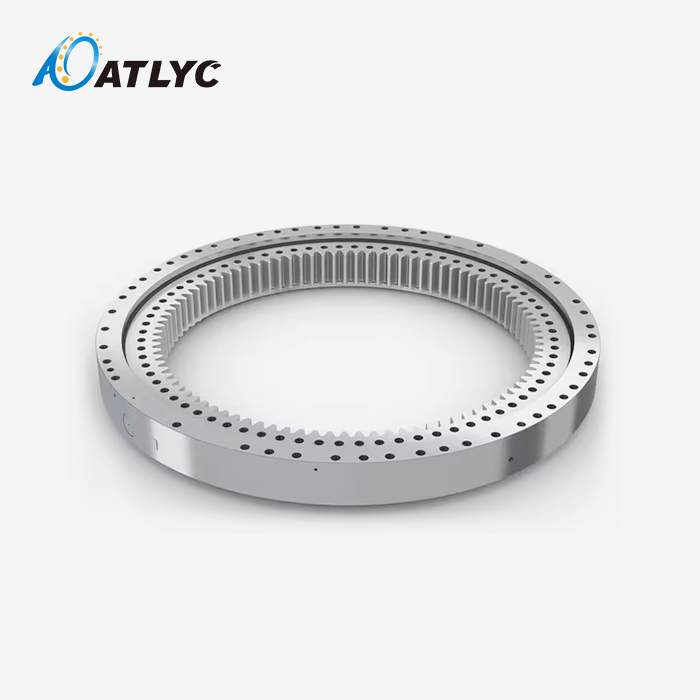
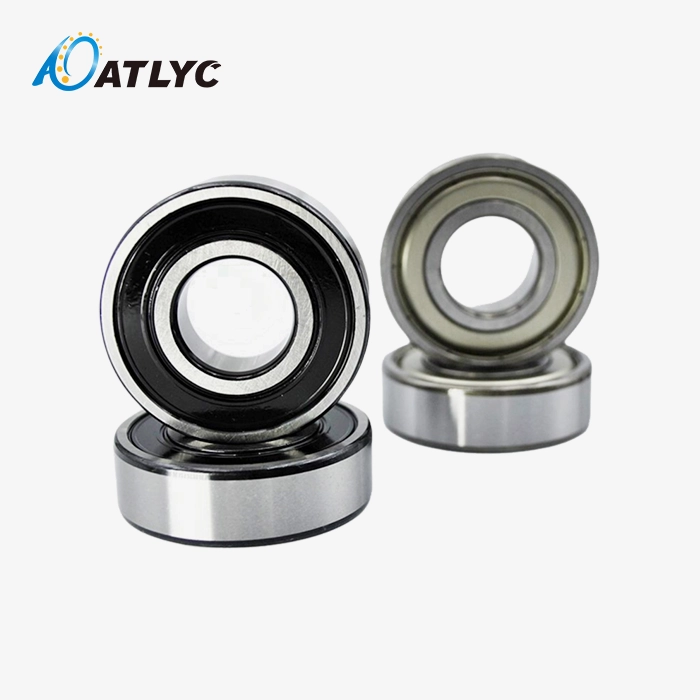
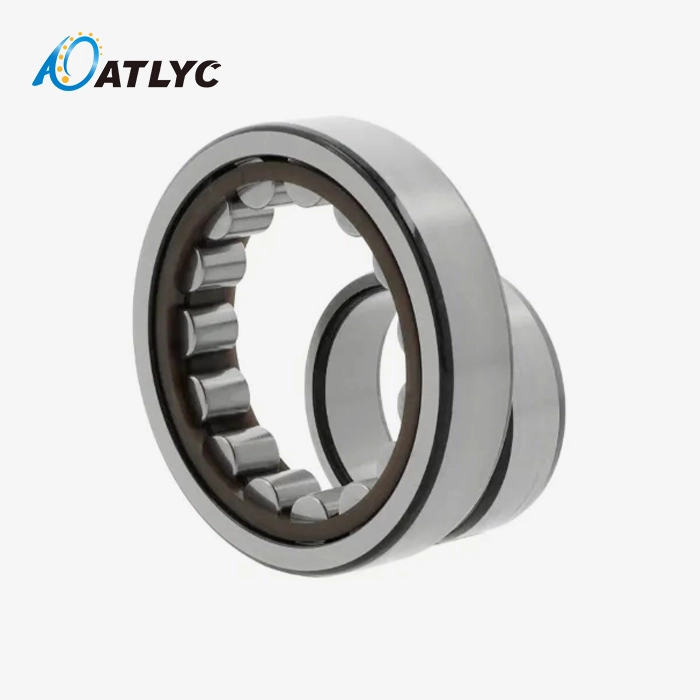
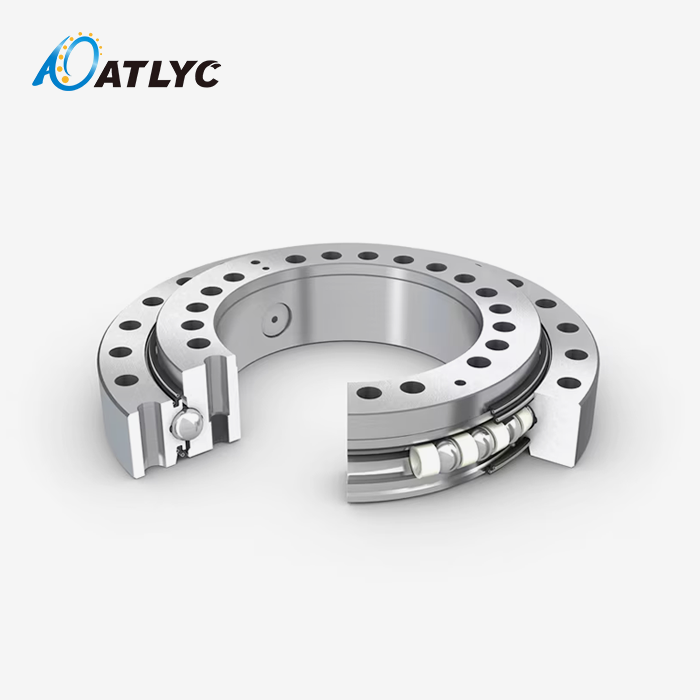
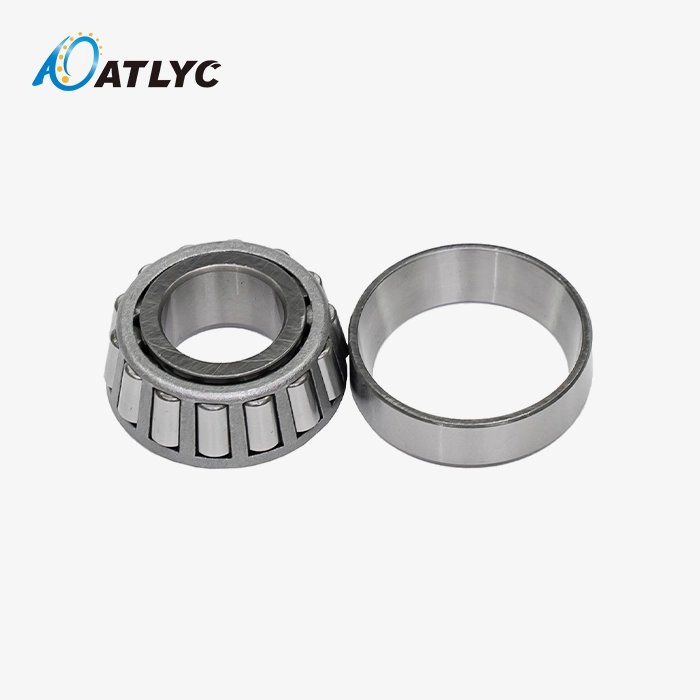
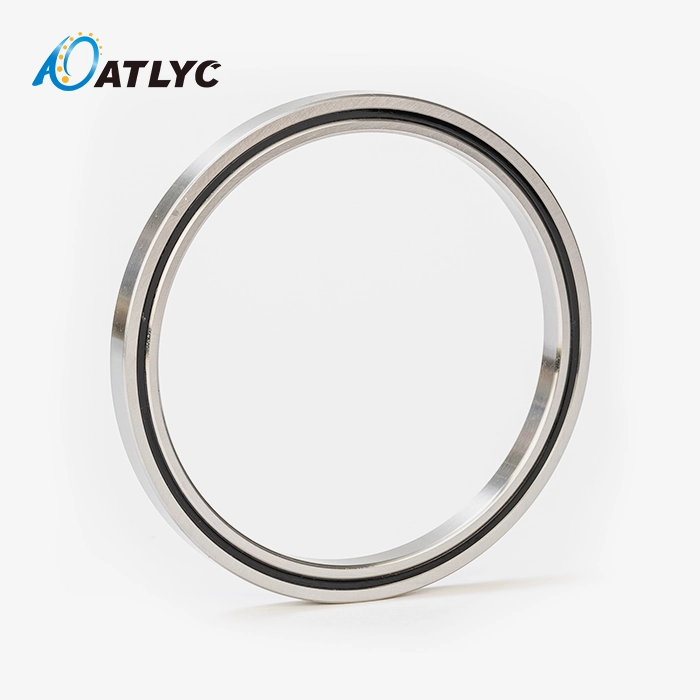
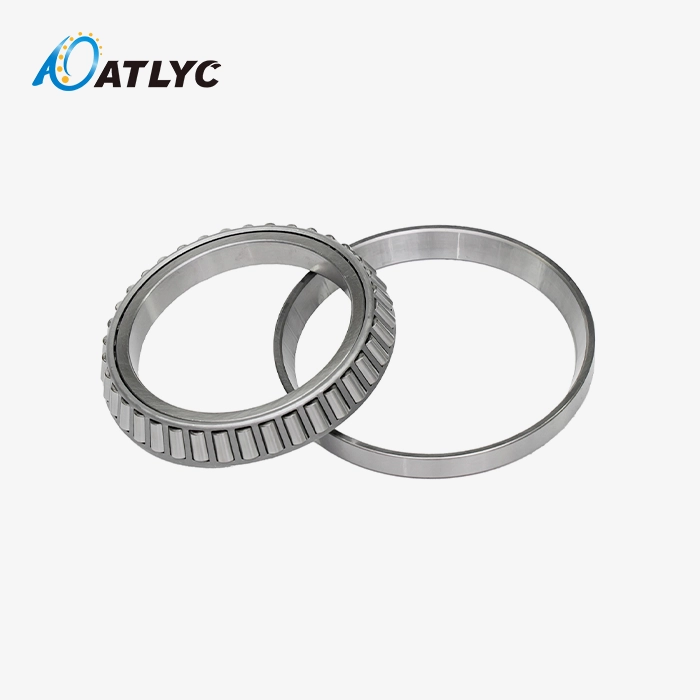
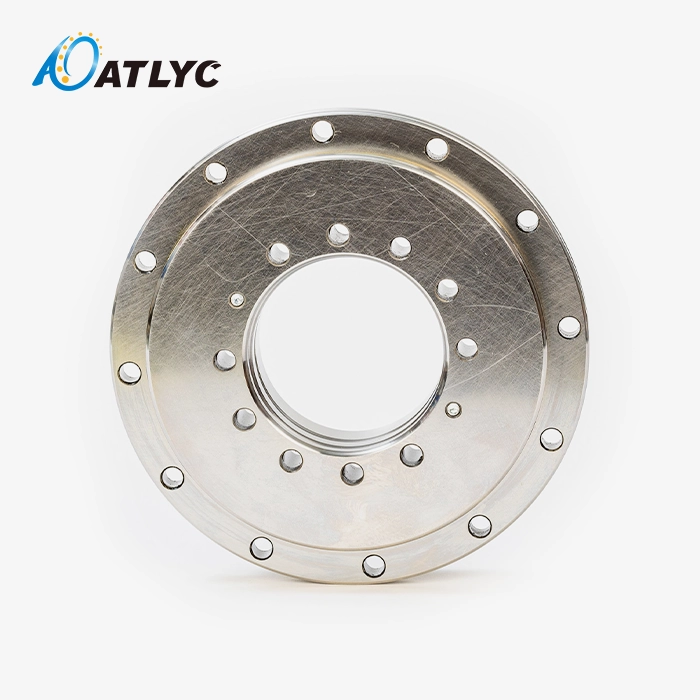
Crossed roller bearings use a series of alternating perpendicular roller arrangements to hold a lot of weight in a small space. This design works well for tasks that need a lot of stiffness and moment load capacity. Harmonic drives, which are also known as strain wave gears, work by controlling the deformation of a thin-walled flexspline. This makes it possible to achieve very accurate positioning with little backlash. Robotic systems also use deep groove ball bearings and angular contact versions of them, especially in less important axes where cost is more important than accuracy.
Material Composition and Performance Trade-offs
Because it is both strong and cheap, steel is still the standard material for most bearing uses. Ceramic bearings are better for cleanrooms and medical robots because they are lighter and less likely to rust. Combining steel bands with ceramic rolling parts in hybrid designs makes them faster while keeping the temperature stable. The choice of material affects not only how long something lasts, but also how much lubricant it needs and whether it can work at certain temperatures.
Crossed Roller Bearings vs Harmonic Drive – Technical Comparison and Applications
If you want to compare these technologies, you have to look at how their structural differences affect how well they work.
Structural Design and Operational Mechanisms
Because the rollers in a crossed roller bearing are arranged in an orthogonal pattern, the pressure is evenly spread across the track. Each roller touches the track at the best angle, which spreads out stress and makes the bearing last longer. The wave generator, the flexspline, and the circular spline are the three main parts of a harmonic drive. The wave generator bends the flexible spline into an oval shape by interacting with teeth on the circular spline at key points along its major axes. This design lets gear reduction ratios go over 100:1 while keeping the assembly light.
Performance Metrics Comparison
Key success differentiators are shown in the table below:
| Performance Parameter | Crossed Roller Bearings | Harmonic Drives |
|---|---|---|
| Positional Accuracy | 10 to 30 arc-seconds | 3 to 10 arc-seconds |
| Load Capacity | High loads in both directions | Moderate power transmission |
| Speed Capability | Moderate (varies by size) | Lower input speeds preferred |
| Backlash | Minimal with preload | Near-zero inherent backlash |
| Compact Design | Moderate space efficiency | Excellent space-to-torque ratio |
Crossed roller bearings work great in situations where they need to handle heavy loads reliably, like in turntable indexing systems or heavy-payload articulated arms. Precision positioning jobs, like handling semiconductor wafers and surgical robots, where angular accuracy has a direct effect on output or patient safety, are mostly done with harmonic drives.
Installation and Maintenance Demands
To install crossed roller bearings correctly, you need to pay close attention to how flat the mounting surface is and how to set the bolt torque sequences so that the raceway doesn't get distorted. Adjusting the preload makes the stiffness optimal without creating too much friction. To keep asymmetric flexspline wear from happening, harmonic drives need the input and output shafts to be perfectly aligned. When it comes to lubrication, crossed roller bearings usually use grease or oil circulation systems, while harmonic drives usually don't need much lubrication because they move so slowly. Under rated loads, crossed rollers should last between 10,000 and 30,000 hours of use. Harmonic drives, on the other hand, can last over 50,000 hours if they are properly maintained, though flexspline fatigue is still a problem.
Real-World Application Insights
Crossed roller bearings are often used in robotic arms that move heavy parts like engine blocks and transmission assemblies on auto manufacturing lines. Joint displacement is stopped by the bearings' ability to handle moment loads during fast accelerations. Harmonic drives are used in precision pick-and-place tasks by robots that make electronics. Their zero-backlash feature makes sure that components are always placed correctly on circuit boards. Crossed rollers support drilling end-effectors, and harmonic drives allow for small angle changes during composite layup processes. Both technologies are used in aerospace tools.
Making the Right Choice – Procurement Factors and Use Case Alignment
When choosing between these types of bearings, you have to weigh the technical needs against the operational and financial realities.
Critical Procurement Criteria
When selecting Industrial Robot Bearings, procurement teams look at a number of factors. Initial selection is based on load needs; tasks that require constant heavy pulling work best with crossed roller bearings, while tasks that require precise angles work best with harmonic drives. The operating environment affects the choice of materials. For example, environments with high temperatures or toxic atmospheres need special treatments or different materials. When standard catalog items can't fit special mounting interfaces or size restrictions, the ability to customize them is important.
Cost-Performance Analysis
Crossed roller bearings usually have lower initial costs than harmonic drives that can handle the same amount of torque. But when you figure out the total cost of ownership, you have to think about how often you change things, how much energy they use, and how often they need to be maintained. Harmonic drives use less power because they lose less power to friction. This could make up for their higher purchase price through cost savings in operation. In high-throughput production settings, the costs of downtime for replacing bearings can be much higher than the costs of the parts themselves. This makes dependability and lifespan predictions important evaluation factors.
Industry-Specific Application Examples
The table below shows how different types of bearings work in common industrial situations:
| Industry Sector | Preferred Bearing Type | Application Rationale |
|---|---|---|
| Automotive Assembly | Crossed Roller Bearings | Strong shock protection and a high carrying capacity |
| Electronics Manufacturing | Harmonic Drives | Positioning to within a millimeter and the need for consistency |
| Aerospace Machining | Both Technologies | Rollers that are crossed for structural loads and harmonics for precise angles |
| Medical Robotics | Harmonic Drives | Motion with no backlash and small package |
| Packaging Automation | Crossed Roller Bearings | Low-cost for moderate precision needs |
Supplier Evaluation Parameters
The global bearing market is dominated by well-known companies like NSK, SKF, FAG, and Timken, which offer a wide range of products and detailed technical information. Check manufacturers' ISO 9001 and IATF 16949 certifications to make sure they follow similar quality management practices. Manufacturing capacity has a direct effect on lead times. Suppliers with multiple production facilities can better handle changes in volume and urgent orders. When standard designs need to be changed to work with private robotic systems, customization services come in handy. When parts need to be replaced, after-sales help, such as field service technicians and spare parts availability, keeps production running as smoothly as possible.
Industrial Robot Bearing Maintenance and Longevity Best Practices
Preventative maintenance keeps production lines running smoothly and extends the life of Industrial Robot Bearings.
Routine Inspection and Lubrication
Maintenance teams should do regular checks that keep track of noise levels, vibration levels, and operating temperatures. When sound amplitudes rise, it means that wear patterns or contamination problems are starting to show up. Temperatures that rise above normal operating ranges mean that there isn't enough lubrication or that the parts aren't lined up correctly, which causes too much friction. Different types of bearings and job cycles need different amounts of lubrication at different times. For example, crossed roller bearings that are used all the time may need to be regreased every 2,000 to 5,000 hours, while harmonic drives don't need much lubricant throughout their service life.
Wear Indicators and Failure Symptoms
Several signs show that bearing failure is about to happen. Noise levels that go up, especially grinding or clicking sounds, could mean that the roller surface is dirty or damaged. Loss of positional precision means that the bearings are wearing out and causing backlash that is too high for safety. A close look may show that the raceways are discolored because they aren't well oiled or because of corrosion. Temperature sensors that pick up on localized heating can pinpoint which bearings are rubbing together incorrectly.
Installation Quality Impact
How well the bearings are installed has a big effect on how long they last. Specifications say that mounting surfaces must be flat, usually within 0.01 mm across the bearing area. Following the manufacturer's instructions for tightening bolts will make sure that the binding forces are spread out evenly. For shaft and housing fits to be perfect, there can't be any extra space between them. If there is, stressing wear can happen, and interference fits can cause raceways to become distorted. Verifying the alignment with a laser or a dial indicator tool makes sure that the parts are positioned in a way that prevents edge loading, which speeds up wear.
Procurement Guide: Where and How to Buy Industrial Robot Bearings
Cost, delivery speed, and supplier reliability must all be balanced in order for Industrial Robot Bearings procurement strategies to work well.
OEM Partnerships and Wholesale Options
Manufacturers of original equipment often work directly with companies that make bearings to get better prices and faster production times. Because of these partnerships, companies can work together to make solutions that are specifically designed for robots. Wholesale distributors offer a wider range of products from more brands, which is helpful for keeping a variety of tools in good shape. Buying in bulk usually means getting discounts, but the minimum order numbers may be higher than what you need right now, which means you have to think about how to handle your inventory.
Custom Orders and Lead Time Factors
Standard stock bearings can be shipped within days to weeks. Custom designs, on the other hand, can take up to 16 weeks to make, based on how complicated they are. When non-standard configurations are chosen, procurement planning should take prototype validation phases into account. Delivery schedules are affected by changes in the global supply chain. Buying from suppliers in different parts of the world helps reduce problems in those areas. Air freight options speed up urgent deliveries at higher costs, which are justified when the costs of production downtime are higher than the costs of faster shipping.
Certification and Technical Support
Make sure that the sources you're considering have the right quality certifications for your business. ISO 9001 shows basic quality control systems, and IATF 16949 talks about the needs of the automotive industry. There is a wide range of technical support available. For example, premium suppliers offer application engineering help, finite element analysis for custom designs, and troubleshooting on-site. The length of the warranty shows how confident the maker is in the product; full coverage for flaws and early wear shows that the quality control process is strong.
Online Platforms and Distributor Networks
Digital markets have changed how bearings are bought by making it easy to quickly find specifications and compare prices. Platforms that bring together various sources make sourcing easier, but it's still important to make sure the sellers are real. Established distributor networks have local store hubs that cut down on the time it takes to ship new parts. Being close to suppliers makes it easier to make returns, file warranty claims, and get technical advice that needs to look at physical parts.

Conclusion
Which one to use—crossed roller bearings or harmonic drives—depends on how precise you need to be, how much the load is, and how much it will cost over its lifetime. Industrial Robot Bearings are an important component to consider when evaluating motion accuracy, durability, and long-term reliability in robotic systems. Crossed roller bearings offer reliable performance for heavy-duty tasks at reasonable prices, while harmonic drives offer unmatched rotational accuracy when removing backlash is necessary. To be successful at procurement, you need to evaluate suppliers based on their certifications, technical support, and how often they deliver. Regular repair practices make parts last longer, which keeps output from stopping. As robotics is used in more and more fields, it's important to understand these key technologies so that you can make decisions that improve performance while keeping total ownership costs low.
FAQ
Which lasts longer: crossed roller bearings or harmonic drives?
If you keep your crossed roller bearings well-oiled and clean, they should last between 10,000 and 30,000 hours under normal loads. Because they have a rolling contact mechanism and little sliding friction, harmonic drives can last for more than 50,000 hours. However, flexspline wear will finally shorten their life. Operating factors have a big effect on how long something lasts. For both technologies, too many loads, contamination, or not enough oil speed up wear.
Can harmonic drives handle high-speed applications?
Harmonic drives are best at accuracy rather than speed. Their design works best for tasks where the input speed is less than 3,500 RPM, because higher speeds make the flexspline too hot. Crossed roller bearings can handle a wider range of speeds, which makes them better for fast indexing or high-cycle-rate tasks where rotational positioning limits allow for a little more backlash.
What symptoms indicate the need for bearing replacement?
Keep an eye out for higher noise levels, higher working temperatures, less accurate positional readings, and noticeable shaking while the machine is running. These signs show that wear, pollution, or a loss of lubricant is happening. When you change something before it fails completely, you protect nearby parts from damage and keep production from stopping without planning to.
Partner with ATLYC for Reliable Industrial Robot Bearing Solutions
ATLYC can help you with your automation projects because they have 15 years of experience in manufacturing bearings. Our ISO 9001 and IATF 16949-certified factories make high-precision crossed roller bearings that meet the strict requirements of the electronics, aerospace, and automotive industries. We offer consistent quality for both large orders and unique setups thanks to our six specialized production workshops and 120 committed professionals. Our expert team helps you choose the best bearings for your robotic platforms through application engineering. Contact our purchasing agents at auto@lyautobearing.com to talk about your needs with a reliable Industrial Robot Bearings supplier that wants to build a long-term relationship with you.
References
1. Schreiber, K., & Mueller, T. (2021). Precision Bearing Technology for Industrial Robotics. Berlin: Technical Publishing House.
2. International Federation of Robotics. (2022). World Robotics 2022: Industrial Robots Report. Frankfurt: IFR Statistical Department.
3. Chen, Y., & Williams, R. (2020). "Comparative Analysis of Bearing Systems in Multi-Axis Robotic Manipulators." Journal of Mechanical Engineering Science, 234(18), 3745-3762.
4. NSK Ltd. (2023). Motion & Control Technical Guide: Precision Bearings for Robotics Applications. Tokyo: NSK Technical Literature Department.
5. Harmonic Drive LLC. (2022). Engineering Reference Guide: Strain Wave Gearing Systems. Peabody: Harmonic Drive Technical Publications.
6. Anderson, P., & Zhang, L. (2019). Manufacturing Excellence in Bearing Production: Quality Systems and Process Control. London: Industrial Engineering Press.
Learn about our latest products and discounts through SMS or email