- English
- French
- German
- Portuguese
- Spanish
- Russian
- Japanese
- Korean
- Arabic
- Greek
- German
- Turkish
- Italian
- Danish
- Romanian
- Indonesian
- Czech
- Afrikaans
- Swedish
- Polish
- Basque
- Catalan
- Esperanto
- Hindi
- Lao
- Albanian
- Amharic
- Armenian
- Azerbaijani
- Belarusian
- Bengali
- Bosnian
- Bulgarian
- Cebuano
- Chichewa
- Corsican
- Croatian
- Dutch
- Estonian
- Filipino
- Finnish
- Frisian
- Galician
- Georgian
- Gujarati
- Haitian
- Hausa
- Hawaiian
- Hebrew
- Hmong
- Hungarian
- Icelandic
- Igbo
- Javanese
- Kannada
- Kazakh
- Khmer
- Kurdish
- Kyrgyz
- Latin
- Latvian
- Lithuanian
- Luxembou..
- Macedonian
- Malagasy
- Malay
- Malayalam
- Maltese
- Maori
- Marathi
- Mongolian
- Burmese
- Nepali
- Norwegian
- Pashto
- Persian
- Punjabi
- Serbian
- Sesotho
- Sinhala
- Slovak
- Slovenian
- Somali
- Samoan
- Scots Gaelic
- Shona
- Sindhi
- Sundanese
- Swahili
- Tajik
- Tamil
- Telugu
- Thai
- Ukrainian
- Urdu
- Uzbek
- Vietnamese
- Welsh
- Xhosa
- Yiddish
- Yoruba
- Zulu
RE Cross Roller Bearings for High-Precision Equipment
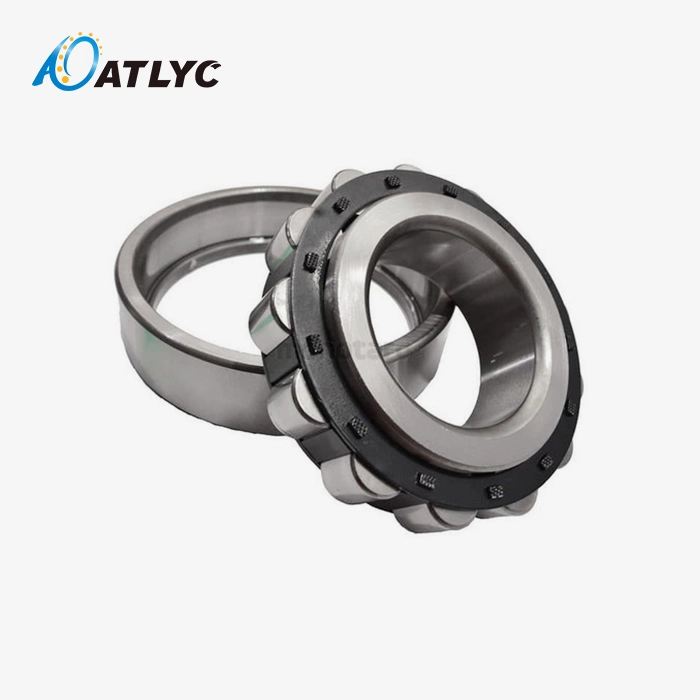
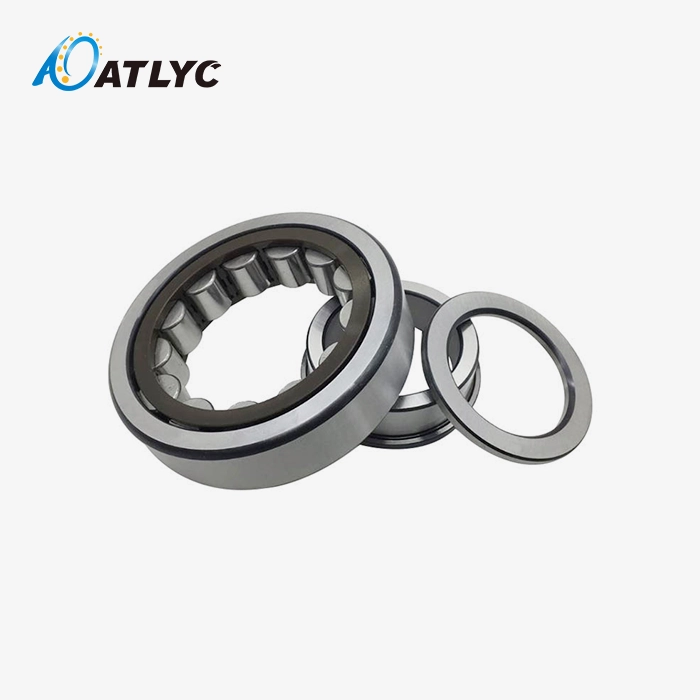
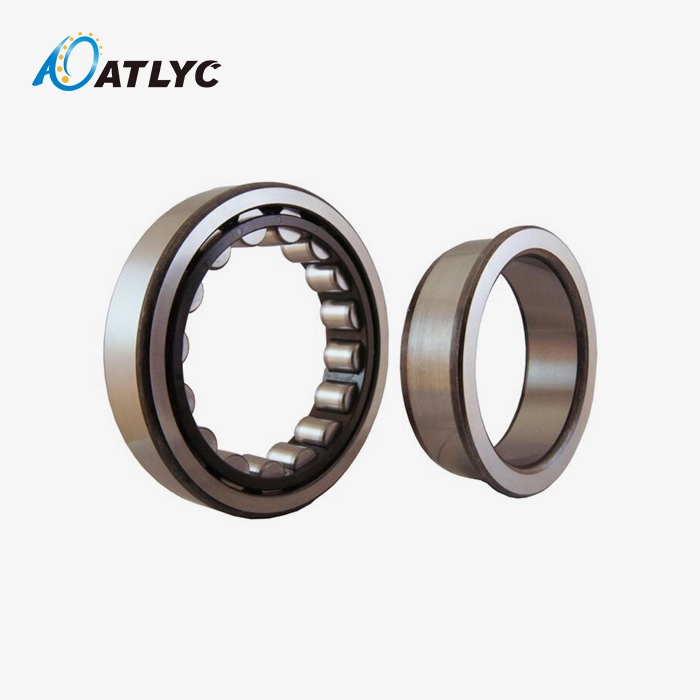
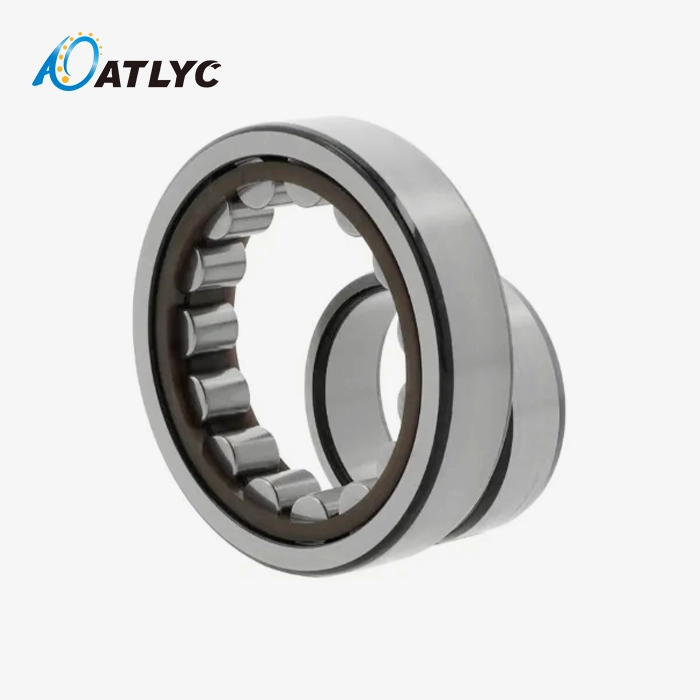
When your production demands absolute positioning accuracy and uncompromising load-bearing performance, RE Cross Roller Bearings represent the engineering solution your operation requires. These specialized precision rotary components integrate an unbroken outer ring structure with a divided inner ring configuration, creating exceptional dimensional stability for rotating outer ring applications. The cylindrical rollers arranged orthogonally within V-groove raceways simultaneously address radial forces, axial thrust, and moment loads—eliminating complex multi-bearing assemblies while delivering micrometer-level precision in space-constrained automation equipment.
Understanding RE Cross Roller Bearings: Features and Benefits
The fundamental architecture distinguishes these bearings from conventional rotary motion solutions. At Luoyang Auto Bearing Co., Ltd., our fifteen years of manufacturing experience have demonstrated how this crossed-roller technology solves critical industrial challenges that standard bearing arrangements cannot address effectively.
Structural Design Principles
The integrated outer ring construction forms the cornerstone of reliable performance. Unlike split configurations that introduce potential alignment inconsistencies, this solid ring design maintains structural integrity under dynamic loading conditions. Inside this rigid outer structure, the divided inner ring—manufactured in two precision-matched halves—houses cylindrical rollers positioned at 90-degree orientations. Spacers separate each roller, preventing metal-to-metal contact that would generate friction and premature wear. This arrangement creates what engineers recognize as simultaneous load distribution. When your robotic manipulator experiences combined forces during operation, cross roller bearings distribute stress across multiple contact points rather than concentrating loads as ball bearings would. The result becomes immediately apparent in improved rigidity and extended service intervals.
Performance Characteristics That Matter
Manufacturing facilities operating machining centers or semiconductor handling equipment demand quantifiable performance metrics. Our Gcr15 and Gcr15SiMn steel constructions deliver measurable advantages across critical parameters. The low friction coefficient inherent to the crossed-roller geometry produces smooth rotational motion even under preload conditions necessary for eliminating internal clearance. Runout accuracy—the deviation from perfect circular motion—reaches levels that precision measuring instruments require. Available accuracy classes span P6 through P4 grades, accommodating applications from general industrial machinery to ultra-precise IC manufacturing devices. This graduated accuracy specification allows procurement teams to match bearing precision directly to equipment requirements without overspecifying components that inflate costs unnecessarily. Load capacity presents another decisive advantage. A single crossed roller bearing handles radial forces, axial thrust, and overturning moments simultaneously. This multi-directional capability means your equipment design eliminates the weight, complexity, and potential alignment issues associated with paired angular contact bearing arrangements. For automation equipment manufacturers targeting weight reduction and compact envelopes, this consolidation translates to tangible competitive advantages.
Dimensional Range and Application Flexibility
Production requirements vary dramatically across industries and equipment types. The size spectrum—spanning inner diameters from 20mm to 1100mm, outer diameters reaching 1500mm, and widths between 12mm and 110mm—accommodates diverse mechanical configurations. Small medical imaging devices utilize compact variants, while large rotary tables in machining centers specify larger dimensions capable of supporting substantial workpieces. This dimensional flexibility for RE Cross Roller Bearings extends beyond catalog specifications. Our IATF 16949-certified production facilities maintain customization capabilities that adapt standard designs to specialized mounting requirements, modified preload parameters, or unique sealing configurations. Procurement managers working with niche automation applications benefit from technical support that bridges standard product offerings with application-specific modifications.
Comparing RE Cross Roller Bearings to Other Bearing Types
Procurement decisions benefit substantially from understanding how different bearing technologies perform under comparable operating conditions. The crossed roller design occupies a specific performance niche that conventional bearing types cannot match effectively.
Angular Contact Bearing Arrangements
Angular contact bearings require paired configurations—typically back-to-back or face-to-face mounting—to handle combined loads. This arrangement demands precise axial preload adjustment during assembly, creating potential maintenance complexity. The two-bearing system occupies greater axial space compared to a single crossed roller unit, providing equivalent load capacity. When your equipment design prioritizes compact installation envelopes, this dimensional difference becomes significant. Angular contact variants excel in high-speed spindle applications where point contact generates less friction than line contact. However, for rotary tables and robotic joints operating at moderate speeds with precision positioning requirements, crossed roller technology delivers superior rigidity and accuracy without the assembly complexity that angular contact bearings introduce.
Tapered Roller Bearing Comparisons
Tapered roller bearings handle substantial radial and axial loads, making them prevalent in heavy industrial equipment and automotive wheel assemblies. Their line contact provides excellent load distribution under high forces. Yet tapered configurations require external housing components to maintain proper positioning, and their geometry cannot accommodate moment loads effectively without additional bearing support. Crossed roller designs integrate moment load capacity within the single bearing structure. Your robotic arm joint experiences constantly varying load vectors during operational cycles—the orthogonal roller arrangement automatically distributes these complex forces without requiring supplementary bearing locations. This inherent multi-directional capability simplifies mechanical design while improving overall system reliability.
Cylindrical Roller Bearing Distinctions
Standard cylindrical roller bearings deliver high radial load capacity in compact radial dimensions but provide limited or no axial load support. Applications requiring both radial and thrust capacity necessitate separate thrust bearing elements, increasing parts count and assembly complexity. The RE series integrates these functions. Procurement teams sourcing components for precision turntables or swivel mechanisms recognize immediate advantages: reduced SKU inventory, simplified assembly procedures, and fewer potential failure points. Maintenance operations similarly benefit from addressing a single bearing location rather than coordinating multiple bearing replacements during service intervals.
Procurement Considerations for RE Cross Roller Bearings
Effective sourcing strategies balance technical specifications against commercial factors, including supplier reliability, quality certifications, and long-term partnership potential. The bearing procurement landscape presents numerous options, requiring systematic evaluation frameworks.
Specification Parameters and Quality Standards
Technical datasheets provide essential baseline information, yet understanding which parameters most directly impact application performance requires engineering insight. Load ratings—dynamic and static—indicate the forces that bearings withstand during operation and at rest. Your equipment's duty cycle determines which rating proves more critical for longevity calculations. Accuracy grades for RE Cross Roller Bearings directly correlate with achievable positioning precision. P0 grade suffices for general industrial machinery, while P5 and P4 classes become necessary for measuring instruments and semiconductor manufacturing equipment, where sub-micron positioning matters. Specifying unnecessarily tight tolerances inflates costs without performance benefits; conversely, inadequate accuracy compromises equipment capability. Material selection influences environmental compatibility. Standard Gcr15 bearing steel delivers excellent wear resistance and dimensional stability across typical industrial temperature ranges. Gcr15SiMn variants provide enhanced toughness for applications experiencing shock loading or vibration. Discussing operational conditions with suppliers ensures material specifications match actual service environments rather than generic defaults.
Supplier Evaluation Criteria
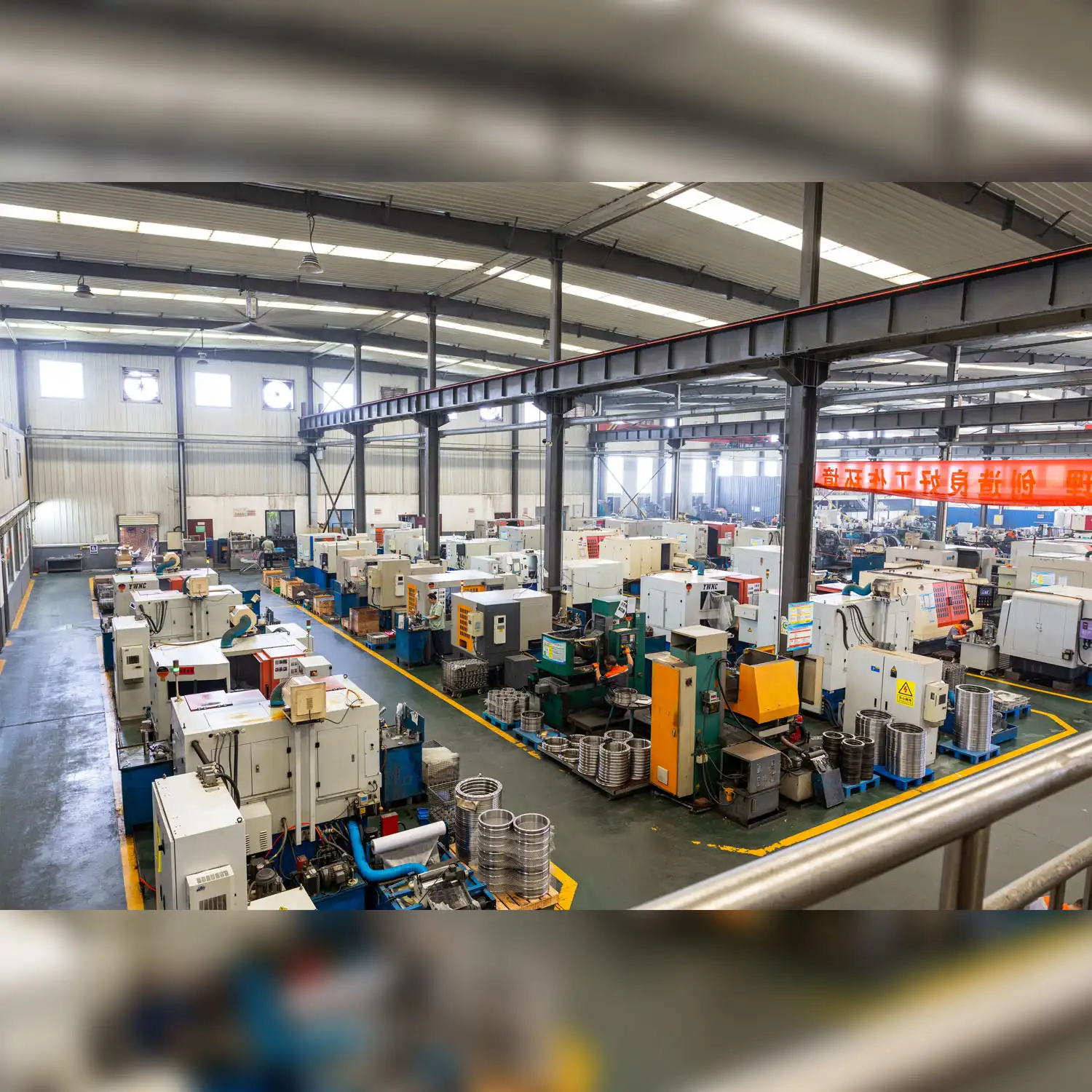
Global bearing markets feature established brands including IKO, NSK, SKF, THK, NTN, KOYO, and MISUMI, alongside specialized manufacturers serving specific market segments. Procurement professionals weigh multiple factors beyond unit pricing when establishing supplier relationships that support long-term production stability. Quality management certifications validate manufacturing consistency. ISO 9001 demonstrates foundational quality systems, while IATF 16949 specifically addresses automotive industry requirements, including traceability and continuous improvement protocols. At ATLYC, our dual certification status reflects a commitment to international standards that mid-to-large OEMs and automotive component manufacturers require from strategic bearing suppliers. Manufacturing capacity determines delivery reliability during demand fluctuations. Our six production workshops—expanded systematically since 2010—maintain capacity reserves that accommodate unexpected order volume increases without compromising lead times. This scalability proves essential when your production ramps coincide with industry-wide component shortages affecting competitors' sourcing from capacity-constrained suppliers.
Technical support capabilities differentiate transactional vendors from genuine manufacturing partners. Application engineering assistance helps procurement teams optimize bearing selection during equipment design phases, preventing costly specification errors discovered during prototype testing. Our 120-person workforce includes dedicated technical specialists providing consultation throughout product development cycles and production scale-up phases.
Customization and Minimum Order Quantities
Standard catalog bearings address common application requirements efficiently, yet specialized equipment often demands modified designs. Customization options typically include altered internal clearance, modified preload configurations, integrated mounting holes, specialized sealing arrangements, or non-standard dimensional variants matching existing equipment interfaces. Understanding MOQ thresholds for custom specifications helps procurement teams balance inventory carrying costs against unit price advantages. Standard product lines frequently ship in smaller quantities suitable for prototype builds and pilot production runs. Custom variants may require higher MOQs, justifying tooling investments, though established manufacturers often maintain flexible policies accommodating growing accounts with long-term volume potential.
Engaging suppliers during equipment design phases—before finalizing bearing specifications—creates opportunities for value engineering. Minor dimensional adjustments or feature modifications might enable using standard components rather than custom variants, reducing both costs and lead times while maintaining required performance levels.
Maintenance Tips and Durability Insights for RE Cross Roller Bearings
Operational longevity depends significantly on installation practices, lubrication protocols, and environmental management. Properly maintained crossed roller bearings routinely achieve or exceed calculated service life, while neglected units fail prematurely regardless of initial quality.
Installation Best Practices
Proper mounting establishes the foundation for reliable service. Bearing seats—both housing bores and shaft mounting surfaces—require dimensional accuracy and surface finish meeting manufacturer specifications. Excessive runout or rough surfaces create uneven loading that accelerates wear patterns and reduces accuracy. Verifying mounting surface geometry before assembly prevents issues from developing during operation. Preload adjustment critically affects both rigidity and bearing life. Insufficient preload allows internal clearance, reducing positional accuracy, while excessive preload increases friction and heat generation. Following manufacturer preload specifications—typically achieved through controlled inner ring spacer thickness or axial clamping force—optimizes performance across the bearing's operating envelope.
Contamination during installation represents a primary failure mode. Clean assembly environments and proper handling procedures prevent particulate infiltration into roller raceways, where debris causes accelerated wear. Utilizing provided protective caps until final assembly and avoiding direct handling of precision-ground raceway surfaces maintains the dimensional integrity your equipment requires.
Lubrication Protocols
Adequate lubrication of RE Cross Roller Bearings minimizes friction and removes operational heat while preventing corrosion during equipment idle periods. Grease lubrication suits most industrial crossed roller applications, offering simplified maintenance compared to oil systems. Selecting appropriate grease viscosity and consistency for your operational temperature range ensures proper film formation without excessive drag during startup. Relubrication intervals depend on operating conditions, including speed, load, temperature, and environmental contamination levels. Conservative guidelines recommend inspection and potential relubrication every 2000-5000 operating hours, though specific applications may warrant more frequent or extended intervals. Monitoring bearing temperature and listening for acoustic changes indicating lubrication degradation enables condition-based maintenance strategies, optimizing intervention timing.
Avoiding overgreasing proves equally important as preventing lubricant starvation. Excessive grease generates hydraulic resistance, impeding roller motion and causing unnecessary heat buildup. Filling bearing cavities to approximately one-third capacity typically provides adequate lubrication reserves without creating flow restrictions.
Troubleshooting Common Issues
Abnormal temperature rises signal potential problems requiring investigation. Excessive preload, inadequate lubrication, contamination, or misalignment commonly cause temperature increases. Thermal imaging during operation identifies whether heating concentrates in specific zones, suggesting localized problems, versus uniform temperature elevation, indicating systemic issues. Unusual noise patterns provide diagnostic information. Smooth, quiet operation characterizes properly functioning crossed roller bearings. Grinding sounds suggest contamination or inadequate lubrication, causing metal-to-metal contact. Periodic clicking or snapping noises may indicate roller spacing irregularities or raceway damage. Early acoustic monitoring—ideally through ultrasonic inspection during routine maintenance—detects developing issues before catastrophic failure occurs.
Accuracy degradation manifests through increased positioning errors or reduced repeatability in precision equipment. Measuring runout periodically and comparing against baseline values quantifies bearing wear progression. When measurements exceed application tolerances, scheduling proactive bearing replacement during planned maintenance windows prevents unscheduled downtime from unexpected failures during production runs.
Why Choose RE Cross Roller Bearings for Your High-Precision Equipment?
Investment decisions involving critical motion components require a comprehensive evaluation, balancing immediate costs against long-term value delivery. Crossed roller bearing technology presents compelling advantages for equipment manufacturers and end-users prioritizing precision, reliability, and operational efficiency.
Cost-Effectiveness Through System Simplification
Initial component pricing represents only one element of total ownership costs. Consolidated load handling within single bearing units reduces parts count, simplifying inventory management and reducing procurement overhead. Assembly labor decreases when installing one bearing rather than coordinating multiple bearing positions with precise alignment requirements. Maintenance procedures similarly benefit from addressing fewer bearing locations during service intervals. These operational efficiencies compound throughout equipment lifecycles. Production machinery operating continuously accumulates thousands of hours annually—simplified maintenance translates to reduced downtime and lower labor costs across extended service periods. Procurement managers evaluating supplier options should calculate the total cost of ownership, incorporating these operational factors rather than focusing exclusively on purchase price differentials between bearing types or suppliers.
Precision Performance Supporting Product Quality
Manufacturing equipment precision directly influences product quality and production yield rates. Robotic welding cells require repeatable positioning to maintain weld consistency across production runs. Machining center rotary tables must eliminate runout errors that would transfer to workpiece surfaces. Semiconductor wafer handling robots demand sub-micron accuracy, preventing die damage during transfer operations. Crossed roller bearings deliver the motion accuracy these applications require. The rigid structure and preloaded roller arrangement eliminate clearances that would compromise positioning repeatability. Equipment builders specifying appropriate accuracy grades ensure mechanical capability matches overall system precision requirements, preventing bearing performance from becoming the limiting factor in achieving product quality targets.
Reliability for Uninterrupted Production
Unplanned equipment downtime generates costs far exceeding component replacement expenses. Lost production capacity, expedited parts procurement, emergency maintenance labor premiums, and potential customer delivery failures create cascading financial impacts. Bearing reliability directly affects equipment uptime and operational continuity. Manufacturing quality management systems ensure consistent bearing performance across production batches. At ATLYC, our ISO 9001 and IATF 16949 certified processes implement statistical process control monitoring critical parameters throughout manufacturing sequences. This systematic quality oversight produces bearings meeting specifications reliably, reducing field failure rates and associated downtime risks for your production operations.
Emerging Applications and Technology Trends
Industrial automation advancement continually creates new applications benefiting from crossed roller bearing capabilities. Collaborative robots entering manufacturing environments require precise joint motion in compact mechanical envelopes—exactly matching crossed roller strengths. Electric vehicle manufacturing scales rapidly, demanding precision assembly equipment for battery pack and powertrain production. Renewable energy sector growth drives wind turbine pitch and yaw systems requiring reliable, high-capacity rotary bearings. These expanding markets reinforce the relevance of crossed roller technology for forward-looking procurement strategies. Supplier partnerships with manufacturers, maintaining continuous product development and application engineering capabilities, position equipment builders to capitalize on emerging opportunities rather than scrambling for component solutions after market opportunities materialize.

Conclusion
RE Cross Roller Bearings deliver the precision, load capacity, and reliability that high-performance automation equipment and industrial machinery demand. The integrated outer ring structure, combined with orthogonal roller arrangements, creates simultaneous multi-directional load handling within compact installation profiles. This design consolidation simplifies mechanical systems while improving accuracy and extending service life compared to conventional multi-bearing arrangements. Procurement professionals sourcing components for robotic systems, precision rotary tables, medical equipment, or semiconductor manufacturing devices benefit from understanding how crossed roller technology addresses their specific operational requirements. Supplier selection should emphasize quality certifications, manufacturing capacity, technical support capabilities, and demonstrated international supply chain reliability.
FAQ
How do crossed roller bearings differ from standard ball bearings regarding precision?
Crossed roller configurations achieve superior accuracy through their rigid structure and line contact geometry. Ball bearings utilize point contact, which permits slight deformation under load, causing positioning variations. The orthogonal roller arrangement distributes loads across greater contact areas, maintaining dimensional stability under varying forces. This structural advantage enables accuracy grades reaching P4 specification—essential for measuring instruments and semiconductor equipment, where positioning errors directly compromise product quality.
What lead times and minimum order quantities apply to customized bearing orders?
Standard catalog bearings typically ship within two to four weeks, depending on quantity and destination logistics. Custom specifications require additional engineering and manufacturing time, generally extending lead times to six through ten weeks for initial orders. Minimum order quantities vary based on customization extent—minor modifications may require 50-100 units, while substantial design changes justify larger minimums, offsetting tooling investments. Discussing project timelines early enables manufacturers to accommodate critical delivery requirements.
What maintenance intervals maximize bearing durability?
Inspection schedules should reflect operating intensity and environmental conditions. Equipment operating continuously in clean environments may extend inspection intervals to 5000 hours, while contaminated or high-load applications benefit from 2000-hour evaluations. Monitoring temperature trends and acoustic signatures enables condition-based maintenance, optimizing intervention timing. Proper lubrication maintenance and contamination prevention typically allow bearings to achieve or exceed calculated L10 service life expectations across diverse industrial applications.
Partner with ATLYC for Your Precision Bearing Requirements
Luoyang Auto Bearing Co., Ltd. (ATLYC) specializes in manufacturing high-precision crossed roller bearings supporting demanding industrial applications worldwide. Our ISO 9001 and IATF 16949 certified production facilities maintain consistent quality standards across our complete product range, from compact 20mm inner diameter units through large 1100mm rotary table bearings. With fifteen years of continuous manufacturing experience and six dedicated production workshops, we provide the production scale and technical expertise mid-to-large OEMs require from strategic bearing suppliers. Contact our application engineering team at auto@lyautobearing.com to discuss your specific requirements, request technical specifications, or obtain quotations for RE Cross Roller Bearings. As an established manufacturer serving precision equipment markets across South Korea, the United States, Germany, and beyond, ATLYC delivers the reliable component supply and competitive pricing your procurement strategy requires.
References
1. Harris, T.A. & Kotzalas, M.N. (2006). Rolling Bearing Analysis: Essential Concepts of Bearing Technology. CRC Press, Taylor & Francis Group.
2. Schaeffler Technologies AG & Co. (2019). Rolling Bearings: Catalogue HR 1. Schaeffler Technologies.
3. ISO 492:2014. Rolling bearings — Radial bearings — Geometrical product specifications (GPS) and tolerance values. International Organization for Standardization.
4. Xu, H. & Zhang, D. (2017). "Load Distribution Analysis of Cross Roller Bearings." Journal of Mechanical Engineering Science, Vol. 231, pp. 4382-4395.
5. THK Co., Ltd. (2020). Cross Roller Ring Technical Manual. THK Engineering Documentation.
6. Deutsche Gesellschaft für Tribologie (2018). Lubrication Guidelines for Precision Bearings in Industrial Applications. German Tribology Society Technical Report.
Learn about our latest products and discounts through SMS or email