- English
- French
- German
- Portuguese
- Spanish
- Russian
- Japanese
- Korean
- Arabic
- Greek
- German
- Turkish
- Italian
- Danish
- Romanian
- Indonesian
- Czech
- Afrikaans
- Swedish
- Polish
- Basque
- Catalan
- Esperanto
- Hindi
- Lao
- Albanian
- Amharic
- Armenian
- Azerbaijani
- Belarusian
- Bengali
- Bosnian
- Bulgarian
- Cebuano
- Chichewa
- Corsican
- Croatian
- Dutch
- Estonian
- Filipino
- Finnish
- Frisian
- Galician
- Georgian
- Gujarati
- Haitian
- Hausa
- Hawaiian
- Hebrew
- Hmong
- Hungarian
- Icelandic
- Igbo
- Javanese
- Kannada
- Kazakh
- Khmer
- Kurdish
- Kyrgyz
- Latin
- Latvian
- Lithuanian
- Luxembou..
- Macedonian
- Malagasy
- Malay
- Malayalam
- Maltese
- Maori
- Marathi
- Mongolian
- Burmese
- Nepali
- Norwegian
- Pashto
- Persian
- Punjabi
- Serbian
- Sesotho
- Sinhala
- Slovak
- Slovenian
- Somali
- Samoan
- Scots Gaelic
- Shona
- Sindhi
- Sundanese
- Swahili
- Tajik
- Tamil
- Telugu
- Thai
- Ukrainian
- Urdu
- Uzbek
- Vietnamese
- Welsh
- Xhosa
- Yiddish
- Yoruba
- Zulu
Why YRTM Rotary Table Bearing Is Ideal for Indexing Tables?
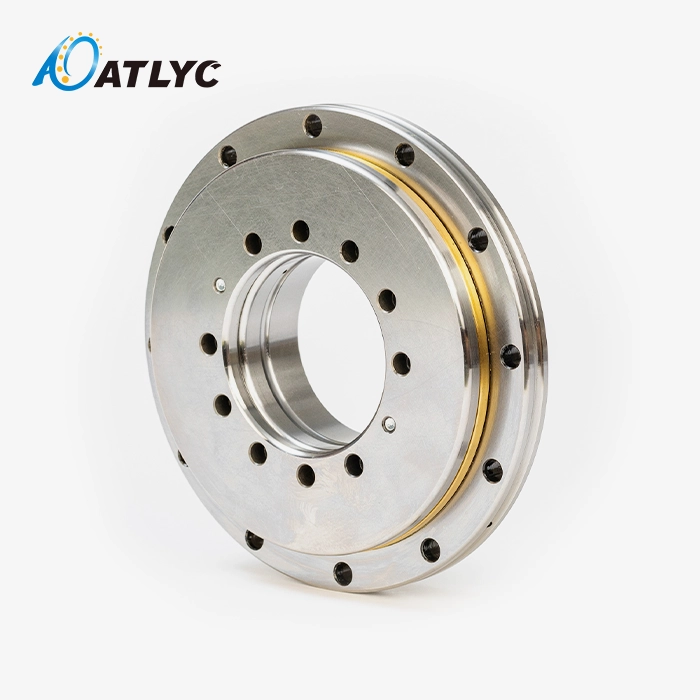
Indexing tables demand bearings that deliver precision, compact design, and multi-directional load handling—and YRTM Rotary Table Bearing meets these requirements exceptionally well. This miniature bearing integrates thrust, radial, and moment load capacity into a single compact unit, eliminating the need for multiple bearing arrangements. The YRTM series features reduced cross-sectional height while maintaining essential load-carrying capabilities, making it perfect for space-constrained applications in CNC machining centers, automated assembly equipment, and precision robotics where consistent positioning accuracy directly impacts production quality.
Understanding YRTM Rotary Table Bearings
Structural Design and Engineering Excellence
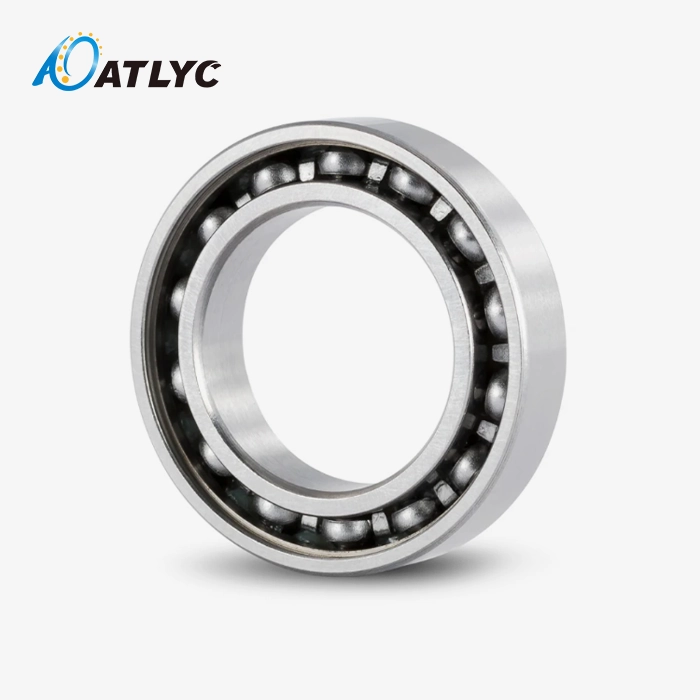
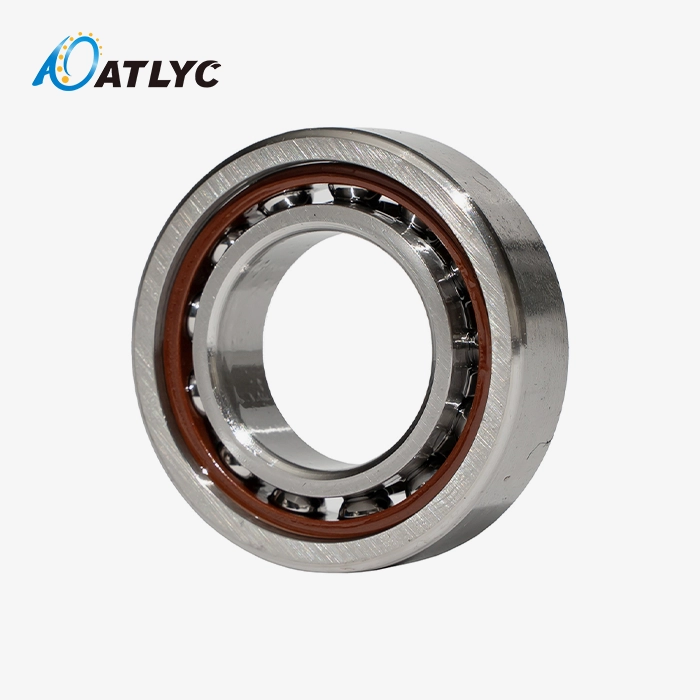
The YRTM series represents the miniature variant within the rotary table bearing family, specifically engineered to deliver maximum performance in minimum space. This compact structure incorporates an integrated three-in-one design that combines thrust bearing capability for axial loads, radial bearing function for radial forces, and moment resistance for tilting loads. The bearing consists of an outer ring (fixed ring), inner ring (rotating ring), precision steel balls, and a cage—all manufactured to exacting dimensional tolerances. What distinguishes the YRTM configuration from standard YRT bearings is its reduced cross-sectional height. Engineers achieved this space optimization without compromising essential load-carrying capabilities. The double-row angular contact ball arrangement positions steel balls at specific contact angles, typically 45° or 60°, enabling simultaneous support of axial loads, radial loads, and composite moments from multiple directions. This geometric configuration effectively improves load-bearing capacity and rigidity, ensuring stable operation under complex load conditions common in indexing applications.
Precision Manufacturing and Quality Standards
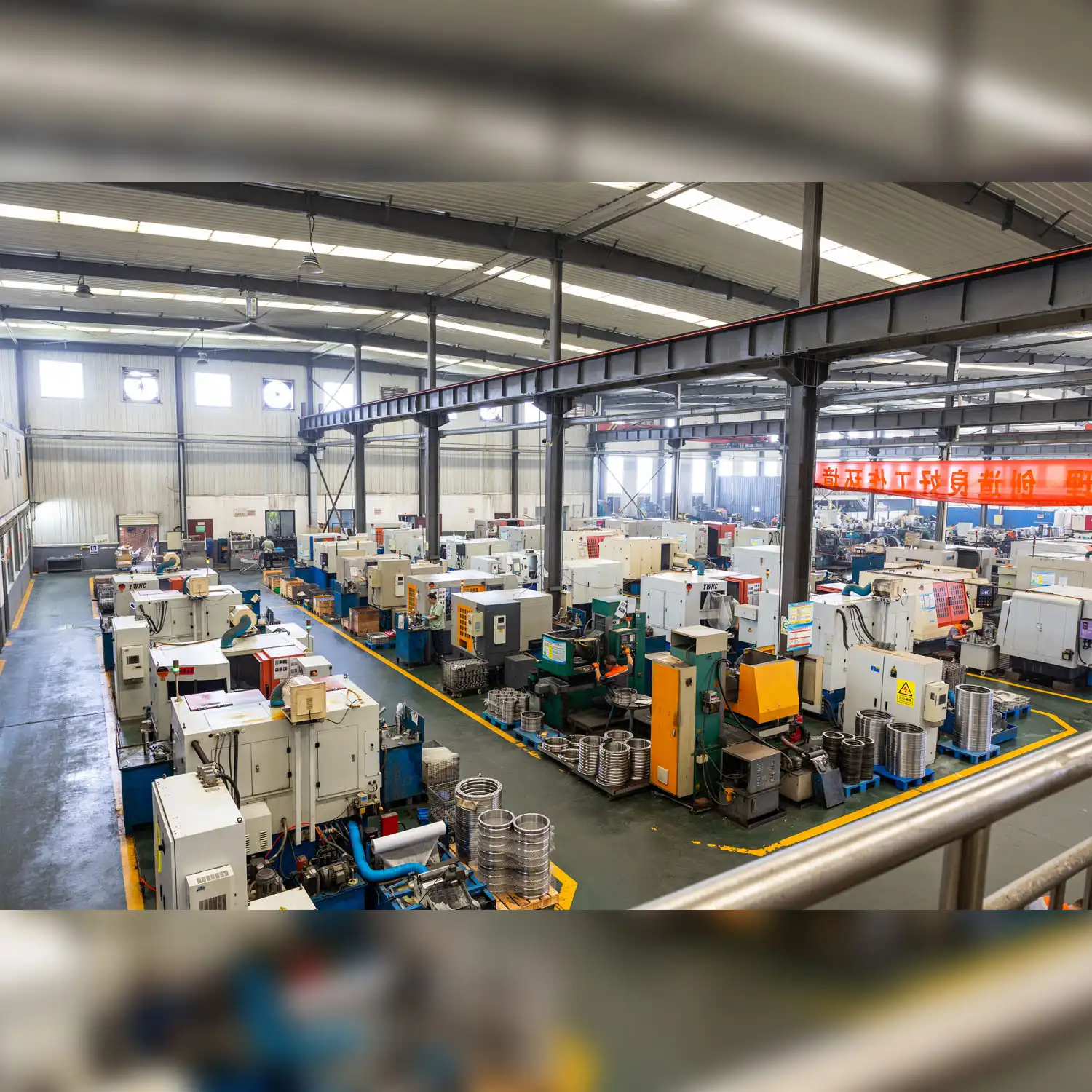
The inner and outer raceways undergo precision grinding and super-finishing processes that achieve surface finishes measured in micrometers. This manufacturing rigor translates directly into operational benefits: reduced friction, extended service life, and consistent rotational accuracy over millions of cycles. Our facility, established in 2010 and now operating six specialized workshops, has refined these production techniques throughout 15 years of continuous improvement. Each miniature rotary bearing undergoes geometric accuracy inspection using Coordinate Measuring Machines to verify axial and radial runout to micrometer reliability. Rigidity and preload testing ensure each unit meets calculated stiffness values, preventing vibration issues during high-speed machining operations. Environmental resistance testing verifies that seals and lubricants maintain effectiveness when exposed to industrial coolants and cutting fluids commonly encountered in CNC environments.
Comparison with Alternative Bearing Technologies
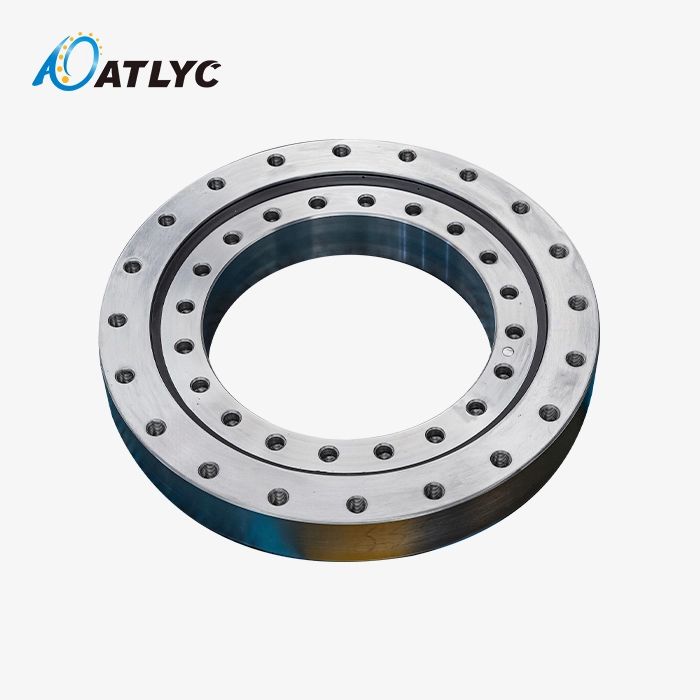
Understanding how the YRTM Rotary Table Bearing compares to alternatives helps procurement specialists make informed decisions. Slewing bearings typically handle larger diameter applications but lack the compact profile needed for space-constrained indexing tables. Cross roller bearings offer high rigidity but require more complex installation procedures and often demand greater radial space. Traditional combined bearing solutions—pairing separate thrust and radial bearings—increase assembly complexity, installation time, and overall system height. The YRTM configuration eliminates these compromises. The integrated design simplifies installation, reducing assembly time and minimizing potential alignment errors that compromise performance. The compact structure allows equipment designers to reduce machine footprints, an increasingly critical consideration as manufacturers optimize factory floor space. The miniature rotary bearing delivers load ratings comparable to much larger bearing arrangements, providing exceptional power density that translates into competitive advantages for equipment manufacturers.
Advantages of YRTM Rotary Table Bearing for Indexing Tables
Superior Multi-Directional Load Capacity
Indexing tables in CNC machining centers experience complex loading conditions during operation. Cutting forces generate significant radial loads as tools engage workpieces. Workpiece mass creates constant axial loads that bearings must support without deflection. Moment loads arise from off-center workpiece positioning or cutting forces applied at a distance from the rotational axis. The YRTM bearing handles all three load types simultaneously through its angular contact ball arrangement. The 45° to 60° contact angle optimizes load distribution across rolling elements. This geometric relationship means each steel ball shares load-carrying responsibility, preventing stress concentration that causes premature failure in conventional bearing designs. The double-row configuration essentially doubles load capacity compared to single-row arrangements, allowing equipment designers to specify smaller bearing envelopes for given load requirements. This load-handling efficiency proves particularly valuable in automated manufacturing cells where multiple workpieces cycle through indexing positions continuously throughout production shifts.
Real-world applications demonstrate these capabilities clearly. A European automotive component manufacturer replaced conventional bearing arrangements with miniature rotary bearings in their transmission housing machining centers. The changeover reduced the indexing table height by 40mm while maintaining load capacity for 150kg workpiece fixtures. The compact design enabled integration of additional tooling stations within the same machine footprint, increasing production capacity by 25% without expanding factory space.
Enhanced Positioning Accuracy and Repeatability
Precision indexing depends on maintaining consistent angular positioning across millions of cycles. The YRTM bearing achieves this through several engineering features working in concert. The precision-ground raceways establish baseline accuracy, with surface finishes that minimize friction variation as rolling elements traverse the load zone. The cage design maintains optimal ball spacing, preventing element clustering that causes position uncertainty. Low-friction characteristics contribute significantly to positioning accuracy. Reduced friction means less heat generation, which translates into dimensional stability during extended operations. Temperature fluctuations cause bearing component expansion that affects clearances and preload—variables that directly influence positioning precision. The miniature rotary bearing's thermal stability maintains consistent performance as machine temperatures rise during production runs.
Repeatability represents another critical performance metric for indexing applications. Equipment must return to identical angular positions within arc-seconds across thousands of daily cycles. The integrated design eliminates backlash inherent in multi-component bearing arrangements, where clearances between separate elements accumulate into positioning errors. A single bearing unit with optimized internal geometry delivers superior repeatability compared to assembled solutions.
Reduced Maintenance Requirements and Operational Costs
The bearing's sealed configuration protects internal components from contamination common in manufacturing environments. Metallic particles from machining operations, coolant mist, and airborne debris all threaten bearing integrity. Advanced seal designs incorporated into the YRTM series create effective barriers against these contaminants while retaining lubrication inside the bearing cavity. Optimized lubrication systems extend service intervals significantly compared to open bearing designs. The sealed environment prevents lubricant degradation from external contaminants and retains lubricant at critical contact surfaces. This reliability translates into predictable maintenance scheduling rather than reactive interventions that disrupt production. Facility managers appreciate the operational continuity that comes from bearings requiring attention during scheduled maintenance windows rather than causing unexpected downtime.
Total cost of ownership calculations favor miniature rotary bearings across multiple factors. The initial procurement cost represents only a fraction of lifetime expenses. Reduced maintenance labor, eliminated downtime losses, extended service life, and energy savings from low-friction operation all contribute to superior ROI. Our customers in Germany and the United States consistently report 30-40% reductions in bearing-related maintenance costs after transitioning to properly specified rotary table bearing solutions.
How YRTM Rotary Table Bearings Work in Indexing Tables
Operational Principles and Load Management
The working principle centers on distributing applied loads across precision rolling elements arranged at optimized contact angles. When indexing tables position workpieces, the bearing simultaneously manages forces in multiple directions. Radial loads from cutting operations are transmitted through the rotating inner ring to steel balls, which transfer force to the fixed outer ring. Axial loads from workpiece weight follow similar paths, with contact angles determining load distribution ratios between radial and axial components. Moment loads present unique challenges in indexing applications. These tilting forces arise when cutting operations apply forces at a distance from the bearing centerline. The YRTM bearing's double-row configuration provides separated load paths that resist tilting moments effectively. The spacing between ball rows creates a moment arm that counteracts applied tilting forces, maintaining precise angular positioning even under asymmetric loading conditions. The integrated structure of the YRTM Rotary Table Bearing proves essential for reliable moment resistance. Separate bearing arrangements experience relative movement between components under moment loads, creating positioning errors and accelerating wear. The single-unit construction of miniature rotary bearings eliminates this weakness, delivering rigid support that maintains positioning accuracy throughout diverse loading scenarios.
Advanced Sealing and Lubrication Technology
Contamination resistance determines bearing service life in real manufacturing environments. The YRTM series incorporates multi-stage sealing systems that prevent ingress while allowing minimal friction. Contact seals provide primary barriers against large particle contamination and fluid intrusion. Non-contact labyrinth seals create tortuous paths that particles and fluids cannot navigate, adding secondary protection without increasing friction. Lubrication strategies balance friction reduction with seal compatibility. The bearing utilizes specialized greases formulated for wide temperature ranges and long service intervals. These lubricants maintain viscosity across operating temperatures from -20°C to +120°C, ensuring consistent performance in both cold-start conditions and sustained high-speed operations. The lubricant chemistry resists degradation from exposure to industrial coolants that may penetrate seal systems, extending effective lubrication life. Our testing protocols verify seal effectiveness and lubricant retention under simulated operating conditions. Bearings undergo accelerated life testing with deliberate contamination exposure, confirming that seal integrity prevents particle ingress that causes premature failure. Thermal cycling tests ensure lubrication remains effective across temperature ranges encountered in actual manufacturing environments.
Real-World Integration and Performance Results
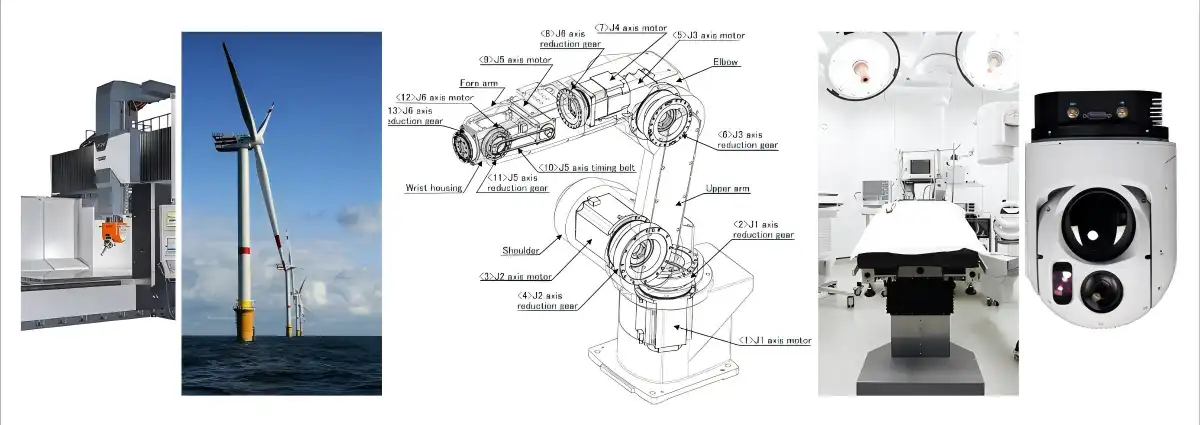
Practical applications across diverse industries validate the YRTM bearing's effectiveness in demanding indexing table installations. A machine tool manufacturer in South Korea integrated miniature rotary bearings into their vertical machining center product line. The compact design enabled table diameter reduction from 630mm to 500mm while maintaining 200kg workpiece capacity. This size optimization allowed the manufacturer to reduce machine footprints, making their equipment more competitive in markets where factory floor space commands premium costs. Robotics applications demonstrate the bearing's versatility beyond traditional machine tools. An industrial automation integrator specified these bearings for assembly robot wrist joints requiring precise angular positioning. The integrated load capacity eliminated complex bearing arrangements previously needed, reducing robot arm weight by 3.2kg per joint. This mass reduction improved robot acceleration characteristics and reduced energy consumption by 18% during typical pick-and-place cycles. Defense sector applications impose particularly stringent reliability requirements. A military equipment contractor selected miniature rotary bearings for surveillance system positioning mechanisms. The application demanded maintenance-free operation over 10-year service intervals while exposed to temperature extremes from -40°C to +70°C. The bearing's sealed design and optimized lubrication met these requirements, with field testing confirming performance specifications remained within tolerance after equivalent operational cycles.
Making the Right Choice: Procurement Considerations for YRTM Bearings
Cost-Effectiveness and Value Analysis
Procurement professionals evaluate bearing solutions across multiple financial dimensions beyond unit price. The miniature rotary bearing's integrated design delivers immediate cost advantages by eliminating separate component purchases and reducing assembly labor. Equipment manufacturers report assembly time reductions of 40-60% compared to installing separate thrust and radial bearing pairs. These labor savings accumulate significantly across production volumes typical in OEM manufacturing. Performance advantages translate into operational cost reductions for end users. The low-friction characteristics reduce drive motor power requirements by 15-25% compared to conventional bearing arrangements in indexing applications. Across equipment operating 6,000 hours annually, these energy savings generate measurable cost reductions. Extended maintenance intervals reduce both parts consumption and labor expenses, with properly maintained units regularly achieving 8-12 year service lives in industrial environments.
Supplier Credibility and Partnership Considerations
Sourcing YRTM Rotary Table Bearing from established bearing manufacturers with documented production capabilities mitigates supply chain risks that disrupt production schedules. Our facility's growth from a single workshop in 2010 to six specialized production areas demonstrates sustained capability development. The 120-person team includes dedicated quality inspection specialists, R&D engineers, and production technicians whose collective expertise ensures consistent product quality. Certification compliance provides objective evidence of manufacturing system maturity. Our ISO 9001 and IATF 16949 certifications validate that production processes meet international standards for quality management and automotive sector requirements. These certifications undergo annual surveillance audits by independent certification bodies, ensuring ongoing compliance rather than one-time qualification.
Lead Times, MOQ, and Customization Capabilities
Standard YRTM bearing sizes typically ship within 3-4 weeks from order confirmation, accommodating most production scheduling requirements. Express production options reduce lead times to 14-18 days for urgent requirements, though premium charges apply for expedited manufacturing. Our inventory management maintains a strategic stock of high-volume sizes, enabling immediate shipment for emergency replacement needs. Minimum order quantities balance manufacturing efficiency with customer flexibility. Standard catalog items carry MOQs of 10-20 pieces depending on bearing size, making small-volume trials and prototype projects economically viable. Volume pricing structures reward larger commitments, with graduated discounts beginning at 50-piece quantities and extending through 500-piece production runs typical for OEM equipment manufacturers.
Maintenance Tips and Best Practices for YRTM Bearings
Inspection Schedules and Monitoring Protocols
Proactive monitoring detects developing issues before they escalate into failures, causing production disruptions. We recommend quarterly visual inspections examining seal condition, lubricant leakage signs, and mounting bolt torque verification. These non-invasive checks require minimal downtime while providing early warning of potential problems. Vibration monitoring using handheld analyzers or permanently installed sensors detects bearing wear progression. Establishing baseline vibration signatures during commissioning creates reference standards for comparison during periodic measurements. Vibration increases of 25% above baseline warrant detailed investigation, potentially indicating contamination ingress, lubrication degradation, or developing component wear.
Lubrication Management and Seal Maintenance
The sealed bearing design simplifies lubrication management compared to open bearing arrangements requiring frequent regreasing. Under normal operating conditions, factory-installed lubrication provides effective service for 8,000-12,000 operating hours. Extreme operating conditions—including sustained high temperatures, heavy contamination exposure, or continuous high-speed operation—may reduce effective lubrication life to 6,000-8,000 hours. Relubrication procedures, when necessary, require careful execution to avoid overfilling, which increases internal friction and temperature. Remove bearing covers or access plugs per manufacturer specifications, purge degraded lubricant using compatible solvents, and apply fresh grease to manufacturer-specified fill percentages. Using incompatible lubricants risks chemical reactions that degrade seal materials and accelerate bearing wear.
Installation Best Practices and Handling Protocols
Proper installation establishes the foundation for reliable bearing performance throughout service life. Clean mounting surfaces meticulously, removing burrs, debris, and old lubricant residues that prevent proper seating. Verify mounting surface flatness and perpendicularity using dial indicators, confirming surfaces meet tolerance specifications, preventing installation misalignment. Temperature-controlled installation methods prevent bearing damage during mounting. Heating bearings to 80-100°C using induction heaters or oil baths creates thermal expansion, enabling straightforward installation onto shafts. Avoid open flame heating that creates uneven temperature distribution, causing dimensional distortion and metallurgical changes, degrading bearing properties. Allow bearings to cool completely before applying operating loads, ensuring thermal shrinkage creates proper interference fits.
Conclusion
The YRTM Rotary Table Bearing represents an engineered solution addressing the fundamental challenge of delivering precision, load capacity, and reliability within compact design envelopes. The integrated three-in-one structure, precision-ground raceways, and advanced sealing systems combine to create a bearing technology ideally suited for demanding indexing table applications across CNC machining, robotics, and automation equipment.
Procurement specialists evaluating bearing options for indexing applications benefit from understanding the total value proposition these miniature bearings deliver. The combination of reduced assembly complexity, superior load handling, extended maintenance intervals, and proven reliability across diverse industrial environments creates compelling advantages over conventional bearing arrangements. Our 15 years of manufacturing experience and commitment to ISO 9001 and IATF 16949 standards ensure consistent quality, supporting long-term equipment reliability.
Successful bearing selection extends beyond technical specifications to encompass supplier capabilities, delivery reliability, and partnership commitment. The considerations outlined throughout this analysis provide decision frameworks supporting confident procurement decisions that optimize equipment performance while managing costs and supply chain risks effectively.
FAQ
What distinguishes YRTM bearings from standard slewing bearings?
The YRTM Rotary Table Bearing series features compact cross-sectional profiles specifically engineered for space-constrained applications, whereas slewing bearings typically serve larger diameter installations. The miniature design integrates thrust, radial, and moment load capacity in reduced envelopes, eliminating the need for multiple bearing components. Slewing bearings excel in applications requiring large diameter support with internal gearing, while miniature rotary bearings optimize precision positioning in confined spaces. The manufacturing approaches differ as well, with YRTM bearings utilizing precision ball arrangements compared to the roller elements common in larger slewing designs.
Can YRTM bearings be customized for specific applications?
Customization options include seal configuration modifications, special lubricant specifications for extreme environments, and dimensional adjustments accommodating unique mounting conditions. Our engineering team evaluates modification requests within 5 business days, assessing feasibility and providing detailed quotations. Common custom applications include non-standard bore diameters, modified seal designs for enhanced contamination resistance, and special material treatments for corrosive environments. Prototype quantities as low as 5 pieces enable design validation before production commitments.
What service life should be expected under typical industrial conditions?
Properly maintained bearings regularly achieve 8-12 year service lives in industrial environments with standard loading conditions and appropriate operating practices. Service life varies based on loading intensity, operating speeds, contamination exposure, and maintenance rigor. Applications with extreme loading, sustained high-speed operation, or significant contamination exposure may experience reduced service intervals of 6-8 years. Regular monitoring, appropriate lubrication management, and proactive seal maintenance extend service life and optimize total cost of ownership.
Get YRTM Rotary Table Bearing Solutions from ATLYC
Optimizing your indexing table performance starts with selecting the right bearing technology and partnering with a reliable YRTM Rotary Table Bearing manufacturer. ATLYC combines precision manufacturing expertise developed over 15 years with ISO 9001 and IATF 16949 certified production processes, delivering consistent quality meeting international standards. Our engineering team provides technical consultation supporting bearing selection, customization assessment, and integration planning, ensuring optimal performance in your specific applications. We maintain competitive pricing backed by reliable lead times and flexible MOQ policies accommodating both prototype projects and volume production requirements. Contact our team at auto@lyautobearing.com to discuss your miniature rotary bearing needs and discover how our manufacturing capabilities support your equipment performance objectives.
References
1. Harris, Tedric A., and Kotzalas, Michael N. "Advanced Concepts of Bearing Technology: Rolling Bearing Analysis, Fifth Edition." CRC Press, 2006.
2. Weck, Manfred, and Brecher, Christian. "Machine Tools Production Systems 3: Design and Construction of Machine Tools." Springer-Verlag Berlin Heidelberg, 2013.
3. Budynas, Richard G., and Nisbett, J. Keith. "Shigley's Mechanical Engineering Design, Tenth Edition." McGraw-Hill Education, 2015.
4. Hamrock, Bernard J., Schmid, Steven R., and Jacobson, Bo O. "Fundamentals of Fluid Film Lubrication, Second Edition." Marcel Dekker Inc., 2004.
5. Eschmann, Paul, Hasbargen, Ludwig, and Weigand, Karl. "Ball and Roller Bearings: Theory, Design and Application, Third Edition." John Wiley & Sons, 1985.
6. ISO 76:2006. "Rolling Bearings — Static Load Ratings." International Organization for Standardization, 2006.
Learn about our latest products and discounts through SMS or email