- English
- French
- German
- Portuguese
- Spanish
- Russian
- Japanese
- Korean
- Arabic
- Greek
- German
- Turkish
- Italian
- Danish
- Romanian
- Indonesian
- Czech
- Afrikaans
- Swedish
- Polish
- Basque
- Catalan
- Esperanto
- Hindi
- Lao
- Albanian
- Amharic
- Armenian
- Azerbaijani
- Belarusian
- Bengali
- Bosnian
- Bulgarian
- Cebuano
- Chichewa
- Corsican
- Croatian
- Dutch
- Estonian
- Filipino
- Finnish
- Frisian
- Galician
- Georgian
- Gujarati
- Haitian
- Hausa
- Hawaiian
- Hebrew
- Hmong
- Hungarian
- Icelandic
- Igbo
- Javanese
- Kannada
- Kazakh
- Khmer
- Kurdish
- Kyrgyz
- Latin
- Latvian
- Lithuanian
- Luxembou..
- Macedonian
- Malagasy
- Malay
- Malayalam
- Maltese
- Maori
- Marathi
- Mongolian
- Burmese
- Nepali
- Norwegian
- Pashto
- Persian
- Punjabi
- Serbian
- Sesotho
- Sinhala
- Slovak
- Slovenian
- Somali
- Samoan
- Scots Gaelic
- Shona
- Sindhi
- Sundanese
- Swahili
- Tajik
- Tamil
- Telugu
- Thai
- Ukrainian
- Urdu
- Uzbek
- Vietnamese
- Welsh
- Xhosa
- Yiddish
- Yoruba
- Zulu
RE9016UUCC0 Cross Roller Bearing Applications in Industrial Systems
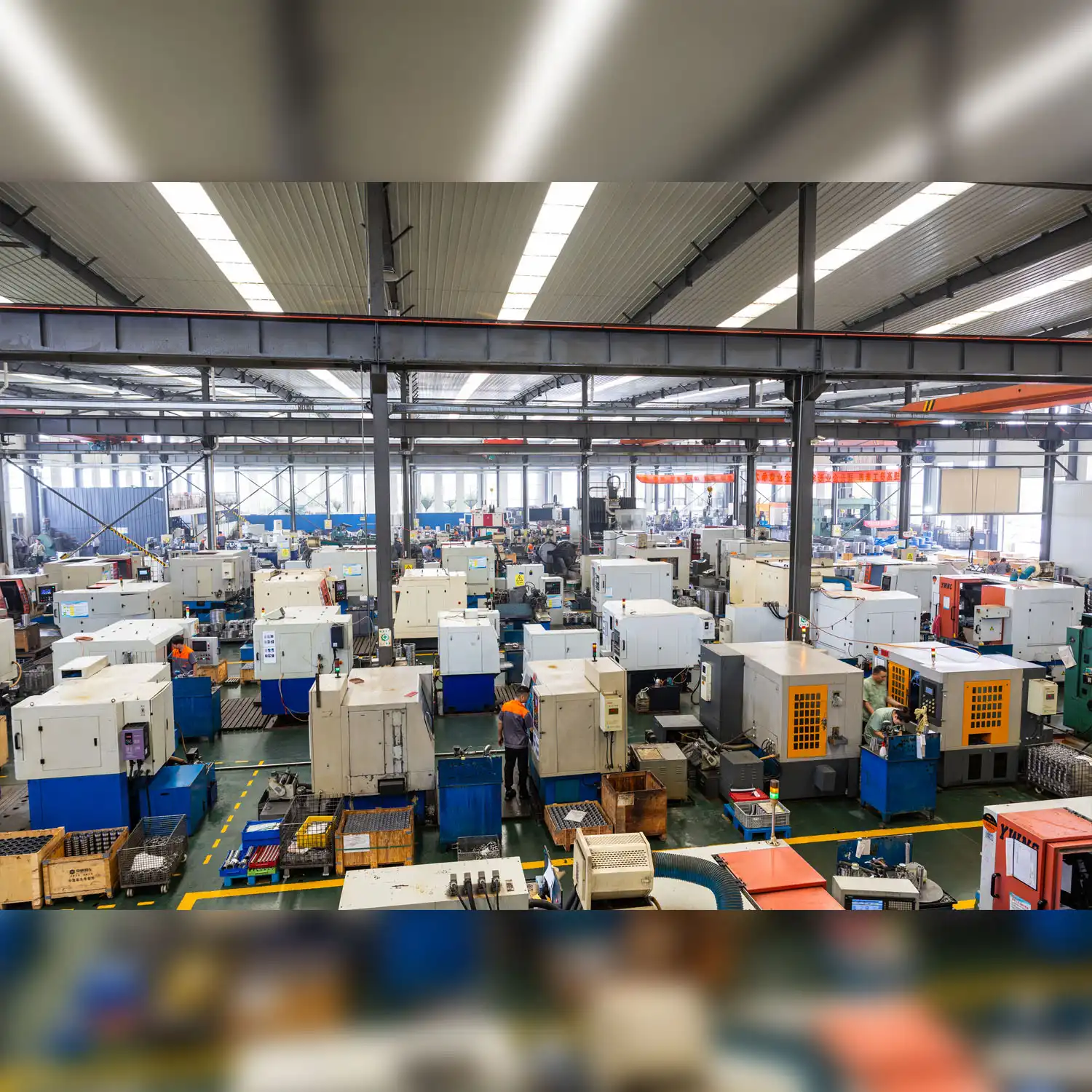
When accuracy is very important in industrial tasks, the RE9016UUCC0 Cross Roller Bearing stands out as a key part for tasks that need very accurate spinning and the ability to carry loads in multiple directions. This unique bearing solution has a combined outer ring and a different inner ring design that was made for systems that need the outer ring to rotate. This small but strong part has a bore diameter of 90 mm, an outer diameter of 130 mm, and a width of 16 mm. It works reliably in robots, medical imaging, semiconductor manufacturing, and precision machining centers where room is limited and accuracy is needed.
Understanding RE9016UUCC0 Cross Roller Bearing Specifications and Design
Cross roller bearings are a big step forward from traditional ball bearing systems because of how they are built. Through its carefully designed specs and material make-up, our RE9016UUCC0 Cross Roller Bearing model shows how this evolution works.
Dimensional Specifications and Structural Configuration
The bearing has exact measurements: the inner diameter is 90mm, the outer diameter is 130mm, and the width is 16mm. When compared to traditional bearing setups, this small profile lets designers save a lot of room. The built-in outer ring structure removes the chance of damage during housing installation, which guarantees precise running throughout the bearing's lifetime. The split inner ring design makes fitting easier while keeping the preload set by the factory, which is made possible by tight production tolerances. Sometimes the outer housing needs to spin while the inner part stays still. This design works especially well in these situations, like in robotic joints and rotary indexing tables.
Material Composition and Heat Treatment
We use high-quality GCr15 and GCr15SiMn bearing steels to make our cross roller bearings. Specialized heat treatments are used on these materials to make them hard, between 58 and 64 HRC. This gives them great resistance to wear and long cycle life. The next steps involve precise grinding, which makes sure that the dimensions are accurate within the P2, P4, P5, P0, or P6 error classes, based on the needs of the application. This method for choosing materials and preparing them directly affects the bearing's ability to keep working well even when conditions are tough.
Cross Roller Arrangement and Load Distribution
The RE9016UUCC0 uses an orthogonal roller arrangement, which means that the cylinder-shaped rollers are placed across from each other at right angles to each other within V-shaped raceways. Spacers keep the rollers from touching each other, which keeps the system running smoothly. This setup makes line contact between the wheels and the raceways, which means that the elastic movement is a lot smaller than with point-contact ball bearings. The design lets a single small unit handle rotational loads, axial loads from both directions, and moment loads all at the same time. The CC0 clearance number means that there is a negative clearance condition, which is basically a light preload that stops pushback and makes the structure stiffer. This preset setting makes spinning much more accurate and increases the life of bearings in places where vibrations are common.
Maintenance Requirements and Longevity Factors
The UU suffix in the bearing name means that there are contact seals on both sides. These seals keep contaminants out and keep the lithium soap-based grease that was already applied. Under normal working conditions, this configuration works for a long time without any upkeep. In places with a lot of speed or heat, the grease may need to be replaced every so often through oil holes. It is still very important to install the rings correctly. The split inner rings come with special systems that hold them together, and they should be put together as a whole to keep the factory-set pressure and accuracy. Regular inspections should check the stability of the seals, the level of shaking, and the patterns of temperature rise to find problems before they affect production plans.
RE9016UUCC0 Cross Roller Bearing Applications in Industrial Systems
Cross roller bearing technology solves certain problems in many different industries where precise motion control and limited space are problems. Knowing about these use cases helps buying workers figure out where the RE9016UUCC0 Cross Roller Bearing is most useful.
Industrial Robotics and Automation Systems
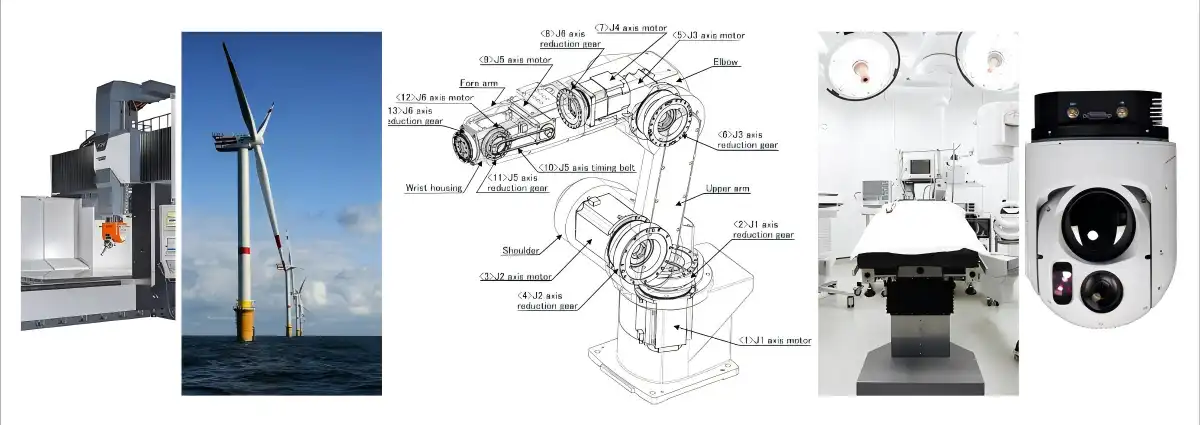
One of the most difficult uses for precise bearings is in industrial robot parts. When an articulated robot's arm stretches and moves objects, the waist and elbow directions create large offset loads and bending moments. The RE9016UUCC0 works great in these spots because it has an outer ring that is built in and holds the spinning arm casing around a center column that stays in place. With the CC0 preload, the zero-backlash feature makes sure that the setting is always exact, which is important for assembly jobs, welding, and moving things around. Robotic system designers like how a single cross roller bearing can be used instead of two complicated dual angular contact bearing setups. This lowers the height of the unit, makes mounting easier, and makes the system more rigid overall.
Precision Machine Tools and Rotary Tables
During multi-axis processes, rotary tables are used to place workpieces on machining centers. These tables have to keep the accuracy of the indexing while holding the weight of the workpiece and soaking up the cutting forces. Our bearing is perfect for direct-drive table designs where the table surface mounts directly to the outer ring. This is because the outer ring can rotate. The bearing's high moment load capacity keeps it from bending during heavy cutting tasks, and its low friction coefficient lets it spin smoothly during placement moves. When factories have lights-out production plans, they count on the reliability that comes from choosing the right bearings.
Medical Imaging Equipment
For high-resolution medical imaging, CT machines and X-ray systems need to be able to rotate without shaking. The spinning gantry gear in these systems has to move very smoothly while supporting heavy X-ray tubes and detector arrays. The RE9016UUCC0 is stiff enough to keep picture flaws from happening when the device bends, and its low noise levels help patients feel better. The sealed design keeps germs from getting into clinical areas, and the bearing's long life means it doesn't need to be serviced as often, which is important for healthcare facilities where equipment downtime directly affects the number of patients who can be cared for.
Semiconductor and IC Manufacturing Equipment
Making semiconductors requires very accurate positioning and work that is free of contamination. Cross roller bearing technology is useful for wafer handling systems, inspection tools, and lithography machines. The sealed design stops the formation of particles that could make clean rooms dirty. The combined outer ring design keeps the dimensions stable, which makes sure that the placement accuracy stays the same during production runs. As semiconductor companies try to make features smaller, the accuracy of carefully chosen bearing systems becomes more and more important for yield rates.
Measuring Instruments and Coordinate Measuring Machines
Rotational precision at the micrometer level is needed for quality control tools. Cross roller bearings are used in the rotating axes of coordinate measuring tools, optical inspection systems, and precision measuring instruments. The RE9016UUCC0 has very good runout accuracy, which means that measurement mistakes caused by the performance of the bearing stay well below acceptable tolerance bands. Professionals in metrology know that measurement uncertainty budgets need to take into account all possible sources of error. Choosing bearings with confirmed precision features can help lower this impact.
Comparing RE9016UUCC0 with Other Cross Roller Bearings and Alternatives
Choosing a bearing means weighing the pros and cons of different choices against the needs of a particular application. Knowing the differences between bearing types helps you make better choices about what to buy regarding the RE9016UUCC0 Cross Roller Bearing.
RE Series Versus RB Series Cross Roller Bearings
One main structural difference between these sets is which ring is joined together and which is split. Our RE9016UUCC0 is perfect for uses that need to rotate the outer ring because it has a combined outer ring and a split inner ring. This arrangement is turned around in the RB series, which has a split outer ring and a combined inner ring that can be used for situations where the inner ring needs to rotate. This difference is important because the combined ring is harder and more accurate in terms of dimensions. Mounting arrangements are also different. The RB series mounts the outer ring to a fixed shaft while the inner ring moves with the housing. The RE series mounts the inner ring to a stationary shaft. Often, the geometry of the application decides which arrangement works best.
Cross Roller Bearings Versus Angular Contact Ball Bearings
An additional way to handle mixed loads is to use angular contact ball bearings that are set up back-to-back or face-to-face. Ball bearings are better for high-speed situations where less mass and point contact mean less heat is made. Cross roller bearings, on the other hand, are much stiffer because they have line contact and can handle loads coming from different directions in one unit. Cross roller designs often save the day when it comes to making small pieces of equipment. Cross roller technology is better for uses where size restrictions limit the bearing area dimensions because it can handle more weight per unit volume.
Performance Metrics Comparison
For checking dimensional suitability, the RE9016UUCC0's 90mm bore width puts it in a size range that works for mid-sized robotic joints and machine tool uses. It is important to check load capacity specs against real-world loads while using the right safety factors, which are usually 2.0 for static loads and 3.0 for dynamic situations. There are different levels of precision, from P6 (standard) to P2 (ultra-precision), to meet different needs for accuracy. Tighter limits cost more but work better. When figuring out cost-effectiveness, you need to look at more than just the initial purchase price. You also need to think about the total cost of ownership, which includes repairs, the expected service life, and the costs of downtime when bearings break.
Procuring RE9016UUCC0 Cross Roller Bearings: What B2B Buyers Need to Know
For successful bearing procurement, you need to know what the seller can do, how to check the quality, and how to look at the total cost, which goes beyond unit price for the RE9016UUCC0 Cross Roller Bearing.
Supplier Evaluation and Quality Verification
Since it started in 2010, Luoyang Auto Bearing Co., Ltd. has grown its manufacturing skills across six production workshops. It now has 120 skilled workers who do production, research and development, quality checking, and assembly. Our ISO 9001 and IATF 16949 certifications show that we are committed to meeting international quality standards. These are important qualifications for companies that make cars and industrial equipment. Managers in charge of buying things should make sure that possible suppliers have these certifications and can provide them for each batch of bearings. These include material certifications, dimensional inspection records, and performance test data. Our three-level quality control system makes sure that every bearing goes through a lot of tests, such as vibration analysis and life testing, so that the ex-factory approval rate is higher than 99.9%.
Pricing Dynamics and Lead Time Considerations
Standard RE9016UUCC0 setups usually ship two to four weeks after an order is confirmed. Custom configurations may take six to eight weeks, based on how complicated the changes are. Quantity pricing structures encourage bigger orders, with big price cuts for each unit usually offered at 100-unit, 500-unit, and 1,000-unit levels. Buyers should compare more than just unit prices when looking at providers. They should also look at payment terms, shipping plans, and programs that help with inventory. Some makers have consignment stocking programs for customers who buy a lot of products. These programs lower the amount of working capital needed and make sure that products are always available.
OEM Equivalency and Interchange Considerations
In the bearing business, there are many companies that make goods that are similar in size. Cross roller bearings from NSK, IKO, THK, and KOYO may look like they can be used interchangeably based on their size and shape. But small changes in the shapes of the rollers, the raceways, the seals, and the preload sets can have an effect on how well they work and how long they last. Instead of just checking to see if two types are dimensionally compatible, engineers should check the load rates, speed limits, and mounting requirements for each one. Our expert support team can help you with interchanges and suggest the right ATLYC models to replace competing goods while keeping or improving performance.
Customization Capabilities and Engineering Support
When an OEM application is complicated, it often needs bearing changes that aren't available in the standard list. Our engineering team works with clients to create unique solutions that include changed seal setups, unique mounting features, precision grade upgrades, and material swaps for harsh locations with high temperatures or corrosion. This way of working together makes sure that the specs for the bearings exactly match the needs of the product. We offer 3D CAD models, help with finite element analysis, and testing that is specific to the application to make sure that the bearings work well before they are committed to full production.
Making the Right Choice: Selecting the Best Cross Roller Bearing Solution
The best way to choose bearings is to weigh the technical performance needs against business factors like cost, supply, and source dependability.
Technical Selection Criteria
The first step in application analysis is to figure out the loads, which include radial forces, axial forces, and moment loads, both in normal working conditions and in worst-case situations. To make sure the bearing lasts as long as it should, its estimated load capacities must be higher than its measured loads by the right amount of safety factors. The choice of precision grade depends on the level of accuracy needed for rotation. For example, P5 or P0 grades may work fine for general manufacturing machinery, but P4 or P2 grades are needed for precision measurement equipment. The type of seal, how it is oiled, and the material used are all affected by the operating speed, temperature range, and weather factors. Our application engineering team helps you with these figures and suggests the right bearing specs based on your needs.
Supplier Credentials and Long-Term Partnership Value
Aside from the product specs, when choosing a provider, you should also think about their ability to manufacture, their financial security, their expert support, and their dedication to always getting better. Customers come from South Korea, the US, Germany, Russia, Iran, and Turkey. This shows that Luoyang Auto Bearing can both make a lot of products and ship them all over the world. Our 15-year history of operations gives long-term supply partners trust in our ability to keep doing business. Quality management systems, quick responses to technical questions, and a desire to help with product development are all things that add value to a provider that goes beyond just price.
Future-Proofing Your Bearing Strategy
In the field of industrial automation, machines are getting more precise, faster, and smaller. To meet these needs, bearing technology keeps changing by using better materials, more advanced seal designs, and new ways to make the parts. When making procurement plans, companies should think about how much their suppliers spend in R&D, how many of them use new manufacturing technologies, and how well their product roadmaps match up with industry trends. By building ties with providers who are committed to technological progress, your business will be able to take advantage of new technologies while keeping the supply chain stable.
Conclusion
The RE9016UUCC0 Cross Roller Bearing works very well in industrial settings that need accuracy, stiffness, and dependable handling of loads in multiple directions in small spaces. Its sealed construction, integrated outer ring design, and orthogonal roller layout make it ideal for use in robotic systems, medical equipment, precise machinery, and semiconductor manufacturing. To make a good procurement decision, you need to carefully look at technical specs, the supplier's skills, and the total cost. As a manufacturer with ISO 9001 and IATF 16949 certifications, a wide range of production capabilities, and a track record of supplying to customers around the world, we can meet your bearing needs with high-quality goods and quick expert support.
FAQ
1. What distinguishes the RE9016UUCC0 from standard ball bearings in industrial applications?
When compared to ball bearings of the same size, RE9016UUCC0 Cross Roller Bearings are much stiffer and can hold more weight. The orthogonal roller arrangement lets the bearing handle radial, axial, and moment loads all at the same time in a single, small unit, instead of having to use two complicated bearing arrangements. This saves room, makes installation easier, and makes the system stiffer, which is especially helpful in robotics and precision machinery where deflection needs to be kept to a minimum.
2. Can the RE9016UUCC0 Cross Roller Bearing accommodate custom modifications for specialized applications?
Manufacturers like ATLYC offer customization services that include changing the way the seals are set up, adding special fastening features, using different materials for harsh settings, and upgrading to a higher precision grade. Our research team works with customers to come up with bearing specs that are perfect for their needs. Custom changes usually add four to six weeks to the lead time compared to normal store items, but they make sure that the product works perfectly in tough situations.
3. How does the CC0 preload specification affect bearing performance and service life?
The number CC0 means that there is a negative clearance or light preload, which stops backlash and makes the bearing stiffer. This preload improves the accuracy of spin and the repeatability of positioning, which are important for precision uses. When compared to clearance conditions, preload slightly raises friction torque. However, it greatly improves service life in vibrational settings by stopping fretting corrosion and contact damage from shock loads. Choose the right setup by thinking about things like the load, the speed, and the level of accuracy needed.
Partner with ATLYC for Your Cross Roller Bearing Requirements
ATLYC uses its knowledge of precise production with international quality standards to create bearing solutions that meet the high standards of companies that make cars, industrial machinery, and automation equipment. Our production sites are ISO 9001 and IATF 16949 approved, and they have strict quality control measures in place throughout the whole manufacturing process. This makes sure that the products always work well and are reliable. Manufacturers and wholesalers around the world trust us as a reliable source for RE9016UUCC0 Cross Roller Bearings because we can produce both small samples and large amounts. Email our technical team at auto@lyautobearing.com to talk about your unique application needs, get full product specs, or get pricing for your next project in bulk. Enjoy the benefits of working with a company that cares about quality, speed, and the success of your long-term relationship.
References
1. Harris, T.A., and Kotzalas, M.N. "Advanced Concepts of Bearing Technology: Rolling Bearing Analysis, Fifth Edition." CRC Press, 2006.
2. Schaeffler Technologies AG & Co. "Rolling Bearings: Design and Calculation Fundamentals." Technical Publication, 2019.
3. ISO 199:2014. "Rolling Bearings – Thrust Bearings – Tolerances." International Organization for Standardization, 2014.
4. Weck, M., and Brecher, C. "Machine Tools Production Systems 2: Design and Calculation." Lecture Notes in Production Engineering, Springer, 2020.
5. Bhushan, B. "Principles and Applications of Tribology, Second Edition." John Wiley & Sons, 2013.
6. American Bearing Manufacturers Association. "Load Ratings and Fatigue Life for Ball Bearings." ABMA Standard 9-1990, Revised 2016.
Learn about our latest products and discounts through SMS or email