- English
- French
- German
- Portuguese
- Spanish
- Russian
- Japanese
- Korean
- Arabic
- Greek
- German
- Turkish
- Italian
- Danish
- Romanian
- Indonesian
- Czech
- Afrikaans
- Swedish
- Polish
- Basque
- Catalan
- Esperanto
- Hindi
- Lao
- Albanian
- Amharic
- Armenian
- Azerbaijani
- Belarusian
- Bengali
- Bosnian
- Bulgarian
- Cebuano
- Chichewa
- Corsican
- Croatian
- Dutch
- Estonian
- Filipino
- Finnish
- Frisian
- Galician
- Georgian
- Gujarati
- Haitian
- Hausa
- Hawaiian
- Hebrew
- Hmong
- Hungarian
- Icelandic
- Igbo
- Javanese
- Kannada
- Kazakh
- Khmer
- Kurdish
- Kyrgyz
- Latin
- Latvian
- Lithuanian
- Luxembou..
- Macedonian
- Malagasy
- Malay
- Malayalam
- Maltese
- Maori
- Marathi
- Mongolian
- Burmese
- Nepali
- Norwegian
- Pashto
- Persian
- Punjabi
- Serbian
- Sesotho
- Sinhala
- Slovak
- Slovenian
- Somali
- Samoan
- Scots Gaelic
- Shona
- Sindhi
- Sundanese
- Swahili
- Tajik
- Tamil
- Telugu
- Thai
- Ukrainian
- Urdu
- Uzbek
- Vietnamese
- Welsh
- Xhosa
- Yiddish
- Yoruba
- Zulu
RU Series Cross Roller Bearings for Aerospace Systems
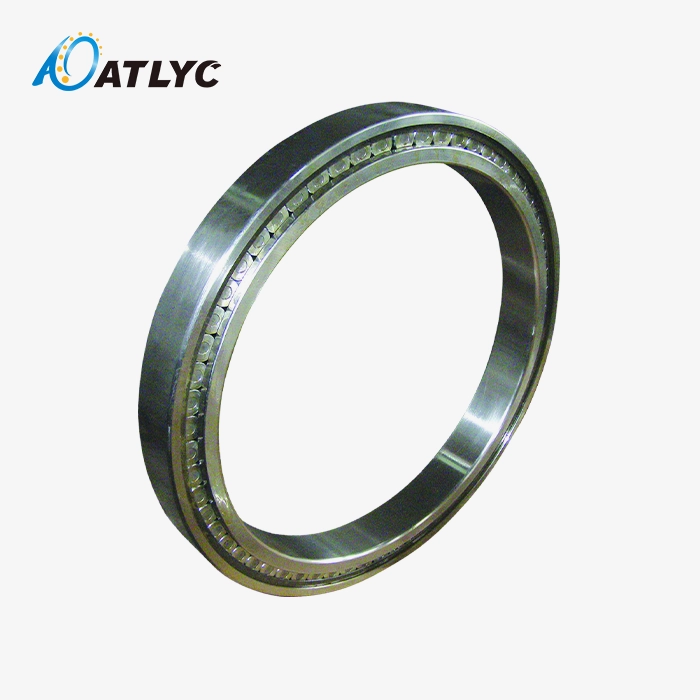
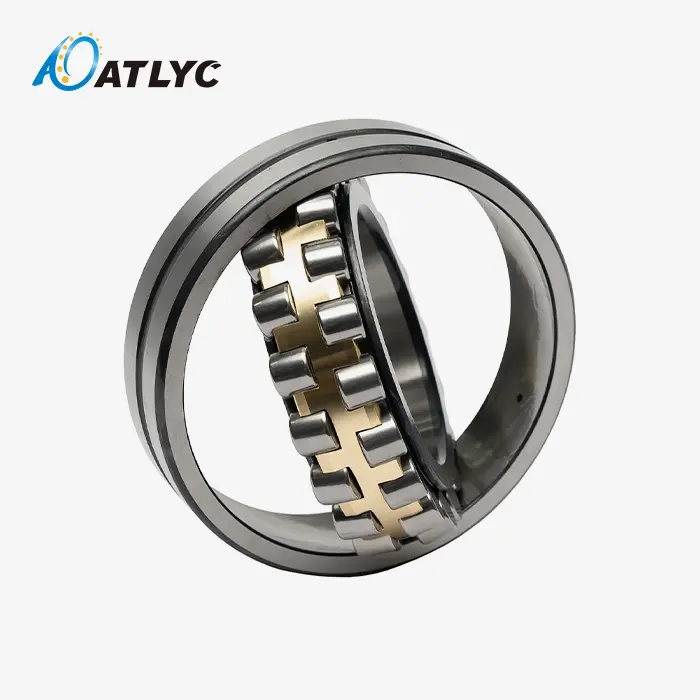
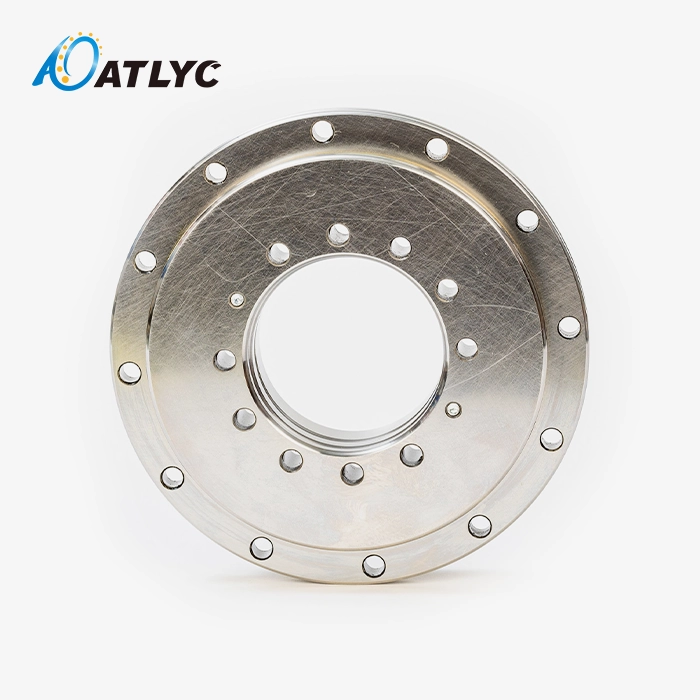
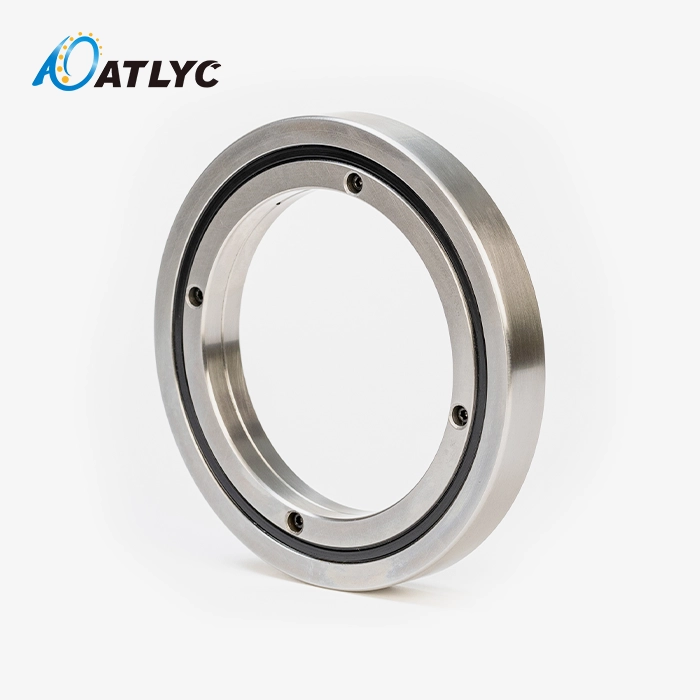
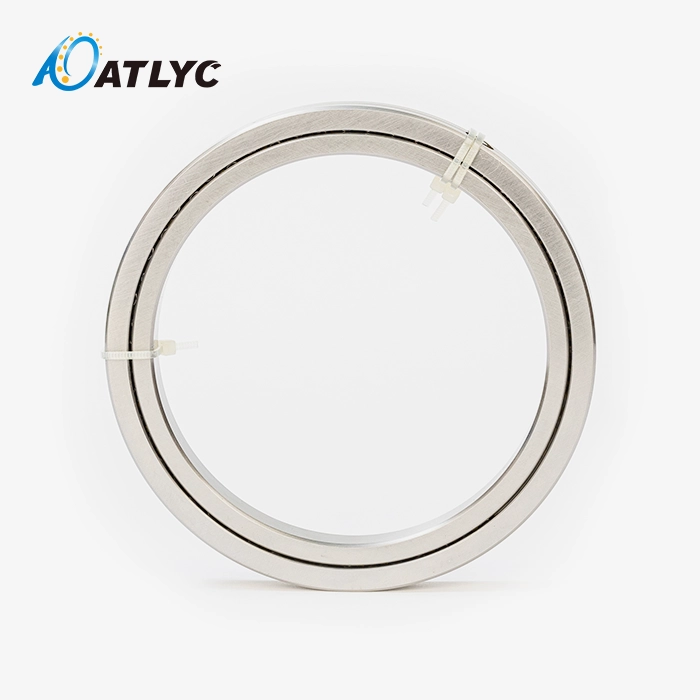
The RU Series Cross Roller Bearing is the best choice for aerospace engineers who need precision, a small design, and the ability to handle loads in more than one way. This special kind of bearing has mounting holes built right into both the inner and outer rings. This makes the housing simpler while still giving the bearings great rigidity and accuracy in spinning. These bearings are used in satellite gimbal systems and aeroplane actuator mechanisms to handle radial, axial, and moment loads all at the same time within limited spaces. With V-groove raceways and high-precision spacers, the crossed-roller design guarantees zero-play operation, which is very important for mission-critical positioning and control systems where even micron-level errors can hurt performance.

Understanding RU Series Cross Roller Bearings in Aerospace Applications
Aerospace systems operate under conditions that push mechanical components to their limits—extreme temperatures, vacuum environments, vibration, and stringent reliability requirements. Cross roller bearings designed for these environments must meet specifications far beyond standard industrial grades.
Core Design Architecture and Operating Principles
The RU Series Cross Roller Bearing has cylindrical rollers that are placed perpendicularly at 90-degree angles between the inner and outer rings that are part of the bearing. This shape makes a stable contact pattern across V-groove raceways, which spreads loads evenly in all directions. Unlike most ball bearings, which need different units for radial and thrust loads, this design can handle complex multi-axis forces within a single compact assembly. High-precision spacers separate the rollers, keeping them from touching each other and making sure that the stress is spread evenly. This design doesn't need any preload adjustments during installation and has no internal clearance during operation. This is important for aerospace gimbal mechanisms and antenna positioning systems because backlash would make pointing less accurate. The integral ring structure with pre-machined mounting holes lets it be directly attached to mating surfaces without the need for intermediate housings or presser flanges. This method keeps geometric accuracy and cuts down on the number of mistakes made during assembly. This is especially helpful in space-limited aircraft assemblies where every gram and millimetre counts.
Material Specifications and Performance Under Extreme Conditions
Cross roller bearings used in aerospace are usually made of Gcr15 or Gcr15SiMn steel alloys. These materials are very hard (58–62 HRC after heat treatment), keep their shape even when the temperature changes, and don't wear out when loaded and unloaded many times. The amount of carbide in these steels is carefully managed to avoid stress concentrations that could cause cracks to start spreading when they are heated and cooled or when they are exposed to vibrations. Surface treatments improve performance qualities. Protective coats make things less likely to rust in places with a lot of humidity, and surface finishing methods get Ra values below 0.2 micrometres, which lowers friction and makes things last longer. Manufacturers can ask for bearings with ceramic rollers or special surface treatments for vacuum compatibility when aerospace uses need even better performance.
Dimensional Range and Load Capacity Specifications
The product line spans a comprehensive size range to RU Series Cross Roller Bearing accommodate diverse aerospace requirements:
- Inner diameter: 20mm to 1100mm
- Outer diameter: 70mm to 1500mm
- Width: 12mm to 110mm
This dimensional flexibility RU Series Cross Roller Bearing enables designers to optimise bearing selection for applications ranging from small actuator joints in UAV control surfaces to large-diameter turntables in ground-based telescope tracking systems. Load ratings scale proportionally, with larger sizes supporting radial loads exceeding 500 kN while maintaining moment load capacity sufficient for cantilevered aerospace equipment installations.
Precision Grades Aligned with Aerospace Standards
Accuracy classifications ranging from P6 (standard industrial) through P3 (ultra-precision) allow procurement teams to match bearing precision to application requirements. Aerospace systems typically specify P5 or P4 grades, which guarantee:
- Radial runout under 5 micrometres
- Axial runout under 3 micrometres
- Raceway dimensional tolerance within 2 micrometres
P3-grade bearings meet the most demanding applications where sub-micron positioning accuracy is non-negotiable, such as satellite optical payload pointing mechanisms or inertial navigation platform gimbals. Understanding these specifications helps engineering teams specify the right bearing configuration during design phases and enables procurement professionals to communicate requirements clearly with suppliers. The combination of compact envelope, multi-directional load capacity, and precision positioning makes these bearings indispensable in modern aerospace systems where performance margins are narrow and reliability requirements are absolute.
Comparing RU Series Cross Roller Bearings with Other Bearing Types
Selecting the optimal bearing technology for aerospace applications requires careful evaluation of performance characteristics, lifecycle costs, and supplier capabilities. Several bearing types compete in this space, each with distinct advantages and limitations.
Performance Comparison with Alternative Bearing Technologies
- Standard Angular Contact Ball Bearings excel in high-speed applications but require paired configurations to handle combined loads. This arrangement increases axial space requirements and complicates preload management. The RU Series Cross Roller Bearing eliminates these issues by integrating multi-directional load capacity within a single unit, reducing assembly complexity and potential alignment errors.
- Four-Point Contact Ball Bearings offer axial load capacity in both directions but sacrifice rigidity compared to roller designs. Under moment loading conditions common in aerospace gimbal applications, ball bearings exhibit greater elastic deformation, compromising positioning accuracy. The crossed-roller geometry provides superior stiffness, maintaining positional stability under variable load vectors.
- Tapered Roller Bearings deliver excellent load capacity but demand precise preload adjustment and generate higher friction during operation. Aerospace actuators requiring smooth, low-torque rotation benefit from the inherently lower friction coefficient of crossed-roller designs, which reduces drive motor requirements and improves control loop response.
Lifecycle Cost Analysis and Maintenance Considerations
Beyond initial procurement costs, aerospace programs must account for total ownership expenses, including installation labour, maintenance intervals, and replacement frequency. Cross roller bearings with integral mounting features reduce installation time by eliminating housing fabrication and alignment procedures. This translates to lower labour costs during manufacturing and simplified field maintenance for aircraft components. The zero-play design extends operational life by maintaining optimal roller-raceway contact patterns throughout the service interval. Competing bearing types that rely on spring preload or adjustment mechanisms gradually lose precision as components wear, necessitating earlier replacement. In aerospace applications where downtime carries substantial operational costs, extended maintenance intervals provide significant economic advantages.
Supplier Landscape and Certification Standards
Global bearing manufacturers, including NSK, IKO, and THK, dominate the precision bearing market with established aerospace supply chains. These brands maintain certifications such as AS9100 and NADCAP, demonstrating compliance with aerospace quality management systems. However, mid-tier manufacturers, including ATLYC, have invested substantially in capabilities to meet ISO 9001 and IATF 16949 standards, offering comparable technical performance at competitive price points.
Procurement professionals evaluating suppliers should verify:
- Material traceability documentation
- Dimensional inspection reports with statistical process control data
- Heat treatment certifications
- Surface finish measurements
Warranty terms vary across suppliers, with established brands typically offering 12-month coverage against manufacturing defects. Emerging manufacturers sometimes extend warranty periods to 18-24 months as a confidence signal during market entry phases. Comprehensive after-sales support—including technical consultation, failure analysis assistance, and expedited replacement parts—often proves more valuable than extended warranty duration alone. The decision between premium-brand and alternative suppliers depends on program-specific risk tolerance, budget constraints, and supplier relationship strategies. Programs demanding flight-critical components with extensive heritage documentation may justify premium pricing, while ground support equipment and test apparatus applications can leverage cost-competitive alternatives without compromising performance requirements.
Procurement Considerations for Aerospace Systems
Sourcing precision bearings for aerospace applications, the RU Series Cross Roller Bearing involves navigating complex supply chains, managing lead times, and ensuring product authenticity. Strategic procurement practices mitigate risks while optimising cost and delivery performance.
Authorised Distribution Channels and Product Authentication
The aerospace bearing supply chain includes multiple tiers: original equipment manufacturers, authorised distributors, independent distributors, and direct factory sales. Authorised distributors maintain direct relationships with manufacturers, ensuring genuine products with full material traceability. This documentation trail is essential for aerospace quality systems that require batch tracking and failure investigation capabilities. Independent distributors may RU Series Cross Roller Bearing offer attractive pricing but introduce authenticity risks. Counterfeit bearings occasionally enter supply chains through these channels, lacking proper heat treatment or using substandard materials. Procurement teams should request Certificate of Conformance documents, material test reports, and dimensional inspection data to verify product legitimacy before acceptance. Direct engagement with manufacturers like ATLYC provides transparency into production processes and enables customisation discussions. Our facility operates six specialised workshops with 120 skilled technicians dedicated to production, quality inspection, and engineering support.
Lead Time Management and Production Scheduling
Standard catalogue sizes usually ship in 4 to 6 weeks for small orders and 8 to 12 weeks for orders of more than 100 units. Custom configurations that need machine changes or special material requirements may take 12 to 16 weeks from the time the order is placed until it is delivered. When planning purchases, aerospace projects with tight integration schedules need to keep these dates in mind. Our production planning team works with customers to make sure that supplies of bearings don't conflict with important assembly dates. When programs have tight schedules, we can prioritise orders by handling them faster, but this usually comes at an extra cost of 15-20%. Setting up blanket purchase orders with scheduled releases or building strategic inventory for long-term projects can help keep prices stable and supply flowing smoothly.
Bulk Order Economics and OEM Customisation
When you commit to a certain amount of volume, you can get better prices. Orders of 50 or more units usually get 10-15% off the price of a single unit, and orders of 500 or more units a year can lead to more favourable terms. When OEM customers add bearings to serialised products, they get dedicated account management, technical help during the design phase, and priority production slots when there aren't enough slots. Changing dimensions isn't the only thing that can be customised. We can change the requirements for internal clearance, use special coatings to protect against corrosion, or set up better lubrication packages to make servicing intervals longer. These extra services set us apart from distributors who only sell items from catalogues. Instead of limiting flight engineers to choices from standard product lines, we offer solutions that are specifically designed to meet their needs.
International Logistics and Delivered Cost Considerations
Precision bearings made for aerospace applications are high-value, light-weight goods that can be sent by air freight. Shipping from China to major logistics hubs in the U.S. usually costs between $8 and $15 per kilogram for consolidated packages. This means that most bearing sizes cost 3 to 5 per cent more than they would otherwise. Express courier services like DHL and FedEx send packages within 5 to 7 business days. Consolidated freight is cheaper but takes 12 to 18 days to get to its destination. Import duties and customs processing make buying things from other countries more difficult. The U.S. Harmonised Tariff Schedule groups most precision bearings into codes that are subject to standard duty rates. However, final landed costs may be different depending on trade agreements or the place of origin. Our logistics team works with freight forwarders who have experience shipping aircraft parts. They handle the necessary paperwork and make sure that the International Traffic in Arms Regulations (ITAR) are followed when they apply.
After-Sales Support and Warranty Frameworks
The difference between capable suppliers and transactional vendors is the availability of technical help. Throughout the lifetime of a product, our engineering team offers advice on choosing the right bearings, helping with installation, and fixing problems. When problems happen in the field, we do failure analysis to find the root causes, which could be mistakes in fitting, poor lubrication, or unexpected loading conditions, and then we suggest what should be done to fix the problem. Standard guarantee protection against manufacturing flaws for 18 months from the date of delivery. This includes non-conformance with dimensions, material flaws, or early wear that shows heat treatment irregularities. For warranty claims, the broken parts must be sent back for review, and replacement units will be sent out within two weeks of the claim being approved. For OEM relationships with a lot of orders, you can negotiate longer warranty periods and performance guarantees. This lowers the risk even more for important aerospace uses.
Installation, Maintenance, and Performance Optimisation in Aerospace
Proper installation procedures and preventive maintenance practices directly impact bearing performance, operational life, and system reliability. Aerospace applications demand rigorous adherence to best practices to ensure components meet design performance targets throughout service intervals.
Installation Protocol and Common Error Prevention
How well a bearing works depends on how well the mounting area is prepared. The mating surfaces must be flat within 0.01 mm across the mounting width and have a roughness level below 1.6 micrometres Ra. Deviations change the shape of things, which leads to more friction, uneven load distribution, and faster wear. Precision grinding or lapping of the mounting surfaces ensures that they contact properly and protects the internal geometry of the bearing. Tightening steps and torque requirements must be strictly followed. We suggest star-pattern tightening sequences, where the torque is increased by 25% at a time until the final standard is met. This method evenly spreads the tightening forces, which keeps the ring from distorting. It is important to use torque tools that are certified to be accurate within 3%. Over-tightening rings deforms them, and under-tightening them lets fretting corrosion happen at the interfaces. It is also very important to be clean during installation. In aerospace settings, contaminants that could damage bearing function are not allowed to enter.
Lubrication Strategies for Aerospace Environments
The choice of lubricant strikes a balance between load-carrying capacity, temperature stability, and compatibility with the surroundings. Most aerospace uses grease to lubricate their parts because it is easier to use and requires less maintenance than oil systems. When used in aerospace, lithium complex greases with synthetic base oils work well in temperatures ranging from -40°C to +120°C. The amount of grease used at the start is very important; too little grease can cause boundary lubrication conditions and faster wear, while too much grease causes churning losses and temperature rise. We suggest filling 30 to 40 per cent of the internal bearing space to make sure there is enough coverage without packing too much. When bearings are used in high-temperature or vertical positions, slightly lower fill amounts stop migration and leakage. The amount of time between relubrications depends on the working conditions. When used for modest amounts of work, aerospace bearings usually need to be oiled every 2000 to 3000 hours again.
Inspection Protocols and Condition Monitoring Techniques
Regular checks find early signs of wear and tear before major problems happen. Corrosion, seal degradation, or lubricant leaks can be seen with the naked eye. Rotational torque measures set the baseline values during the first operation. Later checks show that friction increases, which means that the lubrication is breaking down or letting in dirt. Vibration analysis gives more information about the bearing condition. Accelerometers placed near bearings record frequency spectrums that show roller pass rates and signs of defects. Trending analysis, which compares data over time, finds a gradual degradation. This lets maintenance be planned instead of being done after something breaks down unexpectedly. Aerospace maintenance programs use machine learning algorithms to predict how much longer something will work based on patterns in operational data. Temperature tracking goes along with vibration analysis. Using infrared thermography during operation shows hotspots that mean there isn't enough grease, the parts aren't lined up right, or there is too much preload.
Troubleshooting Common Issues and Root Cause Analysis
Too much noise during operation is usually a sign of contamination, poor lubricant, or mistakes in the installation. The first step in a systematic diagnosis is to look for obvious contamination. Next, a sample of the lubricant is taken to check for particulate content. If contamination isn't present, checking the flatness of the mounting surface and the strength of the bolts can reveal problems related to installation. Unusual wear patterns can show problems with loading or alignment. Uneven wear across the width of the roller indicates that the matching parts are not lined up correctly, and edge loading indicates that the moment loads are higher than the design capacity. To fix things, the mounting interfaces may need to be reshaped geometrically, supporting structures may need to be strengthened, or bearing sizes may need to be increased to fit the actual loading conditions. Premature fatigue failures need a thorough metallurgical analysis to separate manufacturing flaws from damage caused by service. Spalling that starts from deep inclusions means that the material quality is bad, while surface-initiated cracks mean that the material is dirty or not well-oiled.
Future Trends and Innovation in RU Series Cross Roller Bearings for Aerospace
Aerospace bearing technology continues advancing through RU Series Cross Roller Bearing material science breakthroughs, smart sensor integration, and manufacturing process innovations. These developments promise enhanced performance, reduced maintenance burdens, RU Series Cross Roller Bearing and improved lifecycle economics for next-generation aerospace systems.
Advanced Material Technologies and Weight Reduction Initiatives
In demanding aerospace uses, ceramic rolling elements are much better than traditional steel ones. Silicon nitride (Si3N4) ceramics are 60% less dense than steel, which lowers the mass and friction of the bearings. This decrease in weight directly makes aeroplanes use less fuel and lowers the mass needed to launch space systems. Ceramics are also better at resisting corrosion, so you don't have to worry about humidity when storing them or using them near the coast. Ceramics' thermal qualities also allow them to be used at higher temperatures than steel can. Bearings with ceramic rollers work effectively at temperatures above 200°C, which opens up more design options for systems that work in hot areas. Lower thermal expansion coefficients keep clearances smaller even when temperatures change, which keeps precision in settings that change quickly with temperature. Hybrid bearing designs that use both ceramic rollers and steel raceways improve performance while keeping costs low. This method gets most of the benefits of ceramics—less weight, better resistance to corrosion, and longer maintenance intervals—at a modest price premium over designs made of steel alone. A
Smart Bearing Technologies and Predictive Maintenance Integration
Sensor technologies built into embedded parts turn simple mechanical parts into smart systems that give real-time information about their state. Thin-film sensors built into bearing rings keep an eye on temperature, shaking, and load distribution without affecting the strength of the structure. Wireless transmission gets rid of the need for complicated wiring, which is especially helpful in rotating assemblies where slip rings can cause maintenance problems and worries about reliability. Data analytics platforms look through sensor streams to find strange patterns that could mean faults are starting to form. Machine learning algorithms that are taught on operational data can spot patterns that happen before things break. This lets maintenance workers fix problems before they get worse and stop the system from working. This proactive method cuts down on unplanned downtime and makes the best use of maintenance resources by focusing on areas where condition data shows a real need instead of following calendar-based schedules. The Internet of Things (IoT) paradigm expands the monitoring capabilities of bearings to include fleet-wide analytics. Cloud-based platforms collect data from many planes or satellites and find widespread problems that affect certain bearing models or installations.
Sustainability Initiatives and Environmental Responsibility
Demand for sustainable production methods and recyclable materials is driven by the aerospace industry's promise to care for the environment. We've put in closed-loop coolant systems at our facility, which use 40% less water than standard methods. Energy-efficient heat treatment furnaces with regenerative thermal oxidisers collect waste heat, which lowers the amount of natural gas used and the amount of carbon dioxide released per bearing made. Material source transparency lets customers check that the supply chain is sustainable. We keep good relationships with our suppliers by emphasising responsible mining methods and staying away from conflict minerals. We also provide proof to support the requirements for corporate social responsibility reporting. End-of-life bearing recycling programs get high-grade steel back to be remelted, which closes material loops and cuts down on the extraction of new resources. Compact bearing designs help meet sustainability goals in the aerospace industry by making planes and satellites lighter and more fuel-efficient. In flight, every kilogram of weight loss saves about 3,000 litres of fuel over the course of an average aircraft's life. This means that a lot less carbon dioxide is released into the air.
Manufacturing Process Innovations: Enhancing Quality and Consistency
New methods called additive manufacturing are being used to make bearing cages, which can make complex shapes that aren't possible with traditional machining. These improved cage designs cut down on weight while making it easier for the rollers to move and keeping the grease in place. Metal 3D printing is still too expensive for large-scale production, but hybrid methods that use both additive and subtractive processes show promise for custom or low-volume aerospace uses. New surface finishing technologies make the wear and friction properties better. Chemically assisted mechanical polishing lowers Ra values to less than 0.1 micrometres while hardening the top layers, making them less likely to crack. Laser surface texturing makes tiny patterns that help a lubrication film form, which lowers friction coefficients and extends the time between maintenance checks. Automatic inspection systems that use machine vision and AI make sure that all dimensions are correct, without the sampling limits that come with manual inspection.

Conclusion
The RU Series Cross Roller Bearing delivers unmatched value for aerospace applications demanding compact envelopes, multi-directional load capacity, and precision positioning. Its integral ring design with direct mounting features simplifies installation while maintaining rigidity and accuracy essential for mission-critical systems. Material selection, precision grades, and comprehensive size ranges accommodate diverse requirements from UAV actuators to satellite mechanisms. Procurement strategies emphasising authorised sourcing, lifecycle cost analysis, and supplier technical capabilities optimise bearing selection and long-term program economics. Installation rigour and preventive maintenance protocols maximise operational life, while emerging technologies promise enhanced performance through advanced materials, smart monitoring, and sustainable manufacturing. Partnering with capable suppliers who demonstrate engineering expertise, quality commitment, and responsive support ensures aerospace programs have access to the precision bearing solutions necessary for continued innovation and competitive advantage.
FAQ
1. How do RU Series Cross Roller Bearings compare to competitor products in aerospace applications?
The integrated mounting hole design eliminates housing requirements common with competing bearing types, reducing installation complexity and preserving geometric precision. Multi-directional load capacity within a single unit simplifies assemblies requiring combined radial, axial, and moment load support. Precision grades through P3 meet stringent aerospace positioning requirements while maintaining competitive pricing compared to premium European brands.
2. What lead times should aerospace procurement teams expect?
Standard catalogue sizes ship within 4-6 weeks for quantities under 20 units. Larger orders requiring production scheduling extend to 8-12 weeks. Custom configurations with special materials or dimensional modifications typically need 12-16 weeks. Strategic inventory arrangements and blanket purchase orders help aerospace programs align bearing deliveries with integration milestones.
3. Can manufacturers customise bearings for specific aerospace requirements?
Yes, customisation capabilities include modified mounting patterns, non-standard dimensions, enhanced corrosion protection coatings, and adjusted internal clearances. OEM customers integrating bearings into serialised products receive dedicated engineering support during design phases, ensuring bearing specifications optimise overall system performance rather than forcing design compromises around catalogue products.
Partner with ATLYC for Your Aerospace Bearing Requirements
ATLYC has served global OEMs and aerospace component manufacturers since 2010, evolving from a single workshop to a comprehensive six-facility operation with ISO 9001 and IATF 16949 certifications. Our 120-member technical team delivers RU Series Cross Roller Bearing solutions combining precision manufacturing, international standards compliance, and competitive economics. We understand aerospace programs demand more than catalogue products—you need engineering partners who provide technical consultation, customisation capabilities, and reliable supply chains supporting long-term program success. Contact our team at auto@lyautobearing.com to discuss your application requirements, receive technical specifications, and explore how our RU Series Cross Roller Bearing manufacturer capabilities can support your next-generation aerospace systems with proven quality and responsive service.
References
1. Harris, T.A. and Kotzalas, M.N. (2006). Advanced Concepts of Bearing Technology: Rolling Bearing Analysis, 5th Edition. CRC Press.
2. Bhushan, B. (2013). Principles and Applications of Tribology, 2nd Edition. John Wiley & Sons.
3. American Bearing Manufacturers Association (2019). Bearing Load Ratings and Fatigue Life Standards for Aerospace Applications. ABMA Engineering Committee Report.
4. International Organisation for Standardisation (2014). ISO 199: Rolling bearings - Thrust bearings - Geometrical product specifications (GPS) and tolerance values. ISO Standards Publication.
5. Society of Automotive Engineers (2018). AS81820: Bearings, Ball and Roller, Precision, Airframe. SAE Aerospace Standards.
6. Hamrock, B.J., Schmid, S.R., and Jacobson, B.O. (2004). Fundamentals of Fluid Film Lubrication, 2nd Edition. Marcel Dekker.
Learn about our latest products and discounts through SMS or email