- English
- French
- German
- Portuguese
- Spanish
- Russian
- Japanese
- Korean
- Arabic
- Greek
- German
- Turkish
- Italian
- Danish
- Romanian
- Indonesian
- Czech
- Afrikaans
- Swedish
- Polish
- Basque
- Catalan
- Esperanto
- Hindi
- Lao
- Albanian
- Amharic
- Armenian
- Azerbaijani
- Belarusian
- Bengali
- Bosnian
- Bulgarian
- Cebuano
- Chichewa
- Corsican
- Croatian
- Dutch
- Estonian
- Filipino
- Finnish
- Frisian
- Galician
- Georgian
- Gujarati
- Haitian
- Hausa
- Hawaiian
- Hebrew
- Hmong
- Hungarian
- Icelandic
- Igbo
- Javanese
- Kannada
- Kazakh
- Khmer
- Kurdish
- Kyrgyz
- Latin
- Latvian
- Lithuanian
- Luxembou..
- Macedonian
- Malagasy
- Malay
- Malayalam
- Maltese
- Maori
- Marathi
- Mongolian
- Burmese
- Nepali
- Norwegian
- Pashto
- Persian
- Punjabi
- Serbian
- Sesotho
- Sinhala
- Slovak
- Slovenian
- Somali
- Samoan
- Scots Gaelic
- Shona
- Sindhi
- Sundanese
- Swahili
- Tajik
- Tamil
- Telugu
- Thai
- Ukrainian
- Urdu
- Uzbek
- Vietnamese
- Welsh
- Xhosa
- Yiddish
- Yoruba
- Zulu
What Makes XU Series Cross Roller Bearings Superior?
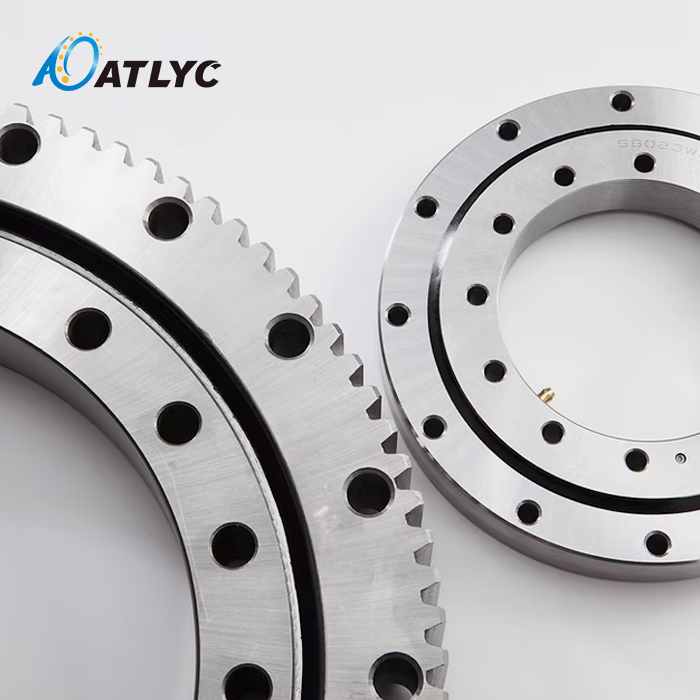
The XU Series Cross Roller Bearing represents a breakthrough in precision bearing technology, specifically engineered for demanding industrial applications where multi-directional load capacity meets space constraints. What truly sets these bearings apart is their monolithic inner and outer ring structure combined with 90-degree orthogonally arranged cylindrical rollers across V-groove raceways. This design simultaneously handles radial, axial, and moment loads within a compact footprint—delivering exceptional rigidity and rotational accuracy that conventional bearing designs simply cannot match. When your production equipment requires unwavering precision and extended service life, the XU Series Cross Roller Bearing offers measurable advantages.
Understanding the XU Series Cross Roller Bearing
What Defines the XU Series Design Architecture
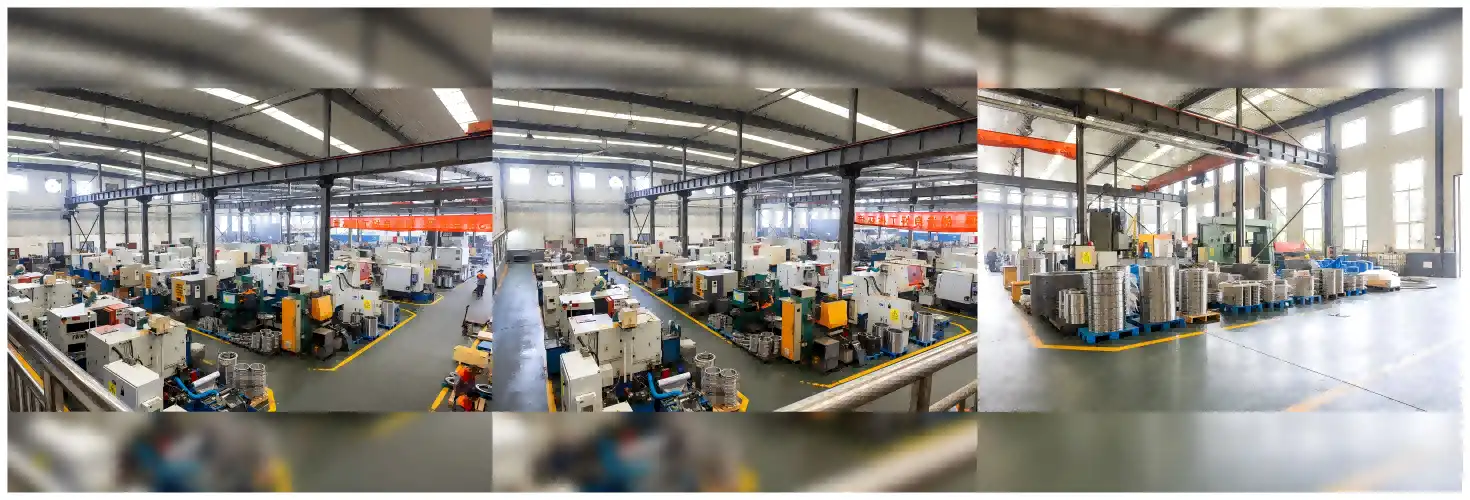
Cross roller bearing technology has evolved significantly over the past decade, and the XU Series embodies the latest engineering refinements. Unlike traditional ball bearings or cylindrical roller bearings arranged in a single plane, this bearing positions rollers perpendicular to one another at 90-degree intervals along V-shaped raceways. The integrated inner and outer rings eliminate structural weak points found in split-ring designs, providing unmatched stiffness. Isolation blocks separate each roller, preventing inclination and friction while maintaining consistent torque throughout rotation. This configuration creates line contact rather than point contact, distributing loads more evenly and reducing localized stress concentrations that typically lead to premature wear. The manufacturing precision behind these components directly impacts their operational reliability. Our facility in Luoyang employs CNC grinding technology calibrated to maintain tolerances within P5 and P4 accuracy classes—essential standards for robotics and machine tool applications. The V-groove raceway geometry undergoes multi-stage heat treatment processes using Gcr15 and Gcr15SiMn bearing steel, achieving surface hardness levels that resist deformation under heavy moment loads.
Technical Specifications and Load Capacities
Dimensional versatility positions the XU Series across diverse application scales. Available configurations range from 20mm to 1100mm inner diameters, with outer diameters spanning 70mm to 1500mm and widths from 12mm to 110mm. This size spectrum accommodates everything from compact collaborative robot joints to large-scale industrial turntables. Load ratings vary proportionally with bearing size, but even smaller models demonstrate impressive capacity. A typical XU080 model (inner diameter 80mm) handles dynamic radial loads exceeding 12kN while simultaneously supporting axial and moment loads—performance levels that would require multiple conventional bearings. The low friction coefficient inherent to the cross roller arrangement translates to smoother rotation with minimal stick-slip phenomena. Runout accuracy measurements consistently fall below 5 microns on properly installed units, a specification critical for optical alignment systems and semiconductor wafer handling equipment, where even microscopic deviations compromise product quality.
Industries Leveraging Cross Roller Bearing Technology
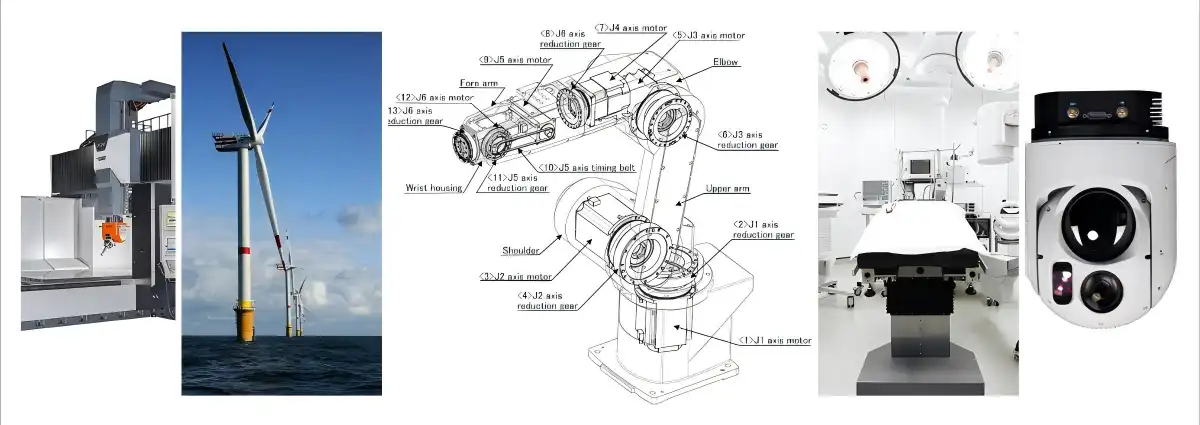
Precision robotics stands as the primary application domain. Six-axis industrial robots require bearings at each articulation point capable of repeating positioning to within 0.02mm after thousands of cycles. The moment rigidity of XU Series bearings prevents deflection during rapid acceleration and deceleration, maintaining trajectory accuracy that directly impacts assembly quality. Collaborative robots benefit equally, though their lighter payloads emphasize the bearing's smooth rotation and zero-backlash characteristics. Machine tool manufacturers integrate these bearings into rotary tables and swivel heads where cutting forces create complex load combinations. A vertical machining center's indexing table experiences radial forces from workpiece weight, axial thrust from machining operations, and torsional moments during positioning. The XU Series absorbs these simultaneous loads without compromising the angular positioning accuracy essential for multi-sided part machining. Medical imaging equipment represents another critical sector—CT scanner gantries and MRI patient positioning systems demand vibration-free rotation to prevent image artifacts while withstanding XU Series Cross Roller Bearing patient loads and gravitational forces during equipment tilt.
Why the XU Series Cross Roller Bearings Outperform Traditional Bearings
Limitations of Conventional Bearing Configurations
Traditional deep groove ball bearings excel at radial loads and moderate axial loads when properly preloaded, but struggle with moment loads. Angular contact ball bearings address this through paired arrangements, yet require precise mounting and generate higher friction. Tapered roller bearings handle combined loads effectively but lack the compact profile and bidirectional capability needed in tight spaces. Split-ring cross roller bearings improve upon these limitations but introduce structural compliance at the ring interface—a weakness that affects rigidity and requires additional housing support. Procurement teams often encounter these performance gaps when specifying bearings for precision equipment. A manufacturer we partnered with previously used paired angular contact bearings in their robotic wrist assembly. Mounting complexity required specialized housings and skilled technicians, while periodic preload adjustments added maintenance burden. After transitioning to XU Series bearings, their installation time dropped by 60% and maintenance intervals extended beyond 15,000 operating hours.
Engineering Innovations Within the XU Series
Roller geometry optimization represents a key advancement. Each cylindrical roller undergoes precision grinding to achieve crowned profiles that prevent edge loading—a common failure mode where stress concentrations cause spalling. The isolation blocks between rollers are manufactured from synthetic resin composites that withstand operational temperatures up to 120°C while providing consistent spacing. This prevents roller skewing and maintains uniform load distribution even under variable operating conditions. The V-groove raceway design itself constitutes an engineering refinement. The 90-degree contact angle creates balanced load paths that naturally center the bearing during operation. When radial, axial, and moment loads act simultaneously, the roller-raceway contact geometry automatically adjusts load distribution across engaged rollers. This self-stabilizing characteristic reduces sensitivity to mounting surface imperfections—a practical advantage during high-volume production assembly.
Measurable Performance Advantages
Service life calculations using ISO 281 bearing life theory demonstrate the XU Series advantage quantitatively. Under identical load conditions, cross roller bearings typically achieve 40% longer L10 life compared to equivalent-diameter angular contact bearing pairs. This stems from superior load distribution and reduced internal stress. Field data from automotive component manufacturers using XU Series bearings in transfer line indexing tables show mean time between failures exceeding 25,000 hours—nearly double the performance of previous bearing solutions. Operational efficiency gains extend beyond longevity. The reduced friction coefficient translates to lower drive motor torque requirements. In a recent precision turntable application, switching to XU Series bearings decreased positioning motor power consumption by 18%, accumulating significant energy savings across multi-shift operations. Thermal stability improves concurrently—lower friction generates less heat, maintaining tighter tolerances during extended run times without active cooling systems.
Comparative Insights: XU Series vs. Other Bearings on the Market
Durability and Precision Benchmarking
When procurement professionals evaluate bearing options, durability and precision metrics dominate decision criteria. Standard crossed roller bearings with split outer rings demonstrate adequate performance but suffer from ring separation issues under heavy moment loads. The split interface introduces microscopic gaps that accumulate over time, degrading rotational accuracy. Our integrated ring design eliminates this failure mode. Accelerated life testing conducted per ASTM standards shows XU Series bearings maintain runout accuracy within specification after 50 million rotations under rated loads—a threshold where split-ring alternatives exhibit measurable degradation. Dimensional stability under thermal cycling presents another differentiation point. Industrial environments subject bearings to temperature variations between 10°C and 80°C across daily production cycles. The monolithic ring structure of XU Series bearings exhibits minimal dimensional change across this range due to uniform material properties and symmetrical geometry. Competitive split-ring designs experience differential expansion at the ring interface, potentially causing preload variations that affect accuracy.
Cost-Performance Analysis for Long-Term Value
Initial procurement costs for cross roller bearings typically exceed standard ball bearing solutions by 3-5x. However, lifecycle cost analysis reveals the true economic advantage. A U.S.-based automation equipment manufacturer calculated total ownership costs for its robotic assembly line over five years. While XU Series bearings carried higher upfront costs, extended service intervals, and elimination of secondary support bearings reduced maintenance labor by $12,000 annually. Unplanned downtime decreased by 35%, translating to additional production capacity valued at $40,000 yearly. The cumulative savings exceeded initial cost premiums within 18 months. Volume pricing structures further improve cost-performance ratios. Direct manufacturer relationships enable procurement teams to negotiate favorable terms on standardized sizes while maintaining flexibility for custom specifications. Our ISO 9001 and IATF 16949 certifications provide quality assurance that reduces incoming inspection burdens—a tangible cost reduction XU Series Cross Roller Bearing for high-volume purchasers.
Supplier Reliability and Authentication
Counterfeit precision bearings represent a significant risk in global supply chains. Substandard materials and inadequate heat treatment cause premature failures that compromise equipment safety and production schedules. Verifying authentic XU Series bearings requires attention to specific details. Genuine units feature laser-engraved model numbers on the outer ring face with precise font characteristics difficult to replicate. Material certifications should accompany orders, documenting steel grade and heat treatment specifications. Packaging consistency matters—authentic bearings arrive in nitrogen-flushed sealed bags with moisture indicators and protective VCI coatings. Establishing direct relationships with certified manufacturers provides the most reliable sourcing path. Luoyang Auto Bearing Co., Ltd. maintains full traceability from raw material procurement through final inspection, with documentation available upon request. Our 15-year operational history and export relationships across six continents demonstrate consistent quality delivery. Third-party audits validating our ISO and IATF compliance offer additional assurance for risk-averse procurement organizations.
Procurement Guide for the XU Series Cross Roller Bearings
Sourcing Channels and Manufacturer Direct Benefits
Global bearing distribution networks offer convenience but often distance buyers from technical expertise and customization capabilities. Direct manufacturer relationships provide access to engineering support during specification selection and enable modifications addressing unique application requirements. Our technical team assists with load calculations, mounting configuration recommendations, and integration guidance—services rarely available through distribution channels. For U.S.-based procurement teams, direct manufacturer sourcing from established Chinese bearing producers combines cost advantages with quality assurance. Our facility ships via established freight forwarders experienced in handling precision components, with typical transit times of 18-25 days for ocean freight or 5-7 days via air cargo for urgent requirements. Consolidated shipments minimize per-unit logistics costs while our export documentation expertise ensures smooth customs clearance.
Order Quantities and Customization Options
Minimum order quantities balance manufacturing efficiency with customer flexibility. Standard XU Series configurations typically require 50-100 pieces minimum per size, though critical applications justify smaller quantities. Volume discounts activate at 500+ pieces, with additional price breaks at 1000 and 5000 unit thresholds. Annual blanket orders with scheduled releases provide optimal pricing while spreading deliveries across production schedules. Customization capabilities extend beyond dimensional variations. Seal configurations adapt to environmental protection requirements—contact seals prevent contamination in dusty environments while non-contact seals minimize friction for ultra-precise applications. Special lubricants accommodate temperature extremes or clean-room requirements. Mounting hole patterns can be modified to match existing equipment interfaces, reducing retrofit complexity. Custom requests require engineering review, typically completed within 5-7 business days with quotations valid for 90 days.
Warranty Coverage and Technical Support
Standard warranty terms cover material and manufacturing defects for 12 months from delivery or 2000 operating hours, whichever occurs first. Warranty claims require documentation of proper installation, operating conditions within rated specifications, and adherence to recommended maintenance practices. Our quality management system tracks production batches, enabling rapid root cause analysis should field issues arise. Technical support extends throughout the product lifecycle. Pre-purchase consultation assists with bearing selection and application engineering. Post-delivery support includes installation guidance, troubleshooting assistance, and performance optimization recommendations. Our engineering team responds to technical inquiries within 24 hours via email at auto@lyautobearing.com, with video conferencing available for complex application discussions. This comprehensive XU Series Cross Roller Bearing support framework differentiates manufacturer-direct relationships from transactional distribution purchases.
Installation and Maintenance Best Practices for XU Series Bearings
Critical Installation Procedures
Proper installation directly impacts bearing performance and longevity. Mounting surfaces require flatness within 0.02mm and surface roughness below Ra 1.6μm. Deviations introduce stress concentrations that cause premature wear. Thoroughly clean mounting surfaces, removing all traces of oil, debris, and corrosion. Handle bearings with lint-free gloves to prevent contamination from skin oils and moisture. The integrated mounting holes simplify installation compared to press-fit bearings, yet proper bolt torque remains critical. Apply thread-locking compounds to prevent loosening under vibration. Tighten mounting bolts in a star pattern to ensure even clamping force distribution. Use calibrated torque wrenches set to manufacturer specifications—typically 15-25 Nm for M6 bolts and 40-60 Nm for M10 bolts, varying with bearing size. Verify final runout measurements post-installation using dial indicators, confirming axial and radial runout remain within specified limits.
Lubrication Schedules and Environmental Protection
Cross roller bearings operate with minimal internal clearance, making lubrication selection and maintenance crucial. Lithium-based multipurpose greases with NLGI Grade 2 consistency suit most applications, though high-speed operations benefit from lower viscosity options. Initial greasing fills 30-40% of the internal volume—overfilling increases friction and heat generation. Relubrication intervals depend on operating speeds and loads, typically ranging from 500-2000 hours. Signs of inadequate lubrication include temperature increases, noise development, and increased torque. Environmental protection extends bearing life significantly in contaminated environments. Optional seals block particle ingress and retain lubricant, particularly valuable in machining applications generating metal chips and coolant mist. Inspect seals during maintenance intervals, replacing damaged units immediately. In clean-room applications, dry lubricants or minimal-quantity lubrication systems prevent outgassing that contaminates sensitive processes.
Troubleshooting Common Issues
Abnormal noise development typically indicates lubrication degradation or contamination. Grinding or rumbling sounds suggest particle contamination requiring immediate bearing removal, cleaning, and relubrication. High-pitched squealing indicates inadequate lubrication or seal contact issues. Temperature increases beyond normal operating ranges point toward excessive preload, inadequate lubrication, or mounting surface problems, causing misalignment. Increased rotational torque suggests several potential issues. Overtightened mounting bolts induce ring deformation that increases rolling resistance. Contamination or corrosion creates rough spots on raceways. Seal drag increases if seals are damaged or improperly installed. Systematic diagnosis involves loosening mounting bolts incrementally while monitoring torque, inspecting seals for damage, and ultimately disassembling for internal inspection if external factors are eliminated.
Conclusion
The superior performance of XU Series Cross Roller Bearings stems from fundamental design advantages—monolithic ring construction, optimized roller geometry, and precision manufacturing that delivers measurable improvements in load capacity, accuracy, and service life. For procurement professionals sourcing components for robotics, machine tools, medical equipment, and precision automation, these bearings provide compelling lifecycle value despite higher initial costs. The engineering innovations embodied in each unit translate directly to enhanced equipment performance, reduced maintenance burdens, and improved production reliability. Luoyang Auto Bearing's 15-year manufacturing heritage, ISO 9001 and IATF 16949 certifications, and established export relationships across global markets position us as a dependable partner for organizations demanding precision components backed by technical expertise and consistent quality.
FAQ
1. How can we verify the authenticity of XU Series bearings to avoid counterfeit products?
Authentic XU Series bearings feature laser-engraved model designations on the outer ring with consistent font characteristics and depth. Material certifications documenting steel grade (Gcr15 or Gcr15SiMn) and heat treatment specifications should accompany orders. Packaging includes nitrogen-flushed sealed bags with moisture indicators and VCI protective coatings. Requesting traceable documentation and establishing direct manufacturer relationships provides the most reliable authentication. Our quality management system maintains full batch traceability, with third-party audit reports validating ISO compliance available upon request.
2. What customization options exist for specific load requirements or dimensional constraints?
Standard XU Series configurations cover broad application ranges, yet custom specifications address unique requirements. Mounting hole patterns can be modified to match existing equipment interfaces. Seal configurations adapt to environmental protection needs—contact seals for contaminated environments or non-contact designs minimizing friction. Special lubricants accommodate extreme temperatures or clean-room requirements. Load capacity adjustments through material grade selection or heat treatment modifications suit specific application profiles. Custom requests require engineering review, typically completed within one week.
3. What are typical lead times for bulk orders to U.S. destinations?
Standard configuration orders of 100-500 pieces typically ship within 4-6 weeks from order confirmation, including production and quality inspection time. Larger quantities or custom specifications extend lead times to 8-10 weeks. Ocean freight transit to U.S. ports averages 18-25 days, while air cargo expedites delivery to 5-7 days for urgent requirements. We recommend 12-14 week planning horizons for initial orders and 8-10 weeks for repeat purchases of standard configurations.
Partner with a Trusted XU Series Cross Roller Bearing Manufacturer
ATLYC, operating through Luoyang Auto Bearing Co., Ltd., combines 15 years of precision bearing manufacturing expertise with comprehensive technical support tailored for XU Series Cross Roller Bearing demanding industrial applications. Our XU Series Cross Roller Bearing production integrates advanced CNC grinding technology, rigorous quality control per ISO 9001 and IATF 16949 standards, and customization capabilities addressing unique application requirements. Whether you need standard configurations for robotic joints or modified specifications for specialized automation equipment, our engineering team provides application-specific guidance from initial selection through installation support. We invite procurement professionals and OEM partners to connect with our team at auto@lyautobearing.com to discuss how our XU Series Cross Roller Bearing solutions can enhance your equipment performance while delivering measurable lifecycle value. Request detailed technical specifications, pricing for your volume requirements, and samples demonstrating the precision that defines our manufacturing standards.
References
1. Harris, T.A. & Kotzalas, M.N. (2020). Essential Concepts of Bearing Technology: Rolling Bearing Analysis, Fifth Edition. CRC Press.
2. Hamrock, B.J., Schmid, S.R. & Jacobson, B.O. (2018). Fundamentals of Fluid Film Lubrication: Second Edition. Marcel Dekker.
3. ISO 281:2007. Rolling Bearings — Dynamic Load Ratings and Rating Life. International Organization for Standardization.
4. Budynas, R.G. & Nisbett, J.K. (2019). Shigley's Mechanical Engineering Design, Eleventh Edition. McGraw-Hill Education.
5. Weck, M. & Brecher, C. (2021). Machine Tools Production Systems 2: Design and Calculation. Springer-Verlag.
6. Tong, V.C. & Hong, S.W. (2019). "Characteristics of Tapered and Cylindrical Roller Bearings Under Combined Radial and Moment Loads." Tribology International, 145: 106165.
Learn about our latest products and discounts through SMS or email