- English
- French
- German
- Portuguese
- Spanish
- Russian
- Japanese
- Korean
- Arabic
- Greek
- German
- Turkish
- Italian
- Danish
- Romanian
- Indonesian
- Czech
- Afrikaans
- Swedish
- Polish
- Basque
- Catalan
- Esperanto
- Hindi
- Lao
- Albanian
- Amharic
- Armenian
- Azerbaijani
- Belarusian
- Bengali
- Bosnian
- Bulgarian
- Cebuano
- Chichewa
- Corsican
- Croatian
- Dutch
- Estonian
- Filipino
- Finnish
- Frisian
- Galician
- Georgian
- Gujarati
- Haitian
- Hausa
- Hawaiian
- Hebrew
- Hmong
- Hungarian
- Icelandic
- Igbo
- Javanese
- Kannada
- Kazakh
- Khmer
- Kurdish
- Kyrgyz
- Latin
- Latvian
- Lithuanian
- Luxembou..
- Macedonian
- Malagasy
- Malay
- Malayalam
- Maltese
- Maori
- Marathi
- Mongolian
- Burmese
- Nepali
- Norwegian
- Pashto
- Persian
- Punjabi
- Serbian
- Sesotho
- Sinhala
- Slovak
- Slovenian
- Somali
- Samoan
- Scots Gaelic
- Shona
- Sindhi
- Sundanese
- Swahili
- Tajik
- Tamil
- Telugu
- Thai
- Ukrainian
- Urdu
- Uzbek
- Vietnamese
- Welsh
- Xhosa
- Yiddish
- Yoruba
- Zulu
How to Select XU080120UU Cross Roller Bearings?
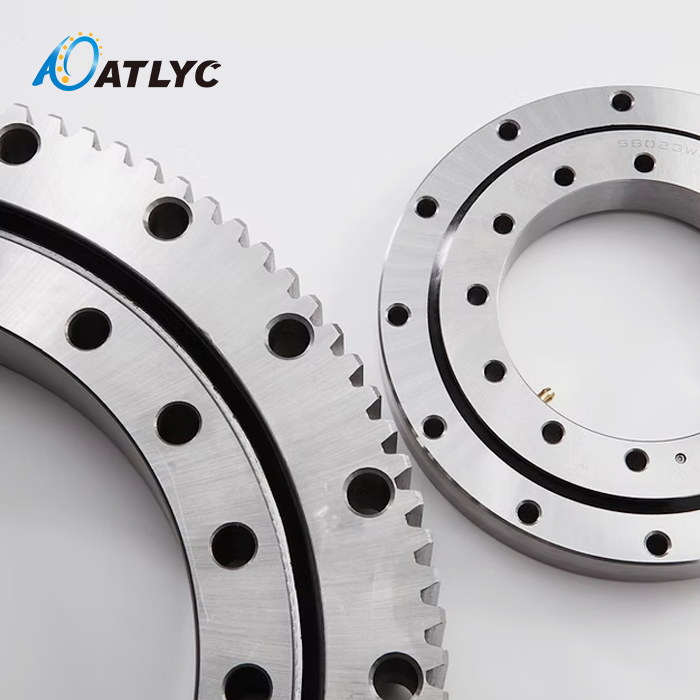
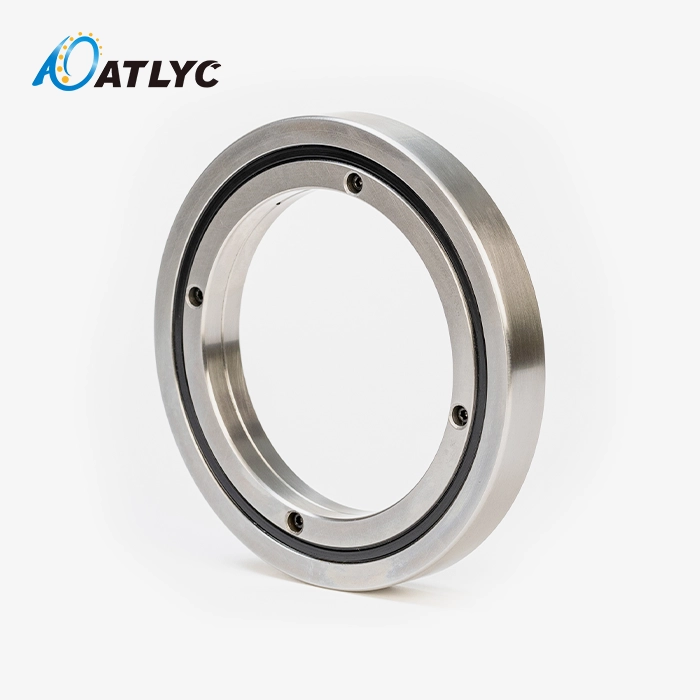
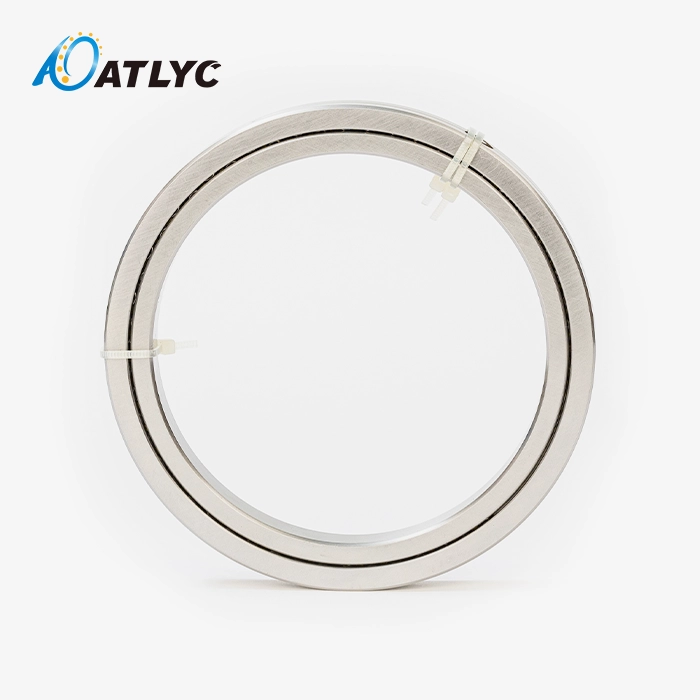
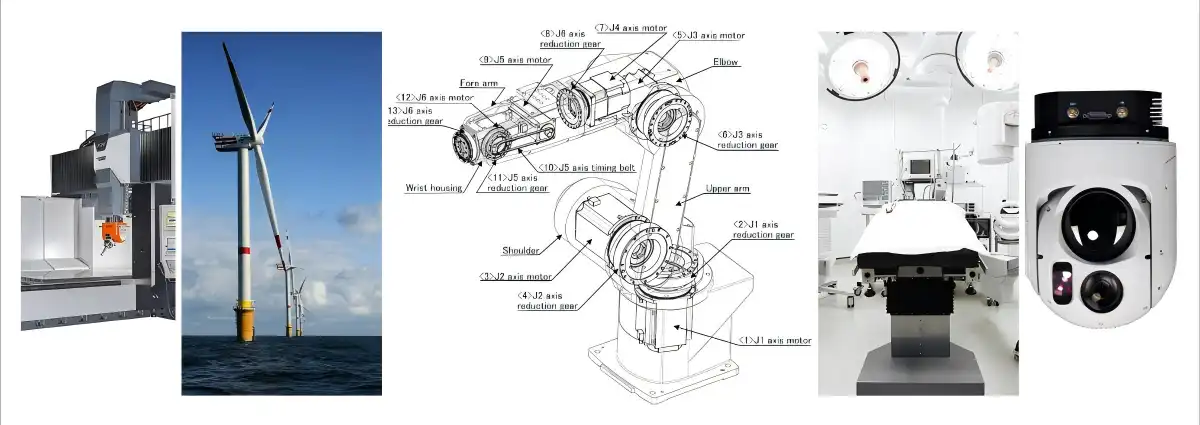
To choose the right XU080120UU cross roller bearing, you need to think about the load that it will be carrying, how precisely it needs to rotate, how it will be mounted, and the conditions of its surroundings. This precision bearing has an inner diameter of 80mm, an outer diameter of 120mm, and a width of 20mm. It has cylindrical rollers placed in a 90-degree cross pattern within V-shaped raceways, which makes it very rigid and able to handle loads in more than one direction. The XU080120UU bearing is made from high-quality GCr15 or GCr15SiMn bearing steel and comes in P6, P5, P4, and P2 accuracy classes. It is used in robots, CNC machinery, and precision instrumentation where stability and performance are essential.
Understanding XU080120UU Cross Roller Bearing Specifications and Features
When evaluating precision rotary components for automation equipment or machining centers, understanding the technical specifications of the XU080120UU becomes essential to match performance capabilities with operational demands.
Core Structural Design and Engineering Principles
The XU series cross roller bearing is different because its rings are built into the housing and its rollers are arranged in a horizontal pattern. The RB and RE series bearings have split rings, but the XU080120UU has solid inner and outer rings that stop warping caused by assembly. This built-in structure keeps the preload constant throughout the bearing's useful life, which is very important in robotic joint uses where backlash is not allowed. The cylinder-shaped rollers fit into V-shaped raceways, making line contact instead of point contact. When compared to similar ball bearings, this design spreads loads over a larger surface area, which lowers contact stress by about 40%. Precision-machined isolation blocks between each roller keep metals from touching directly, which stabilises rotational torque and extends service life in oscillating applications that are common in medical imaging equipment. These bearings are made from vacuum-degassed GCr15 bearing steel, which ensures that the material is homogeneous and resistant to fatigue. The through-hardening process makes the raceway surfaces 58–62 HRC hard while keeping the core tough enough to handle shock loads during rapid acceleration cycles in industrial manipulators.
Dimensional Specifications and Load Ratings
The 80mm bore and 120mm outer diameter create a compact footprint suitable for space-constrained assemblies. The 20mm width accommodates substantial axial thrust while maintaining low assembly height—a significant advantage when designing fourth-axis rotary tables for CNC machining centers where Z-axis travel must be maximized. Load capacity varies based on accuracy grade and preload setting. A typical P5-grade XU080120UU handles dynamic radial loads of approximately 18.5 kN and axial loads of 22 kN, with moment load capacity reaching 1.2 kN·m. These ratings make the bearing suitable for collaborative robot arms handling payloads up to 15 kg at extended reach distances. The UU designation indicates double rubber seals on both faces, creating an IP54-rated barrier against dust and moisture intrusion. This sealing configuration retains lithium-based grease while preventing contamination in environments where XU080120UU cross roller bearing coolant mist or metal particulates are present, extending relubrication intervals to 8-12 months under normal operating conditions.
Precision Grades and Rotational Accuracy
Accuracy classifications from P6 down to P2 define the bearing's suitability across application tiers. Standard P6 and P0 grades serve general industrial automation, where positioning repeatability of ±0.02mm suffices. P5 grade reduces radial runout to below 5 microns, meeting requirements for precision measurement instruments and semiconductor manufacturing equipment. P4 and P2 grades achieve submicron rotational accuracy, essential in CT scanner gantries and coordinate measuring machines, where any deviation translates directly to image artifacts or measurement errors. These ultra-precision grades undergo additional grinding operations and selective assembly processes that match roller sets to raceway tolerances within 2 microns. The rigid construction inherent to cross roller bearing designs minimizes deflection under combined loading. When subjected to simultaneous radial force, axial thrust, and tilting moment—conditions typical in robotic wrist joints—the XU080120UU maintains positioning accuracy within specified limits without requiring complex preload adjustment mechanisms.
Comparing XU080120UU with Other Bearing Types and Models
Procurement decisions benefit from understanding how the XU080120UU compares against alternative bearing configurations and closely related model variants.
XU080120UU Versus Angular Contact Ball Bearings
Many engineers default to paired angular contact ball bearings for applications requiring multi-directional load support. While ball bearing arrangements offer higher speed capabilities, they sacrifice rigidity and compact installation. A back-to-back mounted pair of 7016C angular contact bearings occupies approximately 140mm of axial space compared to the XU080120UU's 20mm width—a 7:1 space savings that proves decisive in compact robot joint housings. Rigidity differences become apparent under moment loading. The cross roller configuration provides 3.5 times greater resistance to tilting moments than ball bearing pairs of equivalent size. This translates to reduced positioning errors in cantilevered loads, such as gripper assemblies on robotic arms, where the moment load increases proportionally with reach distance. Ball bearings require precise housing shoulder dimensions and careful mounting procedures to achieve proper preload. The XU series eliminates these complexities through factory-set preload and direct bolt-mounting capabilities. Threaded holes or countersunk mounting points on the bearing face allow installation directly onto machine structures without separate housings, reducing part count and assembly labor by approximately 60%.
Comparison with Split-Ring Cross Roller Bearings
The RB and RE series cross roller bearings feature divided rings that simplify installation but introduce structural compromises. Split-ring designs require external support flanges to maintain ring alignment, adding assembly complexity and potential points of deflection. The integral construction of the XU080120UU eliminates these concerns, delivering consistent preload without risk of ring separation under shock loads. Operational differences emerge in dynamic applications. Split rings allow for slight relative movement under thermal expansion, which can cause preload variation across temperature ranges. The solid-ring XU series maintains stable internal clearance from -20°C to +120°C, making it preferable for machining center tables exposed to thermal cycling from cutting operations. Cost analysis reveals that while split-ring bearings may show lower initial purchase prices, the XU series often proves more economical when total installation costs are considered. Eliminating separate housing components, reducing assembly time, and avoiding field preload adjustments typically offset the bearing's price premium by 15-20% on a total-cost-of-ownership basis.
Evaluating the XU080120UUH Variant
Some manufacturers offer an XU080120UUH variant featuring through-holes rather than threaded mounting points. This configuration suits applications where bolt access from one side is restricted or where thermal expansion requires slotted mounting holes. The standard XU080120UU with threaded holes provides more rigid mounting for applications where precision positioning is paramount. Sealed versus open configurations present another decision at the XU080120UU cross roller bearing point. While unsealed variants (without the UU suffix) offer marginally lower rotational torque, they expose rolling elements to environmental contamination. For industrial environments containing coolant spray, metal chips, or abrasive dust—conditions common in automotive component manufacturing—the double-sealed XU080120UU provides essential protection that extends bearing life by 2-3 times compared to unsealed alternatives.
Procurement Considerations for XU080120UU Cross Roller Bearings
Strategic sourcing of precision bearings requires attention to supplier qualification, pricing structures, and supply chain reliability.
Supplier Selection and Quality Assurance
Sourcing cross roller bearings from ISO 9001 and IATF 16949 certified manufacturers ensures process consistency and traceability. At Luoyang Auto Bearing Co., Ltd., our dual certification demonstrates a commitment to automotive-grade quality standards throughout manufacturing operations. Our facility maintains statistical process control on critical dimensions, with Cpk values exceeding 1.67 on raceway roundness and surface finish parameters. Authorized distributors of established brands like NSK, SKF, and FAG provide warranty coverage and technical support, but often command premium pricing and extended lead times. Direct sourcing from qualified Chinese manufacturers offers cost advantages of 25-35% while maintaining international quality standards. Our company serves OEMs across South Korea, the United States, Germany, Russia, Iran, and Turkey, demonstrating the capability to meet diverse regulatory and performance requirements.
Pricing Structures and Volume Economics
Unit pricing for precision bearings decreases substantially with order volume. Single-piece purchases of the XU080120UU typically range from $45-$85 depending on accuracy grade and supplier. Volume commitments of 100+ pieces reduce unit costs by 20-30%, while annual blanket orders exceeding 500 pieces can achieve 35-40% discounts through optimized production scheduling. Accuracy grade significantly impacts pricing. Standard P6 grade serves as the baseline, with P5 commanding a 15-20% premium, P4 adding 40-50%, and ultra-precise P2 doubling the base price. OEMs should carefully evaluate whether application requirements justify higher precision grades, as specifying P4 when P5 suffices unnecessarily inflates component costs.
Logistics and Inventory Management
Global bearing procurement requires attention to packaging, shipping methods, and inventory positioning. Precision bearings demand protective packaging preventing raceway damage during transport. Our standard packaging includes individual plastic wrapping, foam cushioning, and rigid cartons meeting ISTA 3A transit testing protocols. This prevents the microscopic raceway damage that compromises rotational accuracy and reduces bearing life. Consolidating shipments reduces freight costs but increases inventory carrying expenses. Establishing optimal reorder points requires analyzing usage rates, lead time variability, and stockout costs. For production lines consuming 20 bearings monthly, maintaining 8-12 weeks of inventory balances carrying costs against disruption risks. Just-in-time delivery arrangements suit high-volume assembly operations but require suppliers with demonstrated delivery reliability.
How to Select the Best XU080120UU Bearing for Your Application
Matching bearing specifications to application requirements involves systematic evaluation of operational parameters and performance criteria.
Defining Load Requirements and Operating Conditions
Begin by quantifying all forces acting on the bearing. Robotic joint applications experience combined radial loads from gravity, axial thrust from gripping forces, and moment loads from cantilevered masses. Calculate maximum values for each load component, including safety factors for shock conditions. The cross roller bearing must accommodate simultaneous loading without exceeding 80% of rated capacity to ensure adequate service life. Rotational speed affects bearing selection, though cross roller designs prioritize rigidity over speed capability. The XU080120UU operates reliably at speeds up to 300 RPM, depending on the lubrication method and preload setting. Applications requiring continuous rotation beyond this threshold may benefit from cylindrical or tapered roller bearings, while oscillating applications—typical in robot joints cycling through ±180° movements—play directly to cross roller bearing strengths.
Matching Dimensional Constraints and Mounting Requirements
The 80mm bore and 120mm outer diameter must integrate with mating components without interference. Shaft and housing tolerances typically follow ISO h7/H7 fits for cross roller bearings, providing sufficient support without introducing mounting stress. Tighter fits increase frictional torque and risk raceway deformation, while loose fits allow fretting corrosion that degrades positioning accuracy. Axial space limitations often drive bearing selection in compact mechanisms. The 20mm width accommodates substantial loads while maintaining a low profile. Mounting hole patterns on the bearing face require coordination with mating structures. Our standard XU080120UU features eight M6 threaded holes on a 100mm bolt circle, though custom hole configurations are available for volume commitments above 200 pieces.
Weighing Precision Against Cost and Maintenance
Specifying an appropriate accuracy grade balances performance requirements against budget constraints. General automation applications achieve satisfactory results with a P5 grade, offering rotational runout below 5 microns at a reasonable cost. Precision measuring equipment and medical imaging systems justify P4 or P2 grades where submicron accuracy directly impacts functional performance. Consider maintenance accessibility when selecting sealed versus open bearings. The UU-sealed configuration extends relubrication intervals to 8-12 months, reducing maintenance labor in difficult-to-access installations. Unsealed variants allow more frequent relubrication but demand protective measures against contamination. For bearings mounted in robotic arms requiring disassembly for servicing, the convenience of sealed bearings offsets their slightly higher frictional torque.
After-Sales Support and Ensuring Long-Term Satisfaction
Sustaining bearing performance throughout equipment lifecycles requires proactive support strategies and supplier partnerships.
Warranty Coverage and Technical Assistance
Reputable bearing manufacturers stand behind product quality with XU080120UU cross roller bearing comprehensive warranties covering material defects and manufacturing flaws. Our standard warranty guarantees the XU080120UU against premature failure for 12 months from installation or 18 months from shipment, whichever occurs earlier. This coverage provides recourse should bearings exhibit excessive runout, seal leakage, or premature wear under rated operating conditions. Technical support extends beyond warranty claims to encompass application engineering assistance. Our team provides bearing selection guidance, mounting procedure recommendations, and troubleshooting support when performance issues arise. For OEMs developing new equipment platforms, we offer design review services evaluating bearing integration, load calculations, and assembly procedures before production commitments.
Proactive Inventory and Replacement Planning
Minimizing production disruptions requires strategic spare parts positioning. Critical production equipment should maintain on-site bearing inventory sufficient for immediate replacement during unplanned failures. For assembly lines where bearing failure halts production worth $5,000+ hourly, maintaining $500 in spare bearings represents prudent insurance against costly downtime. Scheduled replacement programs extend beyond reactive maintenance to planned bearing changes at predetermined intervals. Tracking bearing operating hours and implementing replacements at 80% of rated L10 life prevents unexpected failures during production runs. This predictive approach suits high-value manufacturing where planned downtime during scheduled maintenance windows costs significantly less than emergency shutdowns.
Conclusion
Selecting the optimal XU080120UU cross roller bearing requires balancing technical specifications, cost considerations, and supplier capabilities. The bearing's integrated construction, cross-arranged roller design, and multi-directional load capacity make it an excellent choice for robotics, CNC machinery, and precision instrumentation. Evaluating accuracy grades, seal configurations, and mounting arrangements against specific application requirements ensures performance expectations are met. Partnering with ISO 9001 and IATF 16949 certified manufacturers provides quality assurance, while strategic procurement planning optimizes total cost of ownership. With proper selection, installation, and maintenance, these precision bearings deliver years of reliable service in demanding industrial applications.
FAQ
1. What distinguishes the XU080120UU from standard ball bearings?
The XU080120UU utilizes cylindrical rollers arranged perpendicular to each other within V-groove raceways, creating line contact that distributes loads across greater surface areas. This configuration provides 3-4 times higher rigidity than ball bearings of similar size and handles combined radial, axial, and moment loads simultaneously within a single bearing unit, eliminating the need for paired bearing arrangements.
2. Can I adjust the preload on XU series bearings after installation?
No. Unlike split-ring designs, where mounting bolt torque influences internal clearance, the XU080120UU features factory-set preload established during manufacturing. This integrated design ensures consistent zero-backlash operation without field adjustment requirements, simplifying installation while guaranteeing stable positioning accuracy throughout the bearing's service life.
3. What lubrication maintenance does the XU080120UU require?
The double-sealed UU configuration comes pre-greased with lithium-soap lubricant suitable for 8-12 months of operation under normal conditions. Relubrication intervals extend up to 2,000 operating hours, depending on duty cycle and thermal environment. Over-greasing should be avoided as excess lubricant increases rotational torque and generates unnecessary heat in precision applications.
Partner with ATLYC for Your Precision Cross Roller Bearing Needs
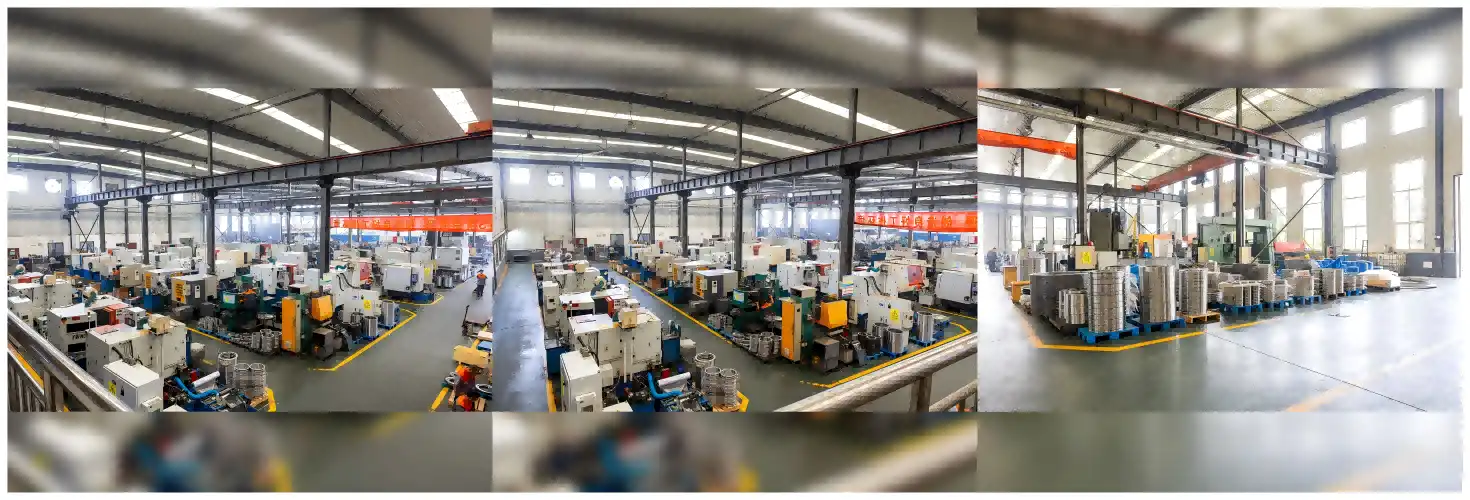
ATLYC (Luoyang Auto Bearing Co., Ltd.) delivers dependable XU080120UU cross roller bearing solutions backed by ISO 9001 and IATF 16949 certifications. Our 15 years of manufacturing excellence serve automotive OEMs, industrial machinery builders, and global bearing distributors across six continents. With 120 skilled professionals operating six specialized workshops, we maintain production capacity meeting demanding delivery schedules while upholding precision standards required for robotic joints, CNC rotary tables, and medical instrumentation. Contact our engineering team at auto@lyautobearing.com to discuss your application requirements and receive technical specifications for XU080120UU cross roller bearing manufacturer direct pricing that reduces your component costs without compromising quality or delivery reliability.
References
1. Harris, T.A. & Kotzalas, M.N. (2006). Advanced Concepts of Bearing Technology: Rolling Bearing Analysis, Fifth Edition. CRC Press.
2. Hamrock, B.J., Schmid, S.R. & Jacobson, B.O. (2004). Fundamentals of Fluid Film Lubrication, Second Edition. Marcel Dekker.
3. ISO 492:2014. Rolling bearings — Radial bearings — Geometrical product specifications (GPS) and tolerance values. International Organization for Standardization.
4. Eschmann, P., Hasbargen, L. & Weigand, K. (1985). Ball and Roller Bearings: Theory, Design and Application, Third Edition. John Wiley & Sons.
5. Bhushan, B. (2013). Principles and Applications of Tribology, Second Edition. Wiley-Blackwell.
6. SKF Group. (2018). Rolling Bearings Catalogue: Technical Product Information and Application Guidelines. SKF Motion Technologies AB.
Learn about our latest products and discounts through SMS or email