- English
- French
- German
- Portuguese
- Spanish
- Russian
- Japanese
- Korean
- Arabic
- Greek
- German
- Turkish
- Italian
- Danish
- Romanian
- Indonesian
- Czech
- Afrikaans
- Swedish
- Polish
- Basque
- Catalan
- Esperanto
- Hindi
- Lao
- Albanian
- Amharic
- Armenian
- Azerbaijani
- Belarusian
- Bengali
- Bosnian
- Bulgarian
- Cebuano
- Chichewa
- Corsican
- Croatian
- Dutch
- Estonian
- Filipino
- Finnish
- Frisian
- Galician
- Georgian
- Gujarati
- Haitian
- Hausa
- Hawaiian
- Hebrew
- Hmong
- Hungarian
- Icelandic
- Igbo
- Javanese
- Kannada
- Kazakh
- Khmer
- Kurdish
- Kyrgyz
- Latin
- Latvian
- Lithuanian
- Luxembou..
- Macedonian
- Malagasy
- Malay
- Malayalam
- Maltese
- Maori
- Marathi
- Mongolian
- Burmese
- Nepali
- Norwegian
- Pashto
- Persian
- Punjabi
- Serbian
- Sesotho
- Sinhala
- Slovak
- Slovenian
- Somali
- Samoan
- Scots Gaelic
- Shona
- Sindhi
- Sundanese
- Swahili
- Tajik
- Tamil
- Telugu
- Thai
- Ukrainian
- Urdu
- Uzbek
- Vietnamese
- Welsh
- Xhosa
- Yiddish
- Yoruba
- Zulu
RU Series Crossed Roller Bearing Design Advantages Explained
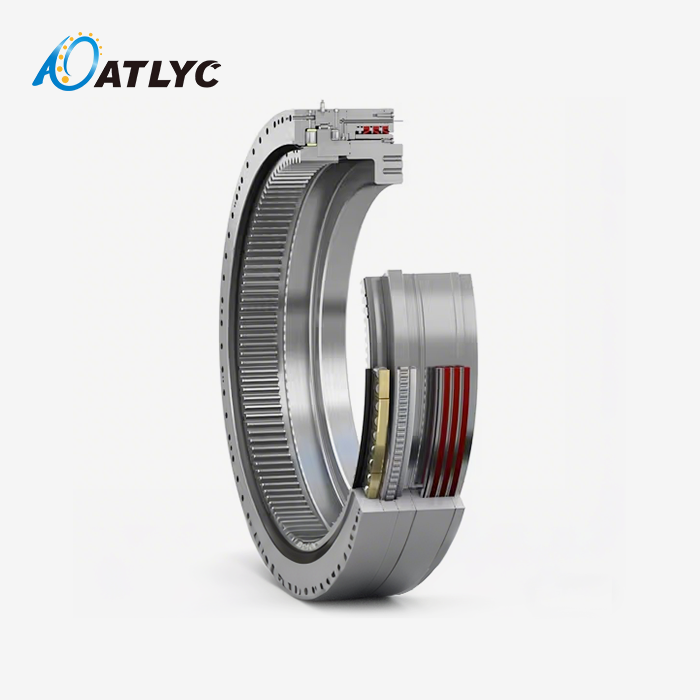
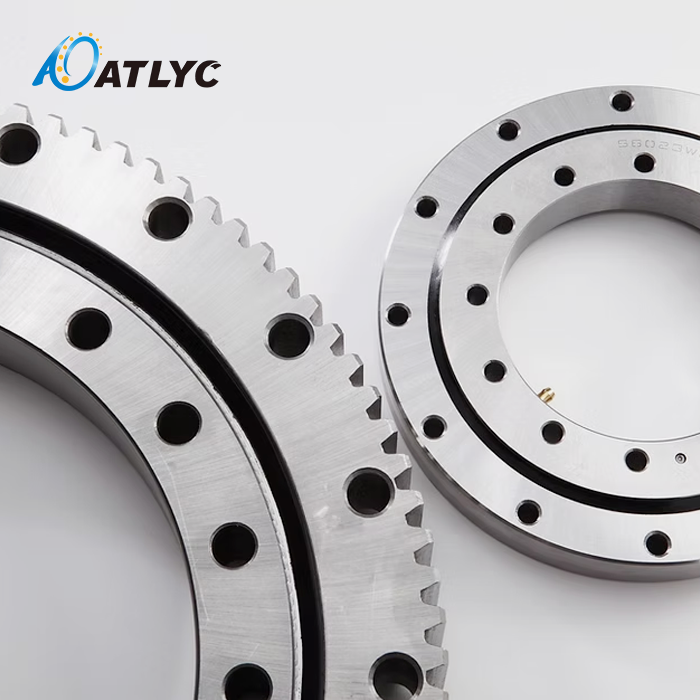
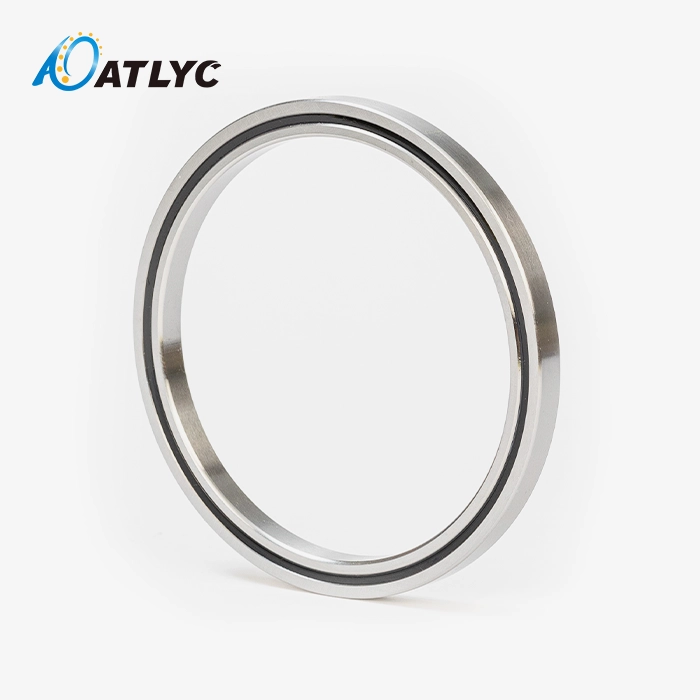
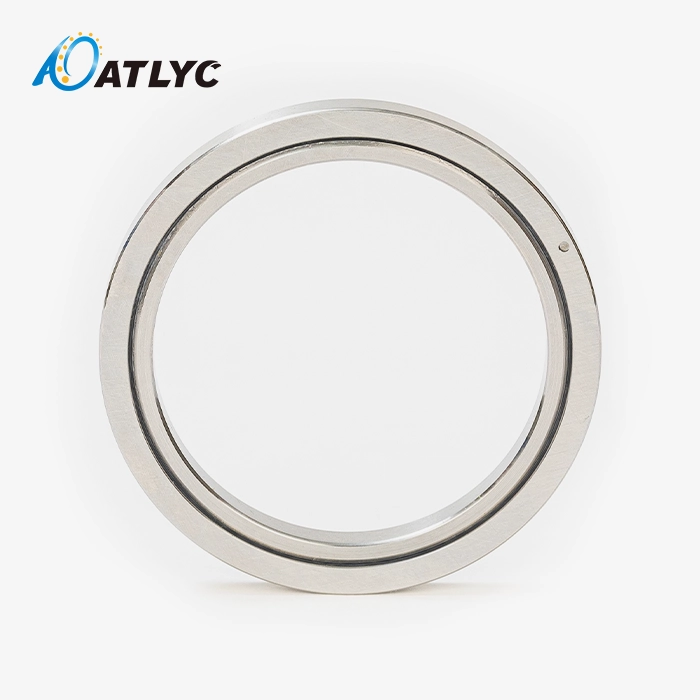
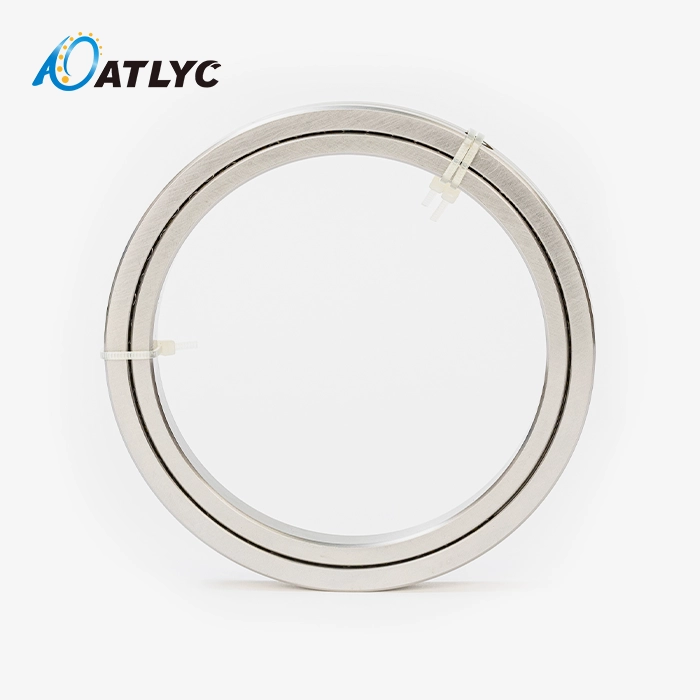
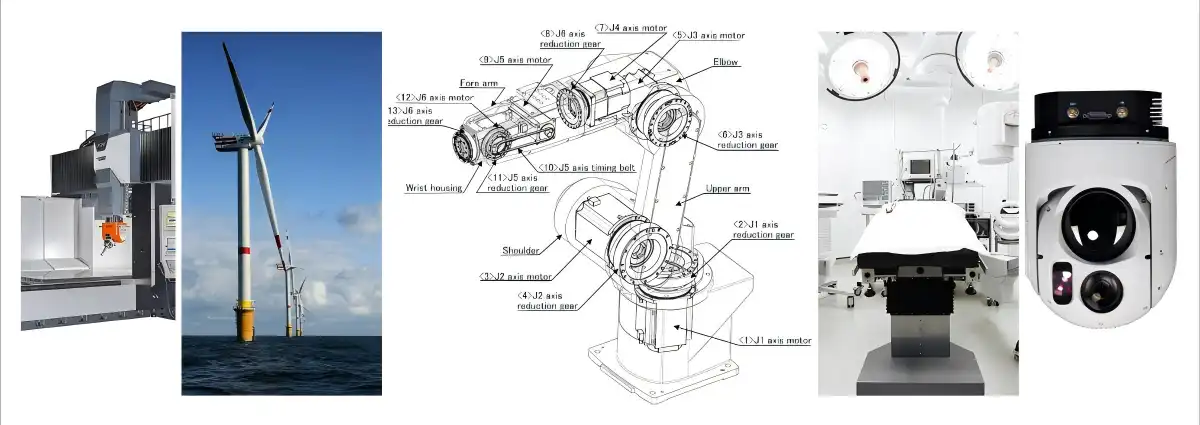
The RU Series Crossed Roller Bearing is a precision-engineered product that combines a large load capacity with high accuracy in a very small package. This bearing has a single inner and outer ring structure with mounting holes already drilled by the factory. This lets it be bolted directly to equipment surfaces without the need for separate housings. Its crossed roller design can handle radial, axial, and moment loads at the same time. This makes it an essential part of industrial robots, CNC rotary tables, medical imaging equipment, and semiconductor manufacturing devices that need to be compact and able to handle loads in multiple directions.
Understanding RU Series Crossed Roller Bearing Design Features
The Crossed Roller Configuration
If you look at the inside of these precise bearings, you'll see that they have V-shaped raceways with circular rollers placed perpendicularly at 90-degree intervals. This crossed design, with precision-machined spacers between them, keeps the rollers from touching directly, and the load is spread evenly around the whole bearing diameter. The gaps are very important for more than just separating things. They keep the rollers in the same place while they're running, so there are no problems with cage wear like there are with standard bearings. This arrangement lets each roller support loads in both directions, which essentially increases the bearing's total capacity without making it bigger.
Integral Ring Structure with Mounting Capability
Unlike most bearings, which need complicated housings or fastening flanges, the RU series has mounting holes already made into both the inner and outer rings. This unified design method gets rid of the problems with tolerance stack-up that happen in systems with more than one part. When compared to internal bearing parts, installing the bearing straight to the frame of your machine takes about 40% less time. Sizes range from 20 mm to 1100 mm in diameter on the inside, 70 mm to 1500 mm on the outside, and 12 mm to 110 mm in width. This wide range of sizes can be used for a lot of different things, from small robotic joints to the big sorting tables that are used in aircraft factories.
Material Selection and Heat Treatment
GCr15 or GCr15SiMn bearing steel of a high grade is used to make the bearing rings and rollers. Specialised heat treatments are used on these materials to get them to the right level of hardness, which is between 58 and 62 HRC. This gives them the sturdiness they need to stay the same size over time while they are in constant use. Surface finishing methods make raceway surfaces that are as smooth as a mirror and have roughness values below 0.2 Ra micrometres. This amazing surface quality reduces friction while increasing contact precision, which directly contributes to the bearing's low-friction properties and long service life.
Performance Benefits of RU Series Crossed Roller Bearings
These precise parts have benefits that go far beyond just supporting loads. Knowing these benefits can help you decide if this type of bearing meets the needs and performance standards of your individual application.
Multi-Directional Load Handling in a Single Unit
In traditional bearing designs, radial, axial, and moment loads are usually handled by multiple bearings working in combination. The RU Series Crossed Roller Bearing can replace these complex arrangements with a single component, simplifying your design and improving system reliability. Because the rollers are arranged in a crossed configuration, they support loads from different directions on alternating axes, distributing stress evenly throughout the bearing structure. This feature is especially useful in robotic joint applications where the extending and retracting of flexible arms creates large moment loads. Robots on an auto assembly line tested these bearings and found that they could keep their positioning accuracy within 15 arc-seconds even after 5 million rounds of operation under mixed pressure conditions.
Superior Rigidity for Precision Applications
How well a bearing keeps its place in fine machinery depends on its rigidity, or how little it bends when it's under load. The crossed roller bearing design is about three to five times stiffer than angular contact ball bearings with the same envelope size. In CNC machining centers, where part standards are directly affected by rotating table movement, this extra stiffness is very important. The low movement that these bearings offer is very helpful for machining processes that need positional accuracy within 5 microns. This extreme toughness is due to the V-shaped raceway design and optimised contact angles. The geometry stays precise even when cutting forces change.
Low Friction and Smooth Rotation
With the right amount of grease, the line contact between the cylindrical rollers and the raceways, and the optimised roller crown shapes bring down the friction coefficients to around 0.002 to 0.003. For servo-controlled pointing systems, this low-friction function means that the force stays the same throughout the spin cycle. Medical CT scanner gantries make this benefit very clear. The picture quality stays the same during all 360-degree scanning rounds thanks to the smooth, vibration-free spinning. The expected friction behaviour also keeps servo motors from getting too hot, which increases the life of controlling parts and lowers energy use by 12–18% compared to older bearing technologies.
Exceptional Runout Accuracy Across Precision Classes
In precise production, the quality of the end product is directly affected by runout accuracy, which is the amount of variation from perfect circular motion. There are different levels of accuracy for these bearings, including P6, P0, P5, P4, and P2. P2 is the highest level of accuracy and is best for ultra-precision uses. Radial runout values of P5 grade units are less than 5 microns, which is good enough for most industrial automation uses. P4 and P2 grades, which have runout limits of less than 2.5 and 1.5 microns, are used in precision optical instrument manufacturing and stages for placing semiconductor wafers. In these fields, sub-micron accuracy is crucial for making products that work.
Comparative Analysis: RU Series vs Alternative Crossed Roller Bearing Designs
Design Innovation and Structural Differences
Several design features distinguish the RU Series Crossed Roller Bearing from other crossed roller bearings, such as the CRB or CRBH series. CRB series bearings typically feature split outer rings, requiring careful assembly procedures and precisely controlled bolt torque during installation. The RU series incorporates a one-piece ring design, eliminating these complex assembly requirements and reducing the risk of installation errors that can compromise bearing performance. CRBH series bearings only have fixing holes in one ring, which limits the options for installation. The RU version has mounting holes in both rings, which gives you more options for how to place it. You can select either the inner ring or the outer ring spin based on the needs of your program. This lets you better deal with room issues and load direction needs.
Load Capacity and Service Life Comparison
Comparing bearings of the same size under the same force conditions in separate tests shows significant changes in how well they work. When radial and axial loads are added together, which is how robotic joints usually work, RU series units have an L10 bearing life that is 15 to 20 percent longer than similar CRB designs. This longer lifespan is due to the better load spread of the inner ring structure. Loads move more evenly through the bearing system when there aren't any split ring surfaces to cause stress peaks. Continuous three-shift production plans help factories by cutting down on unplanned downtime and extending the time between repair visits.
Price-Performance Evaluation and Total Cost of Ownership
The initial buying price is only one part of the total cost of bearing. When looking at providers and bearing types, you should think about the total cost of ownership, which includes installation labour, upkeep needs, and how often the equipment needs to be replaced over a normal 5-year lifetime. RU series bearings from well-known companies that have ISO 9001 and IATF 16949 certifications usually cost 10-15% more than options that aren't made with as much care. This extra gives you value by providing regular quality, thorough technical documents, and quick engineering help. When purchasing from qualified makers with recorded quality management systems, procurement managers say that production pauses caused by bearings happen 30–40% less often.
Installation, Maintenance, and Longevity Optimization
Proper installation procedures and disciplined maintenance practices directly determine whether these precision components achieve their theoretical service life. Understanding these requirements helps your maintenance teams maximize equipment uptime while controlling operational costs.
Pre-Installation Inspection and Preparation
Before mounting begins, conduct thorough inspections of both the bearing and mating surfaces. Bearing mounting surfaces must meet flatness tolerances specified in product documentation—typically within 0.01mm per 100mm of diameter. Surface roughness should not exceed 3.2 Ra micrometers to ensure proper load distribution and prevent fretting corrosion. When installing RU Series Crossed Roller Bearing, clean all components with lint-free cloths and appropriate solvents, removing any preservative coatings applied during storage. Even microscopic contamination particles can create stress concentration points, leading to premature raceway spalling. Controlled cleanroom environments are recommended for P4 and P2 precision grade installations where contamination sensitivity increases substantially.
Mounting Procedures and Common Pitfalls
The pre-drilled mounting holes simplify installation but require disciplined bolt tightening procedures. Use calibrated torque wrenches following the manufacturer's recommended tightening sequence—typically a star pattern progressing through multiple passes at increasing torque levels. This approach ensures even clamping force distribution around the bearing circumference. Uneven bolt torque represents the most common installation error, compromising bearing performance. Variations exceeding 10% between individual bolts create ring distortion, leading to increased running torque, accelerated wear, and premature failure. Digital torque wrenches with data logging capability provide documentation supporting quality management requirements while ensuring consistent installation practices.
Avoid using impact wrenches or pneumatic tools lacking precise torque control. The shock loading generated by these tools can damage precision-ground raceway surfaces, creating operational noise and reducing bearing lifespan by 40-60% even when visible damage is not apparent.
Lubrication Requirements and Maintenance Schedules
Proper lubrication proves essential for achieving design life expectations. Grease lubrication serves most applications, with lithium-based greases containing EP additives providing excellent performance across operating temperatures from -20°C to +120°C. Apply initial grease charges filling 30-40% of available bearing cavity volume—excessive grease generates unnecessary churning losses and temperature rise. Relubrication intervals depend on operating conditions, including speed, load, and environmental factors. General industrial applications operating under moderate conditions typically require relubrication every 2000-3000 operating hours. High-speed applications or contaminated environments necessitate more frequent intervals, potentially as short as 500-1000 hours under severe conditions. Condition monitoring through vibration analysis provides early warning of developing bearing issues. Establish baseline vibration signatures immediately following installation, then conduct periodic monitoring at defined intervals. Frequency spectrum changes indicating bearing defects typically appear 6-8 weeks before catastrophic failure, providing adequate lead time for planned maintenance interventions.
Procurement Considerations and Supplier Selection Insights
Identifying reliable suppliers and establishing productive partnerships significantly impacts your bearing procurement success. The bearing market includes numerous manufacturers with varying capabilities, quality standards, and service commitments requiring careful evaluation.
Certification Requirements and Quality Assurance
When sourcing precision bearings for critical applications, prioritize suppliers maintaining ISO 9001 and IATF 16949 certifications. These quality management system standards ensure documented procedures control all manufacturing processes from raw material verification through final inspection and packaging. Request copies of material certifications and dimensional inspection reports for critical dimension verification. Reputable manufacturers provide comprehensive documentation, including material chemistry analysis, hardness test results, and coordinate measuring machine data confirming geometric tolerances. This transparency demonstrates commitment to quality and provides traceability, supporting your own quality management requirements.
Technical Support and Engineering Collaboration
Beyond the physical product, evaluate suppliers based on technical support capabilities. Bearing selection involves complex calculations considering load distributions, operating speeds, thermal effects, and application-specific factors. Manufacturers employing applications engineers who understand your industry's unique requirements deliver substantial value beyond the bearing itself. Responsive technical support becomes particularly valuable during machine design phases. Engineering collaboration, identifying optimal bearing sizes, accuracy grades, and mounting configurations early in the design cycle, prevents costly redesign efforts later. Suppliers offering bearing life calculations, finite element analysis support, and application-specific recommendations demonstrate expertise benefiting your project success.
Lead Times, Inventory Management, and Supply Chain Reliability
Standard RU series sizes from established manufacturers typically ship within 2-4 weeks for P5 accuracy grades. Higher precision P4 and P2 grades or non-standard sizes may require 6-10 weeks, depending on manufacturing queue depth. When planning production equipment builds or maintenance overhauls, incorporate these lead times into your project schedules. Suppliers maintaining regional distribution centers provide faster delivery for commonly specified sizes. Establishing blanket purchase orders with scheduled releases helps secure favorable pricing while ensuring component availability aligned with your production schedules. Volume commitments often unlock 8-12% pricing improvements compared to spot purchases.
Supply chain disruptions during recent years highlighted the importance of supplier diversification and domestic manufacturing capability. While global sourcing remains viable for many components, critical bearing applications benefit from establishing relationships with multiple qualified suppliers, including regional manufacturers capable of responsive delivery and localized technical support.
Conclusion
The RU Series Crossed Roller Bearing represents a sophisticated engineering solution addressing the demanding requirements of modern precision machinery. Its integral ring structure with integrated mounting holes simplifies installation, while the crossed roller configuration delivers exceptional multi-directional load capacity within compact envelope dimensions. Available across broad size ranges and precision grades from P6 through P2, these bearings serve diverse applications from industrial robotics to medical imaging equipment, where accuracy and reliability determine operational success. Understanding the design features, performance characteristics, and proper implementation practices empowers your team to maximize bearing lifespan while minimizing total ownership costs. Partnering with certified manufacturers maintaining rigorous quality standards ensures you receive consistent products backed by comprehensive technical support.
FAQ
What distinguishes crossed roller bearings from angular contact ball bearings?
Crossed roller bearings utilize cylindrical rollers arranged perpendicularly in alternating positions, creating line contact with raceways rather than the point contact characteristic of ball bearings. This design delivers 3-5 times greater rigidity and substantially higher load capacity within similar envelope dimensions, making them preferable for applications requiring precise positioning under combined loading conditions.
How do I determine the appropriate accuracy grade for my application?
Accuracy grade selection depends on your rotational precision requirements. General industrial machinery typically performs adequately with P5 grade bearings, offering runout tolerance around 5 microns. Precision measurement instruments, semiconductor manufacturing equipment, and medical imaging devices requiring sub-micron positioning accuracy benefit from P4 or P2 grades. Consider both performance requirements and budget constraints since higher precision grades command premium pricing.
Can RU series bearings operate in contaminated environments?
While these bearings tolerate moderate environmental conditions, contamination significantly reduces service life. Applications in dusty or corrosive environments benefit from supplementary sealing systems protecting bearing internals. Contact seals provide maximum contamination protection but increase friction and limit maximum operating speeds. Non-contact labyrinth seals offer compromise solutions, balancing protection with minimal friction penalties. Regular maintenance intervals should be shortened proportionally to contamination severity.
Why ATLYC Delivers Reliable Crossed Roller Bearing Solutions
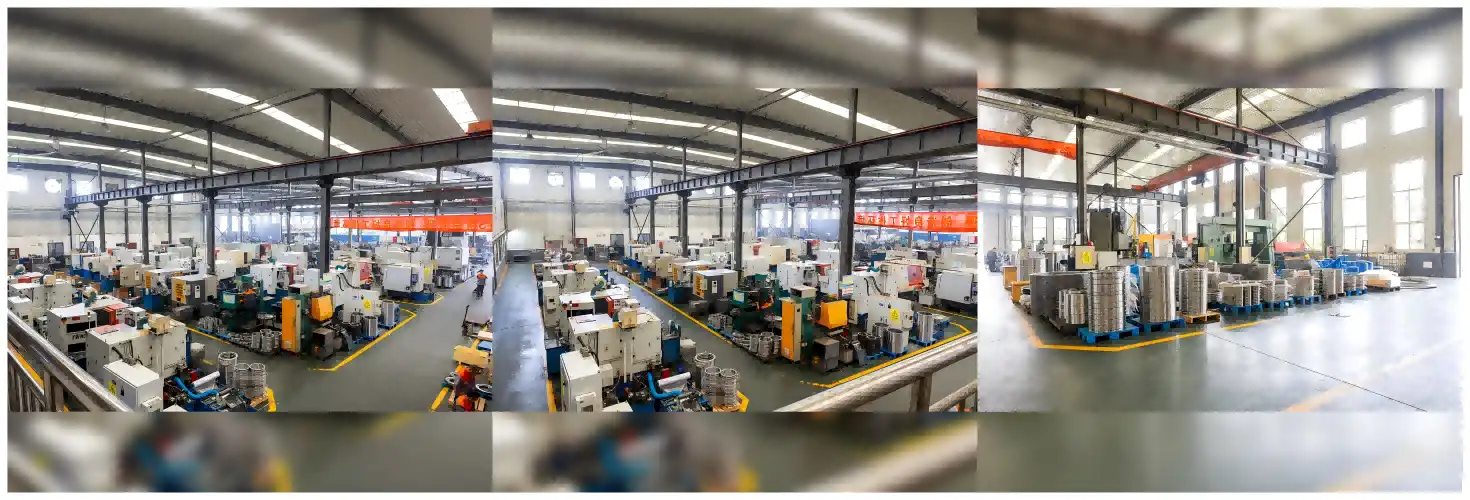
Luoyang Auto Bearing Co., Ltd. (ATLYC) has manufactured precision bearings since 2010, growing from a single workshop to a comprehensive six-facility operation employing 120 skilled professionals across production, quality control, and engineering departments. Our ISO 9001 and IATF 16949 certifications demonstrate our commitment to international quality standards that mid-to-large OEMs and industrial equipment manufacturers require.
We understand your need for stable supply chains, consistent quality, and competitive pricing without compromising precision. Our RU series crossed roller bearing production capabilities span the complete size range from 20mm to 1100mm inner diameter, manufactured to P6, P0, P5, P4, and P2 accuracy classes. Each bearing undergoes rigorous dimensional inspection and functional testing before shipment, ensuring the performance your applications demand.
Our engineering team provides technical support throughout your procurement process, from initial bearing selection through installation guidance and operational troubleshooting. We maintain competitive lead times, averaging 3-5 weeks for standard configurations while offering customization capabilities for specialized application requirements.
Reach out to our team at auto@lyautobearing.com to discuss your specific bearing requirements. Whether you need a reliable crossed roller bearing supplier for ongoing production requirements or technical consultation on complex application challenges, we're prepared to support your success with responsive service and dependable quality.
References
1. Harris, T. A., & Kotzalas, M. N. (2006). Advanced Concepts of Bearing Technology: Rolling Bearing Analysis (5th ed.). CRC Press.
2. Eschmann, P., Hasbargen, L., & Weigand, K. (1985). Ball and Roller Bearings: Theory, Design and Application (2nd ed.). John Wiley & Sons.
3. ISO 492:2014. Rolling bearings — Radial bearings — Geometrical product specifications (GPS) and tolerance values. International Organization for Standardization.
4. Hamrock, B. J., Schmid, S. R., & Jacobson, B. O. (2004). Fundamentals of Fluid Film Lubrication (2nd ed.). Marcel Dekker.
5. Budynas, R. G., & Nisbett, J. K. (2015). Shigley's Mechanical Engineering Design (10th ed.). McGraw-Hill Education.
6. SKF Group. (2018). Rolling Bearings Catalogue: Technical Reference Guide for Bearing Selection and Application. SKF Publication.
Learn about our latest products and discounts through SMS or email