- English
- French
- German
- Portuguese
- Spanish
- Russian
- Japanese
- Korean
- Arabic
- Greek
- German
- Turkish
- Italian
- Danish
- Romanian
- Indonesian
- Czech
- Afrikaans
- Swedish
- Polish
- Basque
- Catalan
- Esperanto
- Hindi
- Lao
- Albanian
- Amharic
- Armenian
- Azerbaijani
- Belarusian
- Bengali
- Bosnian
- Bulgarian
- Cebuano
- Chichewa
- Corsican
- Croatian
- Dutch
- Estonian
- Filipino
- Finnish
- Frisian
- Galician
- Georgian
- Gujarati
- Haitian
- Hausa
- Hawaiian
- Hebrew
- Hmong
- Hungarian
- Icelandic
- Igbo
- Javanese
- Kannada
- Kazakh
- Khmer
- Kurdish
- Kyrgyz
- Latin
- Latvian
- Lithuanian
- Luxembou..
- Macedonian
- Malagasy
- Malay
- Malayalam
- Maltese
- Maori
- Marathi
- Mongolian
- Burmese
- Nepali
- Norwegian
- Pashto
- Persian
- Punjabi
- Serbian
- Sesotho
- Sinhala
- Slovak
- Slovenian
- Somali
- Samoan
- Scots Gaelic
- Shona
- Sindhi
- Sundanese
- Swahili
- Tajik
- Tamil
- Telugu
- Thai
- Ukrainian
- Urdu
- Uzbek
- Vietnamese
- Welsh
- Xhosa
- Yiddish
- Yoruba
- Zulu
RU28UU Cross Roller Bearing vs Linear Bearings: Which Wins?
When weighing motion control options for precision machinery, the RU28UU Cross roller bearing consistently outperforms traditional linear bearings in applications demanding exceptional rigidity, multi-directional load support, and superior rotational accuracy. This integrated bearing solution, with its orthogonal roller arrangement and compact 52mm outer diameter footprint, delivers 3-4 times higher moment load capacity than comparable linear systems, making it the preferred choice for robotic joints, CNC indexing tables, and medical equipment where space constraints meet uncompromising performance requirements. The question isn't simply which technology wins—it's understanding when each solution serves your operational goals most effectively.
Understanding RU28UU Cross Roller Bearings
Engineering Excellence in Compact Design
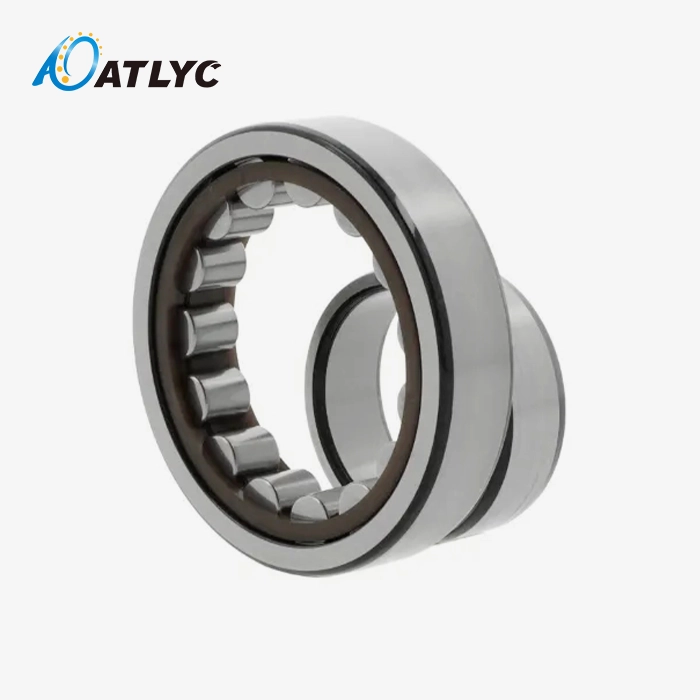
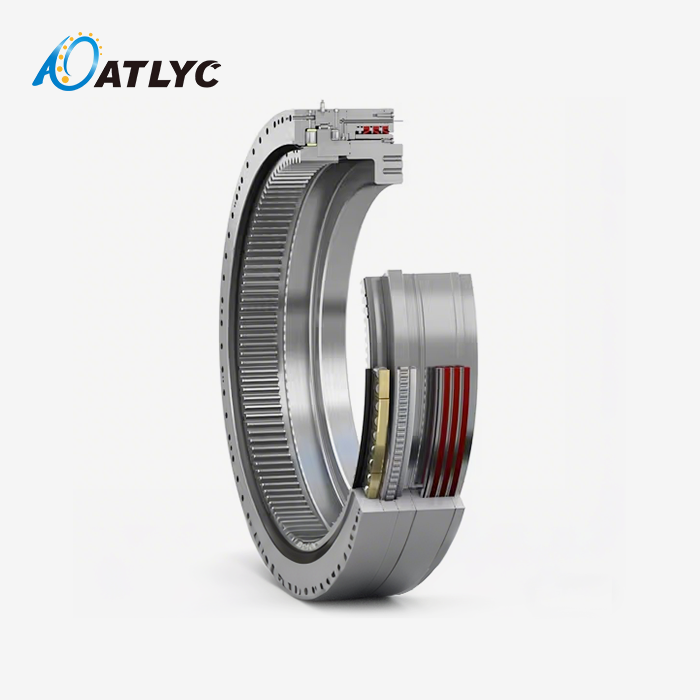
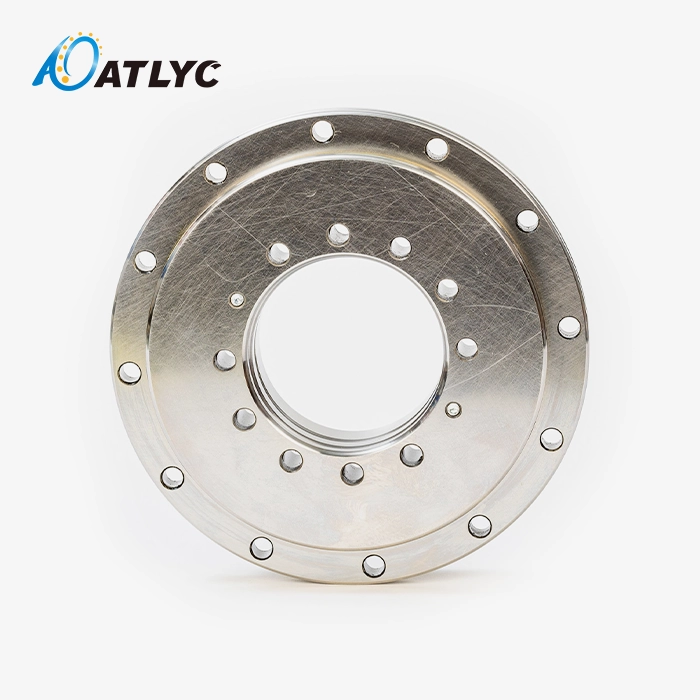
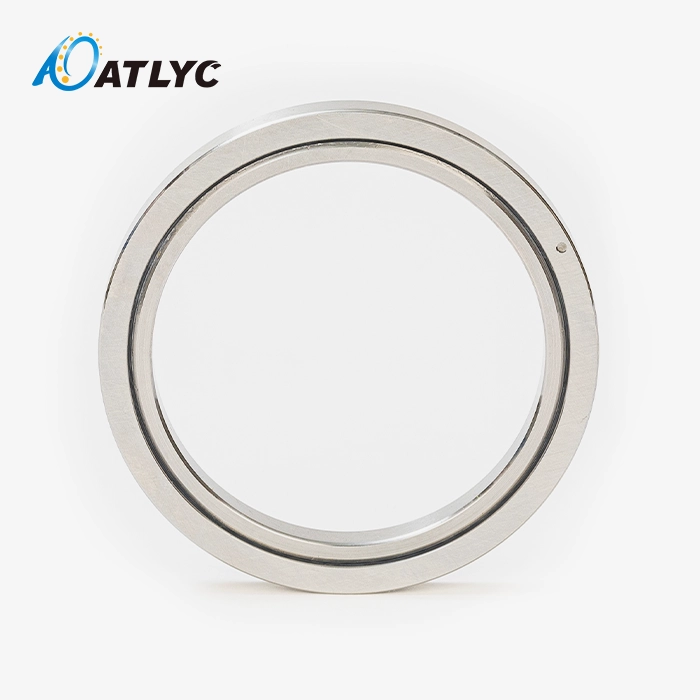
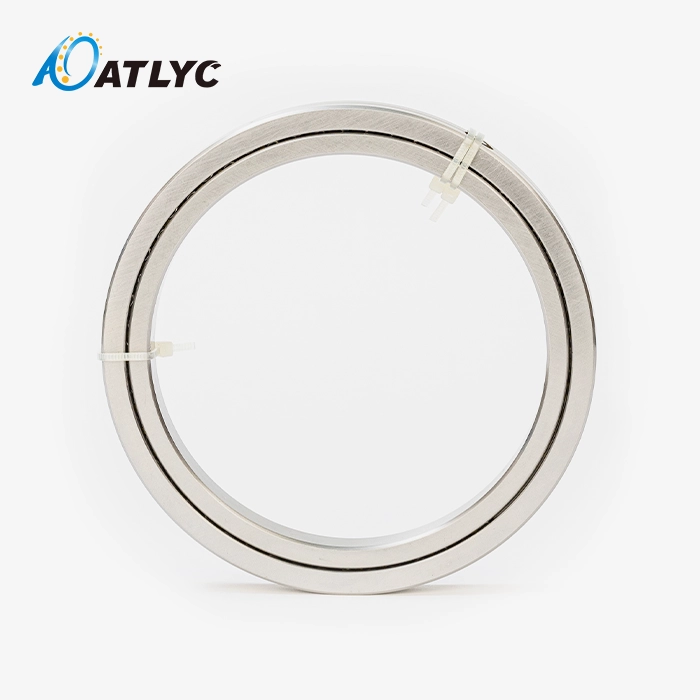
The RU28UU Cross roller bearing represents a breakthrough in precision motion control technology. Unlike conventional bearing arrangements requiring multiple components, this integrated solution combines inner and outer rings into a unified structure with factory-drilled mounting holes. The bearing measures 10mm inner diameter, 52mm outer diameter, and just 8mm in width, yet handles radial, axial, and moment loads simultaneously through its innovative cross-roller configuration. Cylindrical rollers are positioned at precise 90-degree intervals within V-shaped raceways, separated by precision spacers that prevent metal-to-metal contact. This orthogonal arrangement creates what engineers call a "stiff square" support structure—half the rollers resist loads in one direction while the remaining rollers counteract perpendicular forces. The result is exceptional rigidity that eliminates the need for dual-bearing assemblies in many applications.
Material Composition and Manufacturing Standards
Manufacturing these bearings from Gcr15 and Gcr15SiMn high-carbon chromium steel ensures hardness levels between 58-62 HRC, providing the wear resistance necessary for extended service life. At ATLYC's ISO 9001 and IATF 16949 certified facilities, we maintain tolerance levels across six precision grades: P6, P0, P5, P4, and P2. The tightest P2 grade achieves rotational runout below 5 microns—critical for semiconductor manufacturing equipment and optical inspection systems. The "UU" designation indicates contact seals on both faces. These rubber seals retain factory-packed lithium-based grease while blocking dust and contaminants, extending operational life in non-cleanroom environments without external sealing mechanisms. This design addresses a persistent pain point in automation equipment: premature bearing failure from particulate ingress during high-cycle operations.
Primary Application Scenarios
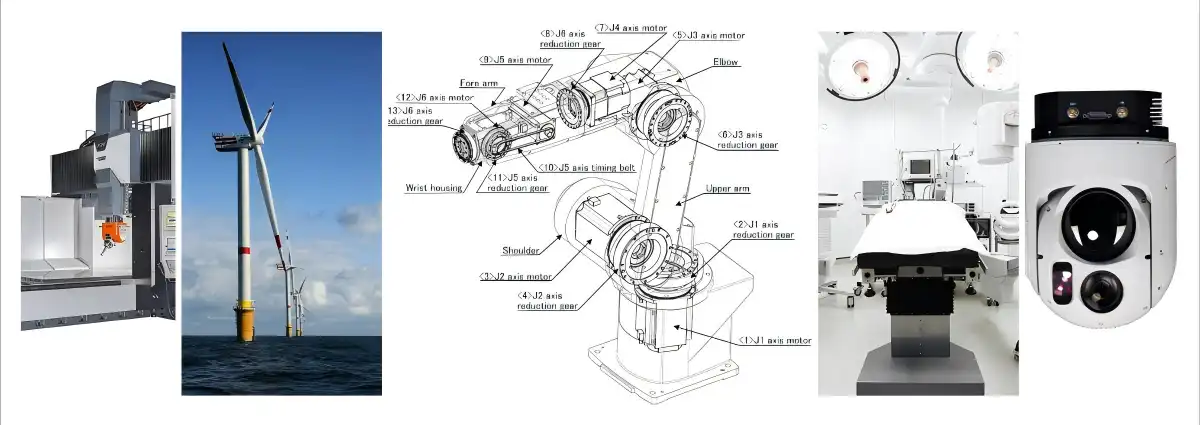
RU28UU Cross roller bearing excels in environments where traditional bearing configurations fall short. In multi-axis industrial robots, the RU28UU handles moment loads at the waist and wrist joints, maintaining positioning accuracy even when manipulator arms extend fully under varying payload weights. Automation engineers appreciate how the integrated mounting holes eliminate alignment errors common with split-ring assemblies, reducing installation time by approximately 40% compared to conventional setups. Medical surgical robots present another demanding application. Space constraints in minimally invasive instruments require compact solutions, while sterilization protocols demand sealed designs preventing lubricant migration into sterile fields. The RU28UU's 8mm width allows hollow-shaft configurations for cable routing without additional housing bulk—a design advantage that's difficult to achieve with linear bearing alternatives. Precision rotary tables in machining centers rely on this technology for smooth indexing with minimal jitter. When high-resolution cameras inspect semiconductor wafers or PCB assemblies at rapid intervals, any vibration translates to measurement errors. The low friction coefficient of cross roller designs ensures consistent motion quality across millions of cycles.
Linear Bearings Overview and Performance
Fundamental Operating Principles
Linear bearings guide motion along straight paths through various mechanical arrangements. Ball bushing types circulate steel balls through external return tubes, while plain bearings use sliding contact between the shaft and housing. Recirculating roller variants employ cylindrical elements for higher load capacity. These designs share common traits: cost-effectiveness, installation simplicity, and widespread availability through distribution networks. The mechanical simplicity that makes linear bearings attractive for budget-conscious projects simultaneously introduces performance limitations. Ball bushing types typically exhibit lower rigidity than cross roller alternatives, particularly when subjected to off-axis loads or moment forces. A linear bearing system optimized for 500N radial load might experience excessive deflection under even modest tilting moments—a scenario where cross roller bearings maintain dimensional stability.
Performance Characteristics and Constraints
Linear bearing systems deliver adequate performance in applications with controlled loading conditions. Clean environments with predominantly axial forces suit ball bushing designs, particularly where travel distances exceed what rotary bearings accommodate. Automated packaging lines, gantry systems, and pick-and-place machines frequently employ linear guides where speed and travel length matter more than ultimate precision. However, several factors constrain linear bearing suitability for precision applications. Load ratings drop significantly when forces deviate from the primary axis of motion. A linear guide rated for 2000N axial capacity might handle only 400N radially—requiring additional support elements that increase system complexity. Lubrication requirements present another consideration; recirculating designs demand regular maintenance intervals to prevent premature wear, adding operational costs over equipment lifecycles. Environmental sensitivity poses challenges in industrial settings. Open linear bearings accumulate contaminants rapidly, accelerating wear and generating particulates that compromise nearby precision equipment. Sealed variants add friction and cost while still offering less protection than the integrated double-seal design found in cross roller alternatives. These limitations impact long-term reliability, particularly in heavy industrial automation, where equipment availability directly affects production throughput.
Side-by-Side Comparison: Technical and Commercial Factors
Mechanical Performance Analysis
Comparing load handling reveals stark differences between technologies. The RU28UU Cross roller bearing's orthogonal roller arrangement provides an effective load-bearing area significantly larger than equivalent-sized ball bearings—translating to 3-4 times higher rigidity against moment loads. This mechanical advantage becomes critical in robotic applications where end-effectors must maintain position accuracy despite varying payload weights and orientations. Linear bearings demonstrate advantages in specific scenarios. When motion requirements involve straight-line travel exceeding 500mm, linear guides provide practical solutions that rotary bearings cannot address. Travel speed capabilities also favor linear systems in certain applications; properly lubricated ball bushing assemblies achieve higher velocities than the limiting speed (dn value) of cross roller bearings, which are optimized for intermittent or oscillating motion rather than continuous high-speed rotation. Runout accuracy—the deviation from true rotational path—strongly favors cross roller technology. Manufacturing to P4 or P2 standards, the RU28UU achieves runout specifications measured in single-digit microns. Linear bearing systems typically exhibit positional repeatability in the 10-50 micron range, depending on design quality, sufficient for many automation tasks but inadequate for precision measurement instruments or semiconductor fabrication equipment.
Installation and Maintenance Considerations
The integrated ring structure of cross roller bearings simplifies mounting procedures considerably. Pre-drilled holes enable direct attachment to machinery without intermediate housing components, eliminating the alignment challenges that extend commissioning timelines. Maintenance intervals stretch considerably thanks to sealed construction; the RU28UU operates maintenance-free under normal conditions, with relubrication recommended only at 6-12 month intervals in high-temperature environments above 80°C. Linear bearing systems require more attention to installation precision. Parallel rail alignment tolerances often specify deviations below 0.02mm per meter—demanding careful setup that increases labor costs during equipment assembly. Ongoing maintenance needs vary by design; open linear bearings require weekly lubrication in dusty environments, while sealed types extend intervals to monthly service but introduce higher friction losses affecting energy consumption.
Procurement and Supply Chain Factors
For procurement managers evaluating the total cost of ownership, several factors beyond unit price deserve consideration. Minimum order quantities influence inventory carrying costs—cross roller bearings typically involve higher MOQs from manufacturers, given their precision manufacturing requirements. However, longer service life and reduced maintenance frequency often yield lower lifecycle costs despite higher initial investment. Lead time expectations differ between technologies. Standard linear bearing sizes ship from distributor stock within days, while precision cross roller bearings might require 4-8 weeks for custom configurations. For OEM applications involving significant production volumes, this timeline matters less than for aftermarket replacement scenarios requiring rapid availability. Warranty terms and technical support capabilities separate premium suppliers from commodity vendors. Manufacturers maintaining ISO 9001 and IATF 16949 certifications demonstrate commitment to consistent quality systems—critical for automotive and medical device OEMs requiring traceable documentation for regulatory compliance. ATLYC's 15-year manufacturing heritage includes engineering support that helps customers optimize bearing selection for specific application parameters, reducing the trial-and-error costs common when sourcing precision components.
Selecting the Best Bearing Solution: Decision Framework
Application-Specific Requirements Analysis
Choosing between cross roller and linear bearing technologies begins with an honest assessment of operational demands. Applications requiring multi-directional load support within compact envelopes favor cross roller solutions. When a single bearing must handle radial forces, axial thrust, and tilting moments simultaneously—common in robotic wrist joints—the RU28UU Cross roller bearing integrated design eliminates the complexity of combining multiple bearing types. Precision requirements significantly influence selection. Measurement instruments, optical inspection systems, and semiconductor manufacturing equipment demand rotational accuracy below 10 microns. Linear bearings struggle to maintain these tolerances consistently, particularly after extended operation in contaminated environments. Cross roller technology delivers repeatable accuracy across millions of cycles without geometric degradation. Environmental conditions warrant careful consideration. Dusty or contaminated atmospheres challenge open linear bearing systems, while the RU28UU's double-sealed construction provides robust protection. However, applications involving corrosive chemicals might require specialized materials beyond standard bearing steel—a customization capability that separates full-service manufacturers from catalog distributors.
Cost-Benefit Calculation Methods
The initial purchase price represents only one component of bearing economics. Calculating true ownership costs requires evaluating installation labor, maintenance frequency, downtime risks, and replacement intervals. A $150 cross roller bearing requiring installation once every 5 years delivers better value than a $40 linear bearing needing replacement annually—particularly when factoring in machine downtime costs during changeouts. Energy consumption differences merit attention in continuous-operation equipment. The low friction coefficient of cross roller designs reduces motor loads compared to sealed linear bearings, translating to measurable electricity savings across thousands of operating hours. In automated assembly lines running three shifts daily, these incremental savings accumulate substantially over equipment lifecycles spanning a decade or more. Procurement teams should weigh supplier reliability heavily. A bearing failure in critical production equipment costs far more than the component itself when considering lost output during unplanned downtime. Partnering with manufacturers demonstrating consistent delivery performance, comprehensive quality documentation, and responsive technical support reduces operational risks that financial analyses often overlook.
Technical Support and Customization Availability
Standard catalog bearings serve many applications adequately, but precision machinery often requires modifications addressing unique requirements. Custom preload levels, special seal materials for high-temperature service, or modified mounting configurations enable optimal system integration. Manufacturers offering engineering collaboration during design phases—rather than simply fulfilling orders—add value that reduces time-to-market for new equipment platforms. ATLYC's technical team assists customers throughout the product development cycle, from initial bearing selection through prototype validation and production scaling. This support proves particularly valuable for OEMs entering new market segments where internal bearing expertise may be limited. Access to detailed CAD models, finite element analysis data, and application-specific testing prevents costly design iterations that delay product launches.
Conclusion
The competition between RU28UU cross roller bearings and linear bearing systems ultimately resolves through application-specific analysis rather than universal declarations. Cross roller technology dominates in precision environments demanding high rigidity, multi-directional load capacity, and compact integration—robotic joints, medical instruments, and semiconductor equipment exemplify these requirements. Linear bearings maintain relevance for long-travel applications where cost sensitivity outweighs ultimate precision needs. Procurement decisions benefiting from total ownership cost evaluation, supplier quality system verification, and technical support availability position organizations for operational success. As automation complexity increases across manufacturing sectors, a partnership with manufacturers demonstrating consistent quality, engineering expertise, and supply reliability becomes essential for maintaining a competitive advantage.
FAQ
What distinguishes RU28UU from standard linear bearings?
The RU28UU Cross roller bearing utilizes orthogonally arranged cylindrical rollers in V-shaped raceways, enabling simultaneous support of radial, axial, and moment loads within a compact 8mm width. Linear bearings guide motion along straight paths using balls or rollers in single-direction configurations, offering lower rigidity and reduced moment load capacity. The integrated ring design with pre-drilled mounting holes simplifies RU28UU installation compared to linear bearing rail alignment requirements.
Can cross roller bearings replace linear guides in existing equipment?
Replacement depends on motion requirements. Cross roller bearings excel in rotary or oscillating applications within limited angular ranges but cannot accommodate the extended straight-line travel that linear guides provide. Retrofitting equipment designed for linear motion would require a complete redesign of the motion system. However, applications using linear bearings for compact rotary motion—an inefficient design choice—benefit substantially from conversion to cross roller technology.
How do sealed designs affect bearing performance?
The "UU" seals on the RU28UU provide contamination protection while retaining factory lubrication, extending service intervals significantly compared to open bearings. Sealed construction introduces slightly higher friction than open designs but prevents premature failure from particulate ingress—a worthy tradeoff in industrial environments. Applications in ultra-clean environments might specify open variants (RU28 without seals) operating in oil-bath housings, though this arrangement sacrifices the installation simplicity of integrated sealed units.
Partner with ATLYC for Precision Cross Roller Bearing Solutions
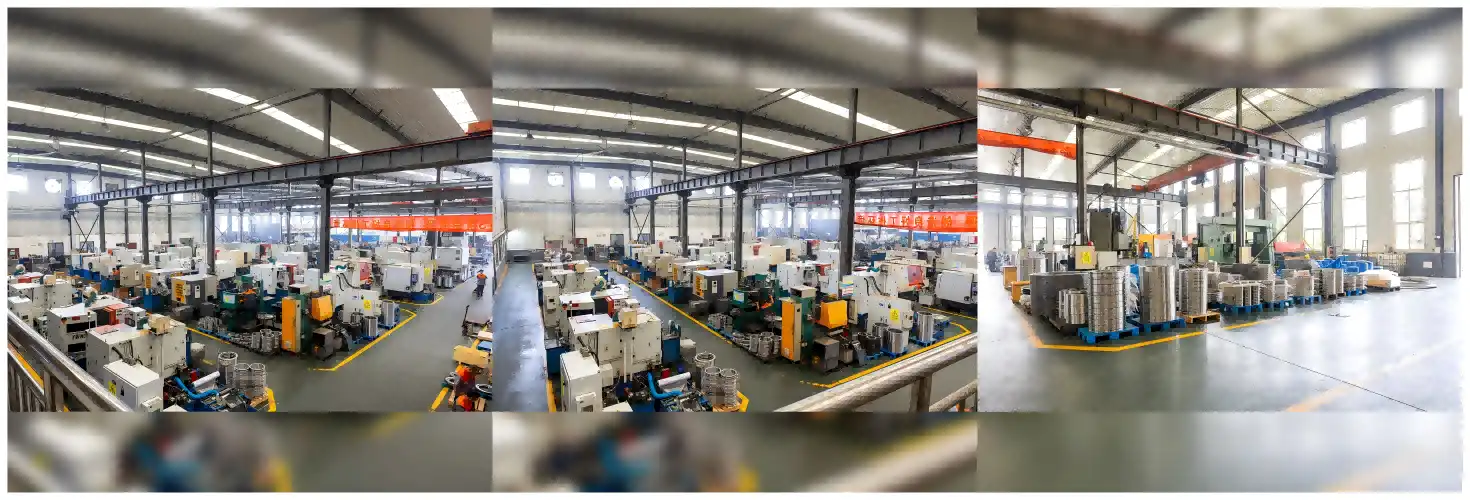
ATLYC stands as your reliable RU28UU Cross roller bearing manufacturer, combining 15 years of precision manufacturing excellence with comprehensive technical support. Our six production facilities maintain ISO 9001 and IATF 16949 certified quality systems, delivering consistent precision across P6 through P2 accuracy grades. We understand the challenges mid-to-large OEMs face: stable supply chains, competitive pricing without quality compromise, and engineering support that accelerates your development cycles. Whether you need standard RU28UU bearings or customized configurations for specialized applications, our team provides responsive communication and reliable lead times. Contact auto@lyautobearing.com to discuss your requirements with our engineering specialists.
References
1. Harris, T. A., & Kotzalas, M. N. (2006). Essential Concepts of Bearing Technology: Rolling Bearing Analysis, 5th Edition. CRC Press.
2. Budynas, R. G., & Nisbett, J. K. (2015). Shigley's Mechanical Engineering Design, 10th Edition. McGraw-Hill Education.
3. ISO 492:2014. Rolling bearings — Radial bearings — Geometrical product specifications (GPS) and tolerance values. International Organization for Standardization.
4. Eschmann, P., Hasbargen, L., & Weigand, K. (1985). Ball and Roller Bearings: Theory, Design and Application, 2nd Edition. John Wiley & Sons.
5. Hamrock, B. J., Schmid, S. R., & Jacobson, B. O. (2004). Fundamentals of Fluid Film Lubrication, 2nd Edition. Marcel Dekker.
6. IATF 16949:2016. Quality management system requirements for automotive production and relevant service parts organizations. International Automotive Task Force.
Learn about our latest products and discounts through SMS or email