- English
- French
- German
- Portuguese
- Spanish
- Russian
- Japanese
- Korean
- Arabic
- Greek
- German
- Turkish
- Italian
- Danish
- Romanian
- Indonesian
- Czech
- Afrikaans
- Swedish
- Polish
- Basque
- Catalan
- Esperanto
- Hindi
- Lao
- Albanian
- Amharic
- Armenian
- Azerbaijani
- Belarusian
- Bengali
- Bosnian
- Bulgarian
- Cebuano
- Chichewa
- Corsican
- Croatian
- Dutch
- Estonian
- Filipino
- Finnish
- Frisian
- Galician
- Georgian
- Gujarati
- Haitian
- Hausa
- Hawaiian
- Hebrew
- Hmong
- Hungarian
- Icelandic
- Igbo
- Javanese
- Kannada
- Kazakh
- Khmer
- Kurdish
- Kyrgyz
- Latin
- Latvian
- Lithuanian
- Luxembou..
- Macedonian
- Malagasy
- Malay
- Malayalam
- Maltese
- Maori
- Marathi
- Mongolian
- Burmese
- Nepali
- Norwegian
- Pashto
- Persian
- Punjabi
- Serbian
- Sesotho
- Sinhala
- Slovak
- Slovenian
- Somali
- Samoan
- Scots Gaelic
- Shona
- Sindhi
- Sundanese
- Swahili
- Tajik
- Tamil
- Telugu
- Thai
- Ukrainian
- Urdu
- Uzbek
- Vietnamese
- Welsh
- Xhosa
- Yiddish
- Yoruba
- Zulu
What Are RA Type Crossed Roller Bearings Used For?
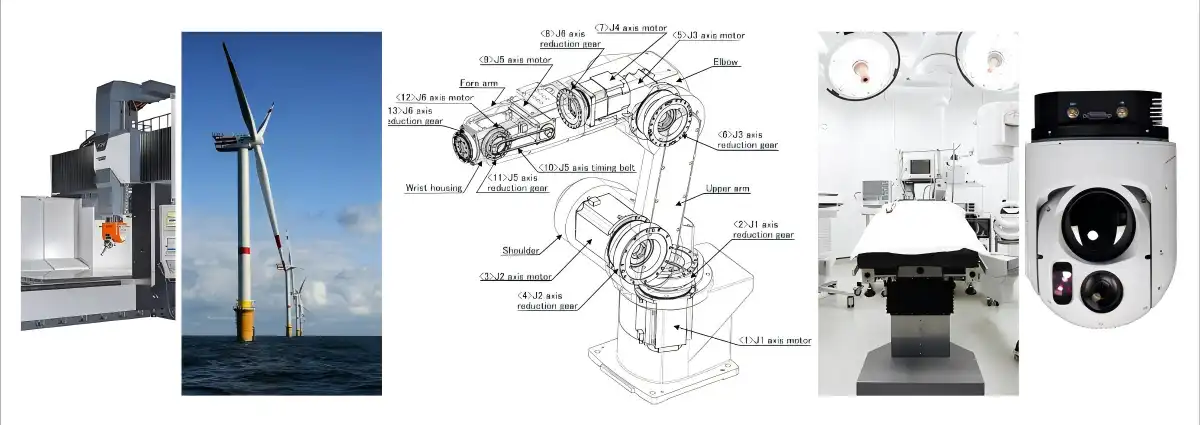
RA Type Crossed Roller Bearings are the best choice when your production line needs very thin, very hard motion control parts that work very precisely without taking up too much room. These special bearings are very important in industrial robots, medical equipment, making semiconductors, and precise machinery that needs to reduce weight without sacrificing performance. The crossed roller design can handle radial, axial, and moment loads at the same time within a very small space. This solves technical problems that other types of bearings can't handle well in situations with limited room.
Introduction to RA Type Crossed Roller Bearings
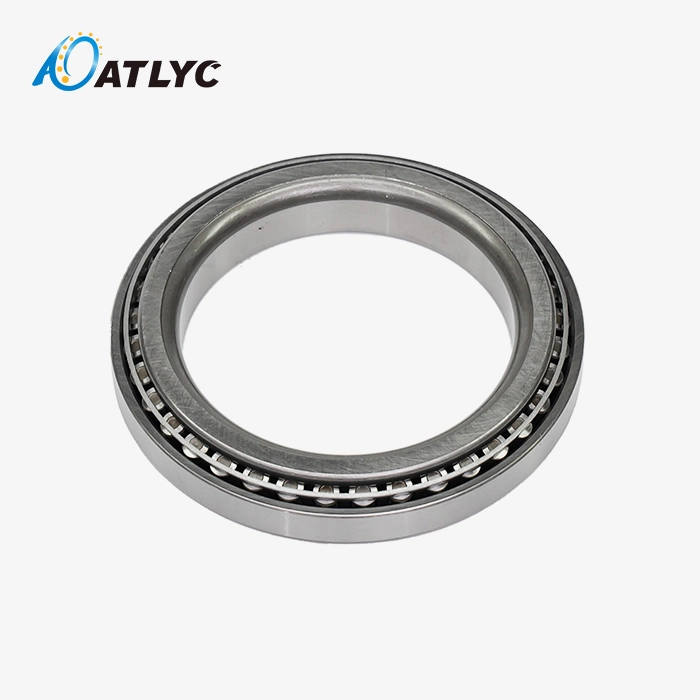
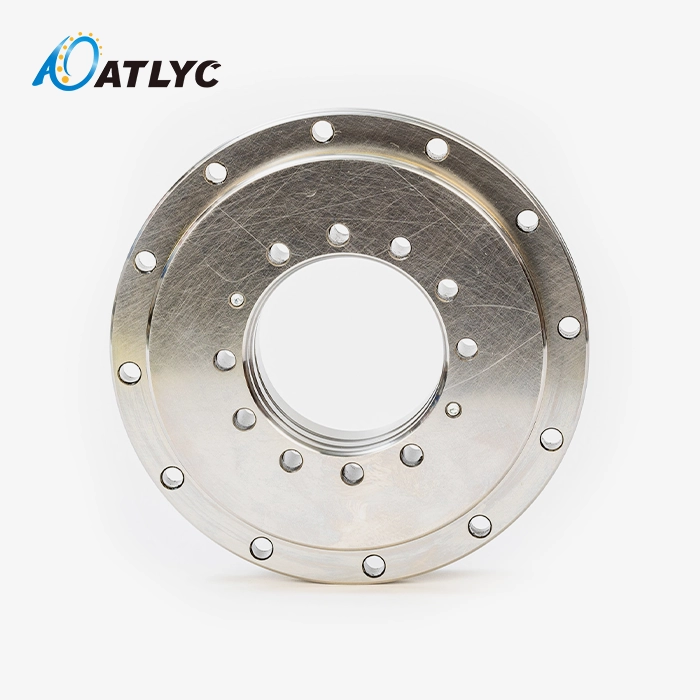
RA Type Crossed Roller Bearings are precision-engineered parts made for uses that need high stiffness, accuracy, and load capacity in a small space. The circular rollers in these bearings are set up perpendicularly, changing at right angles, between the inner and outer rings in a V-groove raceway layout that is 90 degrees.
Understanding the Fundamental Design Architecture
The "RA" marking shows that the outer ring can be separated, and the inner ring can rotate solidly. This way of designing buildings is very different from the usual way of building support structures. It's like having two angular contact ball bearings squished into one very thin unit, thanks to the crossed roller design. High-carbon chromium-bearing steels, like GCr15 and GCr15SiMn, are usually used in manufacturing. These steels are strengthened to HRC 58–64 standards, which ensures better fatigue life and wear protection under tough operating conditions.
Technical Specifications and Performance Parameters
Current production standards allow bearings of a wide range of useful sizes to meet the needs of many industries. The inside diameters range from 20 mm to 350 mm, and the outside diameters range from 70 mm to 540 mm. The width specs range from 12mm to 45mm, which lets engineers choose designs that fit exact space requirements. There are several precision grades, such as P6, P0, P5, P4, and P7. The P5 and P4 grades offer micron-level circular accuracy, which is necessary for high-precision tracking systems. The orthogonal roller arrangement does a great job of distributing loads, allowing it to handle complex forces acting in multiple directions at the same time while keeping the friction coefficient low for smooth, predictable spinning.
Superior Load Handling Through Innovative Geometry
Crossed roller designs spread forces along linear contact lines, while standard ball bearings focus loads on point contacts. This design approach makes the stiffness and load capacity much better while keeping the overall size the same. The 1:1 cross-arrangement of rollers, with precision spacers between them, stops roller skewing and keeps the load evenly distributed throughout the bearing's life. Manufacturing precision keeps the optimal negative clearance (preload) to get rid of pushback. This provides zero-play placement, which is important for tasks that need accurate results over and over again.
Key Applications of RA Type Crossed Roller Bearings in Industry
A lot of these precision bearings are used in high-precision, high-load situations where size restrictions must be met while still meeting strict performance standards. Knowing about specific application situations helps people who work in buying figure out where these parts provide the most value.
Industrial Robotics and Automation Systems
RA Type Crossed Roller Bearings are critical components in the wrist and elbow joints of 6-axis articulated robots. Their ultra-thin wall design reduces rotational inertia, allowing faster acceleration with lower energy consumption while maintaining high rigidity against overhung loads. These bearings are increasingly essential for modern collaborative robots to maintain compact dimensions for safe human interaction. The extended service life of these bearings benefits automated manufacturing facilities by reducing unplanned maintenance that disrupts production schedules.
Crossed roller technology is also used in manipulator moving parts and robotic end-effectors. Being able to handle combined loads without needing multiple bearing sets makes mechanical design easier, makes assembly simpler, and raises the total stability of the system. Using compact bearings cuts down on weight, which directly leads to higher robot carrying capacities and less stress on the frames that support them.
Precision Machine Tool Applications
Rotary tables in machining centers need to be very accurate at placing and be able to hold a lot of weight. These bearings meet both needs at the same time, which lets makers make sure that finished parts are within tight limits. The stiff fixing structure keeps the parts from deflecting when they are cut, so the dimensions stay accurate during the whole machining process. Manufacturers of CNC equipment are asking for these parts more and more in sorting tables, turning heads, and rotating axes, where accuracy has a direct effect on the quality of the product.
The low friction that comes with the crossed wheel shape is especially useful for machine tool users. Less contact means less heat being made, better thermal stability, and more regular placement behaviour. All of these things work together to make tools last longer, cut down on waste, and boost production efficiency. These are some of the most important performance measures that manufacturers use to make choices about what to buy in a competitive market.
Medical Equipment and Diagnostic Systems
For clear images, medical imaging technology depends on spinning that is smooth and doesn't shake. These bearings are used in C-arm X-ray machines, CT scanners, and precision surgery manipulators to make sure that diagnoses are correct and patients are safe. Because it is small, design engineers can keep equipment sizes as small as possible, which is helpful in operating rooms and testing facilities that don't have a lot of room. The micron-level positioning precision of these bearings is essential for surgical robots that perform minimally invasive treatments. They translate surgeon orders into precise tool movements.
Medical uses have very strict requirements for dependability, and these precise parts meet those requirements perfectly. Downtime for medical equipment has serious effects, so long-lasting and reliable performance are important factors to consider when buying it. The ability to keep accuracy over longer periods of time lowers the total cost of ownership, even though the original investment may be higher than with standard bearing types.
Semiconductor Manufacturing and IC Production
In semiconductor manufacturing plants, wafer transfer robots and alignment stages work in tough conditions, usually in vacuum rooms with strict rules for keeping contaminants out. When paired with special lubrication systems, these bearings keep working well in these tough situations. Positioning accuracy down to the micron level has a direct effect on yield rates in lithography and etching, where accuracy down to the nanometre level affects the success of production.
The very high runout accuracy of these bearings is also needed in measuring tools and vision instruments. Coordinate measuring machines (CMMs), precision optical benches, and inspection systems can achieve the level of accuracy they are supposed to be able to because their parts allow for stable, repeatable motion. Because they can keep their positional accuracy over millions of working cycles, they are specified for these important measurement tasks.
RA Type Crossed Roller Bearings vs. Other Bearing Types
When buying, teams know about comparison benefits, they can choose the best bearing options that meet technical needs and fit their budgets. Each type of bearing has its own unique qualities that make it better suited for a certain type of purpose.
Comparison with Standard Ball Bearings
Standard ball bearings work great for high-speed tasks with light loads, but they don't do well for tasks that need to be stiff and have moment loads. To handle combined loads, ball bearings usually need to be paired up, often back-to-back or face-to-face. This makes the installation more complicated and increases the size of the envelope. The crossing roller option combines the ability to handle loads in a single bearing, which makes building easier and lowers the weight of the whole system.
The stiffness properties of these bearing types are very different. When loaded, ball bearings bend in a fluid way that gets bigger as more force is applied. Crossed rollers have about three times more stiffness than other types of rollers because of their straight contact shape. In precision uses, this edge in stiffness directly leads to better positional accuracy and less movement.
Distinguishing from Slewing Ring Bearings
Slewing bearings share the crossed roller principle but target different application scales. Slewing rings typically serve large-diameter, lower-speed applications like construction equipment, wind turbines, and heavy industrial turntables. The RA type addresses smaller-diameter, higher-precision applications where envelope dimensions and weight represent critical constraints. Manufacturing precision levels also differ, with the RA series achieving tighter tolerances necessary for micron-level positioning accuracy.
Cost structures between these bearing families reflect their differing complexity levels and target markets. The precision manufacturing processes required for RA-type bearings command premium pricing justified by the performance capabilities delivered. Procurement decisions should weigh this cost differential against the system-level benefits—reduced assembly complexity, weight savings, and improved performance—that often justify the higher component cost.
Alternative Configurations: Tapered and Angular Contact Bearings
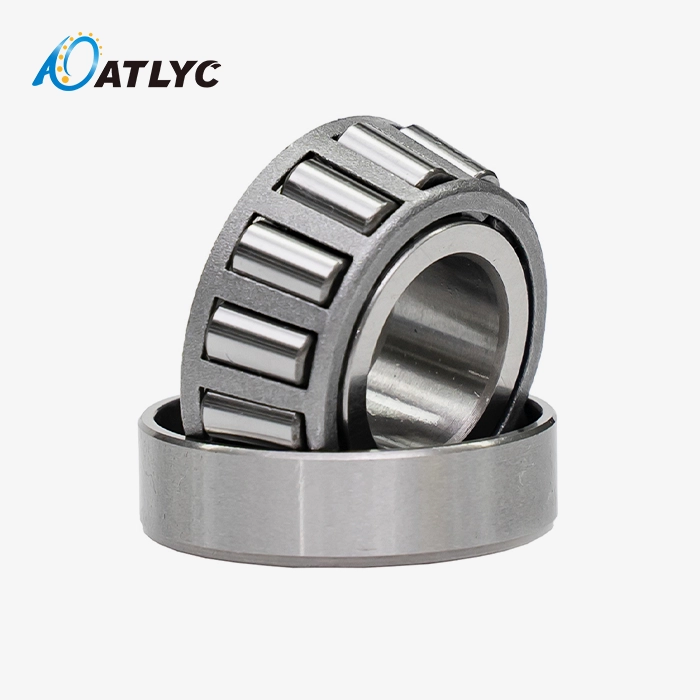
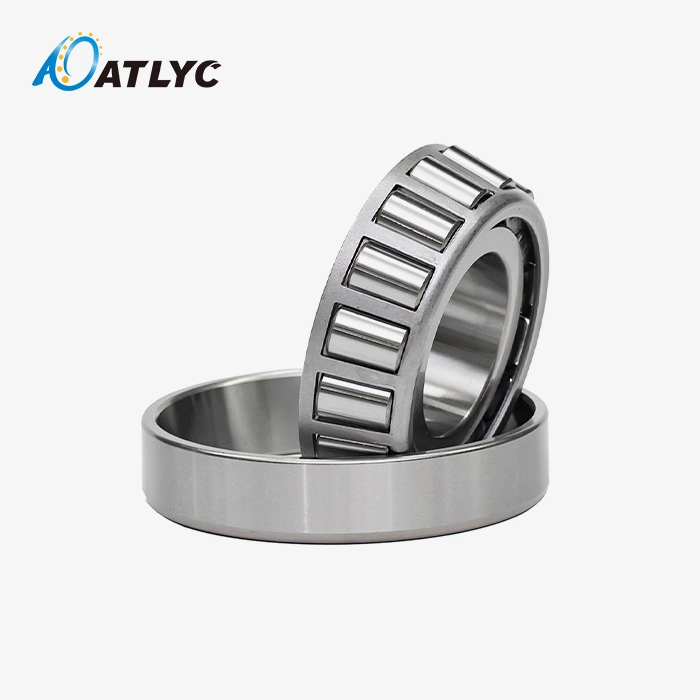
Tapered roller bearings and angular contact ball bearings handle combined radial and axial loads through their contact angle geometry. However, these designs require careful preload adjustment and typically need paired arrangements to manage bi-directional loads. The RA Type Crossed Roller Bearings design eliminates preload adjustment complexity through integrated manufacturing precision, simplifying installation and ensuring consistent performance across production quantities.
Angular contact bearings achieve high-speed capability exceeding crossed roller limits, but sacrifice load capacity and rigidity. Application selection depends on whether speed or stiffness represents the dominant requirement. Precision positioning systems prioritize rigidity and accuracy, making crossed rollers the preferred choice despite speed limitations.
How to Choose the Right RA Type Crossed Roller Bearing for Your Procurement Needs
Selecting appropriate bearing specifications requires a systematic evaluation of application requirements against available product capabilities. Procurement professionals should address multiple technical and commercial considerations to optimize selection decisions.
Evaluating Load Requirements and Safety Factors
Engineering teams must calculate the maximum radial, axial, and moment loads the bearing will experience during operation. Manufacturers publish load ratings based on standardized calculation methods, but application-specific duty cycles and load combinations require careful analysis. Safety factors typically range from 1.5 to 3.0, depending on application criticality, environmental conditions, and desired service life.
Dynamic load considerations differ from static requirements. Applications involving continuous rotation or oscillation demand evaluation of fatigue life calculations based on the L10 bearing life methodology. Static load capacity becomes critical in positioning applications where bearings remain stationary under load for extended periods. Understanding these distinctions ensures bearing selections meet both immediate functional requirements and long-term durability expectations.
Precision Grade Selection and Accuracy Requirements
Precision grades directly impact rotational accuracy, runout characteristics, and ultimately, system performance. The P5 grade delivers accuracy suitable for most precision industrial applications, balancing performance capability with cost-effectiveness. Applications demanding exceptional positioning repeatability—such as semiconductor equipment or coordinate measuring machines—justify P4 or higher precision specifications despite increased investment.
Runout accuracy specifications warrant particular attention in applications where concentricity affects end performance. Medical imaging equipment, optical instrumentation, and precision metrology systems often specify P4 precision to minimize measurement errors and ensure result repeatability. Procurement teams should engage engineering stakeholders to establish minimum precision requirements, avoiding over-specification that unnecessarily increases component costs.
Material Selection and Environmental Considerations
Standard GCr15 bearing steel provides excellent performance across typical industrial environments with temperatures ranging from -20°C to 120°C. Applications encountering corrosive environments, extreme temperatures, or special cleanliness requirements may necessitate alternative materials. Stainless steel variants offer corrosion resistance valuable in food processing, pharmaceutical, and certain chemical processing applications, though typically with reduced load capacity compared to standard bearing steel.
Lubrication selection significantly impacts bearing performance and service life. Standard lithium-based greases suit most applications, but high-temperature environments, vacuum conditions, or clean-room requirements demand specialized lubricants. Procurement specifications should clearly communicate environmental conditions, enabling suppliers to recommend appropriate lubrication solutions matched to operational requirements.
Supplier Evaluation and Procurement Strategy
Established bearing manufacturers like NSK, SKF, and THK set industry benchmarks for quality and technical support. However, qualified manufacturers in established production regions deliver comparable technical performance at competitive price points. Evaluating supplier credentials should emphasize quality certifications—particularly ISO 9001 and IATF 16949—demonstrating commitment to consistent manufacturing processes and continuous improvement.
Production capacity and supply chain reliability represent critical procurement considerations beyond product specifications. Lead time consistency, minimum order quantities, and logistics capabilities directly impact production planning and inventory management. Suppliers demonstrating scalable production capacity provide confidence in their ability to support growing application volumes and respond effectively to demand fluctuations. Geographic diversity in supply chains mitigates risk while maintaining access to global technical expertise and competitive pricing structures.
Maintenance Tips and Best Practices for RA Type Crossed Roller Bearings
Proper maintenance extends bearing service life and ensures consistent performance throughout operational lifecycles. Implementing systematic maintenance practices delivers high total cost of ownership benefits compared to reactive approaches.
Lubrication Management and Regreasing Schedules
Appropriate lubrication prevents premature wear by maintaining protective films between rolling elements and raceways. Initial lubrication applied during manufacturing typically sustains performance for defined operational periods depending on load, speed, and environmental conditions. Establishing regreasing schedules based on manufacturer recommendations and application-specific factors prevents lubricant depletion that accelerates wear progression.
Lubricant selection for RA Type Crossed Roller Bearings should match operational requirements. High-speed applications benefit from low-viscosity greases, minimizing churning losses, while heavily loaded slow-speed applications require higher-viscosity lubricants to maintain adequate film thickness. Temperature extremes demand specialized formulations maintaining performance characteristics across operational ranges. Contamination prevention through effective sealing extends lubricant life and protects bearing surfaces from abrasive particles, causing accelerated wear.
Inspection Protocols and Performance Monitoring
Regular inspection enables early detection of developing issues before catastrophic failures occur. Visual examination during scheduled maintenance intervals identifies obvious contamination, corrosion, or lubricant degradation. Operational monitoring through vibration analysis, temperature measurement, and acoustic emission detection provides early warning of bearing distress, enabling planned intervention rather than emergency repairs.
Establishing baseline measurements during initial commissioning provides reference points for comparison during subsequent inspections. Gradual increases in vibration amplitude, operating temperature, or acoustic emissions indicate developing wear conditions requiring attention. Implementing condition-based maintenance approaches optimizes intervention timing, extending bearing life while preventing unexpected failures and disrupting production schedules.
Installation Best Practices and Handling Procedures
Proper installation fundamentally impacts bearing performance and longevity. Cleanliness during assembly prevents contamination introduction, causing premature wear. Controlled press-fitting or thermal installation methods prevent mechanical damage to precision-ground surfaces and maintain designed preload conditions. Following manufacturer installation specifications ensures bearings operate within designed parameters achieving expected service life.
Handling procedures should prevent impact loads or contamination exposure during storage and assembly. Maintaining bearings in original protective packaging until installation protects precision surfaces from environmental exposure. Using appropriate installation tools and techniques prevents mechanical damage that compromises performance. Training maintenance personnel on proper procedures delivers consistent installation quality across production facilities and maintenance events.
Conclusion
RA Type Crossed Roller Bearings deliver unmatched performance in applications demanding precision, rigidity, and compact design. Their unique crossed roller configuration handles multi-directional loads within ultra-thin profiles, solving critical engineering challenges across robotics, medical equipment, semiconductor manufacturing, and precision machinery sectors. Understanding their technical advantages compared to alternative bearing types enables procurement professionals to make informed selection decisions, optimizing system performance and total cost of ownership. Proper specification, supplier selection, and maintenance practices ensure these precision components deliver their full performance potential throughout extended service lives, supporting production efficiency and product quality objectives essential to competitive manufacturing operations.
FAQ
What makes these bearings suitable for precision instrumentation?
The crossed roller design delivers exceptional rotational accuracy through its orthogonal roller arrangement and precision-ground raceways. Manufacturing to P5 or P4 precision grades achieves micron-level runout accuracy essential for measurement equipment, optical systems, and coordinate measuring machines. The high rigidity prevents deflection under measurement forces, maintaining positional accuracy critical for reliable results.
Can manufacturers customize bearings for specialized requirements?
Qualified manufacturers offer customization addressing specific dimensional constraints, material requirements, or performance specifications. Custom options include modified seal designs for contaminated environments, special materials for corrosive conditions, and tailored preload configurations optimizing stiffness characteristics. Engaging suppliers early in design phases enables collaborative development of optimized solutions, though customization typically requires minimum order quantities, justifying tooling investments.
How does load capacity compare within the crossed roller bearing family?
The RA series emphasizes compact dimensions and inner ring rotation, offering excellent load capacity within thin-section constraints. Alternative crossed roller configurations like RB and RE types provide different mounting arrangements and load ratings suited to specific applications. Comparing published load ratings against calculated application requirements ensures appropriate selection. Consulting manufacturers' technical teams helps match bearing families to application demands, optimizing performance and cost-effectiveness.
Partner with ATLYC for Your Precision Bearing Requirements
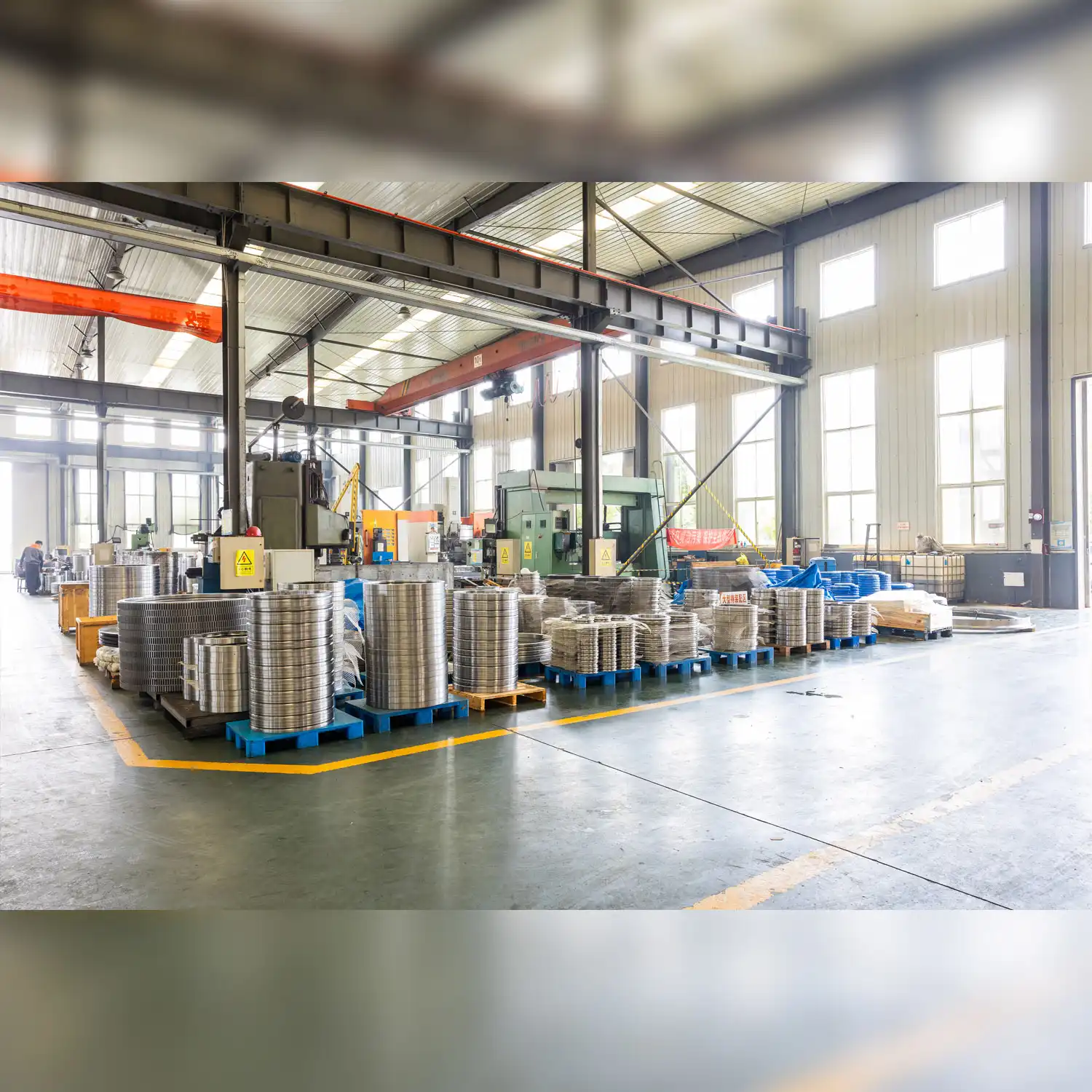
ATLYC brings 15 years of specialized experience manufacturing precision bearings that meet international quality standards and demanding application requirements. Our ISO 9001 and IATF 16949 certified production facilities deliver RA Type Crossed Roller Bearings with consistent quality, competitive pricing, and reliable lead times supporting your production schedules. As an established RA Type Crossed Roller Bearings manufacturer, we serve global OEMs and distributors across automotive, industrial machinery, and automation sectors with technical expertise and scalable production capacity. Our engineering team provides application support matching bearing specifications precisely to your requirements, while our supply chain capabilities ensure dependable delivery to customers in South Korea, the United States, Germany, Russia, Iran, and Turkey. Contact our technical sales team at auto@lyautobearing.com to discuss your specific bearing requirements and receive detailed quotations for RA Type Crossed Roller Bearings for sale tailored to your procurement needs.
References
1. Harris, T.A. & Kotzalas, M.N. (2006). Rolling Bearing Analysis: Essential Concepts of Bearing Technology (5th ed.). CRC Press.
2. Eschmann, P., Hasbargen, L., & Weigand, K. (1985). Ball and Roller Bearings: Theory, Design and Application (2nd ed.). John Wiley & Sons.
3. Palmgren, A. (1959). Ball and Roller Bearing Engineering (3rd ed.). SKF Industries Inc.
4. ISO 492:2014. Rolling bearings — Radial bearings — Geometrical product specifications (GPS) and tolerance values. International Organization for Standardization.
5. Bhushan, B. (2013). Principles and Applications of Tribology (2nd ed.). John Wiley & Sons.
6. Budynas, R.G. & Nisbett, J.K. (2015). Shigley's Mechanical Engineering Design (10th ed.). McGraw-Hill Education.
Learn about our latest products and discounts through SMS or email