- English
- French
- German
- Portuguese
- Spanish
- Russian
- Japanese
- Korean
- Arabic
- Greek
- German
- Turkish
- Italian
- Danish
- Romanian
- Indonesian
- Czech
- Afrikaans
- Swedish
- Polish
- Basque
- Catalan
- Esperanto
- Hindi
- Lao
- Albanian
- Amharic
- Armenian
- Azerbaijani
- Belarusian
- Bengali
- Bosnian
- Bulgarian
- Cebuano
- Chichewa
- Corsican
- Croatian
- Dutch
- Estonian
- Filipino
- Finnish
- Frisian
- Galician
- Georgian
- Gujarati
- Haitian
- Hausa
- Hawaiian
- Hebrew
- Hmong
- Hungarian
- Icelandic
- Igbo
- Javanese
- Kannada
- Kazakh
- Khmer
- Kurdish
- Kyrgyz
- Latin
- Latvian
- Lithuanian
- Luxembou..
- Macedonian
- Malagasy
- Malay
- Malayalam
- Maltese
- Maori
- Marathi
- Mongolian
- Burmese
- Nepali
- Norwegian
- Pashto
- Persian
- Punjabi
- Serbian
- Sesotho
- Sinhala
- Slovak
- Slovenian
- Somali
- Samoan
- Scots Gaelic
- Shona
- Sindhi
- Sundanese
- Swahili
- Tajik
- Tamil
- Telugu
- Thai
- Ukrainian
- Urdu
- Uzbek
- Vietnamese
- Welsh
- Xhosa
- Yiddish
- Yoruba
- Zulu
RU28UU Cross Roller Bearing Failure Symptoms to Watch
If you notice that precision bearings are wearing out before they completely break, you can save your company tens of thousands of dollars in repair costs and lost production time. The small RU28UU Cross roller bearing, with a 10mm inner diameter and a 52mm outer diameter, powers important motion control systems in robotic joints, medical devices, and tools used to make semiconductors. When these precision parts start to break, they don't usually make a big deal out of it. Instead, they send out tiny signs by changing how they work. When you know these early warning signs, you can switch from reactive repair to strategic asset management. This will protect both your equipment investment and your production plans.
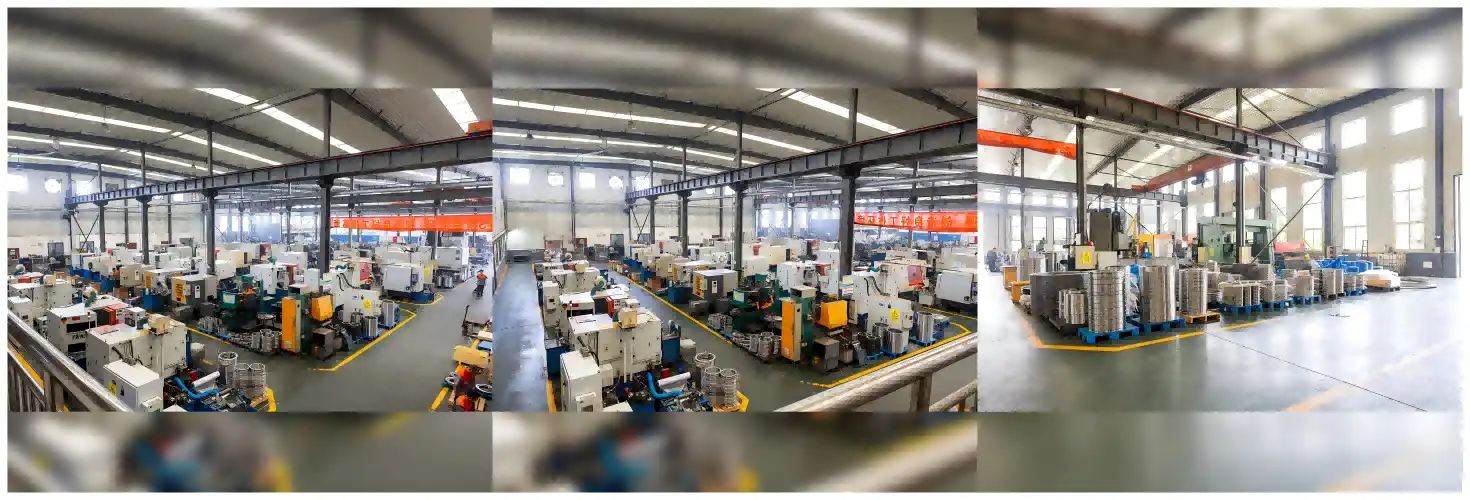
Understanding RU28UU Cross Roller Bearing and Its Critical Role
Structural Innovation in Precision Motion Control
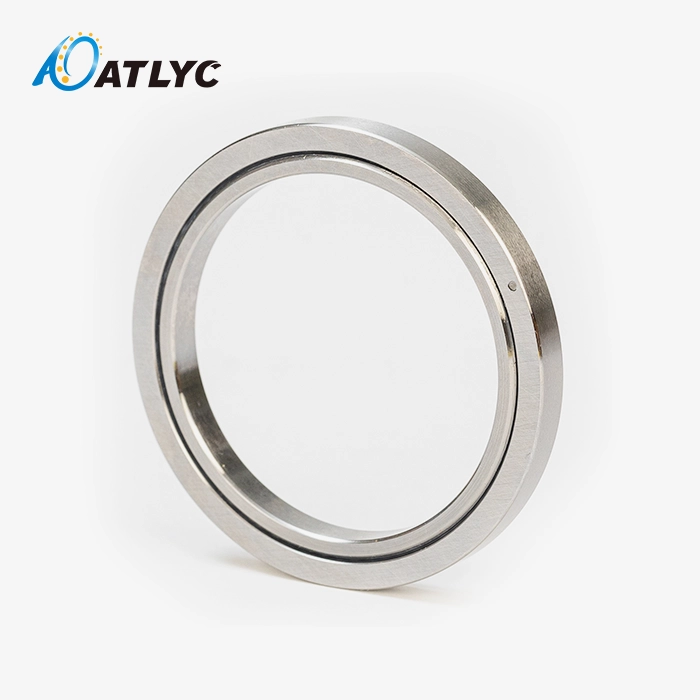
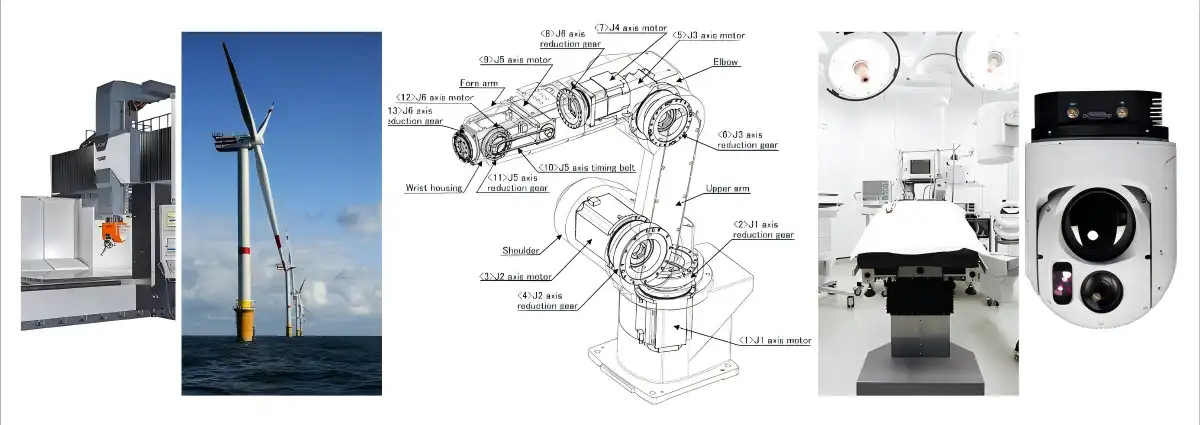
The RU28UU Cross roller bearing is a special type of precision rolling element that can be told apart from others by its built-in ring structure. Unlike most ball bearings, which need separate housings, this version has fastening holes already drilled into both the inner and outer rings. The 8mm width can fit cylindrical rollers that are lined up perpendicular to each other at 90-degree angles within V-shaped raceways. This orthogonal arrangement lets alternate rollers support loads coming from different directions at the same time, making the structure very rigid in a very small space.
These parts are made from high-carbon chromium steel (GCr15) or silicon-manganese steel (GCr15SiMn). They are carefully heated until they reach a hardness of 58 to 62 HRC. The choice of material has a direct effect on how well it resists wear and how stable its dimensions are under repetitive loading. The "UU" label means that there are contact-type rubber seals on both sides that cover them and keep the factory-packed lithium-based grease inside while keeping out environmental contaminants. This is an important feature for equipment that is used outside of controlled cleanroom settings.
Load Capacity That Redefines Space Efficiency
The great thing about this setup is that it can handle complicated lifting situations that would normally need paired bearing arrangements. Precision equipment is affected by radial forces, axial thrusts, and moment loads all at the same time. Traditional methods need several bearings to be placed at specific distances, which takes up valuable installation space and makes alignment harder. The cross-roller design combines these functions into a single 8mm-wide part, which has 3–4 times higher moment stiffness than ball bearings of the same size.
Think about wrist joints for industrial robots, where every millimetre counts toward the weight that can be carried. With the RU28UU Cross roller bearing, designers can use the extra room they've saved to add sensors or make actuators bigger. In the same way, the built-in fixing holes in rotary indexing tables for machining centres get rid of the need to machine the case, which lowers the cost of the parts and makes assembly easier. This design philosophy—maximum usefulness in minimal dimensions—solves the main problem that automation equipment makers all over the world face.
Precision Classes Matching Application Demands
In precision manufacturing, the accuracy of the bearing has a direct effect on the consistency of the end-effector's position and the quality of the surface finish. There are five levels of precision for the RU28UU Cross roller bearing: P6 (normal), P0, P5, P4, and P2 (ultra-precision). These groups, which are based on ISO standards, describe the allowed ranges for raceway roundness, radial runout, and axial play. A P5-grade part keeps rotational runout below 5 microns, which is important for optical inspection systems where the steadiness of the camera decides how well it can find defects.
When procurement teams weigh cost against performance needs, they should match exact grades to the needs of the application. Medical surgical manipulators who do minimally invasive treatments need P4 or P2 grades because the accuracy of their placement has a direct effect on how well the patient does. On the other hand, material handling robots used in less important tasks can work well with P0 or P5 specs and cost a lot less per unit. This tiered method lowers the total cost of ownership without sacrificing functionality.
Common Failure Symptoms of RU28UU Cross Roller Bearings
Acoustic Indicators of Distress
When they're working, healthy RU28UU Cross roller bearings make a smooth hum that is almost impossible to hear. When wear starts, friction patterns change, leaving behind unique sound profiles that experienced repair workers can recognise right away. Grinding sounds mean that the lube is dirty. Abrasive particles stuck between the rollers and raceways are working like sanding compound, slowly removing the hardened surface material. This situation gets worse very quickly; what starts out as a faint noise turns into noticeable vibrations within a few weeks of continuous operation.
When you hear clicking or hitting sounds, it means that there is some small damage. This is usually spalling or pitting on the raceway surfaces. Every time a roller goes over a broken area, it sends out an impulse that makes a rhythmic noise that goes with the speed of the spinning. Keeping track of how many clicks there are per revolution helps find damage and directs checking efforts. Squealing sounds like the bearings aren't properly oiled; the protected grease film has broken down or moved, letting metals touch each other, which creates heat and speeds up wear.
Visual Evidence of Component Degradation
Having regular review windows lets you see obvious wear and tear before it becomes a problem that stops working. Patterns of discolouration on seal surfaces, especially dark or blueish tints, mean that the working temperature is too high. When there is more contact because of dirty lube, imbalance, or bad preload settings, heat is generated. When surface temperatures go above 80°C, grease ingredients break down. This starts a chain reaction where less effective lubrication causes more burning.
When seal quality goes down, grease leaks around contact points or the rubber material develops cracks that can be seen. When elastomer materials are exposed to ozone, ultraviolet radiation, or cleaning chemicals that don't work well together, they break down. This makes contamination shields less effective. When seals fail, outside particles get in while oil leaks out, greatly reducing the remaining service life. When rust forms on visible steel areas that are visible, it means that water has gotten in. This usually happens after a seal fails or when equipment goes through thermal cycling.
Performance Degradation Patterns
Metrics that measure performance give clear proof of bearing health. When accelerometers are attached to the structures of equipment and the shaking level goes up, it means that problems are starting to happen before people can notice them. Vibration analysis methods find the specific frequencies that go with different types of defects. For example, damage to the outer race, defects in the inner race, or imperfections on the roller surface all have their own unique spectral fingerprints.
Dropping in positioning precision is probably the most practically important sign. When robotic systems show more path deviation or indexing tables show bigger angular positioning mistakes, it means that there are problems with the bearings that are affecting the accuracy of rotation. This wear and tear is caused by either uneven friction that causes stick-slip motion or greater internal space as wear continues. Using infrared thermography or integrated sensors to track a rise in temperature during operation can give you an early warning of increased friction before a catastrophic failure.
Root Causes Behind RU28UU Bearing Failures
Installation Errors Creating Stress Concentrations
The service life of an RU28UU Cross roller bearing depends on how well it was installed, but mounting mistakes are still one of the most common reasons why they fail. When parts that fit together incorrectly aren't lined up, edge loading happens, which concentrates forces on small touch areas instead of spreading them out along the whole length of the roller. This situation greatly raises contact loads, which quickly wear down a material's fatigue life. Precision equipment needs alignment limits that are measured in arc-seconds; even small changes in angle can have a noticeable effect on performance.
A lot of the time, mounting surface preparation doesn't get enough attention. When mating faces have burrs, dirt, or rust on them, the bearings can't seat evenly. This causes stress spots and runout errors in certain areas. The combined mounting hole design makes fitting easier, but it's important to use the right bolt torque. Not tightening enough allows for tiny movements that cause fretting wear; too much torque causes rings to bend, which lowers accuracy and could cause damage right away.
Damage that can't be seen at first glance is caused by handling during installation. The precisely ground raceways need to be carefully kept away from damage and dirt. When you drop bearings or let installation tools touch sealing surfaces, you can damage them with dents, scratches, or seals that don't show up as operating issues until after the equipment has been put into service. These problems can be avoided by using controlled construction methods and the right tools.
Operational Conditions Exceeding Design Parameters
The dynamic and static load values for the RU28UU Cross roller bearing are safe working limits that have been proven by a lot of testing. When you exceed these limits by overusing the equipment, hitting it hard, or using it in a way that wasn't meant to be used, fatigue damage builds up faster. Dynamic loading cycles cause stress patterns below the surface, which finally lead to the formation of microcracks that spread to the surface and break off. An exponential shape shows the link between load and fatigue life. A 10% overload can cut the expected service life by 30–40%.
The most important practical element is lubrication. The lithium grease that was put on at the plant has set service intervals and must be used in certain circumstances. High temperatures above 80°C break down the consistency and chemistry of lubricants and additives, so they need to be re-oiled every 6 to 12 months. When a lube gets dirty with metal wear particles, dust, or water, it stops protecting and adds gritty elements that make parts wear out faster.
When designing cross rollers, speed limits should be given extra attention. At high spinning speeds, the large contact area between the wheels and the raceways creates heat through friction. The safe working ranges are given by the DN number, which is the bearing bore in mm times the rotational speed in RPM. For tasks that need constant high-speed spinning, you might need a different type of bearing. The RU28UU Cross roller bearing works best for irregular motion, oscillating tasks, and accurate indexing, but not for long-term high-speed operation.
Material Fatigue and Environmental Degradation
In all bearing uses, rolling contact wear is the main factor that shortens the life of the bearing. Each stress cycle, when wheels move across raceway surfaces while they are loaded, causes tiny changes in the material that add up until it breaks. Modern bearing steels have very good wear resistance thanks to improvements in metallurgy, but the number of cycles that can be used is limited by physics. Knowing how to figure out the L10's life helps procurement teams set reasonable replacement plans based on how the system is used and the amount of failure risk that is accepted.
When protective shields fail, corrosion strikes surfaces that hold things up. When water gets in through broken seals, it mixes with the steel surfaces to make rust, which messes up the precise geometry and works as an abrasive. In some industrial settings with chemical vapours or acidic air, this process happens faster. Stainless steel versions are better at resisting rust, but they usually have lower load capacities and need to be carefully evaluated for each application.
Thermal cycle, or heating and cooling things over and over, causes changes in size and stress patterns inside the material. When the temperature of a piece of equipment changes a lot during operation or between shifts, the bearings go through stages of expanding and contracting. These thermal stresses make the effects of mechanical loads stronger, especially when different materials are used in the parts and have different rates of thermal expansion, which can cause interference or changes in the clearance.
Effective Troubleshooting and Maintenance Strategies
Systematic Inspection Protocols
Setting up structured review processes lets you find problems early for the RU28UU Cross roller bearing, when they are still easy and cheap to fix. Seals should be looked at visually during planned repair windows to see if they are cracked, displaced, or leaking grease. Patterns of discolouration on the surface can tell you about the history of working temperatures. A buildup of external contamination means that environmental security methods need to be improved.
By listening to sounds with electronic stethoscopes or ultrasonic devices and noticing changes in the sound patterns, problems can be found before they get worse. Setting up baseline records during commissioning gives you a way to find variations by comparing them to other recordings. Spectrum analysis is used in vibration analysis to find specific fault frequencies, making it the most advanced method of predictive maintenance. Accelerometer data handled by FFT algorithms shows details about the state of bearings that can't be seen with other inspection methods.
Installation Best Practices: Preventing Premature Failure
Getting the design service life starts with installing things the right way. Clean, controlled production areas keep contamination to a minimum. To get rid of burrs, rust, and leftover cutting fluids, mounting surfaces need to be cleaned and inspected carefully. Precision measuring the smoothness and perpendicularity of the mounting surface proves that it meets the requirements set by the bearing maker, which are usually within 0.01mm for precision uses. Alignment processes require the right fixtures and measuring tools to be used.
| Installation Parameter | Specification | Verification Method |
|---|---|---|
| Mounting Surface Flatness | 0.01mm | Feeler gauge and precision straightedge |
| Angular Alignment | 10 arc-seconds | Laser System and Dial Indicator |
| Bolt Torque | Per Manufacturer Data | Calibrated wrench for torque |
| Surface Cleanliness | ISO 14644 Class 7 or Better | Look and Wipe Test |
| Installation Temperature | 15-25°C | Watching the Environment |
Lubrication Management and Contamination Control
Under normal circumstances, the UU-sealed configuration allows for long periods of running without any upkeep. However, some uses need extra lubrication. In places with high temperatures, long job cycles, or heavy loads, the bearings may need to be oiled every 6 to 12 months. The combined design usually has ways for lubricant to get in, either through drilled holes or by moving the seals around during upkeep. The choice of lubricant has a big effect on speed and durability.
Lithium-based greases are great for a lot of different situations because they can handle a lot of weight, stay stable at room temperature, and work with seals. For uses that need to work at very high temperatures, special synthetic formulas may be needed. The amount of lubricant is important. Too much grease makes spinning more difficult and creates more heat, while not enough grease doesn't keep protection films in place. Controlling contamination makes bearings last a lot longer. Positive-pressure barriers stop dust from getting into dirty places.
Predictive Maintenance Technologies
Condition-based repair strategies that optimise when to replace things are made possible by modern monitoring technologies. Embedded temperature monitors keep an eye on the temperature all the time and send out alerts when abnormality limits are crossed. Wireless sensor networks get rid of the need for complicated wires, which makes tracking equipment setups that are spread out more cost-effective. Vibration analysis systems can be as simple as an alarm system or as complex as a monitoring tool.
Real-time spectral analysis is done by more advanced systems to find specific kinds of defects and estimate how long the system will still work. Machine learning algorithms that are taught on failure data from the past improve the accuracy of diagnostics by cutting down on false reports and finding problems earlier. Monitoring acoustic emissions can pick up stress waves caused by crack growth and surface wear, which could help find issues before sound changes can be measured.
Comparing RU28UU Cross Roller Bearings to Alternatives
Design Trade-offs Across Precision Bearing Categories
Knowing about competing technologies helps buying teams choose the best options for the RU28UU Cross roller bearing. Angular contact ball bearings set up in pairs or back-to-back arrangements can handle combined loads, but they need more axial room and accurate preload adjustment when they are being put together. Their benefit is that they can go faster; ball-race contact causes less friction than roller-raceway surfaces, so they can keep running at a high rpm for a longer time with less heat production.
| Bearing Type | Moment Capacity | Speed Capability | Space Efficiency | Installation Complexity | Typical Applications |
|---|---|---|---|---|---|
| RU28UU Cross Roller | Very good | Moderate | Great Work | Low | Robotics, medical tools, and indexing tables |
| Angular Contact Ball (Paired) | good | Very good | Moderate | Moderate | Spindles for machine tools and high-speed automation |
| Tapered Roller | Very good | Moderate | Okay | Moderate | Gearboxes and Heavy Industrial Equipment |
| Slewing Ring | Great Work | Low | Bad | High | Big turntables, cranes, and excavators |
Evaluating Total Cost of Ownership
The initial buying price is only one part of the total costs of bearing. Installation labour, downtime during repair, and problems caused by failures often cost more than the cost of buying the parts. The RU28UU Cross roller bearing's built-in mounting design cuts installation time by 30 to 50 per cent compared to regular setups that need to make the case and line it up. For OEM uses, this simplification directly means lower assembly costs that are passed on to all output levels.
Throughout the life of an item, its maintenance needs affect how much it costs to run. When bearings are sealed, they require less planned lubrication work and fewer breakdowns caused by contamination. Applications in harsh settings benefit the most—the safety against pollution is worth the small extra cost compared to open bearing types that need to be serviced often. When you divide the cost of upkeep labour by the expected life of the equipment, you can usually see that sealed bearings are more cost-effective.
Sourcing Strategies Ensuring Quality and Authenticity
There are many producers in the global bearing market, and their products range in quality and skill. Well-known brands like SKF, NSK, THK, and NTN got their good names by constantly improving their technology and making sure their products are of high quality. Their high prices are due to the fact that they have invested in metalworking, industrial accuracy, and quality systems. These well-known sources are good for applications that need the highest level of stability and performance predictability.
Chinese companies are making more and more appealing options, especially for uses where cost is a big concern and working conditions aren't too harsh. To tell the difference between good and bad suppliers, you should do your research and look at their production skills, quality certifications (ISO 9001, IATF 16949), and customer references. Established producers with experience doing business in other countries show that they know what quality standards and paperwork are expected around the world. Buying expensive brands requires making sure the seller is authorised to avoid fake bearings.
Conclusion
Recognising the signs of failure in RU28UU Cross roller bearings saves the investment in equipment and keeps production schedules that are necessary for industrial businesses to stay competitive. By knowing what causes problems, like mistakes during installation or damage from the environment or heavy use, engineering teams can take preventative steps that make parts last longer. Systematic inspection procedures that use acoustic tracking, eye inspection, and advanced vibration analysis can spot problems before they get too bad and make fixing them easy and cheap. Total operating costs can be lowered in a wide range of industrial settings by matching precision grades to the needs of the application, choosing the right lubrication strategies, and buying from reputable makers.
FAQ
1. What are the earliest signs that my RU28UU bearing is beginning to fail?
The smallest early warning signs for the RU28UU Cross roller bearing are small rises in working temperature (usually 5–10°C above baseline readings) and small changes in sound amplitude that can be picked up by sensitive accelerometers before people can tell the difference. Skilled techs using electronic stethoscopes can pick up on faint grinding or noise while the equipment is still working normally. In precision applications, a drop in positioning accuracy may show up as more scatter in repeatable measures. These signs often show up weeks or months before there are clear signs of failure.
2. How frequently should we inspect RU28UU bearings in critical applications?
The number of inspections should depend on how bad the failure would be and how the machine is being used. Medical equipment that is safety-critical needs to be inspected carefully every month, including vibrations and temperatures. When it comes to making cars, industrial robots usually need full evaluations every three months, with constant automated tracking in between. Less important uses can depend on checks every six months. Setting baseline measurements during commissioning makes it possible to compare measures and find small degradation trends. Equipment that works in dirty settings or under a lot of stress needs to be checked more often.
3. Can we repair failed RU28UU bearings, or is replacement always necessary?
Most of the time, fixing RU28UU Cross roller bearings is neither cheap nor safe. Field repair methods can't bring back the precisely ground raceways and tight specs that are needed for the part to work right. Damage to the surface from flaking, corrosion, or contamination forever changes the size and structure of the material. Specialised reconditioning facilities can fix some kinds of damage, but the prices are usually higher than new bearings, and repaired parts don't come with the same performance warranties. The best way to preserve equipment and guarantee coverage is to replace old parts with new ones.
Partner With ATLYC for Reliable RU28UU Cross Roller Bearing Supply
Luoyang Auto Bearing Co., Ltd. (ATLYC) has been making precision bearings for 15 years and serves the challenging car and industrial automation markets in North America and Europe. Our ISO 9001 and IATF 16949 certifications show that we are dedicated to quality management systems that meet international standards. We use high-quality GCr15 and GCr15SiMn steel to make RU28UU Cross roller bearings. We offer precision types from P6 to P2 to meet the needs of your unique application. Our six specialised workshops allow us to guarantee a steady supply with short lead times. Our 120-person expert team helps with engineering for unique requirements and application optimisation. Contact our procurement experts at auto@lyautobearing.com to talk about your bearing needs. We meet the cost-effectiveness needs of your procurement goals while also meeting the durability needs of your precision equipment.
References
1. Harris, T.A. & Kotzalas, M.N. (2006). Advanced Concepts of Bearing Technology: Rolling Bearing Analysis, Fifth Edition. CRC Press, Taylor & Francis Group.
2. ISO 14728-1:2017. Rolling Bearings — Linear Motion Rolling Bearings — Part 1: Dynamic Load Ratings and Rating Life.
3. Yoshimoto, S., Yamamoto, T. & Toda, K. (2018). "Numerical Analysis of Static and Dynamic Characteristics of Aerostatic Circular Porous Thrust Bearings with Single Air Supply." Tribology International, Vol. 119, pp. 462-471.
4. German Institute for Standardization. (2010). DIN 616: Rolling Bearings — Tolerances — Values for Tolerances and Deviations from Nominal Dimensions.
5. Tallian, T.E. (1999). Failure Atlas for Hertz Contact Machine Elements, Second Edition. ASME Press, American Society of Mechanical Engineers.
6. SKF Group Technical Manual. (2020). Cross Roller Bearing Units: Mounting, Lubrication and Maintenance Recommendations for Industrial Applications. SKF Motion Technologies AB.
Learn about our latest products and discounts through SMS or email