- English
- French
- German
- Portuguese
- Spanish
- Russian
- Japanese
- Korean
- Arabic
- Greek
- German
- Turkish
- Italian
- Danish
- Romanian
- Indonesian
- Czech
- Afrikaans
- Swedish
- Polish
- Basque
- Catalan
- Esperanto
- Hindi
- Lao
- Albanian
- Amharic
- Armenian
- Azerbaijani
- Belarusian
- Bengali
- Bosnian
- Bulgarian
- Cebuano
- Chichewa
- Corsican
- Croatian
- Dutch
- Estonian
- Filipino
- Finnish
- Frisian
- Galician
- Georgian
- Gujarati
- Haitian
- Hausa
- Hawaiian
- Hebrew
- Hmong
- Hungarian
- Icelandic
- Igbo
- Javanese
- Kannada
- Kazakh
- Khmer
- Kurdish
- Kyrgyz
- Latin
- Latvian
- Lithuanian
- Luxembou..
- Macedonian
- Malagasy
- Malay
- Malayalam
- Maltese
- Maori
- Marathi
- Mongolian
- Burmese
- Nepali
- Norwegian
- Pashto
- Persian
- Punjabi
- Serbian
- Sesotho
- Sinhala
- Slovak
- Slovenian
- Somali
- Samoan
- Scots Gaelic
- Shona
- Sindhi
- Sundanese
- Swahili
- Tajik
- Tamil
- Telugu
- Thai
- Ukrainian
- Urdu
- Uzbek
- Vietnamese
- Welsh
- Xhosa
- Yiddish
- Yoruba
- Zulu
Can You Customize RU28UU Cross Roller Bearing Seals?
It is possible to change the RU28UU Cross roller bearing covers to fit your needs. Dual rubber contact seals (UU designation) come standard on the RU28UU, but makers can change the seal materials, setups, and levels of safety based on your application. Customisation can be used for things that will be exposed to high temperatures, chemicals, better protection against pollution, or specific rubbing properties. Because of this, OEMs and makers of industrial equipment can improve the performance of bearings in robotic joints, medical devices, and precise machinery where regular closing methods don't work well. Working with qualified bearing suppliers will make sure that your custom seals stay the same size and shape as the combined ring structure, and they will also last longer.
Understanding RU28UU Cross Roller Bearings and Their Sealing Needs
The Unique Structure of Cross Roller Designs
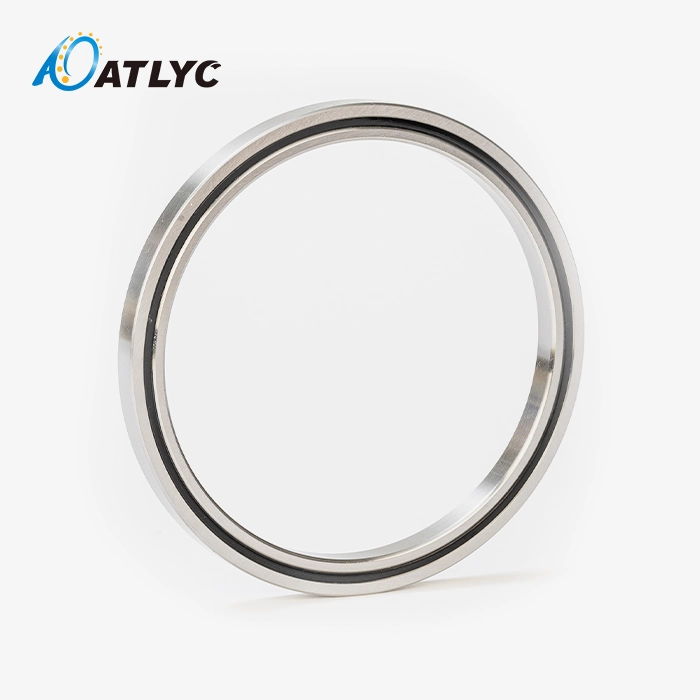
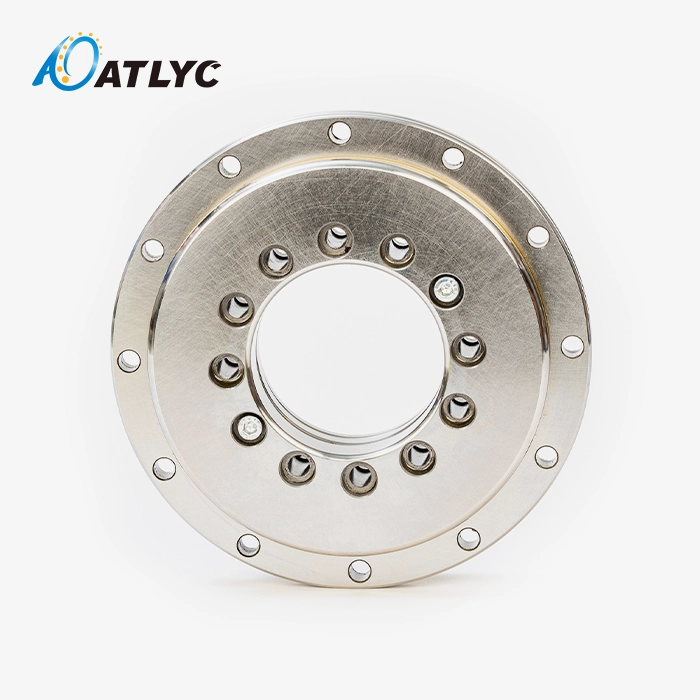
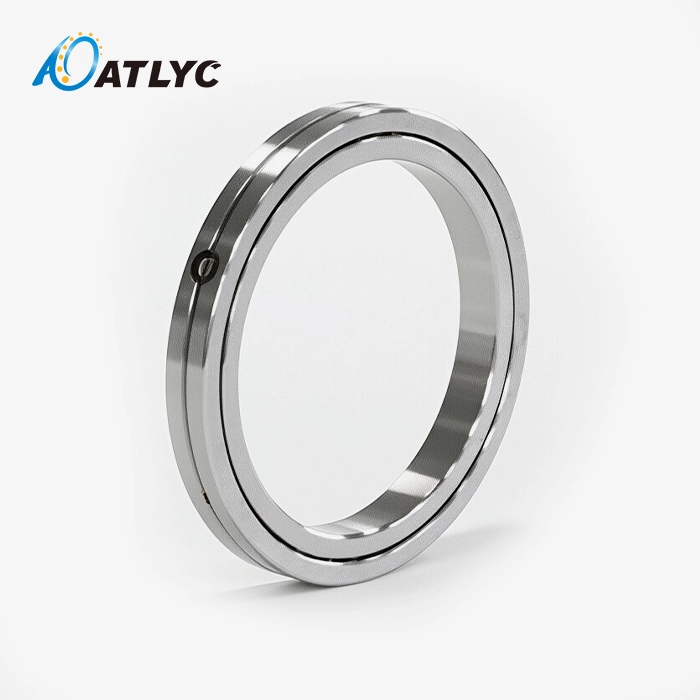
The RU28UU Cross roller bearing is an advanced example of how to design a small precision bearing. This bearing has an inner diameter of 10 mm, an outer diameter of 52 mm, and a width of 8 mm. Despite its small size, it can handle a lot of weight. The combined outer and inner ring design gets rid of the complexity of split rings. It also has pre-drilled mounting holes that make fitting easier for industrial robots and automation equipment. Unlike regular ball bearings that need separate housings, this design lets the bearings connect directly to the machine, which greatly reduces the chance of mistakes and the time it takes to install.
The layout of the rollers in cross roller technology is what makes it unique. Cylindrical rollers are placed exactly 90 degrees apart in V-shaped raceways. Spacers between the rollers keep metal from touching metal. This setup lets a single bearing handle radial, axial, and moment loads at the same time, which normally requires more than one bearing arrangement. These parts are made from Gcr15 or Gcr15SiMn bearing steel that has been hardened to 58–62 HRC. They are very strong and have a range of rotational accuracy levels, from the normal P6 grade to the ultra-precision P2 level.
How Sealing Systems Protect Performance
Seals are the most important protection between the inside of your bearing and outside contaminants. The usual UU designation means that both bearing sides have contact-type rubber seals installed. These seals do two very important things: they keep the lithium grease that was applied by the factory inside the track and stop dust, moisture, and small particles from getting in. In real-world factory settings, repair schedules and equipment life depend directly on how well this protection works.
Contact seals make a barrier by lightly pushing against the moving parts of the bearing. This makes very little friction and keeps dirt out, which makes them perfect for medium-speed tasks like robotic joint movement and sorting tables. The material of the seal lip, which is usually nitrile rubber in standard shapes, has to be able to handle constant bending, changes in temperature, and chemical contact from machines nearby. When these conditions are worse than what a normal seal can handle, performance drops faster, which causes lubricants to break down early and wear patterns to get worse.
Sealing Impact on Load Capacity and Maintenance
The connection between the shape of the cover and the performance of the bearing goes beyond just keeping dirt out. The design of the seal affects the friction factors, which in turn affect how much power is used and how much heat is produced during operation. Because of their line contact shape, cross roller bearings already have less friction than ball bearings. However, the choice of seal can make this advantage even better or worse. Too much seal interference raises drag torque, which is a problem in robotic systems that run on batteries, where saving energy is important.
When it comes to upkeep, sealed bearings are much easier to keep up than open designs that need external sealing systems and regular relubrication plans. The RU28UU's factory-packed grease makes it work without any upkeep under regular circumstances. However, environments with temperatures above 80°C or constant operation may require relubrication from time to time through the access ports that are provided. Knowing the job cycle and weather exposure of your application can help you decide if standard sealing is enough or if custom solutions offer a better total cost of ownership.
| Seal Type | Contamination Exclusion | Friction Level | Temperature Range | Maintenance Frequency |
|---|---|---|---|---|
| Rubber Contact (Standard UU) | Excellent for dust, good for moisture | Low to moderate | -20°C to +100°C | 6-12 months (harsh conditions) |
| Metal Shield | Moderate protection, gap allows ingress | Very low | -40°C to +150°C | 3-6 months (requires external sealing) |
| PTFE Composite | Superior chemical resistance | Low | -40°C to +200°C | 12-24 months |
Why Customise Seals for RU28UU Cross Roller Bearings?
Limitations of Standard Sealing Solutions
Standard rubber contact seals work successfully in most industrial settings, but they quickly show their limits in more specialised settings. Take a look at semiconductor manufacturing equipment that is used in a cleanroom. Standard seals may let out tiny particles or chemicals that can damage sensitive processes. Similar problems happen in medical device use, where seals are exposed to high-temperature steam over and over again during autoclave sterilisation cycles. This breaks down normal nitrile materials too quickly. The flight and aerospace industries need seals that can work safely in a wide range of temperatures, from subzero temperatures at high altitudes to hot temperatures inside engine compartments.
Chemical contact is another common way that things go wrong. Chemicals that are used in cutting fluids, hydraulic oils, or cleaning agents can damage standard seal compounds, causing them to grow, harden, or crack. When seals lose their elasticity, they stop blocking contamination, which lets rough particles into bearing raceways. This speeds up wear patterns that make it harder for measurement tools and devices used to make integrated circuits (ICs), which is where the RU28UU Cross roller bearing really shines.
Key Drivers Behind Seal Customisation
Conditions in the environment are the main reason why seals are customised. Extreme temperatures need special elastomer compounds. For example, fluorocarbon materials keep closing well over a wider temperature range than regular nitrile rubber. When bearings are used near violent substances, chemical compatibility is very important. PTFE-based seals can handle most industrial chemicals while still being low-friction. Levels of dust and particle exposure also affect the choice of cover. Places with a lot of contamination benefit from labyrinth-style designs that make winding paths that stop entry without touch friction.
Decisions about customisation are affected by operational factors in the same way. High-speed spinning causes more friction heating at the places where seals touch, which could damage seal materials and shorten the life of bearings. On the other hand, oscillating motion in robotic joints means that seals are constantly bending instead of rotating steadily. This means that materials that don't crack easily over time are needed. Load dynamics are also important. Moment loads in cantilevered situations can cause seal deflection, which is bad for the stability of the seal. Each application has its own unique mix of these factors that may not be well covered by standard catalogue items.
Real-World Benefits in Critical Applications
Customised closing options improve performance in a lot of different areas that need it. A company that makes medical robots had problems with the surgery manipulator wrist bearings over and over again because of seal degradation caused by sterilisation. When custom fluorocarbon seals were used, bearing service life was increased by 300%. This cut down on downtime and repair costs for surgery tools by a large amount. The improved chemical resistance kept the seal from breaking down during multiple steriliser cycles, keeping the device safe from contamination for as long as it was used.
In precision production settings, a company that makes machining centres and rotating tables dealt with accuracy drift problems that were linked to contaminated bearings. Even though they were supposed to protect against small metal particles, standard plugs let them in. By using special dual-lip seal designs that keep out more contaminants, the bearing's P5 spinning accuracy was kept up over long production runs. The custom seal investment quickly paid for itself because it cut down on the number of times bearings needed to be replaced and improved the quality of the workpiece. This shows how focused customisation can solve specific practical problems while also making equipment more useful overall.
How to Customise RU28UU Cross Roller Bearing Seals: Step-by-Step Guide
Assessing Your Application Requirements
A thorough study of the application is the first step to successful seal customisation. Keep detailed records of your working surroundings, including the temperature ranges, the amount of liquids or chemicals you're exposed to, the amount of dust in the air, and the speeds at which things move or rotate. Find the amounts of radial forces, axial thrust, and moment loads that affect where the seal is placed and how the stress is distributed. Figuring out whether your application requires constant spinning, occasional indexing, or oscillating motion can help you choose the right seal contact designs and materials that will last.
When changing existing parts, you should look at how well the current bearings are working and how often they break. Failures related to seals usually show up as early lubricant loss, obvious pollution in the grease that is thrown out, or higher motor currents that show more friction. Photograph broken seals to show how they've worn down over time. Asymmetric wear means that the parts aren't lined up right, while uniform degradation means that the materials aren't working well together or that the environment is a problem. When working with bearing makers to come up with the best unique solutions, this diagnostic information is very helpful.
Selecting Appropriate Seal Materials
Choosing the material is the most important part of customisation. Buna-N nitrile rubber is the standard seal material. It works well at temperatures ranging from -20°C to +100°C and doesn't react badly with oil-based lubricants. When these conditions aren't met, different elastomers need to be used. The temperature range of fluorocarbon (Viton) is increased to 200°C, and it has better chemical resistance, making it perfect for harsh industrial settings where chemicals are used.
| Material | Temperature Range | Chemical Resistance | Friction | Cost Comparison | Ideal Applications |
|---|---|---|---|---|---|
| Nitrile (Standard) | -20°C to +100°C | Good (petroleum oils) | Moderate | Baseline | General industrial, robotics |
| Fluorocarbon (Viton) | -40°C to +200°C | Excellent (acids, solvents) | Moderate | 2-3x standard | High-temp, chemical exposure |
| PTFE Composite | -200°C to +260°C | Outstanding (nearly universal) | Very low | 3-4x standard | Cleanrooms, extreme environments |
| Silicone | -60°C to +180°C | Fair (limited chemicals) | Low | 1.5-2x standard | Wide temperature swings, food-grade |
Besides choosing the base rubber, you should also think about changing the seal shape. For high-speed uses, single-lip designs reduce friction, while dual-lip designs make it easier to keep contaminants out of dirty areas. Labyrinth seals completely get rid of contact friction. They are good for ultra-high-speed needs, but they don't protect against contamination as well as contact designs.
Communicating Specifications to Suppliers
To work together with suppliers effectively, you need to be able to communicate technically. Make a record with the bearing's identification number (RU28UU), the number of units needed, and the accuracy class that is required (P6, P5, P4, or P2). Include full environmental information, such as the temperature range for operation, the chemicals that will be present, the type and amount of pollution, the speed of spin or motion, and the expected service life. Give CAD drawings that show how the bearing is mounted, especially if there is limited room or other parts nearby that affect the seal design choices.
Ask for material certifications that prove the composition and performance qualities of the seal compound. ISO 9001 and IATF 16949 certifications show that a supplier has the quality control skills needed to make sure that production is consistent across multiple orders. Talk about wait times in a realistic way. Custom seal tooling may take 4–8 weeks, based on how complicated it is, and the cost per unit depends on how many are made. When you order custom seal designs, the minimum order quantity varies by maker but is usually between 50 and 200 units.
Installation and Testing Protocols
Custom covers work as planned as long as they are installed correctly. RU28UU Cross roller bearings with built-in rings and fixing holes are easier to install than split-ring designs, but there is still a chance that the joint will get damaged during handling. Before installing seals, look at them to make sure the lips are facing the right way and to see if they are cracked or deformed. Clean the fixing surfaces well to get rid of any dirt or dust that could make it hard for the seal to seat properly. Install bearings using the force levels recommended by the maker. Be careful not to overtighten, as this can damage the integrated rings and cause the seal lips to become misaligned.
Before a unique seal is fully put into production, it is tested before it is deployed. During run-in processes at slower speeds, torque, temperature, and vibration signs are watched to make sure that seals fit properly. To find outliers, compare standard data to production units. Extended endurance testing under realistic working conditions shows that the seal will last and that it will need to be serviced at the expected times. This part of validation finds any possible problems before they affect production equipment. This lowers the risks of deployment and makes sure that custom solutions give the performance gains that were expected.
Comparing RU28UU Cross Roller Bearing Seals: Standard vs Customised Solutions
Advantages and Limitations of Standard Seals
In about 70% of workplace situations involving RU28UU Cross roller bearings, standard rubber contact seals are the best option. Their main benefit is that they are available right away and don't cost much—they don't charge for tools, have short wait times, and have volume prices that work for both prototypes and production runs. The lithium grease and contact seal that are applied at the plant work together to provide maintenance-free operation across normal industrial temperature ranges. This is sufficient for most robotic applications, machine centre rotary tables, and general automation equipment.
But it's easy to see that normal setups have limits when they're under stress. Temperature changes above 100°C speed up the wear and tear on seals, especially when they are used for a long time, and contact heating adds to the exposure to atmospheric temperature. Chemical conditions are hard for nitrile rubber to work with because some solvents break it down quickly. The design of the contact seal creates friction that, while not very strong, becomes important in battery-powered systems or situations that need very smooth motion patterns with accuracy below 1 arc-second for spinning.
Custom Solutions Benchmarked Against Industry Leaders
Leading bearing makers like NSK, SKF, and THK make a wide range of cross roller products with different covering options. SKF focuses on special seal materials that are chemically compatible, while NSK's RA series offers alternative non-contact labyrinth seals for high-speed uses. THK offers both double-sealed and open versions, but you can't change the materials much. This level of competition makes it clear how important it is to work with manufacturers that offer full customisation options instead of set catalogue choices.
Cost-Benefit Analysis for Strategic Procurement
The prices of the initial purchase don't tell the whole story when it comes to money. Custom seal development usually adds $0.50 to $3.00 to the cost of each bearing unit, based on how complicated it is and how many are ordered. One-time tooling costs can be anywhere from $500 to $2,000. Standard bearings can be shipped right away at a base price, which makes them a good choice for projects that need to stay within a budget. When operating factors are added to the total cost of ownership estimates, however, different results are found.
Imagine a factory that has 50 spinning tables and standard sealed bearings that need to be replaced every 18 months. Each repair costs $120 and requires two hours of downtime labour. The yearly costs of bearings are $4,000. Adding the $6,667 cost of labour (based on a loaded rate of $50/hour), the total annual cost comes to $10,667. With custom seals that make bearings last up to 48 months, yearly bearing costs drop to $1,500, and labour costs drop to $2,500, for a total of $4,000 a year, even though unit bearing costs are 30% higher. The $6,667 saved each year pays for the custom seal investment in 18 months, and that's before you count the time saved on lost output during upkeep.
Procurement Considerations for Customised RU28UU Cross Roller Bearing Seals
Evaluating Supplier Capabilities and Reliability
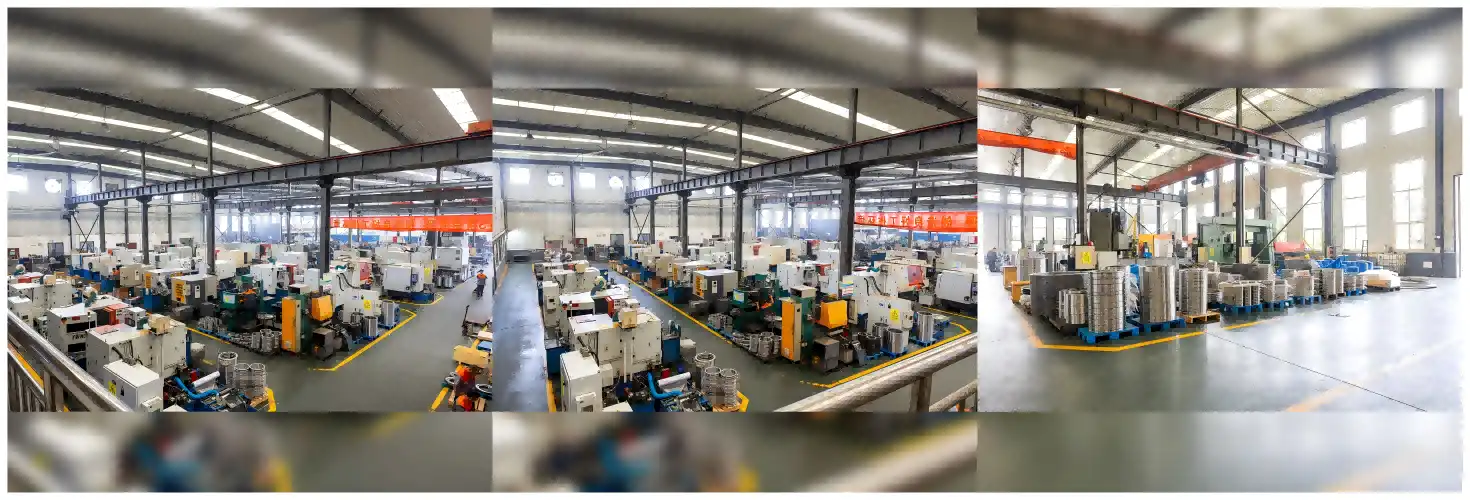
Choosing the right bearing provider is one of the most important parts of a successful RU28UU Cross roller bearing seal job. Manufacturers with a lot of production capacity should be given more attention. Facilities with dedicated cross roller bearing production lines have better process control than businesses that treat these parts as secondary products. In 2010, ATLYC only had one workshop. Now, it has six specialised manufacturing sites, which shows that the company has reached the right level of production to keep quality high for large orders. This 15-year change shows the dedication to always getting better that sets trustworthy long-term partners apart from casual providers.
Lead Times, MOQs, and Pricing Dynamics
To avoid project delays, custom seal development timelines need to be planned in a realistic way. Initial moulding and pilot production usually take between 4 and 8 weeks, but the exact time depends on how complicated the job is and how busy the suppliers are. Production runs start once the prototype is approved. The time it takes to make something depends on the number of items ordered and the level of accuracy required. Standard P5 and P4 grade bearings can be shipped within two to four weeks for known special setups. Ultra-precision P2 tolerances, on the other hand, may take six to eight weeks because of the need for selective assembly and proof.
Minimum order amounts are based on the economics of amortising tools and making output as efficient as possible. Custom seal setups usually have minimum order amounts of 50 to 200 units, but these can be negotiated depending on how complicated the seal is and how many times it is expected to be ordered. Setting up yearly blanket purchase orders lets you release smaller amounts against bigger promises, which balances the costs of keeping inventory with the benefits of buying in bulk. This method works especially well for OEMs whose production plans are stable, as it allows for just-in-time delivery without having to pay extra for faster shipping.
Quality Assurance and Supply Chain Management
Comprehensive quality assurance methods keep you safe from fake parts and manufacturing flaws that make equipment less reliable. Suppliers with a good reputation inspect arriving materials, check work in progress, and test the finished product before sending it out. Ask for written information about these quality checks, such as the exact measuring tools that were used to confirm the dimensions and check the finish on the raceway's surface. Traceability systems that connect finished bearings to lots of raw materials allow for quick root cause analysis if problems happen in the field. This cuts down on the cost of finding and replacing broken equipment.
Conclusion
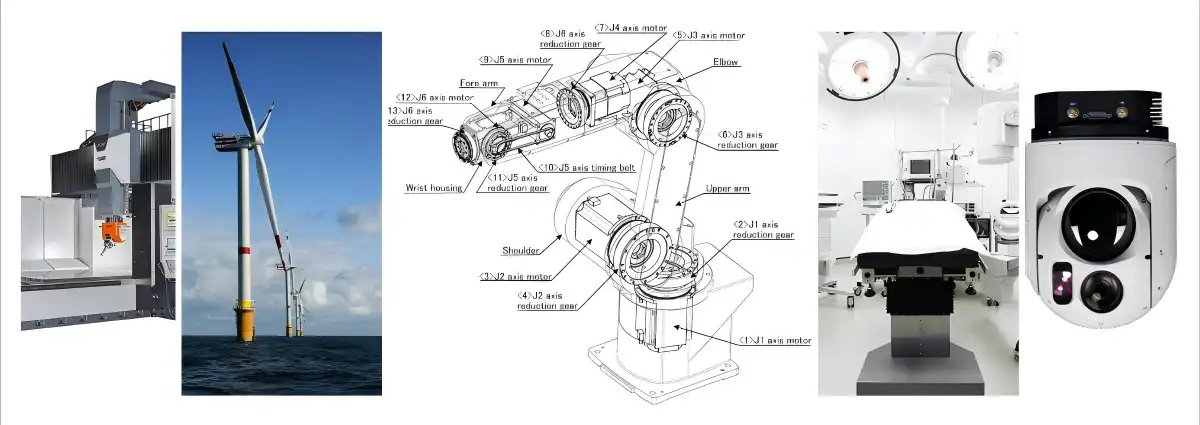
When you customise RU28UU Cross roller bearing seals, you can solve certain operational problems that stock setups can't. These bearings are perfect for precision uses in robots, medical devices, and automation equipment because they are small and integrated, and they can hold a lot of weight in many directions. Customising the seals makes bearings last a lot longer in situations where they are exposed to high or low temperatures, chemicals, or a lot of dirt, which are problems that standard rubber contact seals can't handle. For strategic procurement, you need to carefully evaluate suppliers, taking into account more than just the unit price. You should also look at their certifications, expert help, and the total cost of ownership. OEMs and makers of industrial equipment can get the best bearing performance and lower operating risks by working with experienced manufacturers that offer a wide range of customisation options, quality assurance procedures, and flexible supply chain support.
FAQ
1. What makes RU28UU bearings suitable for custom seal applications?
The combined outer and inner ring design with pre-drilled mounting holes makes fitting easier and allows for a range of seal setups. The small 10mm x 52mm x 8mm size and RU28UU Cross roller bearing shape make it very stiff for handling radial, axial, and moment loads at the same time. Because the structure is so flexible, the seal can be changed without affecting the bearing's main performance benefits in precision robotic joints, medical equipment, and measuring tools.
2. How long does custom seal development typically require?
Depending on how complicated the design is and how much time the seller has, custom seal casting and prototype development take 4 to 8 weeks. For standard P5 grade bearings, production numbers ship two to four weeks after the sample is approved. Due to the need for selected assembly, ultra-precision P2 limits may push back deadlines to 6–8 weeks. When you plan your purchase schedules around these realistic timeframes, you can avoid project delays and make sure everything works before putting it into full production.
3. Do custom seals significantly increase bearing costs?
When ordering in small amounts at first, the price is usually 20–40% higher than normal sealed bearings. At 500 units or more per year, the price drops to 10-15% higher. Total cost of ownership estimates, on the other hand, often favour custom solutions when longer bearing lives mean less replacements and lower upkeep labour costs. When you buy things strategically and look at lifetime costs instead of unit prices, you can see that custom seals are cheaper in many situations where standard setups don't work.
Partner with ATLYC for Superior RU28UU Cross Roller Bearing Solutions
Since its founding in 2010, ATLYC has grown into a reliable RU28UU Cross roller bearing maker that works with mid- to large OEMs and industrial equipment makers in six countries. Our 120-person team runs six specialised production sites that are certified by ISO 9001 and IATF 16949. This makes sure that the quality of every RU28UU Cross roller bearing we make is the same. We sell precision bearings to high-end markets in South Korea, the US, Germany, Russia, Iran, and Turkey, places where quality and dependability are very important.
Our engineering team specialises in making custom seal solutions that work with your surroundings and meet your business needs. We offer solutions that are tailored to your exact needs, whether you need fluorocarbon seals for high-temperature uses, PTFE composites for chemical resistance, or dual-lip setups for better contamination protection. As a provider with a lot of experience in RU28UU Cross roller bearings, we can keep our prices low by making efficient use of our production scale. We also offer variable MOQs and reliable lead times to support both prototype development and large-scale production runs.
Contact our technical specialists at auto@lyautobearing.com to discuss your bearing needs. We provide comprehensive application support, from creating the initial specifications to helping with installation and providing service after the sale. Find out how ATLYC's experience in precision manufacturing and dedication to constant growth can help your equipment work better while lowering the total cost of ownership across all of your global activities.
References
1. Harris, T.A., and Kotzalas, M.N. (2006). Advanced Concepts of Bearing Technology: Rolling Bearing Analysis, Fifth Edition. CRC Press, Boca Raton, Florida.
2. Eschmann, P., Hasbargen, L., and Weigand, K. (1985). Ball and Roller Bearings: Theory, Design and Application, Second Edition. John Wiley & Sons, Chichester, United Kingdom.
3. Hamrock, B.J., Schmid, S.R., and Jacobson, B.O. (2004). Fundamentals of Fluid Film Lubrication, Second Edition. Marcel Dekker, New York.
4. ISO 5593:1984. Rolling Bearings — Vocabulary. International Organisation for Standardisation, Geneva, Switzerland.
5. Khonsari, M.M., and Booser, E.R. (2008). Applied Tribology: Bearing Design and Lubrication, Second Edition. John Wiley & Sons, West Sussex, United Kingdom.
6. Tallian, T.E. (1999). Failure Atlas for Hertz Contact Machine Elements, Second Edition. ASME Press, New York.
Learn about our latest products and discounts through SMS or email