- English
- French
- German
- Portuguese
- Spanish
- Russian
- Japanese
- Korean
- Arabic
- Greek
- German
- Turkish
- Italian
- Danish
- Romanian
- Indonesian
- Czech
- Afrikaans
- Swedish
- Polish
- Basque
- Catalan
- Esperanto
- Hindi
- Lao
- Albanian
- Amharic
- Armenian
- Azerbaijani
- Belarusian
- Bengali
- Bosnian
- Bulgarian
- Cebuano
- Chichewa
- Corsican
- Croatian
- Dutch
- Estonian
- Filipino
- Finnish
- Frisian
- Galician
- Georgian
- Gujarati
- Haitian
- Hausa
- Hawaiian
- Hebrew
- Hmong
- Hungarian
- Icelandic
- Igbo
- Javanese
- Kannada
- Kazakh
- Khmer
- Kurdish
- Kyrgyz
- Latin
- Latvian
- Lithuanian
- Luxembou..
- Macedonian
- Malagasy
- Malay
- Malayalam
- Maltese
- Maori
- Marathi
- Mongolian
- Burmese
- Nepali
- Norwegian
- Pashto
- Persian
- Punjabi
- Serbian
- Sesotho
- Sinhala
- Slovak
- Slovenian
- Somali
- Samoan
- Scots Gaelic
- Shona
- Sindhi
- Sundanese
- Swahili
- Tajik
- Tamil
- Telugu
- Thai
- Ukrainian
- Urdu
- Uzbek
- Vietnamese
- Welsh
- Xhosa
- Yiddish
- Yoruba
- Zulu
RU Series Crossed Roller Bearing vs Crossed Roller: Key Differences
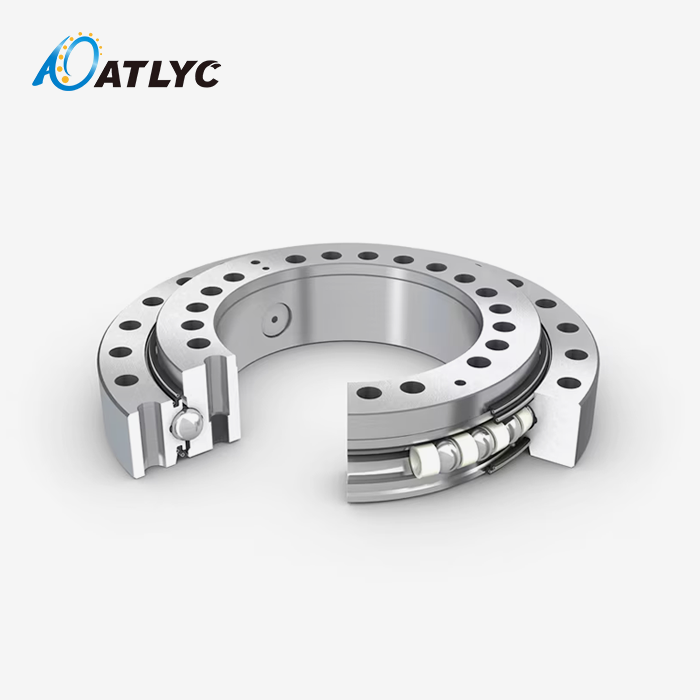
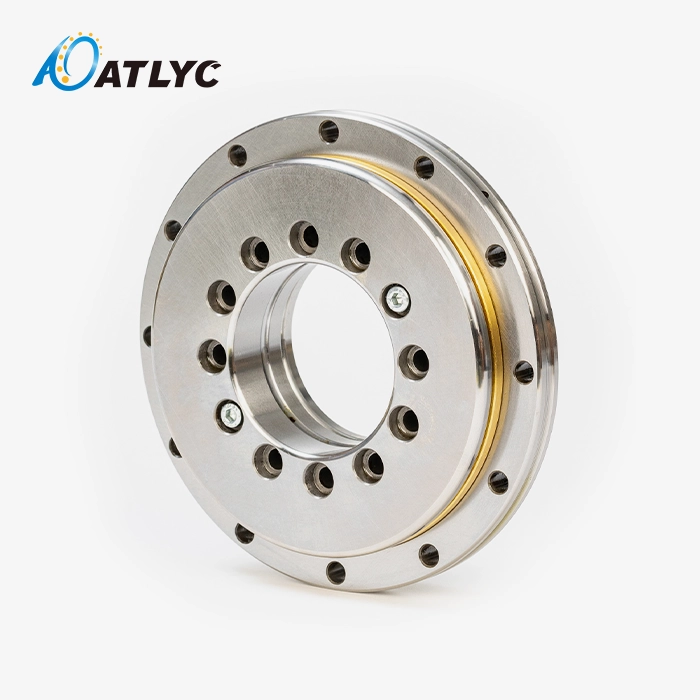
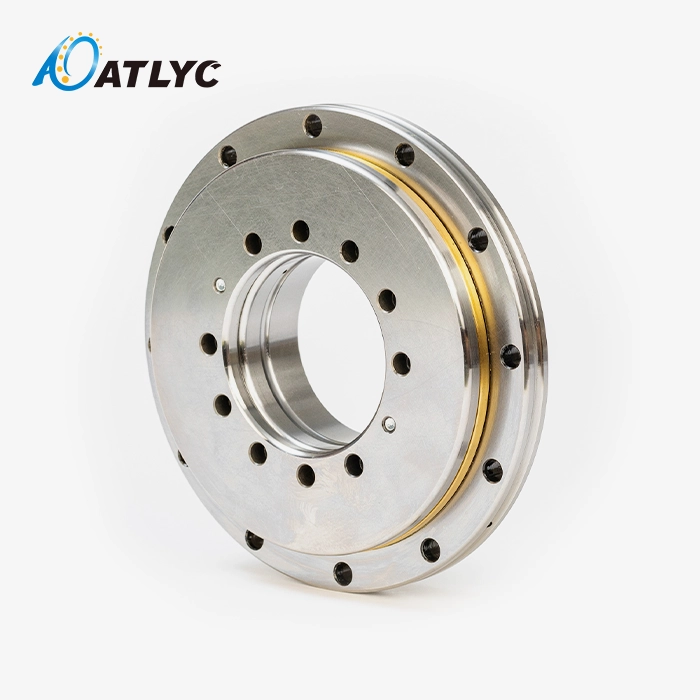
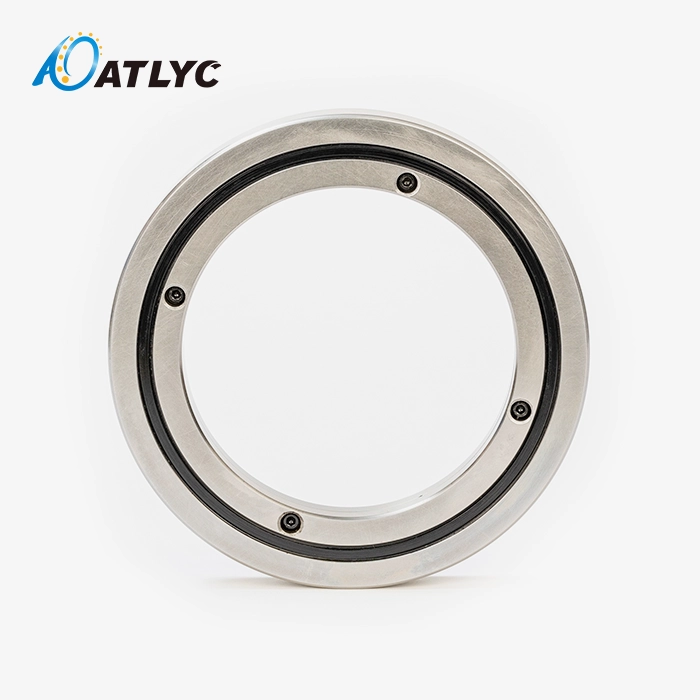
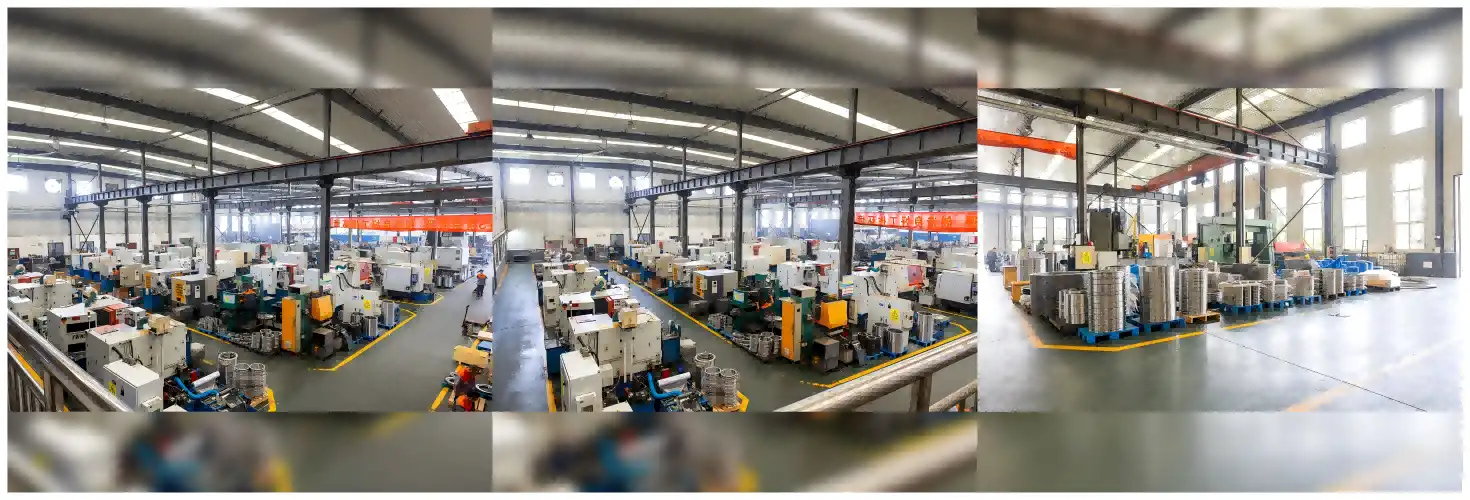
RU Series Crossed Roller Bearings are different from regular crossed roller bearings because they are built in a more integrated way. The RU Series Crossed Roller Bearing has inner and outer rings that are one piece and have fastening holes already drilled in them. This means that there are no separate housings and installation is easier. This design has a higher load capacity and can handle radial, axial, and moment loads all at the same time. It also has very good spinning accuracy. Standard crossed roller bearings usually need extra fixing parts, which can make the assembly process take longer and lead to alignment mistakes. These problems can be solved by the RU Series Crossed Roller Bearing's small, bolt-on form, which makes it perfect for precise uses in robots, medical equipment, and automated machinery.
Understanding RU Series Crossed Roller Bearings
Advanced Structural Design Features
Because it has an integrated ring design, the RU Series Crossed Roller Bearing is a big step forward in precision bearing technology. Unlike most bearings, which need separate housings or clamping flanges, this design has fastening holes already carved into both the inner and outer rings. You can bolt the bearing directly to the frame of your equipment, which gets rid of the tolerance stack-up problems that often happen in systems with more than one part.
The bearing uses V-shaped raceways that are carefully machined and have circular wheels spaced at 90-degree angles across from each other. Placed between the rollers, spacers keep them from touching directly, which keeps the load even and lowers friction during operation. With this crossed design, a single unit can handle complicated load situations that would need more than one standard bearing.
Material Specifications and Manufacturing Standards
A special heat process is used on high-grade bearing steel (GCr15 or GCr15SiMn) to get the best hardness, which is between 58 and 62 HRC. This choice of materials guarantees that the dimensions will stay the same even when the temperature changes, and the product will last longer, even in harsh settings. Precision grinding methods produce uniform raceway geometry and high-quality surface finishes, which have a direct effect on the accuracy of runout and the smoothness of operation.
Manufacturing sites that are approved to ISO 9001 and IATF 16949 use strict quality control procedures all the way through the production process. Before it is shipped, each bearing is checked for its dimensions, its stiffness, and its ability to rotate. These quality controls make sure that the reliability of the product is the same across all production batches. This solves the main problem that procurement workers have, which is that they want stable supply lines.
Technical Specifications and Size Range
The RU Series Crossed Roller Bearing has a wide range of sizes to meet the needs of a wide range of applications:
| Details given | Range |
|---|---|
| Inside Diameter | 20–1100 mm |
| Outside Size | 70–1500 mm |
| Width | 12–110 mm |
| Classes for Accuracy | P6, P0, P5, P4, P2 |
This ability to change sizes lets it fit into small robotic joints that need very little room, as well as big spinning tables in machining centers. Engineers can choose precision grades that meet the needs of different applications, ranging from general industrial use (P6, P0) to ultra-precision tools (P4, P2). Technical datasheets with lots of information give you information like load limits, speed limits, and fitting measurements that you need to check the specifications during the design phase.
Comparative Analysis: RU Series vs Standard Crossed Roller Bearings
Load Capacity and Structural Performance
The RU Series Crossed Roller Bearing's combined ring design enables it to handle moment loads that are significantly higher than those of normal crossed roller bearings. When you place standard bearings, the housing contact causes the bearings to bend more when moment loads are applied. The direct-mount design gets rid of this compliance, so the location accuracy stays the same even when the load is uneven, which is usual in cantilevered applications.
Crossed roller bearings that are standard usually spread loads through different inner and outer rings that need support structures on the outside. They can handle radial and axial loads well, but their ability to handle moment loads rests a lot on how rigid the housing is and how flat the mounting surface is. The RU Series Crossed Roller Bearing gets around these problems because it has a single piece of material that makes it work the same way in any installation situation. This means that the joints in robotic arms will bend less, and precisely rotating stages will be able to place things more accurately.
According to test results, RU Series Crossed Roller Bearings keep their rotary accuracy within ±2 arc-seconds even when they are loaded with loads. This is in contrast to standard designs that may have angular deviations of ±5 arc-seconds or more. This threefold increase in runout accuracy has a direct effect on the quality of the products in automated production lines and the accuracy of measurements made by coordinate measuring tools.
Durability and Service Life Advantages
Material quality and manufacturing precision have a big effect on how long a bearing lasts. The RU Series Crossed Roller Bearing is made with advanced heat treatment methods that improve the way stress is distributed below the surface, making it more resistant to wear. Roller cap shape is given extra attention during production, which lowers edge stress concentrations that cause standard designs to wear out too quickly.
You can expect the operating life to be 40–60% longer than with regular crossed roller bearings when the loads are the same. This longer service period cuts down on the number of repair visits and unplanned downtime, both of which are very important for car production lines that have to stick to tight schedules. The sealed design choices of the bearing offer extra security against contamination in tough industrial settings, which further extends its useful life.
Cost-Efficiency Analysis
The following comparison shows how to think about total costs:
| A Factor | RU Series | Crossed roller standard size |
|---|---|---|
| Cost of the first unit | Moderate price | Beginning |
| Needs for Housing | Not at all (straight mount) | An external building is needed |
| Time for Installation | 30 to 50 percent less | Beginning |
| Maintenance How Often | Longer periods of time | Schedule as usual |
| How Long Should It Last | 40–60% longer | Beginning |
Even though the RU Series Crossed Roller Bearing costs more to buy at first, it usually costs less to install because it doesn't need as many housing parts and requires less building work. Longer replacement times and less upkeep are better for the bearing's return on investment over its working life. When considering high-value production equipment choices, procurement teams should look at the total cost of ownership instead of just the unit price.
How to Choose Between RU Series and Other Crossed Roller Bearings
Application Requirements Assessment
To choose the right bearing type, you need to carefully look at the working factors. It is important to know how much radial, axial, and moment loads your program creates when it is running normally and when it is at its peak. Moment loads make up a big part of the total load range, and the RU Series Crossed Roller Bearing does very well in these situations. This is especially true in cantilevered setups or situations where the mass distribution isn't even.
The need for speed also affects the choice of bearings. Crossed roller bearings usually work at low speeds, but the fastest speed can change depending on how they are oiled and the exact grade they are made of. Applications that need prolonged speeds above 500 rpm should talk to technical support to make sure that the heat control and lubrication are right.
Extreme temperatures, pollution exposure, and shaking levels are some of the environmental factors that can affect how well a bearing works. There are different closing options in the RU Series Crossed Roller Bearing that keep dust and water out of industrial settings. Medical and chip uses that need to work in clean rooms can choose the right seal materials and lubricants that meet the needs of their industries.
Supplier Qualification and Certification Verification
Working with recognised manufacturers ensures that the products are real and that the standard is always the same. You should make sure that suppliers have up-to-date ISO 9001 and IATF 16949 certifications, which show that they are committed to quality management systems and methods for ongoing improvement. For high-volume buying relationships, ask for copies of the certificates and do regular checks.
OEM qualifications prove that a company can make things and has technical knowledge. Well-known bearing makers usually offer a wide range of technical support services, such as application engineering help, the ability to make unique changes, and testing services. This help is very useful when customising standard goods to meet specific needs or fixing performance problems during commissioning.
Procurement Considerations and Lead Time Management
Learning about a supplier's inventory and ability helps you choose the best time to buy something. Manufacturers who have dedicated production lines for crossed roller bearings can usually offer faster lead times for standard sizes and can work with customers to meet their special needs through standard engineering change processes. There are cost savings to be had when you order in bulk, especially when you coordinate purchases across multiple projects or production lines.
Lengths of time needed depend on the size, level of accuracy, and level of customisation needed. Standard RU Series Crossed Roller Bearings in popular sizes usually ship 4 to 6 weeks after the order is confirmed. Lead times are extended to 8–12 weeks for custom setups that need non-standard sizes or materials. You can lower the risk of delivery by setting up planned releases that are in line with production needs. This way, you can be sure that parts will be available without having to pay too much for storage.
Installation and Maintenance Guidelines for RU Series Bearings
Proper Installation Procedures
To get the best results from the RU Series Crossed Roller Bearing, you must first set it correctly. To keep the bearing rings from warping when the bolt is tightened, the mounting surface must be flat, usually within 0.02 mm across the width of the bolt circle. Thoroughly clean all mounting surfaces, getting rid of any burrs, dirt, or protective coats that could get in the way of proper seating.
Apply the mounting bolts in a cross-pattern, gradually raising the pressure until it reaches the number given by the maker. This method makes sure that the tightening force is spread out evenly and stops the ring from distorting. Check the final torque values after a period of time for them to settle down using torque wrenches that have been calibrated. When you over-tighten something, you create leftover stress that makes spinning less smooth and speeds up wear.
Alignment verification should occur before finishing the fitting. Use dial markers to check that the numbers for radial and axial runout stay within the allowed ranges. Too much runout means there are problems with the fastening surface or the bearings that need to be fixed before the equipment can be put into service.
Routine Maintenance Protocols
Scheduled maintenance extends the life of bearings and stops them from breaking down when they're least expected. Set lubrication intervals based on how the machine is being used. These intervals should be between 500 and 2000 hours, but they can be longer or shorter depending on load, speed, and weather factors. Use lubricants that are recommended by the maker. These are usually lithium-based greases with the right viscosity levels for the temperature range you'll be using them in.
During repair periods, look for noise, shaking, or temperature changes that don't seem normal. These could be signs of problems. Normal functioning bearings don't make a lot of noise. Grinding sounds or repetitive vibrations, on the other hand, are signs of contamination or wear that need instant attention. Temperature tracking lets you know quickly when the grease is wearing out or when there is too much load.
Keep track of repair tasks and performance notes to set a standard for how the system should work. Trending analysis helps find patterns of slow wear and tear, which lets predictive maintenance plans change bearings during planned shutdowns instead of having to fix them when they break down unexpectedly, which throws off production schedules.
Troubleshooting Common Issues
Misalignment is the most common fitting mistake that can hurt the function of a bearing. Uneven wear patterns, higher working temperatures, and louder noises are all signs of this problem. To fix the problem, the bearing has to be reinstalled while paying close attention to how flat the surface is and how the line is checked.
External contamination speeds up wear and shortens the service life. Different types of sealed bearings offer safety, but it is still important to keep the working area clean and make sure the seals are intact. To keep gritty particles from getting in, check seals often and repair any broken parts right away.
These rules make sure that the equipment works well and doesn't cost too much to maintain. These are important goals for corporate buyers who want to keep their equipment fleets productive.
Applications and Industry Use Cases of RU Series Crossed Roller Bearings
Robotics and Automation Systems
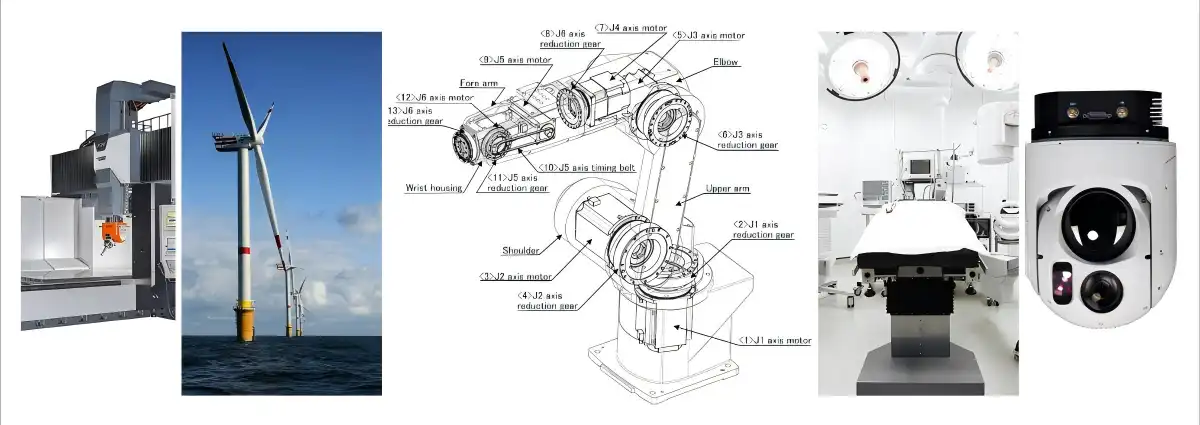
The RU Series Crossed Roller Bearing is used for important pivot points in industrial robots, especially in the waist and shoulder directions, where moment loads are highest. The small size of the bearing cuts down on the size of the joint box, which lowers the robot's weight and spinning inertia. This decrease in weight speeds up cycle times and uses less energy, which is very useful in high-volume car assembly processes.
A big automaker recently improved its spot-welding robots by adding RU Series Crossed Roller Bearings. This made the cycle times 15% faster by lowering the joint friction. The direct-mount design made servicing easier and faster. It took less than 90 minutes to change a bearing, down from four hours. Over the course of three years of testing, the plant saw a 30% drop in downtime due to bearing issues compared to their old standard crossed roller bearing design.
Precision Machining and Measurement Equipment
To get positioning precision down to the micron level, CNC machining centers use rotating tables with the RU Series Crossed Roller Bearing. The bearing has great runout characteristics—it keeps angular deviation below 2 arc-seconds—which directly leads to better part standards and lower scrap rates. Vibration-free spinning keeps the quality of the surface finish on precision-machined parts, so they don't need any extra finishing steps.
Coordinate measuring tools also benefit from how accurately and smoothly the bearing works. For medical device companies that make implantable parts, the measurement error must be less than 1 micron. The RU Series Crossed Roller Bearing gives them the rotary steadiness they need to meet these strict requirements. Designers of equipment like how integrated mounting saves room and lets them make machines that are smaller without losing performance.
Medical Imaging and Diagnostic Equipment
CT scanners and C-arm X-ray systems need to be able to work very quietly and consistently find the right position. The RU Series Crossed Roller Bearing makes stable spinning axes for big imaging gantries that can handle the large loads that are naturally present in medical imaging equipment. Low-friction properties reduce the size of the motor needed and the noise it makes, which makes patients more comfortable during testing treatments.
Because diagnostic imaging in hospital settings is so important, medical equipment makers put a high priority on making sure their parts are reliable. Under normal imaging equipment job cycles, the RU Series Crossed Roller Bearing has a mean time between breakdowns of more than 50,000 hours. This history of dependability, along with easy upkeep steps, cuts down on machine downtime and ensures that diagnostic services are always available.
Conclusion
Ultimately, the choice between RU Series Crossed Roller Bearings and normal crossed roller designs comes down to the needs and goals of your application. The RU Series Crossed Roller Bearing has a unique seamless ring design with pre-drilled fastening holes that make it easier to install and more cost-effective in the long run. It also has a higher moment load capacity. When it comes to precise robotics, medical equipment, and high-accuracy machining, where performance consistency has a direct effect on product quality and operating efficiency, these benefits are the most useful.
Professionals in procurement should look at the total cost of ownership instead of just the initial purchase price. They should think about things like less downtime, less labour needed for installation, and longer repair times. Working with makers who are ISO 9001 and IATF 16949 certified will help you keep your production plans and ensure stable quality. The RU Series Crossed Roller Bearing is the best choice for demanding industrial uses that need unwavering performance because of its technical specs, high-quality materials, and precise manufacturing.
FAQ
1. What's different about the RU Series from other crossed roller bearings?
There is no need for separate housings or mounting flanges with the RU Series Crossed Roller Bearing because the inner and outer rings are one piece and have mounting holes cut into them at the factory. When compared to standard crossed roller bearings, which need external support structures, this direct-mount design makes fitting easier and increases the moment load capacity.
2. Is it possible to change the RU Series to fit specific needs?
Customisation choices from manufacturers include non-standard sizes, unique sealing arrangements, and changed mounting hole designs. Custom specs usually need to be reviewed by engineers, which adds 8 to 12 weeks to the wait time. Talk to your supplier's application tech team about your unique needs and whether or not the project is possible.
3. How long do most RU Series bearings take to get?
After an order is confirmed, standard sizes in popular accuracy grades are shipped within 4 to 6 weeks. Lead times are extended to 8–12 weeks for custom configurations that need special sizes or materials. Setting up blanket buy agreements with planned releases is a good way to make sure that parts are available at the right time for your production schedule and keep inventory costs low.
Partner with ATLYC for Your Precision Bearing Solutions
ATLYC makes high-precision RU Series Crossed Roller Bearings that meet the strict needs of OEMs and industrial equipment makers around the world. Our Luoyang production plants are ISO 9001 and IATF 16949 approved, and they have 120 skilled workers who are committed to quality excellence at all stages of production. For more than 15 years, we've been serving customers in the US, Germany, South Korea, and other tough markets. We've built long relationships with them by always delivering high-quality goods on time.
As a reliable RU Series Crossed Roller Bearing provider, we provide full technical support, including application engineering advice, the ability to make unique modifications, and low factory-direct prices. Our engineering team can look at your unique load needs, space limitations, and performance expectations and suggest the best bearing options for you. You can email us at auto@lyautobearing.com to get full technical datasheets, talk about volume prices for your projects, or set up a meeting with one of our bearing experts. We keep a smart collection of popular sizes to cut down on wait times, and our manufacturing capacity is flexible enough to handle custom specs that meet the needs of your particular application.
References
1. Harris, T.A. & Kotzalas, M.N. (2006). "Advanced Concepts of Bearing Technology: Rolling Bearing Analysis, Fifth Edition." CRC Press, Taylor & Francis Group.
2. Wensing, J.A. (2011). "On the Dynamics of Ball Bearings." University of Twente Press, Netherlands.
3. ISO 199:2014. "Rolling bearings — Thrust bearings — Geometrical product specifications (GPS) and tolerance values." International Organization for Standardization.
4. Palmgren, A. & Ruley, B. (1959). "Ball and Roller Bearing Engineering." SKF Industries Inc., Philadelphia.
5. Gupta, P.K. (2018). "Advanced Dynamics of Rolling Elements." Springer-Verlag, New York.
6. Eschmann, P., Hasbargen, L., & Weigand, K. (1985). "Ball and Roller Bearings: Theory, Design and Application, Second Edition." John Wiley & Sons Ltd.
Learn about our latest products and discounts through SMS or email