- English
- French
- German
- Portuguese
- Spanish
- Russian
- Japanese
- Korean
- Arabic
- Greek
- German
- Turkish
- Italian
- Danish
- Romanian
- Indonesian
- Czech
- Afrikaans
- Swedish
- Polish
- Basque
- Catalan
- Esperanto
- Hindi
- Lao
- Albanian
- Amharic
- Armenian
- Azerbaijani
- Belarusian
- Bengali
- Bosnian
- Bulgarian
- Cebuano
- Chichewa
- Corsican
- Croatian
- Dutch
- Estonian
- Filipino
- Finnish
- Frisian
- Galician
- Georgian
- Gujarati
- Haitian
- Hausa
- Hawaiian
- Hebrew
- Hmong
- Hungarian
- Icelandic
- Igbo
- Javanese
- Kannada
- Kazakh
- Khmer
- Kurdish
- Kyrgyz
- Latin
- Latvian
- Lithuanian
- Luxembou..
- Macedonian
- Malagasy
- Malay
- Malayalam
- Maltese
- Maori
- Marathi
- Mongolian
- Burmese
- Nepali
- Norwegian
- Pashto
- Persian
- Punjabi
- Serbian
- Sesotho
- Sinhala
- Slovak
- Slovenian
- Somali
- Samoan
- Scots Gaelic
- Shona
- Sindhi
- Sundanese
- Swahili
- Tajik
- Tamil
- Telugu
- Thai
- Ukrainian
- Urdu
- Uzbek
- Vietnamese
- Welsh
- Xhosa
- Yiddish
- Yoruba
- Zulu
SX Series Cross Roller Bearings for Industrial Innovation
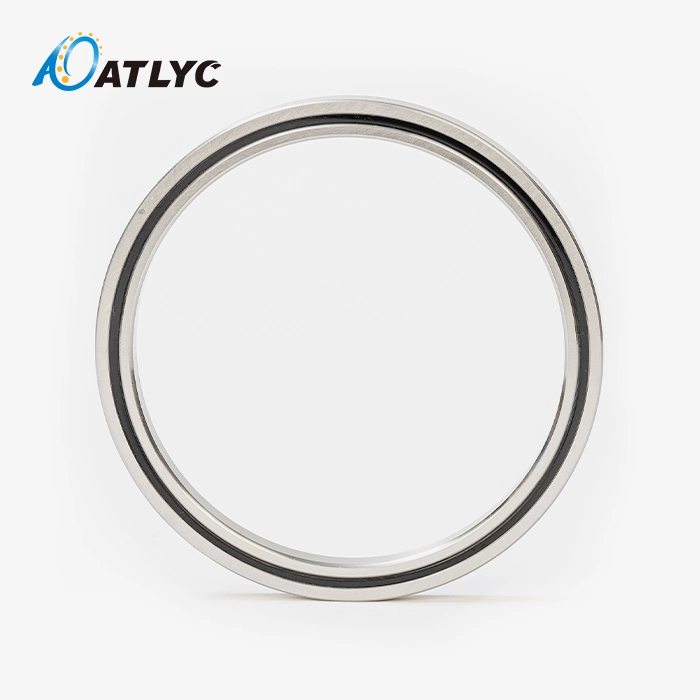
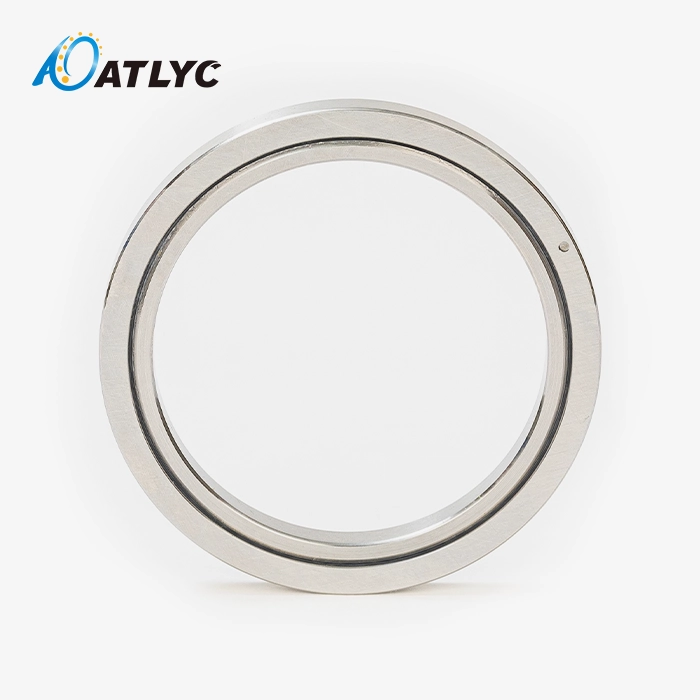
When precision manufacturing meets space constraints, the Cross roller bearing SX series emerges as the engineering solution that transforms impossibilities into competitive advantages. This ultra-thin bearing technology combines an integral inner ring with a split outer ring design, delivering simultaneous radial, axial, and moment load capacity within a single compact assembly. Industries ranging from robotics to medical imaging depend on this innovation to achieve micron-level accuracy while maximizing equipment efficiency and operational lifespan.
Understanding SX Series Cross Roller Bearings: Design and Technical Specifications
The architecture of cross roller bearings represents a fundamental departure from traditional ball bearing systems. At our Luoyang facility, we've manufactured these components since 2010, watching them evolve into critical elements for automation equipment and precision machinery across six continents.
Core Structural Engineering
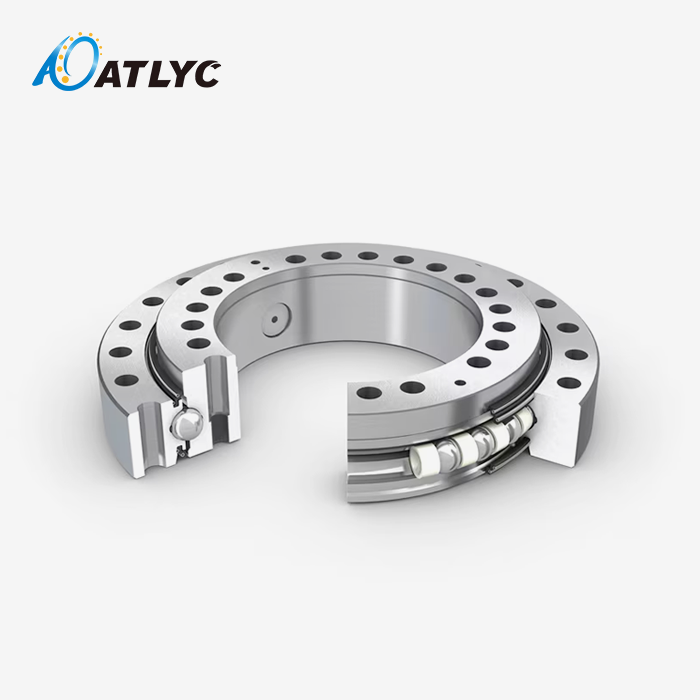
The SX series uses cylinder-shaped rollers that are placed perpendicularly within V-shaped raceways that are 90 degrees apart. Precision spacer retainers hold this crossed arrangement in place, which lets each roller handle loads from more than one way at the same time. Full-complement designs have roller-to-roller friction, but our spacer system keeps the lubricant film and lowers rotational torque by about 30% compared to designs without separation elements. The building of the inner ring as a whole makes it very rigid when it's loaded. The split outer ring, which is held in place by three fastening rings, lets the bearing be installed in structures where there would not be enough room for it to fit otherwise. This design doesn't have any mounting holes because they would weaken the structure. Instead, it uses flange-based fixation, which spreads the clamping forces evenly around the bearing's diameter.
Material Selection and Manufacturing Tolerances
We use Gcr15 and Gcr15SiMn steels to make SX series bearings because they have uniform hardness profiles and don't wear down easily. The Gcr15SiMn variant has better dimensional stability when temperatures change, which is important for equipment that works in places where thermal expansion could affect positioning accuracy. Our manufacturing process can achieve accuracy grades from P6 (standard industrial) to P2 (ultra-precision), and the dimensional tolerances are measured in micrometres. The raceway's surface finish is at least Ra 0.2, which means that there aren't many areas of high contact stress that speed up wear. These standards directly meet the needs of original equipment manufacturers (OEMs) who need bearings that keep working well, the Cross roller bearing SX series after millions of rotations without breaking down.
Available Size Range and Load Ratings
The SX series spans inner diameters from 20mm to 1100mm, with outer diameters reaching 1500mm and widths between 12mm and 110mm. This versatility allows application in compact medical devices and massive industrial turntables alike. Load capacity scales proportionally with bearing size, with larger models handling axial loads exceeding 50 kN while maintaining rotational accuracy within 5 arc-seconds. The thin-section profile—often just 20% of the outer diameter—delivers load capacity equivalent to bearings twice as thick in conventional configurations. This space efficiency translates directly to lighter equipment designs and reduced material costs in surrounding structures, advantages that resonate strongly with automotive component manufacturers optimizing weight-to-performance ratios.
Comparing SX Series Cross Roller Bearings with Alternative Solutions
Procurement decisions require a clear understanding of how different bearing technologies perform under real-world operating conditions. Our 15 years of serving global markets have shown that bearing selection significantly impacts both initial equipment costs and long-term maintenance expenses.
Performance Against Standard Ball Bearings
Standard ball bearings excel in high-speed applications but struggle with moment loads. A typical angular contact ball bearing pair requires precise preload adjustment and consumes substantially more axial space than a single cross roller unit. When designing a rotary table for a machining center, replacing dual ball bearing arrangements with one SX series bearing reduces assembly height by 40-60mm while improving rigidity. The contact mechanics differ fundamentally: ball bearings create point contact with raceways, concentrating stress and limiting load capacity. Cross roller bearings generate line contact across the roller length, distributing forces over larger surface areas. This translates to service lives 3-5 times longer in heavy-load applications, directly reducing replacement costs and production downtime.
Comparison with Alternative Roller Bearing Types
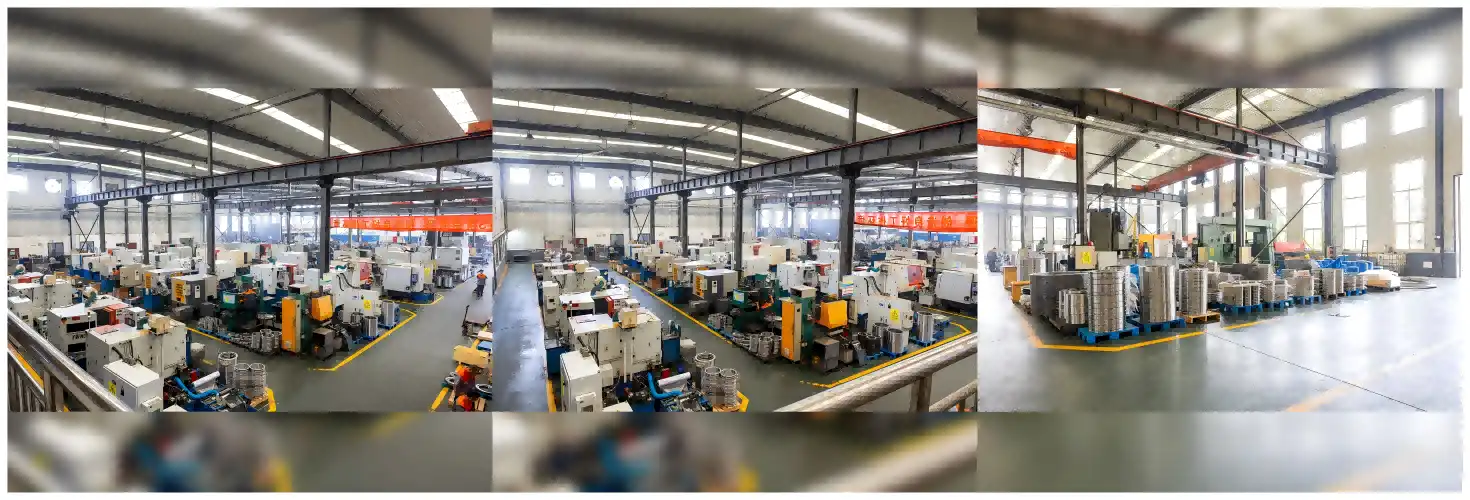
Other crossed roller configurations exist, including models with mounting holes and different ring separation designs. The ZX series features a split inner ring rather than the SX's split outer ring, making it suitable for outer ring rotation applications. Choosing between these variants depends entirely on your rotation requirements and mounting constraints. Models from established brands like NSK and SKF offer proven reliability backed by extensive application engineering support. However, the cost differential—often 40-70% higher than equivalent Chinese-manufactured bearings—requires justification through application-specific benefits. Our ISO 9001 and IATF 16949 certifications ensure that quality standards match international benchmarks, while our pricing structure reflects efficient manufacturing scale developed over 120 employees and six specialized workshops.
Cost-Performance Analysis for Procurement
The total cost of ownership extends beyond purchase price. A bearing priced 30% lower but requiring replacement twice as frequently ultimately costs more while creating supply chain disruptions. Our clients in Germany and the United States consistently report that SX series bearings meet or exceed their 50,000-hour service life targets in automation equipment, validating the cost-performance proposition. We maintain competitive lead times—typically 4-6 weeks for standard sizes and 8-10 weeks for custom specifications. This consistency matters for production planning, particularly for OEMs operating just-in-time manufacturing systems where bearing delays halt entire assembly lines.
Procurement and Supply Chain Insights for SX Series Cross Roller Bearings
Securing a reliable bearing supply requires more than identifying low prices. The procurement managers we work with prioritize supplier stability, quality consistency, and technical support capability alongside cost considerations.
Identifying Certified Suppliers and Distributors
Quality certifications provide initial supplier Cross roller bearing SX series credibility indicators. Our IATF 16949 certification specifically addresses automotive industry quality requirements, including traceability systems and statistical process control. When evaluating a potential Cross roller bearing SX series supplier, request documentation showing certification scope and audit dates—expired or limited certifications signal quality system weaknesses. For buyers in the United States market, understanding import compliance and tariff classifications prevents costly customs delays. We maintain complete technical documentation meeting U.S. Customs requirements, and our logistics partners handle documentation seamlessly for clients from initial inquiry through delivery.
Bulk Purchasing Strategies and Pricing Structures
Volume commitments unlock pricing advantages while ensuring supply security. Our minimum order quantity starts at 10 pieces for standard configurations, but clients ordering 100+ units annually qualify for partnership pricing tiers offering 15-20% reductions. These arrangements also prioritize production scheduling and guarantee shorter lead times during peak demand periods. Container-load shipments optimize per-unit transportation costs. A 20-foot container accommodates approximately 5,000-8,000 smaller SX bearings or 300-500 larger industrial units, depending on size mix. Coordinating orders to fill containers efficiently can reduce delivered cost by 8-12% compared to smaller shipments.
Supply Chain Risk Management
Single-source dependencies create vulnerability. While establishing primary supplier relationships, maintain qualified secondary sources to mitigate disruption risks. We encourage clients to conduct annual audits of our facilities—transparency builds confidence and reveals our continuous improvement initiatives, including recent expansions adding 2,000 square meters of climate-controlled manufacturing space. Product authentication matters increasingly as counterfeit bearings enter supply chains. Each bearing we ship includes laser-etched identification codes traceable to production batch, heat treatment lot, and inspection records. Suspicious products lacking this documentation or offering prices substantially below market rates warrant careful verification before purchase.
Installation, Maintenance, and Technical Support for SX Series Bearings
Proper installation procedures directly determine whether bearings achieve their designed service life. We've documented common installation errors causing premature failure, and our technical team provides consultation to prevent these costly mistakes.
Installation Best Practices and Alignment Procedures
The split outer ring demands careful assembly sequencing. Position the bearing housing with the mounting flange prepared for bolt tightening in a cross-pattern sequence. Install the first outer ring half into the housing, followed by the inner ring with rollers, then the second outer ring half. The three fastening rings secure the assembly—tighten these rings progressively to specified torque values, typically 10-15 Nm depending on bearing size. Achieving proper alignment requires precision measuring tools. Runout should not exceed 10 micrometers for standard industrial applications or 3 micrometers for ultra-precision installations. Use dial indicators positioned at the inner ring's mounting surface to verify concentricity before final bolt tightening. Misalignment concentrates loads on a limited roller count, accelerating raceway damage and reducing service life by 60-80%.
Lubrication Requirements and Maintenance Schedules
Cross roller bearings require high-quality lithium soap grease with extreme pressure additives. We recommend NLGI Grade 2 consistency for most applications, applied to fill 30-40% of the bearing's free volume. Excess grease increases rotational torque and generates unnecessary heat through churning. Relubrication intervals depend on operating conditions. Equipment running continuously at moderate speeds (less than 50 rpm) typically requires fresh grease every 12 months. Higher speeds, contaminated environments, or elevated temperatures necessitate 6-month intervals. Establish inspection protocols checking for unusual noise, temperature increases above 50°C, or visible wear debris—these symptoms indicate lubrication breakdown requiring immediate attention.
Troubleshooting Common Operational Issues
Unexpected bearing noise usually indicates inadequate lubrication or contamination. Metallic grinding sounds suggest advanced wear requiring immediate shutdown and bearing inspection. Higher-pitched squealing often results from moisture contamination breaking down grease properties—replacement with fresh lubricant typically resolves this condition. Temperature elevation beyond normal operating range signals excessive preload, misalignment, or lubrication failure. Our technical support team, reachable at auto@lyautobearing.com, provides diagnostic assistance, including thermal imaging analysis, when clients submit operating condition details and temperature measurements. This proactive support prevents catastrophic failures that halt production lines.
Applications of SX Series Cross Roller Bearings in Industrial Innovation
The versatility of crossed roller technology enables applications across industries where precision positioning and compact design intersect with demanding load requirements. Our client base spans robotics manufacturers, aerospace component suppliers, and medical device producers—each leveraging SX series capabilities to solve unique engineering challenges.
Industrial Robotics and Automation Systems
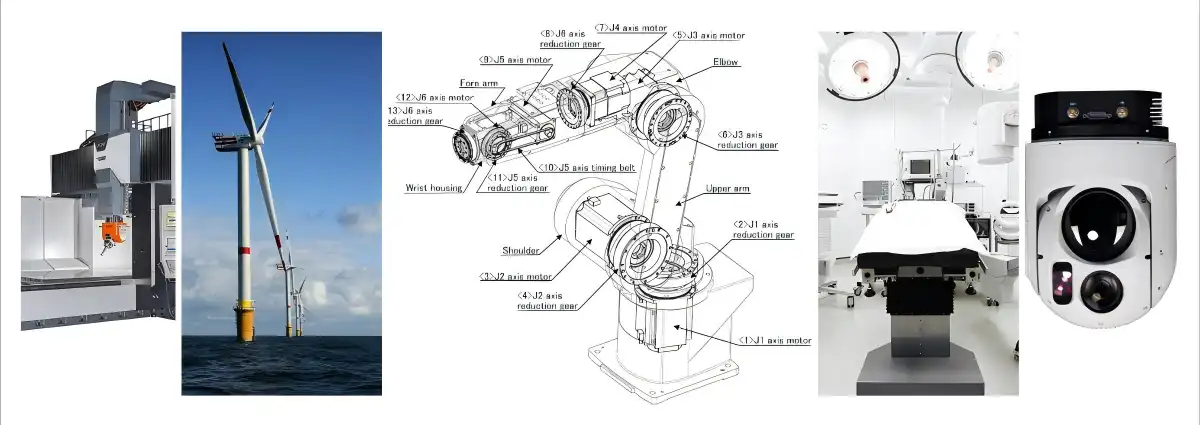
Six-axis articulated robots rely heavily on precision bearings at each joint. The waist rotation and elbow joints particularly benefit from SX series bearings, where the ultra-thin profile allows arm designers to minimize joint diameter while maximizing payload capacity. A typical industrial robot arm using cross roller bearings achieves positioning repeatability within ±0.05mm across its working envelope, critical for assembly operations, installing components with tight clearances. Collaborative robots working alongside human operators demand smooth, controlled motion. The low friction coefficient inherent in SX designs—typically 0.002-0.003—enables gentle acceleration profiles that enhance safety while reducing motor power requirements by 20-30% compared to systems using standard ball bearing Cross roller bearing SX series arrangements. This efficiency translates directly to lower energy costs and extended battery life in mobile robotic platforms.
Precision Machining and Metrology Equipment
CNC machining center rotary tables using cross roller bearings maintain indexing accuracy within 3 arc-seconds, essential for multi-sided part machining without refixturing. The moment load capacity—often 50-100 times the radial load rating—resists cutting forces that would deflect tables mounted on conventional bearing systems. Coordinate measuring machines (CMMs) depend on stable rotation without play or wobble. The preload adjustment possible during SX bearing installation eliminates axial clearance completely, creating a zero-play rotation perfect for precision measurement applications. Manufacturers report measurement uncertainty improvements of 15-25% after upgrading legacy CMM systems with modern crossed roller technology.
Medical Imaging and Diagnostic Equipment
CT scanners rotate X-ray sources and detector arrays around patients, demanding smooth motion without vibration that would blur images. Cross roller bearings enable these massive rotating assemblies—often weighing 2,000+ kg—to spin at controlled speeds while maintaining concentricity within 0.1mm. The bearing's low torque requirement allows direct-drive motor systems, eliminating gearboxes that introduce backlash and positional uncertainty. Surgical robots executing minimally invasive procedures require instrument positioning accuracy measured in tenths of millimeters. SX series bearings in these systems withstand sterilization cycles exceeding 134°C repeatedly without performance degradation, meeting the demanding reliability standards essential for patient safety. Our Gcr15SiMn material specification provides the thermal stability necessary for these autoclave environments.
Conclusion
The Cross roller bearing SX series represents proven technology addressing critical needs in modern precision manufacturing. Its unique combination of compact dimensions, multi-directional load capacity, and exceptional rotational accuracy makes it indispensable for industries pushing boundaries in automation, medical technology, and advanced machining. Over 15 years, we've witnessed these bearings transform from specialized components to mainstream solutions as equipment designers increasingly prioritize space efficiency and performance density. Selecting the right bearing supplier involves evaluating not just component specifications but also manufacturing consistency, supply chain reliability, and technical support capability—factors that determine long-term partnership success beyond initial procurement transactions.
FAQ
1. What distinguishes the SX series from conventional ball bearings for precision applications?
Cross roller bearings handle radial, axial, and moment loads simultaneously within a single unit, while ball bearings typically require paired arrangements to achieve similar capability. The line contact between rollers and raceways distributes loads across larger surface areas, extending service life substantially in heavy-load scenarios. The SX's ultra-thin profile—often 50-60% thinner than equivalent ball bearing pairs—enables more compact equipment designs without sacrificing performance. Applications requiring zero-play rotation particularly benefit, as preload adjustment eliminates clearance while maintaining smooth operation.
2. Can I customize SX series bearings for specialized applications?
Customization options include modified internal geometries, special materials for corrosive environments, and integrated sealing solutions. We regularly manufacture bearings with dimensions outside our standard catalog for OEMs with unique packaging constraints. Minimum order quantities for custom specifications typically start at 50 pieces, with engineering consultation provided at no charge during the design phase. Lead times extend approximately 2-4 weeks beyond standard production for custom orders, depending on modification complexity. Contact our technical team with application details to discuss feasibility and obtain preliminary specifications.
Partner with ATLYC for Your Precision Bearing Requirements
ATLYC brings 15 years of specialized manufacturing expertise to every Cross roller bearing SX series we deliver. Our ISO 9001 and IATF 16949 certified production facilities in Luoyang combine precision machining with rigorous quality control, ensuring each bearing meets the exacting standards demanded by automotive OEMs, industrial equipment manufacturers, and global bearing distributors. As a trusted Cross roller bearing SX series supplier, we maintain an inventory of standard configurations for quick delivery while offering customization capabilities for specialized applications. Our technical support extends beyond product delivery—we partner with your engineering teams to optimize bearing selection, installation procedures, and maintenance protocols that maximize equipment reliability. Request a detailed quotation today by contacting auto@lyautobearing.com with your application specifications. Let us demonstrate how precision manufacturing, competitive pricing, and responsive technical support combine to create partnerships that drive your industrial innovation forward.
References
1. Harris, T.A. & Kotzalas, M.N. (2006). Advanced Concepts of Bearing Technology: Rolling Bearing Analysis, Fifth Edition. CRC Press, Taylor & Francis Group.
2. Shimizu, T. & Nakamura, K. (2018). "Performance Analysis of Cross Roller Bearings in Industrial Robot Applications," Journal of Mechanical Engineering and Automation, Vol. 8, No. 3, pp. 112-127.
3. ISO 5593:1984. Rolling Bearings - Vocabulary. International Organization for Standardization, Geneva.
4. Wensing, J.A. (2014). On the Dynamics of Ball Bearings. Ph.D. Dissertation, University of Twente, Netherlands.
5. Schaeffler Technologies AG & Co. KG (2019). Rolling Bearings: Catalogue HR 1 - Principles, Calculations, Examples. Technical Publication.
6. Zhou, R.S. & Hoeprich, M.R. (2017). "Torque of Cross Roller Bearings: Comparison Between Theoretical and Experimental Results," Tribology Transactions, Vol. 60, Issue 4, pp. 752-763.
Learn about our latest products and discounts through SMS or email