- English
- French
- German
- Portuguese
- Spanish
- Russian
- Japanese
- Korean
- Arabic
- Greek
- German
- Turkish
- Italian
- Danish
- Romanian
- Indonesian
- Czech
- Afrikaans
- Swedish
- Polish
- Basque
- Catalan
- Esperanto
- Hindi
- Lao
- Albanian
- Amharic
- Armenian
- Azerbaijani
- Belarusian
- Bengali
- Bosnian
- Bulgarian
- Cebuano
- Chichewa
- Corsican
- Croatian
- Dutch
- Estonian
- Filipino
- Finnish
- Frisian
- Galician
- Georgian
- Gujarati
- Haitian
- Hausa
- Hawaiian
- Hebrew
- Hmong
- Hungarian
- Icelandic
- Igbo
- Javanese
- Kannada
- Kazakh
- Khmer
- Kurdish
- Kyrgyz
- Latin
- Latvian
- Lithuanian
- Luxembou..
- Macedonian
- Malagasy
- Malay
- Malayalam
- Maltese
- Maori
- Marathi
- Mongolian
- Burmese
- Nepali
- Norwegian
- Pashto
- Persian
- Punjabi
- Serbian
- Sesotho
- Sinhala
- Slovak
- Slovenian
- Somali
- Samoan
- Scots Gaelic
- Shona
- Sindhi
- Sundanese
- Swahili
- Tajik
- Tamil
- Telugu
- Thai
- Ukrainian
- Urdu
- Uzbek
- Vietnamese
- Welsh
- Xhosa
- Yiddish
- Yoruba
- Zulu
Premium RE Series Crossed Roller Bearings for OEM Use
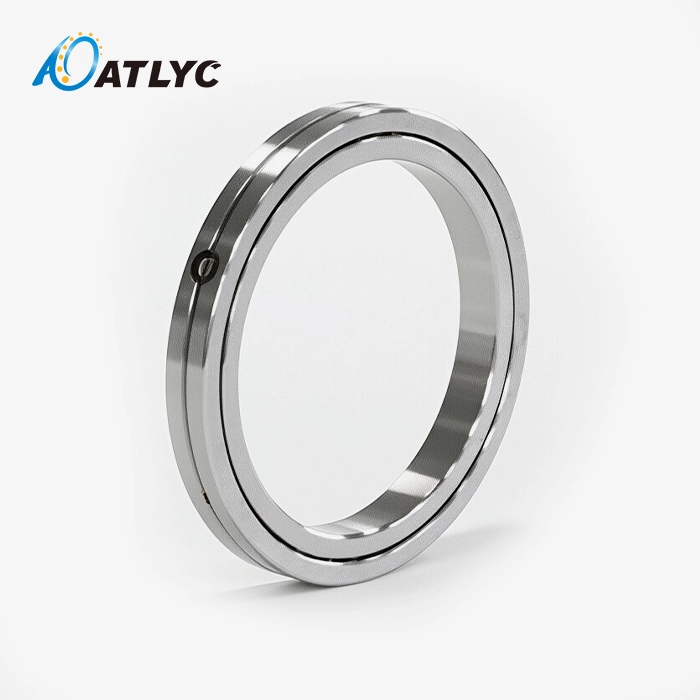
When your production line demands bearings that RE Series Crossed Roller Bearing combine exceptional load capacity with micron-level precision, the RE Series Crossed Roller Bearing represents the solution engineered specifically for demanding OEM applications. This advanced bearing configuration features an integral outer ring paired with a separable inner ring design, enabling it to simultaneously handle radial, axial, and moment loads within a single compact unit. Unlike conventional bearing arrangements that require multiple components, this crossed roller technology delivers the rigidity and rotational accuracy essential for industrial robotics, CNC machining centers, and precision automation equipment, where performance directly impacts your bottom line.
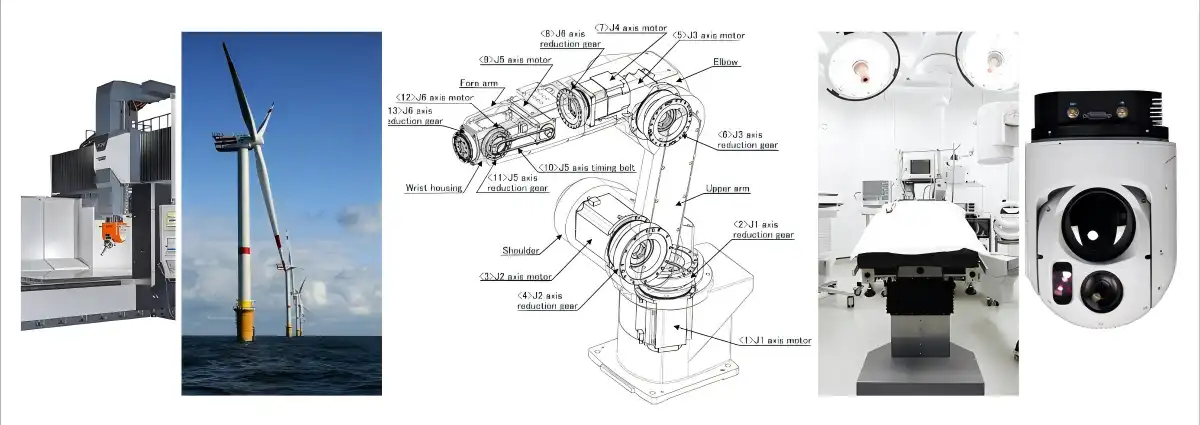
Understanding RE Series Crossed Roller Bearings
The engineering behind crossed roller bearings addresses a fundamental challenge in precision machinery: achieving multi-directional load support without compromising rotational accuracy or consuming excessive mounting space. Traditional ball bearing configurations often fall short when facing combined load scenarios, requiring engineers to design complex bearing arrangements that add weight, cost, and potential failure points to equipment assemblies.
Design Characteristics and Structural Innovation
These high-precision bearings are built around an orthogonal roller arrangement, which has cylinder-shaped rollers placed at right angles to each other within V-groove raceways that have been carefully ground. This geometric arrangement makes touch points that spread loads in all directions at the same time. The integral outer ring keeps its shape under heavy loads, and the split inner ring design makes it easier to install and allows for precise preload adjustment during installation—an important factor for getting the best performance in your specific application environment. Precision-molded cage separators separate each roller element, preventing roller-to-roller contact and ensuring even load distribution throughout the bearing's operational cycle. This setup gets rid of the skewing that happens with regular roller bearings. This makes the spinning smooth and steady, with little change in friction across the whole speed range. The sizes range from 20 mm to 1100 mm in diameter on the inside and 70 mm to 1500 mm on the outside. The widths range from 12 mm to 110 mm, so they can fit a wide range of OEM needs, from small robotic joints to large rotary indexing tables.
Operating Principles Behind Crossed Roller Technology
The functional benefit of this type of bearing comes from the fact that it can replace two different sets of bearings. The crossed roller arrangement makes a 90-degree contact angle, which lets multiple directions of load support work at the same time without the axial clearance problems that normally happen with other designs. When radial loads act on the bearing, half of the rollers take the load directly, while the other half, which are positioned perpendicularly, handle both axial and moment loads at the same time. The choice of material is very important for how long the bearing will last. When bearing steels like Gcr15 and Gcr15SiMn are used, they are known for being very hard, resistant to wear, and stable in size even when heated and cooled many times, so they will keep working well for millions of cycles. Precision grinding of the raceway surfaces produces surface finishes that are measured in micrometres. This directly contributes to the low friction coefficient of 0.002 to 0.004 that these bearings have. This lower friction means that your production equipment needs less power from the drive motor and uses less energy overall.
Key Benefits for OEM Applications
The performance benefits of crossed roller bearing technology, RE Series Crossed Roller Bearing, help sourcing managers and design engineers with several problems they have when they have to choose parts for precision machinery. One of the biggest benefits is that they can take more weight. They can handle radial loads up to 85% higher than ball bearings of the same size, and they can handle axial loads up to 70% of the radial rating. The ability to handle moment loads is especially useful in extended situations, where standard bearings would need extra support structures that are more complicated and cost more. Another important feature is its accuracy in rotating. Running accuracy of within 5–10 micrometres is achieved by the rigid raceway geometry and optimised preload settings. This meets the needs of precision positioning systems where positional mistakes have a direct effect on product quality. With accuracy grades from P6 to P3, you can fit the precision of the bearing to the needs of the application. This way, you can avoid the extra cost of over-specification while still getting the right performance for your needs.
Performance and Application Insights
Understanding how crossed roller bearings perform under real-world operating conditions helps procurement professionals make informed decisions that balance initial investment against long-term operational costs. The material composition and heat treatment processes applied during manufacturing directly influence service life, maintenance intervals, and total cost of ownership.
Load Capacity and Material Selection Impact
The usual configurations of Gcr15 bearing steel work very well in most industrial settings, with hardness levels of 60 to 65 HRC after the right heat treatment. At this level of hardness, the material will be strong enough to fight contact fatigue and wear at normal speeds and loads. When working in places where there is moisture or corrosive materials, Gcr15SiMn steel is better at resisting corrosion while still having the mechanical properties needed for load-bearing performance. Load capacity specifications are very important when matching bearings to the needs of an application. A normal RE Series bearing with a 100mm bore diameter can support radial loads of more than 50kN, axial loads of more than 35kN, and moment loads of about 2.5kNm. To do these things, you would need multiple regular bearings that take up a lot more room. By knowing these capacity values, engineers can choose the right-sized bearings, avoiding both under-specification, which can cause parts to fail too soon, and over-specification, which raises the cost of parts for no reason.
Diverse Industrial Applications
The versatility of crossed roller bearing technology manifests across numerous industrial sectors, each with distinct performance requirements and operating challenges. Examining specific application examples illustrates how these bearings solve real-world engineering problems.
Practical Maintenance Guidance
Paying attention to how to lubricate, handle, and check on bearings is necessary to get the most out of their working lifetime. Proper lubrication is still very important. Lithium-based grease made for wide temperature ranges and long relubrication times is usually used for these bearings. When you first grease a bearing, you should only grease 20 to 30 percent of its internal volume. If you grease it too much, friction and working temperature will rise. When to re-oil depends on the speed and load, but in normal industrial settings, it's usually every 500 to 2,000 hours. How the bearings are installed has a big effect on how long they last. The precision-ground surfaces can get damaged if they are mounted incorrectly. Using the right fitting tools that put equal amounts of force on the right ring stops it from deforming and keeps the tight tolerances that are needed for best performance. Adjusting the preload is another important installation measure. If the preload is too low, there is too much play, and the structure is less stiff. If the preload is too high, wear and friction losses speed up. Following the preload values given by the manufacturer ensures the performance qualities that were wanted.
Comparing RE Series with Alternatives in the Market
Making informed bearing selection decisions requires understanding how different bearing types and manufacturer offerings compare across performance parameters, cost considerations, and application suitability. This comparative analysis helps procurement professionals evaluate options systematically.
Performance Differences from Standard Bearing Types
The distinction between RE Series and RB Series crossed roller bearings centers on structural configuration. While both utilize crossed roller technology, the RE Series features an integral outer ring with a split inner ring, optimizing applications where the outer ring remains stationary, and the inner ring rotates—typical in robotic joint configurations. The RB Series reverses this arrangement with an integral inner ring and split outer ring, suiting applications where the inner ring is fixed, and the outer ring rotates. Selecting the appropriate series based on your rotation requirements ensures optimal performance and simplifies mounting RE Series Crossed Roller Bearing procedures. Comparing crossed roller bearings to slewing ring bearings clarifies another common specification decision. Slewing rings typically handle larger diameter applications above 1000mm, offering higher load capacities but lower rotational speeds and reduced accuracy compared to crossed roller designs. When your application requires diameters below 1000mm with rotational speeds above 10 RPM and positioning accuracy within 10 micrometers, crossed roller bearings deliver superior performance. Conversely, applications involving diameters exceeding 1500mm with slower rotational speeds and moderate accuracy requirements favor slewing ring solutions.
Brand Comparison: KOYO, NSK, THK, and ATLYC
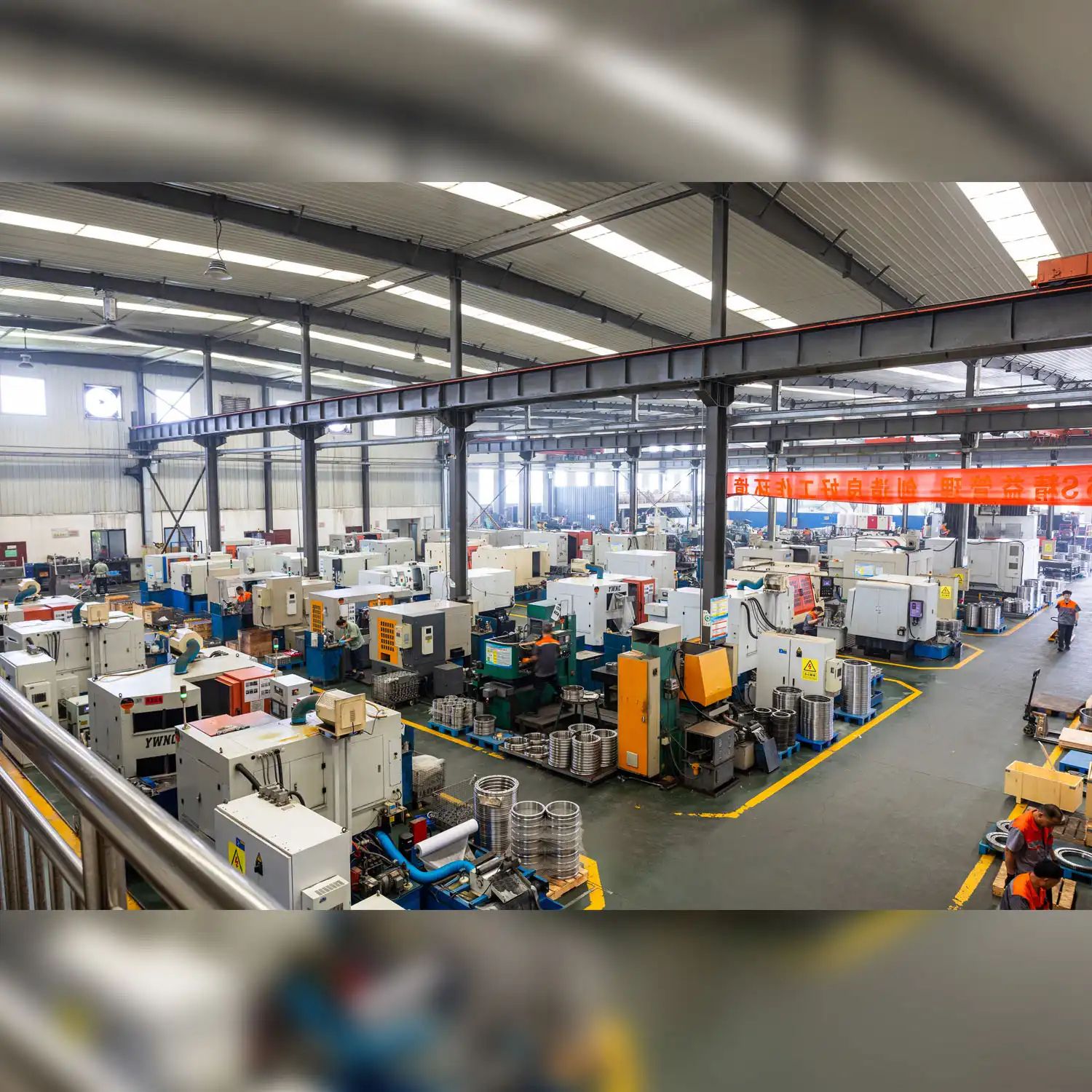
The bearing market includes several established manufacturers, each with distinct positioning regarding performance, pricing, and service support. KOYO and NSK, both Japanese manufacturers, pioneered crossed roller bearing technology and offer extensive product lines with proven reliability in demanding applications. Their bearings typically command premium pricing, reflecting decades of engineering refinement and comprehensive technical documentation. THK specializes in linear motion and rotation systems, offering crossed roller bearings optimized for integration with their broader product ecosystem.ATLYC brings a compelling value proposition to this competitive landscape. Our manufacturing facility, established in 2010, has evolved through 15 years of focused development into a precision bearing manufacturer serving global OEM clients across automotive, industrial automation, and machine tool sectors. Holding both ISO 9001 and IATF 16949 certifications demonstrates our commitment to quality management systems that meet international automotive industry standards. Our six production workshops employ 120 skilled professionals dedicated to production, quality inspection, and engineering support, ensuring consistent manufacturing quality across production runs.
Making the Right Selection for Your Requirements
Matching bearing selection to application demands involves evaluating several decision factors systematically. Load conditions represent the primary consideration—calculating the maximum radial, axial, and moment loads your application generates ensures the selected bearing provides adequate safety margin without excessive over-specification. Operating speed affects bearing life calculations; higher speeds generate increased friction heating and reduce lubrication effectiveness, potentially necessitating higher precision grades or specialized lubrication systems. Environmental conditions influence material and seal selection decisions. Applications exposing bearings to corrosive substances, extreme temperatures, or contamination require appropriate protective measures. Accuracy requirements directly correlate with bearing grade selection—precision positioning systems demanding repeatability below 5 micrometers justify P4 or P3 accuracy grades, while less critical applications function adequately with P5 or P6 grades at reduced cost. Budget constraints naturally factor into decision-making, but evaluating the total cost of ownership rather than solely the purchase price often reveals that higher-quality bearings deliver better long-term value through extended service life and reduced maintenance costs.
Procurement Guide for RE Series Crossed Roller Bearings
Navigating the bearing procurement process efficiently requires understanding distribution networks, pricing structures, customization capabilities, and support services that impact your total acquisition cost and supply chain reliability.
Global Distribution Networks
ATLYC has set up distribution partnerships in North America, Europe, and Asia so that OEM clients can easily reach supply channels no matter where they are located. The US, Germany, South Korea, Russia, Iran, and Turkey are our main markets. We have established logistics partnerships that make delivery to big industrial regions quick and easy. Multinational original equipment makers (OEMs) that need a steady supply of bearings for multiple production sites in different countries can use this geographic distribution feature. Deals for buying in bulk have big benefits for OEM uses that need to keep getting bearings. When you make a volume promise, you can get better pricing that lowers the cost per unit and makes sure that production is prioritised, which keeps delivery dates stable. Our production ability can handle orders ranging from 10 to 20 prototypes for research and development projects to more than 10,000 units a year for well-known product lines. Lead times rely on the specification and volume. Standard configurations usually ship within 4 to 6 weeks, while custom specifications take 8 to 12 weeks, depending on how complicated the design is and when it needs to be made.
Current Pricing Trends and Custom Manufacturing
The prices of bearings in 2024 are based on the changing costs of raw materials and the state of the world supply chain. After being unstable in the past few years, the prices of high-grade bearing steel have levelled off, making it easier for prices to be competitive. Standard crossed roller bearing configurations in widely specified sizes have the best prices. Custom dimensions or special accuracy grades, on the other hand, cost more because they are harder to make. When working with OEM clients who have specific application needs, the ability to do custom manufacturing is a key advantage. Our engineering team works with customers to change standard designs or create completely unique bearing solutions that meet specific performance needs. Customisation choices include non-standard sizes, unique seal configurations, changed internal geometry for different load profiles, and different types of material for different operating environments. Custom designs usually have a minimum order quantity of 100 units, which means that custom solutions can be used even for moderate-volume production.
Warranty Conditions and After-Sales Support
Quality assurance extends beyond manufacturing through comprehensive warranty coverage and responsive after-sales support channels. Standard warranty terms cover manufacturing defects for 12 months from the delivery date or 2,000 operating hours, whichever occurs first, provided bearings are installed and operated according to specified parameters. This warranty protection gives procurement managers confidence in bearing reliability while protecting against the financial impact of premature component failure. Our technical support team assists throughout the bearing lifecycle—from initial specification consultation through installation guidance and troubleshooting operational issues.
Why Choose RE Series Crossed Roller Bearings for Your OEM Projects
Selecting bearings for OEM applications involves balancing multiple factors, including technical performance, cost considerations, supply reliability, and long-term support capabilities. Understanding the core value proposition helps decision-makers align component selection with strategic business objectives.
Engineering Innovation and Precision Reliability
The technical foundation of crossed roller bearing technology rests on decades of metallurgical research, precision manufacturing development, and application experience across diverse industrial sectors. The orthogonal roller arrangement represents an elegant engineering solution to the complex challenge of multi-directional load support within minimal envelope space. This design efficiency translates directly to benefits throughout your equipment—reduced machine complexity, lighter overall assembly weight, simplified maintenance procedures, and improved reliability through fewer potential failure points. Precision manufacturing capabilities determine whether bearing designs achieve their theoretical performance in real-world applications. Our production facilities employ CNC grinding equipment capable of maintaining tolerances within 2 micrometers on critical dimensions, ensuring consistency of the RE Series Crossed Roller Bearing across production runs. Raceway surface finishes routinely achieve Ra values below 0.2 micrometers, directly contributing to the low friction characteristics and extended service life. Quality inspection protocols verify dimensional accuracy, material hardness, and surface finish on every bearing before shipping, backed by comprehensive test documentation that supports your incoming inspection procedures and quality system requirements.
Aligning Bearing Selection with Operational Demands
Successful bearing specification requires understanding the relationship between component characteristics and machine performance requirements. Rotational accuracy directly impacts your equipment's capability to meet product quality specifications—whether maintaining position tolerances on robotic assembly operations, achieving surface finish requirements in precision machining, or ensuring diagnostic image quality in medical equipment. Investing in appropriate bearing accuracy grades prevents quality issues that generate rework costs, customer complaints, and potential product liability concerns. Load capacity margins influence bearing service life through the fundamental relationship between applied stress and fatigue life. Operating bearings near their maximum rated capacity accelerates wear and reduces service life according to well-established bearing life equations. Maintaining load levels at 60-70% of rated capacity typically extends bearing life by factors of 3-5 times compared to operation at maximum ratings. This relationship explains why slightly larger bearing sizes, despite higher initial cost, often deliver better total cost of ownership through extended replacement intervals and reduced maintenance expenses.
Future Technology Advancements and Partnership Opportunities
The bearing industry continues evolving through materials science advances, manufacturing technology improvements, and integration with digital monitoring systems. Emerging developments include specialized surface treatments that extend wear life in contaminated environments, advanced seal designs that better protect internal components while minimizing friction losses, and sensor integration that enables predictive maintenance strategies. Our ongoing research and development efforts focus on incorporating these advancements into product offerings that deliver measurable performance improvements for OEM applications. Partnership opportunities extend beyond transactional supplier relationships toward collaborative development arrangements that align our engineering capabilities with your product innovation objectives. Joint development programs allow early involvement in your equipment design process, enabling bearing optimization that maximizes performance while controlling costs. Technical collaboration during prototype phases identifies potential issues before production commitments, reducing development risk and accelerating time-to-market for new equipment introductions. Long-term supply agreements provide volume commitments that enable preferential pricing while ensuring production capacity allocation that supports your growth plans.
Conclusion
The RE Series Crossed Roller Bearing delivers the combination of precision, load capacity, and compact design essential for modern OEM applications across industrial robotics, CNC machining, and precision automation equipment. Its integral outer ring with split inner ring configuration provides multi-directional load support within space-efficient envelopes, simplifying machine design while enhancing performance reliability. Manufactured from premium Gcr15 bearing steel through precision grinding processes, these bearings achieve accuracy grades from P6 to P3, accommodating diverse application requirements from general industrial use to ultra-precision positioning systems. ATLYC's manufacturing capabilities, backed by ISO 9001 and IATF 16949 certifications, deliver quality comparable to established premium brands with pricing structures that improve project economics. Our global distribution network, custom manufacturing capabilities, and comprehensive technical support provide the supply reliability and engineering collaboration that OEM manufacturers require for successful long-term partnerships.
FAQ
1. What is the typical service life of RE Series bearings under proper maintenance?
Service life depends on operating conditions, including load levels, rotational speed, lubrication quality, and environmental factors. Under normal industrial conditions with loads maintained at 60-70% of rated capacity, proper lubrication, and clean operating environments, these bearings typically achieve 20,000-30,000 operating hours before requiring replacement. Higher load levels, increased speeds, or contaminated environments reduce service life proportionally. Implementing proper maintenance practices, including appropriate relubrication intervals and condition monitoring, significantly extends operational lifetime, often doubling service life compared to installations lacking systematic maintenance protocols.
2. How do crossed roller bearings compare to slewing rings for load capacity?
Crossed roller bearings excel in applications requiring high precision and moderate load capacity within compact envelopes, typically handling moment loads up to 5kNm efficiently. Slewing rings accommodate substantially higher moment loads exceeding 50kNm but sacrifice rotational accuracy and speed capability. The crossover point typically occurs around 1000mm bore diameter—below this size, crossed roller bearings deliver better precision and speed capability, while larger diameters favor slewing ring designs for pure load capacity. Your specific application requirements regarding accuracy, speed, and load determine the optimal bearing type selection.
3. Can ATLYC customize bearings for specific OEM requirements?
Our engineering team regularly develops custom bearing solutions tailored to unique OEM application requirements. Customization options include non-standard dimensions, modified internal geometry, special seal configurations, and material variations. The custom development process begins with detailed application analysis, proceeds through prototype development and testing, and concludes with production implementation. Minimum order quantities for custom designs typically start at 100 units, making specialized solutions viable for moderate-volume production applications.
Partner with ATLYC for Your Crossed Roller Bearing Supply
ATLYC stands ready to support your OEM manufacturing requirements with RE Series Crossed Roller Bearing precision-engineered bearings that meet the demanding performance standards of modern industrial applications. Our 15 years of focused development in bearing manufacturing, combined with ISO 9001 and IATF 16949 quality certifications, provide the foundation for supply relationships built on consistent quality and reliable delivery. Whether you need standard RE Series Crossed Roller Bearing configurations for established production lines or custom-engineered solutions for innovative equipment designs, our engineering team collaborates with you to optimize bearing specifications that balance performance requirements with cost objectives. Contact our technical team at auto@lyautobearing.com to discuss your specific requirements and explore customization possibilities.
References
1. Harris, T.A. & Kotzalas, M.N. (2006). Advanced Concepts of Bearing Technology: Rolling Bearing Analysis, Fifth Edition. CRC Press, Taylor & Francis Group.
2. Weck, M. & Brecher, C. (2006). Machine Tools Production Systems 3: Design and Construction of Machines Volume 3. Springer-Verlag Berlin Heidelberg.
3. International Organization for Standardization (2014). ISO 492:2014 Rolling Bearings - Radial Bearings - Geometrical Product Specifications and Tolerances for Rolling Bearings.
4. Society of Tribologists and Lubrication Engineers (2020). Bearing Lubrication: A Practical Guide to Lubricant Selection and Application in Rolling Element Bearings. STLE Publications.
5. American Bearing Manufacturers Association (2019). Load Ratings and Fatigue Life for Ball Bearings - ANSI/ABMA Standard 9-2019. ABMA Technical Standards.
6. Budynas, R.G. & Nisbett, J.K. (2020). Shigley's Mechanical Engineering Design, Eleventh Edition. McGraw-Hill Education, Chapter 11: Rolling-Contact Bearings.
Learn about our latest products and discounts through SMS or email