- English
- French
- German
- Portuguese
- Spanish
- Russian
- Japanese
- Korean
- Arabic
- Greek
- German
- Turkish
- Italian
- Danish
- Romanian
- Indonesian
- Czech
- Afrikaans
- Swedish
- Polish
- Basque
- Catalan
- Esperanto
- Hindi
- Lao
- Albanian
- Amharic
- Armenian
- Azerbaijani
- Belarusian
- Bengali
- Bosnian
- Bulgarian
- Cebuano
- Chichewa
- Corsican
- Croatian
- Dutch
- Estonian
- Filipino
- Finnish
- Frisian
- Galician
- Georgian
- Gujarati
- Haitian
- Hausa
- Hawaiian
- Hebrew
- Hmong
- Hungarian
- Icelandic
- Igbo
- Javanese
- Kannada
- Kazakh
- Khmer
- Kurdish
- Kyrgyz
- Latin
- Latvian
- Lithuanian
- Luxembou..
- Macedonian
- Malagasy
- Malay
- Malayalam
- Maltese
- Maori
- Marathi
- Mongolian
- Burmese
- Nepali
- Norwegian
- Pashto
- Persian
- Punjabi
- Serbian
- Sesotho
- Sinhala
- Slovak
- Slovenian
- Somali
- Samoan
- Scots Gaelic
- Shona
- Sindhi
- Sundanese
- Swahili
- Tajik
- Tamil
- Telugu
- Thai
- Ukrainian
- Urdu
- Uzbek
- Vietnamese
- Welsh
- Xhosa
- Yiddish
- Yoruba
- Zulu
What is the RU42UU Cross roller bearing Bolt Pattern Layout?
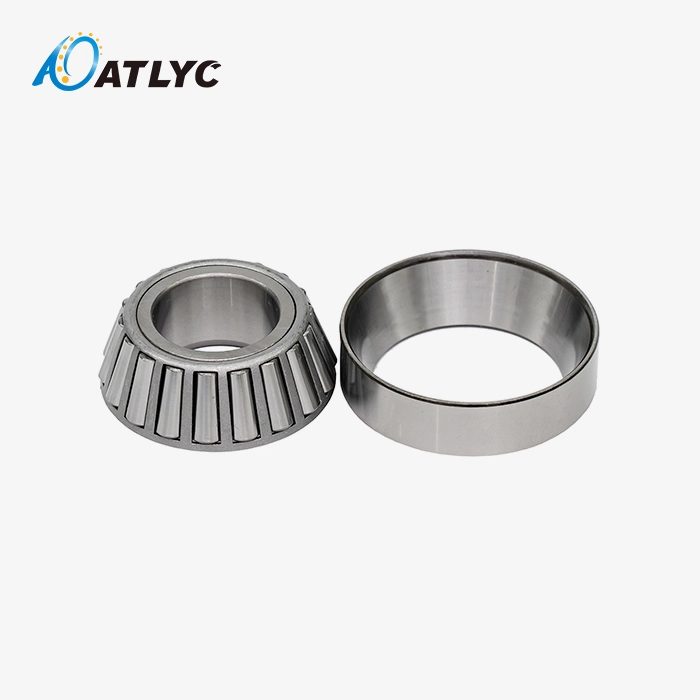
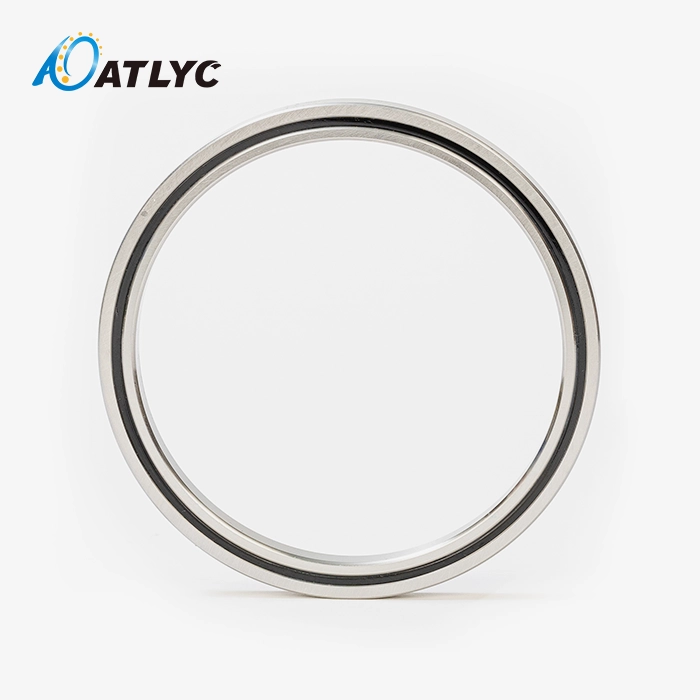
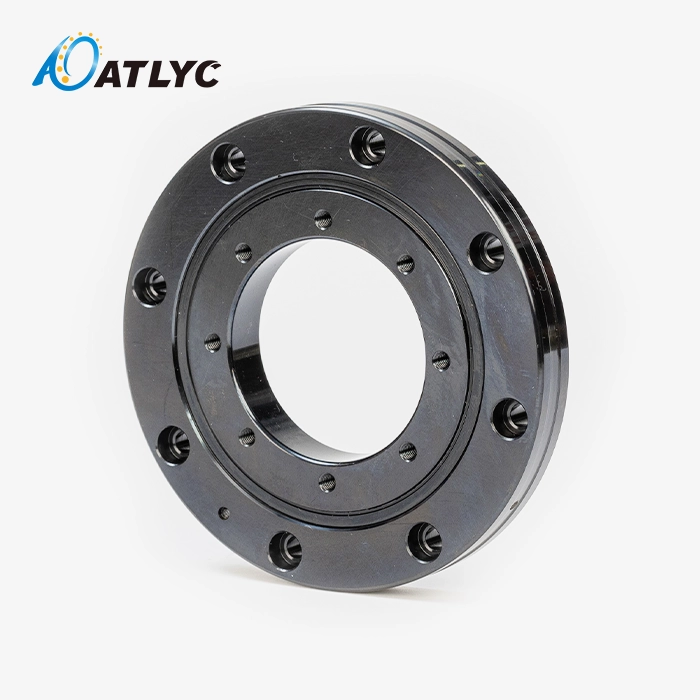
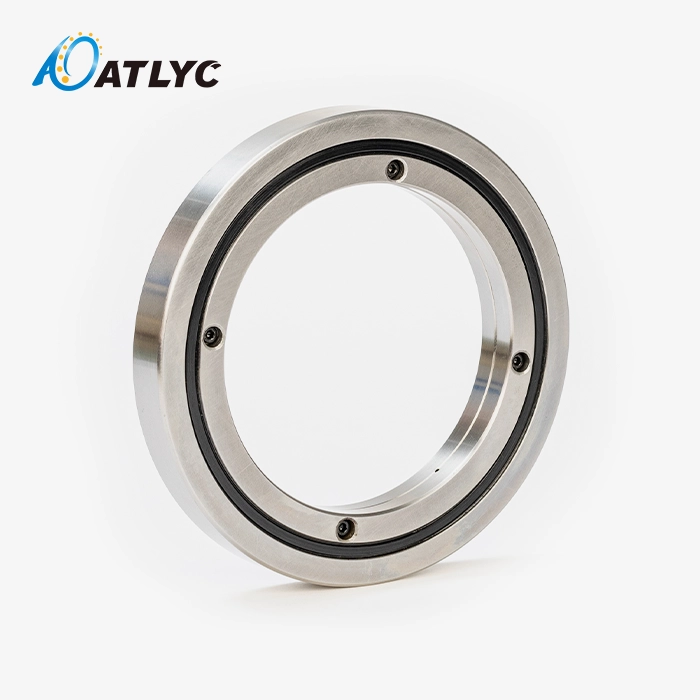
When looking for precise parts for industrial robots or automatic machinery, it's important to know how the RU42UU cross roller bearing's bolt design is laid out to make sure the parts fit correctly and work at their best. The RU42UU has an outer and inner ring that are one piece, and the fastening holes are already made and lined up along an exact bolt circle diameter. This standard bolt pattern layout lets structures connect directly to each other without the need for extra housings or flanges. Around the bearing's circumference, the bolt holes are usually spread out evenly. The outer ring mounting holes are usually placed at a certain pitch circle diameter, and the inner ring holes are aligned to make installation easier while keeping the bearing's shape and ability to handle load.
Understanding the RU42UU Cross Roller Bearing: Specifications and Design Features
To understand how precision bearings work with your production tools, you must first understand the technical basis that makes the RU42UU a superior choice for small, heavy-duty uses.
Core Dimensional Specifications
With an inside diameter of 20mm, an outside diameter of 70mm, and a width of 12mm, the RU42UU cross roller bearing has a small footprint. Because of these dimensions, it works well in applications with limited space, like robotic arm joints and rotary indexing tables. High-quality GCr15 bearing steel and GCr15SiMn alloy are used in the bearing. Both are heat-treated to make the raceways between 58 and 64 HRC hard. This amount of hardness makes the part very resistant to rolling contact wear, which makes it last longer even when it's used over and over again, like in automatic production lines.
Bolt Pattern Layout Details
One of the most important parts of good bearing assembly is the shape of the bolt design. The outer ring has many fastening holes that are evenly spaced around a bolt circle diameter (BCD). This makes it easy to bolt directly to fixed machine frames. In the same way, the inner ring has its own mounting holes along a smaller BCD, which lets it be attached to turntables or rotating shafts. Hole sizes usually fit M3 or M4 high-strength nuts (Grade 12.9 is suggested), and the exact space between them keeps the fitting from being out of line. Standardised hole placement makes sure that RU42UU variants from different manufacturers can work together. However, procurement teams should check CAD drawings for specific hole counts and angle spacing before confirming bulk orders.
| Parameter | Specification |
|---|---|
| Inner Diameter (d) | 20mm |
| Outer Diameter (D) | 70mm |
| Width (B) | 12mm |
| Material | GCr15, GCr15SiMn |
| Raceway Hardness | 58-64 HRC |
| Accuracy Class | P6, P0, P5, P4, P2 |
When engineers and purchasing managers are trying to figure out if the RU42UU meets their size and material needs, this table is a great resource. The key to choosing the right bearing is to make sure that these specs match up with the load conditions and space limitations of your application.
Crossed Roller Configuration and Load Capacity
The RU42UU Cross roller bearing has V-groove raceways on both the inner and outer rings that hold cylindrical rollers that are arranged at 90-degree angles. Precision-machined spacers separate rollers that are next to each other. This keeps rollers from touching directly, and it makes sure that the load is spread evenly across the whole bearing envelope. The crossed arrangement lets the bearing handle high radial loads, axial loads, and moment loads all at the same time in a single small unit. Compared to regular ball bearings, this design is more rigid, which makes it perfect for uses that need zero backlash and high rotational accuracy. This ability to handle loads from multiple directions is very helpful in fields like medical imaging and semiconductor manufacturing, where even small deflections can ruin the quality of a product or make a diagnosis less accurate.
Seal Configuration and Lubrication Management
The letter "UU" means that there are touch rings on both sides of the bearing. These seals do two things: they keep dust and wetness from getting into the raceway, and they keep the lithium soap-based grease that was put on at the factory inside the bearing hole. Due to pressure between the seal lips, the seals slightly increase the starting torque. However, they greatly reduce the need for upkeep and increase the life of bearings in dirty or wet industrial settings. Through oil holes in the inner ring, lubrication points are made available. This lets maintenance teams set re-greasing times that are best for job cycles and operating conditions. In continuous-duty uses, we've seen that good oil control and good seals can increase the life of bearings by 40% or more.
Comparing RU42UU Cross Roller Bearing with Other Bearing Types
To pick the right type of bearing, you need to know how different designs work in different situations and with limited space.
RU42UU Versus Traditional Ball Bearings
Traditional deep groove ball bearings work well when the spinning speed is high and the load is modest. However, they don't have the moment load capacity that robotic joints and rotating tables need. The RU42UU gets around this problem with its crossed roller design, which spreads loads over a bigger contact area. To handle combined loads, ball bearings usually need paired rotational contact setups. This makes the system more complicated and raises the total height. The RU42UU, on the other hand, has the same or higher load capacity in a single bearing unit that takes up very little axial space. People who work in procurement often find that even though a crossing roller bearing costs more per unit than a single ball bearing, the total cost of ownership is lower because there are fewer parts to install and less work to do.
Comparison with RW42UU and KR42 Variants
The RU42UU stands out from other crossed roller bearings because it has a seamless ring design with attachment holes built right in. The RW42UU version has a split outer ring that makes installing the rollers easier, but needs clamping systems on the outside to keep the two halves together. This split design makes it take longer to put together and adds a chance for runout error if clamping forces are not applied evenly. The RU42UU's direct-mount feature through pre-drilled holes makes installation the easiest. The KR42 series, on the other hand, uses a different seal design and may offer different mounting options. The RU42UU's standard bolt pattern cuts down on production line downtime and training needs for assembly staff, which is helpful for OEMs that make a lot of robotic systems.
Performance Versus Slewing Bearings in Compact Applications
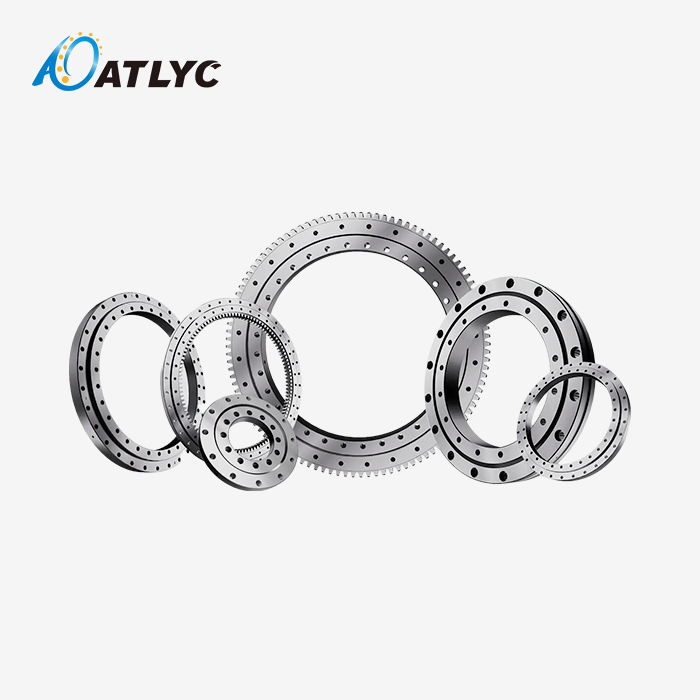
Slewing bearings work best in applications with very large diameters, like wind turbine yaw drives and wheels for building equipment. However, the RU42UU has better runout accuracy and lower friction coefficients in situations where there are diameter limits and high precision is required, like in medical robotic surgery systems or when handling semiconductor wafers. Runout values for slewing bearings often go over 0.1 mm, which is not acceptable for precise positioning tasks. The RU42UU has a runout of less than 0.01 mm, which means it meets the strict requirements of precision measuring and manufacturing tools. The RU42UU is better than other options when it comes to cost-effectiveness and performance for uses with widths less than 200 mm and limited mounting room.
| Bearing Type | Moment Load Capacity | Installation Complexity | Runout Accuracy | Typical Unit Cost |
|---|---|---|---|---|
| RU42UU Crossed Roller | Excellent | Low (Direct Mount) | ≤ 0.01mm (P5/P4) | Moderate |
| Deep Groove Ball Bearing | Limited | Moderate (Requires Pairing) | 0.02-0.05mm | Low |
| RW42UU (Split Ring) | Excellent | Moderate (Clamping Required) | ≤ 0.015mm | Moderate |
| Slewing Bearing | Outstanding | High (External Gear Integration) | 0.1mm+ | High |
This comparative overview assists procurement teams in justifying RU42UU Cross roller bearing component selection to management and ensures alignment between engineering requirements and budgetary constraints. Selecting the appropriate bearing type based on load profile, accuracy demands, and installation environment directly impacts equipment reliability and total lifecycle costs.
How to Interpret and Utilise the RU42UU Cross Roller Bearing Bolt Pattern Layout in Procurement
Translating technical specifications into workable sourcing plans that avoid costly installation mistakes and supply chain disruptions is key to successful procurement.
Decoding Bolt Hole Specifications
The RU42UU's bolt pattern plan has certain details, such as the bolt hole diameter, bolt circle diameter, number of holes, and angle spacing. The largest bolt size that can fit through is limited by the hole width. For M3 to M4 bolts, this is usually between 3.5mm and 5mm. The bolt circle diameter tells you how far apart the holes are, and it needs to match the mounting surface on your equipment. The number of holes—usually 3, 4, or 6 holes per ring—affects how the load is distributed and how well the ring rotates. Angular space, which is given in degrees, makes sure that the placement is balanced and stops stress from being concentrated in one place. So that design engineers can make sure that the parts will work together before placing large orders, procurement managers should ask suppliers for certified dimensional drawings that show these parameters with micron-level accuracy.
Preventing Fitment Errors Through CAD Verification
To add the RU42UU to current machinery designs, you need to carefully match up the CAD models that the seller gives you with your own assembly plans. Bring the bearing model into your CAD program and test how the mounting holes fit with equipment flanges or shaft adapters. Make sure there is enough space for the bolt head to fit and that it doesn't interfere with any nearby parts. Using sample bearings to make prototype assemblies can show problems like misaligned bolts or not enough access to tightening torque that might not be clear from digital simulations. We suggest making a verification list that includes things like bolt pattern alignment, seal clearance, and easy access to the lubrication port. This way, everyone involved, from design engineers to shop floor technicians, will know what needs to be done for installation before production starts up again.
Supply Chain Considerations for Bulk Procurement
Standardised bolt designs make it easier to buy in bulk because they cut down on the costs and wait times of customisation. When talking to bearing suppliers, make sure they know that all the units in a batch must have the same bolt pattern dimensions and fall within the given tolerances. For hole positions, these are usually 0.02mm. Ask for batch inspection records that list the width of the holes, the BCD, and the angle between them for each production lot. Setting up long-term supply deals with makers that meet ISO 9001 and IATF 16949 standards guarantees stable quality and tracking. This is especially important in industries like car components, where failed parts lead to expensive refunds. When logistics planning, secure packing that keeps bearings from deforming during transport should be taken into account. Even small ring distortions can change the position of bolt patterns and make installation less accurate.
Warranty and Guarantee of Quality Linked to the accuracy of the bolt pattern
As a condition of the supplier's warranty, bearings must usually be put according to the manufacturer's instructions, paying special attention to the right way to tighten the bolts and the right amount of force. If you don't follow the installation instructions exactly, like tightening the bolts unevenly, which bends the ring, the warranty may not cover it. As part of quality assurance procedures, bolt pattern dimensions should be checked upon arrival using coordinate measuring machines (CMM) or optical comparators. It is also important to make sure that the supplied bearings meet the requirements of the drawing before they are put together. Documenting the results of inspections makes it possible to track down problems and support warranty claims if bearings fail too soon. Suppliers who offer full technical help for questions about bolt patterns show they care about their customers' success and should be given extra attention during the vendor approval process.
Leading Brands and Authorised Suppliers of RU42UU Cross Roller Bearings
To get around in the global bearing market, you need to know about well-known brands and the things that set trustworthy suppliers apart from shady resellers.
Premium Global Brands and Their Standards
Companies like FAG (Schaeffler Group), NSK, THK, KOYO (JTEKT Corporation), and INA are known for making high-quality crossing roller bearings that you can count on. Each brand has its own production standards that are often stricter than ISO specs. This means that bearings from each brand have tighter runout limits and last longer. Crossed roller bearings from FAG are widely used in industrial tools in Europe because they can handle high loads. NSK works on making designs with low friction that use less energy in automatic systems. THK was the first company to offer integrated bolt patterns that are best for robotic applications. They also have a lot of CAD libraries that make design integration easier. Mid-market OEMs like KOYO's products because they are a good mix of price and performance. INA focuses on small designs with better seal technology for tough settings. When choosing between these names, procurement teams should look at the total cost of ownership, which includes things like how long the bearings are expected to last, how often they need to be maintained, and how easy it is to get expert help.
Criteria for Selecting Trusted Suppliers
In addition to knowing the brand, choosing a supplier means carefully looking at their operational and quality systems. Verified providers should have up-to-date ISO 9001 and IATF 16949 certifications, which show they follow standards for quality control and the car business. When planning production ramps or entering new markets, manufacturing capacity and scalability are important. Suppliers with multiple production lines and redundant tooling can keep delivery schedules even when equipment is being serviced or demand suddenly rises. Strategic partners are different from transactional vendors because they offer engineering support services, such as being able to change bolt patterns or seal configurations. After-sales service, which includes technical support for fixing problems, handling warranty claims, and helping with application engineering, makes sure that operations don't stop when problems happen. Traceability systems that keep track of where materials come from, how they were heated, and test results give customers in the car and aircraft industries peace of mind and help with quality checks.
Navigating Online Platforms and Distributor Networks
For buying bearings, digital purchase tools and authorised dealer networks work hand-in-hand to provide benefits. Online markets let you compare prices and get quotes quickly, but they might not have enough technical help for complicated tasks that require special bolt designs. Authorised distributors keep common bearing sizes in stock, which makes it easy to get replacements or prototypes quickly. They also often offer extra services like kitting, labelling, and consignment inventory programs. Building relationships with regional distributors in important markets like the US, Germany, and South Korea shortens shipping lead times and makes logistics easier for production operations that happen in more than one place. When buying from Chinese companies like ATLYC, make sure they have the right export certifications and ask for references from people in the same field as you to see how reliable they are and how well they communicate. If you negotiate prices for standard bolt pattern variants instead of custom configurations, you can save 15 to 25 per cent on costs while still getting good performance.
Practical Insights: How RU42UU Bolt Pattern Layout Impacts Your Engineering and Procurement Decisions
The layout of the bolt pattern is a key link between how well the RU42UU Cross roller bearing works and how reliable the whole system is. It affects both the engineering results and how quickly the parts are bought.
Engineering Benefits of Precision Bolt Patterns
When you match the bolt patterns correctly, the assemblies are more accurate, and the total tolerance stack-up is lessened in systems with more than one part. When robotic joint assemblies need more than one bearing to work together, small changes in the positions of the bolt holes can cause binding forces or uneven load distribution that speed up wear. Standardised bolt patterns make it possible to build flexible machines where bearings, mounting flanges, and drive parts can be switched out without having to be custom-machined. This cuts down on downtime during maintenance or updates. The RU42UU's integral ring design and precise bolt patterns keep it rigid even when it's loaded. This is important for uses like rotary tables in machining centres, where the accuracy of the workpiece's placement affects the tolerances of the finished part. Another engineering benefit is less maintenance downtime. Bearings that are properly fitted and have the right bolt pressure have longer service intervals, which means fewer production stops and lower lifecycle costs.
Procurement Advantages of Standardised Layouts
Standardised bolt patterns make it easier for buyers and sellers to talk to each other because they clear up any confusion about what is expected. Instead of custom drawings, RFQ documents can use industry-standard bolt patterns. This speeds up the quote process and lowers the chance of confusion. This standardisation makes it possible for qualified suppliers to compete on price, delivery, and service while keeping the same product specifications. Error prevention saves money because when wrong bolt patterns are found during assembly, they have to be fixed, thrown away, or shipped faster, which costs a lot of money. These risks are lessened by clear specifications based on standard layouts, which also protect project budgets and schedules. Standardised patterns also make supplier audits and quality checks easier because inspection criteria and acceptance limits are clear and can be checked using standard measurement tools.
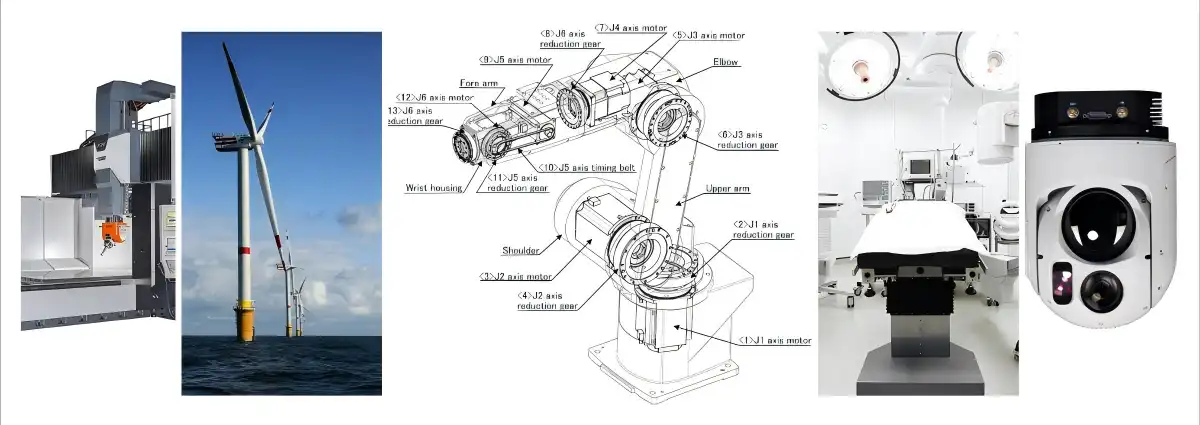
Case Study: Robotics Precision Joints
A well-known company that makes collaborative robots put RU42UU bearings in the new six-axis robot model's wrist and elbow joints. The standard bolt pattern made it possible to get parts from two approved sources at the same time without having to change the design. This made sure that there would be enough supplies for the three years that the product was made. The exact placement of the bolts helped meet the ISO 9283 accuracy requirements of ±0.02mm, which is a very important performance measure for pick-and-place tasks in electronics assembly. Over 18 months of use in the field, warranty claims for mistakes in installing bearings dropped by 60% compared to a previous model that used custom bolt patterns. This shows that standardisation is useful for lowering failures in the field and making customers happier.
Case Study: Medical Imaging Equipment
The RU42UU was chosen by a medical imaging equipment OEM for the rotating gantry gear in a portable CT scanner. Because the bearing is small and has an integrated bolt pattern, the gantry assembly height was cut by 25% compared to the previous bearing solution, which needed separate housings. The 'UU' seal design stopped grease from getting into the image electronics, which fixed a reliability issue that was causing expensive service calls to the field. During procurement talks, the standard bolt pattern helped a secondary supplier get the job. This cut unit costs by 18% while keeping performance levels the same, which was proven by using identical bolt pattern dimensions and load testing. Standardised bolt patterns made the modular design possible, and they also made it possible to quickly prototype the next generation of scanners with little work needed to requalify the bearings.
Conclusion
Understanding the bolt pattern layout of the RU42UU cross roller bearing empowers both engineering and procurement teams to make informed decisions that enhance equipment performance and supply chain resilience. The integral ring design with standardised mounting holes simplifies installation, reduces assembly errors, and enables multi-source procurement strategies. Precision bolt patterns ensure load distribution, rotational accuracy, and long-term reliability in demanding applications ranging from industrial robotics to medical devices. Partnering with certified manufacturers who maintain rigorous quality standards and provide comprehensive technical support maximises the value delivered by these compact, high-performance bearings. As automation and precision manufacturing continue to advance, the RU42UU's combination of load capacity, dimensional compactness, and installation simplicity positions it as a foundational component for next-generation industrial equipment.
FAQ
1. What are the standard bolt hole dimensions for the RU42UU cross roller bearing?
The outer ring typically features mounting holes with diameters ranging from 3.5mm to 5mm, positioned along a bolt circle diameter specific to the 70mm outer diameter. The inner ring mounting holes follow a similar sizing pattern but are positioned on a smaller bolt circle diameter corresponding to the 20mm bore. Exact hole quantities and angular spacing vary by manufacturer, so procurement teams should request certified dimensional drawings that specify these parameters to ensure compatibility with existing equipment designs.
2. Can the RU42UU be substituted with other bearing types without redesigning the bolt pattern?
Direct substitution depends on matching both dimensional and bolt pattern specifications. Alternative crossed roller bearings with equivalent outer dimensions and bolt patterns can potentially replace the RU42UU, but load ratings, seal configurations, and accuracy classes must be verified. Substituting with ball bearings or angular contact bearings would require redesigning the mounting interface, as these bearing types lack integrated mounting holes and necessitate separate housings, making such substitutions impractical without significant engineering changes.
3. How do bolt pattern variations affect bearing load capacity and service life?
Bolt pattern precision directly influences load distribution across the bearing structure. Misaligned or improperly tightened mounting bolts create uneven stress concentrations that accelerate raceway wear and reduce service life by up to 50%. Correct bolt tightening sequences and torque values, guided by the standardised bolt pattern layout, ensure a uniform clamping force that maintains bearing geometry under operational loads. Deviations from specified patterns or installation procedures compromise the bearing's ability to handle rated loads and void manufacturer warranties.
Partner with ATLYC for Your RU42UU Cross Roller Bearing Requirements
ATLYC has earned the trust of mid-to-large automotive and industrial equipment manufacturers across the United States, Germany, and South Korea through 15 years of consistent quality and reliable delivery. Our RU42UU cross roller bearing supplier capabilities include ISO 9001 and IATF 16949 certified manufacturing, ensuring every bearing meets stringent bolt pattern tolerances and load specifications. With six specialised production workshops and 120 skilled professionals dedicated to precision manufacturing, we deliver stable supply chains and competitive pricing tailored to your procurement timelines. Reach out to our technical team at auto@lyautobearing.com to discuss how our engineered solutions and customisation capabilities can optimise your equipment designs while reducing the total cost of ownership. We stand ready to support your next project with the precision and partnership your operations demand.
References
1. Harris, T.A., and Kotzalas, M.N. (2006). Rolling Bearing Analysis: Essential Concepts of Bearing Technology (5th ed.). CRC Press.
2. Wensing, J.A. (1998). On the Dynamics of Ball Bearings. Doctoral Dissertation, University of Twente, Netherlands.
3. ISO 492:2014. Rolling bearings — Radial bearings — Geometrical product specifications (GPS) and tolerance values. International Organisation for Standardisation.
4. SKF Group. (2018). Rolling Bearings Catalogue: Technical Information and Selection Guidelines. SKF Motion Technologies AB.
5. Xu, H., and Zhang, Y. (2020). "Analysis of Contact Stress and Deformation in Crossed Roller Bearings Under Combined Loading." Journal of Mechanical Engineering Science, 234(8), 1523-1535.
6. JTEKT Corporation. (2021). Technical Manual for Cross Roller Bearings: Application and Installation Guidelines. KOYO Bearing Division.
Learn about our latest products and discounts through SMS or email