- English
- French
- German
- Portuguese
- Spanish
- Russian
- Japanese
- Korean
- Arabic
- Greek
- German
- Turkish
- Italian
- Danish
- Romanian
- Indonesian
- Czech
- Afrikaans
- Swedish
- Polish
- Basque
- Catalan
- Esperanto
- Hindi
- Lao
- Albanian
- Amharic
- Armenian
- Azerbaijani
- Belarusian
- Bengali
- Bosnian
- Bulgarian
- Cebuano
- Chichewa
- Corsican
- Croatian
- Dutch
- Estonian
- Filipino
- Finnish
- Frisian
- Galician
- Georgian
- Gujarati
- Haitian
- Hausa
- Hawaiian
- Hebrew
- Hmong
- Hungarian
- Icelandic
- Igbo
- Javanese
- Kannada
- Kazakh
- Khmer
- Kurdish
- Kyrgyz
- Latin
- Latvian
- Lithuanian
- Luxembou..
- Macedonian
- Malagasy
- Malay
- Malayalam
- Maltese
- Maori
- Marathi
- Mongolian
- Burmese
- Nepali
- Norwegian
- Pashto
- Persian
- Punjabi
- Serbian
- Sesotho
- Sinhala
- Slovak
- Slovenian
- Somali
- Samoan
- Scots Gaelic
- Shona
- Sindhi
- Sundanese
- Swahili
- Tajik
- Tamil
- Telugu
- Thai
- Ukrainian
- Urdu
- Uzbek
- Vietnamese
- Welsh
- Xhosa
- Yiddish
- Yoruba
- Zulu
Tapered Roller Bearing: Reliable Solution for Heavy Duty?
When heavy machinery needs to keep working even when radial and axial loads are present, Tapered Roller Bearings are the best technical answer. These precise parts have a conical shape and are built to last. They can carry a lot of weight and work well in gears for cars, industrial gearboxes, and building equipment. Unlike regular ball bearings, the tapered form spreads forces over a larger contact area. This lets machinery work reliably in harsh conditions where a broken part could have big practical and financial effects. Because the design can be separated and the clearance can be changed, these bearings are especially useful for OEMs and manufacturers of industrial equipment that want reliable performance and easier repair procedures.

Understanding Tapered Roller Bearings: Design, Function & Dimensions
Tapered Roller Bearings are different from other rolling element options because of their basic structure, which is made with careful geometric precision. Each unit has three main parts that work together: the inner ring (cone) with a tapered track, the outer ring (cup) that can be installed separately, and tapered rollers held in place by stamped steel or brass cages. This building method is the result of decades of technical improvements that aim to improve load distribution and operating longevity.
The Engineering Logic Behind Conical Geometry
What makes a bearing unique is how all of its contact surfaces come together at a theoretical apex point along its center line. This cone-shaped alignment makes sure that the motion is a true rolling motion with little moving friction between the parts. The logarithmic roller shape spreads the Hertzian contact stress evenly across the contact patch. This stops edge loading failures that usually happen when shafts are out of line or housings bend. This exact shape is kept throughout the bearing's working life by manufacturing tolerances of within ±5 microns.
Dimensional Standards and Compatibility
Following the dimensions set by ISO 355 and DIN 720 ensures that parts can be used on different systems around the world. The 32 series has metric single-row layouts like the 320xx, 322xx, 323xx, and 329xx types. Each is designed to handle different load patterns and space limitations. When purchasing spare parts or building new equipment, procurement teams can use this standardization to their advantage because consistent dimensions make inventory simpler and make the process of qualifying suppliers easier.
Separable Design Advantages
Individual construction lets the inner and outer rings be mounted separately, which greatly streamlines the building process in industrial settings. Maintenance workers don't have to place the cup in the frame before putting the cone piece on the shaft. This feature is especially useful for fine-tuning clearances, as it lets engineers find the best internal Tapered Roller Bearings shape based on operating temperature ranges, shaft system stiffness, and speed needs without taking the whole machine apart.
Comparing Tapered Roller Bearings with Other Bearing Types
In order to choose the right bearing technology, you need to know how the different styles work with practical needs. Often, engineering teams have to choose between several types of bearings, each of which has its own benefits based on the specifics of the application.
Load Capacity Comparison with Ball Bearings
Ball bearings only touch raceways at certain theoretical points, which limits how much weight they can hold compared to their envelope measurements. With Tapered Roller Bearings, each roller makes straight contact with the track surface, which makes the load-bearing area much bigger. Because of this main difference, a 100mm hole tapered roller bearing can handle about 40% more radial loads and 300% greater axial loads than a deep groove ball bearing of the same size. This edge in capacity is used by industrial gearboxes and car differentials to cut down on bearing size and system weight while still meeting safety standards.
Performance Trade-offs Against Cylindrical Roller Bearings
Because their rollers are lined up parallel to each other, cylindrical roller bearings are great for uses with only rotational loads and can handle higher speeds. Tapered roller bearings can only rotate at speeds that are about 60% of those of cylindrical bearings. In exchange for managing axial load, they give up some rotating speed. In helical gearing applications, where tooth engagement creates thrust forces, tapered designs are especially needed for their ability to handle combined loads. The ratio between radial and axial capacity is set by the contact angle, which can be anywhere from 10° to 30° based on the series design.
Operational Context for Spherical and Needle Bearings
Spherical roller bearings can handle larger misalignment angles, which makes them good for equipment where the shaft may bend or where the mounting surface isn't smooth. Needle bearings can fit into very small circular spaces, but they can't hold much weight in the axial direction. In heavy-duty uses that need predictable behavior under complex loading conditions, neither of the other options can match the balanced performance range of tapered roller bearings. When designing machinery with load capacity, adjustability, and easy servicing access in mind at modest speeds, tapered configurations always give the best value. The actual effects of these differences have a direct effect on choices about what to buy. Continuously working in harsh conditions, conical roller technology is the most popular choice for truck wheel ends, industrial gears, and mining equipment because it has been shown to be reliable.
Effective Maintenance, Lubrication & Failure Prevention
Proper maintenance and lubrication techniques are very important for making bearings last as long as possible in heavy-duty situations. The separate design architecture makes installation easier and also makes it easier to do regular inspections that find problems before they become big enough to cause unplanned downtime.
Lubrication Requirements and Intervals
Lubrication with grease is used in most commercial settings. Lithium complex or polyurea formulas work best at temperatures ranging from -20°C to 150°C. Bearings in rolling mill gearboxes, mine conveyors, and heavy construction equipment usually need to be re-oiled every 500 to 2000 hours of use, but this depends on how much load they are carrying and how dirty the surroundings are. For high-speed tasks where getting rid of heat is important, oil bath or flowing oil devices work best. Compared to mineral oil-based products, synthetic lubricants increase the time between relubrication by 40 to 60%. This lowers the cost of repair work for big machine fleets.
Common Failure Modes and Prevention Strategies
Spalling shows up as fatigue cracks in Tapered Roller Bearings, spreading from stress concentrations below the surface. This usually means the bearing has hit its estimated L10 fatigue life. Brinelling makes lasting dents in raceways when shock loads are higher than the material's yield strength while it's being moved or put in place. Breakdown of lubrication, which can happen because of contamination, lack of oil, or heat, speeds up wear rates by a factor of ten. These conditions can be found by vibration tracking systems that find the frequency fingerprints of surface defects. When friction rises, which means the lubrication film thickness is decreasing, temperature monitors provide extra proof. Industrial repair studies show that condition monitoring cuts the number of unexpected failures in key equipment by 75%.
Inspection Protocols for Extended Service Life
During routine maintenance, a visual check shows darkening patterns that show overheating, water entry, or abrasive contamination. Using dial markers to measure radial play shows how wear is progressing; rises of more than 50% of the original clearance mean that replacement is needed. Technicians can look at raceways and rollers without taking off nearby parts because the design is separable. This cuts the time it takes to check big industrial gears from hours to minutes. This advantage of easy entry immediately leads to lower maintenance labor costs and better equipment availability. Setting up written maintenance processes that are specific to the bearing technology and application conditions ensures that all maintenance teams follow the same steps. Operations teams benefit from knowing how long a component will last, which helps them keep track of extra parts accurately and plan when to replace them.
Procuring Tapered Roller Bearings: Brands, Pricing & Supplier Selection
When making a strategic bearing purchase decision, the immediate price is weighed against the total cost of ownership, which includes factors like availability, dependability, and expert support. Getting consistent supply lines that meet both quality standards and delivery requirements is hard for global manufacturers that work with the car and industrial markets.
Evaluating Established Bearing Brands
Leading companies in their fields, like Timken, SKF, NSK, NTN, FAG, KOYO, and INA, have set up global marketing networks to help with OEM production and repair needs in the aftermarket. These names have factories in several countries, which guard the supply chain against problems that might happen in different regions. The higher prices are due to investments made in metal study, precision cutting technology, and systems that check the quality of the products. Mid-tier brands from qualified Chinese manufacturers can save you 30 to 40 percent on costs while still meeting ISO 9001 and IATF 16949 standards. This is becoming a more appealing option for cost-conscious users, where brand heritage is less important than performance specifications that have been tested.
Supplier Qualification Criteria
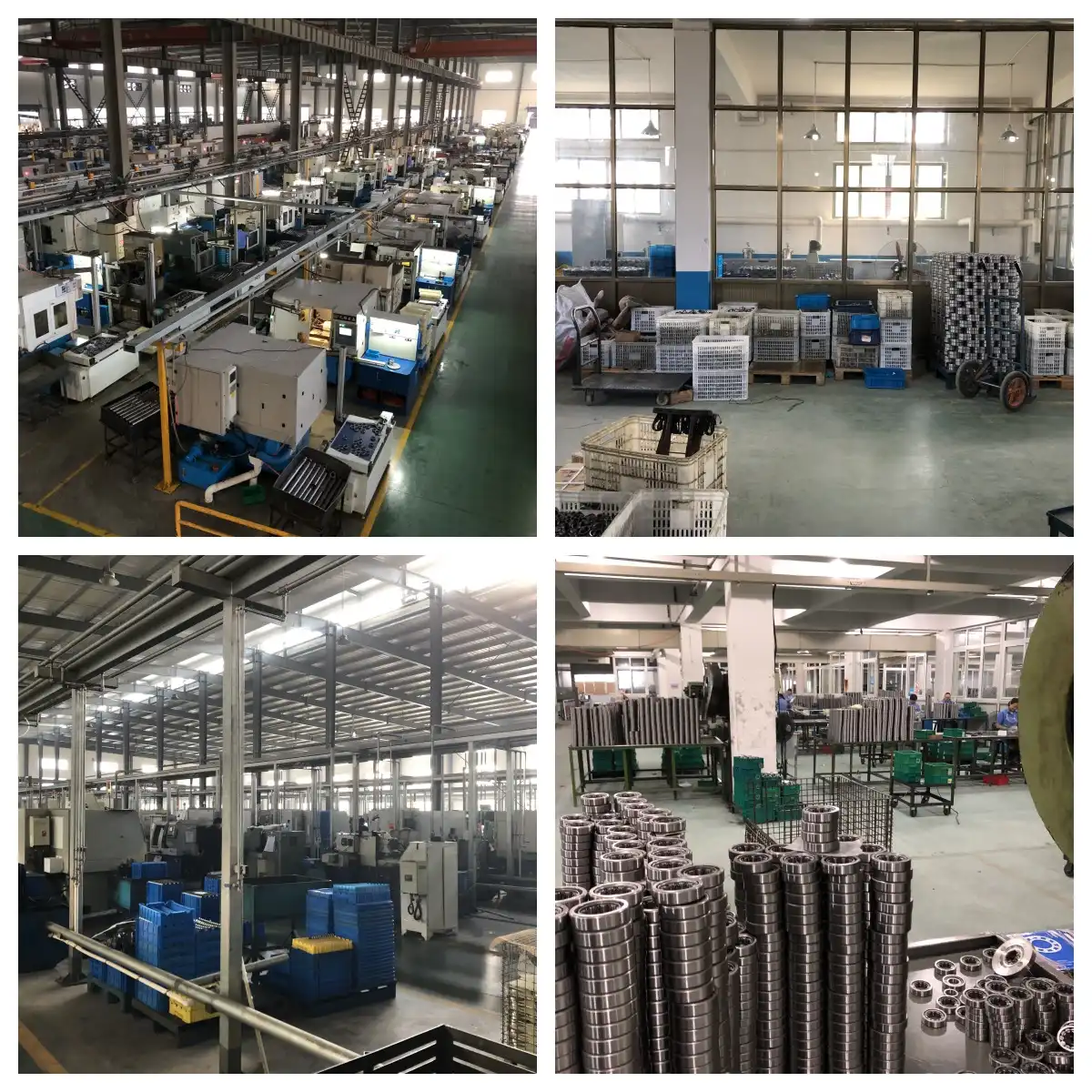
A supplier's evaluation includes more than just price checks. It also includes checks of the supplier's manufacturing capacity, quality management system, and technical help skills. When suppliers show that they can make more than 10 million units a year, it means that their processes are mature and they have invested in automation equipment. IATF 16949 licensing focuses on quality standards for the car industry, covering things like advanced product quality planning (APQP) and production part approval processes (PPAP). For OEM ties that go beyond just buying parts, engineering help for things like application analysis, failure research, and custom specification creation adds a lot of value. Since its founding in 2010, Luoyang Auto Bearing Co., Ltd. (ATLYC) has been a great example of this type of complete supplier description. The company grew from one workshop to six specialized production sites, becoming an expert in all types of bearings while keeping its focus on high-quality, precise manufacturing. ATLYC exports to South Korea, the US, Germany, Russia, Iran, and Turkey, among other places, and has 120 committed workers in production, engineering, and quality control. This range of locations shows that the company can meet the needs of customers and meet the standards of different regions. We are a reliable producer of Tapered Roller Bearings, and we serve markets on six continents with reasonable prices, reliable lead times, and scalable production capacity.
Installation, Standards & Technical Specifications for Industrial Use
When installing Tapered Roller Bearings, the separable layout makes it easier than with non-separable designs, but you still need to pay attention to important factors. If you follow the right steps for installation, the bearings will last as long as they're supposed to or break early because of damage caused during installation.
Mounting Procedures and Clearance Adjustment
To install the inner ring assembly, induction heaters or oil baths are used to heat the Tapered Roller Bearings to 80–100°C. This causes thermal expansion, which makes placing on the shaft easier without having to use too much force. When you use hydraulic tools for cold mounting, you run the risk of adding brinelling damage that shortens the fatigue life. The outer ring fits into the housing when it is at room temperature, and interference fits are determined based on the load and working temperature. During the final assembly process, clearance is changed by changing the axial positioning of one ring in relation to the other. This is usually done to achieve a small setup for precision applications or a measured end play for equipment that will expand when it gets hot.
Torque Specifications and Securing Methods
Lock nuts, lock screws, and end plates keep the bearing in place against the drive forces of operation. Manufacturers of bearings set tightening torque values that make sure there is enough binding force without causing too much preload. When you over-tighten, the internal space drops below what it should be. This lowers the roller-to-raceway contact stress and drastically cuts the life of the bearing. Under-tightening lets the part move axially, which leads to fretting rust and an uncertain load distribution. To maintain uniform assembly quality across production levels, torque wrenches are calibrated to within ±4% of the original value.
Compliance with International Standards
ISO 492 sets out different levels of error for bearing accuracy. Class Normal is good for general industrial uses, while Class 6X is better for machine tool wheels that need more precision. ISO 355 sets limits on dimensions that make sure products from different makers can be used together. The IATF 16949 standards for car quality say that statistical process control must show that key traits have Cpk values greater than 1.67. These standardization systems make it possible for global supply chains to work so that parts from qualified sources can be easily put together with parts from other manufacturers.ATLYC has complete quality control methods that include checking raw materials and validating produced products. Each bearing is checked for 12 main performance factors, such as its measurement accuracy, vibration traits, and load capacity. The qualification rates for this three-level inspection procedure are higher than 99.9%, meeting the strict needs of car OEMs and industrial equipment manufacturers. The ISO 9001 and IATF 16949 certifications give the company's quality management system objective proof that it works.ATLYC's 32 series product line is a good example of how these standards can be used in real life. These metric single-row bearings meet the requirements of ISO 355 and DIN 720. They can handle horizontal and axial loads at the same time in medium-duty uses. Variants of the 320xx, 322xx, 323xx, and 329xx are popular designs that meet a wide range of equipment needs within standard dimensional limits. Bearings with an outer diameter of up to ±5000 mm can be manufactured, and non-standard specs can be changed to fit specific needs. This gives manufacturers the freedom to make a lot of standard series bearings for a wide range of uses. When you mix high-purity bearing steel with specific heat treatment methods and precise grinding technology, you get the best wear protection and physical stability. The cylindrical shape makes sure that the load is spread out evenly by bringing all the touch surfaces together at a single point along the shaft axis. This design concept reduces sliding friction to a minimum, and the logarithmic roller profile evenly spreads contact stress, which stops edge loading failures before they happen. Adjustable internal space during installation lets you get the best performance for a range of operating situations, such as changes in temperature and the stiffness of the shaft system.
Conclusion
Tapered Roller Bearings are tried-and-true technical solutions for heavy-duty uses that need to handle both radial and axial loads at the same time. The conical shape, separate design, and adjustable clearance all work together to make the product effective in harsh industrial settings. When making choices about what to buy, it helps to know about design principles, comparative advantages, upkeep needs, and criteria for qualifying suppliers. Companies that use the right installation methods and condition-based repair schedules get the most out of their components and have less unexpected downtime. Long-term operating success is built on strategic relationships between suppliers and makers who can show quality certifications, technical skills, and production scale.
FAQ
1. How long does a typical tapered roller bearing last under heavy-duty conditions?
It depends on the amount of load, the speed at which it is used, the quality of the oil, and how much it is exposed to dirt and dust. Tapered Roller Bearings usually last between 20,000 and 50,000 hours of use at full load before they hit L10 fatigue life, which is the point at which 10% of the bearings in a population fail due to wear. If there isn't enough grease or shock loading, this can be cut down to less than 5,000 hours. In ideal conditions, it can last more than 100,000 hours.
2. Can tapered roller bearings be used in high-speed applications?
The speed limits are based on the size of the bearings, how they are oiled, and the shape of the cage. Up to DN numbers (bore diameter in mm × RPM) of 300,000 to 500,000, standard tapered roller bearings work well. This range is made bigger by using specialized designs with better cage shape and synthetic lubricants. When higher speeds are needed, cylinder or ball bearings are usually the best choice.
3. What are the key signs of bearing failure to watch for in industrial machinery?
If the working temperature goes above the usual baseline, it means that lubrication problems are starting to show up or that wear is causing more friction. Strange noise patterns, like grinding, clicking, or rumbling, could mean that the surface is damaged or contaminated. Geometric flaws can be seen when the sound intensity goes up at frequencies that are specific to the bearing. During upkeep, a visual check may reveal discoloration, corrosion, or wear patterns that indicate the need for instant replacement before a catastrophic failure happens.
Partner with ATLYC for Precision Tapered Roller Bearing Solutions
ATLYC offers engineering-grade Tapered Roller Bearing options that are backed by 15 years of quality production and a wide range of quality certifications. Our 32 series configurations are designed to work with a wide range of heavy-duty uses in the automobile, industrial machinery, and equipment-making industries. We keep strict quality standards and get 99.9% qualification rates through three-level testing processes. We are certified by ISO 9001 and IATF 16949. Our expert team analyzes applications, makes changes to meet non-standard needs, and provides quick help for OEM partnerships. You can email us at auto@lyautobearing.com to talk about your special bearing needs with engineers who have experience and know what global manufacturing needs.
References
1. Harris, T.A. and Kotzalas, M.N. (2006). Advanced Concepts of Bearing Technology: Rolling Bearing Analysis, 5th Edition. CRC Press.
2. Eschmann, P., Hasbargen, L., and Weigand, K. (1985). Ball and Roller Bearings: Theory, Design and Application, 2nd Edition. John Wiley & Sons.
3. International Organization for Standardization (2014). ISO 492:2014 Rolling Bearings - Radial Bearings - Geometrical Product Specifications (GPS) and Tolerance Values. ISO Standards.
4. Society of Tribologists and Lubrication Engineers (2020). Bearing Lubrication and Maintenance Guidelines for Industrial Applications. STLE Technical Paper Series.
5. Tallian, T.E. (1999). Failure Atlas for Hertz Contact Machine Elements, 2nd Edition. ASME Press.
6. SKF Group (2018). Rolling Bearings Catalogue: Design Considerations and Application Guidelines. SKF Technical Publication PUB BU/P1 10000/3 EN.
Learn about our latest products and discounts through SMS or email