- English
- French
- German
- Portuguese
- Spanish
- Russian
- Japanese
- Korean
- Arabic
- Greek
- German
- Turkish
- Italian
- Danish
- Romanian
- Indonesian
- Czech
- Afrikaans
- Swedish
- Polish
- Basque
- Catalan
- Esperanto
- Hindi
- Lao
- Albanian
- Amharic
- Armenian
- Azerbaijani
- Belarusian
- Bengali
- Bosnian
- Bulgarian
- Cebuano
- Chichewa
- Corsican
- Croatian
- Dutch
- Estonian
- Filipino
- Finnish
- Frisian
- Galician
- Georgian
- Gujarati
- Haitian
- Hausa
- Hawaiian
- Hebrew
- Hmong
- Hungarian
- Icelandic
- Igbo
- Javanese
- Kannada
- Kazakh
- Khmer
- Kurdish
- Kyrgyz
- Latin
- Latvian
- Lithuanian
- Luxembou..
- Macedonian
- Malagasy
- Malay
- Malayalam
- Maltese
- Maori
- Marathi
- Mongolian
- Burmese
- Nepali
- Norwegian
- Pashto
- Persian
- Punjabi
- Serbian
- Sesotho
- Sinhala
- Slovak
- Slovenian
- Somali
- Samoan
- Scots Gaelic
- Shona
- Sindhi
- Sundanese
- Swahili
- Tajik
- Tamil
- Telugu
- Thai
- Ukrainian
- Urdu
- Uzbek
- Vietnamese
- Welsh
- Xhosa
- Yiddish
- Yoruba
- Zulu
What Makes Spherical Roller Thrust Bearings So Durable?
When industrial gear is subjected to high axial loads Spherical Roller Thrust Bearing and misaligned shafts, it must be durable. Spherical roller thrust bearings last a very long time because they are made with precision, use advanced material engineering, and have a self-aligning design. These bearings use barrel-shaped rollers that are placed along inclined raceways to spread loads evenly and allow for angular variations of up to 3 degrees. Their strong construction—with GCr15 bearing steel for high-stress situations and an optional 42CrMo alloy for heavy-load settings—keeps them from fatigue cracking even when they are under constant operating pressures. The spherical raceway design makes up for shaft deflection and installation mistakes that would quickly destroy regular thrust bearings. This makes them essential for marine propulsion, hydroelectric generators, and heavy machinery gearboxes, where reliability directly affects the ability to keep running.

Understanding Spherical Roller Thrust Bearings
Industrial equipment managers face a persistent challenge: maintaining equipment uptime when axial loads combine with unavoidable shaft misalignment. Traditional thrust bearings fail catastrophically under these conditions, but spherical roller thrust bearings provide a proven solution through intelligent engineering.
Core Structural Design Principles
The bearing is made up of asymmetrical barrel-shaped rollers that are placed between raceways that are inclined. The housing washer has a circular raceway surface, but the shaft washer stays flat. This makes these parts self-aligning, which sets them apart from rigid thrust designs. This shape lets the bearing handle deflections in the shaft and installation errors without damaging the edges. Each roller stays in full contact with the raceway surfaces, so there are no stress concentrations that cause normal bearings to wear out too quickly. These bearings come in sizes ranging from 20mm to 1000mm in inner diameter and 47mm to 2000mm in outer diameter, and they are used in everything from small gearboxes to huge industrial presses. The range of widths from 16 mm to 300 mm gives a lot of options for load capacities that meet a wide range of practical needs.
Single-Direction and Double-Direction Configurations
Manufacturers make spherical roller thrust bearings in two main styles that handle different types of loads. Single-direction bearings can only handle axial loads in one direction. This makes them perfect for naval propeller shafts, where thrust stays in one direction while they're running. When choosing between these configurations, procurement professionals need to think about working load patterns, space limitations, and mounting accessibility. Double-direction designs allow for bidirectional thrust, which is necessary for reversible machinery like rolling mills and some vertical turbines. For one-way applications, single-direction units are easier to install and less expensive, while double-direction models get rid of the need for paired bearings in equipment that turns around. Both versions keep the self-aligning feature that prevents failures caused by misalignment, making sure reliable Spherical Roller Thrust Bearing performance in harsh industrial settings.
Design Features That Enhance Durability
Material science and geometric optimization converge in spherical roller thrust bearing design to deliver exceptional service life under harsh operating conditions. Understanding these durability-enhancing features helps engineering teams specify components that minimize maintenance interventions and maximize equipment availability.
Advanced Material Selection and Heat Treatment
The usual material for the inner and outer rings is GCr15 bearing steel, which is very hard and resistant to wear thanks to careful heat treatment steps. After quenching and tempering, this high-carbon chromium steel has a surface hardness of 58–64 HRC. It doesn't deform when big loads are applied for a long time. Manufacturers use 42CrMo alloy steel for situations where shock loading or extreme pressures above standard ratings are needed. This steel is tougher and more resistant to fatigue. Roller elements always use GCr15 bearing steel that has been machined to exact dimensions and surface finish standards. The fine carbide structure of the material ensures that the hardness is spread out evenly, which is very important for stopping localised wear patterns that cause bearing failure from spreading. Through heat treatment, a tougher core is surrounded by a harder case. This creates a balance between surface wear resistance and the ability to take impact loads without breaking.
Optimized Roller Geometry and Internal Clearances
Roller profile optimisation is an important factor for durability that is often ignored when choosing bearings. A logarithmic profile was used to figure out how to make the barrel shape so that the pressure stays the same across the contact patch throughout the range of angle misalignment for the bearing. This shape keeps edge stress concentrations from happening, which can lead to spalling and material fatigue. When it is manufactured, internal clearances are carefully thought out by engineers. Precision grades P0, P6, P5, and P4 show increasingly tighter dimensional tolerances and smaller clearances. P4 is the most precise grade and is best for applications that need very little runout. By choosing the right clearance levels, you can take into account how much the material will expand or contract during operation. This keeps the load evenly distributed and stops preload situations that speed up wear.
Cage Design and Sealing Solutions
The choice of cage has a big effect on how long bearings last and how often they need to be serviced. For moderate-speed uses, stamped steel cages are cost-effective and work well enough. For heavy-load, high-vibration environments, brass cages are stronger and better at removing heat. The cage keeps the rollers evenly spaced, which stops them from being skewed and rubbing against each other, which causes heat and early wear. There are different sealing setups, from open designs that work with oil-bath systems to sealed versions that have elastomeric seals or metal shields. When sealed bearings are used in industrial settings, they keep out contamination, which is the main reason why bearings fail early. Effective seals keep the lubricant inside while keeping out abrasive particles and water. This makes the seals last longer in places where environmental contamination is constant, like on building equipment and port machinery.
Performance Advantages Compared to Other Bearings
Equipment designers evaluating thrust bearing options face trade-offs between load capacity, misalignment tolerance, and operational longevity. Comparative analysis reveals distinct performance advantages that make spherical roller thrust bearings the preferred choice for demanding applications.
Load Capacity and Misalignment Tolerance
Spherical roller thrust bearings demonstrate Spherical Roller Thrust Bearing superior axial load handling compared to ball thrust bearings, tapered roller bearings, and cylindrical thrust designs. The full-length roller contact distributes forces across larger surface areas, enabling load capacities 3-5 times greater than equivalently sized ball bearings. This advantage proves critical in applications like vertical pumps and crane hooks, where compact bearing envelopes must handle substantial thrust forces. The self-aligning capability provides a decisive advantage over tapered roller bearings, which require precise mounting and rigid shaft support. Accommodating up to 3 degrees of angular misalignment, spherical designs compensate for shaft deflection under load, thermal expansion differences between housing and shaft, and minor installation imperfections. This tolerance eliminates the edge-loading failures that plague rigid bearing designs in real-world industrial conditions.
Service Life and Maintenance Requirements
Operational longevity comparisons favor spherical roller thrust bearings across multiple service parameters. The uniform load distribution enabled by barrel-shaped rollers reduces subsurface stress cycling, the mechanism driving rolling contact fatigue. Field data from hydroelectric installations demonstrates service lives exceeding 15 years with proper lubrication, compared to 5-8 year intervals typical for ball thrust bearings in similar applications. Maintenance demands remain moderate despite the bearings' heavy-duty capabilities. Lubrication intervals depend on operating conditions but typically extend to 3-6 months for grease-lubricated installations and continuous circulation for oil-bath systems. The robust construction tolerates brief lubrication lapses better than ball bearings, which experience rapid surface degradation when lubricant films break down. A separable design facilitates inspection and replacement without complete equipment disassembly, reducing maintenance downtime.
Application Areas Demonstrating Durability Benefits
Real-world performance across diverse industries validates the durability advantages inherent in spherical roller thrust bearing design. Understanding these application-specific benefits helps engineering teams recognize opportunities for improved equipment reliability.
Heavy Industrial Machinery
Mining operations subject equipment to severe conditions combining heavy loads, vibration, and contamination. Spherical roller thrust bearings in gyratory crushers and grinding mills withstand the continuous impact loading and abrasive particle exposure that rapidly degrade alternative bearing types. The self-aligning capability accommodates frame flexing common in large mobile equipment, preventing the binding and overheating that occur with rigid bearing arrangements. Steel production facilities deploy these bearings in rolling mill applications where the combination of massive thrust forces and thermal cycling demands exceptional material durability. The bearings support roll neck positions, handling both axial loads from the rolling process and radial forces from stock tension. Temperature variations during production runs create differential expansion between bearing components, which the internal clearance design accommodates without inducing harmful preloads.
Renewable Energy and Power Generation
Wind turbine main shaft and blade pitch bearings represent demanding applications where maintenance accessibility limitations place a premium value on durability. Spherical roller thrust bearings in these positions handle gravitational loads combined with gyroscopic forces from rotor rotation, while accommodating tower flexing during high-wind events. The sealed configurations protect internal components from moisture and airborne contaminants common in offshore installations. Hydroelectric generators employ large-diameter spherical roller thrust bearings supporting vertical shaft turbines. These bearings carry the entire rotor weight plus hydraulic thrust forces, operating continuously for years between scheduled maintenance outages. The tapered bore configuration—standard for inner diameters exceeding 200mm—facilitates precision mounting on shaft journals, ensuring proper load distribution and alignment.
Maintenance Practices to Maximize Bearing Life
Realizing the full durability potential of spherical roller thrust bearings requires implementing proactive maintenance protocols tailored to operational demands. Strategic maintenance practices prevent premature failures while optimizing the total cost of ownership.
Inspection and Condition Monitoring
Regular inspection intervals should align with equipment criticality and operating severity. Visual examinations during scheduled maintenance shutdowns detect seal damage, lubricant leakage, or housing corrosion before these conditions compromise bearing performance. Temperature monitoring using infrared thermography identifies developing problems through abnormal heat patterns, typically indicating lubrication deficiencies or emerging component damage. Vibration analysis provides early warning of deteriorating bearing conditions through characteristic frequency signatures. Increasing vibration amplitudes at bearing defect frequencies signal the need for closer inspection or planned replacement before catastrophic failure disrupts production. Integrating condition monitoring data into predictive maintenance programs allows scheduling bearing replacement during planned outages rather than emergency shutdowns.
Lubrication Protocols and Contamination Control
Proper lubrication remains the single most influential factor in bearing service life. Grease-lubricated applications require regreasing intervals based on bearing size, speed, and operating temperature, typically ranging from quarterly to semi-annually. Using manufacturer-recommended lubricants ensures compatibility with bearing materials and operating conditions. Over-greasing creates excessive churning and elevated temperatures, while under-greasing accelerates wear through inadequate lubricant films. Oil-lubricated systems demand attention to contamination control through effective filtration and regular oil analysis. Monitoring particle counts and moisture content detects seal failures or system contamination before bearing damage occurs. Maintaining proper oil levels and temperatures ensures adequate lubricant flow to critical contact zones while preventing thermal degradation of lubricant properties.
Installation Best Practices
Correct mounting procedures prevent mechanical damage that compromises bearing durability. Using proper heating methods for thermal mounting of bearings with tapered bores ensures uniform expansion and prevents distortion. Hydraulic mounting tools provide controlled installation force, avoiding shock loading that creates indentations in raceway surfaces. Verifying proper shaft and housing fits prevents excessive clearances that allow fretting corrosion or Spherical Roller Thrust Bearing insufficient interference that induces harmful preloads. Surface finish and geometric tolerances of mating components directly impact bearing performance—rough or out-of-round surfaces create stress concentrations and uneven load distribution. Proper alignment during installation minimizes operational misalignment, reducing the self-aligning compensation required and extending bearing life.
Procurement Considerations for Durable Spherical Roller Thrust Bearings
Selecting the optimal bearing solution requires balancing technical specifications against supply chain realities and total lifecycle costs. Informed procurement decisions account for multiple factors beyond initial purchase price.
Technical Specification Evaluation
Load analysis forms the foundation of proper bearing selection. Calculating actual axial and radial loads under operating conditions, including shock factors for impact applications, ensures adequate capacity margins. Considering speed parameters prevents selecting bearings that generate excessive heat or suffer from lubricant starvation at high rotational velocities. Environmental factors, including temperature extremes, contamination exposure, and corrosion potential, influence material and sealing choices. Applications in chemical processing or marine environments benefit from specialized materials and robust seal configurations, while controlled factory environments allow more economical bearing specifications. Precision requirements dictate bearing tolerance class selection—high-speed spindles demand P5 or P4 precision, while slower industrial machinery performs adequately with P0 standard grade.
Supply Chain and Commercial Factors
Lead time considerations affect project planning and spare parts inventory strategies. Standard bearing sizes typically ship within weeks, while custom configurations or large-diameter units may require extended manufacturing periods. Establishing relationships with manufacturers offering reliable delivery performance prevents production delays due to unavailability. Minimum order quantities and volume pricing structures impact total procurement costs. Consolidating requirements across multiple machines or maintenance cycles captures volume discounts while ensuring parts standardization that simplifies inventory management. Bulk purchasing must balance cost savings against inventory carrying costs and the risk of specification obsolescence.
Conclusion
The exceptional durability of spherical roller thrust bearings stems from purposeful engineering decisions addressing the real-world challenges industrial equipment faces. Advanced material selection, precision manufacturing, and self-aligning geometry combine to create components capable of sustained performance under severe conditions. Their proven reliability across diverse applications—from marine propulsion to renewable energy systems—demonstrates practical value beyond theoretical specifications. When procurement teams evaluate bearing options, the combination of high load capacity, misalignment tolerance, and extended service life positions these bearings as cost-effective solutions for mission-critical machinery. Proper maintenance practices and informed selection criteria unlock the full durability potential, protecting equipment investments while ensuring operational continuity.
FAQ
1. What is the typical service life of spherical roller thrust bearings in heavy-duty applications?
Service life depends on operating conditions, including load intensity, speed, lubrication quality, and environmental factors. Properly maintained bearings in hydroelectric applications routinely achieve 15-20 years of continuous operation, while construction equipment bearings typically deliver 5-8 years under intermittent shock loading. Calculating bearing life using ISO 281 methods accounts for application-specific variables, providing estimated hours before fatigue failure probability reaches 10%.
2. How can I identify when a spherical roller thrust bearing requires replacement?
Warning signs include abnormal noise such as grinding or rumbling sounds, elevated operating temperatures exceeding baseline measurements by 20°C or more, increased vibration amplitudes detected through condition monitoring, and visible lubricant discoloration or metal particles in drained oil. Addressing these symptoms promptly through inspection prevents secondary damage to shafts and housings that escalates repair costs.
3. Are customization options available for specialized industrial requirements?
Manufacturers offer extensive customization, including non-standard dimensions, specialized materials for extreme temperatures or corrosive environments, modified internal geometries for specific load distributions, and integrated sealing solutions. Custom bearing development typically requires application engineering support, prototyping phases, and longer lead times, but delivers optimized performance for unique operational challenges that standard catalog bearings cannot adequately address.
Partner with ATLYC for Reliable Spherical Roller Thrust Bearing Solutions
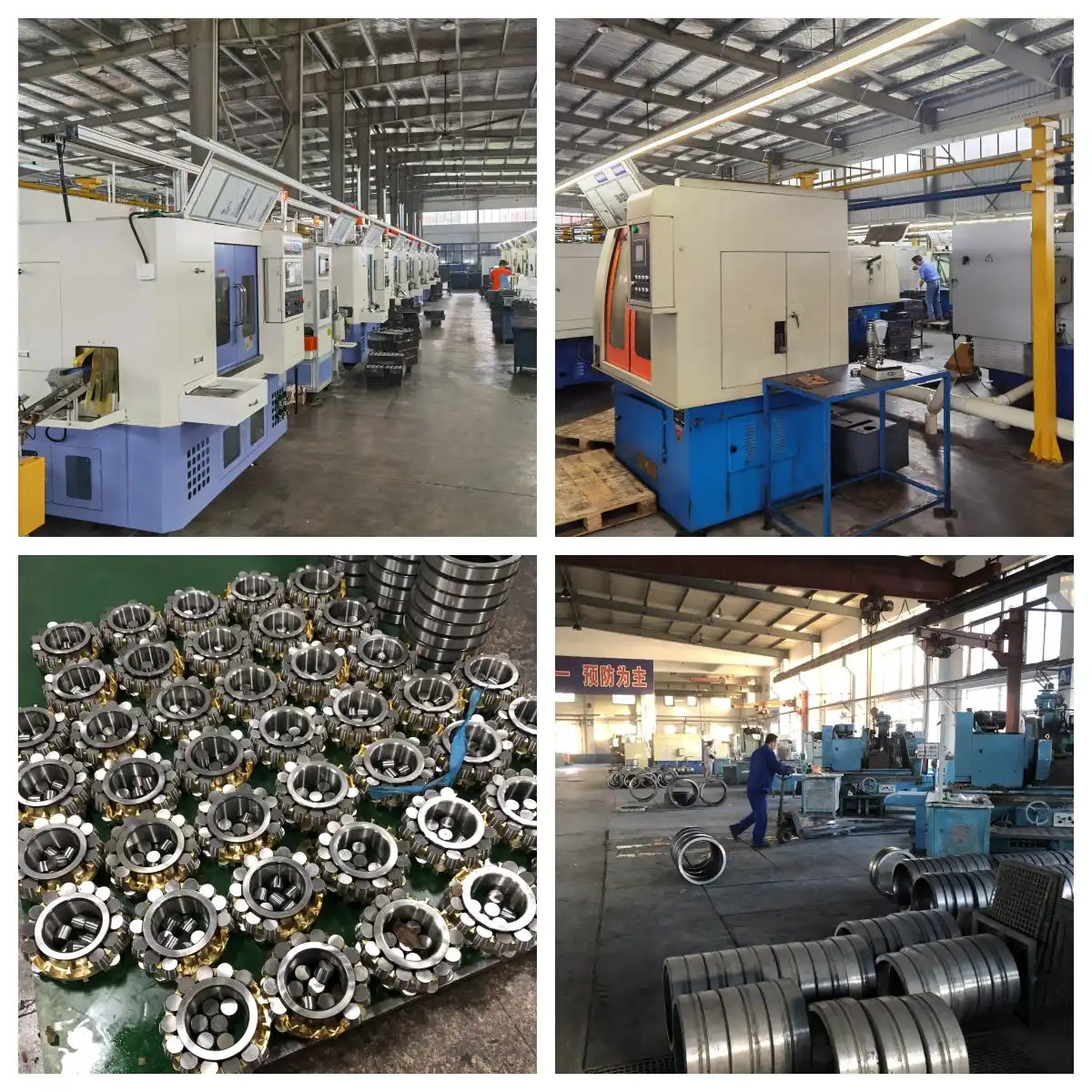
ATLYC stands as your dependable Spherical Roller Thrust Bearing spherical roller thrust bearing supplier, combining 15 years of precision manufacturing expertise with ISO 9001 and IATF 16949 certified quality management systems. Our production capabilities span six specialized workshops serving global markets across South Korea, the United States, Germany, Russia, Iran, and Turkey. We manufacture spherical roller thrust bearings in comprehensive size ranges from 20mm to 1000mm inner diameter, utilizing GCr15 and 42CrMo materials with precision grades reaching P4 tolerance. Our engineering team provides technical support for application-specific customization, ensuring optimal bearing selection for your equipment requirements. Contact us at auto@lyautobearing.com to discuss your procurement needs and discover how our commitment to consistent quality, competitive pricing, and reliable delivery schedules supports your operational success.
References
1. Harris, T.A. & Kotzalas, M.N. (2006). Advanced Concepts of Bearing Technology: Rolling Bearing Analysis, Fifth Edition. CRC Press, Taylor & Francis Group.
2. ISO 281:2007. Rolling bearings — Dynamic load ratings and rating life. International Organization for Standardization.
3. Palmgren, A. & Lundberg, G. (1952). Dynamic Capacity of Rolling Bearings. Acta Polytechnica Mechanical Engineering Series, Royal Swedish Academy of Engineering Sciences.
4. Wiesner, K. & Schmidt, G. (1995). "Design and Application of Spherical Roller Thrust Bearings." Tribology Transactions, Vol. 38, No. 3, pp. 580-586.
5. Zhou, R.S. & Wang, H. (2013). "Fatigue Life Prediction of Spherical Roller Bearings Under Variable Loading Conditions." Journal of Mechanical Engineering Science, Vol. 227, pp. 1710-1724.
6. Cambrell, G.K. & Harrison, W.J. (2018). Industrial Bearing Selection and Maintenance: A Practical Guide for Engineers. Professional Engineering Publishing Limited.
Learn about our latest products and discounts through SMS or email
_1772782093670.webp)