- English
- French
- German
- Portuguese
- Spanish
- Russian
- Japanese
- Korean
- Arabic
- Greek
- German
- Turkish
- Italian
- Danish
- Romanian
- Indonesian
- Czech
- Afrikaans
- Swedish
- Polish
- Basque
- Catalan
- Esperanto
- Hindi
- Lao
- Albanian
- Amharic
- Armenian
- Azerbaijani
- Belarusian
- Bengali
- Bosnian
- Bulgarian
- Cebuano
- Chichewa
- Corsican
- Croatian
- Dutch
- Estonian
- Filipino
- Finnish
- Frisian
- Galician
- Georgian
- Gujarati
- Haitian
- Hausa
- Hawaiian
- Hebrew
- Hmong
- Hungarian
- Icelandic
- Igbo
- Javanese
- Kannada
- Kazakh
- Khmer
- Kurdish
- Kyrgyz
- Latin
- Latvian
- Lithuanian
- Luxembou..
- Macedonian
- Malagasy
- Malay
- Malayalam
- Maltese
- Maori
- Marathi
- Mongolian
- Burmese
- Nepali
- Norwegian
- Pashto
- Persian
- Punjabi
- Serbian
- Sesotho
- Sinhala
- Slovak
- Slovenian
- Somali
- Samoan
- Scots Gaelic
- Shona
- Sindhi
- Sundanese
- Swahili
- Tajik
- Tamil
- Telugu
- Thai
- Ukrainian
- Urdu
- Uzbek
- Vietnamese
- Welsh
- Xhosa
- Yiddish
- Yoruba
- Zulu
Top CRBC Series Crossed Roller bearing Manufacturers
The CRBC Series Crossed Roller bearing is one of the most technically demanding goods in worldwide industrial procurement when acquiring precise rotary components. These providers are acknowledged for precise grades up to P4/P2, ISO 9001 and IATF 16949 compliance, and scalable manufacturing capacity. Among them, ATLYC has made a name for itself with 15 years of focused manufacturing skills, reasonable prices, and reliable exports to the US, Germany, South Korea, and abroad.

Understanding CRBC Series Crossed Roller Bearings
What Makes This Bearing Structurally Distinct
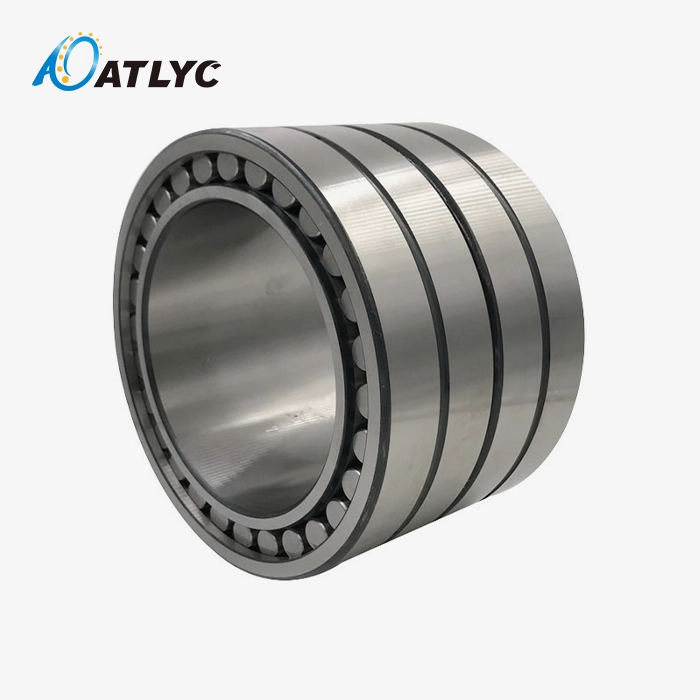
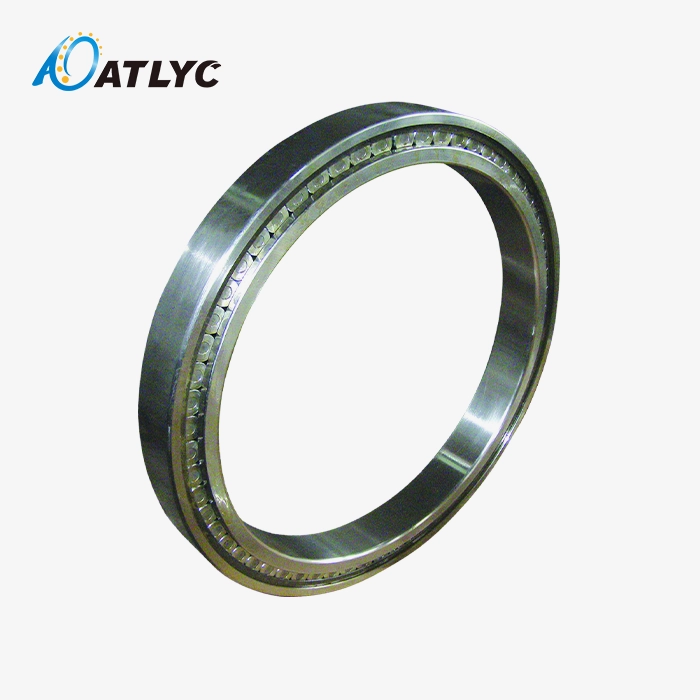
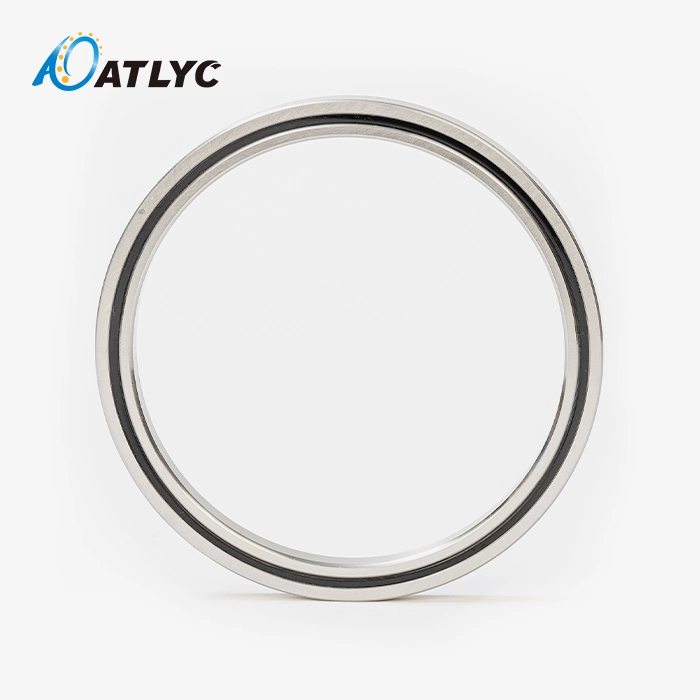
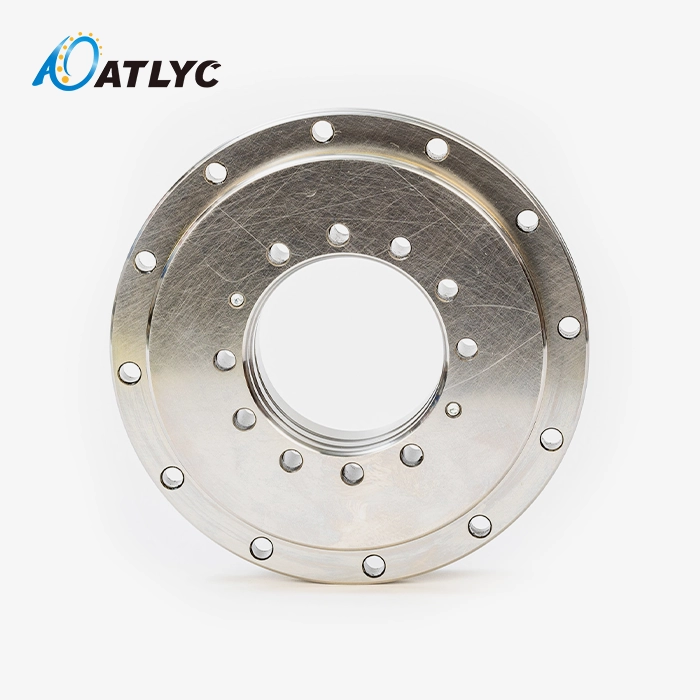
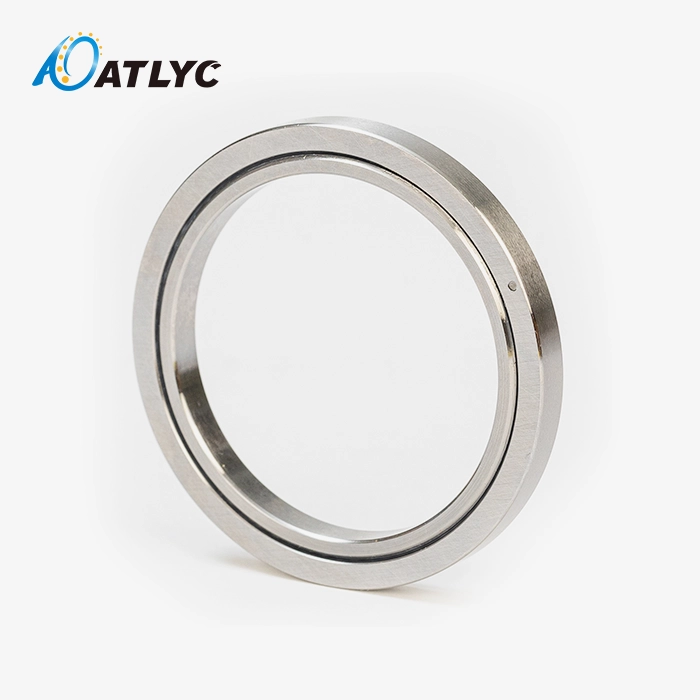
The CRBC crossed roller bearing uses an integral inner and outer ring construction — a deliberate departure from the split outer ring found in standard CRB designs. Cylindrical rollers are arranged orthogonally at 90-degree alternating angles between raceways, which allows a single compact unit to carry radial, axial, and moment loads simultaneously. This eliminates the need for paired bearing arrangements, reducing both axial footprint and system complexity.
| Specification | CRBC Series | Standard CRB Series |
|---|---|---|
| Ring Structure | Integral (solid) inner & outer ring | Split outer ring |
| Rigidity Improvement | 20–30% higher | Baseline |
| Cage Material | Brass or steel | Plastic |
| Max Operating Temp | Up to 120°C | ~80°C |
| Precision Grade | P5 / P4 / P2 | P5 / P4 |
| Sealing Type | Labyrinth + grease injection ports | Standard lip seal |
The raceway incorporates a subtle curvature profile that enlarges the contact zone between rollers and raceways. This geometry improves load distribution while minimizing stress concentrations — a measurable factor in extended service life under continuous industrial duty.
Material and Quality Standards
Rings and rollers are manufactured from high-carbon chromium CRBC Series Crossed Roller bearing steel (GCr15/SUJ2), heat-treated to a surface hardness of 58–64 HRC. Precision grades conform to ISO P5, P4, and P2 classifications, with radial runout tolerances held to micron-level tolerances. Verified manufacturers maintain traceability documentation and dimensional inspection reports as standard deliverables for OEM customers.
Top CRBC Series Crossed Roller Bearing Manufacturers Compared
Several manufacturers have built strong reputations supplying crossed roller bearings to global OEM and industrial markets. Here is a focused comparison of key players procurement teams regularly evaluate.
| Manufacturer | Country | Certifications | Precision Grades | Export Markets |
|---|---|---|---|---|
| ATLYC (Luoyang Auto Bearing) | China | ISO 9001, IATF 16949 | P5, P4, P2 | US, Germany, South Korea, Russia, Turkey, Iran |
| IKO International | Japan | ISO 9001 | P5, P4 | Global |
| THK Co., Ltd. | Japan | ISO 9001 | P5, P4 | Global |
| Hiwin Technologies | Taiwan | ISO 9001 | P5, P4 | Asia, Europe, Americas |
| Schaeffler (INA) | Germany | ISO 9001, IATF 16949 | P5, P4 | Global |
ATLYC was founded in 2010 in Luoyang, China, and has evolved from a single automated workshop to a six-category bearing manufacturing firm with 120 trained personnel. The firm is ISO 9001 and IATF 16949 certified, credentials that relate directly to car OEMs and industrial equipment manufacturers assessing supplier risk. The CRBC product range features high-duty CNC machining centers, robotic welding arms, and large-scale indexing tables with customisation for non-standard specifications.
Japanese manufacturers like IKO and THK are known for excellent precision, consistency, and decades of worldwide brand awareness. Their catalogs are properly documented and extensively defined on engineering drawings. But their price and lead times might be a concern for cost-pressured mid-to-large volume procurement initiatives.
ATLYC has a competitive advantage in terms of parallel precision output, certified quality systems, and pricing schemes available for both prototyping and high-volume orders. This is an advantage for North American and European procurement teams that manage cost performance ratios.
Key Factors in Choosing a Crossed Roller Bearing Supplier
Selecting the right crossed roller bearing supplier goes beyond comparing catalog specifications. Procurement professionals typically evaluate several overlapping criteria before committing to a long-term supply relationship.
Here are the core supplier evaluation benchmarks that experienced B2B buyers consistently apply:
- Certification Depth: ISO 9001 addresses quality management broadly, but IATF 16949 certification signals automotive-grade process control — a meaningful distinction when bearings are integrated into safety-critical assemblies or high-precision drive systems.
- Precision Consistency Across Batches: A supplier's ability to maintain P4 or P2 tolerances across production runs matters more than single-sample performance. Request CPK (process capability index) data and inspection batch records before approving a new source.
- Customization and Engineering Response: Applications in robotics, semiconductor equipment, and medical imaging frequently require non-standard bore diameters, specialized cage materials, or modified sealing configurations. A supplier with in-house engineering capacity reduces iteration time significantly.
- Lead Time Transparency: Global procurement teams managing production schedules need confirmed lead times, not estimates. Suppliers with dedicated export logistics infrastructure and regional inventory are meaningfully lower-risk partners.
These criteria, combined, define whether a supplier relationship will hold under the operational pressure that precision manufacturing environments routinely generate. ATLYC has structured its production and quality management systems specifically to meet these demands across its international customer base.
Applications and Industry Use Cases
CRBC’s integrated ring architecture makes it the optimum choice for a range of technically challenging areas. These CRBC Series Crossed Roller bearings are used in the rotary table drives of heavy-duty CNC machining machines, where the stiffness directly influences surface finish quality and dimensional accuracy. At joint axes, robotic welding arms rely on them when the combined load profile (radial force, axial thrust, and overturning moment) renders traditional bearing systems infeasible.
The smooth, low-torque rotation and small envelope make crossed roller bearings suitable for medical imaging equipment such as CT scanners and X-ray positioning systems. The sub-micron position stability demanded by process yields is available with the P2 grade versions for semiconductor wafer handling and precision inspection equipment. Across all industries, the data is clear: integral-ring crossing roller bearings outperform ordinary designs in situations where stiffness, compactness, and long-term precision are non-negotiable.
Maintenance, Troubleshooting, and Installation Guide
Installation Best Practices
Correct mounting is the single most controllable factor in CRBC bearing service life. The integral ring design requires precise bore and housing tolerances — typically H7/j6 or H6/k5 depending on load direction — to avoid distorting the raceway geometry during assembly. Use calibrated torque tools when securing mounting bolts, and confirm perpendicularity of the bearing face to the shaft axis before final tightening.
Lubrication and Routine Maintenance
EP (Extreme Pressure) lithium-based grease is the standard specification for crossed roller bearings working under combined load circumstances. The CRBC series has specially engineered grease injection ports as part of its labyrinth seal design, enabling re-lubrication without disassembly. Create a lubrication schedule suitable for the operating temperature and duty cycle. For high-load, continuous-duty applications, a quarterly check is a reasonable minimum.
Troubleshooting Common Issues
Elevated running torque typically indicates either over-preloading during installation or grease degradation. Abnormal noise patterns — particularly irregular clicking — often point to contamination ingress or roller skewing caused by misaligned mounting. Both conditions are recoverable early but become significantly more costly if the operation continues without intervention.

Conclusion
The CRBC Series is a very well-designed solution for precise applications where stiffness, small size, and load adaptability are fundamental criteria. Manufacturers like ATLYC have shown that the production of CRBC Series Crossed Roller bearings can meet the demanding standards required by automotive OEMs, robotics integrators and industrial equipment manufacturers – backed by ISO 9001 and IATF 16949 certifications, a 15-year manufacturing history and a strong export footprint across six key markets. For procurement teams seeking to develop sustainable, long-term supply chains, a smart strategy is to assess a certified manufacturer like ATLYC alongside major Japanese and European brands.
FAQ
1. What distinguishes the CRBC series from the CRB series?
The CRBC design uses a solid, integral inner and outer ring rather than a split outer ring. This eliminates assembly gaps and improves overall rigidity by 20–30%. It also uses a metal cage instead of plastic, enabling stable operation at temperatures up to 120°C.
2. How does the cross-roller geometry handle moment loads?
The orthogonal roller arrangement creates an effective load span substantially larger than the bearing's physical width. This geometry provides strong resistance to tilting moments — a performance characteristic that paired angular contact ball bearings cannot replicate in equivalent space.
3. What precision grades are available?
CRBC bearings are available in ISO P5, P4, and P2 grades. P2 grade is specified for applications requiring sub-micron rotational accuracy, such as semiconductor equipment and high-resolution imaging systems.
4. How should buyers verify supplier authenticity?
Request ISO and IATF 16949 certificates directly from the issuing body. Ask for batch inspection reports with traceable measurement data. Established manufacturers like ATLYC provide full documentation as standard practice.
5. Are custom dimensions available for bulk orders?
Yes. Manufacturers with in-house engineering teams can accommodate non-standard bore diameters, modified cage materials, and custom sealing configurations for qualified volume orders.
Partner with ATLYC — Your Trusted CRBC Series Crossed Roller Bearing Supplier
combines 15 years of precision manufacturing with ISO 9001 and IATF 16949 certification to deliver CRBC Series Crossed Roller bearings that meet the rigidity and accuracy demands of global OEMs and industrial equipment manufacturers. With six production workshops, P4/P2 precision capability, and active export across North America and Europe, ATLYC is built for long-term supply partnerships. Contact our engineering team today at auto@lyautobearing.com to request a catalog or application consultation.
References
1. THK Co., Ltd. Crossed Roller Bearing Technical Catalog. THK, 2022. https://www.thk.com/us/en/product/list/bearing/cross_roller_ring.html
2. IKO International. Crossed Roller Bearings Product Guide. IKO, 2023. https://www.iko.com/eng/products/classification/bearings/crossed_roller_bearings/
3. Schaeffler Group. INA Rolling Bearings Catalog. Schaeffler, 2023. https://www.schaeffler.com/en/products-and-solutions/industrial/product-range/rolling-bearings/
4. ISO. ISO 9001:2015 Quality Management Systems — Requirements. International Organization for Standardization, 2015. https://www.iso.org/standard/62085.html
5. IATF. IATF 16949:2016 — Automotive Quality Management System Standard. International Automotive Task Force, 2016. https://www.iatfglobaloversight.org/iatf-169492016/
6. Bearing News. Precision Bearings in Industrial Automation: Design Trends and Application Demands. Bearing News, 2023. https://www.bearing-news.com/precision-bearings-in-industrial-automation/
Learn about our latest products and discounts through SMS or email