- English
- French
- German
- Portuguese
- Spanish
- Russian
- Japanese
- Korean
- Arabic
- Greek
- German
- Turkish
- Italian
- Danish
- Romanian
- Indonesian
- Czech
- Afrikaans
- Swedish
- Polish
- Basque
- Catalan
- Esperanto
- Hindi
- Lao
- Albanian
- Amharic
- Armenian
- Azerbaijani
- Belarusian
- Bengali
- Bosnian
- Bulgarian
- Cebuano
- Chichewa
- Corsican
- Croatian
- Dutch
- Estonian
- Filipino
- Finnish
- Frisian
- Galician
- Georgian
- Gujarati
- Haitian
- Hausa
- Hawaiian
- Hebrew
- Hmong
- Hungarian
- Icelandic
- Igbo
- Javanese
- Kannada
- Kazakh
- Khmer
- Kurdish
- Kyrgyz
- Latin
- Latvian
- Lithuanian
- Luxembou..
- Macedonian
- Malagasy
- Malay
- Malayalam
- Maltese
- Maori
- Marathi
- Mongolian
- Burmese
- Nepali
- Norwegian
- Pashto
- Persian
- Punjabi
- Serbian
- Sesotho
- Sinhala
- Slovak
- Slovenian
- Somali
- Samoan
- Scots Gaelic
- Shona
- Sindhi
- Sundanese
- Swahili
- Tajik
- Tamil
- Telugu
- Thai
- Ukrainian
- Urdu
- Uzbek
- Vietnamese
- Welsh
- Xhosa
- Yiddish
- Yoruba
- Zulu
Top Uses and Benefits of RB8016UUCC0 Crossed Roller Bearings
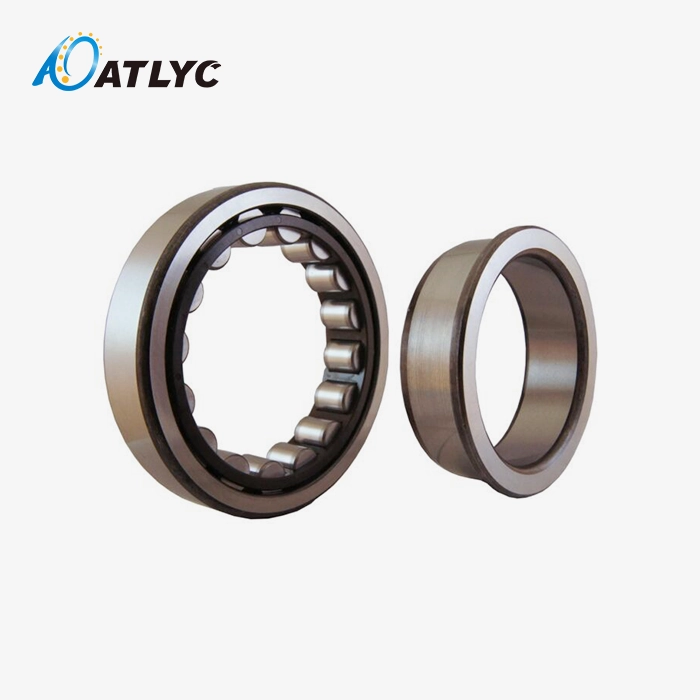
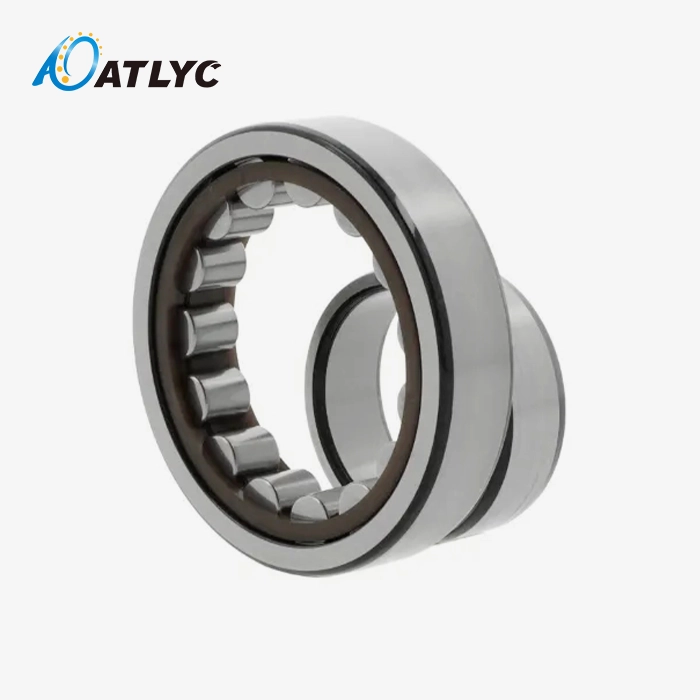
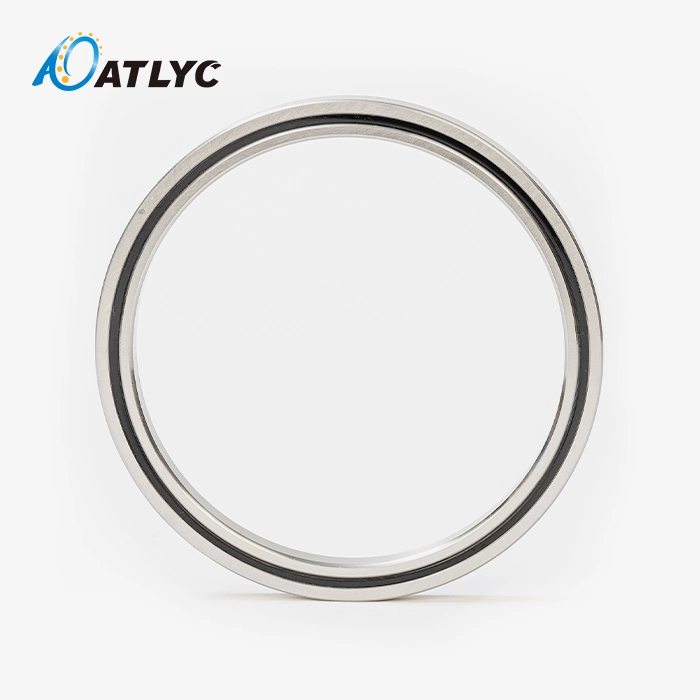
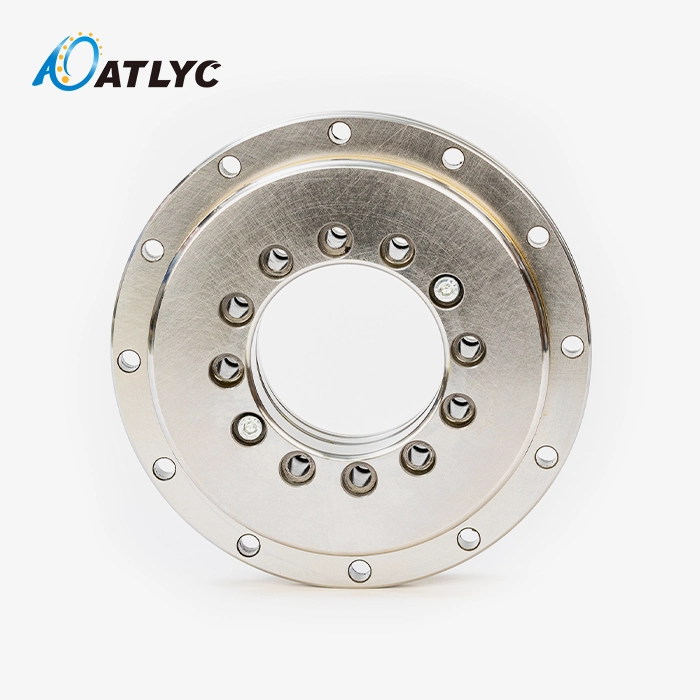
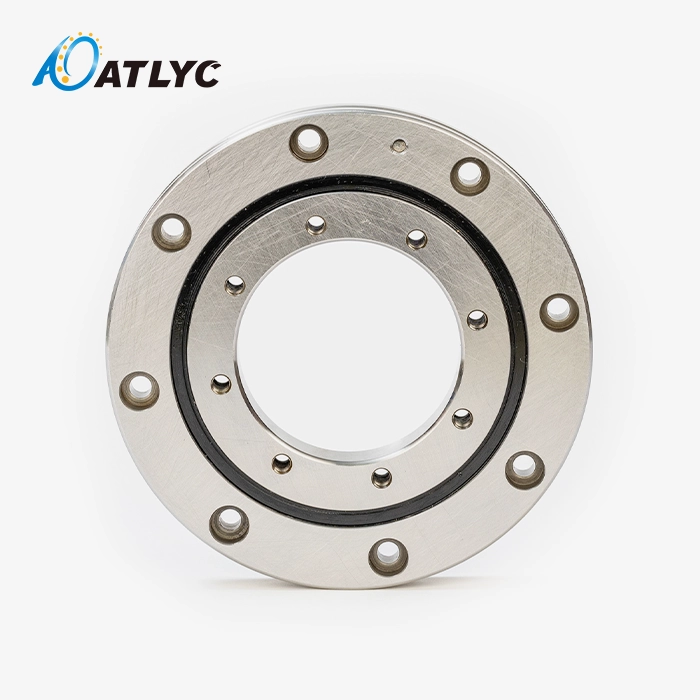
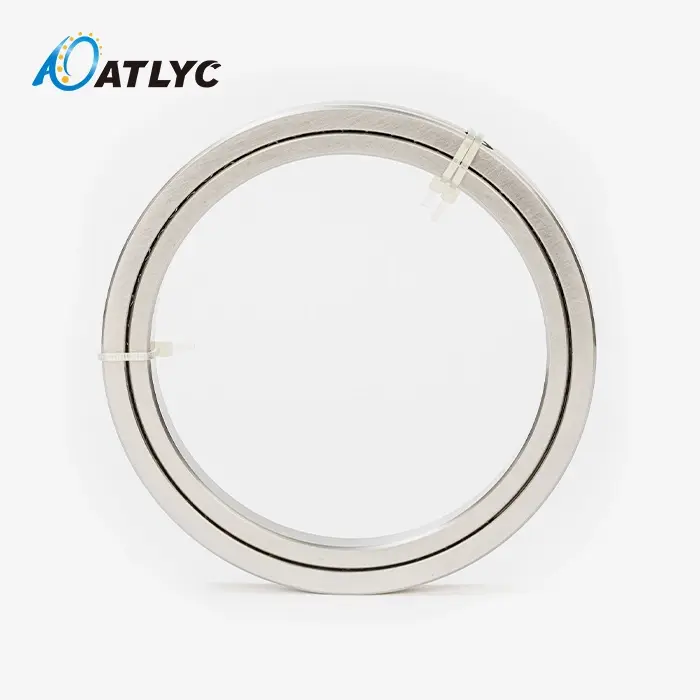
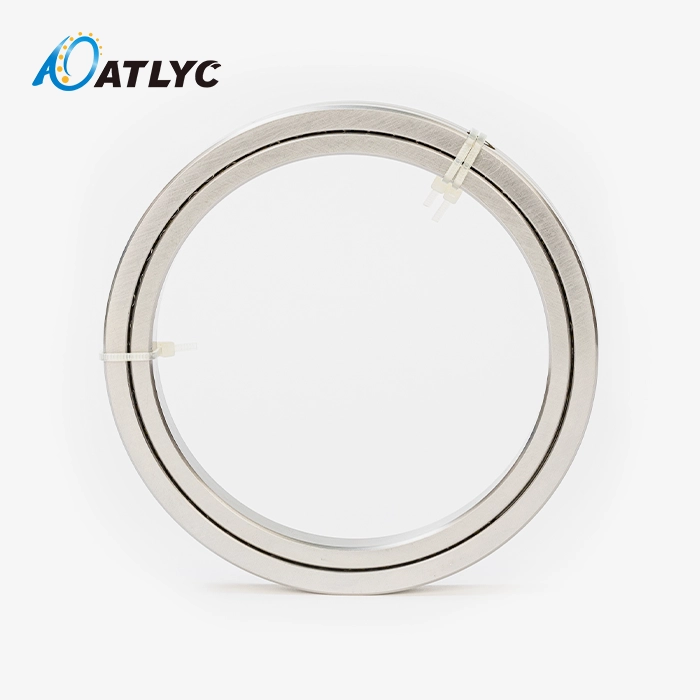
The RB8016UUCC0 Series Crossed Roller Bearing represents a significant advancement in precision bearing technology, specifically engineered for applications demanding exceptional load capacity within constrained spaces. This bearing combines an 80mm inner diameter, 105mm outer diameter, and 16mm width configuration with an integrated outer ring structure and sealing plugs, delivering superior radial, axial, and moment load handling in a single compact unit. The crossed roller arrangement ensures minimal friction, outstanding runout accuracy, and the rigidity required by demanding industrial automation, medical devices, and precision machining environments. Manufactured from Gcr15 and Gcr15SiMn materials with accuracy grades ranging from P6 to P2, this component addresses critical performance requirements across robotics, measurement instrumentation, and semiconductor manufacturing sectors.
Understanding the Key Specifications and Design of RB8016UUCC0
The RB8016UUCC0 Series Crossed Roller Bearing's design architecture is the result of many years of engineering work to make precision motion control parts better. Knowing these specs helps purchasing managers and design engineers make smart choices that have a direct effect on how well equipment works and how long it lasts.
Dimensional Precision and Material Composition
The bearing has an inner diameter of 80 mm and an outer diameter of 105 mm, which makes it small enough to fit in tight spaces. The 16mm width measurement increases load capacity while requiring the least amount of axial room. This shape is especially useful in multi-axis robotic joints, where choosing the right parts is based on how much weight they can hold and how much space they take up. Gcr15 chrome steel, which is used as the main material in the bearing, is very good at hardening and resisting wear. Different types of the Gcr15SiMn material have silicon and manganese added to them to make them tougher and stronger against fatigue. This makes them last longer when they are loaded and unloaded many times, which is common in automatic industrial equipment.
Crossed Roller Configuration and Load Distribution
The fundamental innovation behind this bearing's performance traits is the orthogonal roller arrangement. Line contact is made by cylindrical rollers spaced at 90-degree angles within precision-ground V-groove raceways. This spreads loads over a larger surface area than point-contact ball bearings. This design lets a single bearing assembly support radial forces, axial thrust, and overturning moments all at the same time. The spacer plates between neighboring rollers keep metal from touching metal, which lowers friction and makes sure that all rolling elements are under the same amount of load. This design principle gets rid of the need for paired bearing setups, which makes installation easier and lowers the overall complexity of the system.
Sealing Technology and Contamination Resistance
As long as the bearing is in use, the integrated sealing plug configuration keeps the internal parts clean and free of environmental contamination. Precision bearings are often exposed to liquid mist, metal particles, and airborne dust in manufacturing settings. Both of the rubber seals work well to keep these contaminants out without adding too much rotational drag. This protected design is very important in places like operation rooms for medical imaging equipment and semiconductor cleanrooms where particles must be kept to a minimum. Maintenance intervals are much longer than with open-type bearings, which cuts down on downtime and costs over the life of the bearing.
| Specification Parameter | RB8016UUCC0 Value | Industrial Significance |
|---|---|---|
| Inner Diameter | 80 mm | Designed to work best with mid-sized robotic joints and rotary tables |
| Outer Diameter | 105 mm | Small envelopes allow designs that use room efficiently |
| Width | 16 mm | Maximum load capacity per unit of room along the axis |
| Material | Gcr15, Gcr15SiMn | Better hardness and resistance to fatigue for a long service life |
| Accuracy Grades | P6, P0, P5, P4, P2 | Different applications can use different amounts of accuracy |
| Sealing Type | Integrated Plugs | Operational life is extended by protecting against contamination |
Top Application Areas of RB8016UUCC0 Crossed Roller Bearings
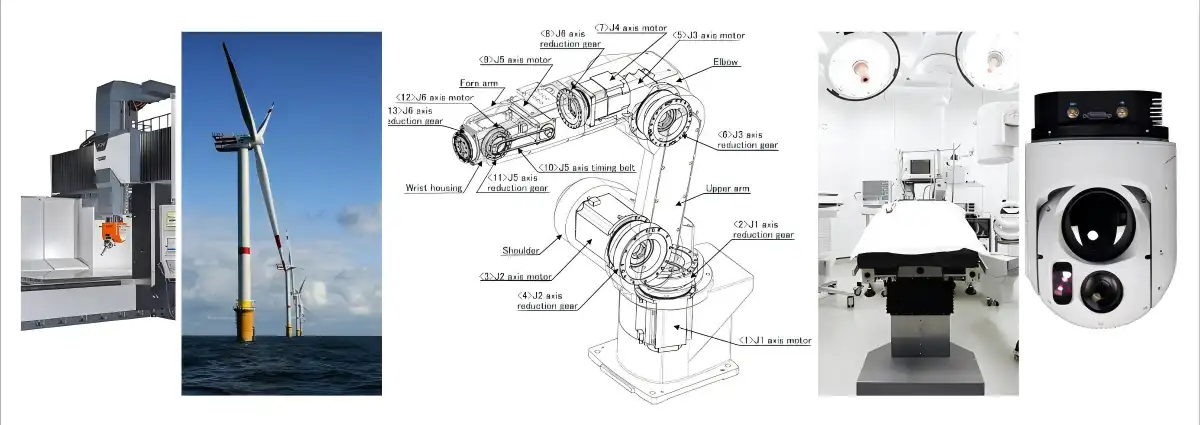
Because they can be used in many different ways, crossed roller bearings are essential in many industries. Understanding the specifics of an application helps buyers see ways to make existing equipment work better.
Industrial Robotics and Automation Systems
Robotic manipulators need bearings that can keep their precise positioning even when they are under a lot of stress. The RB8016UUCC0 Series Crossed Roller Bearing works really well in waist rotation units and elbow joints where loads that are supported on one side cause big moment forces. Because the bearing can handle combined loads, there is no need for multiple bearing sets. This lowers the weight of the arm as a whole and increases the payload-to-weight ratio. In high-throughput assembly processes, this weight loss directly leads to shorter cycle times and less energy use. The smooth, low-torque spinning of the bearing is especially helpful for collaborative robots that work in areas with people. This makes it easier to control motion and adds safety features.
CNC Machining Centers and Rotary Tables
When precision machining is done, rotary table bearings are exposed to cutting forces that change shape, cycles of thermal expansion, and coolant. Crossed roller patterns provide stiff support that keeps the table flat and centered while heavy materials are being removed. Unlike angular contact ball bearings that need precise preload adjustment, the RB8016UUCC0's negative clearance specification makes sure that there is no backlash as soon as it is installed. In five-axis machining centers, where errors in table positioning add up along the kinematic chain, this property is very important. The closed design can handle the rough coolant environment that is common in current cutting tasks without needing to be re-oiled too often.
Medical Imaging and Diagnostic Equipment
CT scanner gantries and C-arm fluoroscopy systems need bearings that allow them to rotate smoothly and without friction while holding a lot of weight. The low friction coefficient of the RB8016UUCC0 makes it possible for it to work quietly, which is important in patient care areas. The small size of the bearing's profile lets designers of medical equipment make devices with smaller footprints, which improves patient access and ergonomics. In medical diagnosis, image quality is closely linked to mechanical stability during scan processes. Crossed roller bearings get rid of motion artifacts that would otherwise make diagnostic accuracy less accurate because they are very rigid and have precise runout. The sealed design keeps cleaning agents and biological fluids that are common in hospital settings from getting inside and making the device dirty.
Semiconductor Manufacturing and Metrology Instruments
Equipment used to make integrated circuits (ICs) works in very clean places where particle production must stay below strict limits. The RB8016UUCC0 series has precision grades from P6 to P2, which can be used for a wide range of tasks, from general automation to positioning systems on the nanometer scale. Robots that handle wafers use crossed roller bearings in their rotating axes to keep the same position over and over again, which is needed for lithography and checking processes. These bearings are used in rotary table assemblies of coordinate measuring machines, where runout accuracy directly affects measurement uncertainty. GCR15 steel stays the same size even when the temperature changes, which keeps measurements accurate in temperature-controlled measuring labs.
Comparing RB8016UUCC0 with Other Crossed Roller Bearings
To choose the best bearing model, you need to know the relative pros and cons of each model and how they affect the specific application. The RB8016UUCC0 fits into a certain performance area within the larger family of crossed roller bearings.
Size Considerations and Load Capacity Differences
The RB8016UUCC0 Series Crossed Roller Bearing is in the middle of smaller types like the RB8015 and bigger ones like the RB9016, with an 80mm bore width. This size works for medium-sized robotic tasks where shaft diameters are common between 75mm and 85mm. Smaller bearings lose the ability to handle moment loads, and bigger ones add extra weight and cost when space limits allow for smaller options. For installations where the thickness of the mounting flange is limited, the 16mm width strikes the best balance between axial stiffness and cross-sectional area. The RB8016UUCC0 has a 15-20% higher moment capacity than angular contact bearing pairs of the same size, according to load rating estimates. It also takes up 30% less axial room.
Precision Grade Selection Impact
Multiple accuracy classes let buyers match the precision of the bearing to the needs of the application without specifying too many expensive features. P6 grade bearings are good for general industrial automation where positional errors are less than 10 microns. P5 and P4 grades are used for normal robots and precision machining that needs accuracy of less than one micron. P2 grade parts are used in ultra-precision measuring and electronics applications that need performance below the micron level. Each precision level rise usually makes parts cost 20–30% more, so choosing the right grade is important for lowering costs. Our factory's production data shows that P5 grade RB8016UUCC0 bearings consistently have runout values below 5 microns, which meet most industrial automation requirements.
Material Variant Performance Characteristics
In normal temperature ranges and modest load conditions, standard Gcr15 material works very well in many situations. The Gcr15SiMn version is tougher, which is useful in situations where shocks or changes in temperature are likely to happen. Impact resistance testing shows that Gcr15SiMn has 25% higher fracture toughness than regular Gcr15. This makes it less likely that the raceway will break under intermittent overload conditions. ATLYC facilities use thermal treatment methods to make sure that both types of material have similar hardness profiles. This keeps the dimensions stable over long service intervals.
| Comparison Factor | RB8016UUCC0 | RB8015UUCC0 | Standard Ball Bearing Pair |
|---|---|---|---|
| Bore Diameter | 80 mm | 75 mm | 80 mm |
| Moment Load Capacity | High | Medium | Low to medium |
| Axial Space Requirement | 16 mm | 15 mm | 24-28 mm |
| Installation Complexity | Low | Low | Medium to High |
| Runout Accuracy (P5) | <5μm | <5μm | 8-12μm |
| Weight | 0.9 kg | 0.75 kg | 1.3 kg |
Procurement Insights and Buying Guide for RB8016UUCC0 Bearings
Effective procurement strategies weigh the short-term costs of buying things against their long-term dependability. Knowing how the market works and what suppliers can do lets you make smart buying decisions that keep your tools running.
Pricing Factors and Volume Considerations
Crossed roller bearing prices are based on how much the materials cost, how precisely they are made, and how strict the quality control is. The RB8016UUCC0 is priced between $85 and $150 per unit, but this depends on how many are ordered and the level of accuracy needed. On the lower end of this range are P6 grade components, while the most expensive are P2 ultra-precision variants. Unit costs are affected by volume agreements in a big way. Usually, number breaks happen at 50, 100, and 500 pieces. When purchasing managers plan to make a lot of equipment, they should talk to suppliers early on to get good prices on large orders and make sure there is enough time for precision grinding and inspection. ATLYC has structured pricing plans for OEM customers that include yearly promises to volume and flexible delivery dates that work with the planning cycles for production.
Supply Chain Reliability and Lead Time Management
The supply of parts has a direct effect on project and production plans. Standard P5 grade RB8016UUCC0 bearings are usually kept in stock so that orders of less than 20 pieces can be shipped right away. Manufacturing lead times of three to six weeks are needed for larger quantities or precision grades that aren't standard. Strategic material inventories of Gcr15 steel are kept at our plant, and we have flexible production capacity that puts urgent customer needs first. Our dedication to dependable supply capacity is shown by the fact that ATLYC was founded in 2010 and has since grown to include six specialist workshops. The ISO 9001 and IATF 16949 standards make sure that the process is always the same, which reduces quality differences that could affect when the delivery will happen.
Technical Support and Customization Capabilities
For complex applications, engineering help is often needed to choose the best bearings and integrate them properly. ATLYC hires technical experts with a lot of experience in robotics, machining, and precision instrumentation. These experts give advice based on the specific needs of the application. Customers can avoid pricey design mistakes with the help of load calculation help, mounting setup suggestions, and lubrication specification services. Customization options include changing the way the seals are set up, treating the materials in special ways, and making the sizes different so they can fit different mounting interfaces. During product development cycles, our engineering team works with OEM customers to make sure that bearing specs match performance needs and cost goals. For applications requiring precise motion and compact integration, RB8016UUCC0 Series Crossed Roller Bearing options can be considered alongside these engineering services. This consultative approach sets well-known manufacturers apart from generic suppliers who can't offer technical depth.
Maximizing the Value of RB8016UUCC0 Bearings in Your Projects
If you install, maintain, and use precision bearings correctly, they should last as long as their manufacturer says they will. Paying attention to the details of implementation saves the investment in tools and improves the efficiency of operations.
Installation Best Practices and Common Mistakes
Preparing the mounting surface has a big effect on how well and how long a bearing lasts. To keep the outer ring from warping when the bolt is tightened, the mating surfaces must be flat within 5 microns and have perpendicularity limits below 10 microns. For even load transfer, the surface roughness should stay below 1.6μm Ra. A major reason for early failure is contamination during installation. Assembling should only be done in clean areas with lint-free gloves and filtered compressed air to clean the parts. It's important to pay close attention to the torque requirements for attaching bolts because not enough preload can cause fretting rust, and too much torque can change the shape of the outer ring. ATLYC gives detailed installation guides for the RB8016UUCC0 that include torque values, tightening sequences, and inspection criteria to make sure the right way to put the parts together.
Lubrication Strategy and Maintenance Intervals
The RB8016UUCC0 has sealing plugs that keep the original oil in place, but regular upkeep makes it last longer in tough situations. Greases made from lithium and having a consistency of NLGI Grade 2 work best at most commercial temperatures. Relubrication times vary from 3,000 to 8,000 working hours and depend on operating speeds, load conditions, and weather factors. Lubrication may need to be done more often in places where they are used all the time or where temperatures are high. Monitoring the condition of something by looking at vibrations or temperatures can give you an early warning when the lubrication is breaking down or dirt is getting in. Setting up preventive maintenance schedules based on actual operating conditions instead of random time intervals increases the life of bearings and reduces the number of times they need to be serviced.
Lifecycle Cost Analysis and ROI Optimization
If you only look at the buying price when choosing a bearing, you might miss out on important lifetime cost factors. The RB8016UUCC0 can replace dual-bearing arrangements, which makes inventory simpler, maintenance easier, and gets rid of the need to adjust the preload. In automated manufacturing settings, downtime costs can be more than $1,000 per hour. This makes bearing reliability an important economic factor. Properly choosing the right material and specifying the precise grade can make something last longer, which lowers the number of replacements needed and the labor costs that come with them. Less friction means less energy use, which saves a small amount of money on operations in continuous-duty situations. Comprehensive cost modeling shows that high-quality precision bearings usually pay for themselves in the first year of use, thanks to more service and fewer repair calls.
Conclusion
The RB8016UUCC0 Series Crossed Roller Bearing performs exceptionally well in tough industrial settings thanks to its small size, advanced material makeup, and precise production. This part meets important needs in robotics, precision machining, medical instruments, and semiconductor manufacturing, where regular bearing arrangements can't meet the needs for rigidity, accuracy, and space efficiency all at the same time. The best performance over long service intervals is guaranteed by careful selection that takes into account load conditions, precision needs, and weather factors. ATLYC has been making things for fifteen years and is dedicated to meeting international quality standards. This makes us a reliable partner for procurement managers and engineering teams that need precise parts that support competitive equipment designs.
FAQ
What maximum load capacity can the RB8016UUCC0 bearing support?
The bearing can handle large loads at the same time, such as radial forces, axial thrust, and moment loads. The exact capacity values depend on the precision grade and the working conditions. However, moment loads between 500 and 1,200 Nm are common in most situations. To make sure there are enough safety margins, detailed estimates of load ratings should take into account real force vectors and job cycles.
How does the RB8016UUCC0 differ from the RB8015 model?
The main difference is the size of the bores: the RB8016UUCC0 has an 80mm bore, and the RB8015 has a 75mm bore. This difference in size means that it can hold about 15% more weight and carry slightly more weight. To find the best model for an application, the thickness limits of the shaft and the load values needed should be taken into account.
Can this bearing be customized for specific OEM requirements?
Yes, customization choices include changing the way the seals are set up, treating the materials in special ways, and making the sizes different so that they can fit different mounting interfaces. The engineering team at ATLYC works with customers to create application-specific solutions that meet specific performance needs and stay within budget.
Partner with ATLYC for Reliable RB8016UUCC0 Series Crossed Roller Bearing Supply
ATLYC has been making precision bearings for fifteen years and is a well-known company with full ISO 9001 and IATF 16949 certifications. They can help you with your automation, medical device, and precision machining projects. Our six specialized production workshops and 120 hardworking employees make sure that mid- to large OEMs and equipment manufacturers across North America get consistent quality and on-time deliveries. Our technical experts can be reached at auto@lyautobearing.com by sourcing managers and engineering teams who want to talk about their unique RB8016UUCC0 bearing needs. Take advantage of low prices on large orders, full technical help during product development, and a reliable supply chain partnership with a reputable Chinese bearing maker. Get in touch with us right away to get full specs, help with application engineering, or quotes for your next project.
References
1. Harris, T.A., and Kotzalas, M.N. (2006). Advanced Concepts of Bearing Technology: Rolling Bearing Analysis, Fifth Edition. CRC Press, Taylor & Francis Group.
2. ISO 5593:1984. Rolling Bearings – Vocabulary. International Organization for Standardization, Geneva, Switzerland.
3. Wensing, J.A. (1998). On the Dynamics of Ball Bearings. Doctoral Dissertation, University of Twente, Netherlands.
4. SKF Group. (2018). Rolling Bearings Catalogue: Technical Reference Guide for Precision Bearing Selection. SKF Motion Technologies AB, Gothenburg, Sweden.
5. Eschmann, P., Hasbargen, L., and Weigand, K. (1985). Ball and Roller Bearings: Theory, Design and Application, Second Edition. John Wiley & Sons.
6. ANSI/ABMA Standard 12.3-2012. Instrument Ball Bearings – Metric Design. American Bearing Manufacturers Association, Washington, D.C.
Learn about our latest products and discounts through SMS or email