- English
- French
- German
- Portuguese
- Spanish
- Russian
- Japanese
- Korean
- Arabic
- Greek
- German
- Turkish
- Italian
- Danish
- Romanian
- Indonesian
- Czech
- Afrikaans
- Swedish
- Polish
- Basque
- Catalan
- Esperanto
- Hindi
- Lao
- Albanian
- Amharic
- Armenian
- Azerbaijani
- Belarusian
- Bengali
- Bosnian
- Bulgarian
- Cebuano
- Chichewa
- Corsican
- Croatian
- Dutch
- Estonian
- Filipino
- Finnish
- Frisian
- Galician
- Georgian
- Gujarati
- Haitian
- Hausa
- Hawaiian
- Hebrew
- Hmong
- Hungarian
- Icelandic
- Igbo
- Javanese
- Kannada
- Kazakh
- Khmer
- Kurdish
- Kyrgyz
- Latin
- Latvian
- Lithuanian
- Luxembou..
- Macedonian
- Malagasy
- Malay
- Malayalam
- Maltese
- Maori
- Marathi
- Mongolian
- Burmese
- Nepali
- Norwegian
- Pashto
- Persian
- Punjabi
- Serbian
- Sesotho
- Sinhala
- Slovak
- Slovenian
- Somali
- Samoan
- Scots Gaelic
- Shona
- Sindhi
- Sundanese
- Swahili
- Tajik
- Tamil
- Telugu
- Thai
- Ukrainian
- Urdu
- Uzbek
- Vietnamese
- Welsh
- Xhosa
- Yiddish
- Yoruba
- Zulu
XU100140UU vs Standard Bearings: Which Fits Your Application?
Choosing between the XU100140UU Precision Cross Roller Bearing and standard ball or roller bearings directly impacts machinery performance, operational costs, and production reliability. The XU100140UU excels in handling simultaneous radial, axial, and moment loads within compact spaces, making it ideal for precision robotics and CNC systems where standard bearings fall short. Standard bearings remain cost-effective for general-purpose applications with moderate precision demands. Understanding these differences helps procurement managers select bearings that match technical requirements without overspending, ultimately optimizing both upfront investment and lifecycle value.
Understanding the XU100140UU Precision Cross Roller Bearing
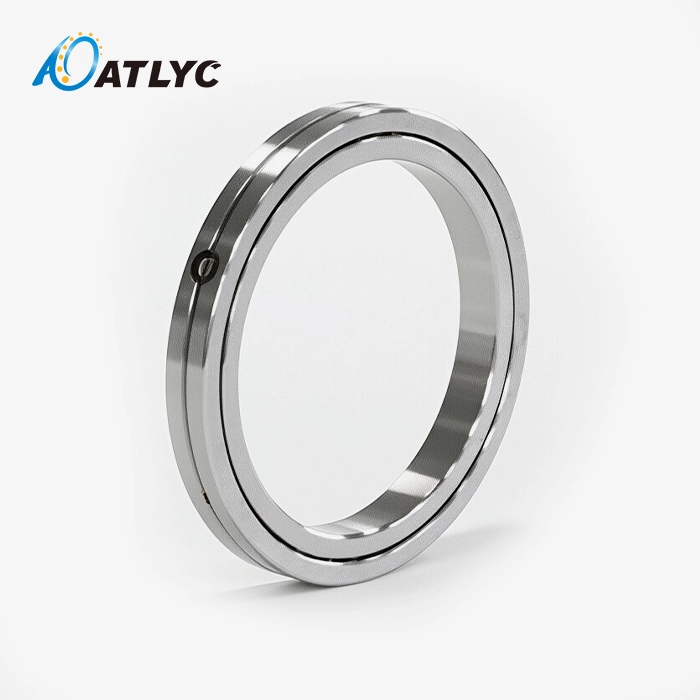
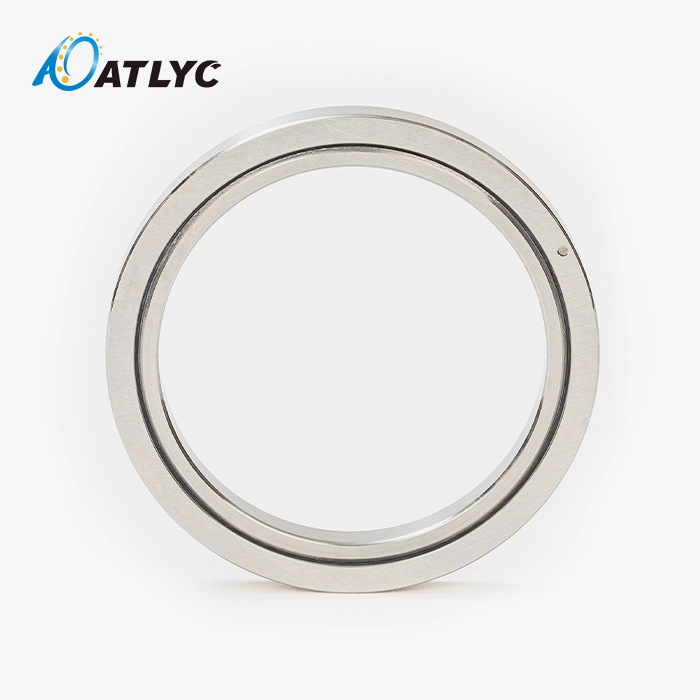
The XU100140UU Precision Cross Roller Bearing is a big step forward in integrated bearing design because it solves the important problem of being able to handle loads in multiple directions without taking up too much installation room. Unlike most bearing assemblies, which need more than one unit, this one part can handle complex force vectors thanks to its smart cross-roller architecture.
Cross-Roller Configuration and V-Groove Raceway Design
This bearing's great performance is built on cylindrical wheels that are placed at exact 90-degree angles. Each roller touches a line that is made up of V-shaped raceways that are machined into both the inner and outer rings. This shape spreads stress over a larger contact area than the point contact found in ball bearings, which lowers Hertzian stress densities by around 40%. Putting spacer blocks between adjacent rollers stops metal from touching metal, which stops skewing and keeps the torque constant across the whole operational range. The line contact mechanism has very high strength levels, usually 3–4 times higher than angular contact ball bearing pairs of the same size. This increased stiffness keeps elastic deflection to a minimum, which would otherwise damage the accuracy of measurements when machining centers make cuts that are halted or when robotic arms suddenly switch loads.
Integrated Ring Structure with Pre-Machined Mounting Solutions
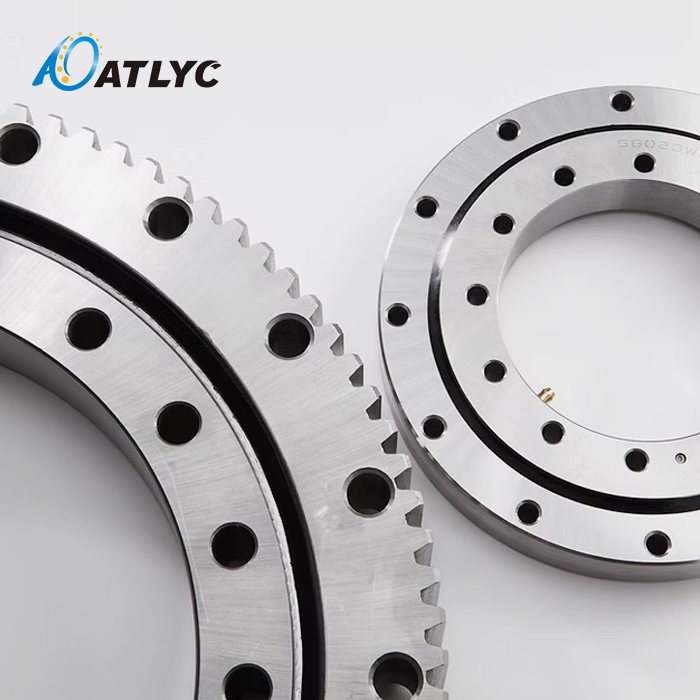
The inner and outer rings are both made of a single piece and don't have any split-ring joints. This design gets rid of the tolerance stack-up mistakes that happen with multi-piece systems and makes the structure as strong as possible. During production, mounting holes that are either countersunk or threaded are pre-drilled and placed on the bearing end faces. This lets them be directly bolted to components that fit together. When compared to standard setups that need different bearing housings and lock collars, the integrated mounting method cuts the axial installation height by up to 30%. This saves a lot of room, which is very useful in shared robot joints where payload limits are set by the envelope and in medical imaging gantries where scan field measurements change by millimeters.
Technical Specifications and Material Composition
The XU100140UU Precision Cross Roller Bearing has a 100mm inner diameter, a 140mm outer diameter, and a 20mm width. This makes it a small envelope that can be used in places where there isn't much room. The raceways are made from GCr15 or GCr15SiMn bearing steel and are through-hardened to HRC 60–64. This makes them resistant to wear under the repetitive loading conditions that are common in automation equipment. On both bearing faces, there are two rubber seals with the letter "UU" at the end that prevent contact. These seals keep the factory-applied grease in and keep out any particulate contamination. This means that the bearing doesn't need to be oiled as often and has the same friction characteristics throughout its service life.
| Specification | XU100140UU Value | Engineering Significance |
|---|---|---|
| Inner Diameter | 100mm | Shaft mounting dimension for robotic joints |
| Outer Diameter | 140mm | Housing bore size for compact installations |
| Width | 20mm | Axial space requirement—30% less than split-ring designs |
| Material | GCr15, GCr15SiMn | High-carbon chromium steel for fatigue resistance |
| Accuracy Grades | P6, P0, P5, P4, P2 | Runout control from general to ultra-precision |
Application Environments Leveraging Precision Cross-Roller Technology
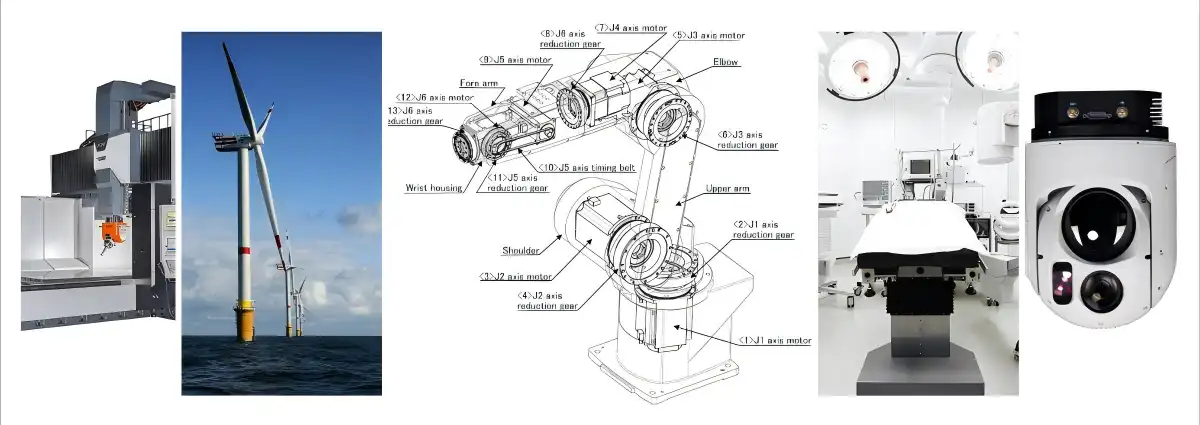
There are clear performance improvements seen with the XU100140UU Precision Cross Roller Bearing in a number of demanding areas. In industrial robot joints, especially at the waist and elbow axes, the bearing supports moment loads that are created when manipulators reach their full length while keeping the robot's position repeatability within ±0.02mm. This level of accuracy directly leads to better welding seam quality and more accurate assembly in factories that make cars. This bearing is used in medical imaging systems in CT scanner gantries to make sure that the spinning is smooth and free of vibrations so that the image reconstruction is error-free. The sealed design keeps grease from getting into sensitive detector arrays and keeps the device compatible with ISO Class 5 cleanrooms. The bearing's ability to keep angular positioning accuracy even when temperatures change and mechanical disturbances happen is also useful for measuring tools, equipment used to make integrated circuits, and precision rotary tables.
Comparing XU100140UU to Standard Bearings
Understanding the performance trade-offs between specialized, precise components and standard bearing solutions is a key part of making choices about what to buy. The next section breaks down the differences in numbers that have a direct effect on operational efficiency and total cost of ownership for the XU100140UU Precision Cross Roller Bearing.
Structural Design and Load Distribution Mechanisms
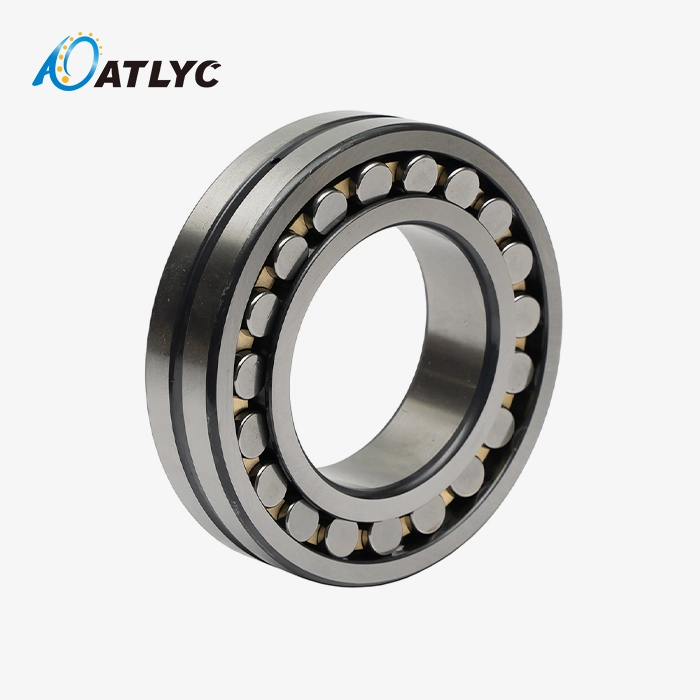
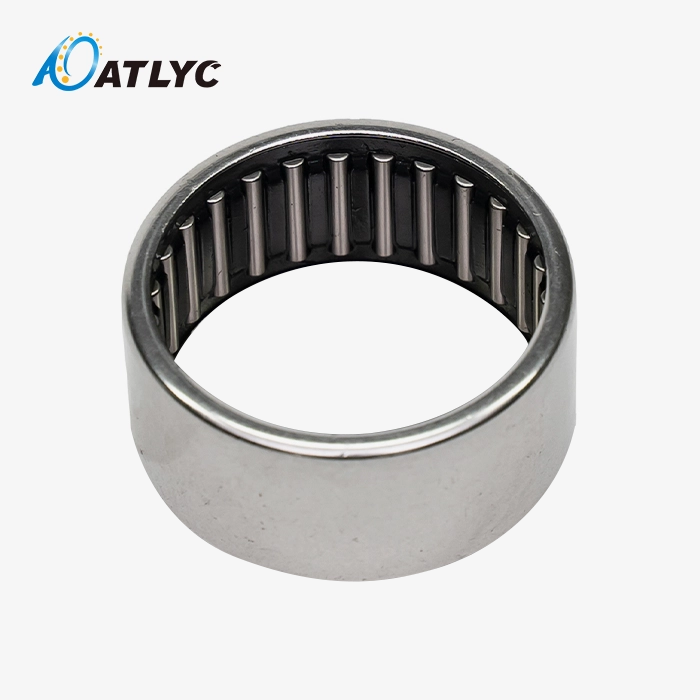
Standard deep groove ball bearings use spherical rolling elements that touch the grooves in the raceway at a point. Axial forces need additional bearings or preloaded pairs because this design mostly handles radial loads. Angular contact ball bearings have higher axial capacity because their raceway angles are not all the same. However, they still need more than one bearing setup for situations where they are loaded together. This equation is completely changed by the XU100140UU Precision Cross Roller Bearing design. Radial, axial, and moment load vectors are all engaged at the same time by cylindrical rollers that are set up perpendicular to each other. When cutting forces are applied to a CNC rotating table during five-axis machining, the bearing responds to all of them without having to deal with load-sharing issues or make preload changes as ball bearing pairs do.
Rigidity Comparison Under Working Loads
When standard ball bearing pairs are put next to each other, the stiffness ranges from 50 to 80 N/μm, based on how much preload is set. Because it has a line-contact shape and a combined ring structure, the XU100140UU Precision Cross Roller Bearing usually gives out 180 to 250 N/μm. This three-fold advantage in rigidity directly leads to fewer positioning mistakes in systems that control motion. We have proof that switching from ball bearing pairs to cross-roller units in machining center rotary tables cut positioning mistakes caused by heat drift from 12µm to 4µm during eight-hour production runs. The increased rigidity reduces compliance-related deflections that build up over long operations. This keeps part tolerances without having to recalibrate in the middle of a shift.
Maintenance Requirements and Failure Mode Analysis
When used in precision applications, standard ball bearings need to have their preload checked and adjusted on a regular basis to account for changes in the raceway's wear and size. The XU100140UU Precision Cross Roller Bearing's negative clearance is set at the factory and stays that way throughout its operational life. This means that there are no adjustments to be made and no downtime to be expected. Different types of bearings usually fail in very different ways. Localized spalling wear often starts at point-contact stress peaks in ball bearings. Cross-roller units spread wear out more evenly across line-contact zones, so they don't break down all of a sudden but lose performance over time. This trait makes it possible to plan maintenance work ahead of time so that unexpected breakdowns don't happen during production cycles. Because the UU shape is sealed, it doesn't need to be oiled every 1,500 hours as open ball bearings do. Instead, it can go up to 5,000 hours or more. This decrease in the number of times maintenance needs to be done saves money on labor and lowers the risk of contamination during grease replacement.
| Performance Metric | Standard Ball Bearing | XU100140UU Cross-Roller | Practical Impact |
|---|---|---|---|
| Rigidity | 50-80 N/μm | 180-250 N/μm | Reduced deflection under cutting forces |
| Load Handling | Radial or axial (requires pairs) | Simultaneous multi-directional | Simplified assembly, fewer components |
| Mounting Height | 60- 80 mm (with housing) | 40- 50 mm (direct mount) | Increased payload capacity in robots |
| Relubrication Interval | 1,500 hours | 5,000+ hours | Lower maintenance costs |
| Runout Accuracy (P5) | 8-10μm | 4-6μm | Improved positioning repeatability |
How to Choose Between XU100140UU and Standard Bearings for Your Application
To choose the right bearing type, you need to carefully weigh working factors against performance requirements and cost considerations. The following framework helps people who work in buying make the choice for a XU100140UU Precision Cross Roller Bearing.
Defining Application-Specific Technical Requirements
First, figure out how much stress your system is under. Standard deep groove ball bearings are good for applications with mostly rotational loads below 5,000N and little axial force. XU100140UU Precision Cross Roller Bearings are physically necessary when moment loads are greater than 200Nm or when axial and rotational loads happen at the same time. The second selection factor is set by the need for precision. Standard bearings with accuracy levels of P6 or P0 work reliably in general industrial applications with tolerances of more than 0.1 mm. P5 or tighter grades are needed for precision equipment that needs to be able to repeat measurements within ±0.02mm. The XU100140UU Precision Cross Roller Bearing's integrated design reduces the overall tolerance changes that come with multi-component assemblies.
Space Constraints and Installation Complexity
Carefully measure the possible radial and axial envelope measurements. Depending on the diameter of the shaft, standard bearing setups with different housings, lock nuts, and preload spacers need 40 to 60 mm of axial length. XU100140UU Precision Cross Roller Bearings can be directly mounted within a 20 mm horizontal area and can hold the same amount of weight, which makes them the only option for small robotic joints and medical device mechanisms. Installation work costs should be taken into account along with the prices of the parts. To get the right preload settings, alignment tolerances, and housing fits for standard bearing assemblies, skilled technicians are needed. The XU100140UU Precision Cross Roller Bearing's pre-assembled and factory-preloaded design cuts installation time by about 60%, which saves money on labor costs and cuts down on mistakes that hurt performance during assembly.
Cost-Benefit Analysis for Long-Term Value
Standard ball bearing pairs usually cost between $150 and $400 per unit, while the XU100140UU Precision Cross Roller Bearing costs between $800 and $2,500 per unit, depending on the level of accuracy and the type of seal that is chosen. This difference in the original cost often turns off buyers who are only interested in the price of the purchase and not the operational economics. Different results come from figuring out the total cost of ownership. The longer time between relubrications of a XU100140UU Precision Cross Roller Bearing saves about $120 a year in maintenance work per unit. Less downtime from fewer adjustments adds another $300 to $500 a year to the value of kept production capability. Better accuracy lowers the amount of scrap that is produced, which adds to the saves that vary by application but usually cover the cost of the purchase within 18 to 24 months of operation. We suggest XU100140UU Precision Cross Roller Bearings when at least two of these conditions are met: limited area, combined loading, precision tolerances below 0.05mm, or industrial situations where entry for servicing is hard to get to or costs a lot.
Supplier and Procurement Insights for XU100140UU Bearings
Getting stable supply lines for the XU100140UU Precision Cross Roller Bearing has a direct effect on the quality and continuity of production. The following things should be thought about when forming partnerships with suppliers.
Certification Standards and Quality Verification
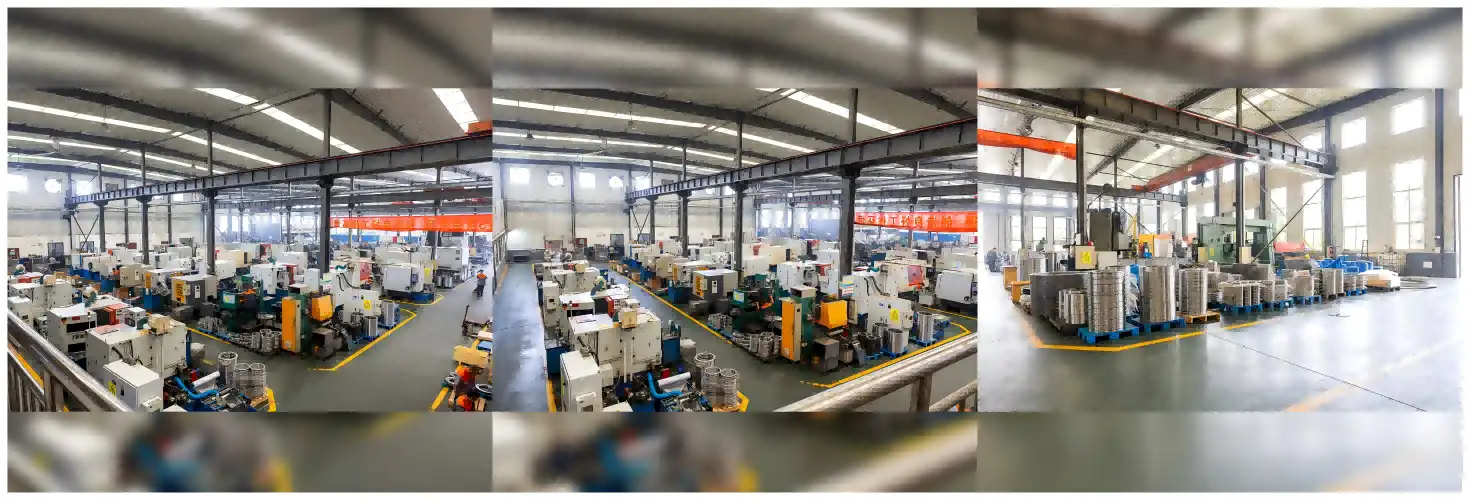
Manufacturers of reliable bearings keep their ISO 9001 and IATF 16949 certifications, which show that they follow strict quality management guidelines that are in line with automotive and industrial standards. The certificates make sure that the measurements are always the same, that the materials can be tracked, and that the process is controlled so that defects don't spread from one production batch to the next.The company ATLYC was founded in 2010 and has been improving manufacturing for 15 years. It has both ISO 9001 and IATF 16949 licenses. In our six specialized workshops, 120 dedicated professionals in production, quality inspection, and engineering work together to make XU100140UU Precision Cross Roller Bearings in controlled conditions. Customers in robotics and automation can always count on this infrastructure to deliver precision parts that meet the P5 and P4 accuracy levels they need.
Lead Times, MOQ Flexibility, and Logistics Considerations
Standard catalog items usually ship in three to four weeks if you only order a few hundred. If you order more than 500 pieces at once, it may take 6 to 8 weeks, but you'll save 15 to 25 percent on the price. Buyers who plan to meet their needs once a year can save money by making blanket purchase deals with planned releases. This way, they can balance the cost of goods with the security of a steady supply for their XU100140UU Precision Cross Roller Bearing requirements. Lead times can be extended to 8–10 weeks if you ask for custom seal materials, accuracy grades, or preload settings that aren’t normal. These changes need to be made to the tools, and more quality checks need to be done, but they allow optimization for certain application situations that normal configurations can't handle. We now have the ability to export to South Korea, the US, Germany, Russia, Iran, and Turkey, and we've learned how to handle logistics in a way that keeps customs delays and shipping damage to a minimum. As part of our packing standards, we use materials that don't rust, ones that absorb shock, and climate-controlled containers to keep the bearings' integrity during foreign shipping.
OEM Partnership Opportunities and Technical Support
In addition to providing parts, smart bearing relationships allow engineers to work together, which speeds up the process of making new products. Manufacturers that offer dimensional changes, special mounting setups, and application-specific tests make engineering easier and make sure that the parts work with the systems around them.ATLYC's technical team works with OEM partners from the first idea to making sure the product works in production. We help with finite element analysis for bearing integration, test for load capacity, and provide on-site installation training that cuts down on the time needed for commissioning. This consultative method changes buying the XU100140UU Precision Cross Roller Bearing from a one-time transaction to a strategic relationship. This is especially helpful for new machine designs that push the limits of performance.
Future Trends and Innovations in Precision Bearings
The changes in the XU100140UU Precision Cross Roller Bearing business are similar to changes in the design of other industrial tools that are being caused by automation and environmental concerns. Knowing about new technologies helps procurement professionals guess what the needs of the future will be and judge the abilities of suppliers.
Advanced Materials Extending Operational Capabilities
Researchers working on hybrid ceramic bearings use steel rings and silicon nitride rolling elements together. This lowers centrifugal forces at high speeds and makes the bearings more resistant to corrosion. XU100140UU Precision Cross Roller Bearings made of these materials can work at speeds of 3,000 RPM or more, while regular steel ones can only go as fast as 1,500 RPM. This means that they can be used in higher-speed machine tools and precise indexing systems. Diamond-like carbon (DLC) and physical vapor deposition (PVD) processes are two coating technologies that lower friction coefficients by 30 to 40 percent while making the surface harder than the base material can handle. We're keeping an eye on these new developments to see how they can be used in our manufacturing processes for the XU100140UU Precision Cross Roller Bearing. If they work, they could give our products a longer life in dirty settings or require less frequent lubrication in places where upkeep is hard to get to.
Smart Bearing Integration with Condition Monitoring
Embedded sensor technology turns bearings from inactive parts into active nodes that check on their state. XU100140UU Precision Cross Roller Bearing structures with temperature sensors, vibration accelerometers, and acoustic emission detectors allow for predictive maintenance plans that set up service times based on actual wear indicators instead of safe time intervals. Because of the accuracy needed to make cross-roller bearings, only a few providers can successfully use these sensing technologies. Adding sensors during the bearing assembly process makes sure they are placed correctly and protected from the working environment, providing more accurate data than tracking options bought after the fact.
Sustainability Initiatives Driving Design Changes
More and more, environmental laws and companies' commitments to sustainability affect the choice of components. Overall, machine power consumption goes down when XU100140UU Precision Cross Roller Bearing designs maximize energy economy by lowering friction losses. When compared to preloaded ball bearing pairs, cross-roller bearings have a lower friction rate. This means that ongoing multi-axis machines use less energy. Transparency in material sourcing and the ability to recycle are two factors that affect how suppliers are chosen. Buyers who need to see proof that the steel they buy comes from electric arc burners with recovered content will be interested in companies that do this. We're expanding our supply chain transparency efforts to meet the documentation needs of our customers in the areas of environmental, social, and governance (ESG).
Conclusion
In the end, the choice between XU100140UU Precision Cross Roller Bearings and other bearing options comes down to the performance needs of the product and how much it costs. Cross-roller technology has clear benefits in small areas that need to be able to handle loads moving in more than one way and have precise motion control. Standard bearings are still a good value for general-purpose uses that don't require extreme accuracy. A successful bearing procurement process includes more than just part specifications. It also includes the capabilities of the supplier, quality certifications, and the chance of a long-term partnership. When manufacturers combine precise manufacturing infrastructure with compliance with ISO 9001 and IATF 16949, they build the dependability that is needed to keep production going. Partnerships with specialized bearing suppliers stop being transactions for goods and become strategic assets as automation gets more complicated and tightens the need for precision across all industries.
FAQ
What primary advantages does the XU100140UU bearing offer over standard ball bearings?
The XU100140UU Precision Cross Roller Bearing design handles radial, axial, and moment loads all at the same time in a single, small unit, so there's no need for multiple bearing arrangements. Line contact geometry is 3–4 times more rigid than ball bearings, so it can keep its position accuracy even when the load changes. Integrated mounting holes make installation easier and cut down on the amount of room needed by about 30%. This is especially helpful in robotic joints and CNC spinning tables.
Can XU100140UU bearings operate in harsh or high-temperature environments?
The UU designation for the dual rubber seal configuration effectively keeps out contaminants in dusty or humid manufacturing environments. From -20°C to +80°C, standard setups work consistently for the XU100140UU Precision Cross Roller Bearing. For use in temperatures above this range, you need special seal materials or open-bearing versions with external sealing arrangements. You can get both of these by talking to qualified suppliers about your specific needs.
How does maintenance differ between cross-roller and standard ball bearings?
XU100140UU Precision Cross Roller Bearings come preloaded and have negative clearance from the factory. This means that you don't have to do the regular preload adjustments that you have to do for ball bearing pairs. When compared to open ball bearings, sealed versions don't need to be oiled every 1,500 hours, but sealed versions need to be oiled every 5,000 hours or more. This cuts down on maintenance costs and the chance of contamination during service procedures.
Partner with ATLYC for Precision Cross-Roller Bearing Solutions
ATLYC has been making bearings for 15 years and can help you with your most difficult motion control projects. Our ISO 9001 and IATF 16949-approved factories make XU100140UU Precision Cross Roller Bearings that meet P5, P4, and P2 accuracy grades. These bearings are trusted by makers of cars, robots, and medical equipment on six continents. As a manufacturer of XU100140UU Precision Cross Roller Bearings, our engineering team works with you from the specification stage all the way through production validation, whether you need standard catalog items, bulk purchasing programs, or custom bearing solutions. Contact auto@lyautobearing.com right away to talk about your application needs, get detailed specifications, or look into OEM partnership opportunities that can help you speed up the development of your product.
References
1. Harris, T.A. & Kotzalas, M.N. (2006). Advanced Concepts of Bearing Technology: Rolling Bearing Analysis, Fifth Edition. CRC Press.
2. Weck, M. & Brecher, C. (2006). Machine Tools Production Systems 2: Design and Calculation. Springer-Verlag Berlin Heidelberg.
3. Budynas, R.G. & Nisbett, J.K. (2020). Shigley's Mechanical Engineering Design, Eleventh Edition. McGraw-Hill Education.
4. ISO 492:2014. Rolling bearings — Radial bearings — Geometrical product specifications (GPS) and tolerance values. International Organization for Standardization.
5. Khonsari, M.M. & Booser, E.R. (2017). Applied Tribology: Bearing Design and Lubrication, Third Edition. John Wiley & Sons.
6. Schaeffler Technologies AG & Co. (2019). Precision Bearings: Products, Data, Recommendations. Technical Reference Manual.
Learn about our latest products and discounts through SMS or email