- English
- French
- German
- Portuguese
- Spanish
- Russian
- Japanese
- Korean
- Arabic
- Greek
- German
- Turkish
- Italian
- Danish
- Romanian
- Indonesian
- Czech
- Afrikaans
- Swedish
- Polish
- Basque
- Catalan
- Esperanto
- Hindi
- Lao
- Albanian
- Amharic
- Armenian
- Azerbaijani
- Belarusian
- Bengali
- Bosnian
- Bulgarian
- Cebuano
- Chichewa
- Corsican
- Croatian
- Dutch
- Estonian
- Filipino
- Finnish
- Frisian
- Galician
- Georgian
- Gujarati
- Haitian
- Hausa
- Hawaiian
- Hebrew
- Hmong
- Hungarian
- Icelandic
- Igbo
- Javanese
- Kannada
- Kazakh
- Khmer
- Kurdish
- Kyrgyz
- Latin
- Latvian
- Lithuanian
- Luxembou..
- Macedonian
- Malagasy
- Malay
- Malayalam
- Maltese
- Maori
- Marathi
- Mongolian
- Burmese
- Nepali
- Norwegian
- Pashto
- Persian
- Punjabi
- Serbian
- Sesotho
- Sinhala
- Slovak
- Slovenian
- Somali
- Samoan
- Scots Gaelic
- Shona
- Sindhi
- Sundanese
- Swahili
- Tajik
- Tamil
- Telugu
- Thai
- Ukrainian
- Urdu
- Uzbek
- Vietnamese
- Welsh
- Xhosa
- Yiddish
- Yoruba
- Zulu
XU100140UU Precision Cross Roller Bearing: OEM Buying Guide
When sourcing precision components for automation equipment or robotic assemblies, understanding the technical and commercial aspects of the XU100140UU Precision Cross Roller Bearing becomes essential. This integrated bearing combines compact dimensions with exceptional load-handling capabilities, making it indispensable for OEMs requiring zero-play performance in space-constrained environments. The cross-roller design eliminates the need for multiple bearing arrangements, while pre-drilled mounting holes streamline installation and reduce assembly complexity. Over the past decade, manufacturers in automotive components and industrial machinery have increasingly adopted this bearing type to meet rigorous quality standards and deliver consistent operational reliability.
Comparing XU100140UU with Other Bearings
Cross Roller Models Analysis
The following table compares and contrasts important features of similar cross roller bearing models to help you make your choice:
| Model | Inner Dia. (mm) | Outer Dia. (mm) | Width (mm) | Load Capacity | Typical Application |
|---|---|---|---|---|---|
| XU100110UU | 100 | 110 | 17 | Moderate | Rotary tables for light work |
| XU100140UU | 100 | 140 | 20 | High | CNC machines and robot parts |
| XU120179UU | 120 | 179 | 28 | Very High | Heavy indexers for industries |
The load rates of models with bigger outer diameters go up, but they need more installation room because they can hold more rollers and wider raceways. The XU100140UU Precision Cross Roller Bearing is a good balance for mid-range torque applications where size restrictions make it hard to choose a bearing.
Ball Bearings vs. Cross Roller Bearings
Normal deep groove ball bearings only touch raceways at one point, which makes them less rigid and requires special preload arrangements to get rid of internal clearance. Cross roller bearings have line contact across cylindrical roller surfaces, which makes them stiffer without the need for extra preload mechanisms. This structure's benefit means better runout accuracy and moment load resistance, both of which are very important in precision positioning systems. Thrust ball bearings are good at handling axial loads, but they need separate rotational support bearings, which makes assembly harder and adds to the number of parts. A single cross roller bearing can replace several standard bearings. This makes it easier to buy parts and find places where they might break, and it also makes upkeep easier. Prices depend on the accuracy grade and the number of items ordered. For OEM applications, standard P5 grade units from trusted manufacturers offer good value for money. Ultra-precision P2 grade versions are very expensive, but they provide the micron-level accuracy needed in measurement tools and tools for making semiconductors.
How to Choose XU100140UU Bearings for Your OEM Needs
Defining Application Requirements
The choice of XU100140UU Precision Cross Roller Bearings is based on a load curve study. Find the highest radial, axial, and moment loads that could happen in the worst possible conditions. Compare these numbers to the manufacturer's load rating tables and use the right safety factors based on the severity of the duty cycle and the expected service life. When robotics is used, dynamic loads need to be carefully thought through in terms of acceleration forces and inertial effects. The rate of rotation changes how much oil is used and how much heat is produced. Cross roller bearings usually work at slower speeds than ball bearings, but make sure the RPM for your application is within the limits that are suggested. Extreme temperatures, chemical exposure, and levels of contamination are some of the environmental factors that affect the choice of seal type and greasing strategy. The choice of precision class depends on how accurate the setting needs to be. P5 grade bearings work well in most industrial automation tasks where an accuracy of ±10 micrometers is fine. To get submicron accuracy in rotation, medical imaging devices and coordinate measuring machines often use P4 or P2 grades.
Sourcing from Verified Manufacturers
Purchasing teams should give more weight to sellers who have ISO 9001 and IATF 16949 standards, which show they are committed to consistent quality management systems. Ask for proof of the material's make-up, how it was heated, and the results of a dimension check for every production lot. Traceability methods kept up by well-known makers make it easy to fix quality problems quickly. Strategies for buying in bulk get better prices and make sure there is a steady supply. Talk about outline deals that spell out lead times, minimum order amounts, and price stability rules for contracts that last more than one year. Before placing a large order, ask for sample units to be tested to make sure they meet the requirements for accuracy in measurements and rotational characteristics. Strategic suppliers are different from commodity vendors because they can customize their products. For some uses, the mounting hole shapes need to be changed, or the seal materials or preload sets need to be changed. When a manufacturer has its own engineering team, it can change standard designs to fit the needs of a specific project. This cuts down on development time and technical risk.
Installation and Maintenance of XU100140UU Bearings
Proper Installation Procedures
Before fitting, make sure that the mating surfaces are completely clean. Get rid of any burrs, chips, or machining fluids that might get in the way of proper seating. Use precision straightedges and feeler gauges to make sure the mounting surface is flat. Any flaws on the surface will directly affect the XU100140UU Precision Cross Roller Bearing runout, which will lower the accuracy of the spin. Carefully place the bearing so that the mounting holes line up with the housing's threaded bores or clearance holes. Tighten the fasteners one finger at a time at first, then in a star design to spread the tightening forces out evenly. To get the manufacturer-specified bolt preload, use measured torque tools. This will keep the bolts from coming loose during operation without putting too much stress on the ring structure. After fitting, turn the bearing by hand a few times to make sure it rotates smoothly. Resistance should feel even, with no stiffness or rough spots that could mean contamination or a problem with the alignment. Install any leftover caps or seals to finish the assembly, making sure that the parts fit properly without hurting the seal lips.
Maintenance Best Practices
The following maintenance plan will make sure that key production equipment lasts as long as possible and doesn't break down without warning:
How often you need to lubricate depends on how the machine is used and how the seals are configured. When used at moderate loads, factory-applied grease in UU-sealed bearings usually lasts for two to three years. In harsh environments, grease may need to be refilled once a year through purge fittings, if they are available. Only use lubricants that the manufacturer recommends and that are safe for the seal material and operating temperature. During planned repair shutdowns, early signs of wear are found through visual checks. Check the seal lips for damage or thickening that could mean the material is breaking down. Check for darkening on nearby parts, which could mean that too much heat is being produced because of poor lubrication or misalignment. If you hear strange noises while the roller is turning, that could mean that there is pollution or damage to the roller surface. Vibration tracking gives a numerical picture of the state of the bearings. Set up standard vibration signatures during commissioning, and then compare readings taken at regular intervals to find problems that are starting to appear. Higher levels of high-frequency shaking often happen before major failures, which lets replacements happen during planned maintenance times instead of having to be done during emergency shutdowns. Regular documentation practices keep track of how well bearings are working over time. Keep track of when the equipment was installed, when it was used, what upkeep was done, and what conditions were seen in equipment logbooks. Look at failure trends across several units to find systemic problems that need to be fixed by changing the design or improving the supplier's quality.
Benefits and Future Outlook of XU100140UU Precision Cross Roller Bearings
Measurable Performance Advantages
When you combine an integrated ring design with straight installation, you get a small shape that makes equipment smaller and lighter. A smaller moment of inertia makes it easier for robotic manipulators to accelerate faster and complete cycles faster. A company that makes medical devices reported 15% faster scanning speeds after switching CT gantry bearings to XU100140UU Precision Cross Roller Bearings. This directly increased the number of patients who could be scanned and the facility's income. Better accuracy in rotation leads to better manufacturing standards and higher quality products. A precision machining center operator said that positional deviations dropped by 40% after cross roller bearings were added to rotary table assemblies. This cut down on scrap and rework costs. The increased stiffness kept the cutting tool in place even when heavy grinding loads deflected the previous ball bearing arrangements. Extreme rigidity lets CNC applications use higher cutting forces and remove material faster. When you have line contact across the lengths of the rollers, the elastic deformation that slows down machining is stopped. Cross roller bearings helped a company that makes parts for cars increase the speed of their machines by 25% and make the bearings last 60% longer.
Emerging Technology Trends
As material science progresses, bearing steels with better resistance to fatigue and corrosion are being made. Vacuum-degassed alloys have fewer inclusions that cause subsurface fatigue cracks. This could double the service life in high-stress situations. Plasma nitriding and other surface processes make things harder and lower their friction coefficients, which makes them more efficient in high-speed operations.
The following table shows some important performance indicators that show how current and new bearing technologies compare:
| Technology | Fatigue Life | Friction Coefficient | Corrosion Resistance | Cost Premium |
|---|---|---|---|---|
| Standard GCr15 | Baseline | 0.002 to 0.003 | Good | — |
| Vacuum-Degassed Steel | +100% | 0.002 to 0.003 | Good | +15% |
| Plasma Nitride Surface | +150% | 0.0015 to 0.002 | Very Good | +25% |
| Ceramic Hybrid Rollers | +200% | 0.001 to 0.0015 | Very Good | +60% |
In hybrid ceramic designs, silicon nitride wheels are used instead of steel parts, which greatly reduces the weight and electrical resistance. When used in motor drive applications, these bearings can handle higher speeds than all-steel versions without getting damaged by electrical pitting. Ceramic hybrid bearings are being used in more and more semiconductor processing equipment to keep particles from forming in clean rooms. The merging of sensors is another new area of growth. Bearings with built-in state tracking sensors show temperature, vibration, and load distribution in real time. Predictive maintenance algorithms look at this data to plan maintenance tasks before they go wrong, which makes equipment more available in environments with continuous production.
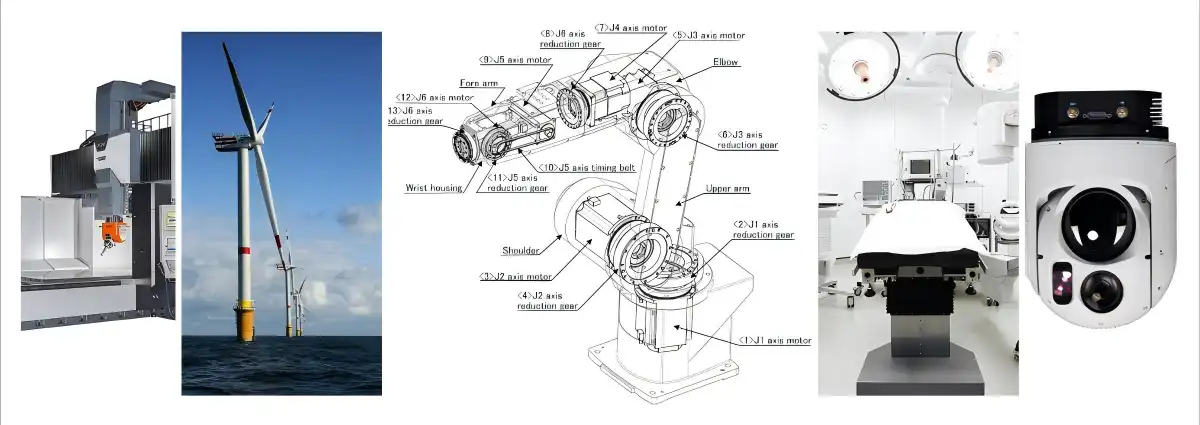
Conclusion
XU100140UU Precision Cross Roller Bearing technology meets important OEM needs for small, rigid rolling support in precision machines. The model is designed to work with mid-range uses by combining load capacity with mounting limitations. The success of procurement relies on carefully studying the application, choosing a supplier that can be trusted, and following strict upkeep procedures. Manufacturers with ISO 9001 and IATF 16949 certifications provide the consistent quality and supply reliability that are needed for production operations to run smoothly around the world. New materials and designs promise even better performance in the future. This makes smart source relationships useful for getting the latest bearing solutions as soon as they're available to the public.
FAQ
What distinguishes the XU100140UU from standard ball bearings?
The crossed-roller design uses line contact instead of point contact, which makes the XU100140UU Precision Cross Roller Bearing structure 3–4 times stiffer and able to handle radial, axial, and moment loads all at the same time in a single, small unit. Integrated ring construction with pre-drilled mounting holes gets rid of the need for separate housings. This means that fewer parts are needed and the assembly process is simpler than with traditional bearing arrangements.
How long do you think these bearings will last?
Service life relies on things like the amount of load, the speed of spinning, the amount of contamination, and the quality of the upkeep. When fitted and kept correctly, units used in moderate-duty industrial automation tasks can usually work for 20,000 to 30,000 hours. Harsh surroundings or not enough grease shorten the life of something by a lot, while the best conditions can make it last longer than 50,000 hours.
Can makers change the size or features?
Manufacturers of well-known bearings who also offer engineering services can change standard designs to fit the needs of a unique project. Changes to the mounting hole patterns, special seal materials for chemical compatibility, custom preload settings, or changes to the dimensions within the tolerances of manufacturing are all common customizations. When compared to catalog items, custom production usually has lower minimum order numbers and longer wait times.
Partner with ATLYC for Reliable Cross Roller Bearing Solutions
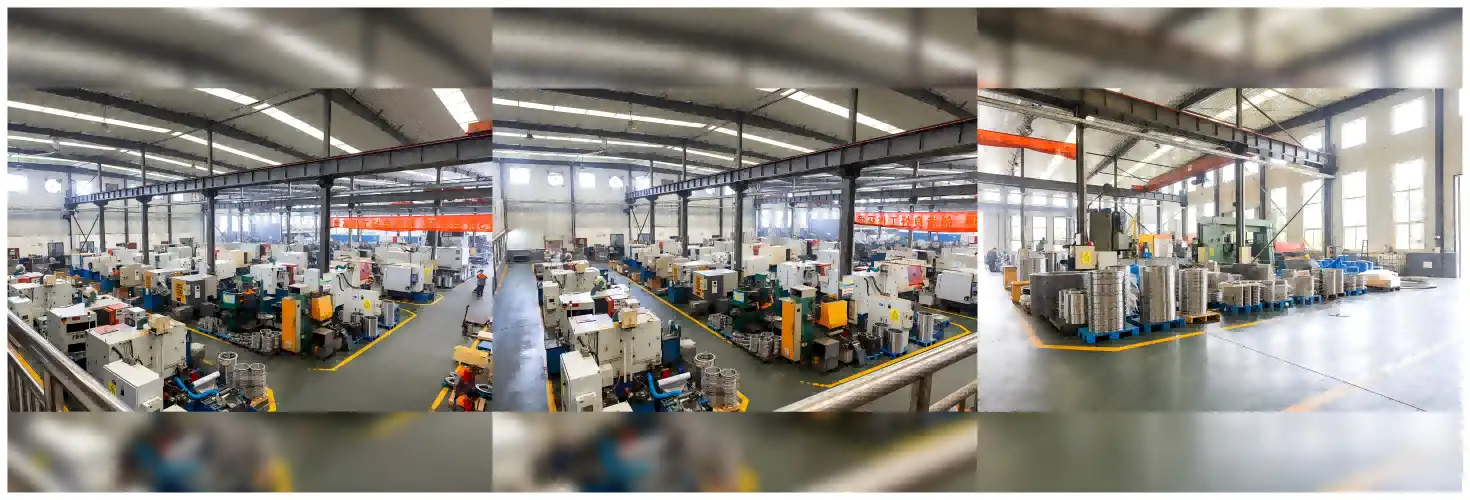
ATLYC has been making XU100140UU Precision Cross Roller Bearings better than anyone else for 15 years, and they sell them to OEMs and makers of industrial equipment around the world. Our ISO 9001 and IATF 16949-certified factories in Luoyang have six specialized workshops with 120 trained workers. They make sure that quality is uniform from choosing the materials to inspecting the finished products. We work with verified cross roller bearing makers that serve customers all over North America. These manufacturers have a history of doing great work in challenging automobile, robotics, and automation applications. Ask for technical details and prices for large quantities for your unique project needs right now. Our engineering team analyzes the application, helps with installation, and provides ongoing technical support to make sure that the bearings work at their best for as long as your equipment lasts. Get in touch with auto@lyautobearing.com to talk about your precision bearing needs with experts who know how important rotating parts are in expensive machinery. At https://aotezhoucheng.aixdb.cn/, you can find out more about the products and find ways to order them.
References
1. Harris, T.A. & Kotzalas, M.N. (2006). Advanced Concepts of Bearing Technology: Rolling Bearing Analysis. CRC Press, Boca Raton, FL.
2. ISO 76:2006. Rolling bearings — Static load ratings. International Organization for Standardization, Geneva, Switzerland.
3. SKF Group. (2018). Rolling Bearings Catalogue: Technical Reference for Precision Bearing Selection. SKF AB, Gothenburg, Sweden.
4. Budynas, R.G. & Nisbett, J.K. (2015). Shigley's Mechanical Engineering Design, 10th Edition. McGraw-Hill Education, New York, NY.
5. Hamrock, B.J., Schmid, S.R. & Jacobson, B.O. (2004). Fundamentals of Fluid Film Lubrication, 2nd Edition. Marcel Dekker, New York, NY.
6. NSK Ltd. (2020). Cross Roller Bearings Technical Guide: Design Principles and Application Engineering. NSK Ltd., Tokyo, Japan.
Learn about our latest products and discounts through SMS or email