- English
- French
- German
- Portuguese
- Spanish
- Russian
- Japanese
- Korean
- Arabic
- Greek
- German
- Turkish
- Italian
- Danish
- Romanian
- Indonesian
- Czech
- Afrikaans
- Swedish
- Polish
- Basque
- Catalan
- Esperanto
- Hindi
- Lao
- Albanian
- Amharic
- Armenian
- Azerbaijani
- Belarusian
- Bengali
- Bosnian
- Bulgarian
- Cebuano
- Chichewa
- Corsican
- Croatian
- Dutch
- Estonian
- Filipino
- Finnish
- Frisian
- Galician
- Georgian
- Gujarati
- Haitian
- Hausa
- Hawaiian
- Hebrew
- Hmong
- Hungarian
- Icelandic
- Igbo
- Javanese
- Kannada
- Kazakh
- Khmer
- Kurdish
- Kyrgyz
- Latin
- Latvian
- Lithuanian
- Luxembou..
- Macedonian
- Malagasy
- Malay
- Malayalam
- Maltese
- Maori
- Marathi
- Mongolian
- Burmese
- Nepali
- Norwegian
- Pashto
- Persian
- Punjabi
- Serbian
- Sesotho
- Sinhala
- Slovak
- Slovenian
- Somali
- Samoan
- Scots Gaelic
- Shona
- Sindhi
- Sundanese
- Swahili
- Tajik
- Tamil
- Telugu
- Thai
- Ukrainian
- Urdu
- Uzbek
- Vietnamese
- Welsh
- Xhosa
- Yiddish
- Yoruba
- Zulu
What Are SX011814 Cross Roller Bearing Technical Specs?
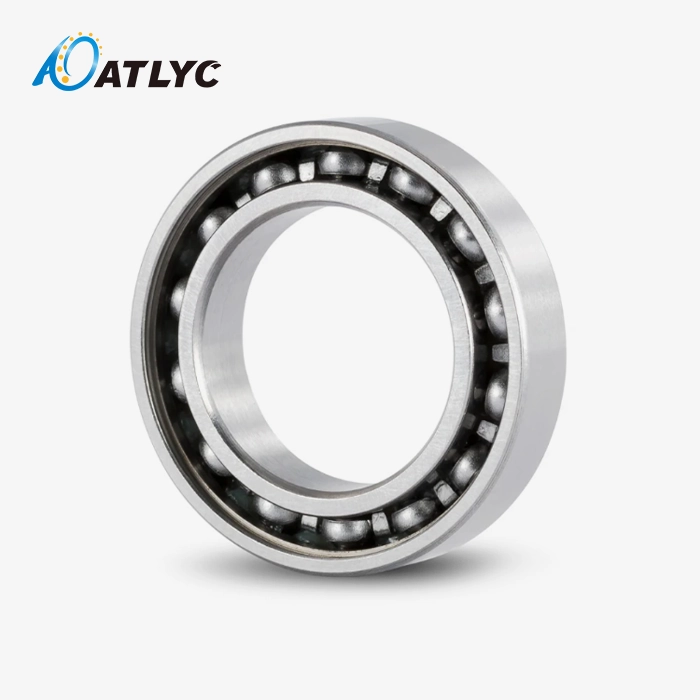
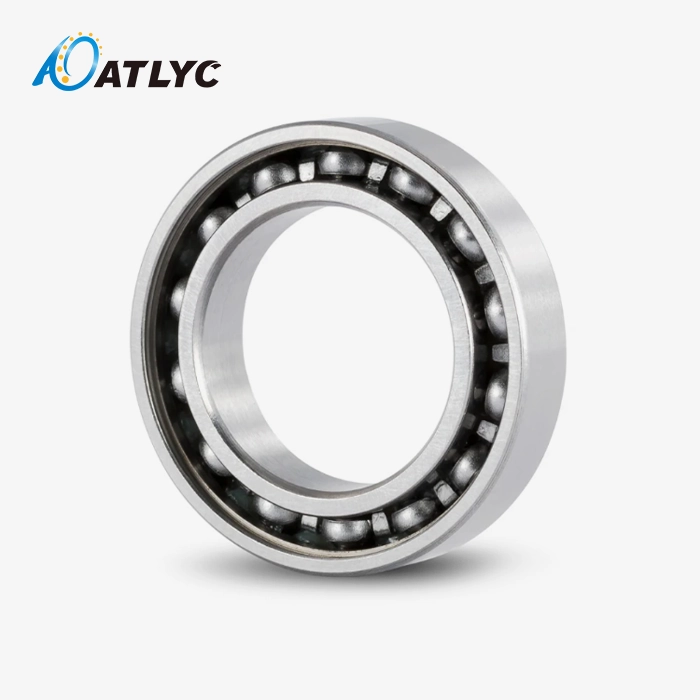
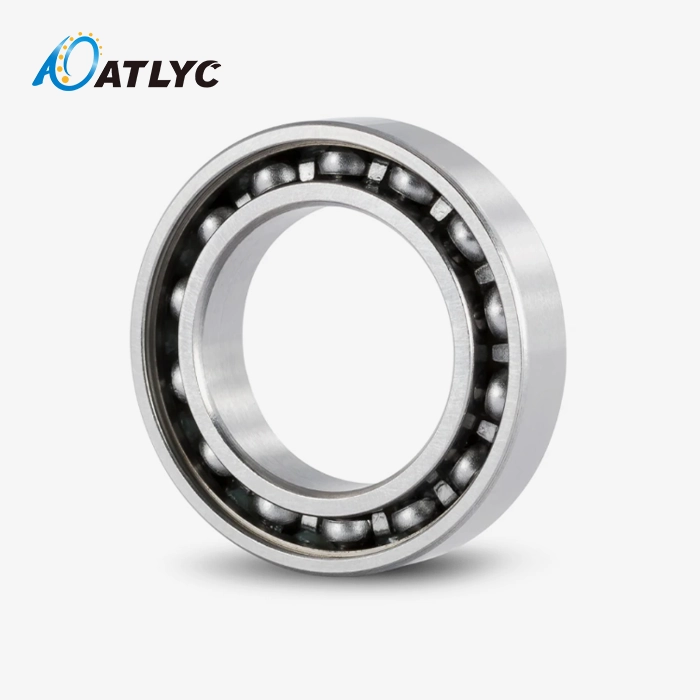
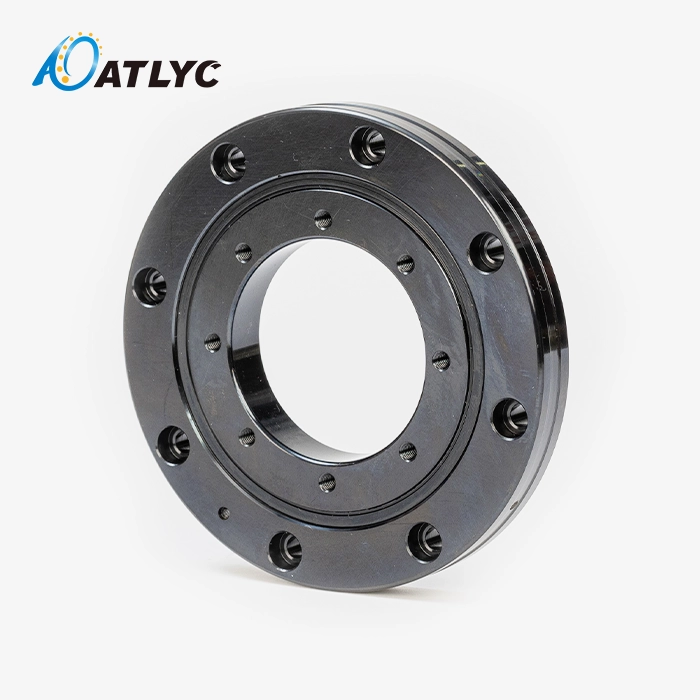
The SX011814 Cross roller bearing represents a breakthrough in ultra-thin, high-precision bearing design tailored for demanding industrial applications. This specialized component features a 70mm inner diameter, 90mm outer diameter, and merely 10mm width, making it exceptionally space-efficient. Its cross-roller configuration arranges cylindrical rollers at alternating 90-degree angles within precision V-groove raceways, enabling simultaneous handling of radial, axial, and moment loads through a single bearing unit. The split outer ring secured by three fastening rings and the integral inner ring structure deliver exceptional rotational accuracy while maintaining superior geometric rigidity—qualities essential for robotics, precision machining centers, and medical imaging equipment where space constraints meet performance demands.
Understanding the Cross Roller Bearing Design Philosophy
When our engineering team at Luoyang Auto Bearing began producing precision components fifteen years ago, we recognized a persistent challenge facing equipment manufacturers: balancing compact dimensions with multi-directional load capacity. Traditional ball bearings couldn't meet rigidity requirements, while larger slewing ring designs consumed excessive mounting space.
The cross roller bearing emerged as an elegant solution to this engineering paradox. Unlike conventional designs relying on point contact, this bearing type employs cylindrical rollers positioned perpendicular to one another. This arrangement creates line contact surfaces along precision-machined V-groove raceways, fundamentally altering how loads distribute across the bearing assembly.
What makes this design particularly effective is its ability to replace dual-bearing setups. In robotic joint assemblies, engineers previously mounted two angular contact ball bearings in tandem to manage complex loads. The cross roller configuration consolidates this function into a single, compact unit, reducing assembly complexity and eliminating alignment concerns between paired components.
Our manufacturing experience shows this structural approach delivers three to four times greater rigidity compared to equivalent-sized ball bearings. The alternating roller orientation ensures optimal load distribution regardless of force direction, making these components ideal for applications experiencing variable loading conditions throughout operational cycles.
Detailed Technical Specifications and Core Parameters
The specifications defining this precision component directly influence its suitability for specific industrial applications. Understanding these parameters helps procurement professionals match bearing capabilities to operational requirements.
Dimensional Characteristics
The bearing measures 70mm across its bore diameter, accommodating standard shaft sizes common in robotic arms and indexing tables. Its 90mm outer diameter maintains a compact footprint, while the 10mm sectional height represents the ultra-thin profile characteristic of the SX series. This dimensional ratio provides maximum load capacity within minimal radial space—a critical consideration when designing compact automation equipment.
Material Composition and Heat Treatment
We manufacture these components from GCr15 or GCr15SiMn high-carbon chromium bearing steel. The material selection directly impacts wear resistance and fatigue life under continuous operation. Through controlled heat treatment processes, we achieve a hardness range of HRC 60-64 across critical contact surfaces. This hardness specification ensures the bearing maintains dimensional stability even when subjected to sustained heavy loads.
The V-groove raceways undergo precision grinding to achieve surface finishes below 0.2 Ra, minimizing friction and extending lubrication intervals. Our quality control procedures verify these surface characteristics before assembly, ensuring consistent performance across production batches.
Load Capacity and Performance Metrics
Dynamic load ratings indicate the bearing's capacity to withstand variable forces during rotation. The cross roller configuration handles radial forces, axial thrust, and tilting moments simultaneously—a combination that would require multiple bearing arrangements in conventional designs. Static load capacity defines the maximum force tolerance when stationary, relevant during equipment positioning or emergency stops.
The low friction coefficient inherent to this design enables smooth rotation even at slow speeds, crucial for precision positioning applications. Runout accuracy specifications typically fall within sub-micron tolerances for higher precision grades, ensuring minimal positional error during indexing operations.
Precision Classes and Tolerance Standards
Available precision grades for the SX011814 Cross roller bearing span P6, P0, P5, P4, and P2 classifications according to ISO standards. Standard industrial applications typically specify P5 or P4 grades, while ultra-precision machine tools and measuring instruments require P2 grade components. Each precision level defines tighter tolerances for bore diameter variation, outer diameter concentricity, and raceway runout.
These specifications directly correlate with achievable positioning accuracy in end applications. A robotic arm joint using P4 grade bearings maintains repeatable positioning within micrometers across millions of cycles—performance impossible with lower precision grades.
Structural Design Features That Enhance Performance
The engineering details distinguishing this bearing type from alternatives reveal why it excels in specific applications. Our manufacturing experience highlights several design elements that directly contribute to operational advantages.
The split outer ring design represents a key innovation addressing both assembly requirements and performance optimization. This configuration allows precise clearance adjustment during installation, enabling technicians to apply a controlled preload that eliminates internal play. Three fastening rings secure the outer ring halves, distributing clamping force evenly to maintain structural integrity under operational loads.
The integral inner ring construction ensures optimal rotational accuracy by eliminating potential misalignment between ring segments. This design choice makes the bearing particularly suitable for applications where the inner ring rotates relative to a stationary housing—the most common configuration in robotic joints and rotating table assemblies.
Plastic spacers positioned between individual rollers serve a critical function beyond simple separation. These components prevent roller-to-roller contact that would generate friction and heat, while also maintaining consistent spacing that optimizes load distribution. The spacer material selection balances strength requirements with the need to avoid damage to hardened steel roller surfaces during operation.
The V-groove raceway geometry deserves particular attention. This profile creates precise line contact between rollers and raceways, distributing loads across elongated contact patches rather than concentrated points. The result is exceptional geometric moment rigidity—the bearing's resistance to angular deflection under tilting loads remains remarkably high even when supporting cantilevered masses.
We've observed through testing that this rigidity characteristic prevents the elastic deformation that compromises positional accuracy in precision machinery. When a machining center rotary table experiences cutting forces, the bearing maintains angular stability, ensuring the workpiece position remains constant relative to cutting tools.
Comparative Advantages in Industrial Applications
Evaluating this bearing against alternative solutions reveals distinct performance benefits that justify specification decisions for demanding applications. Our work with equipment manufacturers across automotive and industrial sectors provides practical insight into these advantages.
Rigidity and Load Capacity Comparisons
Standard ball bearings using point contact cannot match the load capacity achieved through line contact design. Testing data from our quality laboratory demonstrates that equivalent-sized ball bearings fail under loads that this cross roller design handles routinely. The difference becomes particularly significant when moment loads enter the equation—tilting forces that ball bearings resist poorly.
Conventional crossed roller bearings with solid rings require larger cross-sections to achieve comparable performance. The split ring design eliminates this constraint, delivering equivalent rigidity in a more compact envelope. Equipment designers gain valuable mounting space without compromising structural integrity.
Space Efficiency Benefits
The ultra-thin profile measuring merely 10mm in width enables integration into assemblies where axial space limitations would prohibit thicker bearing arrangements. We've supplied these components for collaborative robot joints where designers allocated minimal space for rotation mechanisms, prioritizing compact limb profiles for workspace accessibility.
Replacing dual angular contact ball bearings with a single cross roller unit reduces both axial length and assembly complexity. Procurement teams appreciate the cost savings from simplified housing designs and reduced component counts, while maintenance personnel benefit from fewer potential failure points.
Operational Smoothness and Precision
The low friction coefficient inherent to properly lubricated cylindrical roller contact enables exceptionally smooth rotation. Precision measuring instruments depend on this characteristic to avoid introducing positional errors during slow-speed indexing movements. Medical imaging equipment similarly requires vibration-free rotation to prevent image quality degradation.
Runout accuracy maintained across operational life ensures consistent performance of the SX011814 Cross roller bearing throughout its service period. Unlike ball bearings, where contact stress concentrations can cause premature raceway spalling, the distributed loads in cross roller designs extend fatigue life significantly. Our warranty data shows considerably fewer premature failures compared to ball bearing applications operating under similar conditions.
Application Environments and Industry Use Cases
The technical specifications translate into practical advantages across diverse industrial sectors. Understanding typical application scenarios helps engineers recognize where this bearing technology delivers optimal value.
Industrial Robotics and Automation Systems
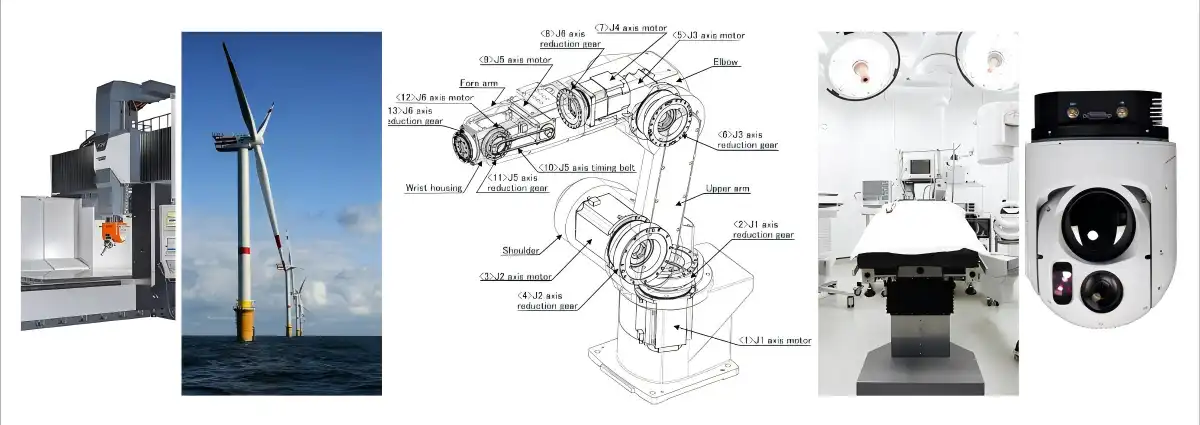
Robotic arm joints represent perhaps the most demanding application for precision bearings. The combination of continuous rotational movement, variable load directions, and accuracy requirements pushes components to operational limits. Cross roller bearings in six-axis collaborative robots handle the complex compound loads generated during rapid acceleration and deceleration cycles, maintaining repeatability tolerances critical for assembly operations.
Our supplied components operate reliably in both cleanroom environments for electronics manufacturing and harsh industrial settings involving cutting fluid exposure and temperature fluctuations. The bearing's sealed design options protect internal elements from contamination that would compromise precision.
Precision Machining Centers and Rotary Tables
Vertical machining center indexing tables require bearings that maintain angular positioning accuracy under substantial cutting forces. The geometric moment rigidity of cross roller designs prevents angular deflection that would affect surface finish quality on machined components. Manufacturers appreciate the consistent performance across production runs, ensuring dimensional tolerances remain within specification.
The bearing's capacity to handle moment loads proves particularly valuable when milling operations create cantilevered cutting forces. Table rotation occurs smoothly despite these destabilizing influences, supporting high-quality machining operations without introducing positional errors.
Medical Imaging and Diagnostic Equipment
CT scanner rotating gantries demonstrate another demanding application where this bearing technology excels. The heavy overhanging weight of scanner mechanisms creates substantial moment loads, while operational requirements demand nearly silent, vibration-free rotation. Precision grades ensure the X-ray source and detector array maintain precise spatial relationships throughout rotation, directly influencing image quality.
Temperature-controlled clinical environments and sterilization requirements necessitate robust bearing designs resistant to cleaning agents and thermal cycling. Our medical equipment customers specify high-quality seals and corrosion-resistant treatments to ensure reliable operation throughout extended service intervals.
Semiconductor Manufacturing and Measuring Instruments
IC manufacturing devices and precision measuring instruments represent ultra-high accuracy applications where even sub-micron positioning errors prove unacceptable. P2 precision grade cross roller bearings deliver the exceptional runout accuracy these applications demand, enabling measurement repeatability at nanometer scales.
The bearing's thermal stability ensures dimensional consistency across temperature variations within controlled production environments. Equipment calibration intervals extend significantly when bearing performance remains consistent, reducing operational costs and improving production uptime.
Maintenance Strategies for Extended Service Life
Maximizing bearing longevity requires systematic maintenance approaches tailored to operational conditions. Our technical support experience identifies key practices that prevent premature failures and optimize performance throughout service life.
Lubrication Requirements and Schedules
Proper lubrication forms the foundation of effective bearing maintenance. We recommend lithium soap base greases with extreme pressure additives for most industrial applications. The grease quantity should fill approximately 30-40% of available free space—excessive grease generates churning resistance that elevates operating temperatures, while insufficient lubrication allows metal-to-metal contact.
Relubrication intervals depend on operational factors including rotational speed, load intensity, and environmental contamination levels. High-speed applications generating elevated temperatures require more frequent attention than slow-speed precision positioning equipment. Establishing condition-based monitoring rather than fixed-interval servicing often proves more effective, particularly in critical production machinery.
Inspection Protocols and Warning Signs
Regular visual inspections should examine mounting surfaces for signs of fretting corrosion, indicating improper fits or inadequate clamping force. Technicians trained to recognize early warning signs can identify developing issues before catastrophic failures occur. Abnormal noise during rotation often signals inadequate lubrication or contamination introduction, requiring immediate investigation.
Temperature monitoring provides valuable insight into bearing condition. Gradual temperature increases suggest lubrication degradation or the accumulation of wear debris within the bearing assembly. Vibration analysis detects developing defects in raceway surfaces or roller elements, enabling planned maintenance before unexpected downtime.
Common Failure Modes and Prevention
Premature failures typically trace to installation errors, lubrication deficiencies, or contamination introduction. Ensuring proper bearing fit during installation prevents subsequent problems—excessive interference generates internal stress, raising operating temperatures, while insufficient interference allows relative motion between mating surfaces that causes fretting wear.
Contamination from cutting fluids, process chemicals, or abrasive particles dramatically shortens the life of the SX011814 Cross roller bearing. Specifying appropriate seal configurations during procurement protects internal elements from environmental hazards specific to operational conditions. We work with equipment manufacturers to identify seal requirements matching their application environments.
Strategic Procurement Considerations for Industrial Buyers
Global B2B procurement professionals face unique challenges when sourcing precision bearings for critical applications. Our fifteen years of serving international markets provide perspective on factors that ensure successful supplier relationships and component performance.
Supplier Evaluation and Quality Verification
Certified quality management systems indicate a manufacturer's commitment to consistent production standards. Our ISO 9001 and IATF 16949 certifications demonstrate compliance with automotive industry quality requirements—standards applicable across industrial sectors demanding reliable component performance. These certifications require regular audits verifying that quality procedures remain effective throughout production processes.
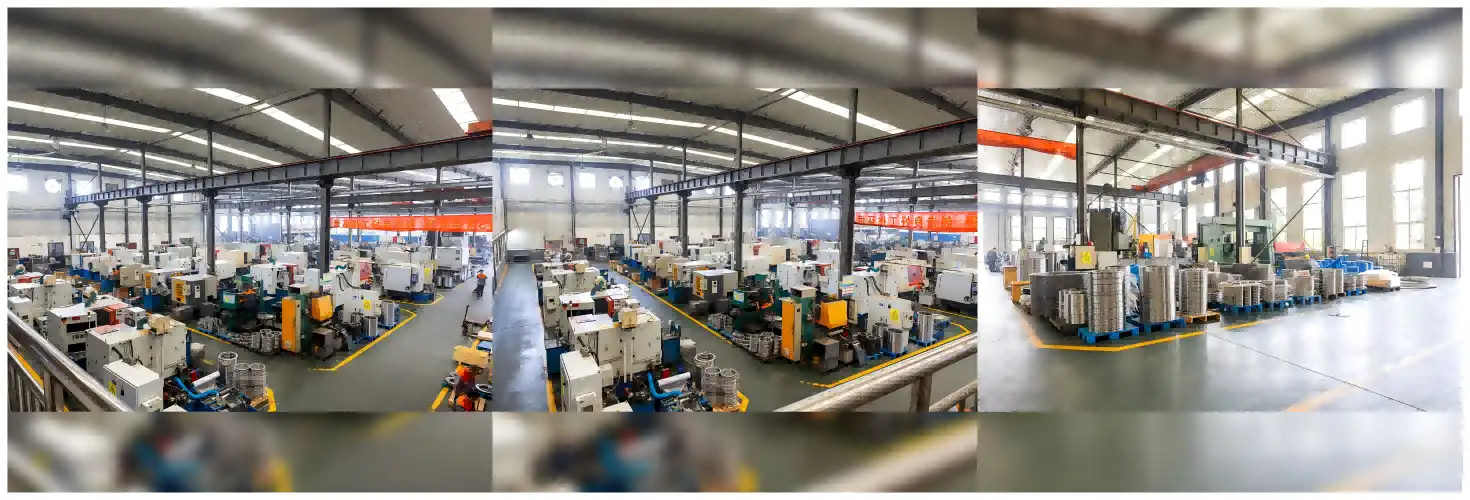
Manufacturing capacity directly influences delivery reliability, particularly for large orders supporting production ramp-ups or new equipment launches. Our six production workshops enable flexible scheduling that accommodates varying order volumes without compromising lead times. Procurement teams should assess potential suppliers' production scale relative to anticipated demand patterns.
Technical support capabilities distinguish suppliers who merely produce components from partners invested in customer success. Our engineering staff provides application consultation, helping customers select optimal bearing specifications for specific operational requirements. This support extends through installation guidance and troubleshooting assistance when questions arise during equipment commissioning.
Customization Options and Engineering Support
Standard catalog specifications suit many applications, yet custom requirements frequently emerge in specialized equipment designs. Modified dimensions, alternative seal configurations, or specialized coatings enable precise adaptation to unique project constraints. We maintain engineering capabilities to evaluate custom bearing requests, providing feasibility assessments and modified designs that meet performance objectives.
Prototype quantities allow validation testing before committing to production volumes. Equipment manufacturers developing new machinery appreciate suppliers willing to support development phases with flexible minimum order quantities. This approach reduces financial risk while enabling thorough compatibility verification within actual operational conditions.
Pricing Strategies and Total Cost Considerations
Volume pricing structures reward customers for consolidating purchases with reliable suppliers. Beyond unit price reductions, streamlined procurement through fewer vendors reduces administrative overhead and simplifies quality management processes. Long-term supply agreements often secure favorable pricing while ensuring component availability throughout product lifecycles.
Evaluating the total cost of ownership rather than the initial purchase price provides more accurate economic assessments. Extended service life, reduced maintenance requirements, and improved equipment uptime contribute value beyond component acquisition costs. Higher-quality bearings commanding premium prices frequently deliver superior return on investment through enhanced operational reliability.
Logistics and Supply Chain Management
Lead time predictability enables effective production planning, particularly for equipment manufacturers coordinating multiple component deliveries for assembly schedules. Our established relationships with international shipping partners facilitate reliable delivery to customers across North America, Europe, and other global markets. Understanding typical transit times allows procurement professionals to balance inventory holding costs against stockout risks.
Minimum order quantities influence inventory management strategies. Suppliers offering reasonable minimums accommodate customers preferring frequent, smaller shipments that reduce warehousing requirements. Conversely, consolidated shipments may achieve lower per-unit freight costs for customers with adequate storage capacity and stable demand patterns.
Conclusion
The technical specifications and performance characteristics of precision cross roller bearings, including the SX011814 Cross roller bearing, directly influence equipment capabilities across industrial robotics, medical imaging, semiconductor manufacturing, and precision machining applications. The 70mm bore, 90mm outer diameter, and 10mm width deliver exceptional load capacity and rigidity within a remarkably compact envelope. Understanding dimensional parameters, material properties, precision grades, and structural design elements empowers engineers and procurement professionals to make informed specification decisions. Comparative advantages over ball bearings and conventional crossed roller designs justify the technology for demanding applications requiring multi-directional load capacity and superior rotational accuracy. Strategic supplier relationships founded on quality certifications, technical support capabilities, and reliable delivery performance ensure long-term component availability supporting critical production equipment. Proper maintenance practices, including appropriate lubrication and systematic inspections, maximize service life and operational reliability throughout bearing lifecycles.
FAQ
What distinguishes this bearing from standard ball bearing designs?
The cross roller configuration employs cylindrical rollers positioned at alternating 90-degree angles, creating line contact surfaces rather than the point contact characteristic of ball bearings. This structural difference delivers three to four times greater rigidity while simultaneously handling radial, axial, and moment loads through a single bearing unit. Ball bearings typically require dual arrangements to manage complex loads, whereas the cross roller design consolidates this function, reducing assembly complexity and mounting space requirements.
How does precision grade selection affect application performance?
Higher precision grades (P4, P2) maintain tighter dimensional tolerances for bore concentricity, raceway runout, and overall geometric accuracy. Applications requiring sub-micron positioning repeatability, such as measuring instruments or semiconductor manufacturing equipment, necessitate P2 grade specifications. Standard industrial machinery, including robotic arms and machining center rotary tables, typically performs satisfactorily with P5 or P4 grades, balancing cost considerations against accuracy requirements.
What installation considerations prevent premature bearing failure?
Proper shaft and housing fits prove critical—the inner ring typically requires transition fits (h7 or js7), ensuring centered mounting without excessive interference stress, while the outer ring needs clearance fits (H7), preventing compression of the split ring assembly. During installation, technicians must avoid disassembling the outer ring halves unnecessarily, as reassembly without proper tooling compromises preload settings and structural integrity. Applying appropriate clamping force through mounting flanges maintains bearing geometry throughout operational loads.
Partner with ATLYC for Precision Bearing Solutions
Luoyang Auto Bearing Co., Ltd., operating under the ATLYC brand, combines fifteen years of manufacturing excellence with comprehensive technical support tailored to your precision bearing requirements for SX011814 Cross roller bearing and other models in our crossed roller series. Our ISO 9001 and IATF 16949 certified production facilities employ 120 skilled professionals dedicated to delivering consistent quality across six specialized workshops. As an experienced manufacturer serving automotive OEMs, industrial machinery producers, and global distributors across North America, Europe, and emerging markets, we understand the critical importance of reliable supply chains and technical partnerships. Whether you need standard catalog specifications or custom-engineered solutions, our team provides application consultation, competitive factory-direct pricing, and flexible lead times supporting your production schedules. Contact our technical sales specialists at auto@lyautobearing.com to discuss your specific application requirements and receive detailed quotations. We welcome sample requests enabling compatibility validation before production commitments, ensuring the bearing solutions we provide deliver optimal performance within your operational environment.
References
1. Harris, T.A., and Kotzalas, M.N. (2006). Advanced Concepts of Bearing Technology: Rolling Bearing Analysis, Fifth Edition. CRC Press, Taylor & Francis Group.
2. ISO 492:2014. Rolling bearings — Radial bearings — Geometrical product specifications (GPS) and tolerance values. International Organization for Standardization.
3. Weck, M., and Brecher, C. (2006). Werkzeugmaschinen 2: Konstruktion und Berechnung [Machine Tools 2: Design and Calculation]. Springer-Verlag Berlin Heidelberg.
4. Schaeffler Technologies AG & Co. KG. (2016). Crossed Roller Bearings: Design, Variants, Applications. Technical Documentation, Industrial Distribution Division.
5. Budynas, R.G., and Nisbett, J.K. (2015). Shigley's Mechanical Engineering Design, Tenth Edition. McGraw-Hill Education.
6. IATF 16949:2016. Quality management system requirements for automotive production and relevant service parts organizations. International Automotive Task Force.
Learn about our latest products and discounts through SMS or email