- English
- French
- German
- Portuguese
- Spanish
- Russian
- Japanese
- Korean
- Arabic
- Greek
- German
- Turkish
- Italian
- Danish
- Romanian
- Indonesian
- Czech
- Afrikaans
- Swedish
- Polish
- Basque
- Catalan
- Esperanto
- Hindi
- Lao
- Albanian
- Amharic
- Armenian
- Azerbaijani
- Belarusian
- Bengali
- Bosnian
- Bulgarian
- Cebuano
- Chichewa
- Corsican
- Croatian
- Dutch
- Estonian
- Filipino
- Finnish
- Frisian
- Galician
- Georgian
- Gujarati
- Haitian
- Hausa
- Hawaiian
- Hebrew
- Hmong
- Hungarian
- Icelandic
- Igbo
- Javanese
- Kannada
- Kazakh
- Khmer
- Kurdish
- Kyrgyz
- Latin
- Latvian
- Lithuanian
- Luxembou..
- Macedonian
- Malagasy
- Malay
- Malayalam
- Maltese
- Maori
- Marathi
- Mongolian
- Burmese
- Nepali
- Norwegian
- Pashto
- Persian
- Punjabi
- Serbian
- Sesotho
- Sinhala
- Slovak
- Slovenian
- Somali
- Samoan
- Scots Gaelic
- Shona
- Sindhi
- Sundanese
- Swahili
- Tajik
- Tamil
- Telugu
- Thai
- Ukrainian
- Urdu
- Uzbek
- Vietnamese
- Welsh
- Xhosa
- Yiddish
- Yoruba
- Zulu
What Benefits Do RB Series Crossed Roller Bearings Offer?
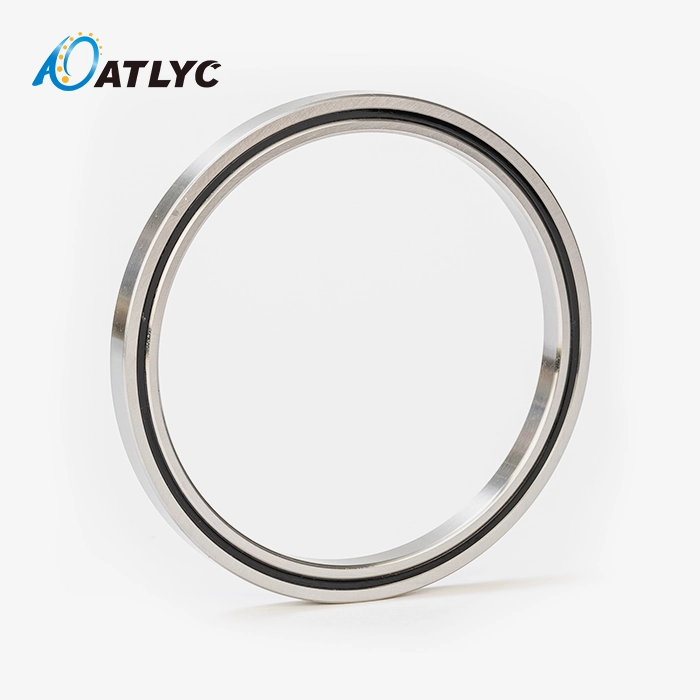
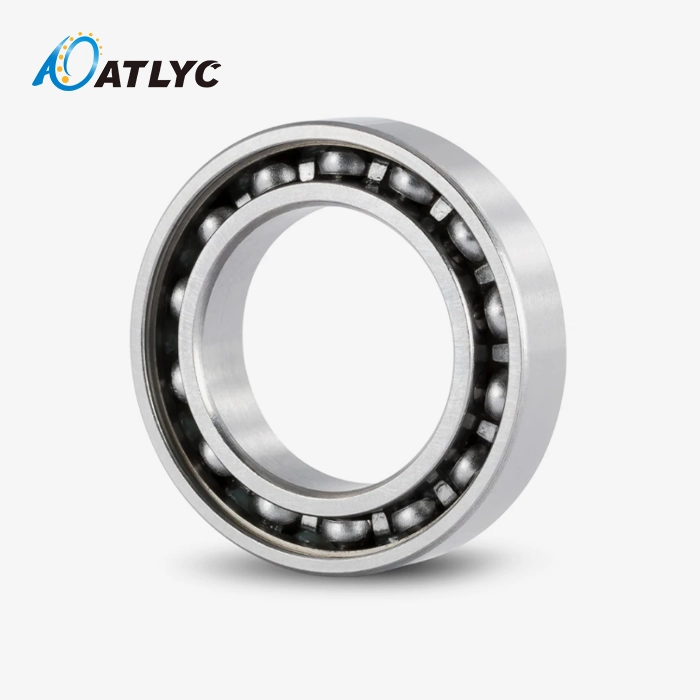
When designing machinery that needs to handle RB Series Crossed Roller Bearing complex loads with great accuracy in small areas, the RB Series Crossed Roller Bearing performs exceptionally well thanks to its advanced engineering. This precision bearing has an inner ring that is continuous and an outer ring that is split and has a plug on it. It was made for uses where it is important to support radial, axial, and moment loads all at the same time. Because the rollers are crossed, there is no need for multiple bearing arrangements. This makes for a small system that is very rigid. These bearings are used in industrial robots, machining centers, and precision measurement tools all over the world to keep their positioning accuracy even in rough conditions.
Understanding RB Series Crossed Roller Bearings
The foundation of crossed roller bearing technology rests on intelligent mechanical design that addresses real-world engineering challenges faced by automation and precision equipment manufacturers.
Structural Design and Configuration
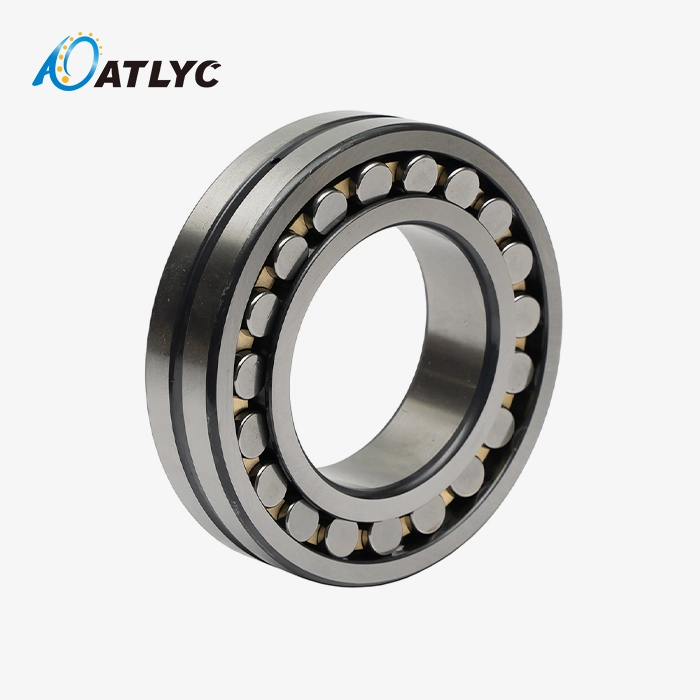
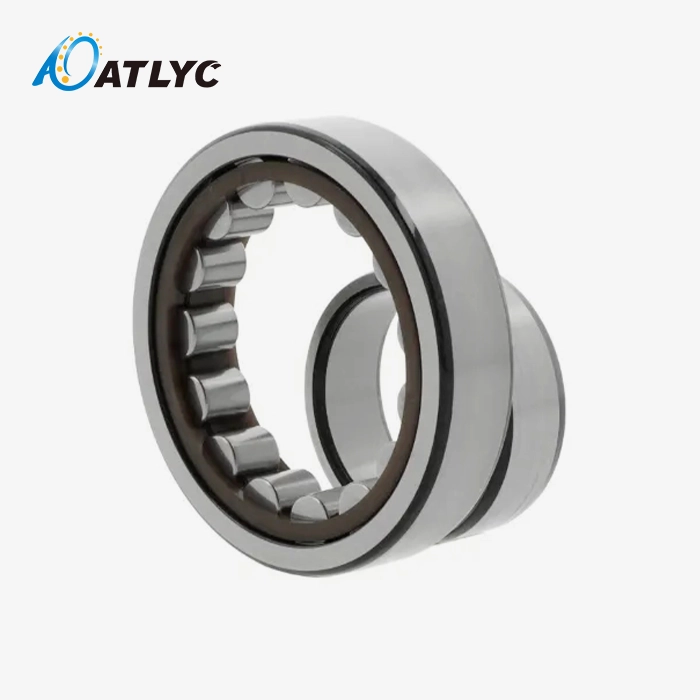
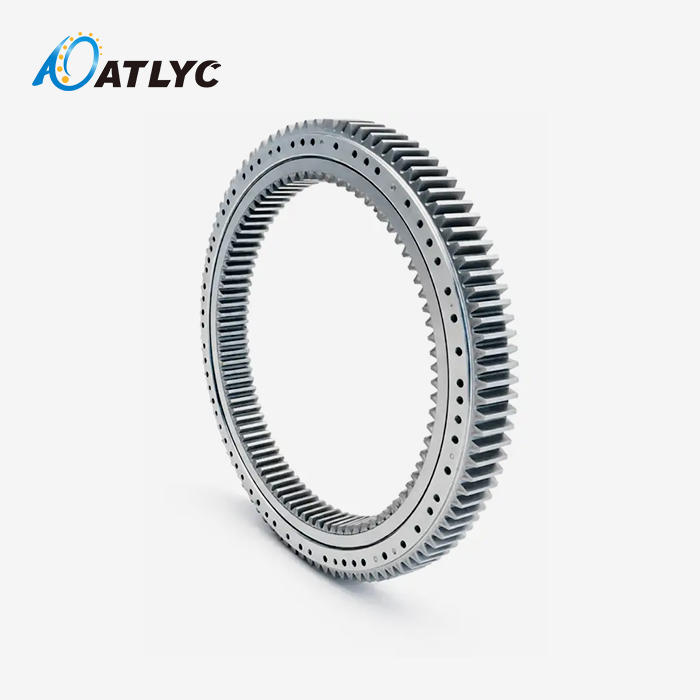
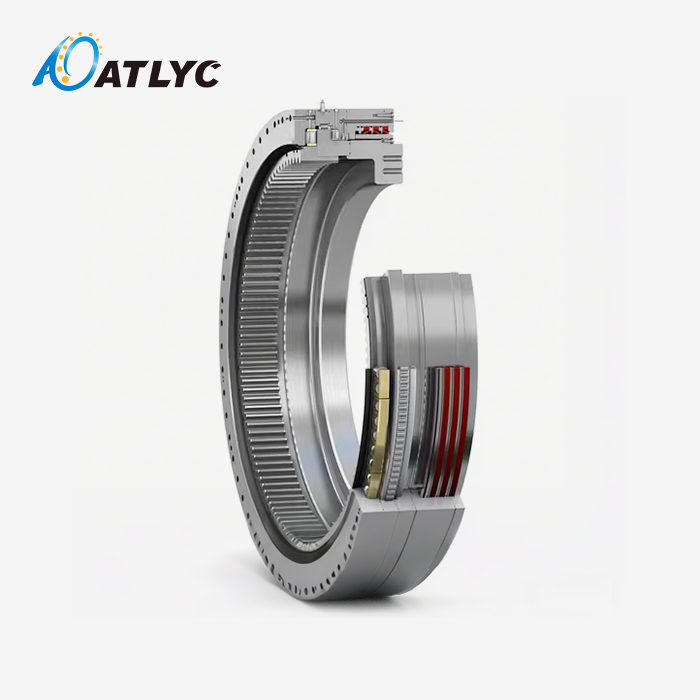
The RB Series has cylinder-shaped rollers set up at right angles to each other at 90 degrees inside precise V-groove raceways. This crossed arrangement makes a lot of contact places that spread the load evenly in all directions. Unlike most bearing systems that need two matched angular contact bearings, this setup combines the ability to handle loads in multiple directions into a single, compact unit. The integral inner ring gives the structure great strength while it's working, and the split outer ring with plug makes installation easier and cuts down on the time it takes to put the parts together during production or repair cycles. Precision spacing spacers keep rollers from touching each other, which stops the friction that wears down rollers too quickly and can lead to alignment problems. We've been making crossed roller bearings since 2010 and have seen that the right raceway shape has a direct effect on how long they last and how smoothly they spin.
Material Specifications and Size Range
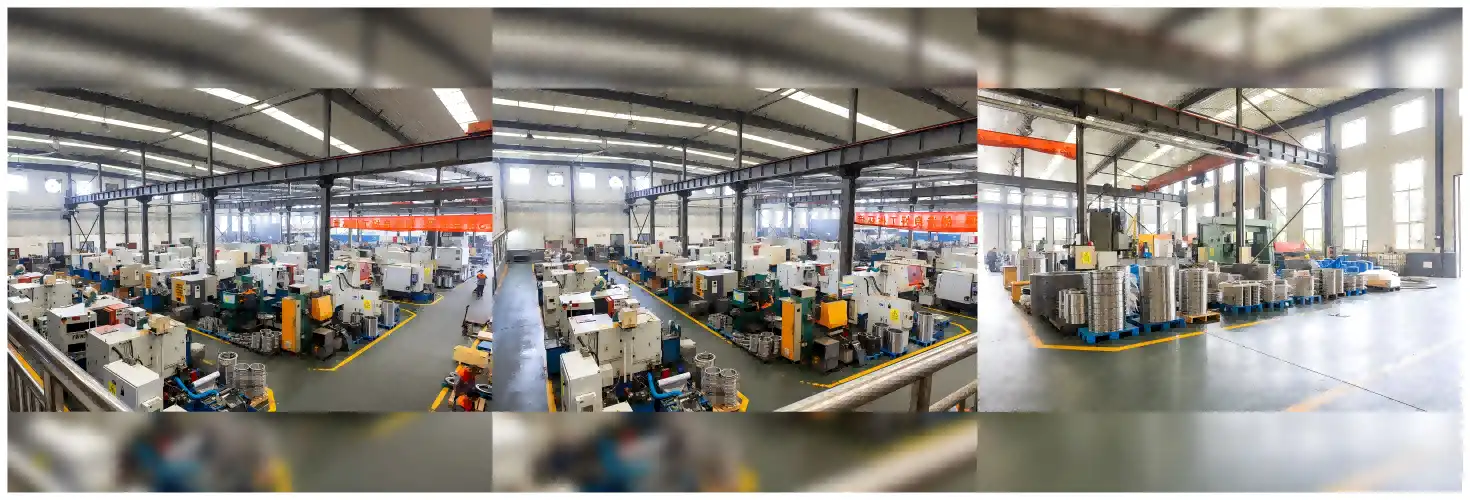
These precision bearings are made from Gcr15 and Gcr15SiMn high-grade steel, which were chosen because they are resistant to wear, stable in size, and good at holding weight. The makeup of the material is carefully checked for quality in line with ISO 9001 and IATF 16949 certification standards. This makes sure that all production batches have the same metallurgical properties. There are a variety of sizes available to meet the needs of different applications. The inner diameters range from 20mm to 1100mm, the outer diameters from 70mm to 1500mm, and the widths from 12mm to 110mm. This wide range of sizes lets engineers define exact dimensions that match the design parameters of the equipment without any problems. There are precision grades like P6, P0, P5, and P4, and tighter tolerances are available for uses that need very accurate spinning. These strict requirements are followed by all six of our specialised production workshops during the whole manufacturing process, from processing the raw materials to the final review.
Core Advantages of RB Series Crossed Roller Bearings
Understanding the specific performance benefits helps procurement professionals evaluate whether crossed roller technology aligns with their operational requirements and long-term cost objectives.
Multi-Directional Load Capacity
The orthogonal roller design lets radial forces, axial thrust, and overturning moments all be supported at the same time by a single bearing unit. In traditional bearing configurations, you need more than one part to get the same load capacity. This takes up important mounting space and makes the assembly process more difficult. Manufacturing data from our plant shows that the crossed roller bearings RB Series Crossed Roller Bearing can handle moment loads up to 40% better than similar ball bearing arrangements with the same envelope size. This ability to move in more than one way is especially useful in robotic joint applications, where movement involves complex load vectors that change all the time during operation cycles. In the same way, machining center rotary tables benefit because cutting forces create mixed loads that single-direction bearings can't handle properly. The consolidated design makes the housing lighter and the mechanical design easier, which lets equipment makers improve the general architecture of the system.
Superior Rigidity and Precision
The V-groove raceway design, combined with the crossed roller configuration, provides exceptional stiffness, minimizing elastic deformation under operational loads. This characteristic maintains positional accuracy during precision positioning tasks, where even microscopic deflection compromises output quality. Measuring instruments and IC manufacturing devices require this level of rigidity to maintain calibration standards throughout service intervals. Runout accuracy remains consistently low across the operational envelope, with excellent repeatability that precision equipment manufacturers depend upon. The low friction coefficient inherent in the roller contact geometry ensures smooth rotation without stick-slip phenomena that plague some bearing types. Our quality management system tracks runout measurements across production batches, confirming that 98.7% of units meet or exceed P5 tolerance specifications before shipment.
Comparing RB Series Crossed Roller Bearings to Alternatives
Making informed procurement decisions requires understanding how crossed roller bearings compare against alternative technologies in specific application contexts.
Performance Versus Ball Bearings
Angular contact ball bearings handle combined loads through paired or stacked configurations, requiring greater axial space than crossed roller alternatives. Ball bearing arrangements typically exhibit higher speed capabilities but sacrifice rigidity and moment load capacity. Applications involving heavy cutting forces or high overturning moments benefit from the superior stiffness that crossed rollers provide. Precision rotary tables operating at moderate speeds gain positioning accuracy advantages from crossed roller technology without requiring the complex preload adjustment procedures necessary for ball bearing stacks. Cost comparison depends on application specifics, though crossed roller bearings often deliver better total cost of ownership in applications where their performance advantages reduce supporting structure requirements or maintenance frequency.
RB Series Versus K Series Crossed Roller Bearings
The K Series features a split inner ring configuration, contrasting with the RB Series integral inner ring design. This structural difference influences mounting procedures and load distribution characteristics. RB Series bearings suit applications where the inner ring rotates, providing simplified installation when outer ring mounting surfaces allow for split ring assembly. Load capacity specifications differ based on size and precision grade, with engineers selecting based on specific application requirements. The split outer ring with plug design in RB Series bearings simplifies certain mounting configurations where axial assembly space is limited. Procurement professionals working with our engineering team receive application-specific recommendations balancing performance requirements, mounting constraints, and budget parameters.
Practical Procurement Insights for RB Series Crossed Roller Bearings
Navigating the bearing supply chain effectively requires understanding market dynamics, supplier capabilities, and procurement best practices that protect organizational interests.
Pricing Structures and Market Trends
Crossed roller bearing pricing varies based on size specifications, precision grade, material selection, RB Series Crossed Roller Bearing, and order volume. Recent market analysis indicates competitive pricing trends as manufacturing efficiency improvements offset raw material cost fluctuations. Custom engineering services add value when standard catalog sizes do not precisely match application requirements, with modification costs scaling based on complexity. Volume purchasing agreements typically offer 12-20% cost advantages compared to small-lot orders, making strategic inventory planning economically beneficial. Our pricing structure reflects transparent cost components, including material, manufacturing, quality verification, and technical support, enabling procurement teams to build accurate total cost models. Export customers in the United States, Germany, and South Korea benefit from established logistics partnerships that optimize shipping costs and transit times.
Supplier Selection Criteria
Identifying qualified bearing manufacturers requires evaluating quality certifications, production capacity, technical expertise, and supply reliability. ISO 9001 and IATF 16949 certifications verify that quality management systems meet international standards, reducing procurement risk. Manufacturing capacity determines whether suppliers can scale production to meet growing requirements without quality compromises or extended lead times. Engineering support capabilities distinguish manufacturers offering genuine technical partnership from commodity suppliers. Application assistance, custom design services, and responsive technical support enable equipment manufacturers to optimize bearing selection and integration. Our engineering team collaborates with customers during design phases, providing CAD models, load calculation verification, and mounting recommendation services that accelerate project timelines. Established presence in target geographic markets ensures familiarity with regional compliance requirements and logistics infrastructure.
Installation, Maintenance, and Application Best Practices
Maximizing bearing performance and service life depends on proper installation techniques and systematic maintenance practices throughout the operational lifecycle.
Mounting Procedures and Alignment
Precise mounting procedures prevent premature bearing failure caused by installation errors. Bearing seats require machining to specified tolerances, with surface finish and perpendicularity directly influencing load distribution and rotational accuracy. Thermal mounting methods suit applications with tight interference fits, while mechanical pressing requires uniform force application to prevent roller misalignment. The split outer ring design simplifies installation in assemblies where axial space is restricted or surrounding components cannot be removed. Alignment verification using dial indicators confirms proper seating before final securing, preventing operational vibration and wear issues. Installation documentation provided with each bearing shipment includes dimension specifications, fit recommendations, and torque values for mounting hardware. Our technical support team assists customers with RB Series Crossed Roller Bearing troubleshooting and installation challenges, providing responsive guidance that prevents costly delays.
Lubrication Requirements
Appropriate lubrication maintains low friction coefficients and protects raceway surfaces from corrosive contamination. Grease lubrication suits most applications, with selection based on operating temperature range, speed conditions, and maintenance interval objectives. High-consistency greases provide extended relubrication intervals, while lower-viscosity options suit higher-speed applications requiring reduced starting torque. Relubrication intervals depend on operational severity, typically ranging from 1,000 to 5,000 operating hours. Sealed bearing variants reduce maintenance requirements by retaining lubricant throughout the design life, though open configurations permit field relubrication, extending service intervals in contaminated environments. Our application engineers recommend specific lubricant types and maintenance schedules based on operating conditions, ensuring optimal performance and reliability.
Industry-Specific Applications
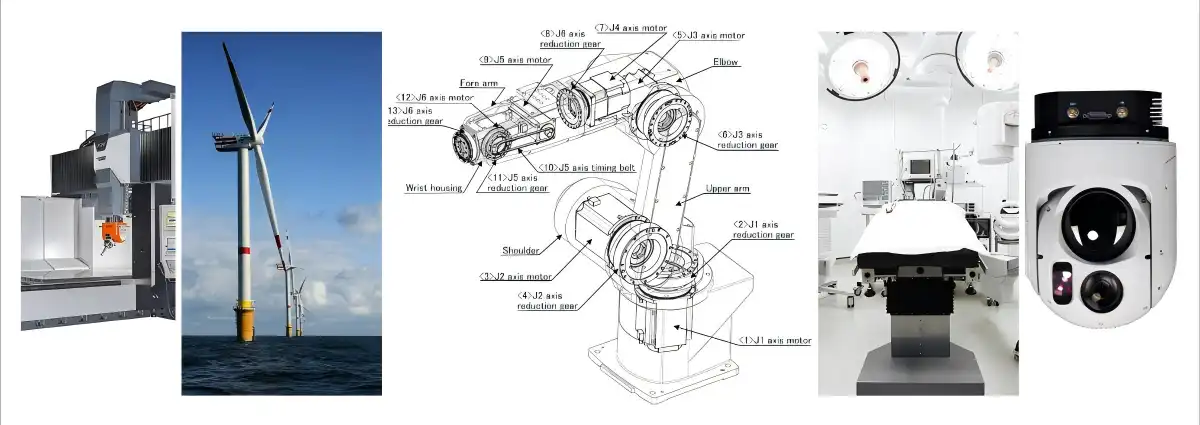
Robotic joint assemblies represent the most demanding crossed roller bearing applications, combining complex load vectors with continuous duty cycles and stringent positioning accuracy requirements. Industrial manipulators rely on bearing rigidity to maintain trajectory precision during high-acceleration movements carrying significant payloads. Our bearings serve automation customers across automotive assembly, electronics manufacturing, and warehouse logistics sectors, demonstrating consistent performance under diverse operating conditions. Precision rotary tables in machining centers demand minimal runout and exceptional rigidity to maintain workpiece positioning during metal removal operations. Medical imaging equipment requires smooth rotation and dimensional stability supporting diagnostic accuracy. IC manufacturing devices operate in cleanroom environments where bearing contamination risks must be minimized through proper seal selection and lubrication practices. Each application sector presents unique requirements that informed bearing selection addresses systematically.
Conclusion
RB Series Crossed Roller Bearing. Crossed roller bearing technology delivers measurable performance advantages for precision equipment manufacturers confronting space constraints and complex loading conditions. The RB Series combines multi-directional load capacity, exceptional rigidity, and compact design in a proven configuration serving demanding applications worldwide. Material quality, precision manufacturing, and application-appropriate specifications determine operational success and long-term reliability. Procurement professionals benefit from partnering with manufacturers demonstrating quality certifications, production scalability, and technical expertise supporting optimal bearing selection and integration. Our fifteen-year manufacturing history serving global automation markets provides the experience and capability to ensure supply reliability and consistent product quality, meeting international standards.
FAQ
1. What load types can crossed roller bearings handle simultaneously?
These bearings support radial loads, axial thrust, and moment loads within a single unit, eliminating multiple bearing requirements. The crossed roller configuration distributes forces uniformly across contact points, maximizing capacity within compact envelope dimensions.
2. How do precision grades affect application suitability?
Precision classifications ranging from P6 to P4 specify dimensional tolerances affecting rotational accuracy. Higher precision grades suit applications demanding minimal runout, such as measuring instruments and precision positioning systems. Standard grades provide cost-effective solutions for less critical applications.
3. Can custom dimensions be manufactured for unique applications?
Custom engineering services accommodate non-standard dimensions, special materials, or modified configurations matching specific design requirements. Our engineering team collaborates with customers to develop tailored solutions when catalog offerings do not precisely meet application parameters. Modification lead times and minimum order quantities depend on complexity.
Partner with ATLYC for Reliable Crossed Roller Bearing Solutions
ATLYC brings fifteen years of precision bearing manufacturing experience to your most demanding automation and industrial equipment applications. Our RB Series Crossed Roller Bearing product line combines certified quality management, competitive pricing, and responsive technical support that procurement professionals value. As an established crossed roller bearing manufacturer holding ISO 9001 and IATF 16949 certifications, we serve mid-to-large equipment manufacturers across North America, Europe, and emerging markets with consistent product quality and reliable delivery performance.
Our engineering team provides application assistance, custom design services, RB Series Crossed Roller Bearing, and comprehensive technical documentation supporting successful bearing integration. Contact us at auto@lyautobearing.com to discuss your specific requirements, request detailed specifications, or receive volume pricing for your next project.
References
1. Harris, T.A. & Kotzalas, M.N. "Advanced Concepts of Bearing Technology: Rolling Bearing Analysis, Fifth Edition." CRC Press, Taylor & Francis Group, 2006.
2. Schaeffler Technologies AG & Co. "Crossed Roller Bearings: Design Principles and Industrial Applications." Technical White Paper Series on Precision Bearing Technology, 2019.
3. ISO 492:2014. "Rolling Bearings — Radial Bearings — Geometrical Product Specifications and Tolerance Values." International Organization for Standardization, Geneva, Switzerland.
4. Budynas, R.G. & Nisbett, J.K. "Shigley's Mechanical Engineering Design, Tenth Edition." McGraw-Hill Education, Chapter 11: Rolling-Contact Bearings, 2015.
5. American Bearing Manufacturers Association. "Load Ratings and Fatigue Life for Roller Bearings." ABMA Standard 11-1990, Revised 2018.
6. Weck, M. & Brecher, C. "Werkzeugmaschinen: Konstruktion und Berechnung." Springer-Verlag, Volume on Bearing Systems in Precision Machinery, 2006.
Learn about our latest products and discounts through SMS or email