- English
- French
- German
- Portuguese
- Spanish
- Russian
- Japanese
- Korean
- Arabic
- Greek
- German
- Turkish
- Italian
- Danish
- Romanian
- Indonesian
- Czech
- Afrikaans
- Swedish
- Polish
- Basque
- Catalan
- Esperanto
- Hindi
- Lao
- Albanian
- Amharic
- Armenian
- Azerbaijani
- Belarusian
- Bengali
- Bosnian
- Bulgarian
- Cebuano
- Chichewa
- Corsican
- Croatian
- Dutch
- Estonian
- Filipino
- Finnish
- Frisian
- Galician
- Georgian
- Gujarati
- Haitian
- Hausa
- Hawaiian
- Hebrew
- Hmong
- Hungarian
- Icelandic
- Igbo
- Javanese
- Kannada
- Kazakh
- Khmer
- Kurdish
- Kyrgyz
- Latin
- Latvian
- Lithuanian
- Luxembou..
- Macedonian
- Malagasy
- Malay
- Malayalam
- Maltese
- Maori
- Marathi
- Mongolian
- Burmese
- Nepali
- Norwegian
- Pashto
- Persian
- Punjabi
- Serbian
- Sesotho
- Sinhala
- Slovak
- Slovenian
- Somali
- Samoan
- Scots Gaelic
- Shona
- Sindhi
- Sundanese
- Swahili
- Tajik
- Tamil
- Telugu
- Thai
- Ukrainian
- Urdu
- Uzbek
- Vietnamese
- Welsh
- Xhosa
- Yiddish
- Yoruba
- Zulu
Why Buy High-Precision RU42UU Cross Roller Bearings?
When your production line needs precise and reliable results all the time, the RU42UU Cross roller bearing is the designed solution to your rotational problems. These integrated bearings have a small 20 mm inner diameter, 70 mm outer diameter, and 12 mm width footprint, but can handle a lot of load in more than one way. The RU42UU doesn't need bulky mounting assemblies like other bearings do; instead, it has integral inner and outer rings with mounting holes that make installation much faster while still maintaining the accuracy needed for automation equipment, robotic joints, and medical instruments. When you buy high-precision cross roller bearings, you get less downtime, consistent performance, and lower long-term running costs.
Understanding RU42UU Cross Roller Bearings: Specifications and Design Features
Precision engineering defines every aspect of the RU42UU cross roller bearing configuration. We manufacture these bearings from Gcr15 and Gcr15SiMn bearing-grade steel, materials specifically selected for their hardness characteristics and dimensional stability under cyclical loading conditions. The steel undergoes heat treatment processes that achieve surface hardness levels exceeding 58-62 HRC, providing exceptional wear resistance throughout extended service intervals.
Crossed Roller Configuration
The structure of the bearing uses cylindrical wheels that are set up so that they alternate between the inner and outer raceways at 90 degrees. This crossed roller design makes a special way to spread the load, with each roller touching the track at the right angle. Precision-machined gaps separate each roller element so that they don't touch directly with each other, which would cause friction and speed up wear. This design lets the RU42UU handle radial forces, axial loads, and moment forces all at the same time within a single bearing assembly. This means that it doesn't need the paired bearing arrangements that are common with angular contact ball bearings. The crossed arrangement evenly distributes stress around the entire bearing circumference. Load vectors pass through many contact places during rotation instead of putting all the stress on a few elements. Compared to point-contact designs found in most ball bearings, this load-sharing concept greatly increases the bearing's fatigue life.
Integral Ring Design and Mounting Simplicity
When you use traditional split-ring bearings, they come with assembly tolerances that can make final setups less precise because of stacking effects. Because the RU42UU's rings are built in, this worry is taken away. Inner and outer rings are both made as single pieces, so they have tight geometric relationships that stay stable when they are put through their paces. Around the outer ring are pre-drilled mounting holes that allow direct bolt-through attachment to housing structures. This speeds up installation and lowers the chance of alignment mistakes. This integral design provides more structural rigidity than segmented options. The uniform ring structure doesn't deform under combined loading conditions, so the exact distances between the rolling elements and raceways are kept. We can get accuracy grades from P6 (standard precision) to P2 (ultra-precision), so we can work with systems that need runout tolerances of less than 5 microns.
Advantages and Performance Benefits of RU42UU Cross Roller Bearings
Manufacturing operations demand components that deliver measurable performance advantages rather than merely meeting minimum specifications. The RU42UU cross roller bearing offers tangible benefits that translate directly to enhanced equipment capabilities and reduced operational costs.
Before exploring specific advantages, procurement managers should recognize that bearing selection significantly impacts the total cost of ownership. Initial purchase price represents only a fraction of lifetime expenses when factoring in maintenance labor, unplanned downtime, and replacement cycles. The performance characteristics outlined below demonstrate how precision bearings justify their investment through RU42UU Cross roller bearing operational excellence.
Multi-Directional Load Capacity: The crossed roller configuration enables the RU42UU to handle combined radial loads up to 8,500N, axial forces reaching 10,200N, and moment loads of 250 N·m—all within its compact 70mm envelope. This multi-axis load capability eliminates the need for auxiliary thrust bearings or paired angular contact arrangements, reducing assembly complexity and overall system weight.
Exceptional Rotational Accuracy: Measured runout values consistently fall below 5 microns in P5 accuracy grades and reach sub-2 micron levels in P2 precision classes. This rotational precision directly translates to improved product quality in applications like semiconductor manufacturing equipment, where positional accuracy affects yield rates.
Low Friction Coefficient: The line-contact geometry between rollers and raceways generates friction coefficients approximately 30% lower than equivalent-sized ball bearings. Reduced friction means less heat generation during operation, enabling higher rotational speeds without thermal expansion issues that compromise clearances and accelerate wear.
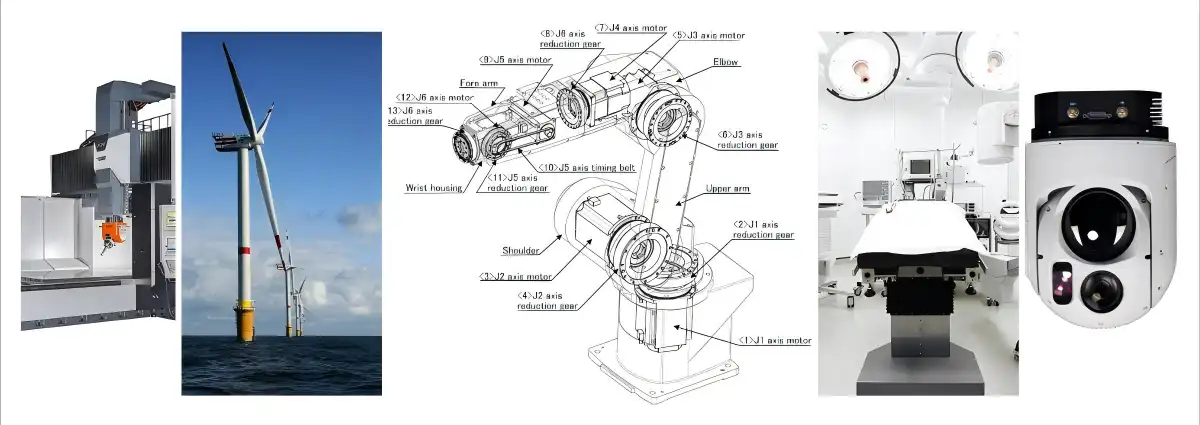
These advantages manifest in real-world applications across diverse industries. Robotic manufacturers utilize cross roller bearings in articulated joints where simultaneous radial, axial, and moment loads occur during programmed motion sequences. Machining center rotary tables depend on the RU42UU's rotational accuracy to maintain workpiece positioning tolerances. Medical equipment designers specify these bearings in imaging systems where smooth, precise rotation affects diagnostic image quality. We've supplied precision bearings to automation equipment manufacturers who report measurable reductions in maintenance intervals and improved production throughput following upgrades to cross roller bearing technology.
Comparing RU42UU Cross Roller Bearings with Market Alternatives
Informed procurement decisions require objective comparisons between available technologies and competing product offerings. The RU42UU occupies a specific performance segment that balances compact dimensions with robust load capacity—characteristics that distinguish it from both smaller and alternative bearing types.
Performance Comparison with RU40 and Other RU Series Models
The RU42UU shares design principles with other members of the RU series while offering distinct dimensional and capacity specifications. Compared to the RU40 model with its 17mm inner diameter and 66mm outer diameter, the RU42UU provides approximately 15% greater radial load capacity and 20% higher moment load ratings within only 4mm additional outer diameter. This capacity increase proves significant in applications where design constraints limit bearing size, but operational demands require maximum load handling. Moving to larger models like the RU66 or RU85 delivers further capacity gains but introduces weight penalties and increased envelope dimensions. The RU42UU represents an optimal balance point for mid-sized robotic joints, compact rotary tables, RU42UU Cross roller bearing, and space-constrained automation equipment where both performance and dimensional efficiency matter.
Cross Roller Bearings Versus Traditional Ball Bearing Arrangements
Achieving equivalent load capacity using deep groove ball bearings or angular contact ball bearings would require paired arrangements with spacers and preload mechanisms. Such assemblies introduce several disadvantages: increased axial length, higher part counts, complex installation procedures, and accumulated tolerance stack-ups. A single RU42UU replaces these multi-component assemblies, reducing inventory complexity and assembly labor while improving reliability through simplified design. Ball bearings offer advantages in certain applications—particularly high-speed rotations above 5,000 RPM where their point-contact geometry generates less heat than line-contact rollers. The RU42UU targets applications prioritizing load capacity, precision, and compact integration over maximum rotational speeds.
How to Procure RU42UU Cross Roller Bearings Efficiently
Strategic procurement of precision bearings requires understanding supplier landscapes, quality verification procedures, and logistics considerations that affect total acquisition costs and supply chain reliability.
Identifying Qualified Manufacturers and Distributors
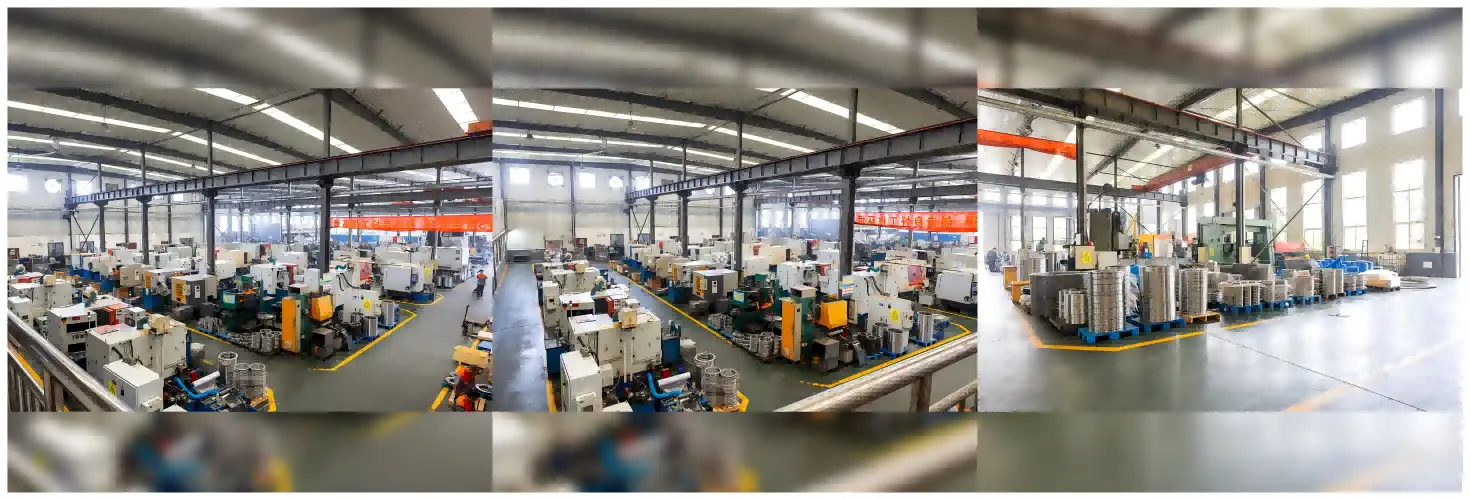
Qualified bearing suppliers have quality certifications that can be checked, output capacity that has been shown, and customer references that can be checked. We suggest that teams in charge of buying things give more weight to companies that are certified by both ISO 9001 and IATF 16949 for car quality standards. These certifications show that the company has a mindset of systematic process controls and continuous improvement, which leads to consistent product quality. Production capacity assessment helps companies figure out if they can meet ongoing volume needs and adapt to RU42UU Cross roller bearing changes in demand. Our six specialised workshops and 120-person staff give us the size we need for reliable high-volume production while still allowing us to meet unique needs. We've worked with clients in South Korea, the US, Germany, Russia, Iran, and Turkey, showing that we know how to export and handle foreign logistics.
Pricing Structures and Volume Negotiations
Cross roller bearing prices depend on how much the materials cost, how hard they are to make, how precise they need to be, and where the seller stands in the market. Standard catalogue items, like the RU42UU, usually have the best prices because they can be made more cheaply when they are ordered in large quantities. Custom specifications that include non-standard sizes, special materials, or higher precision grades come with higher prices that represent the engineering resources and specialised processing that are needed. Volume-based pricing tiers credit buyers who buy more by lowering the cost per unit. The people in charge of buying things should figure out how much they will need each year and look into blanket purchase deals that can get them good prices and let them schedule releases that match production needs. We set our prices in a way that encourages long-term relationships by giving discounts for larger orders starting at 500 units and getting even better as you commit to 1,000 and 5,000 units.
Lead Time Planning and Inventory Management
Standard RU42UU bearings made to P5 or P0 accuracy usually ship 15 to 25 days after the order is confirmed. Lead times are 30 to 40 days longer for higher precision grades that need more grinding and inspection steps. Custom specifications may take 45 to 60 days, based on how long it takes to get the materials and make the tools. Good inventory management balances the costs of keeping items in stock with the risks of losing supply. We suggest keeping 60–90 days of safety stock for important production parts, along with regular replenishment orders that are timed to match supplier wait times. Our flexible production planning lets us handle pressing orders when equipment breaks down or demand spikes happen out of the blue.
Maximizing Value: Maintenance and Long-Term Use of RU42UU Bearings
Precision bearings deliver their designed service lives only when properly maintained throughout operational use. Implementing systematic maintenance practices protects bearing investments and prevents unexpected equipment failures.
Lubrication Management
Cross roller bearings need to be properly oiled to reduce friction, get rid of heat, RU42UU Cross roller bearing,g, and keep precise surfaces from rusting. There is factory-applied grease on the RU42UU that usually lasts for 10,000 to 15,000 hours of standard use because of its sealed design. We pre-lubricate bearings with lithium-based grease that can work in temperatures from -30°C to +120°C, which is good for most industrial uses. However, applications that need to run all the time, are in dirty environments, or are exposed to high temperatures, may need extra lubrication that is done on a regular basis. Setting lubrication schedules based on real working conditions instead of random time intervals is the best way to get the most out of bearings. We suggest keeping an eye on the working temperatures of bearings as a useful way to tell if the lubrication is good enough. Temperature rises above normal levels often mean that the lubrication is breaking down and needs attention.
Inspection Protocols and Wear Indicators
Visual checks done on a regular basis find new problems before they become major problems. During routine maintenance, bearing systems should be checked for leaking lubricant, strange noises, changes in vibration, and temperature changes. Increased rotational resistance, a rough feel when rotating by hand, or clear grinding sounds are all signs of internal wear that need to be looked into right away. In industrial settings, contamination is the main reason why bearings fail too soon. During maintenance, check the integrity of the seals and repair any that are broken right away to keep the barriers against contamination in place. Clean the outside of the bearings to keep particles from building up and damaging the seals or moving into the exact clearances.
Troubleshooting Common Issues
When cross roller bearings lose performance, systematic troubleshooting finds the root reasons and tells you what to do to fix the problem. Too much noise usually means that the bearing isn't well-oiled, is dirty, or has damage on the outside. Take the bearing off for a close look to see if cleaning and re-lubricating it will return normal operation, or if it needs to be replaced. If the running torque goes up, it means that the lubricant is wearing out or getting dirty. Adding new lube usually fixes the problem if the internal surfaces are still in good shape. Increasing the temperature above normal operating ranges could mean that there are problems with the lubrication, too much preload, or misalignment. Make sure that the bearings are properly installed and oiled before deciding that they need to be replaced. Following these maintenance steps will help the RU42UU bearings last as long as possible, and they should be able to reach or beat their calculated fatigue lives. Systematic maintenance takes little time but protects output and stops costly unplanned downtime.
Conclusion
The RU42UU cross roller bearing is a tried-and-true option for uses that need a small size, the ability to handle loads going in multiple directions, and very accurate spinning. Its integral ring design with built-in mounting holes makes installation easier and gives the performance that is needed in robots, automation equipment, medical devices, and precision machinery. These bearings are made from high-quality bearing steel and come in accuracy grades ranging from standard P6 to ultra-precise P2. They are clearly better than regular bearing arrangements. Getting certified manufacturers with competitive prices, on-time shipping, and technical help is the best way to get the most value out of a bearing over its entire lifecycle. When you maintain your equipment properly, it lasts longer and protects your investments. This makes the RU42UU a smart choice for engineering teams that value speed, dependability, and low cost.
FAQ
1. What materials are used in RU42UU cross roller bearing construction?
We manufacture RU42UU bearings from Gcr15 bearing steel and Gcr15SiMn alloy steel, both meeting international standards for bearing-grade materials. These steels undergo specialized heat treatment processes, achieving surface hardness levels of 58-62 HRC, providing excellent wear resistance and dimensional stability. The material selection balances hardness for wear resistance with toughness to resist fatigue crack propagation, ensuring reliable performance throughout extended service intervals.
2. How does the RU42UU compare to similar-sized bearing models?
The RU42UU offers superior load capacity compared to equivalent-sized ball bearings, handling combined radial, axial, and moment loads within its compact 70mm outer diameter. Compared to the smaller RU40 model, it provides approximately 15% greater capacity, while the larger RU66 offers higher loads but increased size and weight. The RU42UU occupies an optimal performance point, balancing capacity with dimensional efficiency.
3. What operational speeds are suitable for RU42UU bearings?
Cross roller bearings typically operate effectively at moderate rotational speeds where their high load capacity and precision characteristics provide maximum advantage. The RU42UU performs reliably at speeds up to 1,500-2,000 RPM when properly lubricated and installed with appropriate clearances. Applications requiring higher speeds may benefit from ball bearing alternatives, while the RU42UU excels in precision positioning applications prioritizing accuracy over maximum speed.
Partner with ATLYC for Your RU42UU Cross Roller Bearing Needs
ATLYC brings 15 years of specialized bearing manufacturing expertise to the RU42UU Cross roller bearing to meet your precision component requirements. As an ISO 9001 and IATF 16949 certified RU42UU Cross roller bearing supplier, we maintain quality standards equivalent to global benchmarks while offering competitive pricing and responsive delivery. Our dedicated engineering team provides technical support throughout your specification process, ensuring optimal bearing selection for your specific application. Contact us at auto@lyautobearing.com to discuss your requirements, request detailed specifications, or obtain quotations for the RU42UU Cross roller bearing and related precision bearing products. We serve OEMs and distributors worldwide with the production capacity, quality consistency, and customer focus that build lasting partnerships.
References
1. Harris, T.A. & Kotzalas, M.N. "Rolling Bearing Analysis: Essential Concepts of Bearing Technology." CRC Press, 5th Edition, 2006.
2. Schaeffler Technologies AG & Co. "Rolling Bearings: Catalogue HR 1." Technical Documentation, Bearing Design and Application Engineering, 2019.
3. ISO 492:2014 "Rolling Bearings — Radial Bearings — Geometrical Product Specifications and Tolerance Values." International Organization for Standardization.
4. Budynas, R.G. & Nisbett, J.K. "Shigley's Mechanical Engineering Design." McGraw-Hill Education, 10th Edition, 2015, Chapter 11: Rolling-Contact Bearings.
5. SKF Group. "Rolling Bearings in Industrial Applications: Application and Lubrication Guidelines." SKF Technical Handbook, 2018 Edition.
6. ANSI/ABMA Standard 12.1-2014 "Instrument Ball Bearings - Metric Design." American Bearing Manufacturers Association Technical Standards.
Learn about our latest products and discounts through SMS or email