- English
- French
- German
- Portuguese
- Spanish
- Russian
- Japanese
- Korean
- Arabic
- Greek
- German
- Turkish
- Italian
- Danish
- Romanian
- Indonesian
- Czech
- Afrikaans
- Swedish
- Polish
- Basque
- Catalan
- Esperanto
- Hindi
- Lao
- Albanian
- Amharic
- Armenian
- Azerbaijani
- Belarusian
- Bengali
- Bosnian
- Bulgarian
- Cebuano
- Chichewa
- Corsican
- Croatian
- Dutch
- Estonian
- Filipino
- Finnish
- Frisian
- Galician
- Georgian
- Gujarati
- Haitian
- Hausa
- Hawaiian
- Hebrew
- Hmong
- Hungarian
- Icelandic
- Igbo
- Javanese
- Kannada
- Kazakh
- Khmer
- Kurdish
- Kyrgyz
- Latin
- Latvian
- Lithuanian
- Luxembou..
- Macedonian
- Malagasy
- Malay
- Malayalam
- Maltese
- Maori
- Marathi
- Mongolian
- Burmese
- Nepali
- Norwegian
- Pashto
- Persian
- Punjabi
- Serbian
- Sesotho
- Sinhala
- Slovak
- Slovenian
- Somali
- Samoan
- Scots Gaelic
- Shona
- Sindhi
- Sundanese
- Swahili
- Tajik
- Tamil
- Telugu
- Thai
- Ukrainian
- Urdu
- Uzbek
- Vietnamese
- Welsh
- Xhosa
- Yiddish
- Yoruba
- Zulu
What Makes Cross Roller Bearing RE Series Space Saving?
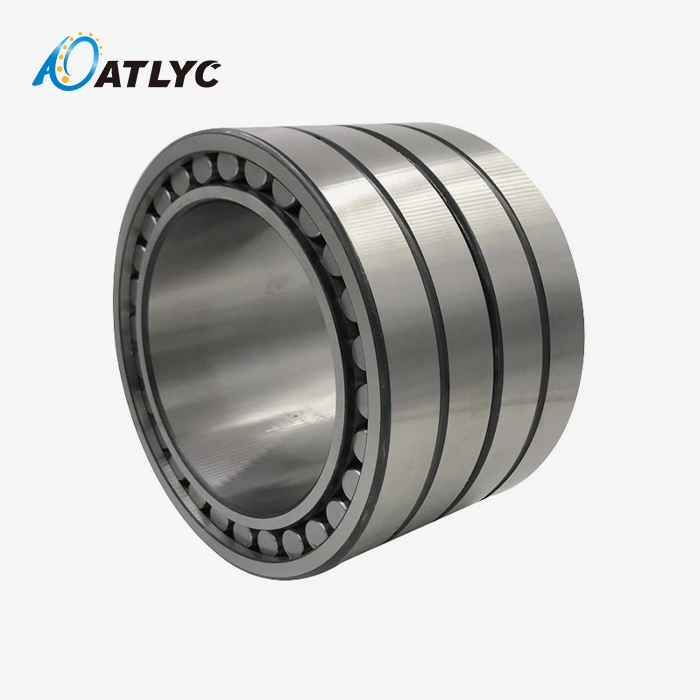
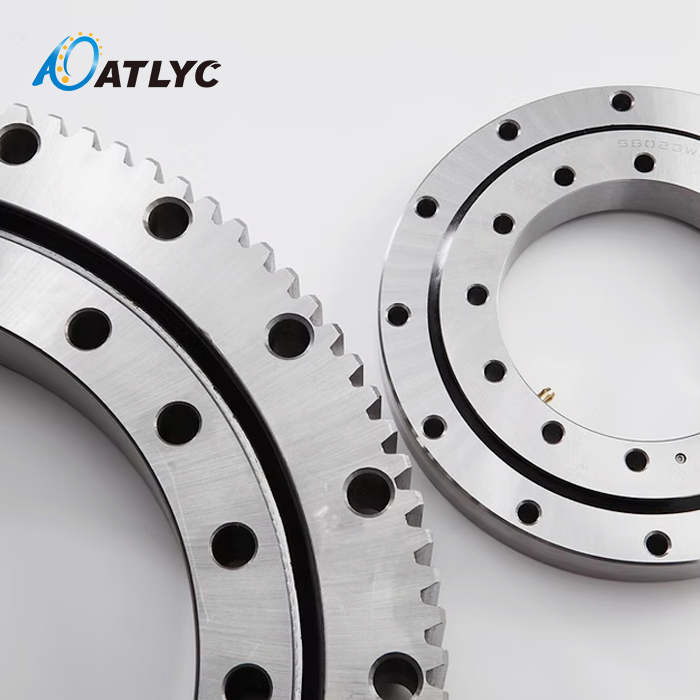
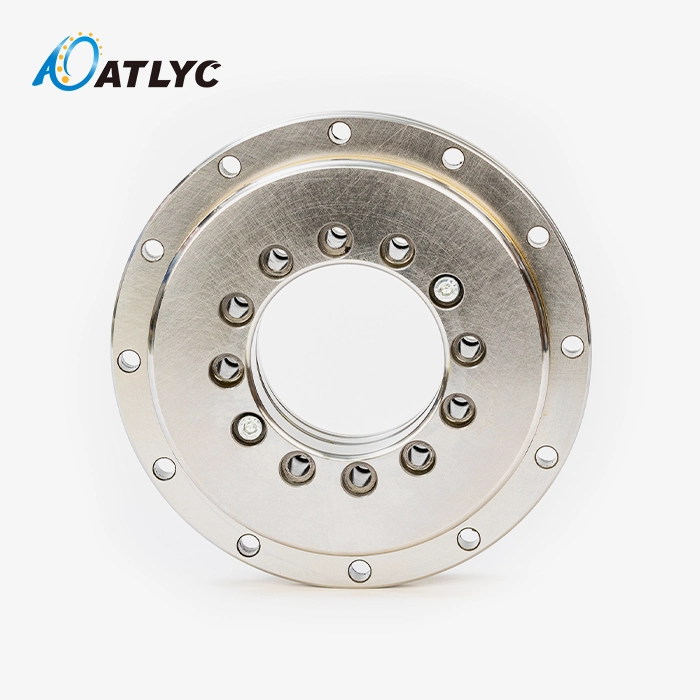
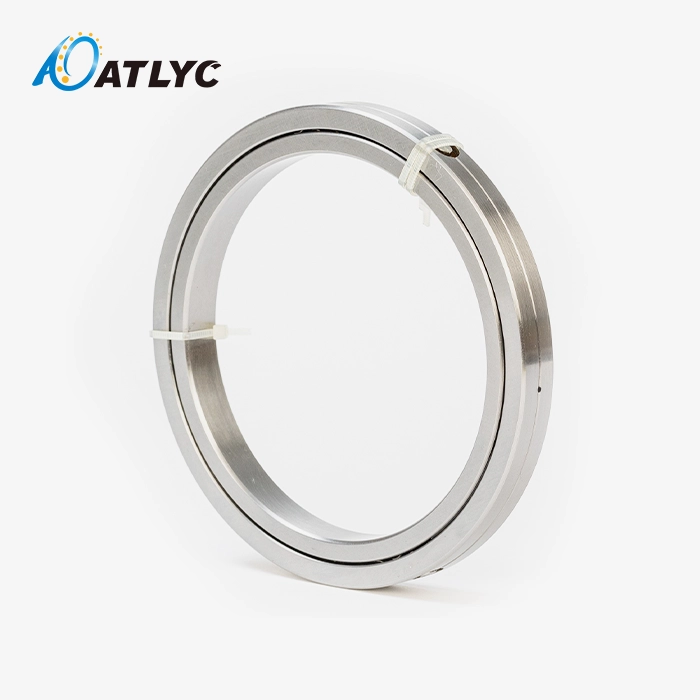
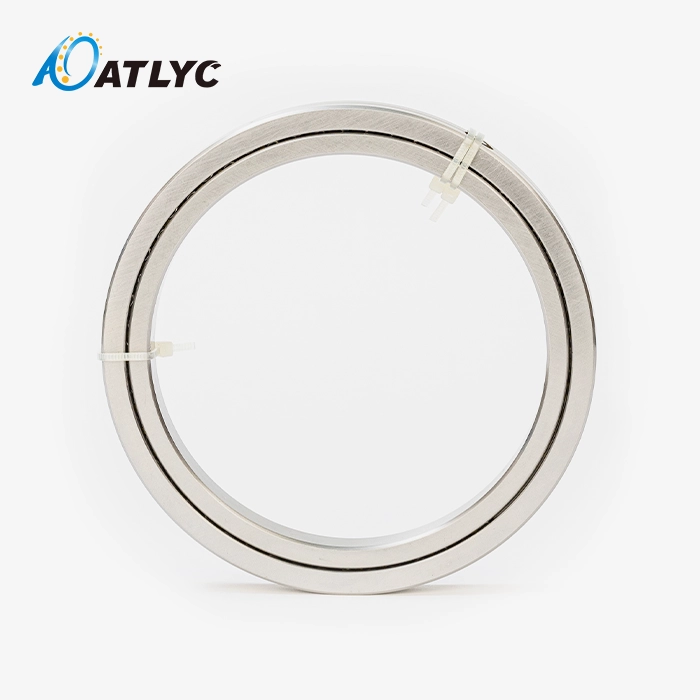
With its innovative integral outer ring design and split inner ring configuration, the Cross roller bearing RE series saves a huge amount of room. This design lets the cylindrical wheels be placed perpendicularly at 90-degree angles. This lets the bearing handle radial, axial, and moment loads all at the same time in a single, small unit. The RE series saves up to 40% more assembly room than other bearing Cross roller bearing RE series solutions because it doesn't need multiple bearings. It still has a higher load capacity and better rotational accuracy.
Understanding the Space-Saving Challenge in Bearing Applications
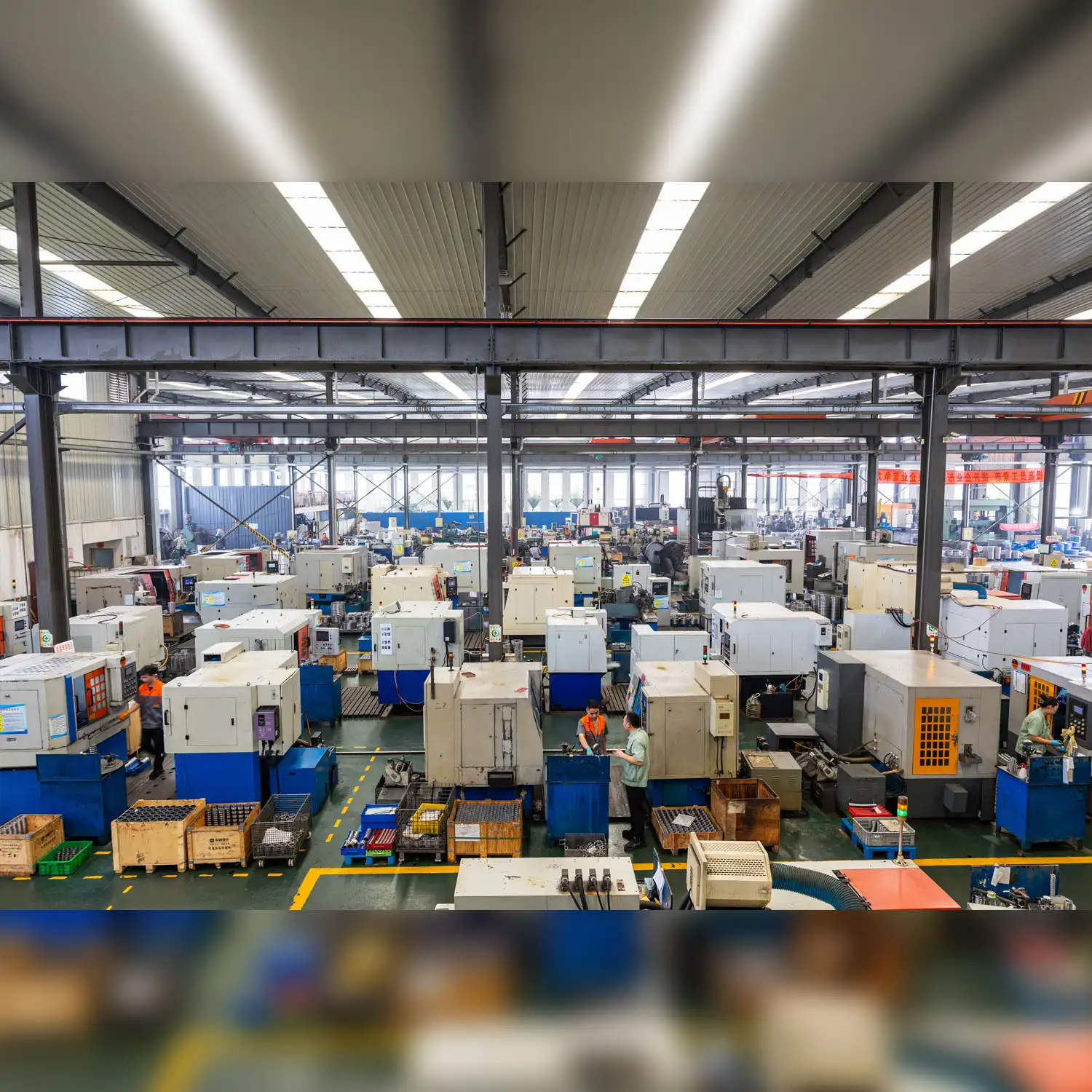
Modern industrial machinery is under more and more pressure to work better in smaller and smaller areas. Traditional bearing designs often need large amounts of space to be installed, which slows down the process of making tools smaller and improving systems. Because these configurations are so big, engineers have to choose between speed and space limitations. This results in layouts that don't work well and higher material costs.
The Impact of Oversized Bearing Systems on Industrial Operations
Manufacturers of equipment face a number of operating problems when they use standard bearing arrangements. Larger bearing sets need stronger housings and support structures, which makes machinery heavier than it needs to be. This extra mass immediately means that it will use more energy while it's running and cost more to transport. It gets harder to install because techs have to line up a lot of bearing parts in tight spaces, which takes longer and costs more in labour.
Critical Sectors Demanding Compact Bearing Solutions
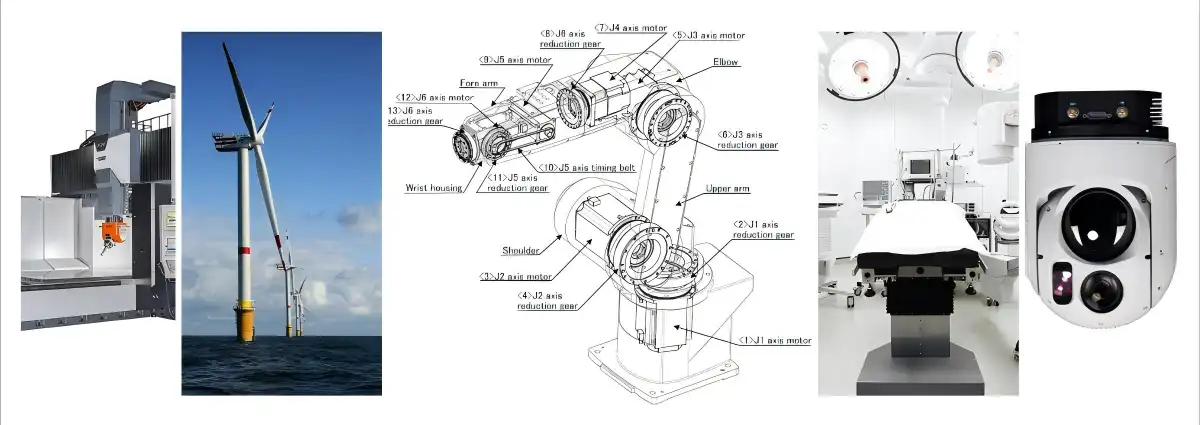
Space problems are especially bad for companies that make robots. Joints in industrial robots need to have bearing systems that can provide high accuracy within very small spaces. Every millimetre saved in bearing thickness lets designers make robots reach farther or add more features. When making small transfer systems and precise positioning steps, companies that make automation equipment face the same problems. Engineers who work on medical devices need small bearing options that can keep working conditions clean and provide reliable motion control. IC manufacturing equipment needs to be able to rotate very precisely inside small housings that can work in a cleanroom.
Core Design Features of the Cross Roller Bearing RE Series That Enable Space Saving
The RE series distinguishes itself through structural innovations that directly address dimensional efficiency. Understanding these design elements reveals why this bearing configuration achieves superior compactness compared to traditional alternatives.
Integral Outer Ring and Split Inner Ring Architecture
The one-piece outer ring construction makes the housing easier to build while giving it more rigidity. This solid ring gets rid of the weak spots that could happen with segmented outer rings. This lets wall sections be smaller without affecting the cross roller bearing RE series of the structure's strength. Splitting the inner ring into two parts makes it easier to place on shafts and streamlines maintenance tasks. This two-piece inner ring design lets you change the roller preloading without taking apart the whole bearing system. This cuts down on downtime during repair periods.
Dimensional Advantage Across Size Ranges
Available sizes span inner diameters from 20mm to 1100mm, outer diameters from 70mm to 1500mm, and widths from 12mm to 110mm. Within these ranges, the crossed roller configuration consistently delivers higher load ratings per unit volume compared to ball bearing alternatives. A typical RE series bearing occupies 30-40% less axial space than equivalent-capacity tapered roller bearing pairs. When compared to angular contact ball bearing arrangements requiring multiple units for comparable load capacity, space savings often exceed 50%.
Performance Advantages Supporting Space Efficiency
Compact dimensions mean nothing without corresponding performance capabilities. The RE series demonstrates that miniaturization need not compromise operational excellence when engineering principles are properly applied.
Multidirectional Load Capacity in a Single Unit
Each crossed roller bearing handles radial loads, axial loads in both directions, and moment loads simultaneously. This multidirectional capability eliminates the need for bearing combinations that traditional designs require. Engineers can replace paired angular contact ball bearings or complex tapered roller arrangements with a single RE unit, dramatically simplifying assembly design. The load distribution across orthogonal roller sets creates exceptional rigidity—precision machinery maintains positioning accuracy even under variable load conditions.
Enhanced Precision Through Integrated Design
The integral outer ring design delivers superior running accuracy when applications require outer ring rotation. Manufacturing tolerances are available across multiple precision grades: P6, P0, P5, P4, and P2. The P4 and P2 grades achieve runout accuracy within micrometers, meeting the demands of precision rotary tables and measuring instruments. This accuracy stems from the one-piece outer ring construction, which eliminates cumulative tolerances that segmented designs introduce.
Real-World Application Performance
Industrial robot manufacturers integrate these bearings into joint assemblies where weight and envelope directly impact payload capacity. Machining center rotary tables utilize the RE series to achieve positioning accuracy within arc-seconds while maintaining compact table designs. Medical equipment designers specify these bearings for CT scanner gantries and surgical robot arms, where reliable precision within confined spaces is non-negotiable. IC manufacturing equipment incorporates them in wafer handling systems requiring ultra-clean operation and exceptional repeatability.
Comparison and Rational Choice in Bearings: Why Choose RE Series?
Understanding how the crossed roller bearing RE series compares to alternative bearing types helps procurement professionals make informed decisions aligned with specific application requirements.
RE Series Versus RA Series Cross Roller Bearings
Both the RE and RA series utilize crossed roller technology, but structural differences in the Cross roller bearing RE series create distinct advantages. The RE series features an integral outer ring, making it optimal for applications requiring outer ring rotation with maximum accuracy. The RA series employs a split outer ring configuration, better suited for inner ring rotation applications. When your equipment design calls for stationary inner rings and rotating outer housings, the RE series delivers superior performance. Space savings favor the RE series in applications where mounting simplicity and housing design simplification are priorities.
Comparison with Ball Bearing Arrangements
Angular contact ball bearings require paired or multiple-bearing arrangements to handle combined loads. A typical configuration might use two opposed angular contact bearings to manage radial and axial loads, plus additional bearings for moment loads. This arrangement demands greater axial space and precise preload adjustment across multiple components. The crossed roller bearing consolidates this functionality into one unit, reducing assembly complexity and eliminating preload coordination between separate bearings. Load capacity per unit volume exceeds ball bearing arrangements by substantial margins, particularly under moment loading conditions.
Addressing Potential Limitations
The crossed roller bearing RE series presents considerations that procurement professionals should evaluate. Initial cost per unit typically exceeds conventional bearing types, though total system costs often favor the RE series when accounting for eliminated components and simplified assembly. Installation requires careful attention to roller alignment and preload adjustment—training maintenance personnel on proper procedures ensures optimal performance. Applications involving severe shock loads or extreme contamination may benefit from alternative bearing types specifically engineered for those conditions.
Making the Rational Choice for Your Application
Selecting the RE series makes sense when your application prioritizes space efficiency without compromising load capacity. Equipment requiring simultaneous radial, axial, and moment load support within compact envelopes represents ideal use cases. Precision machinery demanding exceptional rotational accuracy benefits from the integral outer ring design. When simplifying assembly and reducing component count to deliver meaningful cost or reliability advantages, the crossed roller bearing becomes the logical choice.
Procurement Insights for Cross Roller Bearing RE Series
Navigating the procurement process effectively ensures you secure authentic, high-quality bearings that meet your operational requirements and delivery schedules.
Global Availability and Supplier Landscape
The crossed roller bearing market includes established manufacturers such as NSK, THK, and KOYO, alongside capable Chinese manufacturers who have invested substantially in precision manufacturing capabilities. Luoyang Auto Bearing Co., Ltd., established in 2010, represents this manufacturing evolution—expanding from one workshop to six specialized facilities over fifteen years. The company maintains ISO 9001 and IATF 16949 certifications, demonstrating a commitment to international quality standards. With 120 skilled employees dedicated to production, research and development, quality inspection, and assembly, such manufacturers deliver a reliable supply for global markets including South Korea, the United States, Germany, Russia, Iran, and Turkey.
Lead Times and Order Planning
Standard-size bearings typically ship within 3-4 weeks from established inventory. Custom specifications requiring specific dimensional modifications or precision grade upgrades extend lead times to 6-8 weeks. Large volume OEM orders benefit from planned production runs—communicating annual volume forecasts allows manufacturers to optimize production scheduling and maintain buffer inventory. Establishing a framework for cross roller bearing RE series agreements with manufacturers ensures priority allocation during capacity constraints and provides pricing stability across fiscal periods.
Pricing Considerations and Value Assessment
Unit prices vary based on size, precision grade, material specifications, and order volume. Smaller bearings in standard precision grades (P0, P6) represent entry-level pricing, while larger diameters in ultra-precision grades (P4, P2) command premium costs reflecting manufacturing complexity. Customization for specific dimensional requirements or special material treatments adds incremental costs. Volume pricing tiers typically activate at quantities exceeding 50 units per order, with deeper discounts available for annual commitment agreements. The total cost evaluation should extend beyond the unit price. Compact bearing designs reduce housing material costs and simplify machining operations. Assembly time reductions translate into lower labor costs and faster production throughput. Extended service life and reduced maintenance frequency deliver ongoing operational savings that often exceed initial cost differences within the first operational year.
Ensuring Authentic Product Sourcing
The precision bearing market, unfortunately, includes counterfeit products that compromise performance and safety. Verifying supplier credentials protects your procurement investment. Confirm manufacturers hold current ISO 9001 and IATF 16949 certifications through independent verification. Request material certifications and dimensional inspection reports for shipped products. Established manufacturers provide full traceability documentation, including heat treatment records and hardness testing results. Building relationships with authorized distributors or direct manufacturer partnerships ensures consistent product authenticity across repeat orders.
Conclusion
The Cross roller bearing RE series achieves remarkable space efficiency through intelligent structural design that consolidates multidirectional load capacity into compact, precision-engineered units. Its integral outer ring and orthogonal roller arrangement deliver tangible benefits for equipment manufacturers: reduced assembly footprints, simplified installation procedures, and enhanced operational performance. When procurement decisions balance initial investment against total system costs, the RE series demonstrates clear value through eliminated components, reduced housing requirements, and extended service intervals. Manufacturers seeking to optimize equipment designs while maintaining rigorous quality standards find reliable partners in certified suppliers committed to precision manufacturing and international compliance standards.
FAQ
1. How does the RE series achieve space savings compared to other cross roller bearings?
The crossed roller bearing RE series achieves superior space efficiency through its integral outer ring design, which eliminates the additional housing bulk required by split outer ring configurations. The orthogonal roller arrangement maximizes load capacity per unit volume, allowing smaller overall bearing dimensions for equivalent performance. Compared to conventional bearing combinations requiring multiple units, a single RE bearing reduces axial space requirements by 30-40% while handling radial, axial, and moment loads simultaneously.
2. Can these bearings handle high loads despite their compact size?
The RE series delivers exceptional load capacity through its crossed roller configuration and high-grade bearing steel construction. Gcr15 and Gcr15SiMn materials achieve hardness levels exceeding 60 HRC, enabling thin-section designs without compromising strength. The orthogonal roller arrangement distributes loads across multiple contact points, creating rigidity that matches or exceeds larger conventional bearing assemblies. Applications in industrial robots and machining centers demonstrate reliable performance under continuous heavy-load conditions.
3. What maintenance practices ensure longevity in space-restricted installations?
Proper lubrication remains essential—select lubricants compatible with operating temperatures and speeds, applying appropriate quantities to prevent both starvation and excess buildup. Monitor installation preload during initial setup using manufacturer specifications to ensure optimal internal clearances. Implement vibration monitoring where access permits, as changes in vibration signatures indicate developing wear conditions. Schedule periodic inspections based on operating hours and load cycles, examining seals for integrity and checking mounting surfaces for proper alignment.
Partner with ATLYC for Your Precision Bearing Requirements
ATLYC combines fifteen years of manufacturing evolution with rigorous quality Cross roller bearing RE series standards to deliver reliable crossed roller bearing solutions for demanding industrial applications. Our ISO 9001 and IATF 16949 certified facilities produce precision bearings that meet international specifications, backed by comprehensive technical support throughout your procurement process. Whether you require standard RE series configurations or customized specifications tailored to unique equipment designs, our engineering team provides detailed consultation to match bearing characteristics with your operational requirements. As an established cross roller bearing RE series manufacturer serving global markets, we understand the critical importance of delivery reliability and consistent quality in maintaining your production schedules. Contact our technical sales team at auto@lyautobearing.com to discuss your application specifications and receive detailed quotations for your cross roller bearing RE series needs.
References
1. Harris, T.A. & Kotzalas, M.N. (2006). Advanced Concepts of Bearing Technology: Rolling Bearing Analysis, Fifth Edition. CRC Press.
2. Ensing, J.A. (1998). On the Dynamics of Ball Bearings. Ph.D. Thesis, University of Twente, Netherlands.
3. ISO 492:2014. Rolling Bearings - Radial Bearings - Dimensions and Tolerances. International Organization for Standardization.
4. Eschmann, P., Hasbargen, L. & Weigand, K. (1985). Ball and Roller Bearings: Theory, Design and Application. John Wiley & Sons.
5. Hamrock, B.J. & Dowson, D. (1981). Ball Bearing Lubrication: The Elastohydrodynamics of Elliptical Contacts. Wiley-Interscience Publication.
6. Bhushan, B. (2013). Principles and Applications of Tribology, Second Edition. John Wiley & Sons.
Learn about our latest products and discounts through SMS or email