- English
- French
- German
- Portuguese
- Spanish
- Russian
- Japanese
- Korean
- Arabic
- Greek
- German
- Turkish
- Italian
- Danish
- Romanian
- Indonesian
- Czech
- Afrikaans
- Swedish
- Polish
- Basque
- Catalan
- Esperanto
- Hindi
- Lao
- Albanian
- Amharic
- Armenian
- Azerbaijani
- Belarusian
- Bengali
- Bosnian
- Bulgarian
- Cebuano
- Chichewa
- Corsican
- Croatian
- Dutch
- Estonian
- Filipino
- Finnish
- Frisian
- Galician
- Georgian
- Gujarati
- Haitian
- Hausa
- Hawaiian
- Hebrew
- Hmong
- Hungarian
- Icelandic
- Igbo
- Javanese
- Kannada
- Kazakh
- Khmer
- Kurdish
- Kyrgyz
- Latin
- Latvian
- Lithuanian
- Luxembou..
- Macedonian
- Malagasy
- Malay
- Malayalam
- Maltese
- Maori
- Marathi
- Mongolian
- Burmese
- Nepali
- Norwegian
- Pashto
- Persian
- Punjabi
- Serbian
- Sesotho
- Sinhala
- Slovak
- Slovenian
- Somali
- Samoan
- Scots Gaelic
- Shona
- Sindhi
- Sundanese
- Swahili
- Tajik
- Tamil
- Telugu
- Thai
- Ukrainian
- Urdu
- Uzbek
- Vietnamese
- Welsh
- Xhosa
- Yiddish
- Yoruba
- Zulu
What Industries Use SX011814 Cross Roller Bearing Most?
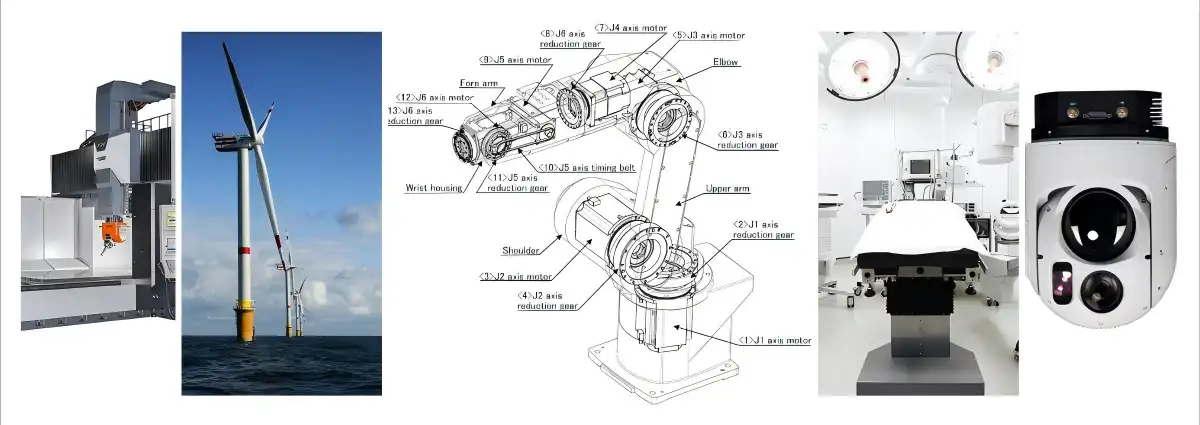
Procurement managers and engineers often ask which industries can gain the most from specialised bearing solutions when they are looking at precision motion control parts. The SX011814 Cross roller bearing is very important in robotics, aircraft, medical devices, machine tool manufacturing, and systems that use green energy. These fields need small parts that can handle complicated loads that come from different directions while still rotating very accurately. This very thin bearing has an inner diameter of 70 mm, an outer diameter of 90 mm, and a width of only 10 mm. It is essential in places where space is limited and performance requirements are high. Figuring out which businesses use this part the most helps people make decisions about the best ways to use it and where to get it.
Understanding the SX011814 Cross Roller Bearing
We need to figure out what makes this bearing special in precision engineering settings before we look at specific business uses. The technical basis has a direct effect on why some areas choose this arrangement over others.
Design Principles and Structural Configuration
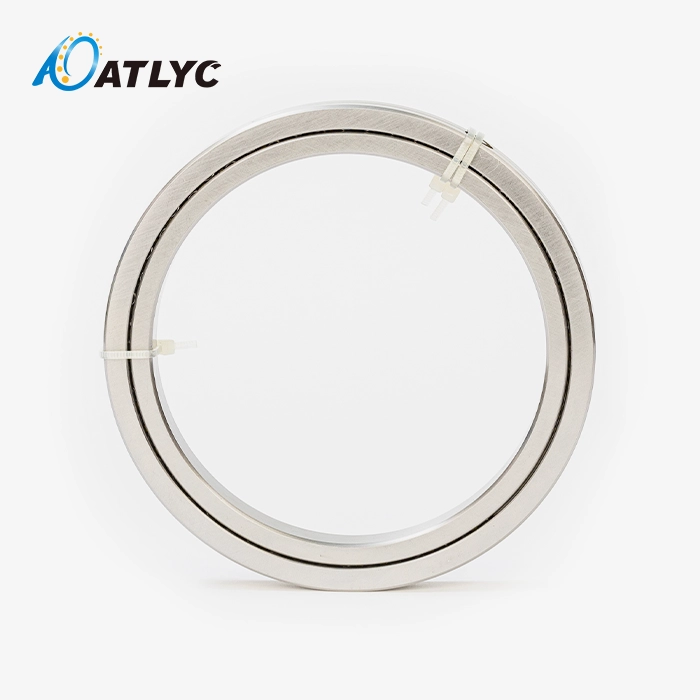
The bearing uses a new design where cylinder-shaped wheels move back and forth at right angles within precise V-groove raceways. This cross-roller setup makes line contact surfaces instead of point contact, which makes it three to four times more rigid than regular ball bearings. The split outer ring is made up of two halves that are held together by three fastening rings. The complete inner ring makes sure that the bearing rotates perfectly while it's in use. Plastic plates between each roller keep metal from touching metal, which lowers friction and allows the rollers to spin smoothly even when they are under load.
Technical Specifications and Material Standards
Components are made from high-carbon chromium-bearing steel (GCr15 or GCr15SiMn) and are heated to get hardness values between HRC 60 and 64. This choice of material guarantees high resistance to wear and a longer fatigue life when used continuously. There is no need for complicated dual-bearing setups because the bearing can handle rotational loads, axial forces, and moment loads all at the same time in a single small unit. There are six levels of accuracy, ranging from P6 (normal) to P0, P5, P4, and finally P2 (ultra-precision). For automation purposes, it is important that runout limits stay within sub-micron ranges.
Operational Mechanics and Load Handling
The main technical benefit of this arrangement is the geometric moment stiffness. When extended loads cause tilting moments, the bearing doesn't bend easily, which would make it less accurate in its position in less rigid designs. The V-groove raceway shape spreads loads across multiple contact points at the same time. This lets the part handle radial forces of over 8,500N and moment loads of up to 280 N·m, even though it has a small 10mm cross-section. The low friction coefficient of the roller setup keeps heat from being generated during high-speed spinning. This means that the bearings don't need to be oiled as often, and upkeep isn't needed as often.
Maintenance Guidelines for Extended Service Life
Choosing the right lubricant is the first step in doing proper repair. Most uses lithium soap base grease with high-pressure additives, which works well, but the fill amount shouldn't go over 30 to 40 percent of the available room to keep spinning resistance from rising as the temperature rises. When installing the split outer ring assembly, it's important to pay close attention to the halves because taking them apart without a reason can damage the structure and change the preload settings. When mounting, buddy flanges are often needed to tightly squeeze outer ring components while keeping certain gaps. Raceway surfaces should be checked regularly for signs of pollution or wear patterns that show misalignment. If runout readings are higher than the application limits, repair is suggested.
Major Industries Using SX011814 Cross Roller Bearings
Now that we know how these powers work technically, we can look at which industries get the most out of them. Each industry has its own operating problems that are similar to the ones this bearing can solve.
Robotics and Automation Systems
Industrial robotics represents perhaps the most demanding application environment for precision bearings like the SX011814 Cross roller bearing. Collaborative robots and six-axis articulated arms require joint components that withstand complex compound loads during rapid acceleration and deceleration cycles. The waist and elbow assemblies particularly benefit from the compact profile and high moment capacity of this bearing design. In cleanroom semiconductor fabrication environments, these bearings maintain positioning repeatability within micrometers despite exposure to temperature fluctuations and occasional contamination. Automation equipment manufacturers specify this bearing configuration because it enables thinner joint designs without sacrificing rigidity, directly reducing overall robot weight and improving payload-to-weight ratios.
Aerospace and Defense Applications
Satellite deployment mechanisms and gimbal systems demand bearings that perform reliably in extreme environments with minimal maintenance opportunities. The vacuum stability and temperature resistance of properly lubricated cross roller bearings make them suitable for spacecraft applications where conventional lubrication might outgas or degrade. Defense systems, including gun turret stabilization and tracking platforms, rely on the bearing's ability to maintain angular accuracy under shock loads and vibration. Aerospace manufacturers value the weight savings achievable with ultra-thin profiles, as every gram eliminated from rotating assemblies reduces launch costs and improves fuel efficiency in aircraft systems.
Medical Equipment and Diagnostic Devices
Surgical robotics and CT scanner gantries require bearings that operate smoothly with minimal noise and vibration. The rotating assemblies in diagnostic imaging equipment often support significant overhanging masses while maintaining precise circular motion paths. Medical device manufacturers appreciate the hygienic properties of sealed bearing configurations that prevent contamination in sterile clinical environments. The low torque characteristics enable precise positioning control in robotic surgical instruments, where surgeons depend on tactile feedback and smooth motion. Dental equipment and optical targeting systems also incorporate these bearings in applications demanding silent operation and extended maintenance intervals.
Machine Tool and CNC Manufacturing
Precision rotary tables and indexing heads in vertical machining centers benefit from the bearing's ability to maintain angular positioning accuracy despite heavy cutting forces. The rigidity prevents elastic deflection that would compromise surface finish quality on machined components. Manufacturers of five-axis machining centers specify cross roller bearings in rotary axes where compact installation envelopes limit bearing size options. The high moment capacity proves essential in applications where workpiece mass creates significant tilting forces on rotary table assemblies. Grinding machines and coordinate measuring equipment also utilize these bearings, where runout specifications directly affect measurement accuracy and part quality.
Renewable Energy and Solar Tracking
Wind turbine blade pitch control systems and solar panel tracking mechanisms require bearings capable of enduring dynamic loads in harsh outdoor environments. The bearing's sealed configuration protects internal components from moisture and particulate contamination common in renewable energy installations. Solar tracker manufacturers value the smooth rotation characteristics that enable precise sun-angle tracking throughout daily cycles, maximizing energy capture efficiency. Tidal energy converters and wave power generators also incorporate these bearings in rotating assemblies exposed to marine environments, where corrosion resistance and reliable performance justify the initial component investment through reduced maintenance costs.
Industry Challenges and How SX011814 Addresses Them
Understanding specific pain points helps illustrate why this bearing configuration emerges as the preferred solution across diverse applications. Each challenge connects directly to design features we explored earlier.
Maintaining Angular Precision Under Variable Loads
Manufacturing environments subject SX011814 Cross roller bearing to load conditions that vary significantly during operational cycles. A robotic arm experiences maximum moment loads at full extension but minimal forces near the base position. Traditional bearing arrangements might exhibit measurable deflection as loads change, introducing positioning errors that accumulate across multiple axes. The cross roller configuration maintains consistent geometric stiffness throughout load ranges, ensuring positioning repeatability regardless of load conditions. This characteristic proves particularly valuable in assembly automation, where pick-and-place operations demand consistent accuracy across millions of cycles.
Minimizing Space Envelope in Compact Assemblies
Modern equipment design increasingly prioritizes space efficiency, particularly in portable medical devices and collaborative robots intended for human-shared workspaces. Engineers face pressure to reduce joint diameters and overall mechanism footprints without compromising load capacity. The ultra-thin 10mm width allows integration into assemblies where conventional bearing pairs would require excessive axial space. The simultaneous handling of radial, axial, and moment loads within a single component eliminates the need for supplementary thrust bearings, further reducing assembly complexity and part count.
Extending Service Intervals and Reducing Downtime
Maintenance accessibility poses significant challenges in applications like wind turbines or satellite systems, where servicing requires specialized equipment or mission interruption. The low friction coefficient and line contact geometry distribute wear across larger surface areas compared to point-contact designs, extending operational life before replacement becomes necessary. Proper initial lubrication can sustain performance for years in sealed configurations, reducing lifecycle costs through extended maintenance intervals. This reliability advantage becomes particularly valuable in remote installations where service call expenses exceed component costs.
Combating Fatigue and Deformation Failure Modes
Material fatigue represents a primary failure mechanism in rotating equipment subjected to cyclic loading. The GCr15 steel composition and heat treatment process create a microstructure resistant to subsurface crack initiation under contact stress. The cross roller arrangement distributes loads across multiple rollers simultaneously, reducing peak contact pressures that accelerate fatigue progression. Applications involving frequent start-stop cycles or oscillating motion benefit from this load distribution, as it minimizes the stress concentrations that lead to premature bearing failure in less robust designs.
How to Choose the Right Cross Roller Bearing for Your Industry Needs
Selection criteria extend beyond technical specifications to encompass procurement considerations that affect the total cost of ownership. Balancing performance requirements against budget constraints requires systematic evaluation.
Comparing SX011814 with Alternative Bearing Configurations
When evaluating options, engineers should compare the SX011814 Cross roller bearing against the RB and YRT series cross roller bearings. The SX configuration optimizes inner ring rotation applications, whereas the RB series suits outer ring rotation scenarios. The YRT series incorporates axial and radial raceways in a different arrangement, offering higher axial load capacity but requiring more radial space. For applications requiring a 70mm bore with inner ring rotation, the SX011814 often provides the best balance of load capacity and space efficiency. The split outer ring design does introduce installation complexity compared to integral outer ring designs, but enables precise preload adjustment that integral designs cannot match.
Aligning Precision Class with Application Requirements
Accuracy class selection directly impacts both cost and performance. P5 precision suits most industrial robotics and machine tool applications where positioning tolerances remain in the 5-10 micron range. Medical imaging and semiconductor manufacturing equipment often require P4 or P2 precision to achieve sub-micron positioning accuracy. Specifying tighter tolerances than application requirements dictate increases costs unnecessarily without performance benefits. Conversely, selecting inadequate precision classes leads to positioning errors that compromise product quality or system functionality. Procurement managers should work with engineering teams to establish minimum accuracy requirements before requesting quotations.
Evaluating Supplier Credentials and Quality Certifications
Bearing performance depends heavily on manufacturing precision and material consistency. Suppliers holding ISO 9001 and IATF 16949 certifications demonstrate commitment to quality management systems essential for consistent production. Factory audits verify that manufacturing capabilities match claimed specifications, particularly for tight-tolerance work. The most reliable suppliers provide material certifications, dimensional inspection reports, and performance test data with each shipment. Established manufacturers with international customer bases typically maintain better supply chain stability and technical support resources compared to smaller regional producers.
Procurement Considerations for Bulk Orders
Volume purchases offer opportunities for cost reduction through quantity discounts and optimized logistics. Lead times typically range from four to eight weeks for standard configurations, with expedited production available at premium pricing. Blanket purchase orders with scheduled releases help stabilize supply while minimizing inventory carrying costs. Warranty terms vary by supplier, with reputable manufacturers offering replacement guarantees for premature failures attributable to manufacturing defects. Payment terms and letters of credit requirements affect cash flow planning, particularly for international transactions. Engaging with authorized distributors provides access to established logistics networks and may reduce minimum order quantities compared to direct factory purchases.
Leading Suppliers and Manufacturers of Precision Cross Roller Bearings
Sourcing decisions significantly impact product quality, delivery reliability, and after-sales support. Understanding the supplier landscape helps identify partners aligned with long-term procurement strategies.
Certification and Quality Management Systems
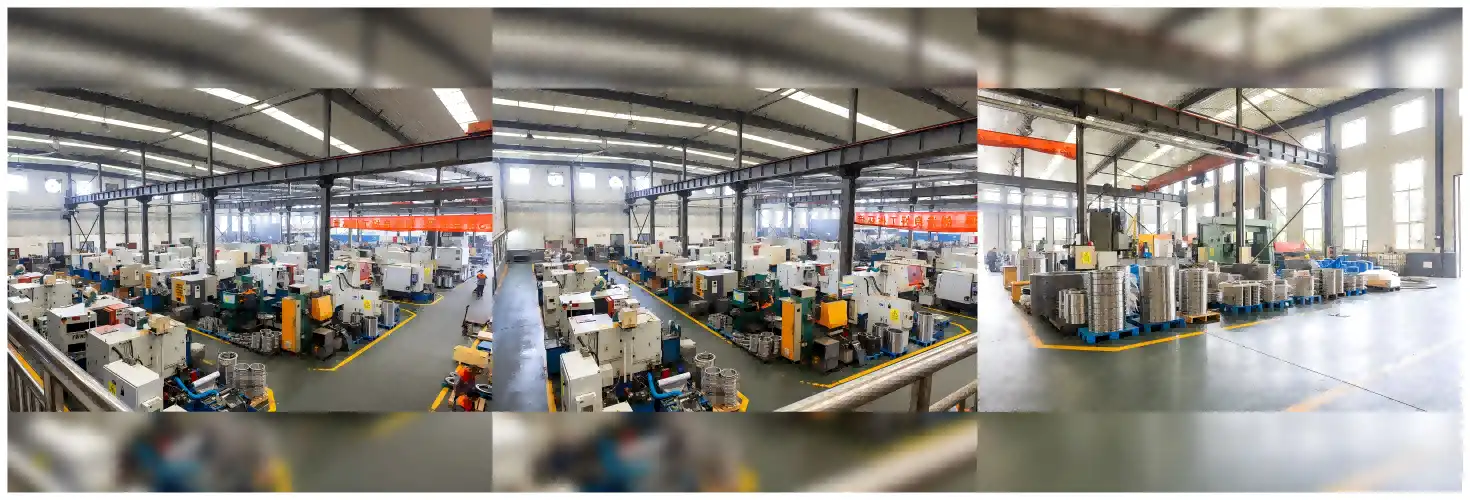
Luoyang Auto Bearing Co., Ltd. exemplifies manufacturers that have built reputations through consistent quality and international standard compliance. Established in 2010, the company has expanded from a single workshop to a comprehensive manufacturing enterprise covering six core bearing categories. With ISO 9001 and IATF 16949 certifications, they demonstrate adherence to quality management practices essential for automotive and industrial OEM supply chains. The facility employs 120 skilled personnel across production, quality inspection, and engineering support functions, ensuring professional oversight throughout manufacturing processes.
Factory-Direct Procurement Advantages
Direct engagement with manufacturers offers several benefits compared to multi-tier distribution channels. Buyers gain access to technical engineering support for application-specific modifications and custom configurations. Factory-direct sourcing eliminates distributor markups, reducing component costs, particularly for volume purchases. Manufacturers can provide detailed documentation regarding material composition, heat treatment specifications, and dimensional tolerances that distributors may not maintain. The ability to tour production facilities and conduct supplier audits builds confidence in quality management practices and manufacturing capabilities.
Global Supply Network and Market Presence
Established bearing manufacturers typically serve diverse geographic markets, building experience with varied regulatory requirements and application standards. Companies exporting to South Korea, the United States, Germany, Russia, Iran, and Turkey demonstrate the capability to navigate international logistics, documentation requirements, and quality expectations. This global reach indicates production scalability and supply chain resilience important for customers planning capacity expansion. Regional technical support presence enables responsive troubleshooting assistance and reduces communication barriers compared to purely export-focused suppliers.
Customer Testimonials and Application Case Studies
OEM equipment manufacturers in the robotics and machine tool sectors provide valuable insights through their supplier relationships. Successful multi-year supply agreements indicate consistent quality, reliable delivery performance, and responsive technical support. Case studies documenting bearing performance in specific applications help prospective customers evaluate suitability for similar use cases. Repeat purchase patterns and long-term contracts signal supplier reliability more credibly than marketing claims. Procurement managers should request customer references within their specific industry segment to assess supplier experience with relevant application challenges.
Conclusion
The SX011814 Cross roller bearing serves critical functions across robotics, aerospace, medical equipment, machine tool manufacturing, and renewable energy sectors. Its ultra-thin profile, combined with exceptional load capacity and rotational precision, addresses space constraints and performance demands that alternative bearing configurations cannot match. Industries requiring compact assemblies capable of handling complex multi-directional loads benefit most from this design. When selecting suppliers, buyers should prioritize manufacturers with ISO 9001 and IATF 16949 certifications, factory-direct access, and proven international supply experience. Understanding specific application requirements enables informed decisions, balancing precision class, material specifications, and total cost of ownership.
FAQ
What distinguishes cross roller bearings from conventional ball bearings?
Cross roller bearings utilize cylindrical rollers arranged at 90-degree angles, creating line contact rather than point contact. This configuration delivers three to four times higher rigidity and enables simultaneous handling of radial, axial, and moment loads within a single compact unit. Ball bearings require paired arrangements to achieve similar multi-directional load capacity.
How should I maintain cross roller bearings to maximize operational life?
Apply lithium-soap base grease with extreme pressure additives, filling only 30-40% of available space to prevent temperature increases. Avoid disassembling the split outer ring unnecessarily. Monitor raceway surfaces periodically for contamination or wear patterns, and verify that runout measurements remain within application tolerances. Replace components when wear compromises positioning accuracy.
Where can I source authentic cross roller bearings with warranty assurances?
Reputable manufacturers with ISO 9001 and IATF 16949 certifications provide material certifications and inspection reports with shipments. Factory-direct procurement ensures product authenticity and access to technical support. Verify supplier credentials through facility audits and customer references within your industry segment before establishing supply relationships.
Partner with ATLYC for Reliable Cross Roller Bearing Solutions
Precision motion control applications demand more than just technical specifications—they require trusted manufacturing partnerships built on quality consistency and engineering support. ATLYC (Luoyang Auto Bearing Co., Ltd.) combines 15 years of specialized bearing production experience with ISO 9001 and IATF 16949 certified manufacturing processes. Our facility produces precision cross roller bearings meeting P2 through P6 accuracy classes, serving automotive OEMs, industrial equipment manufacturers, and global bearing distributors across South Korea, the United States, Germany, and beyond. As an SX011814 Cross roller bearing manufacturer, we maintain stable production capacity, competitive lead times, and comprehensive technical support for application-specific requirements. Contact our engineering team at auto@lyautobearing.com to discuss your precision bearing needs and receive detailed quotations tailored to your volume and specification requirements.
References
1. Harris, T. A., & Kotzalas, M. N. (2006). Advanced Concepts of Bearing Technology: Rolling Bearing Analysis (5th ed.). CRC Press.
2. ISO 5593:1984. Rolling bearings — Vocabulary. International Organization for Standardization.
3. Schaeffler Technologies AG & Co. KG. (2019). Rolling Bearings: Design and Calculation Fundamentals. Technical Product Information.
4. Bhushan, B. (2013). Principles and Applications of Tribology (2nd ed.). John Wiley & Sons.
5. Tallian, T. E. (1999). Failure Atlas for Hertz Contact Machine Elements (2nd ed.). ASME Press.
6. Weck, M., & Brecher, C. (2006). Machine Tools Production Systems 3: Design and Calculation. Springer-Verlag Berlin Heidelberg.
Learn about our latest products and discounts through SMS or email