- English
- French
- German
- Portuguese
- Spanish
- Russian
- Japanese
- Korean
- Arabic
- Greek
- German
- Turkish
- Italian
- Danish
- Romanian
- Indonesian
- Czech
- Afrikaans
- Swedish
- Polish
- Basque
- Catalan
- Esperanto
- Hindi
- Lao
- Albanian
- Amharic
- Armenian
- Azerbaijani
- Belarusian
- Bengali
- Bosnian
- Bulgarian
- Cebuano
- Chichewa
- Corsican
- Croatian
- Dutch
- Estonian
- Filipino
- Finnish
- Frisian
- Galician
- Georgian
- Gujarati
- Haitian
- Hausa
- Hawaiian
- Hebrew
- Hmong
- Hungarian
- Icelandic
- Igbo
- Javanese
- Kannada
- Kazakh
- Khmer
- Kurdish
- Kyrgyz
- Latin
- Latvian
- Lithuanian
- Luxembou..
- Macedonian
- Malagasy
- Malay
- Malayalam
- Maltese
- Maori
- Marathi
- Mongolian
- Burmese
- Nepali
- Norwegian
- Pashto
- Persian
- Punjabi
- Serbian
- Sesotho
- Sinhala
- Slovak
- Slovenian
- Somali
- Samoan
- Scots Gaelic
- Shona
- Sindhi
- Sundanese
- Swahili
- Tajik
- Tamil
- Telugu
- Thai
- Ukrainian
- Urdu
- Uzbek
- Vietnamese
- Welsh
- Xhosa
- Yiddish
- Yoruba
- Zulu
What to Consider When Buying Cross Roller Bearing XSU Series?
It is important to know what to look for in Cross roller bearing XSU series when choosing precision spinning parts for automation systems or machine centers in order to get the most out of your tools. The XSU series is a combined solution with fixing holes already made in both the inner and outer rings. This means that there is no need for an external case, and the device can handle radial, axial, and moment loads at the same time. This one-of-a-kind design is used in fields that need accuracy with no backlash, like medical imaging gantries and robotic joint setups. To do a good job of buying, you need to look at things like load standards, accuracy grades, seller certifications, and long-term support skills that fit with your production scale and working setting.

Understanding the Cross Roller Bearing XSU Series
Core Design Features and Operating Principles
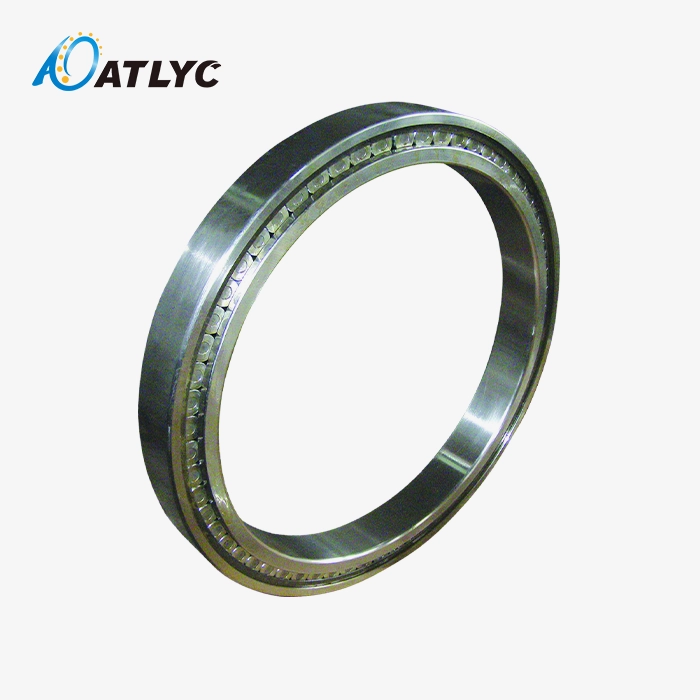
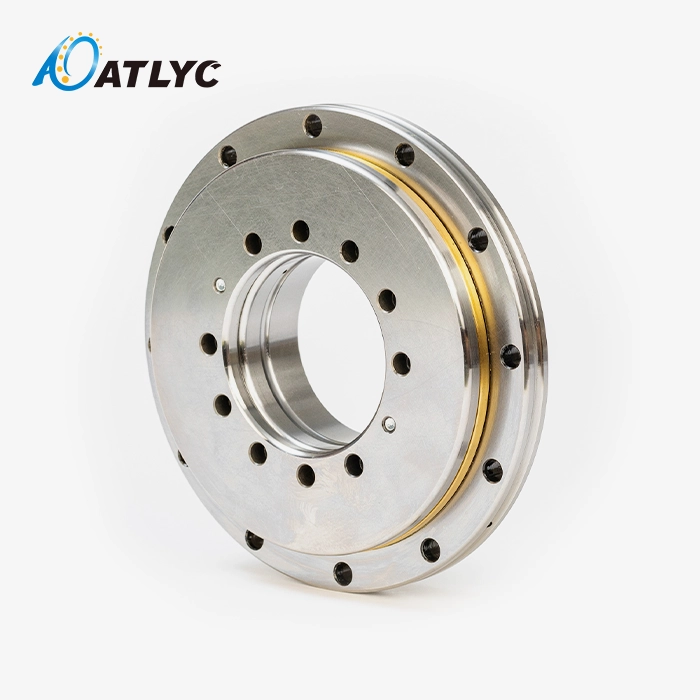
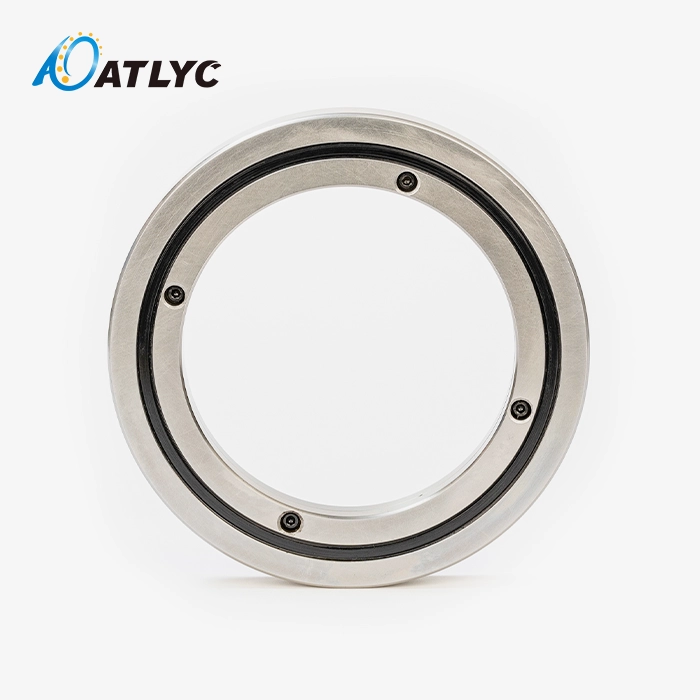
The Cross roller bearing XSU line uses a single-piece ring design that completely changes how precision bearings are built into machines. In contrast to usual bearing sets that need separate flanges or support housings, this type has fastening holes cut directly into both the inner and outer rings. This way of designing stops tolerances from building up on multiple parts, so the contact shape is the same throughout the whole system.
At the heart of the XSU line is a set of crossed rollers. Within V-groove raceways, cylindrical rollers are placed perpendicular to each other and rotate at exact 90-degree angles. Spacers between each roller keep metal from touching metal while the machine is turning. This arrangement makes several load-bearing contact points that support radial forces, axial thrusts, and twisting moments all at the same time in a single small unit. The V-groove raceway design evenly spreads forces, so the bearing can be used instead of several regular bearings when room is limited.
Technical Specifications and Material Composition
The XSU line comes in a wide range of sizes to meet the needs of a wide range of applications. The inside diameters range from 20 mm to 1100 mm, and the outside widths range from 70 mm to 1500 mm. You can choose from widths ranging from 12mm to 110mm, giving you choices for uses that need to fit into specific spaces. Because of this, equipment makers can choose exact bearing sizes that improve both performance and fitting efficiency.
Material choice has a direct effect on how long a bearing lasts and how much weight it can hold. The XSU line uses Gcr15 and Gcr15SiMn alloy steels, which are known for their high resistance to wear and ability to retain their stiffness. When used at normal temperatures, Gcr15 works reliably, but Gcr15SiMn is tougher and better for situations where shock loads or temperature changes happen. When these materials are heated, they reach surface hardness levels above 58 HRC. This makes sure that the raceway surfaces are sturdy and keep their dimensions over long periods of time.
Precision Grades and Performance Advantages
Accuracy scores describe the spinning accuracy features that are important for high-performance machines. The XSU line has different levels of precision, from P6 (standard industrial grade) to P0, P5, P4, and finally P2 (ultra-precision grade). Each grade has tighter requirements for the shape of the raceway, the regularity of the roller width, and the runout traits of the finished part.
For precision machining centers where part quality directly depends on angular positioning accuracy, P5 and P4 grades are optimal. P2 grade bearings are utilized in measuring instruments and semiconductor manufacturing equipment requiring sub-micron accuracy. The Cross roller bearing XSU series naturally provides excellent runout accuracy because its rollers contact the raceways simultaneously at multiple points, smoothing out minor geometric variations. This technical advantage results in smooth rotation with minimal friction, preventing excessive heat generation during operation and maintaining stability under variable loads.
Comparing the XSU Series with Other Cross Roller Bearings
Performance Metrics Against Alternative Designs
Using performance metrics to compare one design to others
There are different types of cross rollers on the market, and each one is best suited for a certain type of purpose. To help procurement specialists match bearing architecture to practical needs, they need to know how the XSU series stacks up against other options, such as split ring designs or outer ring rotation models.
When you need to connect XSU series bearings directly to matching surfaces without using any adapters in between, they work great. The built-in fixing holes let you make fixed links that make rigid load lines from the bearing to the frame. This design has better moment stiffness than bearings that are placed in separate housings, where contact compliance between different parts makes the whole system less rigid. This one-piece stiffness helps equipment that is subjected to cutting forces, collision loads, or fast acceleration by keeping its positional accuracy in changing conditions.
Different types of cross rollers with split inner or outer rings make assembly easier in small areas where it's hard to put the whole bearing. With these split-ring designs, bearing parts can be installed one at a time through areas that are hard to get to. However, the building process adds more tolerance factors, and it usually takes special tools to get the setup settings just right. The XSU line gives up this installation freedom in exchange for more rigid structures and easier mounting methods.
Application-Specific Strengths and Limitations
When choosing between bearing types, you have to weigh the practical goals against the features of each design. The XSU series works especially well in moderate-speed rotational tasks where load capacity and placement accuracy are more important than maximum rotary speed. The crossed roller setup with spacers creates rolling friction that makes it harder to go fast than options with ball bearings. In most cases, they are used for steady rotations slower than 500 RPM or for shifting motion patterns like those found in robotic joints and counting tables.
When something needs to keep spinning at a very high speed, like a machine tool wheel that goes over 1000 RPM, angular contact ball bearings or cylindrical roller bearings that are not crossed out often work better. At high speeds, these options cut down on internal friction losses. On the other hand, the XSU series can handle mixed loading conditions that would normally need multiple ball bearings set up in complicated ways. This makes the general design of the machine easier while lowering the height of the assembly.
The fixing hole design built into XSU bearings makes fitting very specific. To keep the ring from warping during installation, mounting surfaces must have the right bolt circle sizes and maintain their smoothness limits. For uses with non-standard mounting ports, you might need to make your own adapter plates, which could cancel out the benefits of straight mounting. Separated ring designs can sometimes work better with odd mounting shapes because the body is more flexible.
Essential Procurement Considerations for the XSU Series
Defining Technical Requirements and Operating Parameters
Successful procurement of the Cross roller bearing XSU series begins with clearly defining operating conditions and expected performance levels. A load analysis constitutes the initial step in proper bearing selection. Engineers must calculate the radial force, axial pressure, and moment load that the bearing will experience under both normal and peak demand conditions. While the XSU series can simultaneously accommodate all three load types, proper sizing requires detailed information about load magnitude, direction, and duty cycle patterns.
The required speed has a direct effect on the bearing design and lubrication needs. The Cross roller bearing XSU type works well at normal spinning speeds, but when the speed limits are reached, users need to carefully look at how much heat is produced and how often upkeep is needed. An operating environment review finds out if there are any toxins, high temperatures, or toxic substances that could affect the choice of seal and the requirements for the material.
Accuracy needs determine the choice of precision grade and have a direct effect on the cost of purchase. When compared to P5 grade bearings, ultra-precision P2 grade bearings cost more. Procurement professionals find a balance between the need for accuracy and the need to stay within budget. They do this by matching precision grades to the needs of the application rather than over-specifying margin standards. When P4 grade bearings work just as well for a lot less money, they are usually a better choice for a machine center that needs to make parts with ±0.02mm standards.
Supplier Qualification and Quality Assurance
Both the quality of the production process and the right specifications affect how reliable a bearing is. Checking the identities of suppliers keeps you safe from fake goods and makes sure that quality standards are always met. ISO 9001 certification shows that quality management systems are well-established, and IATF 16949 certification covers the quality needs of the car industry, including statistical process control and methods for ongoing growth.
An evaluation of a supplier's manufacturing ability shows whether they can meet the number needs and stick to regular shipping plans. OEMs and equipment makers that are in the middle to big size need providers that can support current projects without having to wait for allocation delays. Check the stated skills, the status of the inspection equipment's accuracy, and the process control methods through site visits or checks by a third party. Suppliers with specialised cross roller bearing production lines usually provide more steady product quality than businesses that only make the XSU series on occasion.
Total cost of ownership is affected by warranty terms and professional help in a big way. Full guarantees that cover problems with the way the product was made lower the risk of original investments in buying things. It's also important that providers who give application tech support help customers choose the best bearings and fix problems they're having with fitting. Having access to experienced expert tools cuts down on the time it takes to set up and avoids early fails caused by bad fitting or greasing.
Pricing Dynamics and Lead Time Planning
XSU series pricing reflects precision grade, size, and order volume. Standard catalog sizes in common precision grades typically maintain competitive pricing due to established production volumes. Custom specifications—modified mounting hole patterns, special seal configurations, or non-standard materials—introduce engineering costs and extended lead times. Procurement planning should identify customization needs early to accommodate design validation and tooling preparation schedules.
Bulk ordering generates economies of scale that reduce unit costs for long-term programs. Establishing blanket purchase agreements with scheduled releases balances inventory carrying costs against volume pricing advantages. This procurement approach particularly benefits equipment manufacturers with predictable production volumes requiring consistent bearing supply throughout product lifecycles.
Lead time expectations vary significantly based on specification complexity and supplier inventory practices. Standard XSU configurations from established suppliers often ship within two to four weeks. Custom specifications may require eight to twelve weeks for initial production runs as tooling preparation and first-article inspection are complete. Strategic procurement incorporates these timelines into production planning, ordering long-lead custom items early while managing standard components through just-in-time delivery arrangements.
How to Choose the Right Cross Roller Bearing XSU Series for Your Application
Application Segmentation and Performance Matching
Different industrial sectors impose distinct performance priorities on the Cross roller bearing XSU series selection. Understanding these application-specific demands guides specification decisions that optimize bearing performance for intended service conditions.
Industrial robotics applications prioritize compact envelope dimensions and moment load capacity. Robotic joint assemblies require bearings supporting off-center loads generated by extended arm lengths and payload masses. The XSU series integrated design minimizes installation height, allowing joint mechanisms to maintain low profiles that reduce overall robot size. P5 or P4 precision grades deliver the positional repeatability necessary for accurate path tracking and payload positioning. Service life expectations in robotics typically span 20,000 to 30,000 operating hours before scheduled maintenance intervals.
Precision machining center rotary tables demand exceptional accuracy retention under cutting forces. Milling operations generate complex load patterns combining radial cutting forces with moment loads from offset workpiece positioning. The crossed roller arrangement of XSU bearings resists these multi-directional forces while maintaining angular positioning accuracy critical to the dimensional quality of machined features. P4 precision grade typically satisfies accuracy requirements for general machining applications, while ultra-precision grinding or coordinate measuring machines may specify P2 grade for sub-micron repeatability.
Medical imaging equipment presents unique requirements combining smooth rotation, vibration damping, and patient safety considerations. CT scanner gantries utilize large-diameter XSU bearings that rotate continuously while supporting X-ray source and detector assemblies. Bearing quietness and vibration characteristics directly affect image quality and patient comfort. P4 precision grade balances performance requirements with procurement costs for these specialized medical applications.
Evaluation Metrics and Selection Criteria
Systematic bearing selection weighs multiple performance factors against application priorities. Load capacity represents the primary selection criterion, ensuring bearing ratings exceed actual operating loads with appropriate safety margins. The XSU series publishes basic static load ratings (C0) and basic dynamic load ratings (C) that enable life calculation using industry-standard L10 methodology. Applications requiring extended service intervals specify bearings with load ratings significantly exceeding calculated minimums to achieve target life expectancy.
Size constraints often drive bearing selection in space-limited equipment designs. The XSU series integrated design reduces the installation envelope compared to housed bearing alternatives, but available sizes must accommodate shaft diameters and mounting space limitations. Equipment designers balance bearing size against load capacity requirements, sometimes accepting larger machine footprints to accommodate adequately sized bearings rather than overloading smaller alternatives.
Accuracy requirements translate directly to precision grade selection and cost implications. Each precision grade improvement typically increases bearing cost by 30% to 50% compared to the next lower grade. Value engineering analysis determines whether application tolerances genuinely require ultra-precision grades or whether standard precision alternatives deliver acceptable performance. Specifying P4 grade when P5 adequately meets accuracy requirements unnecessarily inflates procurement costs without functional benefit.
Long-Term Planning and Lifecycle Cost Considerations
Total cost of ownership extends beyond initial procurement prices to encompass installation expenses, maintenance requirements, and replacement intervals. The Cross roller bearing XSU series integrated mounting simplifies installation compared to housed alternatives, reducing assembly labor costs and minimizing tolerance stack-up that complicates alignment procedures. Direct bolt mounting enables field replacement without specialized tools or alignment equipment, lowering maintenance costs over equipment service life.
Lubrication requirements affect operating costs and maintenance intervals. The XSU series typically receives initial lithium-based grease lubrication suitable for moderate-speed applications. Standard grease fill supports 2,000 to 5,000 operating hours before relubrication becomes necessary, varying with operating speed, load intensity, and environmental contamination levels. Applications in clean environments or intermittent duty cycles often achieve extended relubrication intervals that reduce maintenance frequency and associated downtime costs.
Scalability considerations influence bearing selection for equipment platforms with multiple variants or future expansion plans. Standardizing on common XSU sizes across product families consolidates inventory requirements and simplifies spare parts management. Equipment manufacturers developing product lines benefit from selecting bearing sizes that accommodate current performance specifications while providing growth capacity for enhanced future models without complete redesign investments.
Conclusion
Selecting the appropriate Cross roller bearing XSU series requires a comprehensive evaluation of technical requirements, supplier capabilities, and total lifecycle costs. The integrated mounting design and crossed roller architecture deliver exceptional rigidity and multi-directional load capacity within compact envelopes, serving precision robotics, machining centers, and medical equipment applications effectively. Successful procurement balances performance specifications against budget constraints while ensuring supplier quality certifications and technical support capabilities support long-term operational reliability. Understanding accuracy grade implications, customization options, and proper installation procedures maximizes bearing performance throughout equipment service life, ultimately contributing to production efficiency and product quality objectives.
FAQ
What installation procedures ensure optimal XSU series performance?
Proper installation begins with thorough cleaning of mounting surfaces to remove debris or contamination that creates uneven contact. Mounting bolts should tighten following a star pattern sequence, progressively increasing torque in multiple passes rather than fully tightening individual bolts sequentially. This approach prevents ring distortion that degrades raceway geometry and increases friction. Torque specifications typically range from 10 to 150 Nm, depending on bearing size and bolt diameter, with manufacturer documentation providing exact values. Surface flatness of mating components should maintain tolerances within 0.01mm to prevent localized stress concentrations.
How do I verify supplier authenticity and product quality?
Legitimate Cross roller bearing XSU series suppliers provide comprehensive documentation, including material certifications, dimensional inspection reports, and quality management system certificates. ISO 9001 and IATF 16949 certifications from accredited registrars verify established quality processes. Request test reports demonstrating accuracy grade compliance through coordinate measuring machine inspections of raceway geometry and roller dimensional consistency. Established manufacturers maintain traceability systems linking individual bearings to production batches and raw material lots, enabling quality investigation if field issues arise.
Can XSU series bearings accommodate custom specifications?
Customization options include modified mounting hole patterns, special seal configurations for contaminated environments, and alternative materials for temperature extremes or corrosive conditions. Custom specifications typically require minimum order quantities to justify tooling investments and engineering validation. Lead times extend to accommodate design review, prototype validation, and production setup. Procurement specialists should engage suppliers early during equipment design phases to evaluate customization feasibility and incorporate extended timelines into project schedules.
Partner with ATLYC for Your Cross Roller Bearing XSU Series Requirements
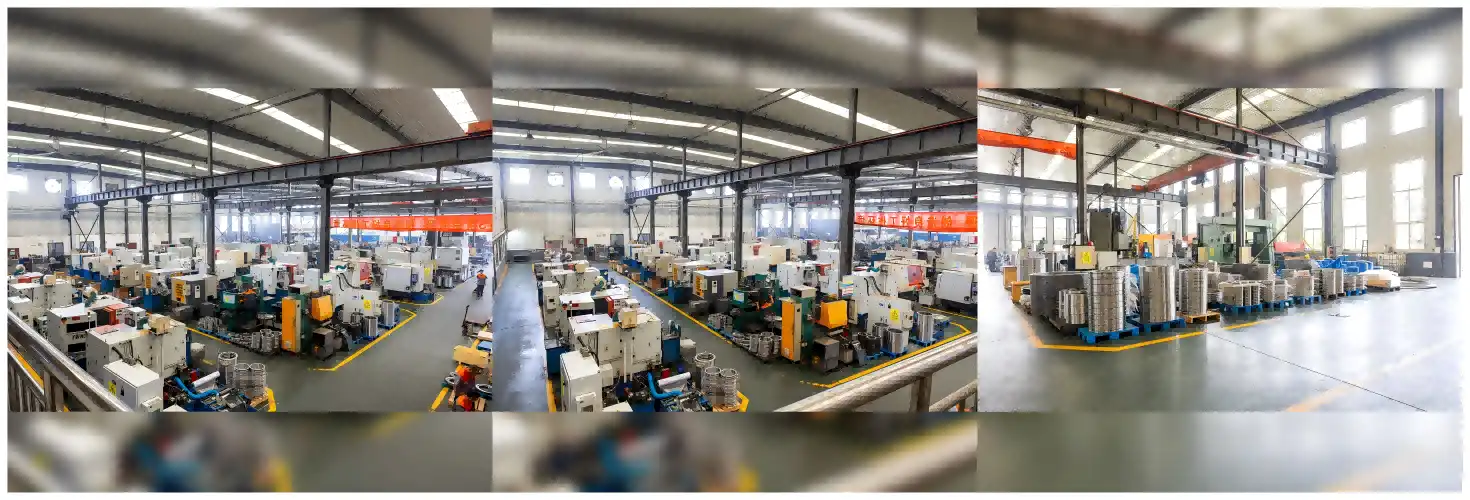
ATLYC stands as your trusted Cross roller bearing XSU series supplier, combining 15 years of manufacturing expertise with ISO 9001 and IATF 16949 certified quality systems. Our engineering team provides comprehensive technical support throughout specification development, helping you select optimal bearing configurations that balance performance requirements with cost-effectiveness. We maintain production capacity across six specialized workshops, ensuring reliable supply continuity for mid-to-large OEMs and industrial equipment manufacturers operating in demanding global markets. Contact our specialists at auto@lyautobearing.com to discuss your specific application requirements, request detailed technical specifications, or receive competitive quotations for both standard catalog items and custom-engineered solutions tailored to your operational needs.
References
1. Harris, T.A., and Kotzalas, M.N. "Advanced Concepts of Bearing Technology: Rolling Bearing Analysis, Fifth Edition." CRC Press, Taylor & Francis Group, 2006.
2. Shimizu, T., and Nakamura, K. "Design and Performance Analysis of Cross Roller Bearings for Precision Machinery Applications." Journal of Tribology and Mechanical Engineering, Vol. 24, No. 3, 2018, pp. 145-162.
3. ISO 199:2014. "Rolling Bearings - Thrust Bearings - Geometrical Product Specifications (GPS) and Tolerance Values." International Organization for Standardization, Geneva, Switzerland.
4. Witte, D.C. "Operating Torque of Tapered Roller Bearings." SAE Technical Paper Series, Society of Automotive Engineers International, 1973.
5. Eschmann, P., Hasbargen, L., and Weigand, K. "Ball and Roller Bearings: Theory, Design and Application, Third Edition." John Wiley & Sons, Chichester, United Kingdom, 1985.
6. Gupta, P.K. "Advanced Dynamics of Rolling Elements." Springer-Verlag, New York, 1984.
Learn about our latest products and discounts through SMS or email