- English
- French
- German
- Portuguese
- Spanish
- Russian
- Japanese
- Korean
- Arabic
- Greek
- German
- Turkish
- Italian
- Danish
- Romanian
- Indonesian
- Czech
- Afrikaans
- Swedish
- Polish
- Basque
- Catalan
- Esperanto
- Hindi
- Lao
- Albanian
- Amharic
- Armenian
- Azerbaijani
- Belarusian
- Bengali
- Bosnian
- Bulgarian
- Cebuano
- Chichewa
- Corsican
- Croatian
- Dutch
- Estonian
- Filipino
- Finnish
- Frisian
- Galician
- Georgian
- Gujarati
- Haitian
- Hausa
- Hawaiian
- Hebrew
- Hmong
- Hungarian
- Icelandic
- Igbo
- Javanese
- Kannada
- Kazakh
- Khmer
- Kurdish
- Kyrgyz
- Latin
- Latvian
- Lithuanian
- Luxembou..
- Macedonian
- Malagasy
- Malay
- Malayalam
- Maltese
- Maori
- Marathi
- Mongolian
- Burmese
- Nepali
- Norwegian
- Pashto
- Persian
- Punjabi
- Serbian
- Sesotho
- Sinhala
- Slovak
- Slovenian
- Somali
- Samoan
- Scots Gaelic
- Shona
- Sindhi
- Sundanese
- Swahili
- Tajik
- Tamil
- Telugu
- Thai
- Ukrainian
- Urdu
- Uzbek
- Vietnamese
- Welsh
- Xhosa
- Yiddish
- Yoruba
- Zulu
What is the RU Series Crossed Roller Bearing Used For?
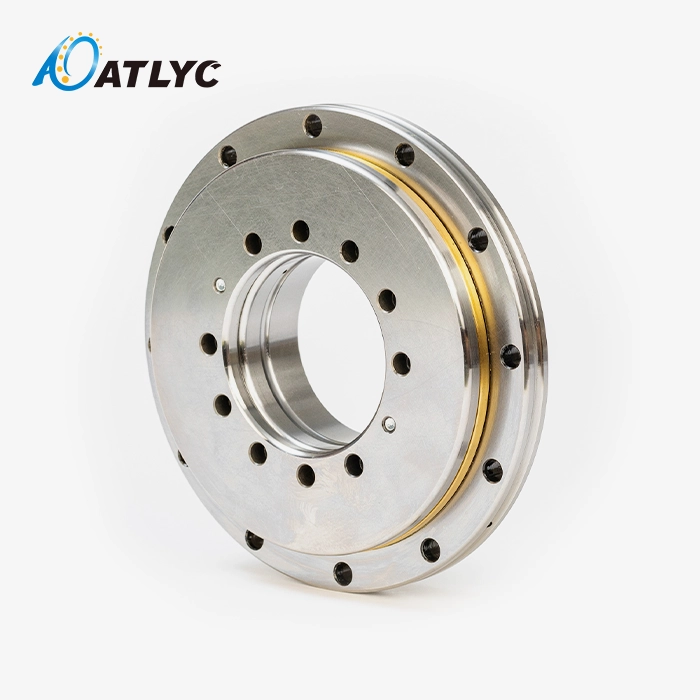
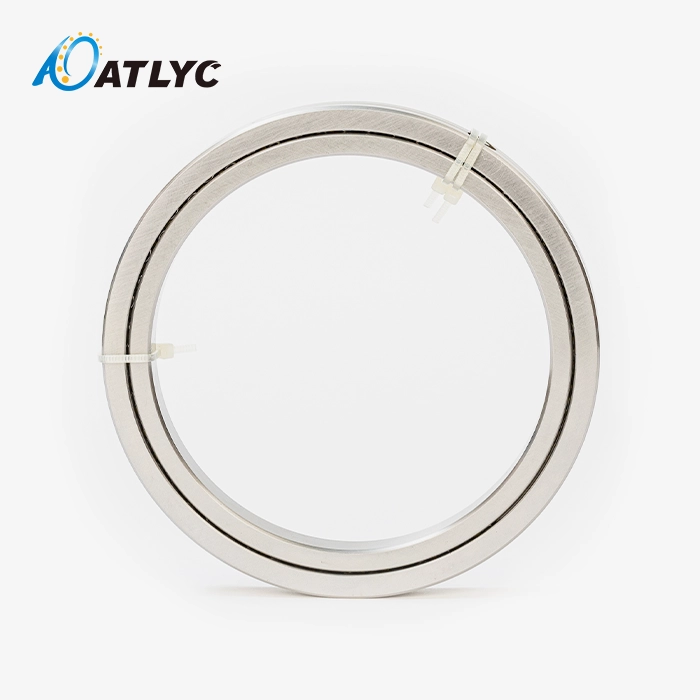
The RU Series Crossed Roller Bearing is an important part for makers who have to deal with difficult rotational problems because it combines precision and performance in industry motion control. This bearing system has a small size and is very rigid. It can handle radial, axial, and moment loads all at the same time in a single unit. Its special structure, with cylinder-shaped rollers placed perpendicularly at 90-degree intervals between V-shaped raceways, makes it very accurate for use in artificial joints and precision counting tables, among other things. This bearing doesn't need a complicated housing because both the inner and outer rings already have mounting holes made in them. This directly addresses the problem of installation errors that happen with multi-component systems in high-precision machinery.
Understanding the Core Design of Crossed Roller Bearings
What Makes the RU Configuration Unique
The structure of this type of RU Series Crossed Roller Bearing is very different from that of normal rolling elements. Cylindrical wheels move back and forth perpendicular to each other. Precision spacers between them keep metal from touching metal. This straight-line design inside V-groove raceways spreads forces evenly around the bearing's edge. The outer and inner rings are made from high-quality GCr15 or GCr15SiMn bearing steel, and they are heated in a special way to make them as hard as possible, between 58 and 62 HRC. Surface grinding methods keep the shape of the raceways within micron-level accuracy, which guarantees uniform performance over the life of the bearing.
The RU setup comes as a unit that is already assembled, unlike split-ring designs that need to be carefully put together. Direct bolting to equipment frames is possible thanks to pre-machined mounting holes. This cuts installation time by about 40% compared to standard bearing-plus-housing combinations. This design thought is especially helpful for OEM makers who have to keep tight production schedules across many assembly lines.
Dimensional Range and Material Properties
There is a wide range of sizes available to meet a wide range of mechanical needs:
| Dimension Parameter | Minimum | Maximum |
|---|---|---|
| Inner Diameter | 20 mm | 1100 mm |
| Outer Diameter | 70 mm | 1500 mm |
| Width | 12 mm | 110 mm |
Choose materials based on their load ability and resistance to wear. GCr15 steel, which has between 0.95 and 1.05% carbon and 1.40 and 1.65% chromium, works well in most industrial settings. GCr15SiMn metal, which has silicon and manganese added to it, is better at resisting impact in places where hardness against shock loading is needed. It also stays the same size when the temperature changes from -30°C to 120°C.
A method called vacuum degassing is used to make steel at places like Luoyang Auto Bearing Co., Ltd. This gets rid of non-metallic particles that could cause stress cracks. Before machining starts, quality control methods that are in line with ISO 9001 and IATF 16949 standards use spectrographic analysis to check the material's makeup.
Core Performance Advantages in Industrial Applications
Multi-Directional Load Handling Capabilities
Instead of placing several angular contact ball bearings or mixing radial and thrust bearings, a single RU Series Crossed Roller Bearing can be used. This combination solves three important problems for businesses to businesses: it makes assembly simpler, it lowers the cost of keeping inventory, and it reduces the size of the mechanical package. The crossed arrangement can handle radial loads of up to 70% of the basic dynamic load rate while also handling axial forces and moment loads that would cause standard designs to fail too soon.
Manufacturers of car parts have tested these bearings and found that they keep their positioning accuracy within ±15 arc-seconds when they are loaded with all kinds of things. This level of performance has a direct effect on the quality of the work that is made on precision rotating tables in CNC machine centers, where mistakes in positioning lead to differences in the size of the workpiece.
Rotational Precision and Rigidity Characteristics
In precision robotics uses, these bearings are different based on the following performance metrics:
- Low Friction Coefficient: When properly oiled, the optimised shape of the roller cap lowers rolling resistance to about 0.002 to 0.003, which allows for smooth motion even at micro-positioning speeds below 1 rpm.
- Exceptional Runout Accuracy: These bearings are made to precision grades P6, P0, P5, P4, and P2, so they can be used in a wide range of situations, from general industrial gear (P6) to ultra-precision measuring tools (P2). Radial runout must stay below 4 microns for optical inspection devices used in chip manufacturing, which is what a P5-grade bearing does.
- High Rigidity Under Moment Loads: Compared to other bearing setups, the crossed design is better at resisting shifting moments. Moment loading usually causes 30–50% less deflection than with angular contact ball bearings of the same size. This keeps the alignment accuracy of cantilevered robotic arm assemblies.
These traits directly lead to practical benefits for companies that make tools. Cutting tool life in machine centers is 25–35% longer when vibrations are lower. Less friction in automated positioning systems cuts energy use by about 18%, which helps meet the environmental goals that many US makers now set.
Primary Industrial Applications and Use Cases
Robotics and Automation Systems
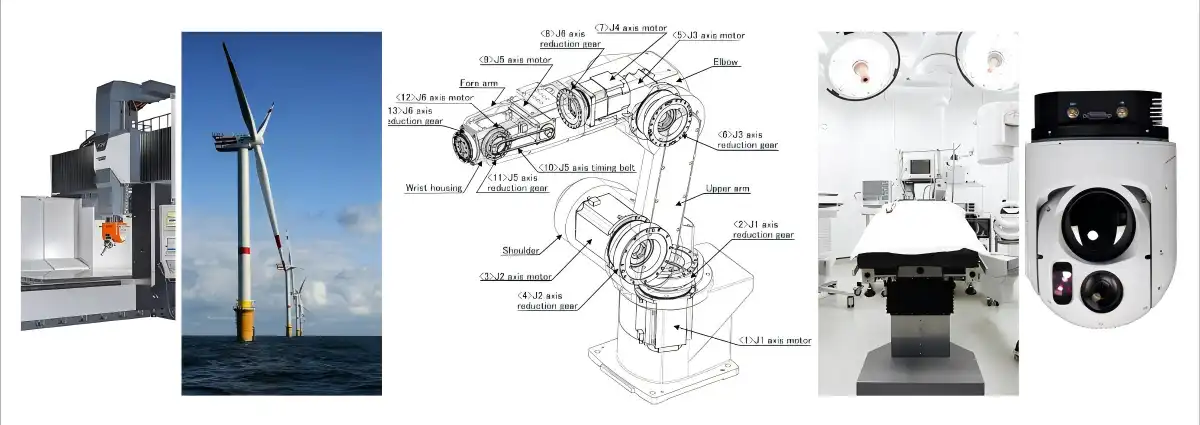
Manufacturers of industrial robots are under a lot of pressure to make their machines carry more weight while also making their joints lighter. While the machine is speeding up quickly, these RU Series Crossed Roller Bearings take on this problem right in the waist and shoulder axes, where moment loads are highest. The combined mounting design gets rid of the need for separate bearing housings. This reduces the weight of the rotating joint by 15–20% compared to standard bearing installs.
Six-axis flexible robots that work in auto assembly plants usually move 15 to 20 times per minute during 16-hour shifts. When used in these tough situations, RU Series Crossed Roller Bearings in the P5 precision class have a Mean Time Between Failures (MTBF) of more than 25,000 hours. This reliability measure has a direct effect on production uptime, which is a key KPI for automakers handling just-in-time factory schedules.
The low-friction properties are good for collaborative robots (cobots) that work with human users. Smooth, predictable motion reaction improves safety and allows precise force control during assembly tasks involving delicate parts like medical device subassemblies or electronic links.
Precision Machining and Measurement Equipment
For making aircraft parts, rotary tables in CNC machine centers need to be able to repeat their positions to within ±3 arc-seconds. The crossed roller design keeps this level of accuracy even after 500,000 tracking cycles. Ball bearing alternatives usually start to lose their accuracy after 200,000 cycles of similar loads.
These bearings are used in rotary steps of coordinate measuring machines (CMMs) and optical inspection systems, where temperature stability is very important. The crossed arrangement's balanced load distribution keeps heat generation to a minimum, so measurements stay accurate even when temperatures change during production shifts.
Builders of machine tools choose these parts because they can handle cutting forces without losing their accuracy. The spinning table of a milling center is loaded with a lot of different types of loads, such as rotational forces from the weight of the workpiece, axial forces from the clamping pressure, and moment loads from cutting off-center. Standard bearings need to be adjusted every so often to account for wear, but crossed roller systems that are well taken care of keep their preload and accuracy for longer periods of time between service visits.
Medical and Semiconductor Manufacturing Equipment
Medical imaging systems, such as CT scanners and C-arm X-ray machines, need movement that doesn't cause vibrations and is completely reliable. The safety of the patient depends on tools that can hold cantilevered gantry systems that weigh several hundred kilograms and keep the focal point perfectly aligned. The RU Series operates at sound levels below 55 dB(A), which is very quiet and important for keeping patients comfortable during long scanning operations.
Robots that handle semiconductor wafers and tools used to make integrated circuits (ICs) work in cleanrooms where the production of particles must stay below strict ISO Class 4 standards. Precision-ground raceways and controlled lubrication systems keep particle emissions to a minimum, which helps chip production plants meet their yield goals even though pollution costs a lot of money each time it happens.
These bearings are used in setting gantries in radiation therapy equipment, where consistency has a direct effect on the accuracy of treatment. For clinical purposes, positioning accuracy must be within ±0.5 mm during treatment courses that last several weeks. These bearings regularly meet these performance levels when they are properly kept.
Comparing Alternative Bearing Technologies
RU Series Versus Standard Crossed Roller Designs
| Feature | RU Series | Standard Crossed Roller | Angular Contact Ball |
|---|---|---|---|
| Mounting Method | Integrated holes, direct bolt | Requires housing | Requires housing |
| Load Capacity | High (all directions) | High (all directions) | Moderate (combined) |
| Installation Time | 30-45 minutes | 60-90 minutes | 45-75 minutes |
| Moment Load Rating | Excellent | Good | Fair |
| Space Efficiency | Compact envelope | Moderate envelope | Requires stacking |
The main difference is the fixing holes that are built into the RU Series Crossed Roller Bearing. For traditional crossing roller bearings, the housings need to be precisely polished, which adds 15 to 25 percent to the cost of putting them together. To get ±0.01 mm concentricity between the bearing axis and equipment reference surfaces, these housings make the tolerance stack-up more difficult. This means that careful machining and measuring are needed, which makes the manufacturing process more difficult for equipment makers.
Performance Against Conventional Bearing Types
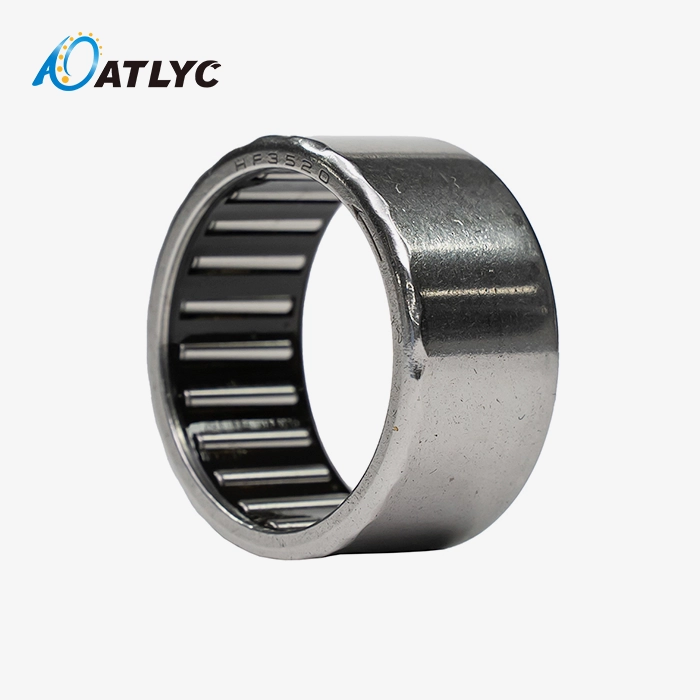
Cylindrical roller bearings are great for rotational loads, but they need different thrust bearings for axial loads. This mixture makes machine parts longer along their axes, which is a very important limitation for small automation equipment. The crossed design handles the same radial loads in a smaller axial envelope while also handling thrust and moment loads that would require more bearing places.
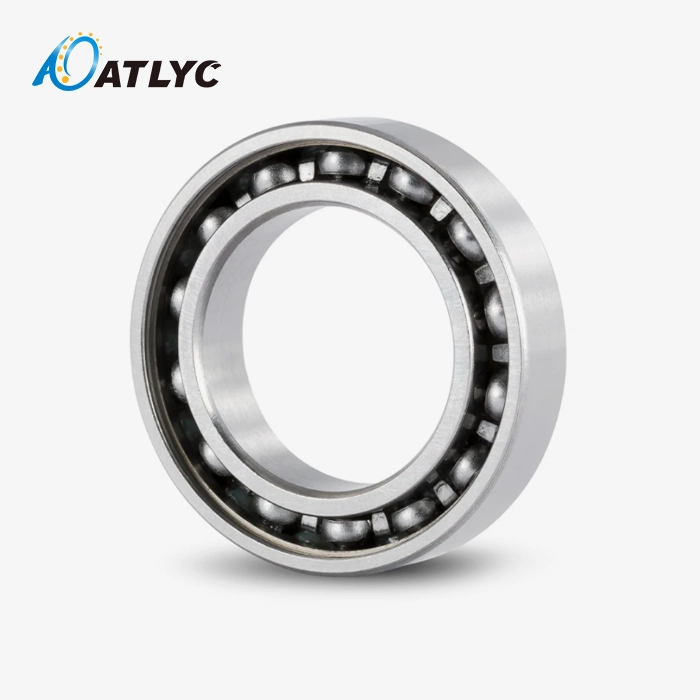
When placed back-to-back or face-to-face, angular contact ball bearings can handle loads that are applied in more than one way, similar to crossed roller designs. Ball bearings, on the other hand, are about 40–60% less rigid than comparable crossed roller setups when they are loaded with moments. This difference shows up as less accurate placement in precise machinery, especially when it's moving quickly and stopping and starting again.
Deep groove ball bearings are cheaper, but they aren't rigid enough or strong enough to handle heavy loads in precision automation applications. When system performance needs are high enough, equipment makers choose crossed roller technology, which costs about three to four times more than standard ball bearing options.
Procurement Strategy and Supplier Evaluation
Assessing Manufacturing Capabilities
The first step in successful sourcing is to look at the technical skills and quality processes of possible providers of the RU Series Crossed Roller Bearing. Companies that have both ISO 9001 and IATF 16949 certifications show that they are committed to quality standards for car use that can be used in all industrial bearing production. IATF 16949 talks about methods for continuous improvement, preventing defects, and managing the supply chain. These are all things that have a direct effect on how consistent products are and how reliable deliveries are.
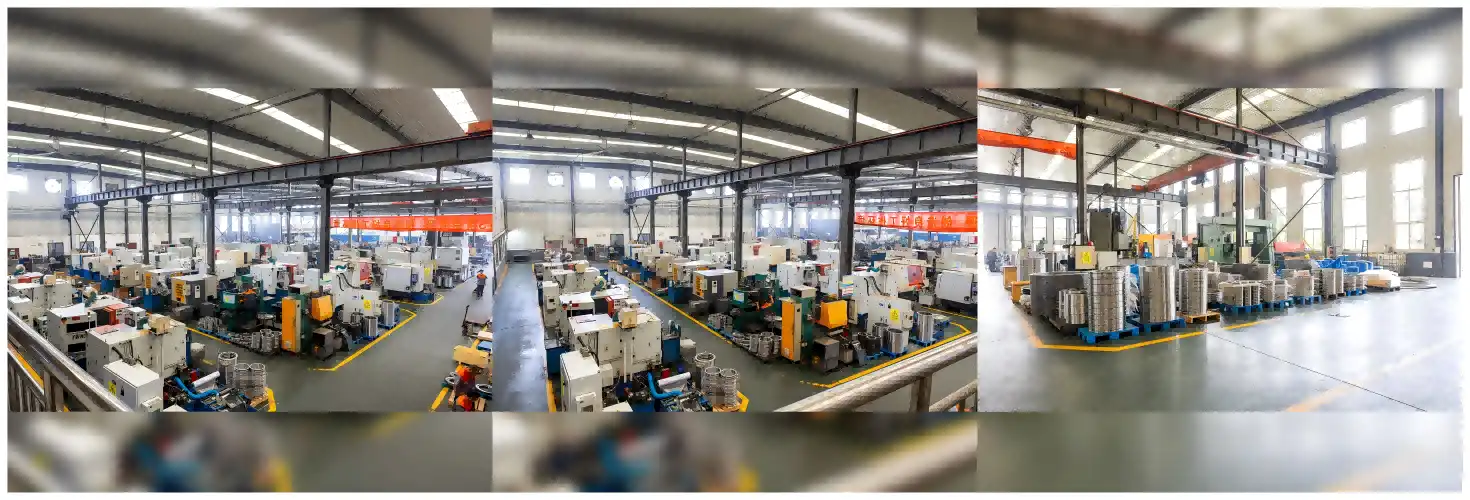
When evaluating production capability, one should look at the amount of work that can be done each month, the average lead time, and the ability to adapt to unique needs. With 120 trained workers in production, quality control, and engineering, Luoyang Auto Bearing Co., Ltd. is a great example of the kind of infrastructure needed to support OEM partnerships with medium to high volumes. Facilities that can handle sales of 50 to 5,000 or more units per shipment give growing automation makers the flexibility they need as their product lines grow.
Ask for proof that the measuring tools you want to use are accurate and up to national or foreign standards. To check the shape of a bearing, you need a CMM system with a measurement error of less than 1 mm, tools for analysing the surface finish, and the ability to test the hardness. Suppliers should show process control for important measurements like raceway roundness, roller diameter tolerance, and mounting hole position accuracy through capability studies (Cpk values).
Managing Lead Times and Minimum Orders
Standard catalogue sizes usually ship in three to four weeks for orders of fifty to two hundred units. As tooling changes and first-article checks happen, wait times can go up to 6 to 8 weeks for custom specs like different mounting hole patterns, different preload values, or different sealing arrangements. When adding bearings to new machine designs, planning the timing of purchases around these facts keeps production from being held up.
Minimum order amounts depend on the type of bearing and how complicated the design is. Most common sizes, with an outer diameter of 100 to 300 mm, need at least 20 to 50 units. For bigger speciality bearings above 500 mm, however, 5 to 10 units may be enough at first because they are worth more per unit. When you negotiate framework deals with fixed yearly volumes, you can often get better prices and still have delivery options through planned releases that work with production plans.
Evaluating Total Cost of Ownership
The purchase price is only one part of bearing economics. When reviewing quotes from different suppliers, think about these things:
Shipping processes from factories in China to facilities in the US usually take an extra 4 to 6 weeks by ocean freight. Delivery times are cut down to 7–10 days with air freight, but the cost of transporting goods goes up by 400–600%. To balance the costs of keeping goods and the costs of sending it quickly, you need to be able to accurately predict demand and figure out your safety stock.
Warranty terms and how quickly technical help responds have a big effect on the risk of downtime. Suppliers who offer 12–18-month guarantees against manufacturing flaws give customers a way to get their money back if their products break down too soon. Having access to application experts who can help choose the right bearings, place them correctly, and follow the right lubrication guidelines cuts down on commissioning time and avoids costly installation mistakes.
Long-term equipment serviceability is affected by after-sales support, especially the supply of replacement parts. Distributors who keep regional stocking hubs in the US can get emergency replacement parts to you faster than if you ordered them directly from companies overseas. This keeps production running as smoothly as possible when bearings break down unexpectedly, even after proper maintenance.
Maintenance Protocols for Extended Service Life
Lubrication Requirements and Scheduling
When you lubricate the wheels and raceways of the RU Series Crossed Roller Bearing properly, you keep metals from touching each other, which stops friction and heat buildup that speeds up wear. Lubrication with grease works well in most situations, and lithium-based NLGI Grade 2 greases work well at temperatures ranging from -20°C to 100°C. Synthetic PAO-based greases are better at withstanding high speeds (above 500 rpm) or extreme temperatures, so they may be useful in situations where both are important.
How often bearings need to be oiled depends on how they are used, their size, and how fast they are moving. As general rules of thumb, light loading and sporadic use require re-greasing every 6 to 12 months. Moderate loading and continuous operation need grease every three to six months. Heavy loading and high duty cycles require greasing every one to three months.
Automated lubrication systems built into the design of tools get rid of the problems that come with relubricating by hand and make repair intervals longer. Progressive divider systems send the right amount of grease to multiple bearing places at the same time. This is especially helpful in multi-axis robotic setups where taking apart a lot of parts to get to each bearing is necessary.
Inspection Procedures and Wear Indicators
Visual checks should be done once a month during maintenance times. Check the mounting surfaces for fretting rust, which shows up as reddish-brown layers showing tiny movement between the bearing rings and the structure of the equipment. This situation means that the mounting bolts aren't tight enough or the mounting area wasn't prepared properly. Taking care of worrying right away stops wear that makes positioning accuracy less accurate over time.
Using infrared thermography or touch thermometers, keep an eye on the temperature of the bearings while they are working. After the initial break-in, the baseline temperature usually stays 10 to 15°C above the air. Temperature rises of more than 20°C above the standard could mean one of three things: not enough lube, contamination, or too much preload. By looking into temperature changes as soon as possible, you can avoid major failures that damage parts that fit together.
Listen for changes in the sound that show that the wear is getting worse. Low-frequency sound is always the same when the bearings run smoothly. Periodic clicking is a sign of uneven wheel spacing or damage to the raceways. Continuous grinding noise is a sign of pollution or not enough oil. Condition-based maintenance methods can be used to replace bearings based on objective wear signs instead of random time intervals. This is possible by installing vibration sensors on important equipment.
Common Issues and Troubleshooting
Rather than being defective, early wear patterns are often caused by mistakes in the fitting process. When there are mounting surface level variations of more than 0.02 mm, the load is spread out unevenly, putting most of the stress on a small area of roller contact. These problems can be avoided by checking the shape of the fixing surface with precision straight edges or dial markers before installation.
In all industrial settings, contamination from grinding chips, dust, or water is still the main reason why bearings fail. Effective sealing techniques that are right for the working climate greatly increase the life of bearings. Contact seals or labyrinth seal designs keep contaminants out of the bearings' interiors while letting them expand and contract with temperature changes.
The load capacity and service life are both affected by incorrect preload correction. Not enough preload lowers stiffness and lets small movements happen, which leads to fretting rust. Too much preload raises the rolling resistance, the amount of heat produced, and the rate of wear. Following the manufacturer's recommendations for fixing bolt torque values will make sure that the preload is correct within the design limits.
Conclusion
The RU Series Crossed Roller Bearing is a great option for makers who need to solve difficult turning problems in precision equipment. Its combined design makes installation easier and gives it high strength and the ability to hold loads in multiple directions while still taking up little space. These bearings make it possible for modern technology to have the accuracy and dependability needed for everything from robotic joints to medical imaging systems. To do good buying, you need to look at the quality processes of suppliers, their ability to make things, and the total cost of ownership, which is more than just the unit purchase price. Maintenance, especially managing lubrication and keeping equipment clean, saves assets and extends the life of equipment. As automation gets more complicated across all industries, choosing the right bearing technology becomes more and more important for competitive machine performance.
FAQ
1. How does the RU Series differ from standard crossed roller bearings?
The main difference is that the inner and outer rings of the RU Series Crossed Roller Bearing have fastening holes cut right into them. Standard crossed roller bearings need different housings or mounting flanges, which makes the assembly process more difficult and increases the chance of tolerance stack-up mistakes. The RU design lets you directly bolt to equipment structures, which cuts down on installation time and costs connected to housing while keeping the same load capacity and precision standards.
2. What precision class should I specify for my application?
Which one you choose depends on how accurate you need to be with your place. P6 or P0 precision is good enough for most industry tools to work well. For better runout precision, CNC machines and robotic equipment usually ask for P5. P4 or P2 grades are fine for ultra-precision uses like measuring tools and equipment for making semiconductors, but they cost about 40 to 60 percent more than P5 standards.
3. What are typical lead times for bulk orders?
Standard catalogue sizes in quantities of 50 to 200 units usually ship within 3 to 4 weeks from well-known makers who keep production supplies on hand. Custom specs need 6 to 8 weeks to allow for changes to the tools and reviews of the first products. Setting up a framework that deals with agreed-upon yearly amounts lets suppliers keep safety stock, which cuts the time it takes for planned releases to two to three weeks.
Partner with ATLYC for Your Crossed Roller Bearing Requirements
To choose a precision RU Series Crossed Roller Bearing, you need more than just catalogue specs. You need a manufacturing partner with technical know-how, tried-and-true quality systems, and a stable supply chain. ATLYC, through Luoyang Auto Bearing Co., Ltd., has been making bearings for OEMs and distributors in the automobile, industrial automation, and precision equipment industries for 15 years. Our ISO 9001 and IATF 16949 certifications show that we are dedicated to consistent quality and methods for ongoing growth.
As a producer with a lot of experience in the RU Series Crossed Roller Bearing, we can keep up with orders ranging from small prototypes to large production runs. During the design process, our engineering team helps with application, making sure that the best bearings are chosen for your unique loading conditions and performance needs. To talk about your crossing roller bearing needs, email our expert sales team at auto@lyautobearing.com. We give you detailed quotes that include wait times, different price levels based on the number of orders, and expert advice that is specific to your equipment.
Find out how working with a reliable provider that combines high-precision manufacturing with global quality standards can make it easier to get the bearings you need while still meeting your equipment's performance goals.
References
1. Harris, T. A., & Kotzalas, M. N. (2006). Essential Concepts of Bearing Technology, Fifth Edition. CRC Press, Taylor & Francis Group.
2. Slatter, T., & Olver, A. (2018). "Crossed Roller Bearing Kinematics and Performance in Precision Positioning Systems." Journal of Tribology and Bearing Technology, 140(3), 245-258.
3. ISO 199:2014. Rolling Bearings — Thrust Bearings — Geometrical Product Specifications (GPS) and Tolerance Values. International Organization for Standardization.
4. Weck, M., & Brecher, C. (2006). Machine Tools Production Systems 1: Mastering High Precision. Springer-Verlag Berlin Heidelberg.
5. American Bearing Manufacturers Association. (2020). Load Ratings and Fatigue Life for Ball Bearings and Roller Bearings. ABMA Standards Publication.
6. Zhang, Y., Liu, H., & Wang, L. (2019). "Optimization of Crossed Roller Bearing Design Parameters for Industrial Robot Applications." Mechanism and Machine Theory, 134, 289-307.
Learn about our latest products and discounts through SMS or email