- English
- French
- German
- Portuguese
- Spanish
- Russian
- Japanese
- Korean
- Arabic
- Greek
- German
- Turkish
- Italian
- Danish
- Romanian
- Indonesian
- Czech
- Afrikaans
- Swedish
- Polish
- Basque
- Catalan
- Esperanto
- Hindi
- Lao
- Albanian
- Amharic
- Armenian
- Azerbaijani
- Belarusian
- Bengali
- Bosnian
- Bulgarian
- Cebuano
- Chichewa
- Corsican
- Croatian
- Dutch
- Estonian
- Filipino
- Finnish
- Frisian
- Galician
- Georgian
- Gujarati
- Haitian
- Hausa
- Hawaiian
- Hebrew
- Hmong
- Hungarian
- Icelandic
- Igbo
- Javanese
- Kannada
- Kazakh
- Khmer
- Kurdish
- Kyrgyz
- Latin
- Latvian
- Lithuanian
- Luxembou..
- Macedonian
- Malagasy
- Malay
- Malayalam
- Maltese
- Maori
- Marathi
- Mongolian
- Burmese
- Nepali
- Norwegian
- Pashto
- Persian
- Punjabi
- Serbian
- Sesotho
- Sinhala
- Slovak
- Slovenian
- Somali
- Samoan
- Scots Gaelic
- Shona
- Sindhi
- Sundanese
- Swahili
- Tajik
- Tamil
- Telugu
- Thai
- Ukrainian
- Urdu
- Uzbek
- Vietnamese
- Welsh
- Xhosa
- Yiddish
- Yoruba
- Zulu
Where to Buy RB5013 Crossed Roller Bearing: Supplier Guide
It’s not always about the lowest price when sourcing the correct RB5013 Crossed Roller Bearing. It’s important to work strategically with a manufacturer that values accuracy, scalability and international compliance. The RB5013 version is designed for applications with high stiffness requirements combined with moment loads and high rotational precision requirements. It is very important to find the right supplier for the performance and lifespan of your equipment. Procurement experts who manage multi-million dollar manufacturing lines realise that the dependability of vendors impacts uptime, warranty claims, and total cost of ownership across decades of operation.

Understanding RB5013 Crossed Roller Bearing Specifications and Applications
Core Technical Parameters Defining the RB5013
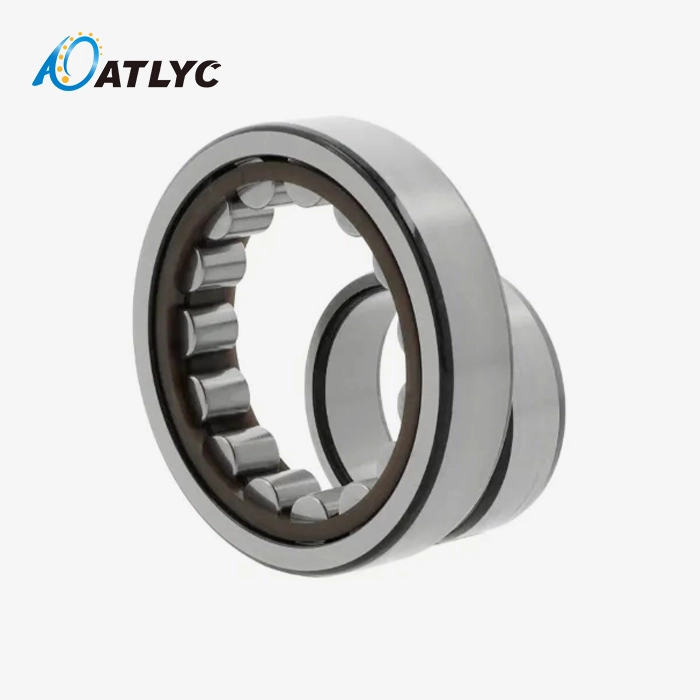
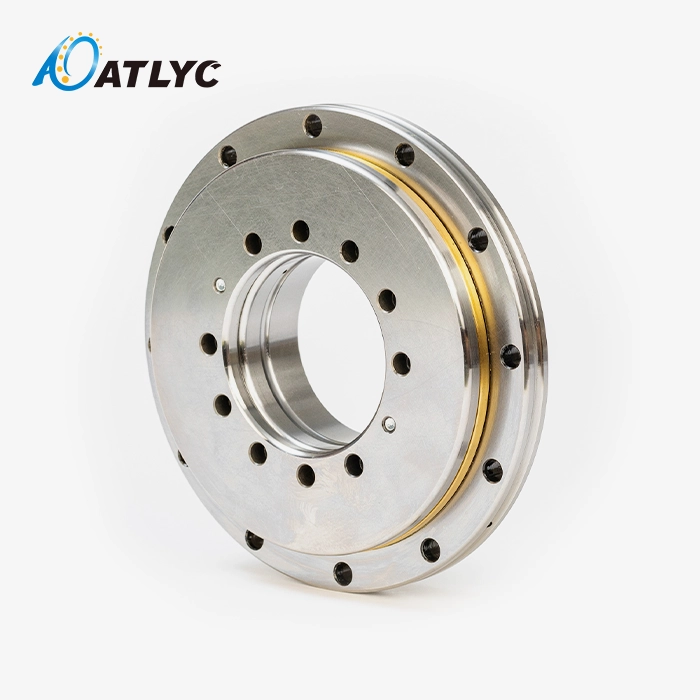
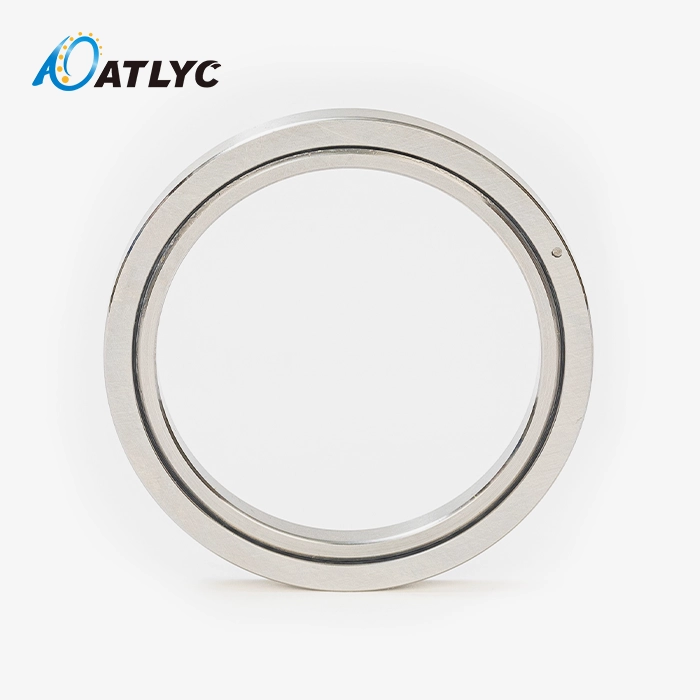
The RB5013 Crossed Roller Bearing has size and performance characteristics that are ideal for compact high load applications. Typical dimensions for bearings of this kind are an inner diameter of around 50mm, an outer diameter of roughly 80mm and a breadth of approximately 13mm. Precise dimensions depend on the tolerances of the manufacturer. Crossed roller designs differ in that they have a line-contact geometry, meaning the rollers are cylindrical and orientated at right angles in alternating rows. This arrangement provides three to four times the stiffness of comparably sized ball bearings, which is important in resisting combined axial, radial and moment stresses.Material choice is high-carbon chromium bearing steel (GCr15 or SUJ2 equivalent) with raceways induction hardened to 58-64 HRC. The hardening depth must be adequate to avoid subsurface fatigue cracking under cyclic stress . This requirement is checked by metallurgical cross-sections and hardness depth profiling at the ATLYC . Preload classification (commonly written as C0 or CC0) is used to assess internal clearance . Negative clearance (preload) removes backlash and results in zero-play operation which is critical for precision indexing tables and robot joints.
Industrial Applications Demanding RB5013 Performance
Crossed roller bearings are used by automation equipment makers to satisfy space restrictions and strict accuracy demands. "RB5013 is for six-axis articulated robots with waist and elbow joints. It allows complete extension with big payloads with no deflection or hysteresis. By setting the bearing runout tolerance to the ISO P5 or P4 precise grades, which we maintain throughout all our manufacturing batches, the repeatability may be achieved within ±0.01mm.Another important area of use is medical imaging systems. CT scanner gantries and X-ray C-arms spin continually to keep emitter and detector arrays within microns of alignment. The smooth, low-torque functioning of the RB5013 minimises vibration transfer and maintains picture quality at high speed acquisitions. Sealed versions (designated UU) include contact seals that preserve lithium-soap grease, but not particle pollution, for extended maintenance periods when environment access is limited.Semiconductor wafer handling robots work in cleanroom environments with tight constraints on lubricant outgassing and particle formation. The inherent efficiency of the crossing roller design in this instance, which has lower friction coefficients than tapered roller bearings, decreases heat generation and lubricant degradation and allows the continued running of three-shift production schedules.
Installation and Maintenance Protocols Maximizing Service Life
How long an RB5013 Crossed Roller Bearing will last is closely related to proper mounting practices. During installation, inspect raceway cleanliness using lint-free wipes and solvent cleaning to remove preservative coatings and machining residues. The flatness of the mounting surface should not exceed 0.01mm variation throughout the diameter of the bearing seat, else stress concentrations and premature spalling of the raceway would occur. We advocate the use of dial indicators to measure axial and radial runout after installation and compare the readings to the manufacturer’s data sheet. Usually, the radial runout is less than 10 microns and the axial runout is less than 15 microns for precision-grade bearings. Lubrication intervals vary on operation circumstances but as a general rule the unit should be regreased every 2000 - 5000 hours for mild loads and temperatures below 80 °C. Over-greasing causes churning losses, temperature increase. We define fill volumes at 30-40% of bearing free internal space. Vibration Analysis: monitoring frequency spectra for bearing fault frequencies to provide condition monitoring, predictive maintenance and early stage damage identification before catastrophic failure interrupts production schedules.
Comparison and Selection Guide for RB5013 Crossed Roller Bearings
Differentiating RB5013 from Comparable Bearing Types
| Bearing Type | Load Capacity (kN) | Precision Grade | Moment Rigidity | Typical Applications |
|---|---|---|---|---|
| RB5013 Crossed Roller | Radial: 12–18 / Axial: 10–15 | P5, P4 | High (3–4× ball bearings) | Robot joints, rotary tables |
| RB5011 Crossed Roller | Radial: 10–14 / Axial: 8–12 | P5, P4 | High | Compact indexing systems |
| Deep Groove Ball Bearing | Radial: 8–12 / Axial: 4–6 | P6, P5 | Moderate | General industrial rotation |
| Tapered Roller Bearing | Radial: 15–25 / Axial: 10–18 | P6 | Moderate | Heavy axial loads |
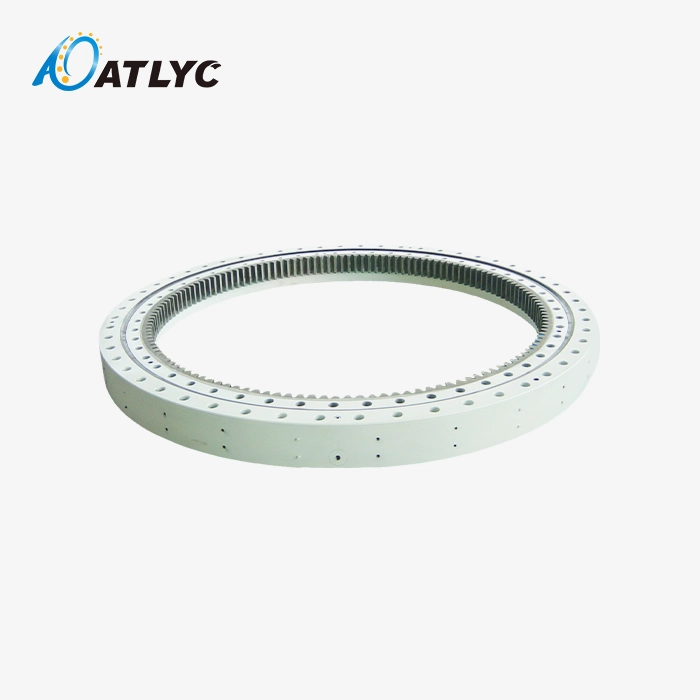
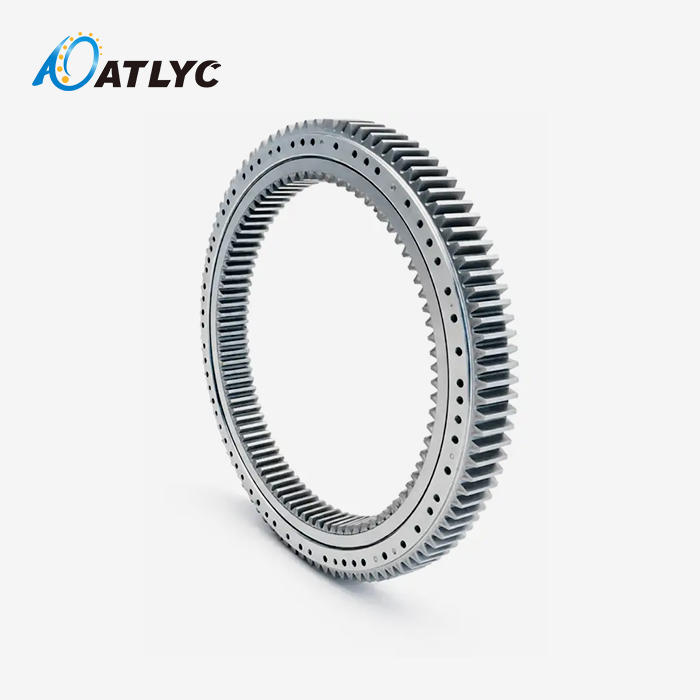
| Slewing Ring Bearing | Radial: 50–200 / Axial: 40–150 | P6 | Very High | Excavators, cranes |
The choice between the RB5013 and its sister RB5011 depends on envelope limits and loads. The increased cross-section of the RB5013 Crossed Roller Bearing can carry up to 20-30% more radial load, meaning robotic wrists can handle 15-25kg payloads at longer reach. In contrast, collaborative robots (cobots) with payloads under 10kg often use RB5011 variations, focusing on a decrease in weight and inertia.The application limits are explained by a comparison of crossed rollers and slewing ring bearings. Slewing rings are the best choice for diameters above 200mm where exceptionally large moment loads are the norm such in excavator turrets or wind turbine yaw drives. However, their penalties in size and weight become prohibitive in tiny automation equipment. The RB5013 hits the sweet spot, providing slewing-ring-like moment stiffness in packages that fit inside 100mm envelopes, suitable for indexing tables and medical gantries...
Cost-Benefit Analysis for Procurement Teams
Quality RB5013 units are in the $80-$250/piece range depending on precision grade, seal arrangement and volume. Premium brands need a 30–50% price premium based on tighter tolerance control, better surface finishes (Ra values ≤ 0.2 microns) and complete warranty coverage. However, new manufacturers like ATLYC that are ISO 9001 and IATF 16949 certified provide similar performance with 20–35% cost reductions, a key factor in high-volume OEM applications where cost per unit directly effects product competitiveness.The total cost of ownership is more than the purchase price. The cost of a failed bearing in a CNC machining center is more than the price of the bearing itself ($150 to $300 including labour) since it also causes production downtime, which averages $5,000 to $15,000 per hour in automotive component manufacture. The risk is minimised by selecting providers who have statistical process control (Cpk values more than 1.67 for essential dimensions) and batch traceability We have process capacity indices more than 1.8 on raceway roundness and roller diameter fluctuation to provide lot-to-lot consistent performance.Vendor selection is driven by lead times and supply chain resiliency. Standard configurations from recognised brands are sent from regional distribution hubs in 2-4 weeks, however unique preloads or seal materials might take 8-12 weeks. Six specialised workshops ensure a rapid response to changes in demand. Direct contact with manufacturers, who can program their production flexibly, shortens procurement cycles and allows the implementation of just-in-time inventory strategies to minimise the working capital tied up in bearing stocks.
Where to Buy RB5013 Crossed Roller Bearings — Finding Reliable Suppliers
Verifying Manufacturer Credentials and Certifications
Genuine crossed roller bearing manufacturers are in conformity with globally recognised quality management methods. ISO 9001 certification provides a basis for quality procedures, but automotive and aerospace OEMs rightly need IATF 16949, which has additional industry-specific standards relating to risk management, continuous improvement and supplier development. As of 2018, we are IATF 16949 certified and conduct yearly surveillance audits to ensure that we maintain the automotive quality standards that govern our operations from raw material inspection to final packaging.Beyond certificates, assess production capabilities using facility audits or in-depth supplier surveys. Key indications are:
- Production volume capability: Annual output exceeding 500,000 units signals investment in dedicated tooling and process optimization, translating to cost efficiency and consistent quality.
- In-house heat treatment: Facilities outsourcing induction hardening sacrifice process control; integrated heat treatment lines enable real-time adjustment of hardening depth and hardness gradients.
- Dimensional measurement equipment: CMM (Coordinate Measuring Machine) systems with sub-micron resolution verify profile accuracy, while roundness testers quantify raceway geometry deviations.
Request certification copies directly from manufacturers rather than relying on distributor assurances. We provide prospective clients with complete traceability documentation for each RB5013 Crossed Roller Bearing: material test reports (MTRs) confirming steel chemistry, heat treatment charts recording time-temperature profiles, and dimensional inspection reports covering 100% of critical parameters.
Evaluating Distribution Networks and After-Sales Support
Global bearing brands maintain extensive distributor networks, offering convenience but introducing margin layers increasing end costs. NSK, SKF, and FAG provide exceptional technical support—application engineering assistance, finite element analysis for custom installations, and field service troubleshooting. Their warranty terms typically span 12–24 months, contingent on proper installation and operating conditions remaining within datasheet specifications.Alternative sourcing through specialized Chinese manufacturers combines cost advantages with improving service capabilities. Over our 15-year evolution, ATLYC established partnerships serving automotive OEMs across South Korea, Germany, and the United States, demonstrating our ability to meet stringent quality expectations in demanding markets. Our technical team responds to inquiries within 24 hours, providing CAD models, load calculation assistance, and installation guidance tailored to specific applications—support levels rivaling multinational brands at substantially lower total costs.
Procurement Channels: Direct vs. Distribution
| Procurement Channel | Unit Price Range | Minimum Order Quantity | Lead Time | Technical Support Quality |
|---|---|---|---|---|
| Direct Manufacturer | $80–$180 | 50–100 pcs | 4–8 weeks | High (application engineers) |
| Authorized Distributor | $150–$250 | 1–10 pcs | 1–3 weeks | Moderate (catalog support) |
| Online B2B Platforms | $90–$200 | 10–50 pcs | 3–6 weeks | Variable (depends on seller) |
| Bearing Specialty Houses | $140–$220 | 5–20 pcs | 2–4 weeks | High (cross-referencing) |
Direct manufacturer engagement optimizes value for production runs requiring 100+ bearings annually. Establishing supplier relationships enables customization—modified seal materials for food-grade applications, special greases for extreme temperatures, or non-standard preload specifications. Our engineering team collaborates during design phases, recommending bearing selections balancing performance against cost, potentially substituting RB5013 for lighter-duty RB5011 variants where load analysis permits, generating 15–25% savings without compromising reliability.Small-batch prototyping and emergency replacements justify distributor premiums. Their inventory availability and expedited shipping (often next-day delivery domestically) prevent production stoppages, where downtime costs dwarf bearing price differentials. We recommend maintaining hybrid strategies: distributor relationships for urgent needs, direct manufacturer partnerships for planned procurement covering 80–90% of annual bearing consumption.
Best Practices for RB5013 Crossed Roller Bearing Procurement
Supplier Reliability Assessment Frameworks
Vetting potential bearing suppliers requires systematic evaluation beyond price quotations. Reputation assessment begins with customer references—request contact information for three clients in similar industries, inquiring specifically about defect rates, delivery consistency, and responsiveness to quality issues. We transparently provide references from automotive component manufacturers in Michigan and industrial automation firms in Stuttgart, where our RB5013 Crossed Roller Bearing operates in demanding production environments. Quality management system maturity reveals operational sophistication. During supplier audits (virtual or on-site), evaluate:
- Incoming material inspection protocols: Spectroscopy verification of steel chemistry, ultrasonic testing for internal flaws, and dimensional checks on purchased components like seals and cages.
- In-process quality gates: Statistical sampling plans at critical operations (grinding, heat treatment, assembly) with defined acceptance criteria and reaction plans for non-conformances.
- Final inspection rigor: 100% dimensional verification of critical parameters, functional testing measuring starting torque and rotational smoothness, plus batch sampling for destructive testing validating hardness depth profiles.
Our quality control procedures include magnetic particle inspection (MPI) detecting surface and near-surface cracks invisible to visual examination, and ultrasonic testing (UT) identifying subsurface metallurgical defects before assembly—non-destructive testing protocols mandatory for aerospace and medical applications where failure consequences are severe.
Product Authentication and Warranty Term Clarity
Counterfeit bearings represent significant risks in global supply chains, particularly through unofficial channels and suspiciously low-priced offers. Authentic crossed roller bearings display laser-etched identification codes on seal faces or raceway shoulders, encoding manufacturing date, batch number, and specification grade. Request pre-shipment photographs showing these markings, cross-referencing against manufacturer databases when available.Warranty terms vary substantially across suppliers. Standard coverage spans 12 months from delivery date, conditional on:
- Proper storage: Maintaining preservation packaging until installation, avoiding corrosive environments or temperature extremes exceeding -20°C to +70°C.
- Correct installation: Following torque specifications for mounting bolts, verifying mounting surface flatness, and using appropriate tooling preventing raceway damage.
- Operating within specifications: Adhering to load ratings, speed limits, and temperature ranges published in technical datasheets.
We extend warranty coverage to 18 months for clients providing installation documentation and operating condition logs, demonstrating shared commitment to bearing longevity. Claims processing requires photographic evidence of failure modes and completed failure analysis questionnaires, enabling our engineers to identify root causes—whether material defects, installation errors, or unanticipated operating conditions—driving continuous improvement in both product design and customer guidance.
Balancing Cost Efficiency Against Performance Longevity
Procurement strategies optimizing total cost of ownership recognize that ultra-low-cost bearings often generate hidden expenses through premature failures and increased maintenance. A $50 bearing saving becomes trivial against $8,000 in lost production and $400 in emergency replacement labor. Conversely, over-specifying precision grades or exotic materials wastes capital—P4 precision costs 40–60% more than P5 but delivers marginal benefit in applications tolerating 20-micron runout.Collaborate with bearing suppliers during design phases, sharing load calculations, duty cycles, and environmental conditions. Our application engineers analyze these inputs using bearing life calculation software (L10 life prediction per ISO 281), recommending optimal bearing selection balancing initial cost, expected service life, and maintenance intervals. This consultative approach identified opportunities where clients substituted RB5013 units for over-specified slewing rings, achieving 35% cost reductions while maintaining 15-year service life targets.Bulk ordering negotiates better unit pricing but requires warehousing and capital allocation. We observe optimal order quantities falling between three and six months' consumption for production bearings, balancing volume discounts (typically 8–15% at 100-piece quantities, 20–25% at 500 pieces) against inventory carrying costs and obsolescence risks if design changes occur.

Conclusion
Securing reliable RB5013 Crossed Roller Bearing supply demands rigorous supplier evaluation, balancing technical capability, quality assurance maturity, and commercial flexibility. The crossed roller design's inherent advantages—exceptional moment rigidity, compact envelopes, and precision operation—only materialize when manufacturing processes maintain tight tolerances and consistent heat treatment control. Procurement professionals who invest time verifying certifications, auditing quality systems, and establishing collaborative relationships with manufacturers position their organizations for sustained competitive advantage through reduced downtime, predictable maintenance schedules, and optimized total cost of ownership across equipment lifecycles spanning decades.
FAQ
What advantages do RB5013 crossed roller bearings provide over conventional roller bearings?
Crossed roller configurations deliver three to four times greater moment rigidity compared to single-row ball or cylindrical roller bearings of equivalent outer diameter. The alternating perpendicular roller arrangement creates line contact across both axial and radial load paths simultaneously, enabling compact bearing assemblies to resist complex load combinations without supplementary thrust bearings. This design reduces overall assembly height by 30–50%, critical in space-constrained robotic joints and medical imaging equipment. Rotational accuracy improves significantly—precision-grade crossed rollers achieve radial runout below 5 microns versus 15–25 microns typical of standard deep groove ball bearings, directly enhancing positioning repeatability in CNC indexing tables and semiconductor manufacturing equipment.
What lead times should we expect when ordering RB5013 bearings in bulk quantities?
Standard RB5013 configurations with common seal types and preload specifications ship within four to six weeks from established manufacturers maintaining safety stock of semi-finished components. Custom specifications—special seal materials, non-standard preloads, or modified lubrication—extend lead times to eight to twelve weeks, accounting for dedicated production runs and quality validation testing. Expedited production becomes feasible at premium costs (typically 15–25% surcharges) when manufacturers possess flexible scheduling and dedicated production capacity. We maintain streamlined operations across six specialized workshops, enabling response to urgent requirements within three weeks for quantities up to 200 pieces, supporting clients' prototype development timelines and emergency equipment repairs.
Partner with ATLYC for Your Crossed Roller Bearing Supply
Luoyang Auto Bearing Co., Ltd. (ATLYC) combines 15 years of precision manufacturing evolution with ISO 9001 and IATF 16949 certified quality systems, delivering RB5013 Crossed Roller Bearing solutions to automotive OEMs, industrial automation manufacturers, and equipment distributors across six continents. Our 120-person team operates dedicated production lines maintaining P5 and P4 precision grades, backed by comprehensive non-destructive testing and statistical process control ensuring defect rates below 50 PPM. We invite procurement managers and engineering teams to explore our technical catalog and request customized quotations addressing your specific load requirements, envelope constraints, and delivery schedules. Contact our applications engineering team at auto@lyautobearing.com to discuss how our crossed roller bearing manufacturing capabilities support your equipment performance objectives and supply chain resilience strategies.
References
1. Harris, T.A., & Kotzalas, M.N. (2006). Rolling Bearing Analysis: Essential Concepts of Bearing Technology (5th ed.). CRC Press.
2. ISO 281:2007. Rolling Bearings — Dynamic Load Ratings and Rating Life. International Organization for Standardization.
3. Bhushan, B. (2013). Principles and Applications of Tribology (2nd ed.). John Wiley & Sons.
4. SKF Group. (2018). Rolling Bearings Catalog: Technical Product Information. SKF Motion Technologies AB.
5. Weck, M., & Brecher, C. (2006). Machine Tools Production Systems 2: Sensors and Actuators for Mechatronic Systems. Springer-Verlag.
6. American Bearing Manufacturers Association. (2020). Load Ratings and Fatigue Life for Ball Bearings: Engineering Standards. ABMA Publication.
Learn about our latest products and discounts through SMS or email