- English
- French
- German
- Portuguese
- Spanish
- Russian
- Japanese
- Korean
- Arabic
- Greek
- German
- Turkish
- Italian
- Danish
- Romanian
- Indonesian
- Czech
- Afrikaans
- Swedish
- Polish
- Basque
- Catalan
- Esperanto
- Hindi
- Lao
- Albanian
- Amharic
- Armenian
- Azerbaijani
- Belarusian
- Bengali
- Bosnian
- Bulgarian
- Cebuano
- Chichewa
- Corsican
- Croatian
- Dutch
- Estonian
- Filipino
- Finnish
- Frisian
- Galician
- Georgian
- Gujarati
- Haitian
- Hausa
- Hawaiian
- Hebrew
- Hmong
- Hungarian
- Icelandic
- Igbo
- Javanese
- Kannada
- Kazakh
- Khmer
- Kurdish
- Kyrgyz
- Latin
- Latvian
- Lithuanian
- Luxembou..
- Macedonian
- Malagasy
- Malay
- Malayalam
- Maltese
- Maori
- Marathi
- Mongolian
- Burmese
- Nepali
- Norwegian
- Pashto
- Persian
- Punjabi
- Serbian
- Sesotho
- Sinhala
- Slovak
- Slovenian
- Somali
- Samoan
- Scots Gaelic
- Shona
- Sindhi
- Sundanese
- Swahili
- Tajik
- Tamil
- Telugu
- Thai
- Ukrainian
- Urdu
- Uzbek
- Vietnamese
- Welsh
- Xhosa
- Yiddish
- Yoruba
- Zulu
RB8016 Bearing Specifications: Is It Right for Your Needs?
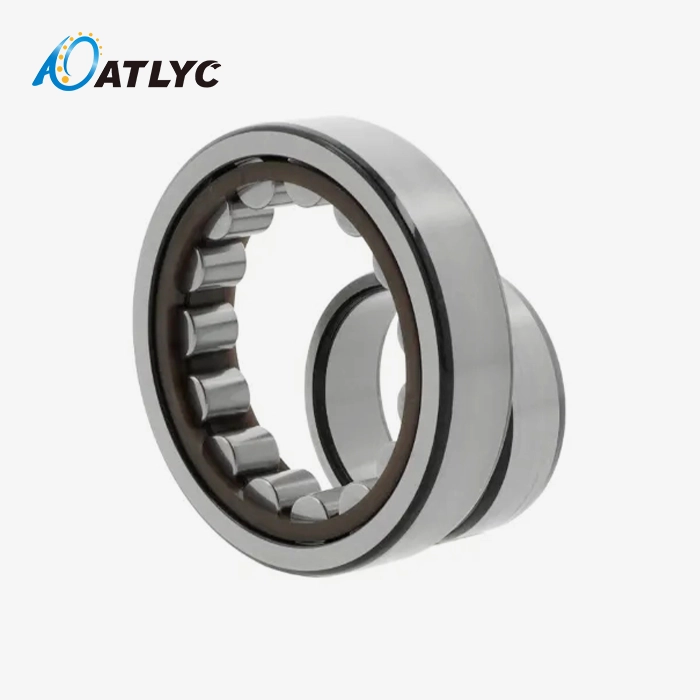
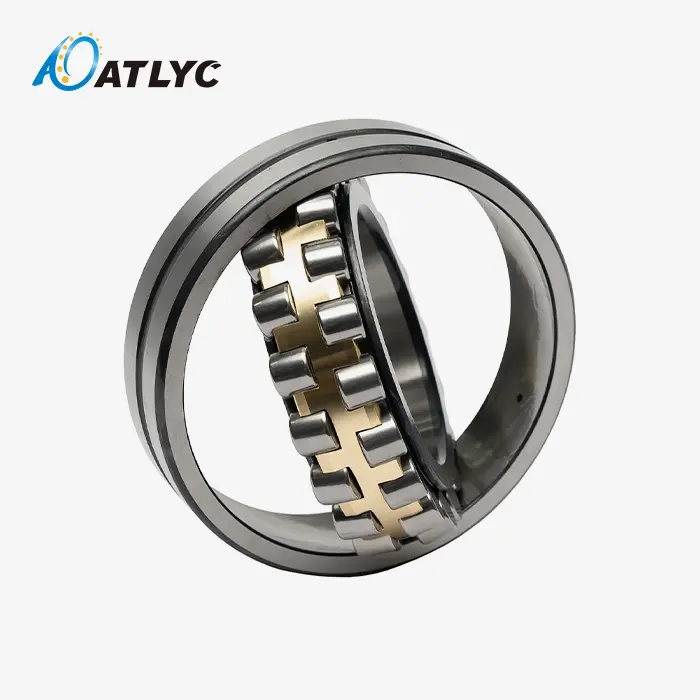
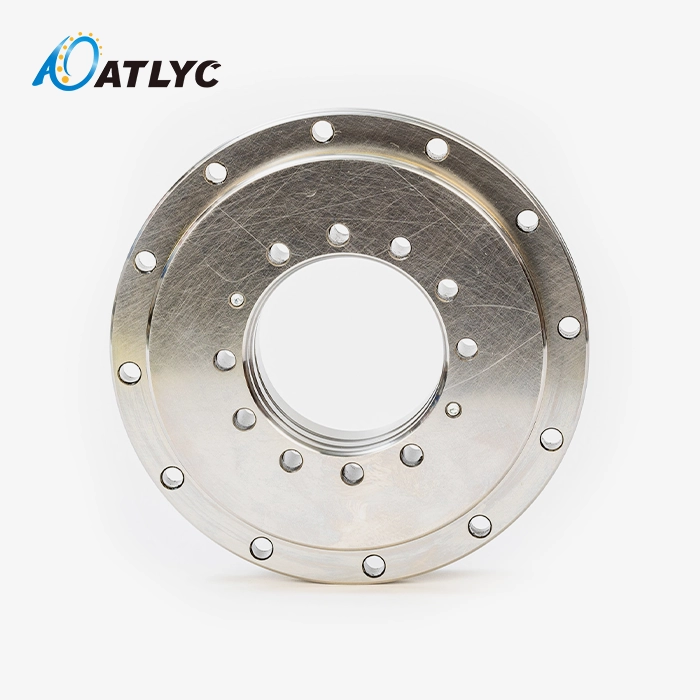
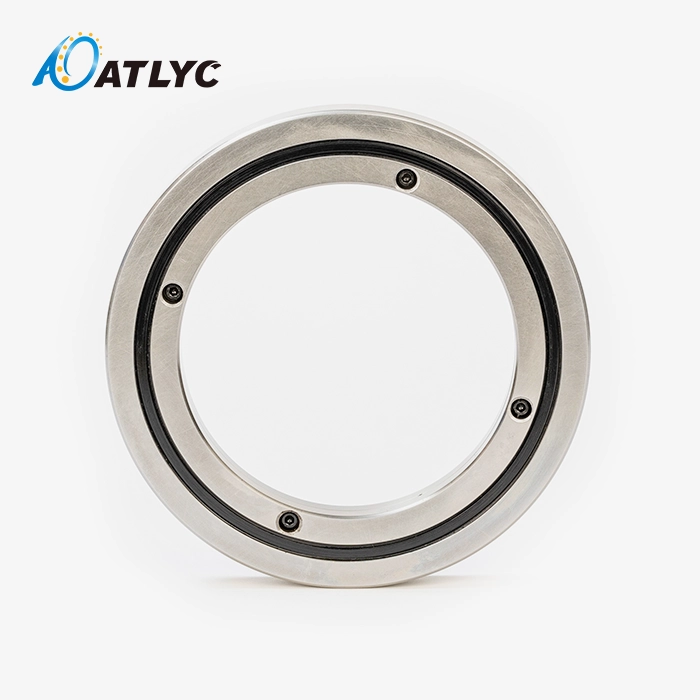
Selecting the proper bearing has a direct effect on the dependability and operating cost of your machines. The RB8016 bearing is a crossed roller bearing for applications requiring high stiffness and minimal axial space. Its Unique Split-Ring Configuration and Precision-Ground Rollers Allow it to Accommodate Combined Radial, Axial and Moment Loads Simultaneously, Making it Particularly Well-Suited for Robotic Joints, Precision Rotary Tables and Medical Equipment Turntables. For you to be able to determine if this bearing will be suitable for your operating needs, you will need to compare its technical characteristics with your real load circumstances, mounting limitations and performance requirements.

Introduction
This article offers a complete look at the RB8016 crossed roller bearing, a precise component that is increasingly being used in automobile assembly lines, industrial automation systems and specialised manufacturing equipment. We review key technical specifications, performance comparisons to other models, sourcing strategies, and maintenance procedures, all written with B2B procurement managers, mechanical engineers, and worldwide bearing distributors in mind. We want to arm you with the technical know-how and supplier information needed to select bearings with confidence, helping to improve machine uptime and reduce the total cost of ownership. If you’re considering this component for new equipment designs, or you’re looking for dependable replacement parts for current gear, this guide answers the practical issues that effect your bottom line.
Understanding RB8016 Bearing Specifications
The technical basis of every bearing selection is dimensional correctness and load carrying capabilities. The RB8016 crossed roller bearing has precise dimensions that determine its fit to your machine.
Key Dimensions and Tolerances
Typically the RB8016 is 80mm outside diameter, 120mm inside diameter and 16mm wide, however this may vary with the manufacturer's series designation. These measurements conform to ISO 492 and ABEC accuracy requirements with tolerance grades P5 to P2. The split outer ring design enables for easier attachment and provides dimensional stability under stress. The typical internal clearance parameters are in the C0 to C3 categories and impact the thermal expansion characteristics during operation. When determining the dimensional fit, the tolerances for the housing bore and shaft diameter must meet the bearing’s recommended mounting standards. Even a 10 microns mismatch may result in high stress concentrations that impair service life by 40% or more.
Load Capacity and Speed Ratings
Crossed roller bearings such as the RB8016 are ideal for applications that need to take loads simultaneously from several directions. The dynamic load rating is generally between 28,000N to 35,000N while the static load capacity reaches around 50,000N depending on the series and the manufacturer.
| Load Type | Capacity Range | Application Impact |
|---|---|---|
| Dynamic Radial Load | 28,000-35,000N | Determines rotational lifespan under continuous operation |
| Static Load | ~50,000N | Critical for stationary or slow-pivot applications |
| Moment Load | 15,000-22,000Nm | Essential for cantilever and overhung load conditions |
This crossed roller arrangement typically has speed limits about 500-800 RPM, which is much less than deep groove ball bearings, but is fine for positioning and indexing purposes. Go too fast and you become too hot and wear out the cage sooner.
Material Composition and Seal Options
The material used for both rings and rollers is high-carbon chromium bearing steel (GCr15 or comparable to AISI 52100) heat treated to a hardness of HRC 58-63. RB8016 Bearing manufacturers provide stainless steel types for corrosive conditions but they will give up about 15-20% load carrying capability. Seal shapes are important in contamination resistance and lubricant retention. Open designs need external sealing systems but allow for faster speeds and quicker relubrication. The sealed variants use nitrile rubber or polyurethane seals to preserve the internal components but also result in small increases in friction. The marking “2RS” shows there are rubber seals on both sides, like with deep groove ball bearings, but is less typical with crossed roller bearings.
Temperature and Environmental Operating Ranges
Standard crossed roller bearings work satisfactorily between -20°C and +100°C. Applications above this range need particular attention – high temperature greases rated to +150°C or oil lubrication systems for continuous operation in excess of +120°C. In cold conditions, below -30°C, low temperature viscosity properties of grease should be acceptable to avoid stiffening of the lubricant.Environmental considerations such as exposure to dust, moisture and chemical vapours will determine the choice of seals and lubrication intervals. Variants with sealed bearings and external labyrinth seals are well suited to plants with significant particle pollution, even with the little loss in efficiency.
Comparing RB8016 Bearing With Alternative Models
To make an educated purchase choice, it is important to know how this crossed roller bearing compares to comparable alternatives in similar size ranges and application locations.
RB8016 vs. RB8015: Dimensional Trade-offs
The RB8015 has almost the same outer and inner diameter specs, but the width is decreased to 15mm as opposed to the 16mm profile of the RB8016. This 1mm difference may seem insignificant, but it leads to an approximately 8-12% lower load capacity in all load directions. For applications with limited axial space and moderate loads, such as lightweight robotic arms or laboratory equipment, the RB8015 provides adequate performance possibly at lower cost. However, the RB8016 may be justified for heavy-duty applications such as CNC machine rotary tables or large diameter turntables when the little increase in size is not an issue.
Performance Against Angular Contact and Deep Groove Ball Bearings
Angular contact ball bearings are well-suited for high-speed applications, often operating at speeds between 3,000 and 8,000 RPM depending on size and preload. They can accommodate combined loads, but require matched pairs or sets for bidirectional axial load management, which complicates installation and inventory management.The crossed roller design of the RB8016 consolidates functionality into a single bearing unit, reducing assembly complexity and achieving superior moment load capacity—typically 3-4 times higher than comparably sized angular contact arrangements. This is especially critical for applications with large overturning moments such as robotic wrist joints or telescope mounts . Deep groove ball bearings like the 6316 type run at even greater speeds and with less friction but are mainly used for radial loads and have limited capacity for axial loads . Using a 6316 in a crossed roller application will result in early failure because to the lack of moment stiffness and axial load capability.
| Bearing Type | Max Speed (RPM) | Moment Capacity | Installation Complexity |
|---|---|---|---|
| RB8016 Crossed Roller | 500-800 | High (15,000-22,000Nm) | Low (single unit) |
| Angular Contact (paired) | 3,000-8,000 | Moderate | High (requires matched sets) |
| 6316 Deep Groove Ball | 5,000-12,000 | Low | Low |
Market Feedback and Application Suitability
Industry feedback from automation equipment manufacturers has shown the durability of the RB8016. In precision positioning systems, the RB8016’s rigidity and small form factor are more important than speed constraints. Some European machine tool manufacturers require crossed roller bearings only for rotary table applications, stating that they provide 30-40% longer service intervals than previous angular contact designs.Limitations are apparent in applications involving continuous high speed rotation, where conventional ball bearings exhibit distinct advantages. Cost concerns are high on the list here again – crossing roller bearings often have premiums of 40-60% over comparable capacity ball bearing arrangements, thus are only economically justifiable when their particular load carrying qualities result in meaningful operational advantages.
Procurement Guide: Where and How to Buy RB8016 Bearings
When sourcing precise bearings, you need to strike the right balance between cost, quality assurance and supplier dependability. You don’t want to be faced with production interruptions and premature component failures.
Price Ranges and Cost Benchmarking
The global market price of RB8016 Bearing crossed roller bearings is $ 100.0 - $ 300.0 depending upon the reputation of the brand, accuracy grade and order quantity. Premium brands such as THK, IKO and SKF cost between $180-$320 per unit in modest numbers. Mid-tier manufacturers like KOYO, NSK and NTN have similar specs for $120-$200 per unit. Chinese manufacturers with ISO 9001 and IATF 16949 certifications, such as ATLYC (Luoyang Auto Bearing Co., Ltd.), offer cost-competitive options starting from $75-$140 per unit while meeting international quality standards. Volume buys of 100+ units often provide you 15-25% savings across all supplier categories. Price differences are not just brand premium but also precise quality choices. P5-grade bearings fulfil most industrial automation needs at reduced prices. P4 and P2 precision grades for ultra-high-accuracy applications come at premiums of 30-50%.
Evaluating Supplier Credentials and Brand Reputation
The choice of suppliers will have an immediate effect on the long-term dependability and after-sales support. Established companies have authorised distributors that guarantee authentic items but frequently have minimum purchase quantities and long lead periods. Direct communication with manufacturers offers more flexibility with customisation and usually faster turnaround on technical enquiries. When assessing manufacturers, check that they hold valid, up-to-date ISO 9001 and IATF 16949 certifications, and that these quality management systems are not expired. Request material certifications, dimensional inspection reports and third party test data for crucial applications. Manufacturers supplying automotive OEMs typically have more stringent process controls in place due to industry audit requirements. ATLYC, founded in 2010, has grown from a single facility to a six-facility operation with 120 specialised employees in production, quality control and engineering support. Certified to ISO 9001 and IATF 16949, the company is dedicated to offering consistent quality, and they have experience exporting to South Korea, the United States, Germany, Russia, Iran and Turkey, so they know how to fulfil different market requirements.
Logistics Considerations and Lead Times
International bearing purchase will need coordination of manufacturing schedules, shipping techniques and customs clearance. Typical lead times from Asian manufacturers are 3-6 weeks for standard products, and 8-12 weeks for special specs or high volume orders that need dedicated production runs. Shipping choices have a big impact on total landing cost and speed of delivery. Air freight will shorten the travel time to 5-7 days but will cost $8-$15 per kilogram. 25-35 days, trans-Pacific) at a cost of $0.50-$1.20/kg. For bulk orders of over 200 units, this is economically preferable. Establishing relationships with suppliers with consignment inventory or regional warehouse programs mitigates lead time risk for critical spare parts, but such arrangements generally require minimum annual purchase commitments.
Warranty Terms and Technical Support
Warranty coverage varies considerably from provider to supplier and is a direct reflection of quality confidence. Premium products often provide 12-24 month guarantees against manufacturing problems, whereas budget vendors could give only 6 months of insurance. Check the warranty conditions to see whether they solely cover replacement components or if they also cover labour and consequential losses. The availability of technical assistance is also vital, especially during installation or troubleshooting. As well as the cost of the components themselves, suppliers provide a lot of value via their specific technical support, mounting instructions and failure analysis services. Accessibility assistance for foreign procurement depends on how quickly you can respond by email, your language skills and your time zone.
Installation and Operational Best Practices for RB8016 Bearings
Proper installation and maintenance techniques directly impact whether your bearing investment is delivering predicted service life, or failing prematurely.
Pre-Installation Preparation and Environmental Control
Clean assembly environments reduce contamination, which is responsible for 40% of premature bearing failures. Implement clean-room practices or at a minimum make sure that work surfaces are wiped down with lint-free cloths and all tools are degreased before coming into contact with bearing components. Inspect housing bores and mating shafts for burrs, nicks or corrosion that produce stress concentrations Verify dimensional correctness of mating components using calibrated measuring tools. The tolerances on the housing should be H7 for standard fittings and the shaft dimensions are normally h6 tolerances. Deviations outside the stated ranges need machining modifications prior to installation.
Mounting Techniques and Damage Prevention
Crossed roller bearings need cautious handling because of the precision ground raceways and preloaded roller configurations. Do not hammer bearing rings directly as this can induce Brinelling damage, permanent indentations that cause vibration and increase wear. Use proper installation equipment, such as bearing presses with adapters suited to the bearing supported surfaces. Distribute the mounting force uniformly along the bearing circle; do not apply force to a single location. High volume assembly processes benefit from regulated force application and reduced installation time using hydraulic mounting tools. A little oil coating on mating surfaces provides for easy installation and helps avoid galling.The split ring construction of crossed roller bearings dictates a certain torque sequence for reassembling the outer ring. Follow the manufacturer's instructions for bolt tightening patterns, usually crossing patterns at 30-50% final torque, then sequential tightening to full specification. Uneven torque distribution destroys raceway geometry which causes deformation.
Lubrication Selection and Application Frequency
The bearing life in service depends on lubrication quality and refill intervals. Lithium-based greases with NLGI Grade 2 consistency are suitable for most typical industrial applications, offering appropriate film strength and pumpability between -20°C and +100°C. Greases with reduced viscosity ( NLGI Grade 1 or 0 ) are used for high-speed applications to minimise churning losses. Initial lubrication should occupy 30-40% of the bearing free volume, as overfilling results in excessive churning resistance and heat production, while underfilling allows metal-to-metal contact. This initial charge for sealed bearings generally is sufficient for the bearing’s full service life under normal operating circumstances. Open bearing designs must have relubrication intervals, dependent on operating conditions. Light duty (less than 8 hours daily operation, little contamination) may stretch intervals to 2,000-3,000 operating hours. In heavy-duty or dirty situations, change intervals are 500-1,000 hours. Relubrication During purge out the old grease entirely to avoid mixing with incompatible lubricant.
Maintenance Monitoring and Fault Diagnosis
Develop regular inspection schedules including vibration analysis, temperature and visual inspections. Baseline vibration measurements made soon after installation are reference points for the detection of emerging defects. Increases of 25% or more above the baseline readings need to be investigated further. Temperature increases beyond normal operating limits (about 20-30°C over ambient for correctly fitted bearings) are indicative of lubrication problems, excessive preload or misalignment problems. Infrared thermography allows non-contact monitoring during operation, identifying problem units before they fail catastrophically. Typical indicators of faults are abnormal noise (grinding or squealing indicates contamination or lubrication failure), increased friction torque (indicating changed preload or contamination) and visible grease leakage or discolouration (indicating seal failure or overheating). Prompt attention to these indications prolongs bearing life and avoids additional damage to adjoining machinery parts, particularly when monitoring RB8016 Bearing performance.
Why RB8016 Bearing Stands Out in the Market
Crossed roller bearings represent specialized engineering solutions addressing specific application challenges that conventional bearing types cannot adequately solve.
Engineering Innovations Enhancing Performance
The crossed roller configuration positions cylindrical rollers perpendicular to one another, separated by spacer retainers. This arrangement permits rollers to directly support loads from all directions without the complex preload adjustments required in angular contact ball bearing sets. The resulting design achieves exceptional rigidity—typically 2-3 times higher than comparable ball bearing arrangements—critical for maintaining positional accuracy in precision machinery.Material advances including vacuum-degassed bearing steels reduce inclusion content, improving fatigue resistance and extending L10 life calculations by 15-25%. Surface treatments like specialized nitriding processes enhance wear resistance in contaminated environments, though these add cost premiums of 20-30%.Cage design optimization reduces friction and improves lubricant distribution. Modern synthetic resin cages combining glass fiber reinforcement offer superior strength-to-weight ratios compared to traditional brass cages while reducing noise generation. These innovations particularly benefit robotic applications where weight reduction directly improves payload capacity and energy efficiency.
Application Success Stories
A European automotive manufacturer integrated RB8016 bearings into their automated assembly line robotic arms, replacing previous angular contact bearing sets. The simplified installation reduced assembly time by 35%, while the improved moment rigidity enabled 15% faster positioning cycles without sacrificing accuracy. Maintenance intervals extended from 8,000 hours to over 12,000 hours, reducing unplanned downtime.A North American precision instrument manufacturer adopted crossed roller bearings for optical inspection equipment turntables, where runout specifications demanded submicron accuracy. The RB8016's inherent stiffness eliminated the backlash issues experienced with previous worm gear and ball bearing combinations, improving measurement repeatability by 40%.Industrial automation distributors report growing demand for crossed roller bearings as manufacturers upgrade legacy equipment with servo-driven positioning systems. The bearing's ability to handle combined loads within compact envelopes proves essential for retrofitting modern actuators into existing machine frames with limited modification.
Future Technology Trends
Bearing technology evolution focuses on smart monitoring integration, advanced materials, and sustainability improvements. Sensor-embedded bearings incorporating temperature, vibration, and load monitoring enable predictive maintenance strategies, reducing unexpected failures by 60-70% according to Industry 4.0 implementation studies.Ceramic hybrid bearings, utilizing silicon nitride rolling elements with steel rings, offer extended life in high-contamination environments and reduce weight by 40%. Though currently cost-prohibitive for most industrial applications at 3-5 times conventional bearing prices, increasing adoption in aerospace and medical equipment drives gradual cost reduction through volume production.Environmental regulations increasingly influence bearing design, with manufacturers developing bio-based lubricants and recyclable bearing materials. These sustainability initiatives align with corporate ESG objectives while maintaining performance standards demanded by modern industrial applications.

Conclusion
Selecting the RB8016 Bearing requires balancing its exceptional moment load capacity and compact design against speed limitations and cost considerations. This bearing excels in precision positioning applications, robotic joints, and rotary tables where rigidity and combined load handling justify its premium over conventional ball bearings. Successful implementation depends on proper dimensional verification, careful installation practices, and appropriate lubrication maintenance. Partnering with certified manufacturers offering technical support and quality documentation ensures reliable supply chains supporting your operational objectives. The bearing's proven performance across automotive, automation, and precision equipment applications demonstrates its value for demanding industrial environments requiring dependable, long-service-life components.
FAQ
What industries commonly use crossed roller bearings like the RB8016?
Precision automation equipment, robotic systems, medical imaging devices, aerospace actuators, and machine tool rotary tables represent primary application sectors. These industries value the bearing's ability to handle combined loads within compact spaces while maintaining positional accuracy. Manufacturing assembly lines increasingly adopt crossed roller bearings for servo-driven positioning systems replacing hydraulic actuators.
How do I determine if the RB8016 matches my machinery requirements?
Calculate your application's radial, axial, and moment loads, then compare against the bearing's published capacity ratings with appropriate safety factors (typically 1.5-2.0 for industrial equipment). Verify dimensional compatibility with existing housing and shaft specifications. Consider speed requirements—applications exceeding 800 RPM generally require alternative bearing types. Consult with bearing engineers providing load analysis services to confirm suitability for complex or critical applications.
What maintenance practices extend bearing service life most effectively?
Proper lubrication management delivers the greatest impact, ensuring adequate film thickness while preventing contamination. Implement vibration monitoring to detect developing faults before catastrophic failure. Maintain clean operating environments minimizing dust and moisture exposure. Follow manufacturer-specified mounting procedures to avoid installation damage. Schedule relubrication based on actual operating conditions rather than arbitrary time intervals, adjusting frequency for severe service environments.
Partner With ATLYC for Your Precision Bearing Requirements
ATLYC delivers certified precision bearings engineered for demanding industrial applications requiring consistent quality and reliable supply chains. Our ISO 9001 and IATF 16949 certified manufacturing facilities combine 15 years of bearing production expertise with modern quality control systems ensuring every crossed roller bearing meets international dimensional and metallurgical standards. We serve automotive OEMs, industrial equipment manufacturers, and global distributors across six continents with competitive pricing structures for volume orders. Our technical team provides comprehensive application support including load analysis, mounting guidance, and customization capabilities for specialized requirements. Contact our engineering specialists at auto@lyautobearing.com to discuss your specific bearing needs and receive detailed quotations for the RB8016 bearing and alternative models. Experience the advantages of working with a trusted Chinese bearing manufacturer combining precision manufacturing, scalable production capacity, and responsive customer service.
References
1. Harris, T.A. & Kotzalas, M.N. (2006). Advanced Concepts of Bearing Technology: Rolling Bearing Analysis, Fifth Edition. CRC Press.
2. ISO 492:2014. Rolling bearings — Radial bearings — Geometrical product specifications (GPS) and tolerance values. International Organization for Standardization.
3. Witte, D.C. (2012). "Load Distribution and Contact Stress Analysis in Crossed Roller Bearings." Journal of Tribology, Vol. 134, Issue 2.
4. SKF Group. (2018). Rolling Bearings Catalogue: Technical Product Information and Selection Guide. SKF Group Publications.
5. Budynas, R.G. & Nisbett, J.K. (2015). Shigley's Mechanical Engineering Design, Tenth Edition. McGraw-Hill Education.
6. IATF 16949:2016. Quality Management System Requirements for Automotive Production and Relevant Service Parts Organizations. International Automotive Task Force.
Learn about our latest products and discounts through SMS or email