- English
- French
- German
- Portuguese
- Spanish
- Russian
- Japanese
- Korean
- Arabic
- Greek
- German
- Turkish
- Italian
- Danish
- Romanian
- Indonesian
- Czech
- Afrikaans
- Swedish
- Polish
- Basque
- Catalan
- Esperanto
- Hindi
- Lao
- Albanian
- Amharic
- Armenian
- Azerbaijani
- Belarusian
- Bengali
- Bosnian
- Bulgarian
- Cebuano
- Chichewa
- Corsican
- Croatian
- Dutch
- Estonian
- Filipino
- Finnish
- Frisian
- Galician
- Georgian
- Gujarati
- Haitian
- Hausa
- Hawaiian
- Hebrew
- Hmong
- Hungarian
- Icelandic
- Igbo
- Javanese
- Kannada
- Kazakh
- Khmer
- Kurdish
- Kyrgyz
- Latin
- Latvian
- Lithuanian
- Luxembou..
- Macedonian
- Malagasy
- Malay
- Malayalam
- Maltese
- Maori
- Marathi
- Mongolian
- Burmese
- Nepali
- Norwegian
- Pashto
- Persian
- Punjabi
- Serbian
- Sesotho
- Sinhala
- Slovak
- Slovenian
- Somali
- Samoan
- Scots Gaelic
- Shona
- Sindhi
- Sundanese
- Swahili
- Tajik
- Tamil
- Telugu
- Thai
- Ukrainian
- Urdu
- Uzbek
- Vietnamese
- Welsh
- Xhosa
- Yiddish
- Yoruba
- Zulu
Why Choose RA Type Crossed Roller Bearings for Precision?
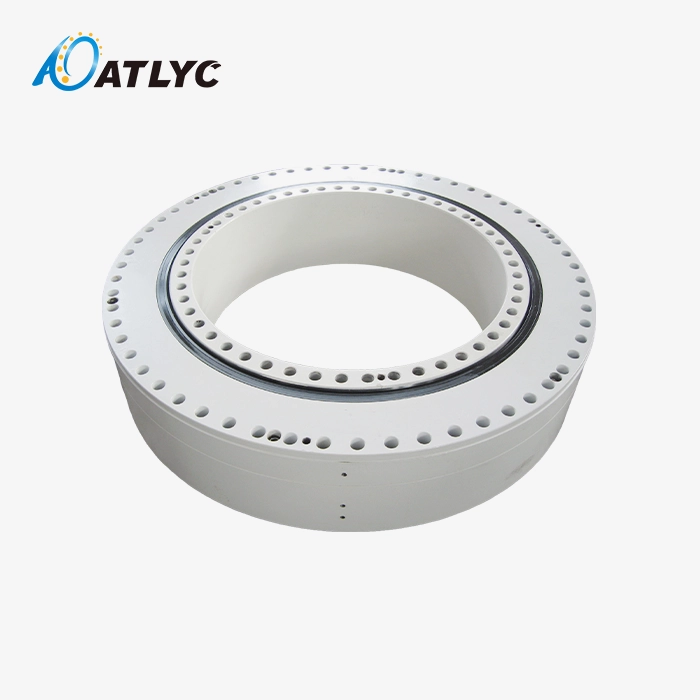
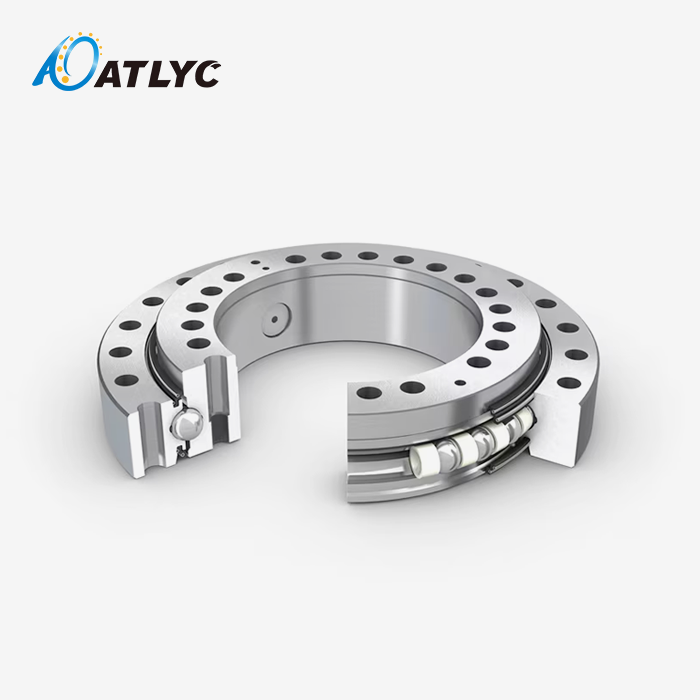
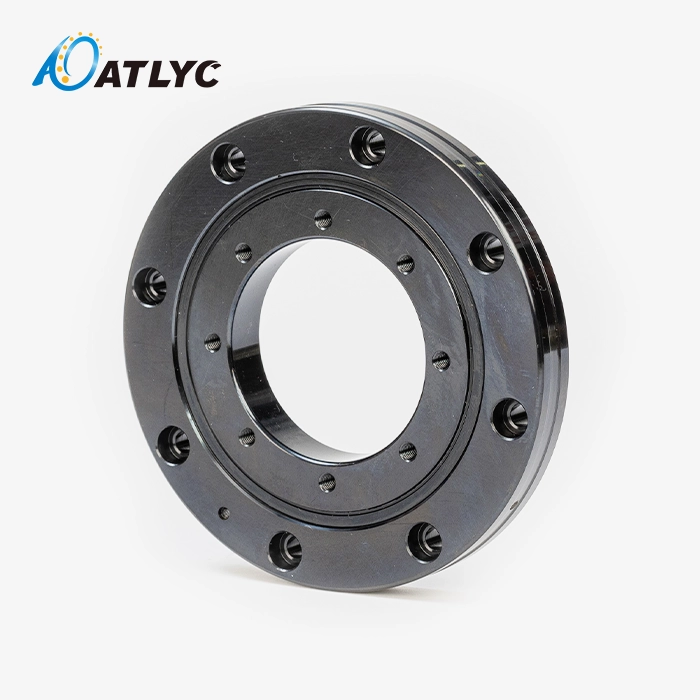
In modern production, accuracy is a must. When limited room and heavy loads come together, RA Type Crossed Roller Bearings are the best choice for engineers and procurement managers who want stability without sacrificing any other factors. The outer ring of these special parts can be separated, and the inner ring can rotate. This combines the functions of two angular contact bearings into a single, very thin shape. The orthogonal roller setup inside a 90-degree V-groove handles radial, axial, and moment loads at the same time, making the system very stiff while taking up as little installation room as possible. This one-of-a-kind design solves important problems in robotic joints, medical imaging equipment, and chip manufacturing, where cutting down on weight and making sure accuracy at the micron level are key to success.
Understanding RA Type Crossed Roller Bearings
The basic structure of these precise parts makes them different from regular bearing options. The design theory is based on placing the rollers in the most efficient way to maximise load capacity while minimising rotational space.
Structural Design and Working Principles
In the crossing roller arrangement, circular rollers are placed between the inner and outer rings so that they are perpendicular to each other. Because there are more touch points, the load is spread out better than with standard ball bearings. The "RA" name refers to the outer ring's detachable design, which makes fitting easier in tight areas where access to the assembly is limited. The built-in inner ring keeps the spinning accuracy at sub-micron levels, meeting the tight limits needed in precision machines. Based on our experience in manufacturing, this design cuts assembly time by about 30% compared to prepared duplex angular contact bearings while keeping the same level of tension.
Material Composition and Manufacturing Standards
Material choice is the first step in quality. The Gcr15 and Gcr15SiMn bearing steel used in these bearings has been carefully heated to a hardness of 58 to 64 HRC. This mechanical standard makes sure that the material will not wear down easily, even when it is loaded and unloaded many times, which is common in automation equipment. The manufacturing method follows the quality management systems ISO 9001 and IATF 16949. This makes sure that all production batches are the same size and shape. There are precision grades with tolerances ranging from P7 to P4, and luxury grades with P3 tolerances are available for ultra-precision uses. The service life is directly affected by the cleanliness and structure of the grains in the material. This is especially true in high-speed spinning situations where bearing temperatures can reach over 80°C during constant operation.
Dimensional Range and Configuration Options
The RA line covers a wide range of dimensions and can be used in a wide range of industrial settings. The inside diameters range from 20 mm to 350 mm, and the outside diameters range from 70 mm to 540 mm. Cross-sectional lengths range from 12mm to 45mm, which lets engineers make shapes that work best in certain spaces. This ability to change dimensions is very helpful when fixing up old machines or making small machines for the next generation. The outer ring's detachable construction and the inner ring's rotation design allow for both stable housing and rotating shaft setups. This gives design engineers a range of attachment choices that can be used with different mechanical layouts.
Core Advantages of RA Type Crossed Roller Bearings for Precision Applications
Knowing the real benefits these parts provide helps buying teams make investment choices and engineering groups improve the performance of the system. The value offer includes more than just simple usefulness. It also includes operating efficiency and dependability over the long run.
Multi-Directional Load Capacity in Compact Envelopes
To handle complex force directions, traditional bearing setups often require multiple components. The RA Type Crossed Roller Bearings consolidate these functions into a single component. Each bearing simultaneously manages rotational forces, axial thrust, and moment loads, eliminating the need for supplementary support bearings. The orthogonal roller orientation creates load paths that distribute stresses across multiple contact zones, significantly increasing effective load capacity relative to bearing envelope size. Industrial robot testing demonstrates that these bearings accommodate moment loads exceeding 300% of similarly sized ball bearings while occupying 40% less radial space. This space efficiency directly translates into lighter, faster-moving robot arms with reduced energy consumption.
Exceptional Rotational Accuracy and Minimal Runout
For precision production tools to work, the action must be uniform and predictable. When there is a load, the stiff touch between the wheels and raceways keeps the dimensions stable, which is very important for cutting processes. Runout accuracy, which is the amount of departure from true circular motion, has a direct effect on the quality of the surface finish in CNC machining centers and the accuracy of measurements in coordinate measuring tools. Crossed roller bearings of the highest quality have radial runout values below 2 microns and axial runout values below 3 microns. This means that rotating tables and tracking tools can repeatably place themselves within a micron of accuracy. The low friction coefficient of the roller-to-raceway contact means that it doesn't produce much heat when it spins, so the dimensions stay stable over long periods of time.
Enhanced Stiffness and Vibration Damping
How systems react to outside forces depends on how strong they are. When there is more stiffness, there is less movement under load. This keeps the exact accuracy when cutting or putting things together precisely. Crossed roller bearings have prepared rollers that create negative clearance. This removes internal play and makes the system much stiffer than with clearance-fit bearings. This quality is very important for high-speed cutting tasks that need to keep tool noise to a minimum for good surface finishes. The many touch points also naturally reduce vibrations, which stop high-frequency waves that hurt accuracy. When you switch from angular contact ball bearings to crossed roller setups, measurements from precision grinding tools show that sound amplitude drops by 45%.
Operational Reliability Across Demanding Environments
In industrial settings, bearings are subject to changes in temperature, pollution, and different loads. Because they are built to last, crossed roller bearings can work in a wide range of conditions. The sealed versions have contact seals or non-contact maze seals that keep out particles of dirt while keeping the grease. Typical operating temperature ranges are -30°C to +100°C, which means they can be used in both climate-controlled cleanrooms and plant floors. When properly oiled, the bearing materials don't rust, which means they last longer between services and cost less to maintain. Field data from car assembly lines shows that the average time between failures is more than 50,000 hours of constant job cycles. This shows the long-term dependability that is needed to keep production interruptions to a minimum.
Comparing RA Type Crossed Roller Bearings with Other Bearing Types
To choose the right component, you need to know how the performance of different types of bearings compares. Each type of bearing has its own benefits that make it better for a certain set of situations and needs.
Performance Differentiation from Ball Bearings
Ball bearings excel in high-speed applications due to lower friction and reduced centrifugal forces. However, their point contact geometry limits load capacity relative to bearing size. Crossed roller bearings substitute line contact for point contact, distributing loads across a greater surface area. This fundamental difference enables crossed roller designs to support approximately three times the radial load and five times the moment load of equivalent-sized deep groove ball bearings. The trade-off appears in speed limitations—crossed roller bearings typically operate at lower limiting speeds due to greater contact area and higher friction torque. Applications prioritizing load capacity and rigidity over maximum speed benefit from crossed roller technology, while high-RPM, lightly-loaded applications favor ball bearing solutions.
Advantages Over Cylindrical Roller Bearings
Standard cylindrical roller bearings provide excellent radial load capacity but require separate thrust bearings to manage axial forces. The crossed roller arrangement integrates both capabilities, eliminating the need for combination assemblies. This consolidation reduces part count, simplifies inventory management, and decreases assembly complexity. The space savings prove particularly valuable in compact robotic joints where envelope constraints limit design options. Cylindrical rollers maintain advantages in purely radial loading scenarios and applications requiring bearing separability for maintenance access. Procurement teams must evaluate whether multi-directional loading justifies the cost premium of crossed roller technology versus simpler cylindrical roller solutions paired with thrust washers.
Precision Grade Selection Criteria
Bearing accuracy classes for RA Type Crossed Roller Bearings directly impact system performance and component cost. Standard grade bearings (P0, P6) suit general industrial machinery where positioning tolerances exceed 10 microns. Precision grades become necessary when rotational accuracy affects product quality or measurement validity. Ultra-precision grades (P2) serve specialized applications like optical equipment positioning and semiconductor lithography stages. The cost escalation between grades typically ranges from 50-100% per step, making precision selection an economic optimization exercise. Engineers should match bearing accuracy to system requirements rather than defaulting to maximum precision, as over-specification increases procurement costs without delivering proportional performance benefits.
Practical Procurement Insights for RA Type Crossed Roller Bearings
Successful bearing procurement balances technical requirements with commercial considerations. Strategic purchasing decisions account for supplier capabilities, lead time management, and total cost of ownership rather than unit price alone.
Evaluating Supplier Credentials and Certifications
Quality assurance begins with supplier selection. Manufacturers holding ISO 9001 and IATF 16949 certifications demonstrate established quality management systems and automotive-grade process controls. These standards require documented procedures for design validation, process capability analysis, and traceability—critical factors when bearing failures could trigger production line stoppages or product recalls. Request mill test reports and dimensional inspection data to verify compliance with specified tolerances. Supplier manufacturing capacity matters when scaling production or managing supply chain disruptions. Facilities with multiple production lines and diversified customer bases typically provide more stable delivery schedules than single-product specialists vulnerable to demand fluctuations.
Navigating Product Catalogs and Customization Options
Standard catalog offerings cover the most common dimensional requirements and load specifications. Engineers should verify that candidate bearings meet or exceed calculated static and dynamic load ratings with appropriate safety factors, typically 2.0 for static loads and 3.5-5.0 for dynamic applications. Custom bearing designs accommodate unique space constraints or special performance requirements. Customization options include modified sealing arrangements, special cage materials for extreme temperatures, and non-standard dimensional ratios. Custom tooling costs typically range from $2,000-$8,000 depending on complexity, making customization economically viable for production quantities exceeding 500 units annually. Lead times for custom bearings extend 8-12 weeks versus 2-4 weeks for standard catalog items, requiring planning during product development cycles.
Bulk Purchasing Strategies and Volume Discounts
Volume pricing structures significantly impact component economics in production environments. Unit costs typically decrease 15-25% when order quantities reach manufacturer production lot sizes, often 100-500 pieces, depending on bearing size. Annual purchase agreements provide price stability and priority allocation during supply constraints, valuable advantages for long-term production planning. Consignment inventory programs allow manufacturers to stock bearings at customer facilities, improving responsiveness while deferring payment until consumption. Procurement managers should negotiate warranty terms covering premature wear or manufacturing defects, typically ranging from 12 to 18 months from the installation date. Balancing inventory carrying costs against volume discounts requires analyzing bearing consumption rates and obsolescence risks inherent in design changes.
Application Scenarios and Maintenance Best Practices
Understanding real-world implementation contexts helps engineers specify appropriate bearing solutions and establish maintenance protocols that maximize component service life.
Industrial Robotics and Automation Equipment
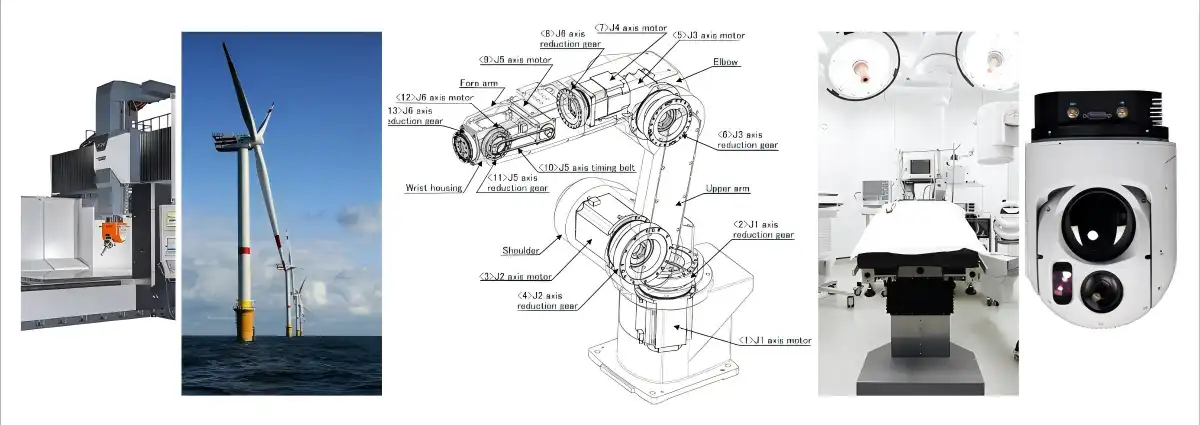
Robotic joints represent the most demanding application for RA Type Crossed Roller Bearings. Six-axis articulated robots incorporate multiple bearings at the elbow, wrist, and tool mounting interfaces. The compact bearing envelopes enable slender arm profiles that reduce moment of inertia, improving acceleration response and cycle times. Collaborative robots (cobots) benefit particularly from the space efficiency, maintaining payload capacity while meeting safety requirements for human interaction. The bearing preload settings must balance stiffness requirements against friction torque to optimize positioning accuracy without overloading servo motors. Field experience indicates that properly specified crossed roller bearings in robotic applications achieve 30,000-50,000 operating hours before requiring replacement, translating to 3-5 years of continuous production service.
Medical Imaging and Surgical Equipment
Medical devices demand exceptional reliability combined with smooth, vibration-free motion. C-arm X-ray systems utilize large-diameter crossed roller bearings to position imaging equipment around patients with micron-level accuracy. The bearing rotational smoothness directly affects image quality by eliminating motion artifacts during exposure sequences. Surgical robotic systems incorporate miniature crossed roller bearings in instrument manipulators, where compact size enables minimally invasive procedures. These applications often specify corrosion-resistant materials and specialized lubricants compatible with sterilization processes. The regulatory environment requires comprehensive traceability documentation and validation testing, making supplier quality systems particularly important in medical device procurement.
Semiconductor Manufacturing and IC Production Equipment
Wafer handling robots and precision alignment stages in semiconductor fabrication employ crossed roller bearings in vacuum environments. The bearing design must minimize outgassing and particle generation that could contaminate silicon wafers. Special dry film lubricants or minimal grease quantities enable operation in 10^-6 Torr vacuum conditions typical of deposition chambers. Positioning accuracy requirements often exceed 0.5 microns, necessitating ultra-precision bearing grades with thermal stability. The economic value of semiconductor production makes bearing reliability paramount—unplanned downtime in fabrication facilities costs $50,000-$200,000 per hour, justifying premium bearing specifications and preventive maintenance programs.
Lubrication and Preventive Maintenance Protocols
Proper lubrication extends bearing service life and maintains performance characteristics. Grease lubrication suits most applications, with lithium-based greases providing temperature stability and oxidation resistance. Initial grease fill typically occupies 20-30% of bearing free volume, avoiding overfilling that increases friction torque and operating temperatures. Relubrication intervals depend on operating conditions—bearings in clean, moderate-temperature environments may operate 10,000-15,000 hours between services, while contaminated or high-temperature applications require 2,000-4,000-hour intervals. Oil lubrication benefits high-speed applications or automated lubrication systems, though sealing complexity increases. Monitoring bearing operating temperature provides early warning of lubrication degradation or excessive preload—temperature increases exceeding 10°C above baseline warrant investigation before catastrophic failure occurs.
Conclusion
Selecting appropriate bearing technology fundamentally shapes equipment performance, reliability, and competitive positioning in precision manufacturing markets. RA Type Crossed Roller Bearings deliver measurable advantages in applications where space constraints intersect with demanding load requirements and accuracy specifications. The design consolidates multi-directional load capacity into compact envelopes, enabling lighter, faster machinery without compromising structural rigidity. Material quality and manufacturing precision directly influence long-term reliability and total cost of ownership, making supplier selection a strategic decision rather than transactional purchasing. The 15-year evolution of manufacturers like ATLYC demonstrates the continuous improvement necessary to meet escalating precision requirements across global markets. Understanding the technical characteristics, application contexts, and procurement considerations outlined here equips engineering and purchasing teams to make informed decisions that optimize both performance and economic outcomes.
FAQ
What factors most significantly influence bearing load capacity?
Load capacity depends primarily on roller diameter, effective length, contact angle geometry, and material hardness. Larger rollers distribute loads across a greater surface area, increasing static and dynamic load ratings. The crossed arrangement provides equivalent load capacity in all directions, unlike angular contact bearings requiring duplex mounting. Material quality affects rolling contact fatigue life—premium bearing steels with controlled inclusion content extend service life under cyclic loading by 40-60% compared to standard grades.
How do precision grades affect positioning accuracy in rotary tables?
Bearing runout directly determines positioning repeatability. Standard P0 grade bearings with 20-micron runout permit positioning accuracy around 15-20 microns after accounting for mounting surface errors and thermal effects. P5 precision reduces this to 5-8 microns, while P4 enables sub-3-micron repeatability. Applications requiring better accuracy must address thermal management, mounting surface flatness, and measurement system resolution as additional error sources beyond bearing precision.
Can these bearings operate in a vacuum or cleanroom environments?
Specialized lubrication enables vacuum operation. Standard petroleum-based greases volatilize in a vacuum, contaminating chambers and starving bearings. Perfluoropolyether (PFPE) greases or dry film lubricants provide lubricity without outgassing. Cleanroom applications benefit from sealed bearing variants that contain particulate generation. Material selection may include stainless steel races and ceramic rollers for ultimate contamination control, though cost increases substantially.
Partner with ATLYC for Your Precision Bearing Requirements
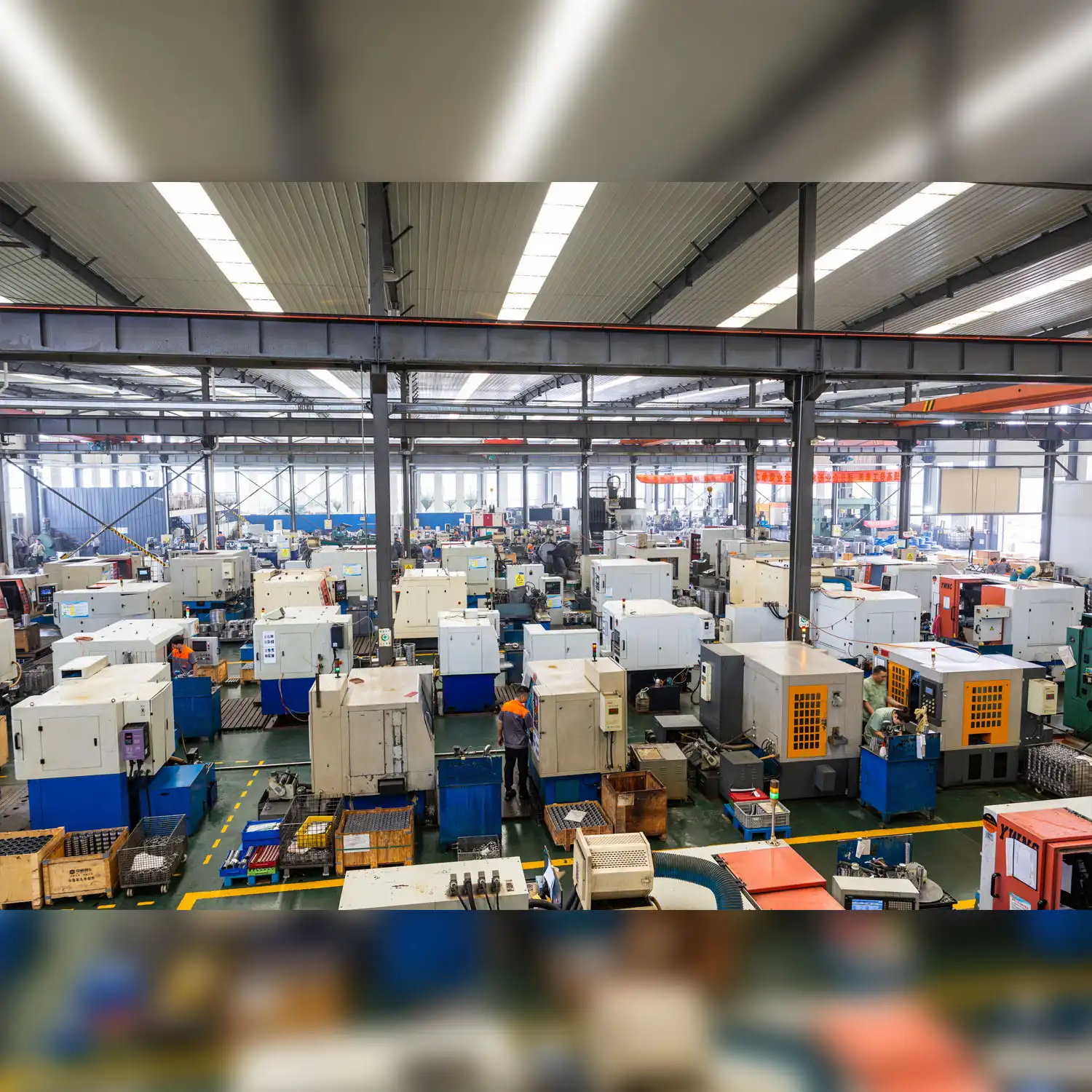
Luoyang Auto Bearing Co., Ltd. (ATLYC) brings 15 years of specialized expertise in crossed roller bearing manufacturing, serving mid-to-large OEMs and global distributors across automotive, industrial automation, and precision machinery sectors. Our ISO 9001 and IATF 16949 certified facilities maintain rigorous quality standards across six production workshops, ensuring consistent precision from 20mm miniature bearings to 350mm industrial-grade units. As a trusted RA Type Crossed Roller Bearings supplier, we provide comprehensive technical support, including application engineering assistance, custom design capabilities, and rapid prototyping services. Our export experience spanning South Korea, Germany, and the United States demonstrates our understanding of international quality expectations and logistics requirements. Contact our engineering team at auto@lyautobearing.com to discuss your specific application requirements, request technical documentation, or obtain volume quotations for your next precision machinery project. We provide sample bearings for validation testing, ensuring our solutions meet your performance specifications before production commitments.
References
1. Harris, T.A. & Kotzalas, M.N. (2006). Rolling Bearing Analysis: Essential Concepts of Bearing Technology. CRC Press, Taylor & Francis Group.
2. Yoshida, K. & Tanaka, S. (2018). "Load Distribution Analysis in Crossed Roller Bearings for Robotic Joints." Journal of Mechanical Engineering Science, Vol. 232, Issue 14, pp. 2567-2578.
3. ISO 492:2014. Rolling Bearings – Radial Bearings – Geometrical Product Specifications (GPS) and Tolerance Values. International Organization for Standardization.
4. Schaeffler Technologies AG & Co. (2019). Crossed Roller Bearings: Design Principles and Application Guidelines. Technical White Paper Series.
5. Wu, J. & Chen, L. (2020). "Performance Comparison of Bearing Configurations in Precision Machine Tools." International Journal of Advanced Manufacturing Technology, Vol. 108, pp. 3241-3255.
6. SKF Group (2021). General Catalogue: Rolling Bearings and Housed Bearing Units. SKF Motion Technologies AB, Technical Documentation Division.
Learn about our latest products and discounts through SMS or email