- English
- French
- German
- Portuguese
- Spanish
- Russian
- Japanese
- Korean
- Arabic
- Greek
- German
- Turkish
- Italian
- Danish
- Romanian
- Indonesian
- Czech
- Afrikaans
- Swedish
- Polish
- Basque
- Catalan
- Esperanto
- Hindi
- Lao
- Albanian
- Amharic
- Armenian
- Azerbaijani
- Belarusian
- Bengali
- Bosnian
- Bulgarian
- Cebuano
- Chichewa
- Corsican
- Croatian
- Dutch
- Estonian
- Filipino
- Finnish
- Frisian
- Galician
- Georgian
- Gujarati
- Haitian
- Hausa
- Hawaiian
- Hebrew
- Hmong
- Hungarian
- Icelandic
- Igbo
- Javanese
- Kannada
- Kazakh
- Khmer
- Kurdish
- Kyrgyz
- Latin
- Latvian
- Lithuanian
- Luxembou..
- Macedonian
- Malagasy
- Malay
- Malayalam
- Maltese
- Maori
- Marathi
- Mongolian
- Burmese
- Nepali
- Norwegian
- Pashto
- Persian
- Punjabi
- Serbian
- Sesotho
- Sinhala
- Slovak
- Slovenian
- Somali
- Samoan
- Scots Gaelic
- Shona
- Sindhi
- Sundanese
- Swahili
- Tajik
- Tamil
- Telugu
- Thai
- Ukrainian
- Urdu
- Uzbek
- Vietnamese
- Welsh
- Xhosa
- Yiddish
- Yoruba
- Zulu
Why Does the RB Series Crossed Roller Bearing Have a Split Outer Ring?
In small areas, the RB Series Crossed Roller Bearing works very well when you need a bearing that can handle complicated loads. The split outer ring design, which has an integral inner ring and a two-piece outer ring with a plug, solves a major engineering problem: how to put high-precision bearings in small assemblies and keep them in good shape without lowering their load capacity or rigidity. Because the outer ring can be split into two pieces, the bearing can be mounted around fixed shafts or in tight housings, where one-piece designs would not work or be possible. This makes it the best choice for industrial robots, machining centers, and precision equipment around the world.
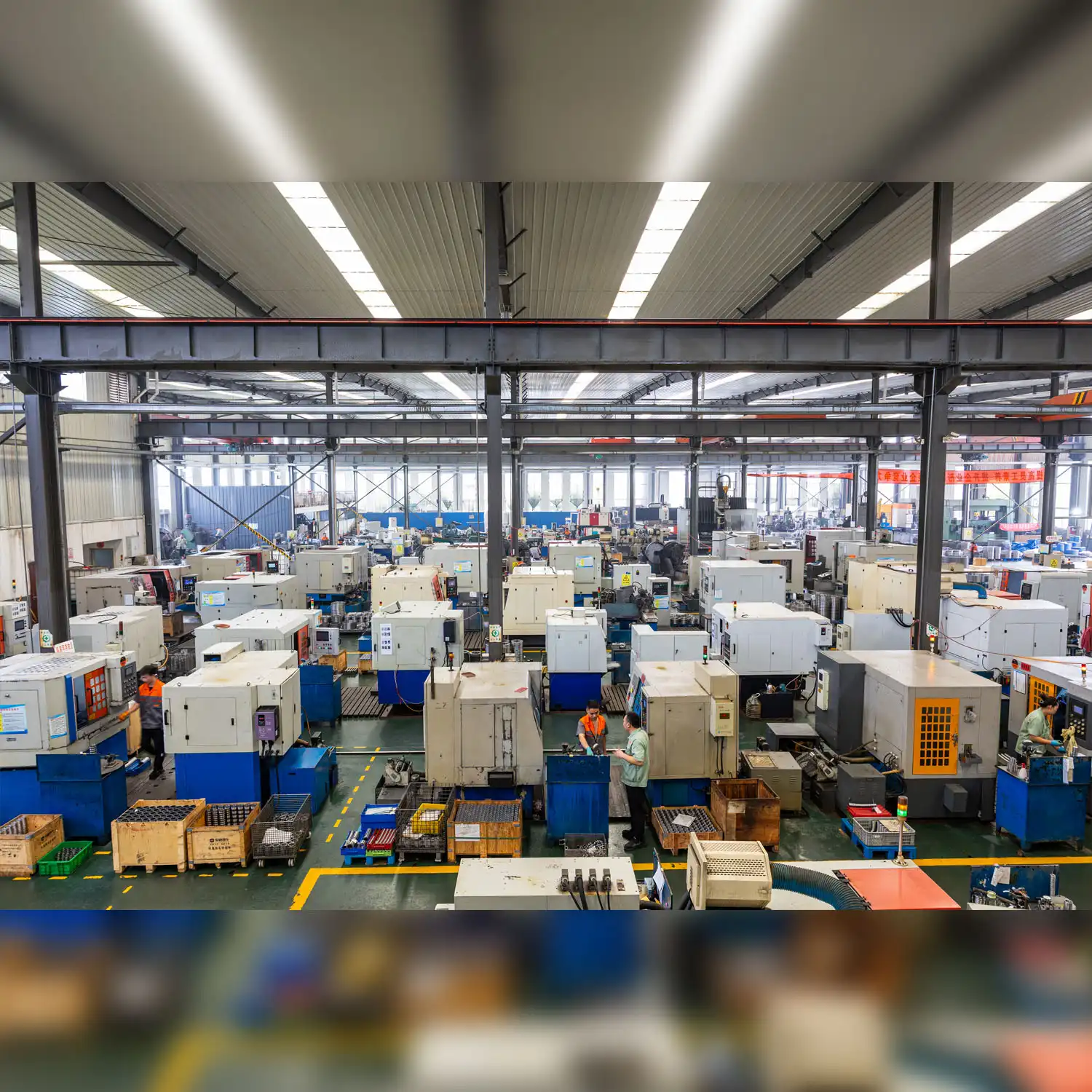
Understanding the Split Outer Ring Design of the RB Series Crossed Roller Bearing
The outer ring is split into two half-circles that are held together by precision-machined plugs that keep the structure straight and concentric. The divided design doesn't affect the performance of the bearing because the V-groove raceways are precision-ground after assembly, making sure that load lines are continuous across the joint contact. The cylinder-shaped rollers are set up at right angles to each other at 90 degrees inside these V-groove raceways. This makes many contact points that spread the load evenly in all directions.
The built-in inner ring makes the structure very stable and keeps the exact dimensions stable while it's working. Precision spacing spacers keep rollers from touching each other, which stops friction and any possible skewing problems that could happen during spinning. This crossed design combines the radial, axial, and moment load capacities into a single small unit. Without it, multiple bearing installs would be needed.
Material Selection and Manufacturing Standards
ATLYC makes these crossed roller bearings with high-quality Gcr15 and Gcr15SiMn bearing steels, which are known around the world for their ability to keep their hardness, resist wear, and keep their shape when heated and cooled. Our ISO 9001 and IATF 16949 certifications make sure that every bearing goes through strict heat treatment processes. This makes sure that the hardness is spread out evenly, which increases the bearing's service life in tough situations.
Precision grinding of raceways is used in the production process to get runout accuracy levels ranging from P6 to P4 grades, based on the needs of the application. This careful attention to measurement accuracy makes sure that the spinning is smooth and there is little shaking, which is an important quality for medical imaging equipment, devices used to make semiconductors, and precision measuring tools.
Engineering Advantages of the Split Outer Ring in RB Series Crossed Roller Bearings
The two-piece outer ring design has real performance benefits that have an immediate effect on the stability and efficiency of the machinery. These benefits help procurement professionals decide if this type of bearing fits their needs for specific applications and long-term maintenance plans.
Superior Multi-Directional Load Capacity
With an RB Series Crossed Roller Bearing crossed roller configuration, radial forces, axial thrust, and overturning moments can all be supported at the same time by a single bearing assembly. This ability to handle loads in more than one direction gets rid of the hassle and space needs that come with installing multiple angular contact bearings or combined bearing arrangements. Each roller touches the raceway at a 45-degree angle to the bearing axis. This creates load vectors that can effectively fight forces coming from all directions.
These bearings come in a range of sizes, from 20 mm to 1100 mm in inner diameter and 70 mm to 1500 mm in outer diameter. They also come in widths from 12 mm to 110 mm, so they can handle a wide range of load requirements in industrial settings. The split outer ring design keeps the load evenly distributed around the whole diameter, even when heavy moment loads would cause less strong bearing types to bend.
Installation Efficiency and Maintenance Accessibility
Cutting down on assembly time has a direct effect on the costs of the production line. The outer ring can be cut into two pieces, which lets repair teams install or change bearings without having to take off nearby parts, shafts, or gears, which would normally take hours of work. Technicians can place the inner ring on the shaft, add the roller complement, and then use precision plugs to hold the two outer ring halves together when installing bearings in robotic joint assemblies or rotary table mechanisms.
This advantage of being easy to get to lasts the whole life of the bearing. When routine maintenance or an unplanned check is needed, the split design makes it easy to take the whole thing apart and inspect the raceways, add more oil, or replace the seals. Lower repair windows mean that equipment is available more often, which is especially useful in places like car assembly lines and chip factories where downtime costs rise quickly.
Compact Footprint with High Rigidity
Modern machinery is mostly made with space limits in mind, especially joint robots and precise medical equipment. Compared to ball bearings or standard roller bearings, the crossed roller arrangement gives the bearing a lot more stiffness per unit volume. This stiffness stops elastic deformation under load, which is important for CNC machines that use complex tool paths because it keeps the positional accuracy that is needed.
The circular roller contact shape has a low friction coefficient that makes spinning smooth even when there is loading. Preload gets rid of the interior space, which makes the structure even stiffer while keeping the force levels reasonable. Because these bearings are stiff enough and allow for free movement, they can be used in situations that need both high positional accuracy and quick response times.
| Performance Parameter | RB Series Specification | Application Benefit |
|---|---|---|
| Load Directions Supported | Radial, Axial, Moment (simultaneous) | A single bearing replaces multiple bearing assemblies |
| Accuracy Grades Available | P6, P5, P4 | Matches precision requirements from general machinery to ultra-precision equipment |
| Friction Coefficient | Low (optimized roller geometry) | Smooth rotation with reduced heat generation |
| Rigidity Rating | High (crossed roller contact) | Minimal deflection under load maintains positioning accuracy |
| Installation Method | Split outer ring with plug | Reduces assembly time and maintenance downtime |
These performance characteristics work synergistically to address the demands of modern automation equipment. The combination of space efficiency, load capacity, and installation convenience explains why procurement managers at leading OEMs specify these bearings for new equipment designs.
Comparative Analysis: RB Series Crossed Roller Bearings vs Other Bearing Types
To make smart buying choices, you need to know how the performance, cost, and suitability for different uses of different bearing technologies compare. There is a place in the market for the split outer ring crossed roller bearing, where it is better than other options.
Structural Differences From Angular Contact Ball Bearings
It is common for angular contact ball bearings to come in pairs or sets so that they can handle combined loads. Even though they can go fast, they are not as rigid or able to handle moment loads as RB Series Crossed Roller Bearing crossed roller bearings. When compared to circular rollers, which have line contact, the point contact between balls and raceways makes it harder to spread the load. The crossed roller is stiffer, which makes it better for applications that need precise angular positioning under changing loads, like robotic waist rotation or precision indexing tables.
The split outer ring makes the RB series different from other angled contact setups that use rings that are all one piece. Installing a pair of angular contact bearings requires accurate axial positioning and preload adjustment, both of which are harder to do because of limited space. The RB series makes these steps easier while providing the same or better performance in terms of load capacity and rotational accuracy.
Performance Comparison With NRB and SX Series Crossed Roller Bearings
Different types of crossed roller bearings use different ring designs. Bearings in the NRB series have a split inner ring instead of a split outer ring. This means they can be used in situations where the outer ring needs to move. Bearings in the SX series have a split inner ring with fixing holes that are designed to fit directly onto machinery.
The split outer ring form of the RB series is perfect for situations where the inner ring turns, which happens a lot in artificial joints, rotary tables, and manipulator wrists. Because it's easier to mount and secure an outer ring assembly to a housing than to put together a split inner ring around a rotating shaft while keeping it straight, this design choice makes sense.
| Bearing Type | Ring Configuration | Optimal Rotation | Installation Advantage | Primary Applications |
|---|---|---|---|---|
| RB Series | Integral inner / Split outer with plug | Inner ring rotates | Easy mounting around fixed structures | Robot joints, machining center rotary tables, manipulators |
| NRB Series | Split inner / Integral outer | The outer ring rotates | Suitable for shaft-mounted applications | Rotary encoders, specialized machinery |
| Angular Contact Ball | Typically, integral rings (paired) | Either | High-speed capability | Machine tool spindles, automotive hubs |
| Cylindrical Roller | Typically integral rings | Either | High radial capacity only | Rolling mills, gearbox shafts |
This comparison makes the decision process clearer: the choice of bearing relies on the need for movement, the direction of the load, available room, and ease of installation. The RB line does a great job when all of these things come together in situations where small, rigid, multidirectional load support with easy installation is needed.
Cost-Performance Ratio for Bulk Procurement
The initial bearing prices are only one part of the total costs of ownership. Cost-effectiveness is judged by procurement professionals who look at things like installation labour, upkeep regularity, expected service life, and the costs of downtime caused by bearing failures. The split outer ring design cuts installation time by about 30–40% compared to similar one-piece bearing setups that need a lot of removal. This saves a lot of time and effort when applied to many units in production equipment or robotic teams.
The bearing's ability to keep its preload and orientation throughout its operating time gives it a longer service life. The precision plug system that holds the split outer ring in place keeps its shape even when temperatures change, and the bearings are vibrated. This keeps the bearings from slowly coming loose, which can happen with bolted bearing assemblies. When these bearings are properly oiled and kept clean, they regularly last longer than the L10 life ratings that are calculated based on load and speed parameters.
When OEMs and distributors place large orders, the overall return on investment for equipment is higher because of lower failure rates, lower installation costs, and longer service intervals. Over the past 15 years, ATLYC has built up its manufacturing capacity across six specialised workshops. This lets us offer competitive pricing on large orders while maintaining consistent quality, which helps our customers meet their cost-performance goals.
Practical Applications and Procurement Considerations for Global B2B Clients
Understanding where and how these bearings perform in actual industrial environments helps procurement teams match technical specifications to application requirements. Our 15 years of export experience to markets including the United States, Germany, South Korea, Russia, Iran, and Turkey provides insight into diverse application demands and regional preferences.
Industrial Application Examples
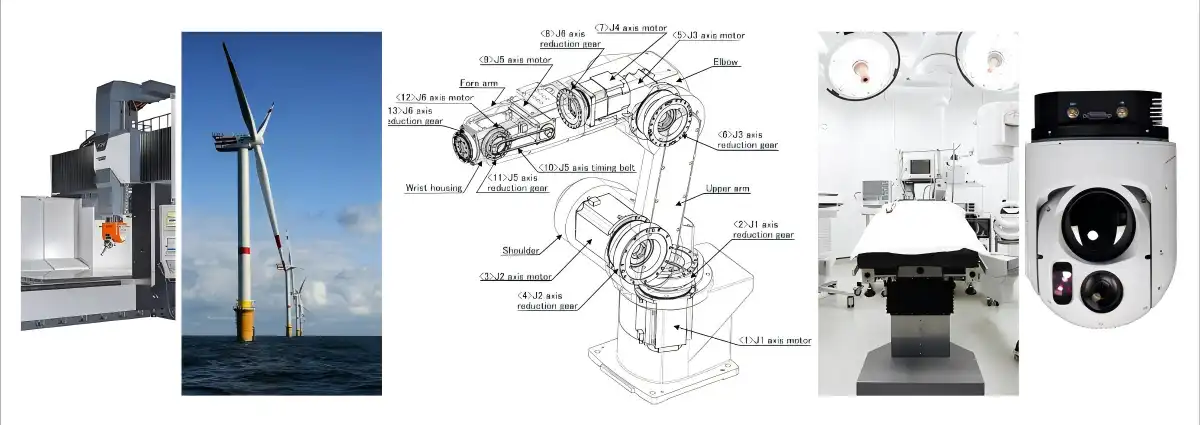
Articulated Robot Joints: Six-axis industrial robots rely on crossed roller bearings at the waist and elbow joints, where high moment loads occur during payload manipulation. The RB series's ability to handle these moment loads without deflection ensures precise repeatability in automotive assembly lines and electronics manufacturing. The split outer ring allows robot manufacturers to install bearings into compact joint housings without compromising structural integrity.
CNC Machining Center Rotary Tables: Precision indexing tables in machining centers require bearings that maintain angular positioning accuracy under multi-directional cutting forces. The RB series supports the table directly, allowing high-speed rotation with minimal runout—typically below 5 micrometers for P4 grade bearings. This accuracy level enables complex five-axis machining operations where positioning errors would produce out-of-tolerance workpieces.
Medical Imaging Equipment: CT scanners and X-ray rotational arms utilize RB Series Crossed Roller Bearing for smooth, quiet operation within compact profiles. Reliability becomes paramount in medical applications where equipment failure disrupts critical patient diagnostics and generates substantial replacement costs. The bearing's low friction coefficient minimizes heat generation during continuous rotation, extending service life in these demanding environments.
Semiconductor Manufacturing Devices: IC manufacturing equipment demands ultra-clean operation and exceptional positioning accuracy. The crossed roller bearing's sealed design options prevent particle generation that could contaminate wafer processing. The high rigidity maintains alignment tolerances necessary for photolithography and wafer handling operations where micrometer-level positioning accuracy directly affects yield rates.
Procurement Guidelines for Authorized Suppliers
Selecting a qualified bearing manufacturer affects product quality, delivery reliability, and long-term support availability. Procurement managers should verify several key qualifications during supplier evaluation. ISO 9001 certification demonstrates basic quality management system implementation, while IATF 16949 certification specifically addresses automotive industry quality requirements—essential for bearings destined for automotive robotics or production equipment.
Manufacturing capacity indicators include production volume capability, quality control processes, and material traceability systems. ATLYC operates six specialized workshops staffed by 120 skilled employees dedicated to production, research and development, quality inspection, and assembly operations. This scale enables us to handle both prototype quantities for new equipment development and volume production runs for established products.
Lead time expectations vary with bearing size and accuracy grade. Standard configurations in common sizes typically ship within 2-4 weeks, while custom specifications or ultra-precision grades may require 6-8 weeks for production. Procurement teams should communicate forecasted requirements early to allow production scheduling that meets project timelines. Minimum order quantities depend on bearing size and customization level—standard catalog items may have lower minimums than engineered-to-order specifications.
Global Logistics and Technical Support
International bearing procurement involves logistics coordination across continents and time zones. ATLYC maintains relationships with freight forwarders experienced in industrial component shipping, ensuring proper packaging, documentation, and customs clearance procedures. Our export experience to diverse markets means we understand regional import requirements and can provide necessary technical documentation, material certifications, and compliance declarations.
Technical support extends beyond initial sale to include application engineering assistance, installation guidance, and troubleshooting support. Our engineering team can review mounting designs, recommend appropriate preload levels, suggest lubrication strategies, and assist with bearing selection for new applications. This technical partnership approach builds long-term relationships that support our customers' product development and continuous improvement initiatives.
Conclusion
The split outer ring design distinguishes the RB Series Crossed Roller Bearing as a practical solution for precision machinery facing installation constraints, space limitations, and demanding load requirements. This two-piece configuration simplifies bearing assembly and maintenance while preserving the exceptional rigidity, multi-directional load capacity, and rotational accuracy that crossed roller bearings provide. From industrial robot joints to medical imaging equipment, these bearings deliver reliable performance across applications where conventional bearing types would compromise either installation feasibility or operational capability. The engineering logic behind the split outer ring reflects real-world manufacturing and maintenance realities, making it the preferred choice for procurement professionals seeking dependable, high-performance bearing solutions.
FAQ
1. Why is the split outer ring design preferred for the RB Series?
The split outer ring configuration solves practical installation challenges in precision machinery where the inner ring must rotate. This design allows technicians to assemble the bearing around existing shafts and structures without requiring complete machinery disassembly. The two-piece outer ring maintains load capacity and rigidity equivalent to one-piece designs because precision grinding occurs after assembly, creating continuous raceways. This approach reduces installation time and maintenance downtime while preserving the bearing's high-performance characteristics across radial, axial, and moment loading conditions.
2. How does the split design affect load capacity and bearing life?
The split outer ring does not compromise load capacity when manufactured to proper specifications. The precision plug system and post-assembly raceway grinding ensure continuous load paths around the bearing circumference. Material selection using Gcr15 or Gcr15SiMn bearing steels provides hardness and wear resistance equivalent to integral ring designs. Proper installation with recommended preload maintains contact geometry throughout the bearing's service life. When operated within rated load parameters and provided with adequate lubrication, these bearings achieve L10 life ratings comparable to or exceeding one-piece bearing alternatives in similar applications.
3. What should aerospace and precision equipment buyers prioritize when procuring these bearings?
Buyers in aerospace and precision sectors should verify that accuracy grade specifications match application requirements—P4 or P5 grades typically suit these demanding applications. Request material certifications documenting steel composition and heat treatment parameters to ensure traceability. Confirm the manufacturer holds relevant quality certifications (ISO 9001 minimum, IATF 16949 preferred) and can provide inspection reports showing dimensional accuracy, runout measurements, and torque characteristics. Discuss customization options, including seal configurations, lubrication specifications, and mounting interface requirements, to ensure the bearing integrates properly with your specific equipment design.
Partner With ATLYC for Your Crossed Roller Bearing Requirements
ATLYC combines 15 years of bearing manufacturing expertise with ISO 9001 and IATF 16949 certified quality systems to deliver RB Series Crossed Roller Bearings that meet the exacting standards of global industrial manufacturers. Our production capacity spans six specialized workshops employing 120 dedicated professionals who ensure consistent quality from material selection through final inspection. Whether you need standard configurations or customized specifications, our engineering team provides technical support throughout your procurement process. Contact our sales team at auto@lyautobearing.com to discuss your bearing requirements, request technical specifications, or receive quotations for your next project. As a trusted crossed roller bearing supplier serving automotive, robotics, and precision machinery manufacturers worldwide, we're prepared to support your equipment performance and reliability objectives with scalable production and competitive lead times.
References
1. Harris, T.A. & Kotzalas, M.N. (2006). Advanced Concepts of Bearing Technology: Rolling Bearing Analysis, Fifth Edition. CRC Press.
2. Tedric A. Harris & Michael N. Kotzalas. (2007). Essential Concepts of Bearing Technology: Rolling Bearing Analysis. Taylor & Francis Group.
3. ISO 5593:1998. Rolling bearings — Vocabulary. International Organization for Standardization.
4. Eschmann, P., Hasbargen, L., & Weigand, K. (1985). Ball and Roller Bearings: Theory, Design and Application, Second Edition. John Wiley & Sons.
5. Hamrock, B.J. & Dowson, D. (1981). Ball Bearing Lubrication: The Elastohydrodynamics of Elliptical Contacts. Wiley-Interscience Publication.
6. Wensing, J.A. (1998). On the Dynamics of Ball Bearings. PhD Thesis, University of Twente, Netherlands.
Learn about our latest products and discounts through SMS or email