- English
- French
- German
- Portuguese
- Spanish
- Russian
- Japanese
- Korean
- Arabic
- Greek
- German
- Turkish
- Italian
- Danish
- Romanian
- Indonesian
- Czech
- Afrikaans
- Swedish
- Polish
- Basque
- Catalan
- Esperanto
- Hindi
- Lao
- Albanian
- Amharic
- Armenian
- Azerbaijani
- Belarusian
- Bengali
- Bosnian
- Bulgarian
- Cebuano
- Chichewa
- Corsican
- Croatian
- Dutch
- Estonian
- Filipino
- Finnish
- Frisian
- Galician
- Georgian
- Gujarati
- Haitian
- Hausa
- Hawaiian
- Hebrew
- Hmong
- Hungarian
- Icelandic
- Igbo
- Javanese
- Kannada
- Kazakh
- Khmer
- Kurdish
- Kyrgyz
- Latin
- Latvian
- Lithuanian
- Luxembou..
- Macedonian
- Malagasy
- Malay
- Malayalam
- Maltese
- Maori
- Marathi
- Mongolian
- Burmese
- Nepali
- Norwegian
- Pashto
- Persian
- Punjabi
- Serbian
- Sesotho
- Sinhala
- Slovak
- Slovenian
- Somali
- Samoan
- Scots Gaelic
- Shona
- Sindhi
- Sundanese
- Swahili
- Tajik
- Tamil
- Telugu
- Thai
- Ukrainian
- Urdu
- Uzbek
- Vietnamese
- Welsh
- Xhosa
- Yiddish
- Yoruba
- Zulu
What Makes the RB Series Crossed Roller Bearing More Rigid Than Ball Bearings?
It is very important to understand the mechanical principles that make each design of precision bearings different when choosing them for tough industrial uses. The RB Series Crossed Roller Bearing is much stiffer than regular ball bearings because its rollers are arranged in an orthogonal way. This makes the contact surface area bigger and spreads the load across more than one axis at the same time. This structure design gets rid of the problems that come with point contact in ball bearing geometry and replaces them with linear contact that doesn't bend under radial, axial, or moment loads. The end result is a bearing solution that stays stable in size and position even when complex, multidirectional forces are acting on it in a small mounting space.
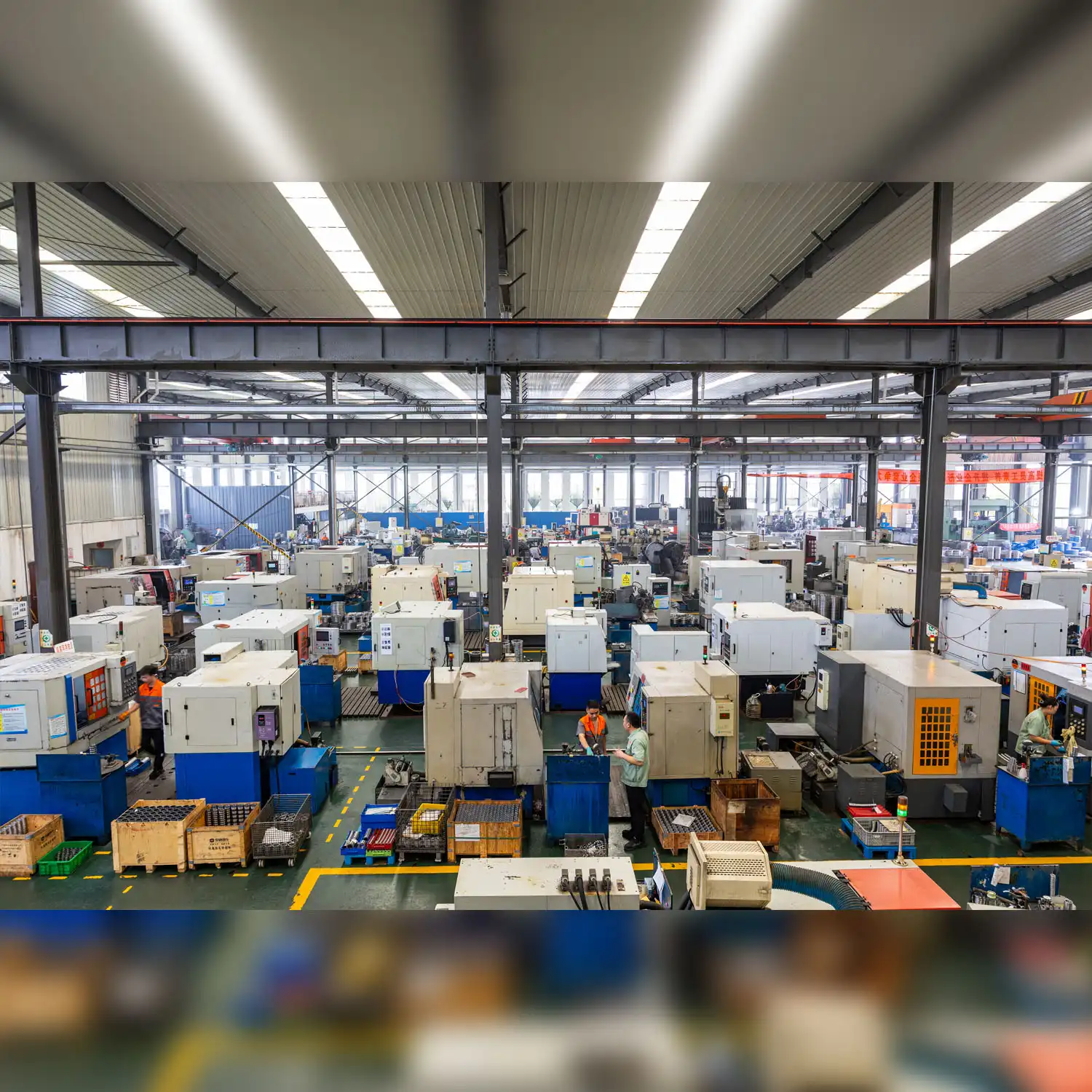
Understanding the Rigidity of RB Series Crossed Roller Bearings
The Fundamental Design Principles Behind Superior Stiffness
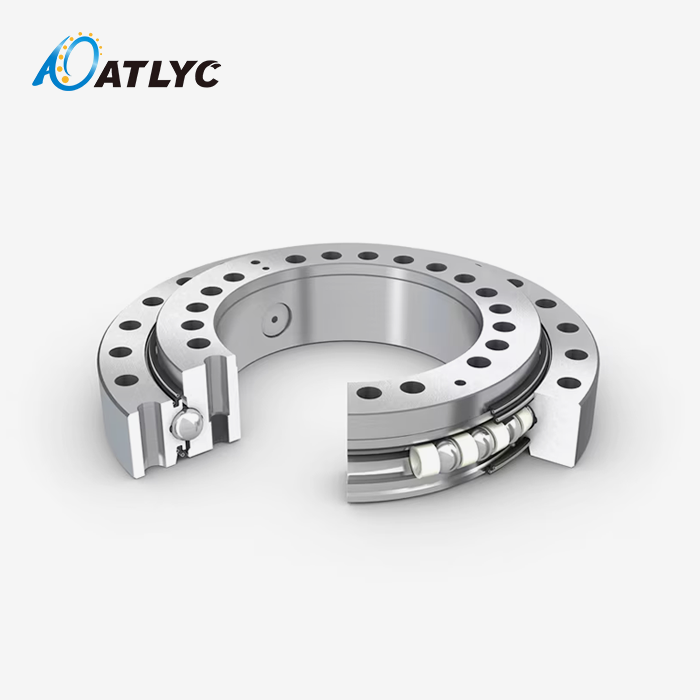
The cross roller bearing design is very different from the way ball bearings are usually set up. In the RB Series, cylinder-shaped rollers are arranged at exact 90-degree angles to each other along V-shaped raceways that have been machined into the inner and outer rings. This straight-line positioning makes alternating contact points that spread loads evenly across all direction planes.
In this setup, each roller makes linear contact with both track surfaces. This creates contact areas that are much bigger than the point contacts that are typical of ball bearings. This bigger contact geometry directly leads to less stress in the contact and more load-carrying capacity. When forces from outside the bearing assembly try to move it, the crossed wheel arrangement stops it by working together with multiple load routes.
Material Selection and Manufacturing Precision
High-quality Gcr15 and Gcr15SiMn bearing steel are used in our manufacturing process. These steels are specially made to be very hard, resistant to wear, and stable in their dimensions. Unique heat treatment methods are used on these metal mixtures to achieve Rockwell hardness levels that are good for long-term use in tough circumstances.
The design of the entire inner ring keeps the structure continuous, which gets rid of the weak spots that often happen in divided systems. The split outer ring with plug makes fitting easy while keeping the tight specs needed to meet performance ratings. Dimensional accuracy levels from P6 to P4 grades keep runout values within micrometre ranges, which helps with uses where positional accuracy has a direct effect on product quality.
Inspections with a coordinate measuring machine make sure that manufacturing standards are met. These inspections check the shape of the raceways, the regularity of the wheel diameters, and the assembly gaps. Before bearings are put into service, magnetic particle screening checks for possible surface cracks. Rotational accuracy testing makes sure that the standards for radial and axial runout meet the needs of the application.
Structural Advantages Over Ball Bearing Configurations
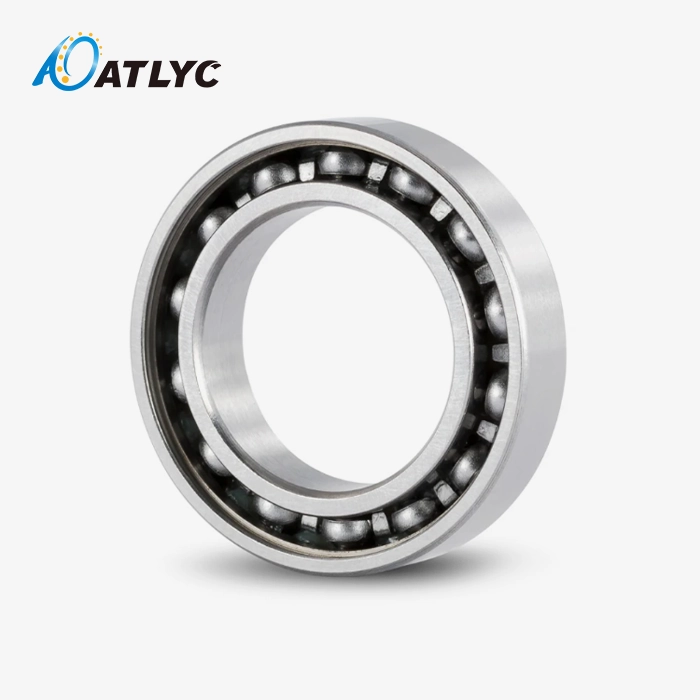
There is point contact between the rolling elements and the raceways in ball bearings. This makes it harder to spread the load and makes them more likely to deform when heavy or moment loads are applied. Because its linear contact design spreads applied forces over a lot more surface areas, the RB Series Crossed Roller Bearing gets around these problems.
When comparing load capacity specs, this difference in design stands out even more. Crossed roller bearings with the same envelope size can usually handle 30–40% more radial loads than similar ball bearings. They are also much better at handling axial and moment loads. Because this single bearing assembly can handle forces acting in multiple directions, there is no need for complicated bearing setups that take up valuable machine room and make the assembly more difficult.
| Performance Parameter | RB Series Crossed Roller Bearing | Conventional Ball Bearing |
|---|---|---|
| Contact Type | Linear contact along roller length | Point contact at ball-raceway interface |
| Load Distribution | Multi-directional simultaneous support | Predominantly radial or axial (requires pairing) |
| Rigidity Under Moment Load | Exceptional resistance to angular displacement | Requires bearing combinations for moment capacity |
| Space Efficiency | Single bearing handles complex loads | Multiple bearings needed for equivalent capacity |
| Rotational Accuracy | Runout typically <5μm at P4 grade | Higher runout variation under combined loads |
The V-groove raceway profile maintains precise roller positioning throughout rotation, preventing skewing and ensuring consistent load distribution. Precision-machined retainers maintain optimal roller spacing, eliminating metal-to-metal contact between adjacent elements that would otherwise generate friction, heat, and premature wear.
Performance Advantages of RB Series Crossed Roller Bearings in Industrial Applications
Multi-Directional Load Capacity in Compact Envelopes
Industrial equipment makers are always under pressure to make machines that do as much as possible while taking up as little space as possible. This problem is solved by the crossed roller bearing, which combines radial, axial, and moment load support into a single small unit. Because of this integration, the bearing pairs that were previously needed to get the same results are no longer needed.
The RB Series comes in a range of sizes, from 20mm to 1100mm in diameter, 70mm to 1500mm in diameter, and 12mm to 110mm in width, so it can be used in a wide range of situations. This range of dimensions works with a wide range of devices, from small measuring tools to big industrial robot joints. This lets engineers use the same methods for all of their equipment.
Having the ability to deal with overturning moments is very useful in robotics, where extended arms create large moment loads at joint locations. In the past, different angular contact bearings would have had to be placed next to each other, which took up more room and made the building process more difficult. One crossed roller bearing gives better rigidity while cutting down on the number of parts and making maintenance easier.
Precision Performance Characteristics
In situations where precise placement affects the quality of the product, manufacturing accuracy has a direct effect on how well the machine works. The RB Series has ground track surfaces and precisely matching wheels that make it very accurate at rotating. Radial runout values usually stay below 5 micrometres at the P4 accuracy level, which helps applications like semiconductor manufacturing equipment that need repeatable positioning within the micron range.
The best contact shape and special lubricant methods make it possible for friction coefficients to be low. Smooth spinning keeps vibrations from spreading to nearby structures as little as possible. This lowers noise levels and stops resonance problems that can affect the accuracy of measurements or the quality of the surface finish in cutting operations.
Extended Service Life and Reliability
When you combine better load distribution with high-quality materials and precise manufacturing, you get longer bearing service life. Less contact stress slows the spread of fatigue cracks, and the best formation of a grease film stops metal-to-metal contact, which speeds up wear.
When the RB Series Crossed Roller Bearing keeps performing the same way during recommended service times, equipment efficiency goes up. Predictable wear patterns let you plan maintenance in a way that keeps failures from happening out of the blue and stops production. Applications like medical imaging equipment, where unplanned downtime can ruin patient care, benefit the most from this level of operational consistency.
Real-World Application Performance
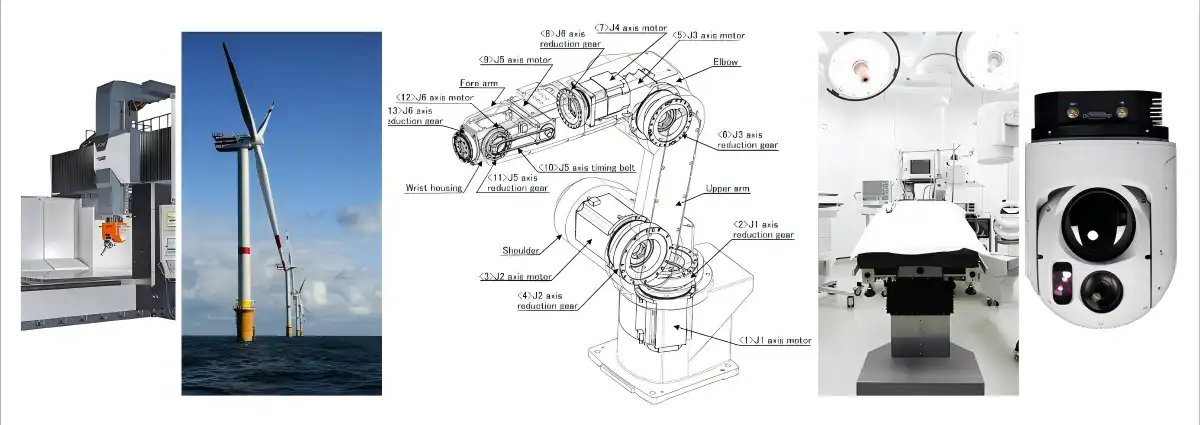
Industrial flexible robots show how useful crossed roller bearing technology is in the real world. At the waist and elbow joints, the RB Series allows the arm to fully extend with heavy loads while keeping the same position over and over, which is important for automated assembly tasks. Because the bearing can handle high moment loads, it stops deflection and hysteresis that could affect the accuracy of placement.
Crossed roller bearings keep the tracking accuracy of precision hollow rotary tables in CNC machining centers during cutting processes that go in more than one direction. The bearing directly holds the spinning table and can handle the complicated load combinations that come up during heavy cutting passes while keeping the location accuracy that is measured in arc-seconds.
Crossed roller bearings are used in spinning gantry systems of medical imaging tools like CT machines. The bearing works quietly and smoothly, which makes the patient more comfortable. Its dependability also makes sure that the image quality stays the same. Compact profiles make it possible to use them in equipment designs that don't have a lot of room or where maintenance is hard to get to.
| Application Sector | Typical RB Series Implementation | Critical Performance Requirement |
|---|---|---|
| Industrial Robotics | Joint mechanisms, rotary bases | Moment load capacity, positional repeatability |
| Machine Tool Equipment | Rotary tables, indexing heads | High rigidity, runout accuracy <5μm |
| Medical Devices | CT scanner gantries, X-ray positioning | Smooth rotation, operational reliability |
| Semiconductor Manufacturing | Wafer handling, precision stages | Ultra-low vibration, contamination resistance |
| Measurement Instruments | Coordinate measuring machines | Dimensional stability, thermal compensation |
These demanding applications share common requirements that crossed roller bearing technology uniquely satisfies: compact dimensions, multi-directional load support, exceptional rigidity, and sustained accuracy throughout extended service intervals.
Installation, Maintenance, and Longevity of RB Series Crossed Roller Bearings
Proper Mounting Practices for Optimal Performance
To get the most rigidity out of crossed roller bearings, you need to pay close attention to the installation steps that maintain the manufacturing precision during the whole process. To keep the bearings from warping during installation, mounting surfaces must be flat and straight within certain limits. The quality of the surface finish affects how the load is distributed; smoother finishes help make sure that the bearing's mounting interface is in contact with the surface evenly.
Specifications for mounting bolt torque follow exact steps that spread clamping forces evenly around the bearing's edge. Tightening bolts unevenly can cause distortion that changes the shape of the raceway and raises the operational friction. When compared to integral ring designs, the split outer ring design with plug makes installation easier because technicians can place the bearing correctly before securing the outer ring segments.
Using crank markers to check for alignment makes sure that the bearing assembly stays upright to the parts next to it on the machine. Misalignment adds extra loads that speed up wear and tear and shorten the life of the product. The care that went into making each bearing is kept alive by using the right fitting methods. This makes sure that the rated performance characteristics are met in service.
Lubrication Requirements and Service Intervals
Using the right lubrication is important to keep rolling elements and raceways separate so that metals don't touch and damage each other quickly. Most situations can be lubricated with grease, and lithium-based formulations are great for carrying heavy loads and staying stable at high temperatures. For high-speed tasks, you might need oil lubrication methods that get rid of heat better.
How often you need to lubricate depends on things like the load strength, movement speed, and amount of pollution in the surroundings. In controlled settings, some applications can run for thousands of hours without re-lubrication, but in tough environments, they need to be serviced more often. When used in dirty or wet places, sealed bearing designs keep dirt and other contaminants from getting into internal parts, which means that repair times are longer.
Environmental Considerations and Protection Measures
Temperature changes can affect the distance between bearings and the viscosity of the oil. To keep the best setup conditions across the working temperature spectrum, applications that experience wide temperature differences need to carefully choose the gap. Too much preload causes friction and heat that aren't needed, while not enough preload makes the structure less rigid and lets it vibrate.
One of the main reasons why bearings fail early is contamination. Particulate matter that gets into the bearing causes three-body abrasion, which damages the surface and speeds up wear and tear. Sealing systems keep oil inside the bearing assembly while stopping contaminants from getting in. Applications that will be used in very harsh conditions may need extra protection from labyrinth seals or positive pressure systems.
Inspection Protocols and Predictive Maintenance
Regular inspections let problems be found early on, before they become so bad that they can't be fixed. When vibration analysis finds bigger changes in amplitude or frequency, it means that surface damage or lubrication loss is happening. Monitoring the temperature shows high amounts of friction, which could mean that there isn't enough grease or there is too much loading.
During routine repair, the grease, seals, and fastening parts are looked at visually to make sure they are in good shape. Discoloured or dirty lubricant means that it has been exposed to the environment or is operating at too high a temperature, which needs to be fixed. Backing out mounting nuts means they weren't tightened enough at first or became loose from shaking.
Bearing makers offer technical support tools that help maintenance teams come up with good checking procedures and figure out why something isn't working right. Having access to engineering experts makes sure that the equipment works at its best for as long as it's supposed to. Manufacturers are more confident in the reliability of their products when they are installed correctly and kept up to date according to the manufacturer's instructions.
Comparing RB Series Crossed Roller Bearings to Other Market Alternatives
Performance Benchmarking Against Premium Bearing Brands
The global bearing market includes established manufacturers offering crossed roller bearing products with varying performance characteristics and pricing structures. When evaluated against premium alternatives, the RB Series delivers comparable technical performance at more favorable price points, providing compelling value for procurement professionals managing component budgets.
Rigidity comparisons under standardized test conditions demonstrate that properly manufactured crossed roller bearings achieve similar stiffness values regardless of brand origin. The determining factors are design geometry, material quality, and manufacturing precision rather than brand heritage. ISO 9001 and IATF 16949 certifications verify that manufacturing processes meet internationally recognized quality standards, ensuring consistent product characteristics across production runs.
Load capacity ratings follow established calculation methods defined in bearing industry standards. Comparisons should evaluate specific catalog ratings rather than relying on generalized brand perceptions. Detailed technical documentation allows engineers to make informed selections based on application requirements rather than marketing positioning.
Crossed Roller Bearings Versus Alternative Bearing Types
Cylindrical roller bearings excel at supporting high radial loads but require separate thrust bearings for axial load capacity. Paired angular contact ball bearings can accommodate combined loads but consume significantly more axial space than crossed roller configurations. Each bearing type offers distinct advantages for specific applications, with crossed roller bearings optimally suited for compact, high-rigidity installations requiring multi-directional load support.
Weight considerations sometimes favor ball bearing arrangements in applications where mass reduction takes priority over ultimate rigidity. Assembly complexity varies across bearing types, with some configurations requiring specialized mounting fixtures or preload adjustment procedures. Cost comparisons must account for total installed expense, including housing components, mounting hardware, and assembly labor, rather than bearing purchase price alone.
The decision between bearing types involves evaluating multiple factors specific to each application. Equipment designers benefit from consulting with bearing manufacturers early in the design process to optimize bearing selection before committing to housing dimensions and mounting configurations.
Evaluating Supplier Credentials and Support Capabilities
Bearing buying includes more than just product specs. It also includes how reliable the seller is, how good their expert help is, and how long the business relationship will last. A supplier's ability to meet volume needs and adapt to changes in demand is based on its manufacturing capabilities. Production scale lowers costs through economies of scale and ensures that materials are always sourced and processes are controlled.
Quality management system certifications provide objective proof of consistent production and a dedication to ongoing improvement for RB Series Crossed Roller Bearing. ISO 9001 certification shows that you follow the rules of quality management, and IATF 16949 certification talks about the needs of the automotive industry, such as advanced planning for product quality and processes for approving production parts.
After-sales technical support is very helpful when there are questions about how to use the product or ways to improve its performance. Customers can get the most out of their bearings by getting help from engineers on how to choose the right ones, install them correctly, and fix problems. Respondent customer service sets apart suppliers who see their relationships with customers as partnerships rather than transactions.
Since it started in 2010, Luoyang Auto Bearing Co., Ltd. has grown its manufacturing skills across six production workshops and 120 trained workers who work on production, research and development, quality checking, and assembly. Our 15-year history of operations shows that we have been committed to the bearing business by investing in production technology and training for our employees.
Our international customer base, which includes people from South Korea, the US, Germany, Russia, Iran, and Turkey, shows how competitive our products are on the world stage and how trustworthy they are in tough situations. We can meet different scientific and legal standards in different areas thanks to our ability to work with people from different parts of the world.
Procurement Considerations for RB Series Crossed Roller Bearings
Transparent Pricing and Value Proposition
Bearing procurement decisions balance performance requirements against budget constraints. The RB Series offers compelling value through advanced engineering and quality assurance that delivers reliable performance at competitive price points. Transparent pricing structures reflect actual manufacturing costs and quality levels rather than brand premium charges, allowing procurement professionals to optimize component spending without sacrificing performance.
Bulk purchasing arrangements provide volume discounts that improve cost-effectiveness for OEMs and equipment manufacturers with ongoing bearing requirements. Flexible terms accommodate both standard catalog products and customized specifications tailored to specific application needs. This adaptability supports customers ranging from prototype development through full-scale production.
Lead Times and Supply Chain Reliability
Production scheduling accommodates both stock items available for immediate shipment and custom orders requiring specialized manufacturing. Standard catalog sizes typically ship within established lead times that support production planning and inventory management. Custom specifications require additional manufacturing time that varies with complexity and current production schedules.
Global shipping solutions ensure reliable delivery to customers worldwide, regardless of destination. Logistics partnerships with established carriers provide tracking visibility and delivery confirmation that support supply chain management processes. Proper packaging protects bearings during transit, preventing damage that could compromise precision components.
Technical Consultation and Application Support
Direct engagement with bearing manufacturers provides access to engineering expertise that assists customers in optimizing bearing selection for specific applications. Technical consultations evaluate operating conditions, load requirements, space constraints, and performance expectations to recommend appropriate bearing configurations. This collaborative approach prevents costly specification errors and ensures optimal performance.
Installation guidance helps customers achieve proper mounting practices that preserve bearing precision and maximize service life. Troubleshooting support addresses performance questions or operational concerns, drawing on extensive application experience to identify root causes and recommend corrective actions. This comprehensive support reinforces the value of established supplier relationships.
Quality certifications and warranty coverage assure product authenticity and the manufacturer's commitment to customer satisfaction. Warranty terms reflect the manufacturer's confidence in product reliability when properly applied and maintained according to specifications. This protection gives procurement professionals additional confidence when evaluating bearing sources.
Conclusion
When comparing rigidity, crossed roller bearings are better than ball bearings because they are designed to maximise contact area and distribute load more evenly. The RB Series shows these benefits with its split outer ring design, accurate production, and high-quality materials. It also has an integral inner ring. The usefulness of this technology in tough service settings is shown by its uses in industrial robots, precise machinery, medical equipment, and measurement tools. When these precision parts are installed and maintained correctly, they work at their best for longer periods of time between service intervals. You can be sure that your long-term supply partnerships will work well if you look at a bearing supplier's manufacturing capabilities, quality certifications, technical support, and track record.
FAQ
1. What dimensional tolerances are critical when housing crossed roller bearings?
Housing bore and mounting surface flatness directly impact bearing performance. Bore tolerances typically follow H7 or H8 fits depending on load conditions and thermal expansion requirements. Mounting surface flatness should remain within 0.01mm to prevent distortion during installation. Perpendicularity between mounting surfaces ensures proper load distribution across the bearing cross-section. Shoulder heights must provide adequate axial support without interfering with bearing clearances.
2. How do I determine the appropriate preload for my application?
Preload selection balances rigidity requirements against friction and heat generation. Applications requiring maximum stiffness benefit from a higher preload that eliminates clearances. High-speed applications require reduced preload to minimize friction and temperature rise. Manufacturer specifications provide recommended preload values based on bearing size and application characteristics. Custom applications may require engineering consultation to optimize preload for specific operating conditions.
3. What factors influence bearing service life calculations?
Load magnitude and direction significantly impact calculated bearing life. Dynamic loads reduce the life compared to static applications. Contamination accelerates wear regardless of load levels. Proper lubrication extends service intervals by maintaining protective films between rolling elements and raceways. Operating temperature affects material properties and lubricant performance. Manufacturer catalogs provide life calculation methods following ISO standards that account for these variables.
Partner with ATLYC for Your Precision Bearing Requirements
ATLYC combines 15 years of specialized manufacturing experience with comprehensive quality management systems certified to ISO 9001 and IATF 16949 standards. Our crossed roller bearing product line includes the RB Series Crossed Roller Bearing in dimensional ranges from 20mm to 1100mm inner diameter, manufactured from premium Gcr15 and Gcr15SiMn bearing steels with accuracy grades spanning P6 through P4 specifications. As a trusted crossed roller bearing manufacturer serving automotive OEMs, industrial machinery builders, and precision equipment producers across North America and global markets, we provide the technical support, customization capabilities, and supply reliability that demanding applications require. Contact our engineering team at auto@lyautobearing.com to discuss your specific bearing requirements and discover how our manufacturing expertise can support your equipment performance objectives with cost-effective, precision-engineered solutions.
References
1. Harris, T.A. & Kotzalas, M.N. (2006). Advanced Concepts of Bearing Technology: Rolling Bearing Analysis, Fifth Edition. CRC Press, Boca Raton.
2. Amrock, B.J., Schmid, S.R. & Jacobson, B.O. (2004). Fundamentals of Fluid Film Lubrication, Second Edition. Marcel Dekker, New York.
3. ISO 492:2014. Rolling bearings — Radial bearings — Geometrical product specifications (GPS) and tolerance values. International Organization for Standardization, Geneva.
4. Eschmann, P., Hasbargen, L. & Weigand, K. (1985). Ball and Roller Bearings: Theory, Design and Application, Second Edition. John Wiley & Sons, Chichester.
5. Tallian, T.E. (1992). Simplified Contact Fatigue Life Prediction Model — Part I: Review of Published Models. Journal of Tribology, 114(2), 207-213.
6. Wensing, J.A. (1998). On the Dynamics of Ball Bearings. Doctoral Dissertation, University of Twente, Enschede, Netherlands.
Learn about our latest products and discounts through SMS or email