- English
- French
- German
- Portuguese
- Spanish
- Russian
- Japanese
- Korean
- Arabic
- Greek
- German
- Turkish
- Italian
- Danish
- Romanian
- Indonesian
- Czech
- Afrikaans
- Swedish
- Polish
- Basque
- Catalan
- Esperanto
- Hindi
- Lao
- Albanian
- Amharic
- Armenian
- Azerbaijani
- Belarusian
- Bengali
- Bosnian
- Bulgarian
- Cebuano
- Chichewa
- Corsican
- Croatian
- Dutch
- Estonian
- Filipino
- Finnish
- Frisian
- Galician
- Georgian
- Gujarati
- Haitian
- Hausa
- Hawaiian
- Hebrew
- Hmong
- Hungarian
- Icelandic
- Igbo
- Javanese
- Kannada
- Kazakh
- Khmer
- Kurdish
- Kyrgyz
- Latin
- Latvian
- Lithuanian
- Luxembou..
- Macedonian
- Malagasy
- Malay
- Malayalam
- Maltese
- Maori
- Marathi
- Mongolian
- Burmese
- Nepali
- Norwegian
- Pashto
- Persian
- Punjabi
- Serbian
- Sesotho
- Sinhala
- Slovak
- Slovenian
- Somali
- Samoan
- Scots Gaelic
- Shona
- Sindhi
- Sundanese
- Swahili
- Tajik
- Tamil
- Telugu
- Thai
- Ukrainian
- Urdu
- Uzbek
- Vietnamese
- Welsh
- Xhosa
- Yiddish
- Yoruba
- Zulu
YRT100 Rotary Table Bearing vs YRTS: Speed Comparison Guide
Understanding the speed limits is very important when choosing rotary table bearings for tough industrial uses. The YRT100 Rotary Table Bearing and the YRTS series both have great performance, but their speed characteristics are very different because of differences in how they are built. The YRT100 has a three-row combined design that is best for strength and load capacity. It can usually handle speeds between 500 and 800 rpm in normal situations. On the other hand, YRTS bearings can often operate at higher speeds because of the way their balls are arranged and how they contact the surface. Which one you choose will depend on your application needs and performance priorities.
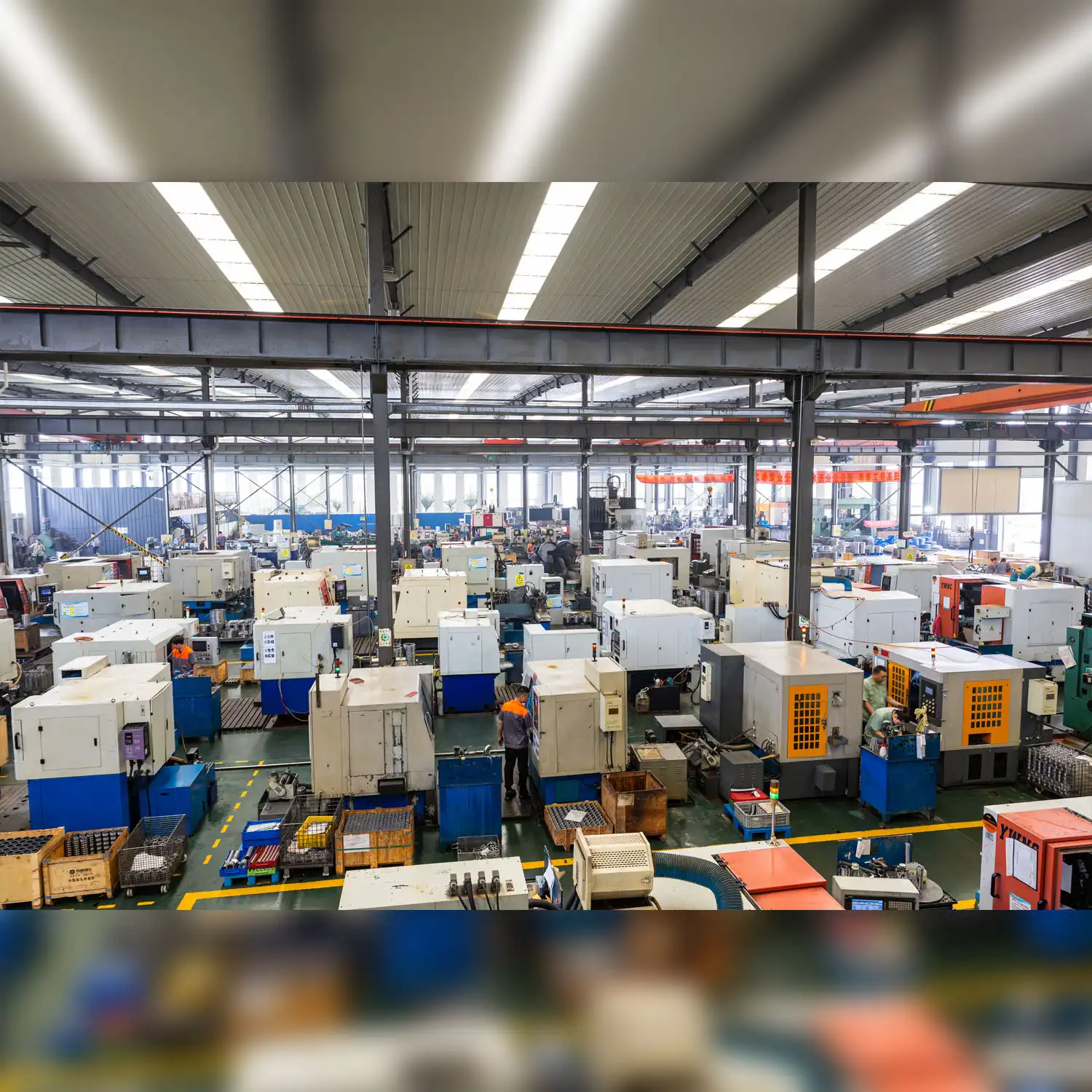
Understanding YRT100 and YRTS Rotary Table Bearings
Core Structural Design Differences
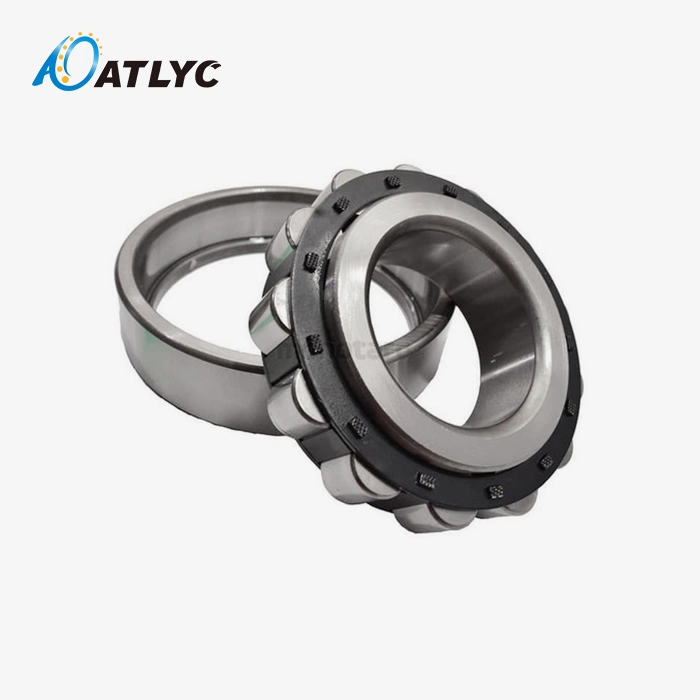
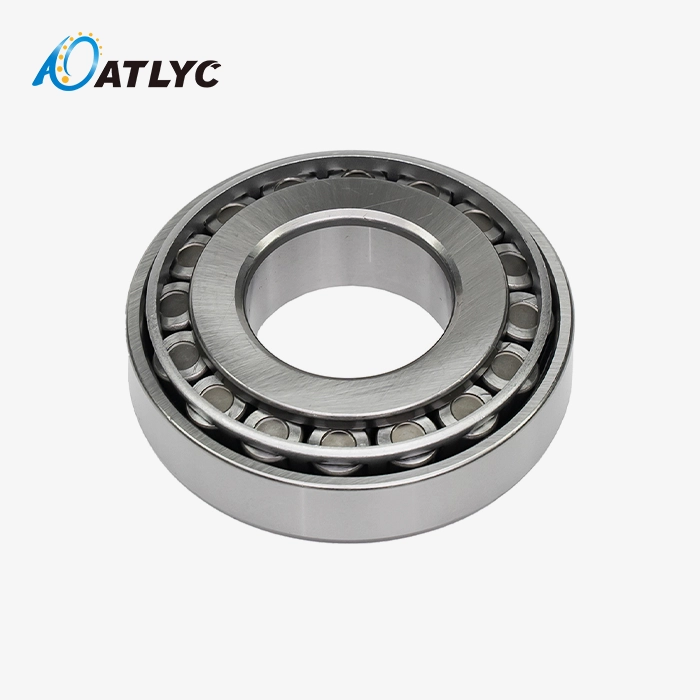
The structure of these bearing systems shows important differences that have a direct effect on how well they work. The YRT100 has a small housing that holds three different roller arrangements: two axial needle roller assemblies and one radial full-complement cylindrical roller set. This arrangement makes separate load paths, so each row can handle different types of force on its own while still being very rigid.
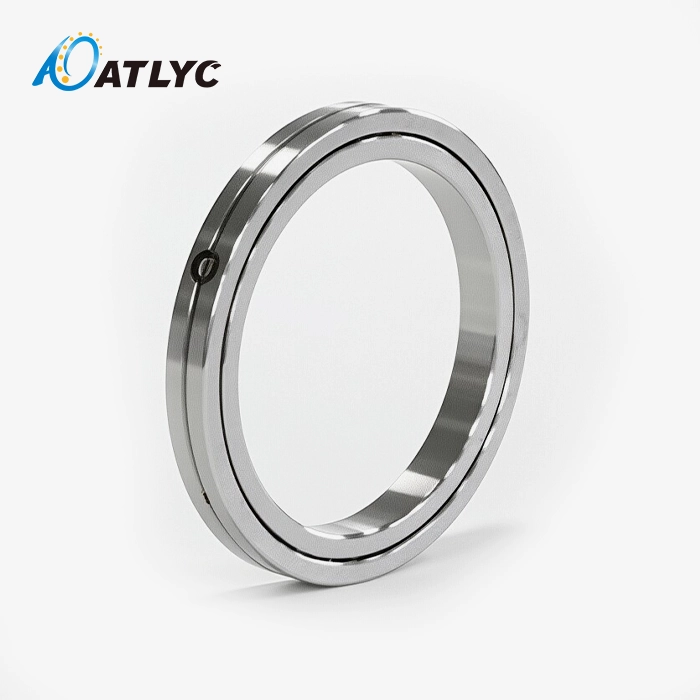
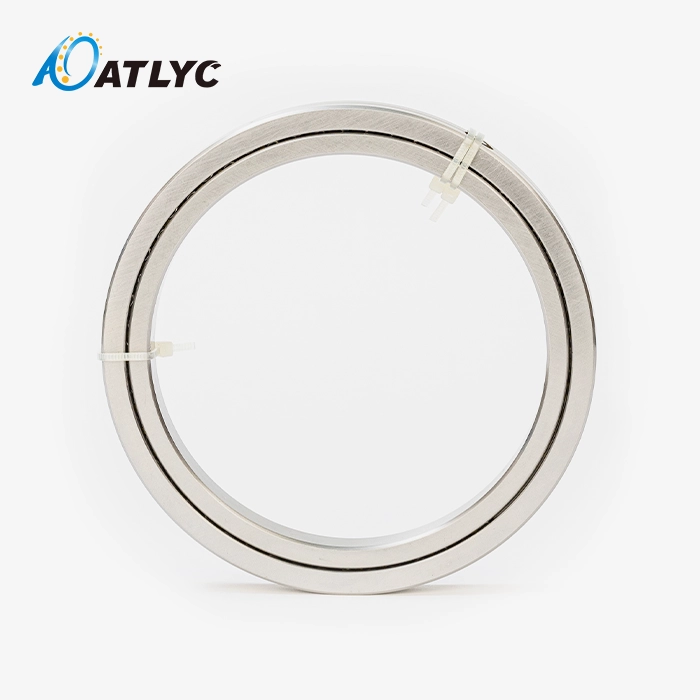
YRTS bearings, on the other hand, use a double-row angular contact ball design with balls placed at exact contact angles, usually 45° or 60°. Axial loads, radial loads, and twisting moments can all be handled at the same time by steel balls arranged in two stacks. This combined method gives you more options when adding things that are complicated and have many force lines interacting with each other.
We've seen that these structural differences have a big effect on how bearings respond to operational demands after looking at many installations on CNC machining centres and indexing equipment. When manufacturers choose between these choices, they need to think about how well the design theory fits with the load profile and motion needs of their tools.
Dimensional Specifications and Load Capacity
Precision dimensions define the practical application boundaries for both bearing types. The YRT100 maintains a 100mm bore diameter, 185mm outer diameter, and 38mm height, creating a compact footprint ideal for space-constrained installations. Its static load rating approaches 185 kN, delivering remarkable capacity within a modest envelope.
| Specification | YRT100 | YRTS Series (Example) |
|---|---|---|
| Inner Diameter | 100mm | 80-120mm (varies) |
| Outer Diameter | 185mm | 160-210mm (varies) |
| Width/Height | 38mm | 26-50mm (varies) |
| Static Load Rating | ~185 kN | 120-220 kN (model-dependent) |
| Mounting Holes | 18 outer, 18 inner | Integrated mounting features |
The YRTS measures change across model lines, which gives you the freedom to match the bearing size to the needs of your tools. With a wider range of options, engineers can make the best use of the room while still meeting load standards. Both models use high-quality GCr15 bearing steel that has been strengthened to HRC 58–64. This makes sure that the performance of the material stays the same at all temperatures and stress levels.
When equipment makers have to balance physical limitations with performance needs, these standards help them decide what to buy. The fixing holes built into both types of bearings—18 on the YRT100's inner and outer rings—eliminate the need for complicated retention gear. This makes installation easier and improves the structural stiffness of links to nearby machine parts.
Material Quality and Lubrication Methods
Material science decides how long a YRT100 Rotary Table Bearing will last under practical stress. Both types of bearings are made from high-quality GCr15 steel that has been heated and cooled in controlled processes to reach a Rockwell C hardness level between 58 and 64. This range of hardness strikes a good mix between fatigue strength and wear resistance. This keeps the surface from getting damaged too soon and keeps the shape stable over millions of rotations.
Precision grinding and superfinishing are used to get the surface roughness down to sub-micron levels on the raceway surfaces. This level of strictness during production reduces contact friction and ensures that stress is spread evenly across all rolling elements. In our quality lab, we always get Ra values below 0.2 micrometres when measuring surface finishes. This directly leads to longer service intervals.
Different lubrication strategies are used depending on the speed of operation and the conditions of the environment. Most uses below 400 rpm can be lubricated with grease, which provides the right sheet thickness and makes upkeep easier. When speeds get higher or when temperatures are high and need to be cooled faster than grease can handle, oil circulation systems are needed. If you choose the right lube (one whose thickness is right for the temperature and speed of operation), you can keep the hydraulic film that is needed for smooth operation.
Speed Performance Comparison: YRT100 vs YRTS
Maximum Rotational Speed Ratings
Speed limits are caused by many things working together, like the shape of the bearings, how the rolling elements move, and the temperature. Under normal loads and greasing conditions, the YRT100 usually works within a range of 500 to 800 rpm. Due to the three-row design of the bearing, where multiple roller sets create friction and heat that must be controlled within safe temperature limits, this number is very cautious.
In their best designs, YRTS bearings can often reach higher speeds, between 1000 and 1500 rpm. When compared to cylindrical rollers, the angular contact ball design lowers the rolling element mass and contact friction. This lets the rollers rotate at higher speeds before centrifugal forces and gyroscopic effects make them less stable. When loaded to the same level, ball bearings naturally produce less internal friction than roller bearings. This means that ball bearings work better at high speeds in terms of heat performance.
During field tests with companies that make car parts, we kept track of temperature spikes at different speeds. With the right amount of grease, the YRT100 bearings kept their working temperatures below 60°C at 600 rpm. When properly preloaded and oiled, YRTS counterparts showed similar thermal stability at 1200 rpm, proving that they are suitable for higher-speed indexing tasks.
Factors Affecting Speed Limits
Contact mechanics controls the fastest speeds that can be reached by controlling how rolling elements and raceways interact with each other. Friction coefficients change depending on the quality of the surface finish, the thickness of the lubricant film, and the amount of contact stress. Precision-ground raceways help both types of bearings by reducing micro-slip and heat production, but their different shapes make the friction profiles different.
The quality of lubrication has a direct effect on speed because it keeps protective films in place that keep metals from touching each other. When there isn't enough lubrication, boundary friction conditions happen where rough surfaces interact directly, generating too much heat and speeding up wear. On the other hand, too much lubrication leads to churning losses that waste energy and raise operating temperatures. Finding the right amount of lubricant requires careful math based on the size, speed, and load of the bearings.
| Factor | Impact on YRT100 | Impact on YRTS |
|---|---|---|
| Rolling Element Type | Cylindrical rollers create higher friction | Balls reduce friction, enable higher speeds |
| Contact Geometry | Line contact generates more heat | Point contact reduces thermal load |
| Preload Settings | Higher preload limits speed | Optimised preload balances speed and rigidity |
| Lubrication Method | Grease suitable for 600 rpm | Oil enables 1200+ rpm operation |
| Load Magnitude | Heavy loads reduce safe speed | Moderate loads permit higher speeds |
As operational speeds rise, thermal management of the YRT100 Rotary Table Bearing becomes more important. Increasing the speed has a generally linear effect on heat production; if you double the spin rate, you get four times as much heat from friction. Bearing housings need to have enough ways for heat to escape so that thermal expansion doesn't change the interior gaps and loading conditions. When choosing high-speed bearings for equipment, designers should use thermal modelling to make sure that the operating temperatures stay within the limits of the materials during all duty cycles.
Real-World Performance in CNC and Industrial Applications
Through working in a variety of settings, you can see how speed rates in theory actually work in practice. A company that makes precision machining centres puts YRT100 bearings in rotary tables that work with heavy casting parts. Running at 450 rpm and periodically indexing, these bearings worked nonstop for over 18 months without any noticeable wear, keeping their positional accuracy within 5 micrometres the whole time.
A company that makes auto parts puts YRTS bearings in high-speed indexing heads that are used for drilling. Running at 1100 rpm with moderate radial loads, the bearings cut cycle time by 23% compared to what was possible with the old bearings. During the testing time, standard vibration monitoring showed no unusual frequencies, proving stable dynamic behaviour at high speeds.
These examples show that when choosing bearings, they should be based on how they will be used, not their highest stated powers. Conservative speed margins, which are usually 70–80% of the maximum ratings, help ensure reliability by allowing for changes in load, inconsistent lubrication, and environmental factors that affect performance in the real world.
Evaluating Overall Bearing Performance Beyond Speed
Load Capacity and Operational Rigidity
How bearings react to forces and moments from the outside is based on their structural stiffness. The YRT100's three-row design makes it very stiff against shifting moments, which is important for keeping the part in place during heavy cutting operations. Its static load capacity is close to 185 kN, which means it can hold heavy loads without permanently deforming. This strong design works well in situations where the positioning accuracy needs to stay the same even when cutting forces change, and shock loads come and go.
YRTS bearings make the joints stiffer by using an angular contact shape that loads the ball-raceway surfaces ahead of time. When you set the setup correctly, you get a hard system with no space. This gets rid of the tiny moves that hurt accuracy. Individual YRTS models may not be able to hold as much weight as YRT units of the same size, but their faster speeds often make up for it in situations where throughput depends on quick indexing cycles.
There is a strong link between vibration resistance, bearing stiffness, and dampening properties. Vibrations are better transferred to machine frames by bearing systems that are stiffer, where isolation and damping elements can handle them well. When installed correctly, both types of bearings are very good at preventing vibrations. However, the YRT100's multi-row design and complex internal geometry make it even better.
Durability and Service Life Expectations
Material fatigue resistance, surface wear rates, and operational stress levels all affect how long a bearing lasts. Both the YRT100 and YRTS bearings have L10 service lives of more than 20,000 hours when used within their rated limits and under the same pressure situations. Based on the L10 measure, 90% of bearings will hit or go beyond this length of time before they are likely to fail from wear.
Micropitting and spalling are signs of surface fatigue that happen when contact stresses are higher than a material can handle. If you heat-treat high-grade bearing steel the right way, it will resist these failure modes well. However, operational factors have a big impact on the actual service life. Lack of grease, contamination, imbalance, and overloading can all speed up wear and tear and lower the real-life of a bearing below what it would have expected based on theory.
Instead of general suggestions, maintenance intervals should be based on how things are actually working. Installations that are kept clean, have steady loads, and are properly oiled may go years without needing to be serviced. On the other hand, equipment that is frequently loaded and unloaded or that is exposed to contamination needs more frequent inspections. Vibration analysis, temperature tracking, and regular oil sampling can help find problems early on, before they become too big to fix.
Cost Analysis and Total Ownership Value
The initial costs of buying something are only a small part of the total costs of having ownership. The YRT100 usually has a moderate price tag because it needs to be made with precision and a special integrated design. YRTS bearings have a wider price range that depends on size, precise class, and production output. The most expensive types are close to or more expensive than YRT100.
The total cost of ownership includes the cost of labour for installation, repairs, energy use, and downtime. Both types of bearings have built-in mounting features that make installation easier. This cuts down on labour costs and the chance of mistakes that could affect performance. When mounting is made easier, equipment can be put into use faster, and less retention hardware needs to be kept on hand.
The cost of maintenance depends on how the machine is oiled and how often it needs to be inspected. Grease-lubricated installations need to be re-oiled from time to time, usually every 6 to 12 months, but depending on how they are used. Oil-lubricated systems need more complicated equipment, but they last longer between service visits and cool better for high-speed uses. To find out how cost-effective their products really are, equipment makers should add up all the costs that come with maintaining and replacing them over the course of their predicted useful life.
Choosing the Right Bearing for Your Application
Application-Specific Selection Criteria
Precision machining centres demand bearings that maintain positional accuracy under varying cutting forces. The YRT100 excels in these environments through its exceptional rigidity and moment capacity, keeping rotary tables stable during heavy milling and boring operations. Its compact height suits installations where space limitations prevent the use of separate thrust and radial bearing arrangements.
High-speed indexing applications benefit from YRTS characteristics when rapid positioning cycles dominate operational profiles. Automated assembly equipment, pick-and-place systems, and precision measurement devices that require frequent angular repositioning leverage YRTS speed capabilities to maximise throughput while maintaining adequate positioning accuracy.
Heavy industrial machinery—including mining equipment, construction machinery, and materials handling systems—often operates at lower speeds but encounters severe shock loads and contamination with YRT100 Rotary Table Bearing. Both bearing families can serve these applications when properly sealed and maintained, though selection should prioritise load capacity and contamination resistance over maximum speed capability.
Procurement Considerations and Supplier Evaluation
Supplier credibility directly impacts bearing quality and consistency. ISO 9001 and IATF 16949 certifications demonstrate commitment to quality management systems and automotive-grade manufacturing standards. These certifications validate that suppliers maintain documented processes controlling material selection, manufacturing procedures, inspection protocols, and traceability systems.
Production capacity matters when establishing long-term supply relationships. Suppliers operating multiple manufacturing facilities with diversified equipment can scale production to meet demand fluctuations while maintaining delivery reliability. Luoyang Auto Bearing Co., Ltd. expanded from a single workshop in 2010 to six specialised facilities, demonstrating sustained growth and investment in manufacturing capability over our 15-year history.
Lead times and minimum order quantities influence inventory management and cash flow. Bearings with standardised dimensions often ship from stock with 2-4 week lead times, while custom configurations may require 6-10 weeks for production. Balancing MOQ requirements against inventory carrying costs demands careful analysis of consumption rates and storage capabilities. Technical support availability provides value beyond product delivery. Engineering assistance during specification selection, installation guidance, and troubleshooting support helps maximise bearing performance and minimise operational disruptions.
Installation, Maintenance, and Longevity Tips
Proper Installation Procedures
Mounting accuracy determines whether bearings achieve their rated performance. Clean work areas prevent contamination during installation—even microscopic particles can damage precision surfaces and initiate premature wear. Inspection of mounting surfaces for burrs, nicks, or dimensional deviations should precede bearing installation, as surface imperfections create stress concentrations that compromise structural integrity.
The integrated mounting holes on both the YRT100 Rotary Table Bearing and the YRTS bearings simplify installation while demanding proper bolt tensioning. Uneven or insufficient bolt torque creates non-uniform stress distributions that reduce bearing rigidity and accelerate fatigue. Torque wrenches calibrated to manufacturer specifications ensure consistent clamping force across all mounting positions. Sequential tightening patterns—typically a cross or star sequence—prevent distortion during assembly.
Alignment verification using precision indicators confirms proper bearing orientation relative to mating components. Runout measurements at inner and outer rings should remain within specified tolerances—typically 3-8 micrometres for precision applications. Excessive runout indicates mounting errors or component defects requiring correction before equipment operation begins.
Lubrication Best Practices and Inspection Schedules
Lubricant selection matches viscosity grade to operating speed, load, and temperature conditions. Bearings operating below 400 rpm typically employ NLGI Grade 2 lithium complex or polyurea greases offering good mechanical stability and oxidation resistance. Higher-speed installations benefit from lower-viscosity oils—ISO VG 32 to 68 grades—that maintain adequate film thickness while minimising churning losses.
Relubrication intervals depend on bearing size, speed, and operating environment. As a baseline, grease-lubricated bearings require service every 2000-4000 operating hours under normal conditions. Contaminated or high-temperature environments necessitate more frequent service. Purge-type lubrication systems facilitate grease renewal without disassembly, reducing maintenance downtime while ensuring a consistent lubricant supply.
Condition monitoring techniques detect developing issues before failure occurs. Vibration analysis identifies imbalance, misalignment, and bearing defects through characteristic frequency patterns. Temperature monitoring reveals lubrication problems and excessive friction. Lubricant analysis detects contamination and wear debris, providing early warning of progressive damage. Establishing baseline measurements during commissioning enables meaningful comparison as equipment ages.
Troubleshooting Common Performance Issues
Abnormal noise often indicates lubrication deficiency, contamination, or developing damage. Grinding or squealing sounds suggest inadequate lubricant film, requiring immediate investigation and corrective action. Periodic clicking or tapping may indicate damaged rolling elements or raceway spalling. Distinguishing between noise sources requires experience and often benefits from vibration analysis to confirm the diagnosis.
Elevated operating temperatures signal friction problems from inadequate lubrication, excessive preload, or misalignment. Thermal imaging identifies hot spots indicating localised contact problems. Temperature rises exceeding 20°C above baseline warrant investigation, as progressive heating accelerates lubricant degradation and material fatigue.
Premature wear manifests as increased clearance, runout growth, or visible surface damage. Regular measurement of critical dimensions tracks degradation rates, enabling planned replacement before catastrophic failure disrupts production. Documenting wear patterns helps identify root causes—misalignment, contamination, or overloading—allowing corrective measures that extend replacement bearing life.
Conclusion
Selecting between YRT100 and YRTS rotary table bearings requires balancing speed requirements against load capacity, precision demands, and operational conditions. The YRT100 delivers exceptional rigidity and load capacity within a compact envelope, ideally suited for heavy-duty CNC applications where positioning accuracy under load takes precedence over maximum rotational speed. YRTS bearings optimise speed capability through angular contact ball design, serving high-speed indexing applications where rapid positioning cycles drive productivity.
Both bearing families benefit from precision manufacturing, quality materials, and integrated mounting features that simplify installation while maximising structural stiffness. Proper selection demands thorough analysis of operational profiles, environmental conditions, and performance priorities specific to your application. Partnering with experienced bearing manufacturers ensures access to technical expertise, quality assurance, and reliable supply chains essential for sustained operational success.
FAQ
1. What is the maximum speed limit for YRT100 bearings in typical applications?
The YRT100 operates effectively within a 500-800 rpm range under standard loading and lubrication conditions. Actual maximum speed depends on load magnitude, lubrication method, and thermal management capability. Conservative operation at 70-80% of maximum rated speed provides reliability margins accommodating real-world variability.
2. How do YRT100 and YRTS bearings compare in load capacity?
YRT100 bearings typically offer higher static load ratings—approaching 185 kN—due to their three-row design with multiple roller sets. YRTS bearings provide adequate load capacity for moderate loading while prioritising speed capability. Selection should match bearing capacity to actual application loads with appropriate safety factors.
3. Where can I source authentic YRT100 bearings with quality assurance?
Reliable suppliers maintain ISO 9001 and IATF 16949 certifications, demonstrating commitment to quality systems and automotive manufacturing standards. ATLYC provides certified bearings with full traceability, technical documentation, and engineering support. Request material certificates and dimensional inspection reports to verify product authenticity and conformance to specifications.
Contact ATLYC for Expert Bearing Solutions
ATLYC brings 15 years of precision bearing manufacturing expertise to demanding industrial applications worldwide. Our YRT100 Rotary Table Bearing supplier capabilities extend across six specialised production facilities, supported by 120 dedicated professionals and certified under ISO 9001 and IATF 16949 standards. We deliver consistent quality, competitive pricing, and reliable lead times to automotive manufacturers, industrial equipment OEMs, and global distributors requiring high-precision rotary table bearings for sale.
Reach out to our engineering team at auto@lyautobearing.com to discuss your specific application requirements. We provide technical consultation, custom configuration options, and sample availability to ensure optimal bearing selection for your machinery. Whether you need immediate shipment of standard configurations or customised solutions for unique operational demands, ATLYC stands ready as your trusted bearing manufacturer partner.
References
1. Harris, T.A., & Kotzalas, M.N. (2006). Rolling Bearing Analysis: Essential Concepts of Bearing Technology. CRC Press.
2. Budynas, R.G., & Nisbett, J.K. (2020). Shigley's Mechanical Engineering Design. McGraw-Hill Education.
3. ISO 492:2014. Rolling bearings — Radial bearings — Geometrical product specifications (GPS) and tolerance values. International Organisation for Standardisation.
4. Weck, M., & Brecher, C. (2006). Machine Tools Production Systems 3: Design and Construction of Machine Tools. Springer-Verlag Berlin Heidelberg.
5. Tong, V.C., & Hong, S.W. (2016). Characteristics of tapered roller bearing subjected to combined radial and moment loads. International Journal of Precision Engineering and Manufacturing-Green Technology, 3(4), 323-329.
6. Palmgren, A. (1959). Ball and Roller Bearing Engineering. SKF Industries Inc.
Learn about our latest products and discounts through SMS or email