- English
- French
- German
- Portuguese
- Spanish
- Russian
- Japanese
- Korean
- Arabic
- Greek
- German
- Turkish
- Italian
- Danish
- Romanian
- Indonesian
- Czech
- Afrikaans
- Swedish
- Polish
- Basque
- Catalan
- Esperanto
- Hindi
- Lao
- Albanian
- Amharic
- Armenian
- Azerbaijani
- Belarusian
- Bengali
- Bosnian
- Bulgarian
- Cebuano
- Chichewa
- Corsican
- Croatian
- Dutch
- Estonian
- Filipino
- Finnish
- Frisian
- Galician
- Georgian
- Gujarati
- Haitian
- Hausa
- Hawaiian
- Hebrew
- Hmong
- Hungarian
- Icelandic
- Igbo
- Javanese
- Kannada
- Kazakh
- Khmer
- Kurdish
- Kyrgyz
- Latin
- Latvian
- Lithuanian
- Luxembou..
- Macedonian
- Malagasy
- Malay
- Malayalam
- Maltese
- Maori
- Marathi
- Mongolian
- Burmese
- Nepali
- Norwegian
- Pashto
- Persian
- Punjabi
- Serbian
- Sesotho
- Sinhala
- Slovak
- Slovenian
- Somali
- Samoan
- Scots Gaelic
- Shona
- Sindhi
- Sundanese
- Swahili
- Tajik
- Tamil
- Telugu
- Thai
- Ukrainian
- Urdu
- Uzbek
- Vietnamese
- Welsh
- Xhosa
- Yiddish
- Yoruba
- Zulu
Why is the SX011848 Crossed Roller Slewing Bearing Popular in the industry?
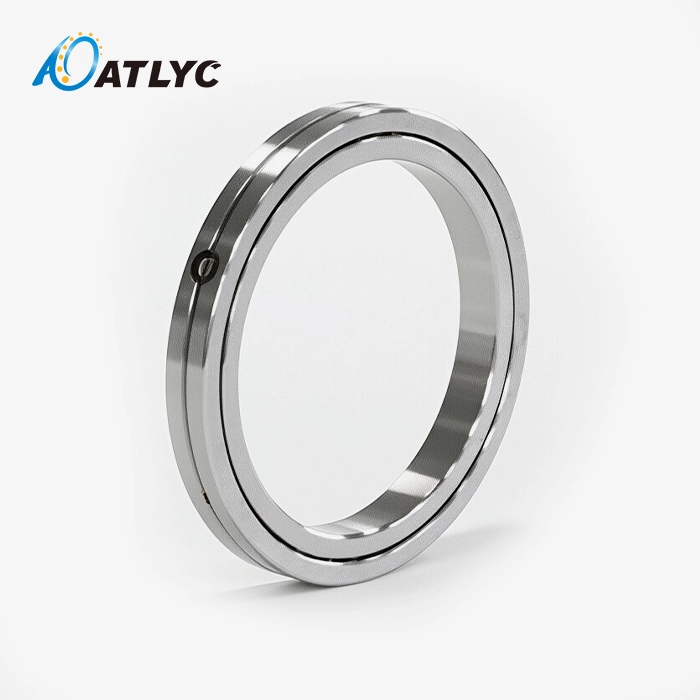
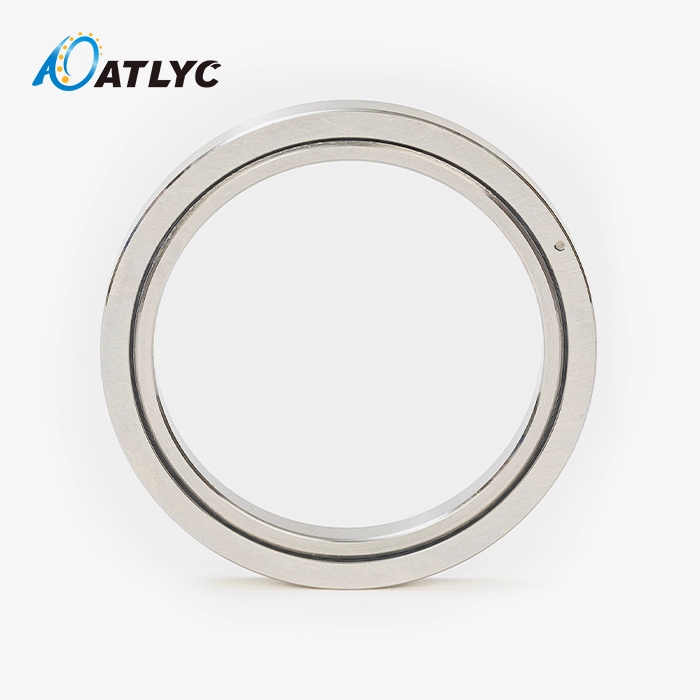
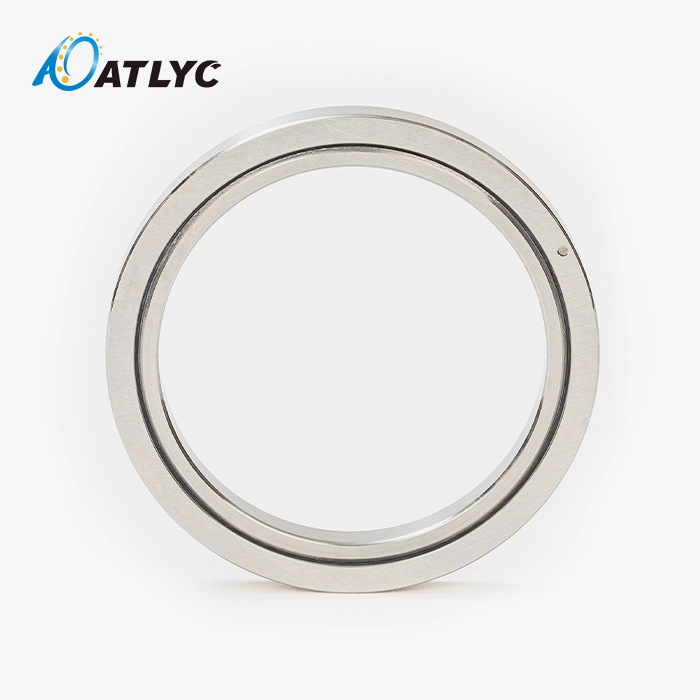
Because it combines radial, axial, and moment load capacities into one very small unit, the SX011848 Crossed Roller Slewing Bearing has become a standard part in precision engineering. Its cross-roller design gives it great strength and accuracy in tight spaces, which is why industrial robots, medical equipment, and precision machinery can't work without it. This bearing solves the problem of getting high performance without giving up valuable installation space. It has an inner diameter of 240 mm, an outer diameter of 300 mm, and a width of only 28 mm. This is a need that is strong in automotive manufacturing, automation systems, and advanced measuring instruments.
Overview of the SX011848 Crossed Roller Slewing Bearing
Precision-Engineered Design Philosophy
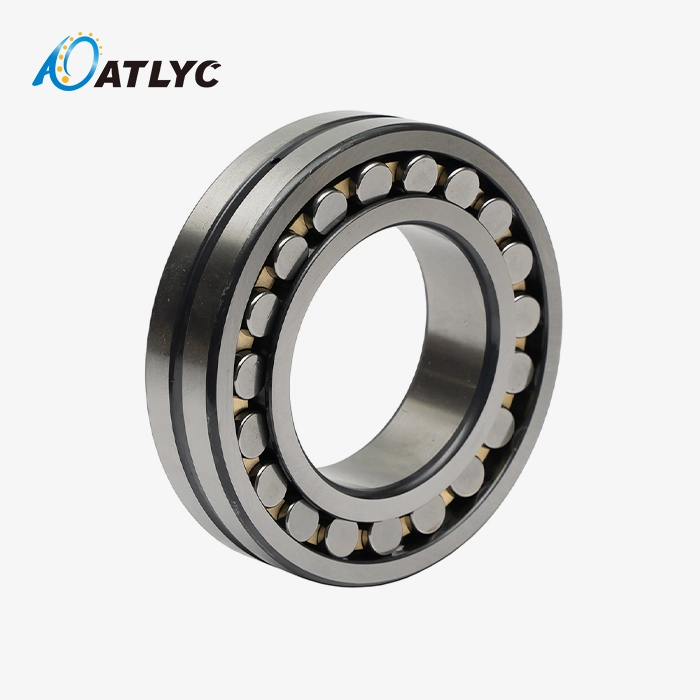
A unique way to control circular motion is shown by the SX011848. This crossed roller bearing has cylindrical rollers placed at 90-degree angles between the inner and outer raceways. This is different from most bearing designs, which need multiple units to handle complex loads. The bearing has an integral inner ring and a split outer ring assembly. The orthogonal positioning creates contact points that spread forces evenly across all directional planes. This lets the assembly handle radial forces, axial thrust from both directions, and tilting moments all at the same time. The outer ring parts are held together by three fixing rings, which keep the structure strong while it's working. Polyamide spacers separate the rollers so that metal doesn't touch metal, and the spinning is smooth with little friction. With this setup, you don't need dual-bearing setups, which usually take up more axial room and make the system more complicated.
Technical Specifications That Matter
The SX011848 is made from GCr15 and GCr15SiMn bearing-grade steel, which gives it the strength and wear resistance needed for long service life. These chromium-steel alloys go through precise heat treatment steps that make the material's features work best in tough rotating environments. The bearing meets several precision grades, such as P6, P0, P5, P4, and P2. P2 is the highest accuracy class, and it is best for ultra-precise applications with runout tolerances measured in microns. The ultra-thin profile, which is only 28mm wide, is especially useful when engineers are limited on space. This small shape is good for industrial robot joints, spinning tables in CNC machining centers, and medical imaging equipment. Because the inner and outer rings don't have mounting holes, they have to be fixed using flange-and-bearing-seat ways. This spreads the load better than traditional bolt-hole patterns, which can cause stress concentration points.
Operating Principles Behind Superior Performance
V-groove raceways make the touch area between rollers and raceways as big as possible. Each roller stays in contact with the radial and axial planes at an angle of about 45 degrees. This makes a load path that moves forces through the bearing system efficiently. This shape is very stiff under moment loads, which is important for precision placement tasks where angular deviation needs to be kept to a minimum. The crossed arrangement also helps to improve load capacity. When the bearing is hit by radial forces, half of the rollers move to fight the load. At the same time, axial forces move the wheels that the SX011848 Crossed Roller Slewing Bearing is placed in different positions. This load-sharing system spreads stress across the whole set of rollers instead of focusing forces on a small contact area like single-direction bearings do.
Advantages Driving the Popularity of the SX011848 Bearing
Multi-Directional Load Capacity
Manufacturing engineers consistently praise how this bearing handles combined loading scenarios. Production machinery rarely experiences pure radial or axial loads in isolation. The SX011848 accommodates the complex force vectors encountered in real-world applications—radial pressures from drive mechanisms, axial thrust from machining processes, and tilting moments from offset loads or misalignment conditions. A machining center rotary table, which must maintain position accuracy while cutting forces vary throughout the tool path, exemplifies this advantage. The bearing supports the workpiece weight (axial load), resists cutting forces transmitted through the fixture (radial load), and counteracts any moment generated by eccentric workpiece positioning—all while maintaining rotational smoothness measured in arc-seconds.
Enhanced Rigidity and Precision
The 90-degree V-groove raceway configuration delivers rigidity that directly translates to positioning accuracy. When an industrial robot executes repetitive movements, even microscopic deflections in the joint bearings accumulate into noticeable endpoint errors. The SX011848's structural stiffness minimizes such deflections, enabling robots to achieve specified positional repeatability over millions of cycles. Precision-grade versions meeting P4 or P2 tolerances deliver runout accuracies that satisfy stringent requirements in semiconductor manufacturing equipment and coordinate measuring machines. These applications demand angular positioning accuracy within single-digit arc-seconds—performance levels that standard bearings cannot consistently achieve.
Installation Flexibility Across Machinery Types
The split outer ring design simplifies assembly procedures, particularly in retrofit applications where existing machinery requires bearing replacement without complete disassembly. Technicians can install the inner ring, position the roller set, then secure the outer ring sections with fastening rings—a sequence that proves considerably more manageable than press-fitting interference-fit bearings into closed housings. Flange-mounting compatibility accommodates diverse machine architectures. Whether integrating into a robot joint housing, a precision turntable base, or a medical scanner gantry, engineers appreciate the design adaptability that doesn't constrain machine layout decisions.
Industry Applications and Use Cases of the SX011848 Crossed Roller Slewing Bearing
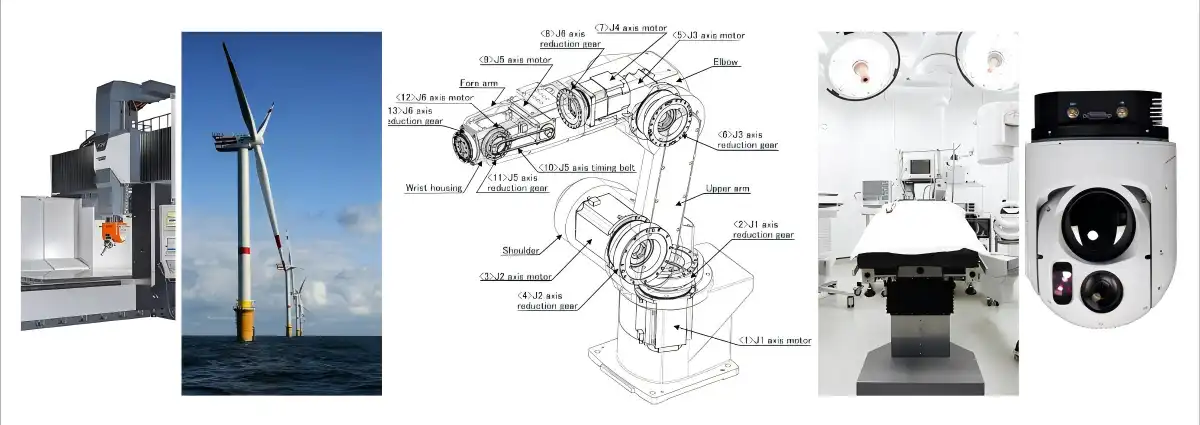
Industrial Robotics and Automation
Articulated robots in automotive assembly lines depend on joint bearings that maintain accuracy despite continuous motion under varying loads. The SX011848 has proven particularly effective in shoulder and elbow joints where moment loads SX011848 Crossed Roller Slewing Bearing are substantial. A European automotive manufacturer documented a 35% improvement in joint positioning accuracy after upgrading from ball-type slewing rings to crossed roller bearings in their welding robots, directly correlating to reduced rework rates and improved weld quality consistency. Collaborative robots (cobots) working alongside human operators require smooth, predictable motion. The low friction and high damping characteristics of crossed roller bearings contribute to the controlled acceleration and deceleration profiles that ensure operator safety. Equipment builders specifically select the SX011848 for applications where compact size enables more human-like arm proportions while maintaining payload capacity.
Precision Machining Centers and Rotary Tables
Five-axis machining centers utilize rotary tables to position workpieces at precise angles relative to cutting tools. The combination of high rigidity and rotational accuracy makes this bearing ideal for such applications. A machining center manufacturer in the United States reported that implementing the SX011848 in their rotary table design reduced angular positioning error from ±12 arc-seconds to ±5 arc-seconds, enabling them to meet aerospace component tolerances that were previously unattainable with their standard bearing configuration. The compact axial dimension proves particularly advantageous in horizontal machining centers where table height directly affects machine rigidity and chip evacuation. By reducing bearing stack height by 40% compared to previous designs, engineers achieved lower center-of-gravity positioning that improved cutting stability and surface finish quality.
Measuring Instruments and Quality Control Systems
Coordinate measuring machines (CMMs) and automated optical inspection systems require rotational axes that introduce minimal measurement uncertainty. The P2 precision-grade SX011848 delivers the geometric accuracy these applications demand. Metrology equipment manufacturers specify this bearing for rotary tables where measurement repeatability within 2 micrometers is required across the entire measurement volume. Semiconductor wafer handling equipment represents another precision application where the bearing's characteristics prove essential. Wafer steppers and inspection tools must position silicon wafers with submicron accuracy while maintaining cleanliness standards—requirements that the SX011848's sealed construction and smooth operation satisfy effectively.
Comparing SX011848 Crossed Roller Slewing Bearing with Alternative Solutions
Superior Performance Versus Standard Slewing Rings
Traditional ball-type slewing rings occupy more axial space for equivalent load ratings. A comparable ball bearing typically requires 45-55mm width to match the load capacity of the 28mm-wide SX011848. This size difference becomes particularly significant in compact machinery where every millimeter affects overall equipment dimensions and weight. Moment load capacity presents another decisive advantage. Crossed roller bearings typically deliver 50-70% higher moment ratings than ball bearings of similar envelope dimensions. Equipment designers can either reduce bearing size while maintaining performance or achieve higher load capacity within existing space constraints—both options providing tangible value in competitive machinery markets.
Cost-Performance Analysis for Procurement Decisions
Initial acquisition cost for crossed roller bearings runs approximately 40-60% higher than standard ball slewing rings. Procurement professionals must evaluate this price differential against operational benefits. When analyzed over a typical 5-year equipment lifecycle, the extended service life, reduced maintenance frequency, and improved machine performance often yield total cost of ownership reductions of 20-30%. A German automation equipment manufacturer shared data showing that while bearing component costs increased by 8% when switching to the SX011848, warranty claims decreased by 35% and customer satisfaction scores improved measurably. The quality perception enhancement proved valuable in competitive bidding situations where equipment reliability serves as a key differentiator.
Selection Guidance Based on Application Requirements
Load magnitude and direction ratios guide bearing selection. Applications with predominantly radial loads and minimal axial forces might benefit from cylindrical roller bearings with separate thrust bearings. Conversely, equipment experiencing significant combined loading—particularly with moment loads exceeding 30% of radial capacity—represents ideal territory for crossed roller slewing bearings. Operating speed constitutes another selection criterion. The SX011848 performs optimally in applications with rotational speeds below 500 RPM, where precision and rigidity matter more than high-speed capability. Spindle applications requiring speeds exceeding 1000 RPM typically benefit more from angular contact ball bearing arrangements designed for higher speed ratings.
Procurement Insights for SX011848 Crossed Roller Slewing Bearings
Supplier Networks and Manufacturing Capability
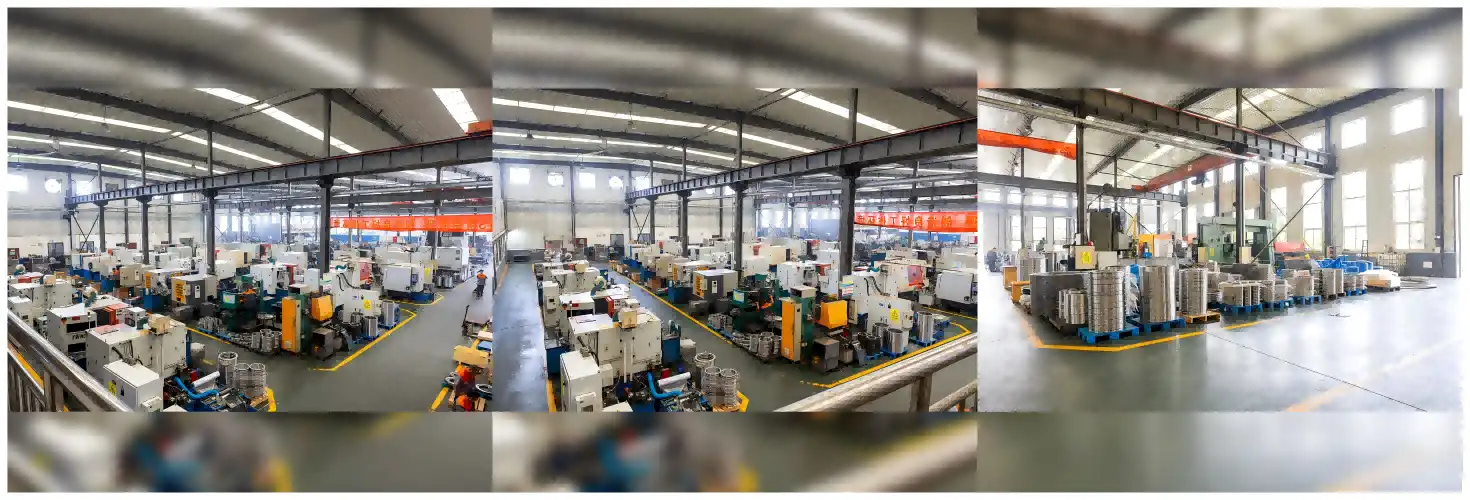
Global bearing distributors stock standard configurations of the SX011848, providing reasonable SX011848 Crossed Roller Slewing Bearing lead times for common specifications. OEM partnerships with manufacturers like ATLYC enable customization possibilities that standard distributor inventory cannot accommodate. Established in 2010, ATLYC has developed specialized manufacturing capabilities across six production facilities, processing orders from initial engineering consultation through final quality verification under ISO 9001 and IATF 16949 certified systems. Manufacturing capacity directly impacts supply reliability. Mid-to-large equipment manufacturers require suppliers who can scale production to match project timelines. ATLYC's 120-person workforce across production, engineering, and quality departments provides the operational depth to support both prototype quantities and volume production requirements. This scalability has proven particularly valuable for customers in South Korea, Germany, and the United States, where project timelines often accelerate unexpectedly.
Customization Capabilities and Technical Support
Standard SX011848 specifications satisfy many applications, yet custom requirements frequently arise. Seal configurations, lubrication provisions, mounting feature modifications, and material upgrades represent common customization requests. Bearing manufacturers with in-house engineering teams can evaluate modification requests quickly, providing feasibility assessments and cost implications within days rather than weeks. Technical support extends beyond initial specification. Application engineers who understand both bearing technology and end-use machinery can identify potential issues before they manifest in production. ATLYC's engineering team works with customers to verify load calculations, evaluate mounting arrangements, and recommend optimal precision grades—services that reduce project risk and accelerate time-to-market.
Quality Assurance and After-Sales Support
ISO 9001 and IATF 16949 certifications provide baseline quality assurance, yet additional verification protocols offer enhanced confidence. Dimensional inspection reports, material certifications, and performance test data should accompany critical applications. ATLYC provides comprehensive documentation packages that satisfy both internal quality requirements and end-customer audit requirements—documentation that proves particularly valuable in automotive and aerospace supply chains. Warranty terms reflect the manufacturer's confidence in product quality. Standard warranties covering manufacturing defects for 12-18 months are common, yet comprehensive programs addressing premature wear or performance degradation provide additional value. Global after-sales support networks enable rapid response when field issues arise, minimizing equipment downtime through expedited replacement shipments and technical troubleshooting assistance.
Conclusion
The SX011848 Crossed Roller Slewing Bearing's industry popularity stems from measurable performance advantages that directly address critical manufacturing challenges. Its ability to consolidate multi-directional load capacity into an ultra-compact envelope enables machine designs that were previously impractical. The combination of exceptional rigidity, precision positioning accuracy, and extended service life delivers operational value that justifies the procurement investment. Equipment manufacturers across robotics, precision machinery, and medical devices continue selecting this bearing configuration because it consistently delivers the reliability and performance that competitive markets demand.
FAQ
1. What Distinguishes Crossed Roller Bearings from Ball Slewing Bearings?
Crossed roller bearings utilize cylindrical rollers positioned at 90-degree angles, creating line contact with raceways compared to the point contact of ball bearings. This geometry provides substantially higher load capacity and rigidity within equivalent envelope dimensions. Ball bearings excel in high-speed applications, while crossed roller designs optimize precision and stiffness in moderate-speed, high-accuracy applications.
2. How Often Should These Bearings Undergo Maintenance?
Maintenance intervals depend on operating conditions, including load magnitude, rotational speed, and environmental factors. Standard practice recommends lubrication inspections every 2000-3000 operating hours for industrial applications. Sealed bearing configurations extend intervals to 5000-6000 hours. Equipment operating in contaminated environments benefits from more frequent inspections to verify seal integrity and lubricant cleanliness.
3. Can the SX011848 Be Customized for Specific Applications?
Manufacturers like ATLYC accommodate customization requests, including seal configurations, mounting feature modifications, and specialized material treatments. Engineering consultation during project planning phases ensures modifications align with application requirements while maintaining performance characteristics. Custom precision grades, preload specifications, and surface treatments represent commonly requested variations that experienced manufacturers can implement effectively.
Partner with ATLYC for Your Precision Bearing Requirements
ATLYC delivers comprehensive SX011848 Crossed Roller Slewing Bearing solutions backed by 15 years of manufacturing expertise and global quality certifications. Our engineering team provides technical consultation from initial specification through production implementation, ensuring optimal bearing selection for your specific machinery requirements. As an established crossed roller bearing manufacturer serving automotive OEMs, industrial equipment builders, and automation system integrators across North America, Europe, and Asia, we understand the supply reliability and quality consistency your operations demand. Contact our technical sales team at auto@lyautobearing.com to discuss your project requirements, request detailed specifications, or schedule an application review that ensures your equipment achieves its performance objectives.
References
1. Harris, T.A. and Kotzalas, M.N. (2006). "Advanced Concepts of Bearing Technology: Rolling Bearing Analysis." CRC Press, Fifth Edition.
2. Schaeffler Technologies AG & Co. (2019). "Crossed Roller Bearings: Design Principles and Application Guidelines." Technical Design Manual, Industrial Division.
3. ISO 199:2014. "Rolling Bearings – Thrust Bearings – Geometrical Product Specifications (GPS) and Tolerance Values." International Organization for Standardization.
4. American Bearing Manufacturers Association (2021). "Load Rating and Fatigue Life for Ball and Roller Bearings." ABMA Standard 9-2020 Publication.
5. Wensing, J.A. (2011). "On the Dynamics of Ball Bearings." Doctoral Dissertation, University of Twente, Netherlands.
6. SKF Group (2018). "Slewing Bearings and Rotary Table Bearings: Application and Selection Guidelines." SKF Technical Documentation, Bearing Products Division.
Learn about our latest products and discounts through SMS or email