- English
- French
- German
- Portuguese
- Spanish
- Russian
- Japanese
- Korean
- Arabic
- Greek
- German
- Turkish
- Italian
- Danish
- Romanian
- Indonesian
- Czech
- Afrikaans
- Swedish
- Polish
- Basque
- Catalan
- Esperanto
- Hindi
- Lao
- Albanian
- Amharic
- Armenian
- Azerbaijani
- Belarusian
- Bengali
- Bosnian
- Bulgarian
- Cebuano
- Chichewa
- Corsican
- Croatian
- Dutch
- Estonian
- Filipino
- Finnish
- Frisian
- Galician
- Georgian
- Gujarati
- Haitian
- Hausa
- Hawaiian
- Hebrew
- Hmong
- Hungarian
- Icelandic
- Igbo
- Javanese
- Kannada
- Kazakh
- Khmer
- Kurdish
- Kyrgyz
- Latin
- Latvian
- Lithuanian
- Luxembou..
- Macedonian
- Malagasy
- Malay
- Malayalam
- Maltese
- Maori
- Marathi
- Mongolian
- Burmese
- Nepali
- Norwegian
- Pashto
- Persian
- Punjabi
- Serbian
- Sesotho
- Sinhala
- Slovak
- Slovenian
- Somali
- Samoan
- Scots Gaelic
- Shona
- Sindhi
- Sundanese
- Swahili
- Tajik
- Tamil
- Telugu
- Thai
- Ukrainian
- Urdu
- Uzbek
- Vietnamese
- Welsh
- Xhosa
- Yiddish
- Yoruba
- Zulu
What Makes Single Row Tapered Roller Bearing 30211 a Popular Choice?
It is known as the "preferred choice" in many industries because the Single Row Tapered Roller Bearing 30211 can handle both horizontal and axial loads at the same time. This metric-series precision part has a standard inner diameter of 55mm, an outer diameter of 100mm, and a width of 21mm. It works well in car hubs, industrial reducers, and machine tool spindles. The tapered geometry makes the best load distribution, and the separable design makes installation easier. This makes it an essential choice for manufacturers who need reliable bearing solutions that balance accuracy, durability, and operating efficiency.
Understanding Single Row Tapered Roller Bearing 30211
Core Structural Components and Design Philosophy
The tapered roller bearing 30211 is made up of four carefully designed parts that can be taken apart and put back together again. The inner ring, called the cone, has a raceway that is curved and guides the movement of the rollers while the machine is running. The outer ring, which is called the cup, can be mounted separately to make it easy to put together and take apart for maintenance. A single row of tapered rollers moves loads between the raceways, and the cage assembly keeps the rollers at the right distance apart and keeps them from touching. This separate design is very helpful for repair teams. You can install the cup and cone parts separately, which cuts down on downtime while bearings are being replaced. The open design lets you use dust covers if you need to, based on the conditions of your environment. This gives you more options for how to handle contamination.
Material Specifications and Manufacturing Standards
The choice of material has a direct effect on how well the bearing works and how long it lasts. GCr15 or GCr15SiMn high-carbon chromium bearing steel is used for both the inner and outer rings. This steel is very hard after being heated. Rollers may also have 20Cr2Ni4A carburised steel added to them to make the body and surface harder. For low-cost uses, the cage is made of stamped steel. In places that need better heat dissipation and corrosion resistance, it's made of brass. According to ISO standards, the manufacturing precision grades available are P0 (standard), P6 (higher precision), and P5 (ultra-precision). You can match the bearing's performance to the needs of a certain application by using these precise levels to set the dimensional tolerances and running accuracy.
Critical Dimensions and Load Capacity Metrics
The 30211 bearing is a medium-sized item with an inner diameter of 55mm, an outer diameter of 100mm, and a width of 21mm. It can handle mild to light loads. Dimension standardisation makes sure that parts from different makers can be used interchangeably, which makes it easier for your procurement teams to find and replace parts. Load capacity depends on a number of things, such as how the parts are mounted, how well they are oiled, and how fast they are running. Line contact between rollers and raceways spreads pressures over a larger surface area than ball bearings of the same size, which lets them handle more weight. Along with this feature, tapered roller bearings are perfect for uses that have mixed loading situations.
Benefits and Advantages of the 30211 Bearing for Industrial Applications
Superior Durability Through Advanced Material Technology
Thanks to carefully chosen materials, Single Row Tapered Roller Bearing 30211 and strong building methods, the 30211 bearing lasts a very long time. GCr15 bearing steel goes through controlled heat treatment methods that make the surface hard, between 60 and 65 HRC. This makes it resistant to wear and contact fatigue. The tapered shape reduces stress concentrations and spreads loads equally across contact surfaces. Its temperature resistance lets it work at higher temperatures (up to 150°C) without losing performance, so it can be used in situations where temperatures are high. The material composition doesn't change shape when hit by shock loads that are common in farming and automotive tools. This means that the bearing's dimensions stay the same throughout its life.
Maintenance Protocols and Service Life Extension
Proper maintenance techniques greatly increase the operational life of bearings. Keeping things oiled is the most important part of care, and grease works well in most situations. You should choose lubricants based on the temperature, speed, and load conditions of the machine. Lithium-based greases with the right consistency grades are usually best. Vibration levels, temperature, and strange noise patterns should all be checked on a regular basis. Too much vibration is often a sign of mounting problems or developing flaws that need to be fixed right away. Temperature rises outside of standard operating ranges are a sign of either poor lubrication or too much preload. Visual inspections done on a regular basis can find problems with contamination, seal wear, or misalignment before they get worse and cause catastrophic failures. Controlling contamination is important for extending service life. Even tiny bits between the rolling elements and the raceways greatly speed up the rate of wear. In tough industrial settings, installing good seals or dust covers keeps outside contaminants from getting into internal parts.
Common Failure Modes and Risk Mitigation Strategies
Understanding how most failures happen helps procurement managers take steps to stop them from happening. Small cracks start to show up under the raceway's surface, and they finally break through to make surface pits. This is called fatigue spalling. This mode happens because of repeated stress cycles and cannot be avoided after a certain number of hours of use, but good lubrication and loading techniques can greatly extend fatigue life. Too much wear happens when lubrication doesn't keep rolling elements away from raceways, allowing metal-to-metal contact. This type of failure can be avoided by following the right lubrication practices and taking steps to stop contamination. Misalignment causes uneven load spread along the length of the roller, which speeds up wear at the ends of the roller. This risk can be reduced by making sure the shaft and housing are properly aligned during installation. With these repair insights, your teams can use proactive strategies to keep production going. You can lower the total cost of ownership for your bearing inventory and cut down on unplanned downtime by keeping an eye on key factors and taking preventative steps.
Comparison and Selection Guide for 30211 Tapered Roller Bearings
Performance Benchmarks Against Alternative Bearing Types
By comparing the 30211 tapered roller bearing to other options, you can see which one is best for your needs. When comparing bearings of the same size, ball bearings have lower friction and can go faster, but they can't hold as much weight. When both radial and axial loads are present, tapered roller bearings work better. The 30311 bearing follows the same design principles, but it is bigger, with a 55mm inner diameter, 120mm outer diameter, and a wider width. While this size boosts the load capacity, it also needs more radial space. The 30211 is better for applications with limited space because it is smaller, but the 30311 may be better for heavy-duty situations because it has more space. Double row tapered roller bearings are made up of two single row units that work together to support two-way axial loads and higher circular capacities. But they make things more complicated and cost more. For situations where axial loads mostly work in one direction, single-row configurations like the 30211 are sufficient. They are cheaper and easier to mount.
Cost-Quality Trade-offs in Procurement Decisions
Procurement pros have to find a balance between quality needs and cost concerns. Premium OEM bearings from well-known brands cost more, but they always have good quality, come with certifications, and come with expert support. Aftermarket alternatives can save you 20% to 40% on costs, making them a good choice for replacing parts in non-essential equipment. When looking at suppliers, look for those with ISO 9001 and IATF 16949 certifications, which show that their quality management systems are strong and in line with car industry standards. These certifications give you peace of mind that the manufacturing process has the right controls, inspection methods, and ways to track down materials. Since getting IATF 16949 certification, Luoyang Auto Bearing has kept both certifications, showing its dedication to meeting international quality standards. Bulk buy agreements, Single Row Tapered Roller Bearing 30211, allow for even more savings and ensure stable supply relationships. Long-term contracts with makers make it possible to predict prices and make sure that capacity is allocated correctly when demand goes up. Because of economies of scale, bearing production means that promises to make a lot of units lead to real cost cuts per unit without lowering quality standards.
Trusted Supply Channels for B2B Procurement
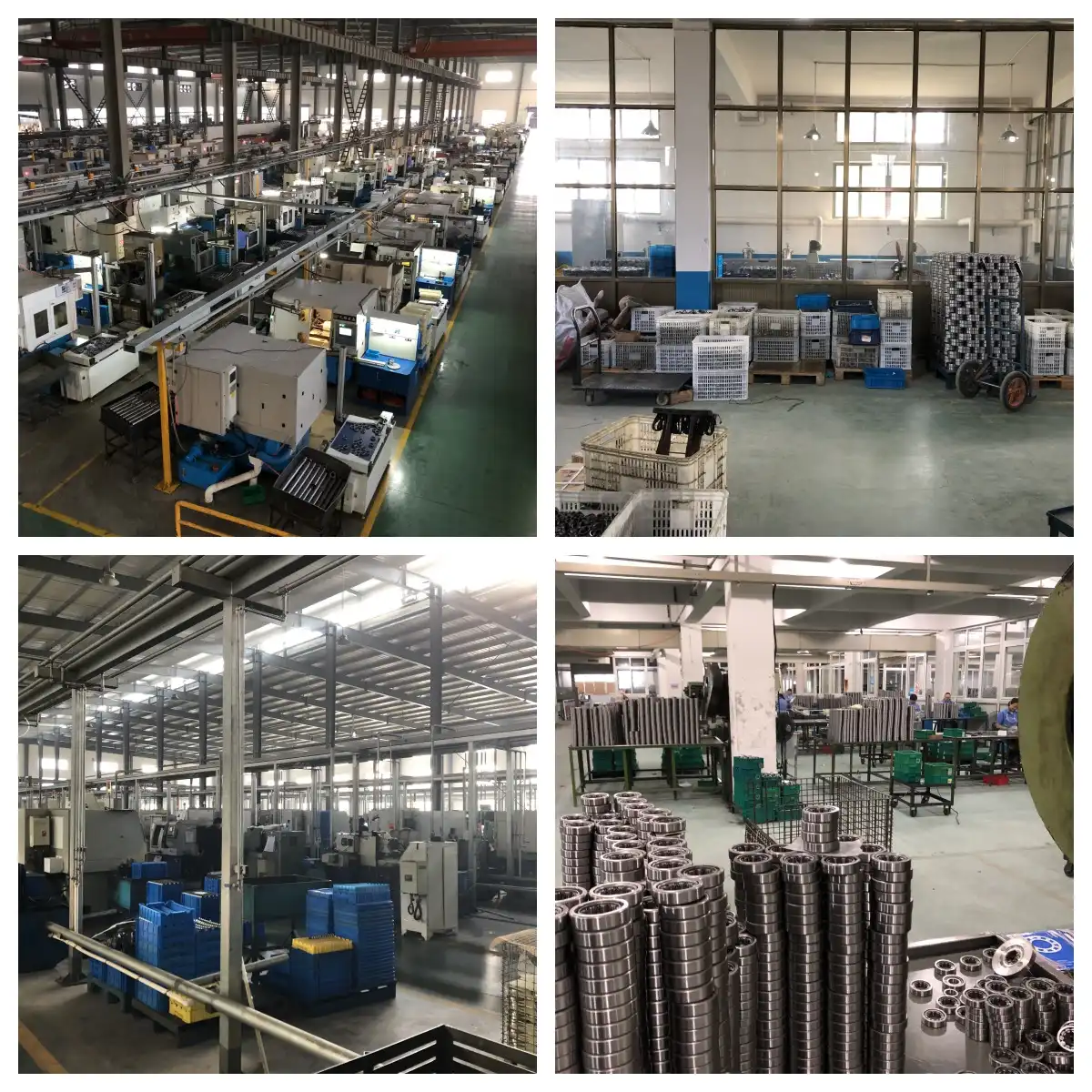
Identifying reliable sourcing partners streamlines procurement operations. Direct relationships with manufacturers offer advantages, including technical consultation, customization capabilities, and competitive pricing structures. Our manufacturing facility in Luoyang has served global customers across South Korea, the United States, Germany, Russia, Iran, and Turkey, building expertise in export logistics and international quality requirements. Authorized distributors provide local inventory availability and technical support while maintaining manufacturer backing. This arrangement suits buyers requiring smaller quantities or faster delivery timelines compared to direct factory orders. Industrial supply platforms facilitate price comparison and supplier evaluation, though verifying seller credentials remains essential for avoiding counterfeit exposure. When evaluating potential suppliers, manufacturing capacity indicators reveal scalability. Our six production workshops, spanning deep groove ball bearings, tapered roller bearings, and additional categories, demonstrate production scale supporting high-volume requirements. Established facilities with documented quality systems and international experience provide supply stability critical for long-term partnership development.
Procurement Strategies and Market Insights for 30211 Tapered Roller Bearings
Optimizing Sourcing Avenues for Industrial Buyers
Procurement optimization begins with understanding available sourcing channels and their respective advantages. Online B2B platforms connect buyers with global suppliers, offering price transparency and supplier comparison capabilities. These platforms suit exploratory procurement and spot purchases, though establishing quality assurance protocols remains critical when engaging unknown suppliers. Wholesale distributors specializing in bearings maintain extensive inventory across multiple product lines, providing convenience for buyers managing diverse component requirements. Their technical staff often possesses application knowledge, assisting with product selection and troubleshooting. Building relationships with specialized distributors creates reliable backup sources during primary supplier disruptions. Direct manufacturer engagement yields optimal results for strategic procurement. You gain access to engineering resources, customization services, and pricing flexibility unavailable through intermediaries. Manufacturing partnerships enable collaborative problem-solving and product development tailored to specific application needs.
Negotiation Tactics for Competitive Pricing
Successful negotiation strategies balance cost objectives with quality requirements and relationship development. Volume commitments demonstrate serious buyer intent while justifying preferential pricing. Presenting realistic forecast data helps suppliers plan capacity allocation and material procurement, strengthening negotiating positions. Long-term agreement structures reduce administrative overhead for both parties while providing price stability. Multi-year contracts with volume commitments and scheduled price reviews create win-win scenarios. Including performance metrics around delivery reliability and quality conformance aligns incentives toward operational excellence. Understanding supplier cost structures informs realistic negotiation targets. Material costs, manufacturing overhead, and competitive dynamics all influence pricing flexibility. Requesting detailed quotations broken down by cost components reveals opportunities for value engineering and process improvements benefiting both parties.
Leading OEM Brands and Supplier Evaluation
Established bearing manufacturers like SKF, NSK, and Timken have built reputations through decades of engineering excellence and quality consistency. Their products command premium pricing justified by extensive testing, comprehensive technical documentation, and global support networks. Applications with critical performance requirements or stringent certification needs often specify these premium brands. Mid-tier manufacturers offer compelling alternatives, balancing quality and cost considerations. Chinese bearing producers have substantially improved manufacturing capabilities and quality systems over recent decades. Our 15-year manufacturing history demonstrates the evolution of Chinese bearing industry capabilities, progressing from single product lines to comprehensive manufacturing across six bearing categories. Supplier evaluation criteria should encompass quality certifications, production capacity, technical support capabilities, and financial stability. Site audits provide a firsthand assessment of manufacturing processes, quality control systems, and operational professionalism. Reference checks with existing customers reveal actual performance regarding delivery reliability, product quality, and responsiveness to issues.
Why 30211 Bearings Remain a Preferred Choice Across Industries
Proven Performance in Automotive Applications
Automotive manufacturers rely extensively on tapered roller bearings for wheel hub assemblies, differential systems, and transmission components. The 30211 configuration suits light commercial vehicles and passenger car applications where space constraints and load requirements align with its specifications. Vehicle manufacturers value the bearing's ability to maintain precise wheel positioning while accommodating Single Row Tapered Roller Bearing 30211 cornering forces and road impacts. A European automotive component supplier reported 15% reduction in warranty claims after switching to higher-precision P6 grade tapered roller bearings in their hub assembly production. The dimensional accuracy improvements reduced vibration and extended service intervals, generating customer satisfaction improvements alongside warranty cost savings.
Industrial Machinery Success Stories
Tapered roller bearings are used by machine tool makers in spindle setting tasks that need to be rigid and accurate. Being able to change the preload makes it possible to get the best spindle stiffness for each grinding task. A machine tool builder reported better surface finish quality and less tool wear after switching to precision-grade tapered roller bearings. They said the improvements were due to less spindle runout and better vibration damping. Manufacturers of reducers for industrial automation benefit from the bearing's ability to handle combined loads in small spaces. The 30211's load capacity makes it a good choice for servo-driven reducers used in robotics, where exact motion control and dependability are important. The costs of downtime for production equipment are often many times higher than the prices of bearings, which is a good reason to buy high-quality parts.
Emerging Trends in Bearing Technology
As material science progresses, bearings keep getting better and last longer. Specialised steel formulations with better cleanliness and finer microstructures have longer wear lives than regular steels. Surface treatment technologies, such as special coatings, lower friction and wear while protecting against corrosion in harsh environments. Sensor integration is a new trend that makes condition tracking and planned maintenance possible. Smart bearings with vibration sensors and temperature monitoring let you know early on when problems are starting to show up, so you can schedule repair before they become catastrophic. Monitoring technology is only used in critical applications right now because it's too expensive for other uses. However, as costs go down and Industry 4.0 projects move forward, more and more people will use it. These technological improvements make tapered roller bearings even more useful in new and changing industrial applications. The basic design ideas are still valid, but changes in manufacturing have made the performance better. Purchasing professionals who buy high-quality tapered roller bearings do so in a way that meets both current operating needs and long-term goals for industrial progress.

Conclusion
The Single Row Tapered Roller Bearing 30211 maintains its position as an industrial standard through proven performance across automotive, machinery, and equipment applications. Its combination of robust load capacity, separable design convenience, and cost-effective manufacturing makes it an optimal choice for mid-to-large manufacturers requiring reliable component solutions. The bearing's ability to handle combined loading conditions while maintaining precise positioning addresses critical requirements in wheel hubs, reducers, and machine tool spindles. As material technologies and manufacturing processes continue advancing, the fundamental design advantages of tapered roller bearings ensure continued relevance in demanding industrial environments requiring dependable performance and extended service life.
FAQ
1. What distinguishes tapered roller bearings from ball bearings in industrial applications?
Tapered roller bearings utilize line contact between rollers and raceways, distributing loads over larger surface areas compared to ball bearings' point contact. This design provides superior load capacity and better performance under combined radial and axial loading conditions. Ball bearings offer advantages in high-speed applications and situations requiring minimal friction, but tapered designs excel when load capacity and rigidity take priority in your equipment specifications.
2. How can procurement teams verify bearing authenticity when sourcing components?
Authentic bearing verification involves multiple checkpoints. Examine marking quality for crisp, clear designation codes and manufacturer logos. Measure critical dimensions using precision instruments to confirm specification conformance. Request material certificates and inspection reports providing traceability documentation. Source through authorized distributors or direct manufacturer relationships, eliminating counterfeit exposure. Our certifications and export experience across multiple countries provide assurance of genuine products meeting international standards.
3. What maintenance schedule extends tapered roller bearing service life effectively?
Implement quarterly vibration monitoring and temperature checks, detecting developing issues early. Perform annual lubrication renewal using appropriate grease types matching your operating conditions. Conduct visual inspections during scheduled equipment maintenance, identifying contamination or seal degradation. Document baseline performance parameters enabling trend analysis, revealing gradual deterioration. Proactive maintenance strategies prevent unexpected failures while extending operational life significantly beyond reactive approaches.
Partner with ATLYC for Reliable Bearing Solutions
ATLYC, backed by Luoyang Auto Bearing's 15 years of manufacturing excellence, offers certified Single Row Tapered Roller Bearing 30211 solutions meeting ISO 9001 and IATF 16949 standards. Our six specialized production workshops and 120 skilled professionals ensure consistent quality and scalable production capacity serving global customers. As an established tapered roller Single Row Tapered Roller Bearing 30211 bearing manufacturer, we provide competitive pricing, customization capabilities, and reliable delivery to support your operational requirements. Contact our engineering team at auto@lyautobearing.com for technical consultation, detailed specifications, and quotations tailored to your application needs. We deliver the precision manufacturing and long-term supply stability your projects demand.
References
1. Harris, T. A., & Kotzalas, M. N. (2006). Essential Concepts of Bearing Technology. CRC Press, Rolling Bearing Analysis, Fifth Edition.
2. Timken Company Engineering Manual (2021). Tapered Roller Bearing Design and Application Guide. Timken Technical Publications.
3. ISO 492:2014. Rolling Bearings - Radial Bearings - Geometrical Product Specifications and Tolerance Values. International Organization for Standardization.
4. Warda, B., & Chudzik, A. (2016). Effect of Ring Misalignment on the Fatigue Life of the Radial Cylindrical Roller Bearing. International Journal of Mechanical Sciences, Volume 111-112.
5. SKF Group (2020). Bearing Maintenance Handbook: Best Practices for Industrial Applications. SKF Technical Documentation Series.
6. American Bearing Manufacturers Association (2019). Load Ratings and Fatigue Life for Roller Bearings. ABMA Standard 11-1990, Revised Edition.
Learn about our latest products and discounts through SMS or email