- English
- French
- German
- Portuguese
- Spanish
- Russian
- Japanese
- Korean
- Arabic
- Greek
- German
- Turkish
- Italian
- Danish
- Romanian
- Indonesian
- Czech
- Afrikaans
- Swedish
- Polish
- Basque
- Catalan
- Esperanto
- Hindi
- Lao
- Albanian
- Amharic
- Armenian
- Azerbaijani
- Belarusian
- Bengali
- Bosnian
- Bulgarian
- Cebuano
- Chichewa
- Corsican
- Croatian
- Dutch
- Estonian
- Filipino
- Finnish
- Frisian
- Galician
- Georgian
- Gujarati
- Haitian
- Hausa
- Hawaiian
- Hebrew
- Hmong
- Hungarian
- Icelandic
- Igbo
- Javanese
- Kannada
- Kazakh
- Khmer
- Kurdish
- Kyrgyz
- Latin
- Latvian
- Lithuanian
- Luxembou..
- Macedonian
- Malagasy
- Malay
- Malayalam
- Maltese
- Maori
- Marathi
- Mongolian
- Burmese
- Nepali
- Norwegian
- Pashto
- Persian
- Punjabi
- Serbian
- Sesotho
- Sinhala
- Slovak
- Slovenian
- Somali
- Samoan
- Scots Gaelic
- Shona
- Sindhi
- Sundanese
- Swahili
- Tajik
- Tamil
- Telugu
- Thai
- Ukrainian
- Urdu
- Uzbek
- Vietnamese
- Welsh
- Xhosa
- Yiddish
- Yoruba
- Zulu
Can RA Series Crossed Roller Bearings Handle Combined Loads?
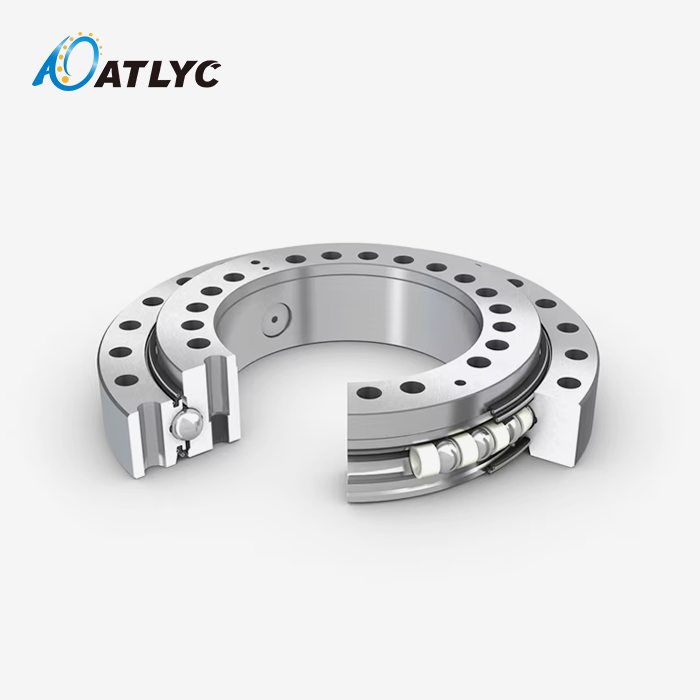
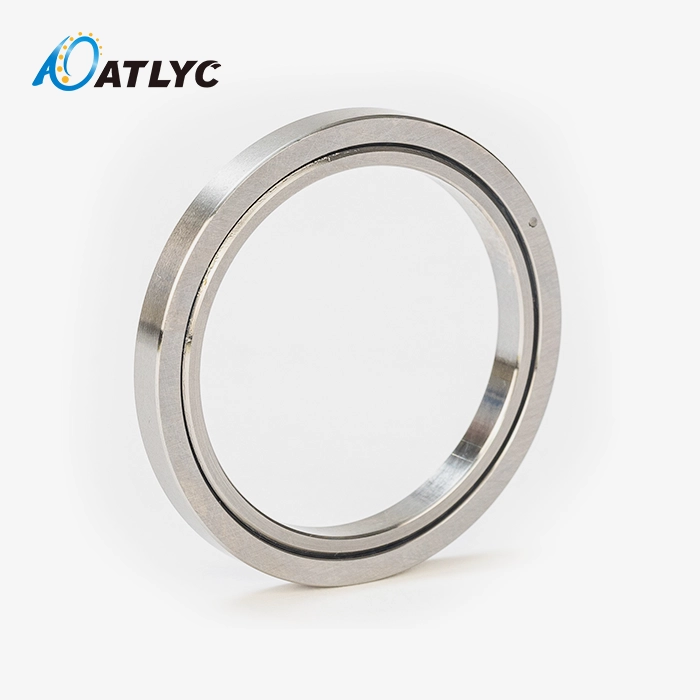
RA Series Crossed Roller Bearings are very good at handling mixed loads. These carefully designed parts handle radial, axial, and torsional loads simultaneously in a single small unit. The crossed roller design, which has cylinder-shaped rollers set at right angles within precise V-groove raceways, lets the load be spread out evenly across many contact points. This design gets rid of the need for complicated bearing arrangements. This makes RA Series solutions perfect for industrial robots, rotary tables, and automation equipment that need to support loads in more than one way but don't have a lot of room.
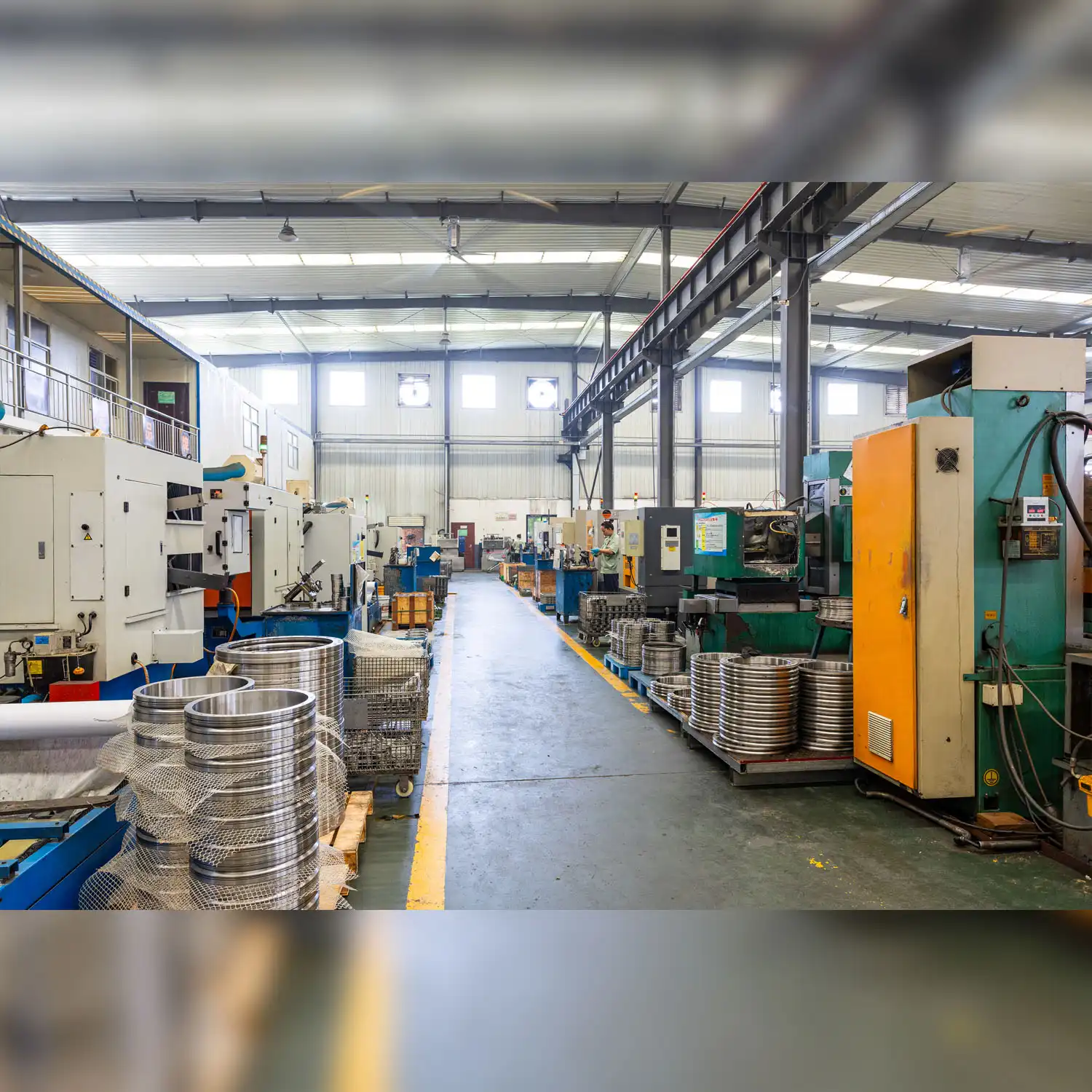
Understanding Combined Loads and RA Series Crossed Roller Bearings
Combined loading conditions present significant challenges in precision machinery. When equipment experiences radial forces pushing perpendicular to the shaft, axial forces applying thrust along the shaft axis, and moment loads creating rotational torque around specific points—all occurring simultaneously—standard bearing solutions often fall short.
The Nature of Multidirectional Forces
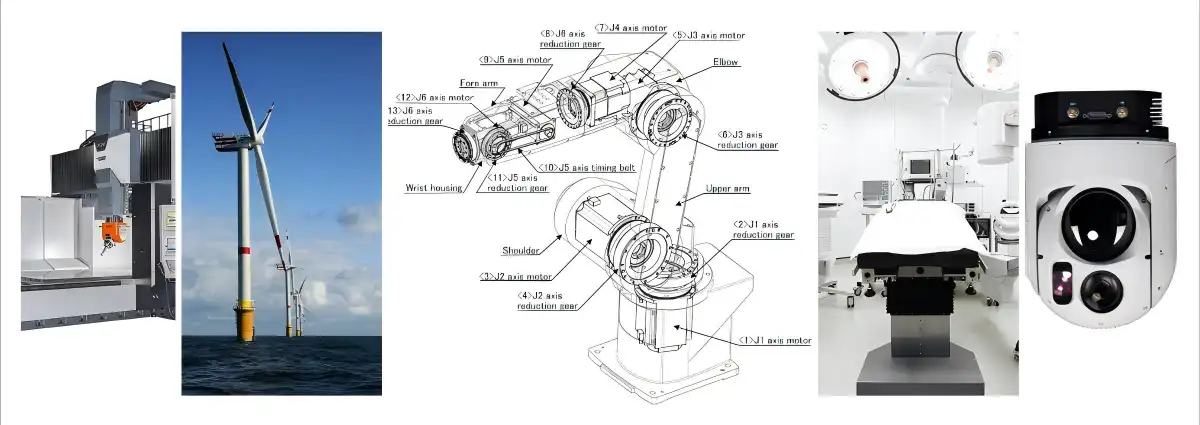
These complicated force combinations happen all the time in industrial automation equipment, machine center rotary tables, and robotic joints. A robotic arm may have to support its own weight (radial load), fight gravity when it is stretched (axial load), and fight rotational resistance when it is moving into place (moment load). In traditional bearing setups, different types of bearings have to be carefully placed to handle each direction of load. This makes the installation more difficult and takes up more space.
Material Excellence for Demanding Applications
Gcr15 and Gcr15SiMn bearing steel are used to make these crossed roller bearings. Gcr15 has great strength, resistance to wear, and dimensional stability when used continuously. Gcr15SiMn is better at hardening and being tough, which is especially helpful for bigger diameter uses where through-hardening is important. These materials go through strict heat treatment processes that make the surface hard enough to ensure long service life, even under heavy combined loading conditions. The V-groove raceways are precisely machined to keep the roller contact layout in the best possible shape. This part of the design reduces friction coefficients while increasing load capacity. Low friction means that less heat is generated during operation, which helps keep performance stable and extends the life of bearings in continuous-duty situations.
Performance Comparison: RA Series vs Other Bearing Solutions
Understanding how different bearing types perform under combined loads helps procurement professionals make informed sourcing decisions. The following comparison illustrates why crossed roller bearings increasingly replace traditional configurations in precision machinery.
Structural Distinctions That Influence Performance
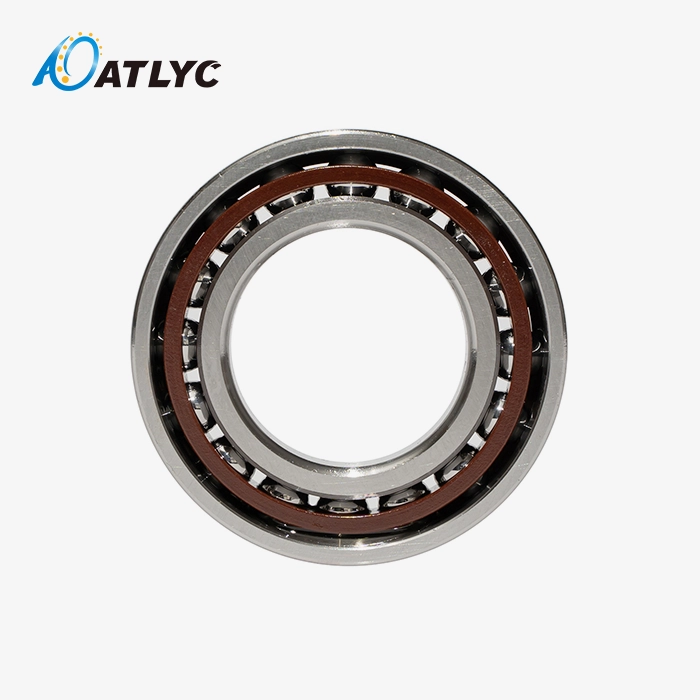
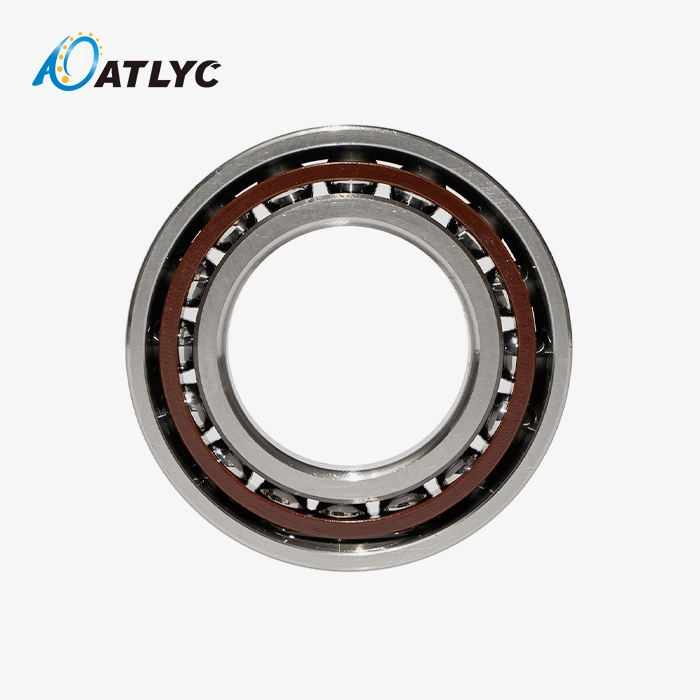
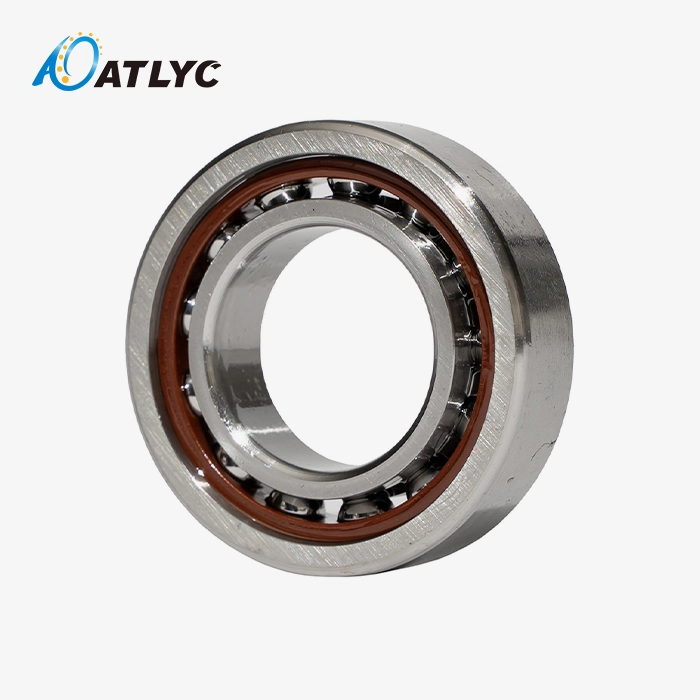
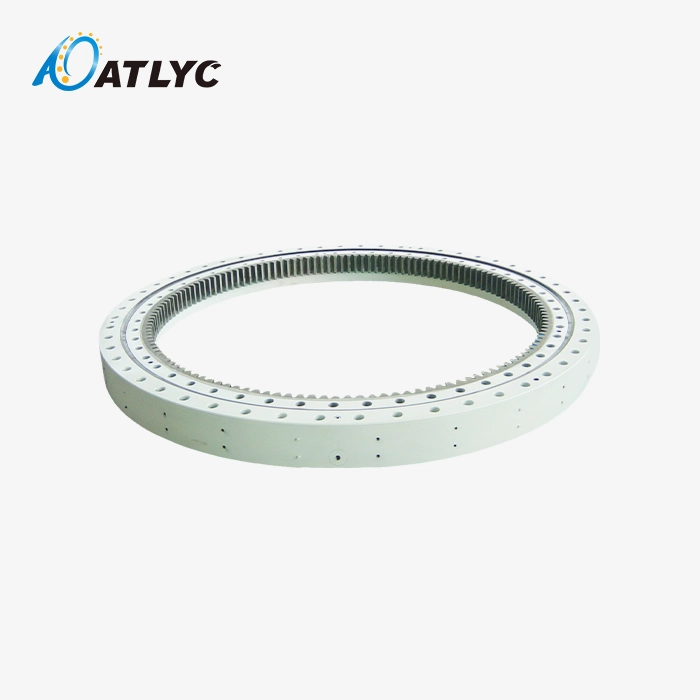
An alternative that is often used for combined load situations is an angular contact RA Series Crossed Roller Bearings ball bearing. These bearings have balls that are placed at certain contact angles, usually between 15° and 40°. This lets them handle loads that are applied in both directions. But because their contact areas are smaller, ball bearings can't hold as much weight as roller bearings. Because the balls and raceways only touch at one place, they can't support heavy moment loads, especially in small installations. Slewing bearings are another option for large-diameter applications that need to support both load and motion. These huge, ring-shaped bearings have gear teeth built right into them, which lets them rotate while holding heavy loads. Even though they are useful, slewing bearings take up a lot of room and need a lot of mounting space. Their size makes them useless for uses that need small sizes or high spinning speeds. Standard crossed roller bearings are based on the same basic design idea as RA Series bearings, but they might not have an outer ring that can be separated. This difference in design has a big effect on how to put things and how easy it is to do maintenance. Bearings that don't have separate rings need more complicated fitting steps and special tools, which makes the installation take longer and cost more.
Cost and Value Assessment for Procurement Managers
Precision crossed roller bearings may cost more than normal ball bearings at first, but when you look at the total cost of ownership, you can see that they are a much better value. Because it can handle combined loads in a single bearing, it removes the need for multiple bearing arrangements. This cuts down on the number of parts, installation labour, and inventory needed. The robust design and low-friction characteristics also make maintenance costs much lower. The form of the outer ring being able to be taken off makes inspection and replacement easier, which cuts down on downtime during regular maintenance periods. Over the normal lifespan of 5 to 10 years, these operational savings more than make up for the higher starting cost. When you compare our prices to well-known brands, we stay competitive while still meeting ISO 9001 and IATF 16949 quality standards. Because we've been making things for 15 years and have six specialised production workshops, we can take advantage of economies of scale that help large buyers get better deals on products. We have built long-term relationships with mid- to large OEMs and distributors in South Korea, the US, Germany, Russia, Iran, and Turkey by consistently delivering high-quality goods.
Installation, Maintenance, and Longevity of RA Series Crossed Roller Bearings
Proper installation techniques preserve the precision characteristics that make crossed roller bearings valuable in demanding applications. Understanding correct procedures prevents common mistakes that compromise performance or reduce service life.
Installation Best Practices
The shape of the outer ring that can be separated makes mounting much easier. Usually, to install, you first join the inner ring to the rotating part (shaft), then place the roller complement inside the raceway, and finally connect the outer ring sections to the housing. This order makes it possible to put things together without using large-diameter press fits or special heating tools. It's important to keep things clean during installation. Precision bearings can wear out too quickly, even if the pollution is very small. We suggest that installation processes be done in clean areas and that all mating surfaces be cleaned very well before assembly. Using the right amount of preload according to the instructions makes sure that the internal space is just right, which distributes the load evenly and reduces vibrations. Tolerances on the mounting surface have a direct effect on how well the bearing works. To keep the bearing rings from warping, the shaft and housing must be within certain limits. Excessive interference fits can deform raceways, causing increased friction and reduced accuracy. If there isn't enough interference, the bearing rings and mounting surfaces can move relative to each other, which can cause fretting rust and failure before its time.
Factors Influencing Durability and Warranty Considerations
Bearing life depends on multiple interrelated factors. Load magnitude and direction, rotational speed, operating temperature, lubrication quality, and environmental contamination all influence service duration. Under properly controlled conditions, crossed roller bearings can achieve millions of operational cycles without significant wear. Our quality management system, certified to ISO 9001 and IATF 16949 standards, ensures consistent manufacturing quality across all production batches. Each bearing undergoes rigorous dimensional inspection and functional testing of RA Series Crossed Roller Bearings before shipment. This quality assurance approach minimizes defect rates and supports the long service life expectations of our customers. We stand behind our products with comprehensive warranty provisions that reflect confidence in our manufacturing processes. Our technical support team provides application engineering assistance, helping customers optimize installation procedures and maintenance protocols for their specific requirements. This collaborative approach builds the long-term partnerships that characterize our business relationships with automotive component manufacturers, industrial machinery producers, and global bearing distributors.
Procurement Insights for RA Series Crossed Roller Bearings
Sourcing precision bearings requires careful evaluation of supplier capabilities, quality certifications, and supply chain reliability. Understanding these factors enables procurement professionals to make confident decisions that support operational continuity.
Sourcing from Qualified Suppliers
Direct engagement with manufacturers offers several advantages over distributor channels. Manufacturing partnerships provide access to technical expertise, customization capabilities, and potentially more favorable pricing structures for volume requirements. We welcome inquiries from OEMs and distributors seeking stable supply relationships backed by demonstrated production capacity. Our six specialized workshops produce bearings across multiple categories, including the crossed roller bearings central to this discussion. This diversified production capability enables us to serve as a comprehensive bearing supplier, simplifying procurement by consolidating multiple component needs with a single reliable source. Since our establishment in 2010, we have continuously invested in manufacturing technology and quality systems, evolving from a single workshop operation to our current scale serving global markets. Quality certifications provide objective evidence of manufacturing capability and process control. Our ISO 9001 certification demonstrates the implementation of effective quality management systems encompassing all operational aspects. IATF 16949 certification specifically addresses automotive industry quality requirements, reflecting our capability to meet the stringent standards demanded by automotive component applications and industrial equipment serving similar quality expectations.
Quality Verification and Supplier Reputation Assessment
Beyond certifications, supplier reputation stems from consistent performance over time. Our 15-year operational history provides substantial track record evidence. We have maintained relationships with demanding customers in automotive and industrial sectors, where quality failures carry significant consequences. This sustained success demonstrates our commitment to continuous improvement and customer satisfaction. We encourage prospective customers to request product samples for evaluation before committing to volume orders. Hands-on assessment allows engineering teams to verify dimensional accuracy, surface finish quality, and operational characteristics under actual application conditions. This evaluation approach builds confidence and establishes clear performance expectations before large-scale procurement commitments.
Why Choose RA Series Crossed Roller Bearings for Your Combined Load Applications?
Real-world performance validates theoretical advantages. Across industries from robotics to precision machining, crossed roller bearings demonstrate measurable benefits in challenging applications.
Case Studies Demonstrating Exceptional Performance
A leading automation equipment manufacturer integrated our crossed roller bearings into their industrial RA Series Crossed Roller Bearings robot joint assemblies. The application demanded simultaneous support of substantial radial loads from the manipulator arm weight, axial loads during extension and retraction movements, and moment loads during rotational positioning. Previous angular contact ball bearing arrangements required multiple bearings per joint, consuming valuable space and complicating assembly procedures. After switching to our RA Series crossed roller bearings, the manufacturer achieved significant design simplification. The single-bearing solution reduced joint envelope dimensions by 30%, enabling more compact robot designs with improved reach-to-footprint ratios. Positioning accuracy improved measurably due to superior moment rigidity, directly enhancing production quality in assembly operations. Maintenance intervals are extended due to the robust design and excellent wear characteristics, reducing the total cost of ownership substantially. Performance testing confirmed exceptional results. Runout accuracy remained within specified tolerances throughout extended operational trials simulating years of production use. The low friction coefficient reduced drive motor energy consumption, providing unexpected efficiency benefits. The customer now specifies our bearings as standard components across their rotary table product family, and we have established a long-term supply agreement supporting their global production requirements.
Core Benefits for B2B Clients and OEMs
The advantages of implementing crossed roller bearing solutions in precision machinery extend across multiple operational dimensions. Enhanced load capacity within compact envelopes enables smaller, lighter equipment designs without sacrificing performance. Superior accuracy supports tighter manufacturing tolerances and improved finished product quality. Exceptional durability reduces maintenance frequency and extends equipment service life, improving asset utilization rates. Comprehensive technical support distinguishes manufacturers committed to customer success from component suppliers merely fulfilling orders. Our engineering team collaborates with customers during product development, providing application analysis, bearing selection guidance, and installation recommendations tailored to specific requirements. This consultative approach ensures optimal bearing performance and prevents costly mistakes during equipment development.
Technological Advancements and Future Capabilities
Material science advances continue to improve bearing performance characteristics. Enhanced steel formulations offer superior fatigue resistance and extended operational life under demanding conditions. Surface treatment technologies, such as advanced coating systems, reduce friction further while improving corrosion resistance in challenging environments. We continuously evaluate emerging technologies, integrating proven innovations into our manufacturing processes to maintain competitive advantages for our customers. Design optimization through computational modeling enables more precise prediction of bearing behavior under complex loading conditions. Finite element analysis reveals stress distributions within bearing components, guiding refinements that maximize load capacity while minimizing weight. We invest in engineering resources and analytical tools that translate into tangible performance improvements for the products we deliver. The evolution toward Industry 4.0 integration creates opportunities for enhanced bearing condition monitoring. Sensor-equipped bearings provide real-time operational data, enabling predictive maintenance strategies that minimize unplanned downtime. As these technologies mature, we stand ready to incorporate them into our product offerings, supporting our customers' advancement toward smart manufacturing environments.
Conclusion
Combined load management capabilities make RA Series Crossed Roller Bearings indispensable for precision machinery applications where space constraints meet demanding performance requirements. The sophisticated crossed roller configuration, precision manufacturing, and robust material selection deliver exceptional load capacity, accuracy, and durability within compact envelopes. Through proper installation, maintenance, and supplier selection, these components provide reliable long-term service supporting critical automation equipment, machining centers, robotics, and precision instruments across global manufacturing operations.
FAQ
1. Can RA Series bearings be customized for specific load requirements?
Customization options address diverse application needs. We modify bore diameters, outer dimensions, and width specifications within manufacturing capabilities. Internal clearance adjustments optimize preload conditions for specific load profiles. Material selection between Gcr15 and Gcr15SiMn addresses different operational requirements. Seal configurations adapt to environmental conditions ranging from clean rooms to contaminated industrial settings. Our engineering team evaluates custom specifications, providing feasibility assessments and technical recommendations that balance performance requirements with manufacturing practicality and cost considerations.
2. How do RA Series bearings compare with premium brands regarding compatibility?
Our crossed roller bearings meet international dimensional standards, ensuring interchange compatibility with equivalent specifications from established brands. Mounting dimensions, bolt patterns, and interface tolerances conform to industry standards, facilitating direct replacement in existing equipment designs. Performance characteristics match or exceed comparable offerings through our adherence to ISO quality standards and rigorous manufacturing controls. We provide detailed technical documentation supporting engineering evaluation and qualification processes, enabling confident specification in demanding applications where reliability cannot be compromised.
3. What indicators suggest maintenance or replacement needs?
Operational monitoring reveals developing issues before catastrophic failure occurs. Temperature increases above established baselines indicate inadequate lubrication or increased friction from wear or contamination. Unusual noise patterns such as rumbling, grinding, or intermittent clicking suggest roller or raceway damage requiring investigation. Vibration amplitude increases detected through condition monitoring equipment provide early warning of degradation. Visible inspection during scheduled maintenance intervals reveals seal condition, lubricant quality, and potential contamination ingress. Accuracy degradation measured through positioning checks indicates wear affecting functional performance. Addressing these indicators promptly through maintenance intervention or bearing replacement prevents secondary damage and costly unplanned downtime.
Partner with ATLYC for Premium RA Series Crossed Roller Bearings
Selecting the right bearing supplier impacts equipment performance, operational reliability, RA Series Crossed Roller Bearings, and total cost of ownership throughout product lifecycles. ATLYC combines 15 years of manufacturing excellence with comprehensive quality certifications and global supply experience, serving as your dependable RA Series Crossed Roller Bearings manufacturer. Our ISO 9001 and IATF 16949-certified production facilities deliver consistent precision across bore sizes from 20mm to 350mm, supporting applications from compact medical instruments to substantial industrial machinery. We invite procurement professionals and engineering teams to connect with our technical specialists at auto@lyautobearing.com for application consultations, competitive quotations tailored to your volume requirements, and detailed product specifications. Whether you need standard configurations or customized solutions for unique combined load challenges, our experienced team provides the expertise and manufacturing capacity to support your success.
References
1. Harris, T.A. & Kotzalas, M.N. (2006). Essential Concepts of Bearing Technology: Rolling Bearing Analysis, Fifth Edition. CRC Press, Boca Raton.
2. Hamrock, B.J., Schmid, S.R. & Jacobson, B.O. (2004). Fundamentals of Fluid Film Lubrication, Second Edition. Marcel Dekker, New York.
3. ISO 492:2014, Rolling bearings — Radial bearings — Geometrical product specifications (GPS) and tolerance values. International Organization for Standardization, Geneva.
4. IATF 16949:2016, Quality management system requirements for automotive production and relevant service parts organizations. International Automotive Task Force, Southfield.
5. Wensing, J.A. (1998). On the Dynamics of Ball Bearings. PhD Thesis, University of Twente, Enschede, Netherlands.
6. Zhou, R.S. & Hoeprich, M.R. (1991). "Torque of Tapered Roller Bearings." Journal of Tribology, Transactions of the ASME, Volume 113, Issue 3, pp. 590-597.
Learn about our latest products and discounts through SMS or email