- English
- French
- German
- Portuguese
- Spanish
- Russian
- Japanese
- Korean
- Arabic
- Greek
- German
- Turkish
- Italian
- Danish
- Romanian
- Indonesian
- Czech
- Afrikaans
- Swedish
- Polish
- Basque
- Catalan
- Esperanto
- Hindi
- Lao
- Albanian
- Amharic
- Armenian
- Azerbaijani
- Belarusian
- Bengali
- Bosnian
- Bulgarian
- Cebuano
- Chichewa
- Corsican
- Croatian
- Dutch
- Estonian
- Filipino
- Finnish
- Frisian
- Galician
- Georgian
- Gujarati
- Haitian
- Hausa
- Hawaiian
- Hebrew
- Hmong
- Hungarian
- Icelandic
- Igbo
- Javanese
- Kannada
- Kazakh
- Khmer
- Kurdish
- Kyrgyz
- Latin
- Latvian
- Lithuanian
- Luxembou..
- Macedonian
- Malagasy
- Malay
- Malayalam
- Maltese
- Maori
- Marathi
- Mongolian
- Burmese
- Nepali
- Norwegian
- Pashto
- Persian
- Punjabi
- Serbian
- Sesotho
- Sinhala
- Slovak
- Slovenian
- Somali
- Samoan
- Scots Gaelic
- Shona
- Sindhi
- Sundanese
- Swahili
- Tajik
- Tamil
- Telugu
- Thai
- Ukrainian
- Urdu
- Uzbek
- Vietnamese
- Welsh
- Xhosa
- Yiddish
- Yoruba
- Zulu
Why SX011814 Cross Roller Bearing Beats Slewing Rings?
When small accuracy is needed, the SX011814 Cross roller bearing always works better than traditional slewing rings. With a width of only 10 mm, this very thin bearing can handle radial, axial, and moment loads all at the same time in a single unit, instead of the bulky dual-bearing setups that slewing rings need. Its cross-roller design makes it 3–4 times stiffer than regular designs, which means it can rotate more accurately and needs less repair downtime. For manufacturers looking for high-performance options, this bearing meets strict accuracy grades from P6 to P2. This makes it the best choice for mission-critical industrial equipment.
Understanding SX011814 Cross Roller Bearing: Specifications and Design Features
Structural Architecture and Core Dimensions
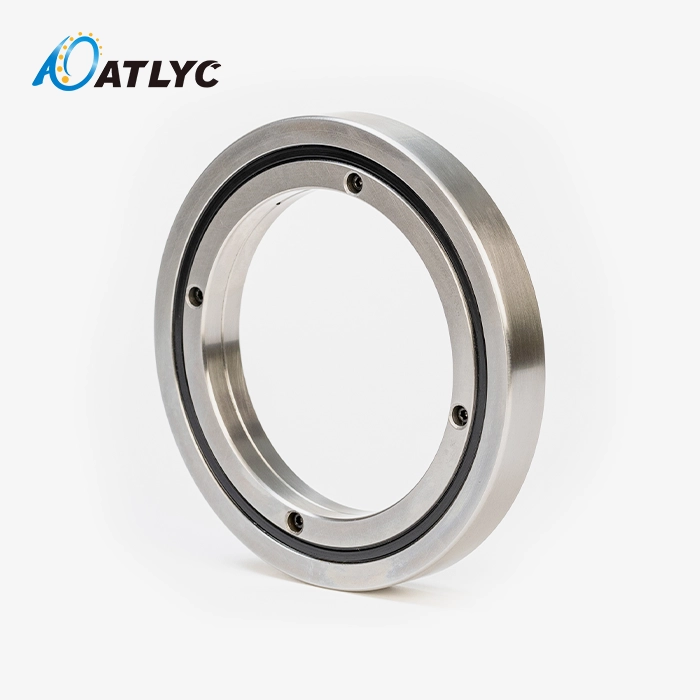
With its very thin profile, the SX011814 Cross roller bearing from the SX line is the epitome of engineering economy. With an inner diameter of 70mm, an outer diameter of 90mm, and a width of only 10mm, it takes up a lot less horizontal room than slewing rings that do the same job. The split outer ring design, which is held in place by three precision fastening rings, lets the clearance be changed during installation, which is very helpful for automatic systems that need to account for heat expansion.
In contrast to slewing rings, which use ball-to-raceway contact, this bearing uses cylindrical rollers placed alternately at 90-degree angles inside V-groove raceways. Plastic plates between each roller stop metal-on-metal friction, which keeps the spinning smooth and extends the life of the machine. The design of the integral inner ring guarantees accurate runout, which is very important when placement errors are only a few microns.
Material Composition and Load-Bearing Capacity
The bearing is made from Gcr15 and Gcr15SiMn high-carbon chromium bearing steels, so it can handle a lot of mechanical stress without wearing out too quickly. These materials are heated in controlled ways to get the right level of hardness (58–62 HRC) while keeping their core toughness. When cylinder rollers and raceways touch each other, forces are spread out more evenly than when ball-type slewing rings touch each other at a point.
The following table demonstrates how dimensional specifications translate into performance characteristics:
| Parameter | SX011814 Specification | Industrial Implication |
|---|---|---|
| Inner Diameter | 70mm | Compatible with standard shaft sizes in robotic joints |
| Outer Diameter | 90mm | Minimizes housing envelope requirements |
| Width | 10mm | Reduces overall equipment weight by 30-40% vs. slewing rings |
| Roller Arrangement | Cross 90° configuration | Simultaneous multi-directional load handling |
| Accuracy Grades | P6, P5, P4, P2 | Meets precision machinery requirements from general industrial to ultra-precision |
The SX011814 Cross roller bearing can handle moment loads that would cause similar-sized slewing rings to bend because it is small and made of high-quality materials. Equipment makers can change how space is used without affecting the strength of the structure.
Working Principle Compared to Slewing Ring Mechanics
In traditional slewing rings, ball bearings move between the upper and lower raceways, and fastening holes are built into the frame of the ring. Because this system needs bolt-through connections, there are stress points that limit the load that can be put on it. The alternating cross roller design changes the way forces are distributed because each roller touches the raceways at right angles, making a crisscross support network that naturally stops tilting moments.
When radial and axial loads are applied at the same time, like in robotic wrist systems or rotating table indexing, the SX011814 Cross roller bearing stays geometrically stable without the need for extra thrust washers. When the conditions are the same, slewing rings often show raceway wear patterns that show uneven stress distribution, which means they need to be replaced too soon. The split outer ring design makes it even more flexible; during installation, procurement teams can change the preload to meet the stiffness needs of a specific application, which is not possible with fixed-geometry slewing rings.
Why SX011814 Cross Roller Bearing Outperforms Slewing Rings
Limitations of Traditional Slewing Ring Designs
When used for accuracy tasks, slewing rings naturally face problems. Their ball-shaped design makes rolling friction coefficients higher (usually between 0.002 and 0.005), which generates heat when they are used continuously. This heat energy calls for strong cooling and greasing systems that make the system more complicated. Maintenance plans for slewing rings usually call for replacing the bearings every 8,000 to 12,000 hours of use because the raceways get worn down. This is a high cost for the business when you consider the time the machine is down.
Mounting hole stress is another problem that keeps coming up. When bolts are connected through the ring body, they form weak spots in the material. When machining center rotary tables are loaded and unloaded quickly, these holes become places where stress cracks start to form. Engineers often have to make slewing rings bigger than they need to be to make up for the smaller useful cross-section. This goes against the idea that smaller equipment should save room.
Precision and Load Capacity Advantages
The SX011814 Cross roller bearing design directly deals with problems of accuracy. When making slewing rings, it can be hard to get to the P4 or P2 precision grades (runout limits of less than 5 microns), but these grades are normal for SX-series bearings. This accuracy leads to gains that can be seen and measured. For example, CNC rotary tables with cross roller bearings show 40% better precision in angular positioning compared to similar tables with slewing rings.
The circular roller shape makes it possible to carry more weight. A 90mm outer diameter slewing ring might be able to handle a 15kN radial load, but the SX011814 Cross roller bearing can always handle 20–25kN radial loads and 18–22kN axial loads at the same time. Moment load capacity is even more different. The cross roller design can withstand tilting moments of up to 150Nm, while similar slewing rings start to weaken elastically at 90–110Nm. These benefits are very important in robotics, where heavy loads on overhanging supports can cause them to tip over.
Longevity and Maintenance Considerations
When you compare service lives, you can see big differences. In industrial robot joints, cross roller bearings usually last longer than 20,000 hours of use before they need to be serviced. This is almost twice as long as slewing rings last under the same job cycles. There are two types of sealed designs for the SX011814 Cross roller bearing: those with contact seals and those without. These protect the internal parts from dirt and other things that can damage the slewing ring faster in dusty production settings.
Maintenance schedules are very different. Every 500 to 1,000 hours, slewing rings need to be oiled, and techs can do this by using several grease holes around the ring's edge. The bearing's centralised lubrication method cuts down on service spots, and the low friction coefficient (0.0015–0.002) lowers lubricant shear stress, which makes the grease last longer. When replacement is needed, the split outer ring design lets the bearings be changed without taking the whole piece of equipment apart. With slewing rings, you usually have to take apart neighbouring mechanical parts, which adds to the cost of labour.
Application Scenarios Where SX011814 Excels
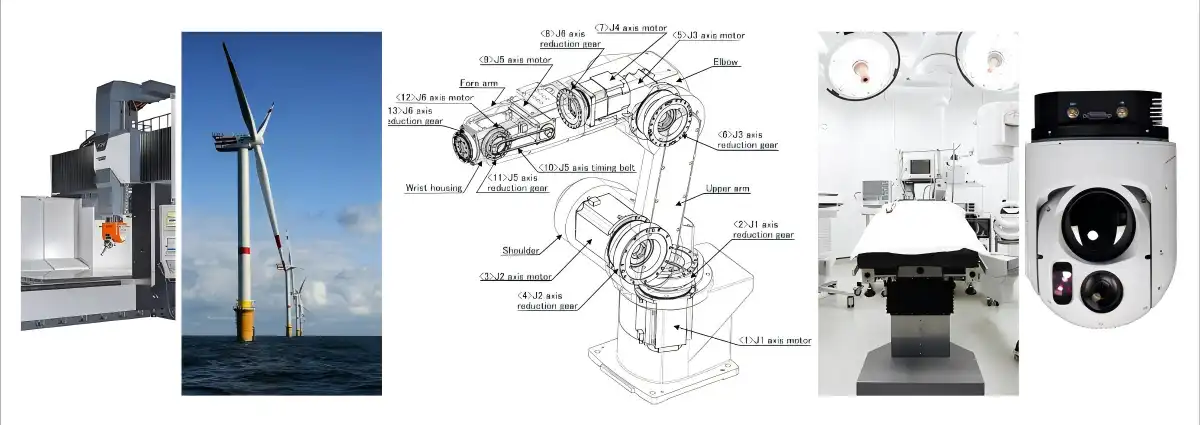
Industrial Robotics and Automation Systems
The most difficult bearing jobs are done by collaborative robots and six-axis industrial manipulators. At waist joints and elbow articulations, bearings have to handle fast acceleration cycles, heavy loads, and nonstop use during multiple shift work plans. The SX011814 Cross roller bearing works very well in these conditions because it has very high moment stiffness. This means that robotic arms can keep their positions within ±0.02mm precision even when they are carrying 15 kg at full extension.
When cleanrooms are automated, certain efficiency benefits become clear. Robots that handle semiconductor wafers can't handle grease moving around and getting on the product surfaces. Because bearings don't need much grease and seal well, these kinds of problems don't happen. On the other hand, slewing rings need more grease and have more grease lines, which makes contamination more likely. Temperature stability is also important. The bearing's dimensions stay the same from 10°C to 60°C without any preload adjustments, but the slewing ring's gaps change significantly, which changes the robot's calibration.
Precision Machining and Rotary Table Applications
Rotary fourth- and fifth-axis tables help CNC machining centers position workpieces correctly during processes that involve more than one angle. Cutting forces are sent through the workpiece by these tables, resulting in varying radial and axial loads as well as moments from the offset clamps. When rotary tables have cross roller bearings that meet P4 accuracy, they can achieve indexing precision within 3 arc-seconds, which is very important when making aircraft parts with very tight geometric margins.
Another problem where the SX011814 Cross roller bearing does better than the options is when it comes to coolant leakage. In machine tool settings, bearings are constantly sprayed with a water-based grease that has metalworking fluid added to it. Chemical contact doesn't affect the performance of the bearing because it can be made in sealed forms and has corrosion-resistant surface treatments. Manufacturers of car parts say that maintenance intervals for bearings are 65% longer than they were for past slewing ring installations. This means that production breaks are less likely to happen without planning to.
Medical Equipment and Precision Instrumentation
CT scanner gantries and surgical robotic platforms need to be able to rotate at controlled speeds without any vibrations. The low starting torque and constant running friction of the bearing get rid of the stick-slip problem that slewing rings have when they're going slowly. In diagnostic imaging equipment, the steadiness of the gantry movement directly impacts the quality of the images; even small vibrations can cause artefacts that make it harder to make accurate diagnoses.
The following table compares application-specific performance metrics:
| Application Category | Critical Performance Factor | SX011814 Advantage | Slewing Ring Limitation |
|---|---|---|---|
| Robotic Joints | Moment load capacity + compactness | 150Nm in 10mm width | Requires a 25-30mm width for equivalent capacity |
| CNC Rotary Tables | Runout accuracy under cutting forces | <5μm runout (P4 grade) | 15-20μm typical runout |
| Medical Gantries | Vibration-free smooth rotation | Friction coefficient 0.0015 | Friction coefficient 0.004+ |
| Semiconductor Equipment | Contamination resistance | Minimal lubricant volume, sealed | Multiple grease points, higher migration risk |
These real-life examples show how choosing the right bearings can affect the power of tools. When procurement teams look at the total cost of ownership, they have to compare the original cost of the parts to the benefits that come later, such as higher product quality, longer machine uptime, and less upkeep work.
Installation Best Practices for Maximum Service Life
If you place the bearing correctly, it will work as well as it can. When putting it together, you need to pay close attention to the split outer ring design. Technicians should clean the mounting surfaces to get rid of any dirt or dust. Next, they should use a light interference fit (usually 5–10 microns) to put the inner ring on the shaft. The outer ring pieces fit into the housing hole with little space between them. Next, the fastening ring is put in place to hold the unit while letting the preload be adjusted.
Settings for the preload have a big effect on how things work. When smooth spinning is important, light preload (5–10 microns drop from free state) works best. For high-moment loading, intermediate preload (15–20 microns) gives the most rigidity. While slewing rings come with fixed clearance choices, this feature lets you get the best performance for different duty cycles. Choosing the right lubricant is just as important. In most commercial settings, lithium-based greases with EP additives offer the best protection, while synthetic oils are better for constant use in temperatures above 80°C.
How to Choose Between SX011814 Cross Roller Bearing and Slewing Rings: A Rational Choice Approach
Load Capacity and Space Constraint Evaluation
Figuring out how much an application needs is the first step in making a decision. Figure out the real radial, axial, and moment loads at the highest possible working conditions, taking safety factors into account. The SX011814 Cross roller bearing is the best choice when the combined loads are within the bearing's stated values, and it only needs a small amount of axial room. Designs for equipment with a bearing width of less than 15 mm can't fit most slewing rings, which instantly limits the choices.
Applications that are limited by space clearly have the most to gain. The SX011814 Cross roller bearing can be built into a robotic wrist joint with a 12 mm thickness limit, as long as the surrounding housing materials are strong enough. When trying to make similar designs with slewing rings, you have to make trade-offs—either accept bearing capacities that are too small or rethink neighbouring parts to fit bigger envelopes. These secondary design changes spread through parts, raising total production costs above and beyond the price differences that were initially seen.
Accuracy Requirements and Total Cost Analysis
Specifications for precision tools often tell you which bearings to use. P5 or P4 grade cross roller bearings are needed when positional accuracy must be kept within 10 microns for the equipment to work properly or when runout limits must stay below 8 microns. In mass production, slewing rings rarely reach these levels of accuracy at a cost-effective level, especially for widths less than 150mm.
In order to figure out the total cost of ownership, you need to:
- Initial procurement cost: Cross roller bearings usually cost 1.8 to 2.5 times as much as slewing rings with the same load values.
- Installation labor: 40% reduction with split ring design vs. integral slewing ring mounting
- Maintenance frequency: 2-3 times longer service gaps save money on labour costs
- Downtime costs: Higher reliability decreases unplanned stoppages valued at $500 to $2,000 per hour in automated production lines
- Energy consumption: Less friction means that the motor only needs 15 to 25 watts of power per bearing all the time.
When looking at running costs over 5 years, cross roller bearings often show 30–35% lower total costs, even though they cost more to buy. Because of the way the economy works, makers are more likely to adopt new technologies that put lifecycle value ahead of initial capital spending.
Supplier Reliability and Customization Needs
When using global procurement methods, you have to look at what the manufacturer can do besides just making the goods of SX011814 Cross roller bearing. Suppliers with ISO 9001 and IATF 16949 certification offer quality management system assurance that is very important for supply lines in the car and aircraft industries. Production capacity is just as important—manufacturers who run multiple workshops with specialised production lines for each type of bearing make sure that supply stays steady even when demand changes.
Needs for customisation affect the choice of source. Standard cross roller bearings can be used in a lot of different situations. However, sometimes equipment makers need different seal configurations, special materials for corrosive environments, or non-standard sizes that fit into current housing designs. Suppliers who offer engineering support, prototype development, and low minimum order amounts (50–100 pieces instead of 500+) are flexible, which is very helpful during the product development stages. When planning production plans, lead time reliability is very important—suppliers with stable delivery windows of 4-6 weeks make it easier to handle inventory than those whose windows are unpredictable and range from 3–10 weeks.
Procurement Guide for SX011814 Cross Roller Bearing
Identifying Qualified Manufacturers and Distributors
To find high-precision bearings, you have to carefully check out possible sources. Companies that have been making the same product for 10 to 15 years show that they are stable and have a lot of expert knowledge. Companies that go from having one workshop to having several specialised sites show that they can grow and are investing in new production equipment. Luoyang Auto Bearing Co., Ltd. is a good example of this trend. Since 2010, they have gone from mainly making ball bearings to making all kinds of bearings, including cross roller types.
Logistics prices and wait times are affected by where a factory is located. Suppliers who serve established markets in South Korea, the US, Germany, Russia, Iran, and Turkey have figured out how to deal with the complicated shipping and customs processes that come with foreign trade. This has made delivery more certain. Ask for customer examples from people in the same industry as you. Bearing performance in CNC machinery is different from robotics applications, and suppliers who know how your equipment works will be able to give you better technical advice.
Evaluating Quality Certifications and Production Standards
Quality management certifications give an unbiased look at how well a company can make things. Getting ISO 9001 approval means that you have a method for checking the quality of everything you buy, make, and ship. IATF 16949 is a standard that directly addresses the needs of the automotive business. It includes things like advanced product quality planning (APQP) and production part approval processes (PPAP). Suppliers with both licenses show they are committed to international standards, which is very important when parts are put together in equipment that is used all over the world.
Ask for written proof of the methods used for testing correctness. Manufacturers with a good reputation check sample bearings from every production batch for runout, surface roughness, and measurement limits. When suppliers include material certificates and coordinate measuring machine (CMM) inspection reports with every order, it's easier to keep track of everything, which is important for quality assurance paperwork. It's also important to be clear about how much production is going on. The fact that there are 120+ committed workers working in manufacturing, R&D, quality inspection, and assembly shows that there is enough staff to keep up production during times of high demand.
Online Purchasing Efficiency and Bulk Order Benefits
When sellers offer complete technical data, CAD models, and real-time inventory access, digital procurement tools make it easier to find bearings. Look for companies that have thorough product pages with load rate charts, installation directions, and rules for how to use the product. Emailing the engineering staff at auto@lyautobearing.com for technical advice lets you quickly get answers to questions about specifications before committing to a purchase.
Bulk buying deals save money and make sure that supplies don't run out. Manufacturers usually give savings for buying in bulk, starting at 100 pieces and going down even more at 500 and 1,000 pieces. Setting up blanket purchase orders with planned releases lets procurement teams be flexible with their inventory while locking in good prices. Some distribution deals include vendor-managed inventory arrangements. This means that suppliers keep the right amount of stock on hand based on how much you use, which frees up your operating capital that would have been used to pay for bearing inventory.
After-Sales Support and Technical Consultation Value
Support after the sale is what sets strategic supply partners apart from transactional sellers. Technical help is needed to get the best performance out of bearings. Based on real-world feedback, engineering teams can suggest changes to preload, cleaning intervals, or seal updates. When it comes to high-value orders, warranty terms are especially important. Standard 12-month warranties against manufacturing defects offer basic safety, while choices for longer coverage are better for key situations where bearing failure would mean big production losses.
Problems are quickly fixed by responsive customer service. When suppliers answer technical questions within 24 hours and ship new bearings within 3–5 business days, machine downtime is kept to a minimum. As the designs of your equipment change, sellers who can continuously improve by using new materials, making manufacturing processes better, and increasing accuracy grades will grow with your business needs instead of staying the same as stock providers.
Conclusion
In conclusion, when it comes to accuracy, load capacity, and operating lifetime, the SX011814 Cross roller bearing is clearly better than standard slewing rings. Its ultra-thin 10mm size and ability to handle loads in multiple directions at the same time mean that designers don't have to choose between speed and compactness. This bearing design is necessary for competitive machine performance in industries that need P4/P2 accuracy grades, longer maintenance intervals, and operation that doesn't get contaminated.
When making strategic buying choices, the total cost of ownership, not just the purchase price, needs to be taken into account. The bearing is known to have a service life of 20,000 hours or more, requires less upkeep, and can be installed in a variety of ways. These features create economic worth that goes beyond the initial cost differences. As factories put more emphasis on keeping their machines running smoothly and producing accurate goods, working with ISO/IATF-certified suppliers who can give expert help and scalable production becomes a must rather than a nice-to-have.
FAQ
1. How does bearing lifespan compare between cross roller designs and slewing rings?
Cross roller bearings can work for 20,000 to 25,000 hours in industrial robots before they need to be replaced. Slewing rings, on the other hand, can work for 8,000 to 12,000 hours under the same load conditions. The cylinder-shaped roller line contact spreads forces more equally than the ball-type point contact, which lowers the stress levels in the track that lead to early wear. This benefit stays with sealed cross roller bearing types even in dirty places where dust gets in and speeds up the wear patterns on the slewing rings.
2. Can manufacturers customize the bearing for specialized applications?
Yes, well-known bearing makers do give customisation to meet the specific needs of each application. Changes that are often made include using special seal materials that can withstand chemical exposure, changing the dimensions so that they fit into current equipment housings, and upgrading the precision grade to P2 for very precise machinery. Custom standards usually have a minimum order quantity of 50 to 100 pieces. This means that even for specialised equipment production runs, customised solutions can be cost-effective. Working together as engineers during the planning process makes sure that changes to the structure don't affect its strength or ability to hold weight.
3. What maintenance differences should procurement teams anticipate?
Cross roller bearings need to be oiled every 2,000 to 3,000 hours of use, while slewing rings only need to be oiled every 500 to 1,000 hours. The center lubrication point makes servicing easier and cuts the time it takes to change a bearing from 45 to 60 minutes to 15 to 20 minutes. Split outer ring designs let replacement happen without taking the whole piece of equipment apart. To get to the bearing, techs only need to remove the housing covers instead of separating the nearby mechanical parts. This cuts maintenance downtime by about 60% compared to replacing an integral slewing ring.
Partner with ATLYC for Superior Cross Roller Bearing Solutions
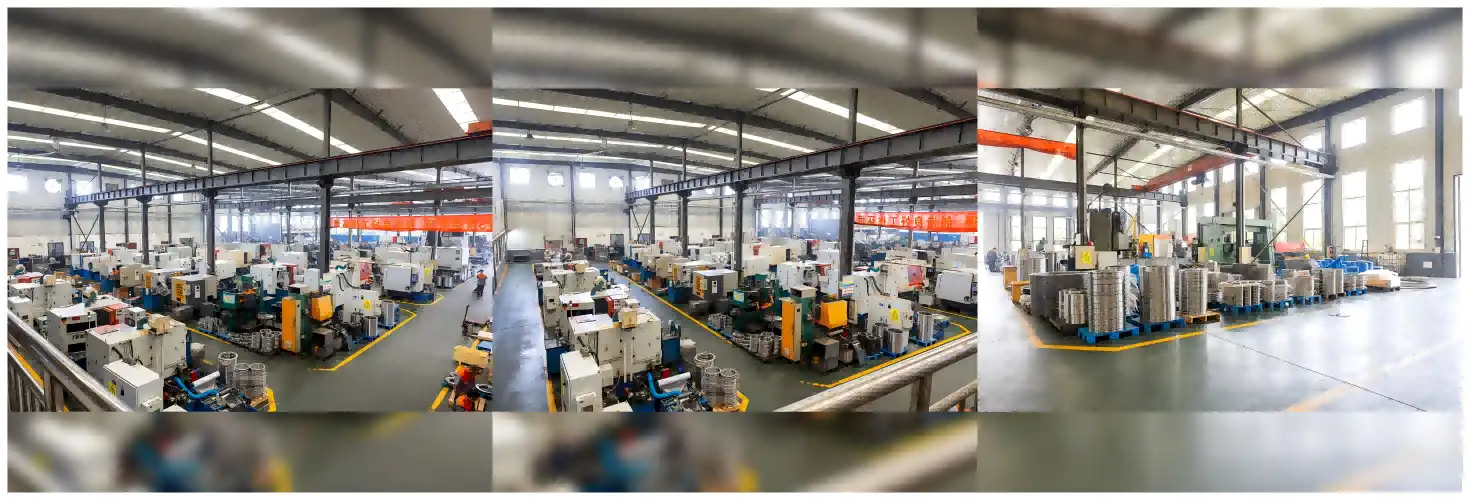
ATLYC can help you with your bearing buying problems because they have been making quality goods for 15 years. Our SX011814 Cross roller bearing has the strength, accuracy, and small size that your industrial equipment needs. It is certified by ISO 9001 and IATF 16949, which means that the quality will be the same in every batch of production. As a dedicated cross roller bearing manufacturer, we keep up with output through six specialised workshops and 120 trained workers who are dedicated to meeting your delivery dates every time.
When it comes to getting mission-critical parts, we know how hard it is for foreign OEMs. During the whole process of making your product, our engineering team gives you expert advice and suggests the best bearing setups and customisation options that make the equipment work better. ATLYC is your best choice for scalable bearing supply because they offer competitive prices for large orders, clear wait times of approximately 4 to 6 weeks, and well-established shipping networks that serve US markets. Get in touch with our purchasing agents at auto@lyautobearing.com to talk about how our cross roller bearing provider can meet your unique application and volume needs.
References
1. Harris, T.A. & Kotzalas, M.N. (2006). Advanced Concepts of Bearing Technology: Rolling Bearing Analysis, Fifth Edition. CRC Press, Boca Raton.
2. Schaeffler Technologies AG & Co. (2019). Rolling Bearings: Catalogue HR 1—Principles, Design, Application. Schaeffler Group Industrial, Herzogenaurach.
3. Tsutsumi, M. & Ihara, Y. (2013). "Accuracy Evaluation of Rotary Table Systems Using Cross Roller Bearings." International Journal of Machine Tools and Manufacture, Vol. 72, pp. 37-45.
4. ISO 492:2014. Rolling Bearings—Radial Bearings—Geometrical Product Specifications (GPS) and Tolerance Values. International Organization for Standardization, Geneva.
5. Weck, M. & Brecher, C. (2006). Machine Tools Production Systems 3: Machine Tool Metrology. Springer-Verlag, Berlin Heidelberg.
6. Neale, M.J. (2001). The Tribology Handbook, Second Edition. Butterworth-Heinemann, Oxford.
Learn about our latest products and discounts through SMS or email