- English
- French
- German
- Portuguese
- Spanish
- Russian
- Japanese
- Korean
- Arabic
- Greek
- German
- Turkish
- Italian
- Danish
- Romanian
- Indonesian
- Czech
- Afrikaans
- Swedish
- Polish
- Basque
- Catalan
- Esperanto
- Hindi
- Lao
- Albanian
- Amharic
- Armenian
- Azerbaijani
- Belarusian
- Bengali
- Bosnian
- Bulgarian
- Cebuano
- Chichewa
- Corsican
- Croatian
- Dutch
- Estonian
- Filipino
- Finnish
- Frisian
- Galician
- Georgian
- Gujarati
- Haitian
- Hausa
- Hawaiian
- Hebrew
- Hmong
- Hungarian
- Icelandic
- Igbo
- Javanese
- Kannada
- Kazakh
- Khmer
- Kurdish
- Kyrgyz
- Latin
- Latvian
- Lithuanian
- Luxembou..
- Macedonian
- Malagasy
- Malay
- Malayalam
- Maltese
- Maori
- Marathi
- Mongolian
- Burmese
- Nepali
- Norwegian
- Pashto
- Persian
- Punjabi
- Serbian
- Sesotho
- Sinhala
- Slovak
- Slovenian
- Somali
- Samoan
- Scots Gaelic
- Shona
- Sindhi
- Sundanese
- Swahili
- Tajik
- Tamil
- Telugu
- Thai
- Ukrainian
- Urdu
- Uzbek
- Vietnamese
- Welsh
- Xhosa
- Yiddish
- Yoruba
- Zulu
Where to Source RU Series Crossed Roller Bearing?
When you're searching for RU Series Crossed Roller Bearing suppliers, you'll find reputable manufacturers concentrated in established bearing production hubs—particularly in China, Japan, and Germany. Chinese manufacturers like Luoyang Auto Bearing Co., Ltd. now offer internationally certified products that combine ISO 9001 and IATF 16949 compliance with competitive pricing and scalable production capacity. Authorized distributors across North America and Europe maintain ready inventory for faster delivery, while specialized B2B platforms connect you directly with certified factories capable of customization and technical support tailored to your specific application requirements.
Understanding RU Series Crossed Roller Bearings
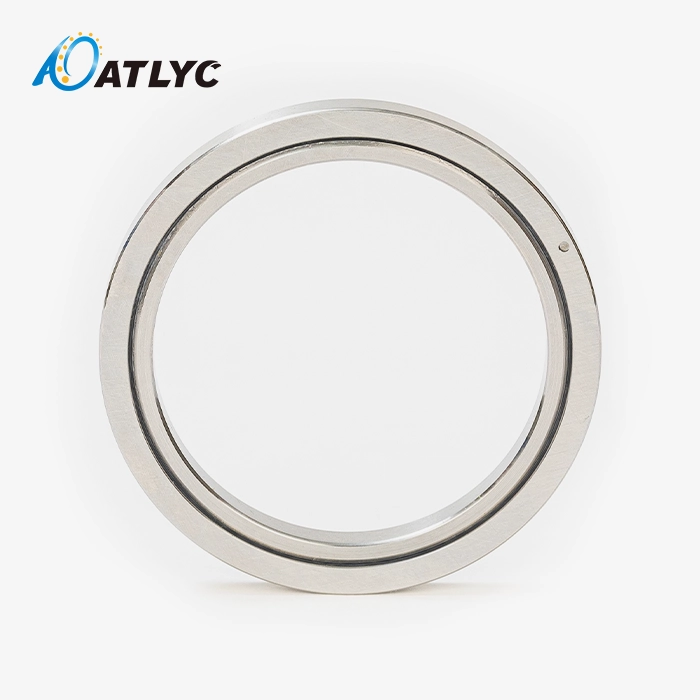
Crossed roller bearings are based on a design theory that solves a basic engineering problem: how to get multidirectional load capacity with very little rotational space. These unique parts use cylinder-shaped rollers that are placed orthogonally, or changing at right angles, between V-shaped raceways that have been machined into the inner and outer rings.
Design, Architecture, and Construction
The RU Series Crossed Roller Bearing has mounting holes already made in both the inner and outer rings, making it a complete ring structure. This gets rid of the need for different housings and presser flanges, so you can bolt the bearing directly to surfaces that fit together. This method makes assembly easier and stops tolerance stack-up mistakes that happen a lot with multi-piece assemblies. Precision spacers separate each roller, keeping the metals from touching when two rollers are next to each other. This keeps the load evenly spread around the raceway's diameter. A special heat treatment is used on high-quality bearing steel (GCr15 or GCr15SiMn) to get the best hardness (58–62 HRC) and physical stability when heated and cooled many times.
Dimensional Range and Material Standards
The different sizes available meet the needs of a wide range of applications. The inside diameters run from 20 mm to 1100 mm, the outside sizes from 70 mm to 1500 mm, and the widths from 12 mm to 110 mm. Because of this, engineers can choose bearings that fit perfectly in robotic joints, rotary tables, and precision tracking stages that have limited room. When choosing materials, the attention is on bearing steels that have been used before and work well every time. For normal uses, GCr15 has great wear resistance and fatigue life. On the other hand, GCr15SiMn is better at hardening bigger cross-sections that need greater penetration.
Performance Characteristics
The crossed design has a very high load capacity in more than one way. Instead of various bearing systems, a single bearing can handle radial loads, bidirectional axial loads, and moment loads all at the same time. This feature cuts down on the number of parts you need, which makes your design easier and lowers the cost of assembly. The accuracy of the runout depends on the precision grade. There are P6, P0, P5, P4, and P2 classes to choose from. In most industrial settings, P5 or P4 grades are required, while P2 tolerances are needed for ultra-precision tools like chip manufacturing stages. Under normal conditions, the temperature range is from -30°C to +120°C. If the device is properly kept, it should last more than 20,000 hours.
Target Industries and Applications
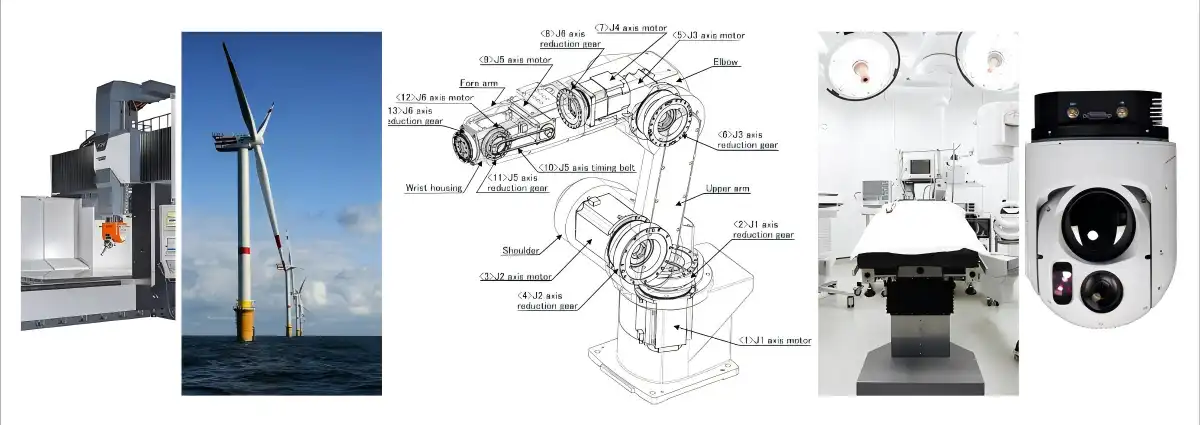
These bearings are used by robotics companies in the waist, shoulder, and wrist joints of flexible robots. The small size and high moment load capacity allow for more efficient joint housing designs. They are used by machine tool builders to make precise rotary tables and bearing heads, where high runout accuracy keeps workpieces in the same place. Engineers who work on medical equipment depend on them to run smoothly and quietly in CT scanner gantries and X-ray placing arms, which must be completely reliable for patient safety.
Set up regular review times to check the state of the raceways, the torque of the mounting bolts, and the cleanliness of the lubricant. This will help you get the most out of your equipment. Metal particles or wetness that get into the bearings speed up the wear process. Making sure the seals are properly sealed saves your investment and increases the bearings' life.
Comparing RU Series Crossed Roller Bearings with Alternatives
Knowing how crossed roller bearings stack up against other types can help you choose the right technology. The table below shows the main differences between the types of bearings that are usually looked at for precision rotating applications:
| Type of Bearing | Capacity to Hold | Level of Precision | Complexity of Mounting | Common Uses | Cost Compared To |
|---|---|---|---|---|---|
| RU Series Crossed Roller Bearing | High radial, axial, and moment | P2 through P6 | Low (has fixing holes built in) | Rotary tables and robot joints | Moderate |
| Slewing Ring Bearing | An axial moment of very high | From P5 to P0 | Level 2 (bolt head) | Excavators, cranes, and turntables | High |
| Pair of Angular Contact Ball Bearings | Moderate rotational force and a small moment | From P4 to P2 | High (needs to be preloaded adjusted) | Spindles and pumps for machine tools | Lessen |
| Bearings for cylindrical rolling | But only high radial | From P5 to P0 | Moderate (no shared housing) | Conveyor systems and gearboxes | Lessen |
Load Capacity and Precision Analysis
While slewing ring bearings work great in places with high moment loads, like construction equipment towers and wind turbine yaw drives, they are too big and too expensive for small robots. When arranged back-to-back or face-to-face, angular contact ball bearings can handle axial loads well, but they need to be carefully preloaded and adjusted during installation, and can only handle a small amount of moment. Standard cylindrical roller bearings have a good rotational capacity and are reasonably priced, but they can't handle axial or moment loads without extra thrust bearings.
In terms of usefulness, the crossed roller bearing is in the middle. The load capacity is good enough for most industrial automation and precise machinery uses, and the small size and easy placement make it even better. Precision grades from P6 (general purpose) to P2 (ultra-precision) let you fit the accuracy of the bearing to the needs of the application without making too many requirements, which would drive up costs.
Market Pricing Perspective
Prices depend on the size, accuracy grade, and number of items ordered. Small-diameter crossed roller bearings with an outer diameter of 50 to 150 mm in P5 grade usually cost between $150 and $400 per unit in small quantities. For bigger widths (400–800mm) and tighter standards (P4 or P2), the price per unit can go up to $1,200 to $3,500. Comparable slewing rings usually cost 40–60% more because they are bigger and need more work to be done on them. Paired angular contact bearings may cost less at first, but they are harder to install and could have alignment problems.
Think about the expected service life, installation labor, and upkeep needs when figuring out the total cost of ownership. Crossed roller bearings' seamless mounting design cuts down on assembly time and gets rid of alignment mistakes that shorten the life of bearings. Because of these things, the modest price premium over simpler bearing setups is usually worth it.
Key Considerations When Sourcing RU Series Crossed Roller Bearings
Finding providers with good prices is only one part of successful buying. You need partners who can meet your business needs in terms of manufacturing capability, quality consistency, and supply chain efficiency.
Verifying Supplier Authenticity and Certifications
Fake bearings are always a risk when buying things around the world. These low-quality goods often break down early, which can lead to unexpected downtime and safety problems. For companies that work with automakers, ask for proof that they follow ISO 9001 quality management and IATF 16949 quality guidelines for cars. Make sure that the certificates list the exact factory that is making your RU Series Crossed Roller Bearing units, not just the company offices. Reliable makers, such as Luoyang Auto Bearing Co., Ltd., keep their licensing records open and invite qualified buyers to inspect their factories.
Ask for material papers that list the types of steel used and how they were heated. Genuine providers make it possible to track finished bearings back to the lots of raw materials used and the production runs they were made in. This openness makes it possible to find the root cause of any quality problems and shows that the provider is committed to being accountable.
Lead Times and Order Quantities
When sellers keep enough in stock, standard catalog sizes usually ship within 3–4 weeks. Custom configurations, like changed mounting holes, unique sealing arrangements, or non-standard precision grades, need 6 to 10 weeks for technical review, making the tools, and production. The smallest amount that can be ordered depends on the brand and size of the bearing. Most of the time, the MOQ for small-diameter bearings is 10 to 50 pieces. For bigger specialty bearings, on the other hand, the MOQ may be as low as 1 to 5 units because they are so application-specific.
When you buy in bulk, you save money and get priority scheduling for your production. Price cuts of 10 to 15 percent and sure lead times during times of high demand are common with annual contracts that include volume promises. Talk to the supplier about flexible shipping times that work with your production planning cycles. This will help you keep track of inventory costs and make sure that parts are always available.
After-Sales Support and Warranty Terms
Transactional sellers are different from reliable suppliers because they don't offer technical help. During the design phase, your provider should offer application engineering help to help you choose the right bearing size, precise grade, and mounting setup. Installation instructions, such as suggested mounting methods, torque limits, and lubricant choices, keep people from making mistakes during installation that can cost a lot, void guarantees, and shorten the life of bearings.
Standard warranty terms usually cover flaws in materials and labor for 12 months from the date of shipment or 2,000 hours of use, whichever comes first. Make sure it's clear what kinds of problems the guarantee doesn't cover, like bad fitting, contamination, or using it at loads that are too high. Set clear rules for how to handle guarantee claims, such as how to check the product and how long it will take to get a replacement.
International Shipping and Logistics
Bearings are relatively expensive and small, so even though the shipping costs are higher, air freight is still a good option for pressing orders. Standard ocean freight meets planned production needs, and it takes 4 to 6 weeks to get from Asian industrial hubs to ports in North America. Your supplier should take care of all the export paperwork, like business invoices, packing lists, and certificates of origin, to make sure that the final target countries follow the rules for customs entry.
Make sure that packages come with protected packaging that keeps moisture from getting inside and stops damage from impacts while they're in transit. Bearings that are kept in stock before they are installed have longer shelf lives thanks to anticorrosion treatments and sealed packing. Set clear terms for where the risk shifts (Incoterms like FOB, CIF, or DDP) to avoid disagreements about who is responsible for shipping damage.
Where to Source RU Series Crossed Roller Bearings?
To find trusted sources, you have to look at different types of suppliers. Each type has its own benefits, which rely on your procurement goals and application needs.
Direct from Manufacturers
When you buy directly from bearing makers, you can get access to their entire product line, get help from engineers, and get low prices on large orders. Chinese companies that have been around for a while have put a lot of money into precise manufacturing equipment and quality systems. This has helped them compete with traditional sources on price while also improving performance.
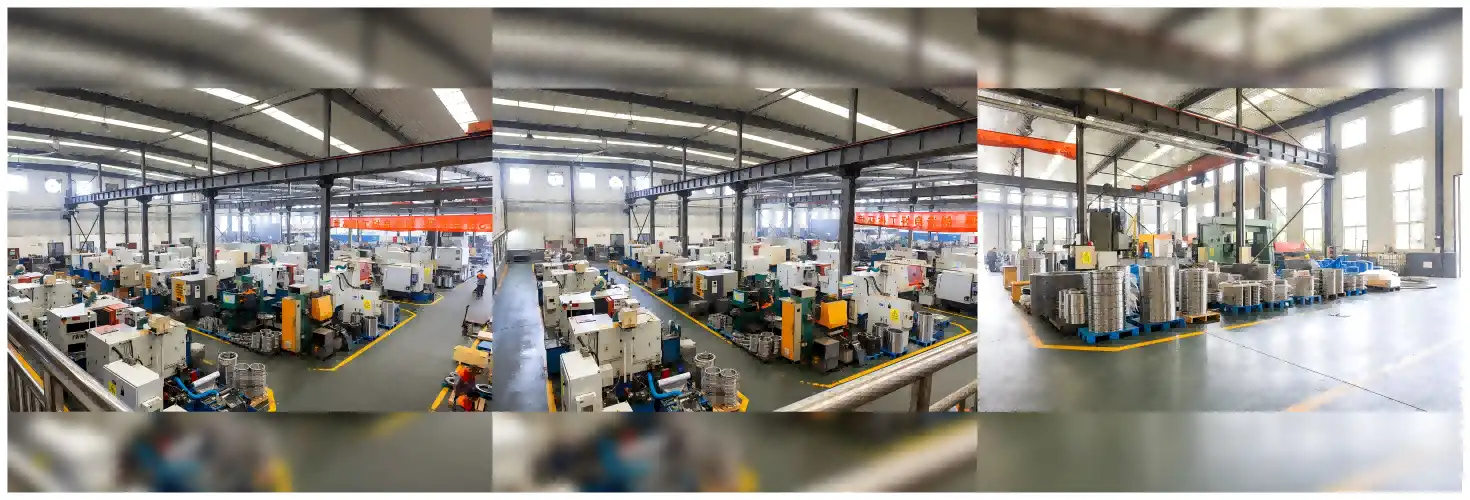
This change can be seen in Luoyang Auto Bearing Co., Ltd. Since it began in 2010, the company has grown from a single workshop to six specialized production sites. Their 120-person team includes production specialists, R&D engineers, quality inspectors, and assembly workers. This makes sure that everything is done professionally at every stage of the manufacturing process. Having ISO 9001 and IATF 16949 licenses shows that they are dedicated to quality standards and consistency around the world. The factory makes RU Series Crossed Roller Bearing units in all sizes and can grind them to accuracy levels P2 through P6. Their goods are used to make car parts, industrial machinery, and automation equipment in South Korea, the US, Germany, Russia, Iran, and Turkey, among other places.
Direct ties with manufacturers give you more ways to customize their products, like changing the mounting patterns, using different materials, or making the products work better in certain situations than normal catalog products can. Technical talks happen directly with engineering teams that know what the production process can and can't do. This speeds up the development process for unique needs.
Authorized Distributors and Regional Dealers
Because distributors keep stock in their own countries, regular sizes can be delivered faster without having to wait for foreign shipping. This benefit comes in handy when production plans are squished or when unexpected equipment breakdowns mean that replacements need to be made right away. Being present in a region makes it easier to communicate in the local language and time zone, which makes it easier to process orders and answer technical questions.
Authorized dealer networks in North America and Europe usually have popular RU Series Crossed Roller Bearing sizes in stock, and they can ship them the same week or the next. The outer diameter range is 100–300mm, and the grade is P5. The price includes small distributor margins, but buying through a wholesaler saves time and lowers the minimum order quantity compared to buying directly from the maker. Check to see if the distributors get their products from qualified makers and can show you material papers that prove the products are real.
B2B Platforms and Online Marketplaces
Specialized industrial buying platforms put buyers in touch with verified makers. These platforms let buyers compare prices and rate suppliers through centralized interfaces. When compared to markets that aren't controlled, platforms that use source verification programs like factory checks, certification audits, and transaction history reviews make counterfeiting less likely.
Be careful with sites that don't have strong source screening. Unreasonably low prices are often a sign of fake goods or sellers who don't have good quality control. Before you decide to buy something, make sure you get full product specs, material certificates, and accuracy grade test results. Suppliers who are trustworthy easily show proof to back up their quality claims.
OEM Partnership Opportunities
Strategic supply ties help equipment makers who need bearings on a regular basis. Long-term contracts set favored prices, offer specialized engineering support, and give priority to production capacity during times of high demand. Collaborations allow for the creation of new products together, which improves bearing designs to meet the performance and cost goals of your equipment.
Based on common buying objectives, the following comparison can help you choose between sourcing channels:
| Sourcing Channel | Price Competitiveness | Technical Support | Delivery Speed | Customization Capability | MOQ Flexibility |
|---|---|---|---|---|---|
| Direct Manufacturer | Excellent (large orders) | Very good | Not too bad (3–4 weeks) | Very good | Moderate |
| Authorized Dealer | good | good | Very good (stock things) | Limited | Very good |
| B2B Platform | Different | Different | Different | Different | Different |
| OEM Working Together | Excellent (contracts for one year) | Very good | Good (setting priorities) | Very good | Possible |
Assessing Supplier Reputation
Besides price and delivery times, a supplier's image shows how reliable they will be in the long run. Look into customer reviews and recommendations, paying special attention to comments about how consistent the quality of the product is, how well the delivery works, and how quickly the company responds to quality concerns. Certifications from the industry show that suppliers have quality control systems that meet world standards. Being a part of trade shows and group shows that you care about the bearing business and want to connect with other professionals.
Ask sellers for references from past customers, preferably buyers in the same line of work as you who have similar application needs. Talking to current customers gives you honest information about a supplier's strengths and weaknesses that marketing materials don't show. Check out how providers deal with tough situations like production delays, quality issues, and technical issues. Their ability to handle these situations can be more important than how well they do in normal transactions.
Making the Final Decision: A Buying Guide
To confidently make buying choices based on technical needs and supplier evaluations, evaluations must be done in a planned way and against clear criteria.
Defining Your Procurement Parameters
First, write down the technical needs for your application in clear, measured language. What kinds of loads—radial force magnitude, axial force direction and magnitude, and moment loads from offset masses—will the bearing have to handle? Operating speed (in RPM) has a direct effect on the choice of bearings and the amount of grease that needs to be used. Conditions in the environment, like high or low temperatures, the presence of contaminants, and the amount of humidity, determine the sealing needs and material treatments.
The performance specs of your tools tell you what level of accuracy you need. A standard industrial rotation table might work fine with P5 grade bearings, but a semiconductor chip inspection stage needs P2 accuracy to keep the position accurate to the micron level. If you over-specify precision, costs will go up without practical benefits, and if you under-specify precision, you might not meet equipment performance goals.
Evaluating Key Supplier Metrics
Price competition is important, but the total cost of ownership is a better way to figure out what something is worth. Instead of just using ex-factory pricing, figure out the landing cost, which is the unit price plus freight, customs taxes, and logistics handling. When considering options, think about what the guarantee covers, how long you expect the product to last, and how often it needs to be maintained. You can get more for your money with a bearing that costs 20% more at first but lasts 50% longer and needs less upkeep.
Practical Steps for Initiating Supplier Engagement
Start by sending a specific Request for Quotation (RFQ) that lists the RU Series Crossed Roller Bearing size, precise grade, number, delivery date, and location. Include information about the application, such as the type of equipment, how it will be used, and how long it is expected to last. This will help sellers confirm that the specs are suitable or suggest alternatives that better meet your needs.
Look at the answers in a planned way, comparing not only prices but also lead times, payment terms, warranty coverage, and the availability of expert help. Set up online conferences or site visits with the chosen providers to get a better idea of their engineering skills, manufacturing capabilities, and quality control systems.
Before placing a large order, ask for samples that will be used in important situations. Physical review and test installation make sure that what the seller says about the product's dimensions, finish, and ability to spin smoothly matches how it works in real life. Sample review finds possible problems before they delay production.
Talk about terms that are good for both sides. Clear specs stop arguments about whether or not a product meets requirements. Clear review criteria and acceptance standards set concrete standards for quality. Payment terms that protect both the seller and the buyer—deposits for special items, and the balance due after inspection—make transactions go smoothly.
Conclusion
Finding the right RU Series Crossed Roller Bearing requires a balance between scientific accuracy and the practicality of the supply chain. You need parts that are exactly what you need, and you need to work with suppliers who can give you steady quality, quick help, and reliable service. Certified manufacturers like Luoyang Auto Bearing Co., Ltd. show that Chinese bearing makers now meet quality standards that are recognized around the world, have full technical capabilities, and offer cheap pricing that helps you reach your buying goals.
Successful sourcing that works goes beyond the first exchange. Supply chain resilience protects your operations through market changes and unexpected problems. It is achieved by building relationships with suppliers who understand your application requirements, keep you informed about production status, and stand behind their products with meaningful warranties.
FAQ
1. What is the typical operational lifespan of crossed roller bearings in industrial applications?
RU Series Crossed Roller Bearing parts usually last between 20,000 and 30,000 hours of use before they need to be replaced. This is as long as the loads are within the stated capacity, they are properly lubricated and maintained, and they are kept clean. Service life depends on the type of work, the speed at which it is used, the climate, and how well it is maintained. Bearings that are kept in a controlled environment and oiled regularly often last longer than their original life. On the other hand, bearings that are dirty or not properly oiled fail early, no matter what the load is.
2. Can manufacturers customize crossed roller bearings for non-standard applications?
Reliable makers offer customization services that meet the needs of specific applications. Changes that are often made include changing the mounting hole patterns to match existing equipment connections, making special sealing arrangements for harsh environments, and changing the internal shape to make the load capacity best for certain load profiles. For engineering review, machine preparation, and production, customization usually takes 6 to 10 weeks. For custom bearings, the smallest order quantity is 5 to 20 pieces for simple changes in size, and the largest order quantity is 50 to 100 pieces for special materials or heat treatments.
3. How can buyers validate supplier authenticity and avoid counterfeit bearings?
Ask for all the certification paperwork, like ISO 9001 and IATF 16949 papers, that name the individual production location. Use the online proof tools provided by the awarding bodies to check the certificates. Ask for material papers that show what kind of steel it is, how it was heated, and how it can be traced back to production batches. Legitimate providers are happy for plant checks and let inspectors look at their facilities and quality records. When prices are too low compared to what the market normally bears, it could mean that fakes are being sold.
Contact ATLYC for Your RU Series Crossed Roller Bearing Needs
ATLYC knows that the success of your production depends on getting you solid, well-designed parts on time. We are a certified RU Series Crossed Roller Bearing maker with ISO 9001 and IATF 16949 credentials. With fifteen years of experience and scalable production capacity, we serve original equipment manufacturers (OEMs) in the car industry, builders of industrial machinery, and manufacturers of automation equipment all over the world. Our engineering team can help you with technical questions that are specific to your application. Our six specialized production sites can make precision grades from P6 to P2 across all dimensions. Email us at auto@lyautobearing.com to talk about your needs with experienced bearing experts who know your business objectives and supply chain challenges.
References
1. Harris, T. A., & Kotzalas, M. N. (2020). Essential Concepts of Bearing Technology: Rolling Bearing Analysis. CRC Press.
2. Schaeffler Technologies AG & Co. (2019). Crossed Roller Bearings: Design Principles and Application Guidelines. Technical Publication TI 00123-EN.
3. ISO 492:2014. Rolling Bearings – Radial Bearings – Geometrical Product Specifications (GPS) and Tolerance Values. International Organization for Standardization.
4. Budynas, R. G., & Nisbett, J. K. (2021). Shigley's Mechanical Engineering Design, 11th Edition. McGraw-Hill Education.
5. SKF Group. (2018). Rolling Bearings Catalogue: Application-Specific Bearing Selection and Mounting Practices. Publication 10000/1 EN.
6. American Bearing Manufacturers Association. (2022). Standard for Precision Crossed Roller Bearings: Performance Specifications and Quality Assurance Requirements. ABMA Standard 20-2022.
Learn about our latest products and discounts through SMS or email