- English
- French
- German
- Portuguese
- Spanish
- Russian
- Japanese
- Korean
- Arabic
- Greek
- German
- Turkish
- Italian
- Danish
- Romanian
- Indonesian
- Czech
- Afrikaans
- Swedish
- Polish
- Basque
- Catalan
- Esperanto
- Hindi
- Lao
- Albanian
- Amharic
- Armenian
- Azerbaijani
- Belarusian
- Bengali
- Bosnian
- Bulgarian
- Cebuano
- Chichewa
- Corsican
- Croatian
- Dutch
- Estonian
- Filipino
- Finnish
- Frisian
- Galician
- Georgian
- Gujarati
- Haitian
- Hausa
- Hawaiian
- Hebrew
- Hmong
- Hungarian
- Icelandic
- Igbo
- Javanese
- Kannada
- Kazakh
- Khmer
- Kurdish
- Kyrgyz
- Latin
- Latvian
- Lithuanian
- Luxembou..
- Macedonian
- Malagasy
- Malay
- Malayalam
- Maltese
- Maori
- Marathi
- Mongolian
- Burmese
- Nepali
- Norwegian
- Pashto
- Persian
- Punjabi
- Serbian
- Sesotho
- Sinhala
- Slovak
- Slovenian
- Somali
- Samoan
- Scots Gaelic
- Shona
- Sindhi
- Sundanese
- Swahili
- Tajik
- Tamil
- Telugu
- Thai
- Ukrainian
- Urdu
- Uzbek
- Vietnamese
- Welsh
- Xhosa
- Yiddish
- Yoruba
- Zulu
Why Use Spindle Bearing 71906C in CNC Machining Centers?
If you are responsible for purchasing CNC machining equipment you are aware that the bearing behind the spindle has a big impact on its performance. Spindle Bearing 71906C is an angular contact ball bearing with a contact angle of 15°. ISO dimensions 30x47x9mm with tolerance ratings up to P2 (ABEC 9). It deals with the radial and thrust combined stresses created by CNC spindles at speeds of 30,000 RPM. If you’re producing automotive components, grinding industrially or automating with precision, the 71906C has become a go-to for engineers and procurement teams that can’t afford to have their spindles fail.
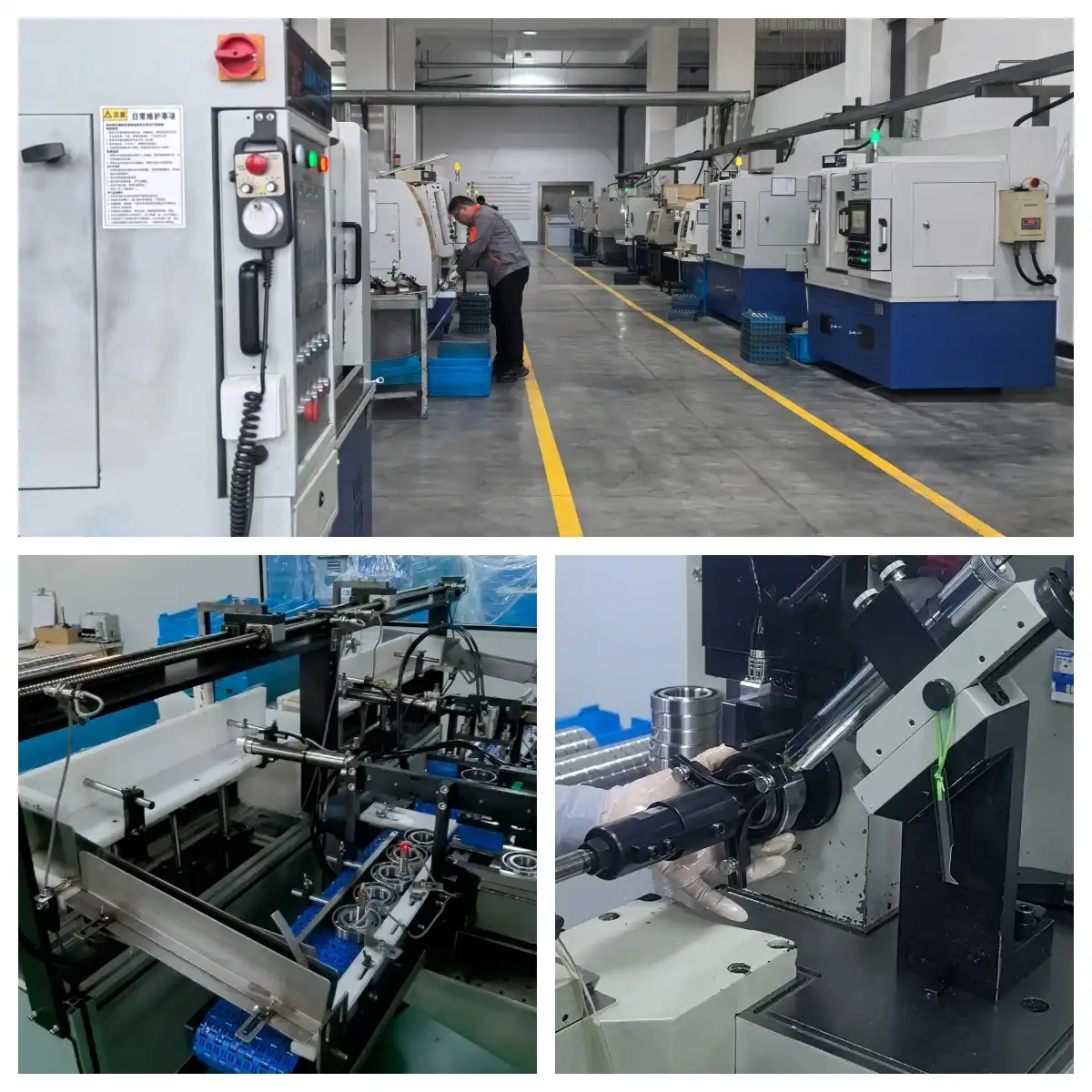
Understanding Spindle Bearing 71906C: Specifications and Design Features
Core Dimensional Properties
The 71906C is an angular contact ball bearing from the super-light Series 19 series. The interior diameter is 30 mm, exterior diameter 47 mm and breadth 9 mm. Thin section design means that a larger diameter of the shaft may be fitted within a tiny frame. This increases the stiffness of the spindle shaft directly without increasing the machine size. This tiny stiffness is highly significant for organizations who create tight-tolerance car parts or micro-via PCB drilling machines.
Material Composition and Cage Design
Standard versions use vacuum-degassed chrome steel balls (100Cr6), whilst hybrid versions (HC71906C) utilize silicon nitride (Si3N4) ceramic balls. Ceramic balls are about 60% lighter than steel balls. This means that the centrifugal force is significantly smaller at high speeds and thus the creation of heat within the ball is substantially reduced. The cage is normally composed of outer-ring guided phenolic resin (TA) or PEEK (T85). Both of these materials maintain their dimensional stability at the elevated temperatures typical to CNC machine environments.
Tolerance and Precision Grades
The 71906C is made to either ISO P4 (ABEC 7) or P2 (ABEC 9) tolerance levels. The radial runout of the inner ring (Kia) is kept to within 2.5 microns at P4. This level of rotational accuracy directly manages the runout of the tool tips during cutting, which is very important for getting surface finish tolerances (Ra) in the sub-micron range. Here is a quick-reference table with important specs:The bore diameter is 30 mm, the outer diameter is 47 mm, the width is 9 mm, and the contact angle is 15° (C-type). The precision class is P4 (ABEC 7) or P2 (ABEC 9), and the maximum speed factor is up to 2,000,000 (oil-air lube). The ball material is 100Cr6 steel or Si3N4 ceramic, and the cage material is phenolic resin (TA) or PEEK (T85).
| Parameter | Value |
|---|---|
| Bore Diameter | 30 mm |
| Outer Diameter | 47 mm |
| Width | 9 mm |
| Contact Angle | 15° (C-type) |
| Precision Class | P4 (ABEC 7) / P2 (ABEC 9) |
| Max Speed Factor (ndm) | Up to 2,000,000 (oil-air lube) |
| Ball Material | 100Cr6 Steel / Si3N4 Ceramic |
| Cage Material | Phenolic Resin (TA) / PEEK (T85) |
Why Spindle Bearing 71906C Is Ideal for CNC Machining Centers
High-Speed Capability Without Thermal Penalty
Its 15° contact angle makes gyroscopic moments less likely to happen during fast spinning, which is a big plus over the 25° (AC) versions. The speed factor (ndm) can reach 2,000,000 when oiled with an oil-air system. This means it can be used for internal grinding spindles that normally run at over 35,000 RPM. Because these speeds produce less heat, there is less thermal expansion, fewer mistakes in measurements, and longer grease life. Compared to all-steel versions, ceramic hybrid Spindle Bearing 71906C versions have two to three times longer grease service intervals.
Spindle Rigidity and Machining Accuracy
Here are the main reasons why the 71906C is better for precision CNC applications in terms of performance:
- Radial stiffness: The 15° angle delivers superior radial rigidity compared to higher-angle variants, making the bearing well-suited for fine finishing operations where surface quality is the primary target.
- Universal matching (DU grinding): Bearings are ground for universal pairing, allowing Back-to-Back (DB), Face-to-Face (DF), or Tandem (DT) mounting without shimming. This simplifies spindle assembly and reduces setup errors.
- Low vibration signature: Anderon meter testing across low, medium, and high frequency bands confirms raceway and ball quality, directly reducing tool chatter and part rejection rates.
These benefits solve real production issues like spindle droop when cutting, surface flaws caused by vibration, and bearing replacement cycles that happen too soon and stop planned production runs.
Verified Applications in B2B Environments
The 71906C is used in high-speed CNC internal grinding spindles to make parts for fuel injectors in cars, PCB drilling spindles to make electronics, and robotic surgical arm actuators that need to move without any backlash. The thin cross-section, low inertia rolling elements, and exact preload control of the bearing make it work well every time. Its track record in these tough industries gives procurement teams good technical reasons to choose it for new machines or replacements that need to be done for maintenance.
Comparing Spindle Bearing 71906C with Other Popular Models
71906C vs. Other Suffix Variants
The last part of an angular contact bearing isn't just for looks; it determines the contact angle and, by extension, the bearing's whole load and speed profile. The 71906C (15°) focuses on radial stability and high speed, while the 71906AC (25°) can handle heavy axial loads at slower speeds. The 40° contact angle of the 71906B variant makes it good for situations where axial load is important but speed is not. If you choose the wrong suffix for a CNC spindle, the bearings will last less long and the spindle may break down early.
Brand Comparison for OEM and Aftermarket Procurement
| Brand | Known Strength | Typical Application |
|---|---|---|
| SKF | Consistent P4/P2 tolerances, wide distribution | European machine tool OEMs |
| FAG (Schaeffler) | High load ratings, extensive pairing data | German automotive precision lines |
| NSK | Strong hybrid ceramic lineup | High-speed Japanese CNC spindles |
| NTN / KOYO | Competitive pricing, broad catalog | Asian market OEM and aftermarket |
| ATLYC (Luoyang Auto Bearing) | ISO 9001 & IATF 16949 certified, scalable B2B supply | Export markets: US, Germany, South Korea, Russia, Turkey |
Never put different brands of bearings on the same spindle stack. Different makers use different internal shapes, such as different raceway osculation, preload offset grinding values, and ball grades, even when the bore and OD sizes are the same. When you mix brands, the load is spread out unevenly, which speeds up spindle wear. Using a Spindle Bearing 71906C from a consistent manufacturer helps maintain proper load distribution and spindle performance.
Procurement Considerations for Spindle Bearing 71906C
Supplier Qualification and Certification Standards
ISO 9001 and IATF 16949 certifications are required when buying angular contact spindle bearings for CNC machines; they are not extras that can be added. These standards show that a company regularly checks for dimensional variation, preload accuracy, and vibration testing, not just on sample runs. A company called Luoyang Auto Bearing Co., Ltd. (ATLYC) was founded in 2010 and has six production workshops with 120 skilled workers. It has both certifications and has been selling bearings to customers in the US, Germany, South Korea, Russia, Iran, and Turkey for 15 years.
Quality Control Checkpoints Buyers Should Verify
Before placing large orders, procurement teams should make sure that each production lot goes through the following checks with the supplier:
- Rotational accuracy (Kia/Kea): Radial runout of inner and outer rings verified against P4 or P2 class limits.
- Dimensional deviation (Δdmp): Bore and OD measurements confirming correct interference fit with shaft and housing.
- Contact angle verification: Angle held within 15° ±1° to maintain preload consistency in paired sets.
- Vibration and noise (Anderon meter): Three-band frequency analysis identifying raceway micro-scratches or ball defects.
- Preload class confirmation: Axial displacement measured under gauged load to verify Light (L), Medium (M), or Heavy (H) preload class.
Any reputable supplier should be able to provide inspection data along with each shipment, not just a certificate of conformance.
Logistics, Lead Times, and Bulk Order Planning
Production plans are kept safe by stable wait times. For business-to-business buyers who are in charge of planned repair or building new machines, providers should give clear shipping documents and firm delivery windows. Most of the time, bulk buy agreements lower the cost per unit and guaranty output priority. Ask potential sellers about their minimum order sizes, how they package their goods for long-distance shipping, and whether they offer technical help for application questions.
Maintenance Tips and Lifespan Optimization for Spindle Bearing 71906C
Lubrication Selection and Scheduling
If you want to go up to 60 to 70% of the bearing's stopping speed, you should use quality spindle grease with a barium-complex base, like Kluber Isoflex NBU 15. When speeds get close to the ndm limit, you have to have an oil-air lubrication system. Oil-air systems send precisely measured amounts of oil directly to the bearing while airflow removes heat. This keeps the cage from breaking because it doesn't have enough lubricant. Instead of set calendar dates, grease relubrication plans for the Spindle Bearing 71906C should be based on the bearing manufacturer's estimated L10 life data.
Monitoring for Early Failure Signals
Strange noises or a quick rise in spindle temperature are the two most important early warning signs that can be taken action on. Vibration analysis at the spindle housing can find raceway problems as they start to form before they lead to mistakes in the dimensions of final parts. Using a contact thermometer to check the bearing temperature during the initial run-in (usually the first two to four hours after installation) makes sure that the preload class and grease are right for the job.
Avoiding Common Installation Errors
If you place the bearings correctly, they will last longer from the start. The interference fit between the shaft and the bore must be within the tolerance set by the manufacturer. Forcing a bearing onto a shaft that is too big creates extra preload, which speeds up wear. When fitting heat, you should always use induction heaters instead of open flames. When putting together a matched set of bearings, never mix brands, and make sure you write down the bearing's orientation marks during installation to keep the factory-set preload relationship.
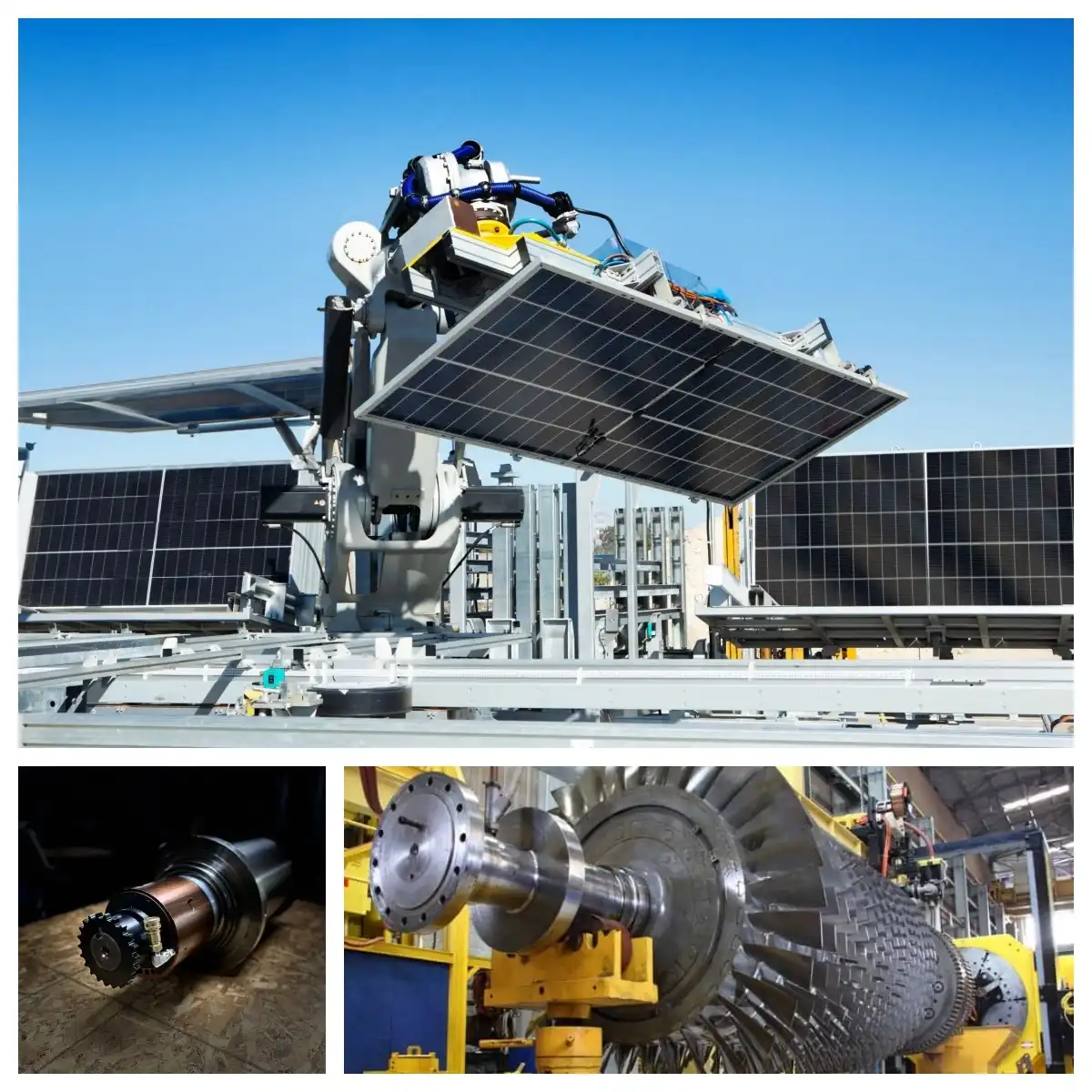
Conclusion
It is well known that the Spindle Bearing 71906C angular contact bearing is a good choice for CNC spindle applications that need high rotational accuracy, low heat production, and a long service life. With a 15° contact angle, P4/P2 tolerance options, and the ability to work with universal matched mounting, this part can be used in a variety of systems for grinding, milling, and precision automation. This bearing will last as long as it is supposed to if the seller is qualified, the quality is checked regularly, it is properly oiled, and the fitting is done correctly. When buying teams are making long-term deals for supplies, these technical factors should be just as important as price and wait time.
FAQ
What is the difference between the 71906C and 71906AC?
The "C" at the end of the name means a 15° contact angle, which is good for high-speed operation and radial stiffness. The "AC" suffix means a 25° angle, which lets more weight go through the pipe but limits the top speed. The AC-type is for heavy-duty milling, and the C-type is for high-speed end grinding.
Should I choose a hybrid ceramic version for my spindle?
Hybrid ceramic balls (Si3N4) are a good buy if your wheel goes faster than 30,000 RPM or needs to be electrically insulated. When balls are moving quickly, the fact that they are 60% lighter than steel balls cuts down on centrifugal force and internal heat. Two to three times as long of a grease service life as in all-steel configurations.
How do I select the correct preload class?
Light preload works best for high-speed, low-heat tasks like high-speed grinding. When cutting force stiffness is important, like in grinding, a medium or heavy preload works best. When the preload is higher, the maximum RPM goes down, so always check with the spindle's dynamic model.
Can I mix brands within a single spindle stack?
No, because different makers use different internal shapes, preload offset grinding values, and ball grades. Even if the outside measurements are the same, mixing brands causes the load to be spread unevenly across the bearing set, which speeds up spindle failure.
What lubrication method is recommended at very high speeds?
An oil-air lubrication system is needed when the speed is getting close to the bearing's ndm limit. Premium barium-complex spindle grease is enough and easier to handle for speeds below 60–70% of the limiting speed.
Partner with ATLYC for Your Spindle Bearing 71906C Supply
ATLYC, which stands for Luoyang Auto Bearing Co., Ltd., has been selling precision bearings to companies in the US, Germany, South Korea, and other places for 15 years. We are a Spindle Bearing 71906C manufacturer that is ISO 9001 and IATF 16949 certified. We offer scalable order amounts, full inspection paperwork, and direct technical help from our engineering team. You can count on our six workshops to help your supply chain, whether you need normal steel or hybrid ceramic designs. To get a quote right away, email your requirements to auto@lyautobearing.com or go to https://aotezhoucheng.aixdb.cn/.
References
1. Harris, T. A., & Kotzalas, M. N. — Essential Concepts of Bearing Technology, Taylor & Francis, 2006.
2. ISO 492:2014 — Rolling Bearings — Radial Bearings — Dimensional and Geometrical Tolerances, International Organization for Standardization, 2014.
3. Abele, E., Altintas, Y., & Brecher, C. — "Machine Tool Spindle Units," CIRP Annals — Manufacturing Technology, 2010.
4. Schmitz, T. L., & Smith, K. S. — Machining Dynamics: Frequency Response to Improved Productivity, Springer, 2009.
5. SKF Group — Spindle Bearings Catalogue, SKF, 2022.
6. Weck, M., & Brecher, C. — Werkzeugmaschinen: Konstruktion und Berechnung (Machine Tools: Design and Calculation), Springer, 2006.
Learn about our latest products and discounts through SMS or email
