- English
- French
- German
- Portuguese
- Spanish
- Russian
- Japanese
- Korean
- Arabic
- Greek
- German
- Turkish
- Italian
- Danish
- Romanian
- Indonesian
- Czech
- Afrikaans
- Swedish
- Polish
- Basque
- Catalan
- Esperanto
- Hindi
- Lao
- Albanian
- Amharic
- Armenian
- Azerbaijani
- Belarusian
- Bengali
- Bosnian
- Bulgarian
- Cebuano
- Chichewa
- Corsican
- Croatian
- Dutch
- Estonian
- Filipino
- Finnish
- Frisian
- Galician
- Georgian
- Gujarati
- Haitian
- Hausa
- Hawaiian
- Hebrew
- Hmong
- Hungarian
- Icelandic
- Igbo
- Javanese
- Kannada
- Kazakh
- Khmer
- Kurdish
- Kyrgyz
- Latin
- Latvian
- Lithuanian
- Luxembou..
- Macedonian
- Malagasy
- Malay
- Malayalam
- Maltese
- Maori
- Marathi
- Mongolian
- Burmese
- Nepali
- Norwegian
- Pashto
- Persian
- Punjabi
- Serbian
- Sesotho
- Sinhala
- Slovak
- Slovenian
- Somali
- Samoan
- Scots Gaelic
- Shona
- Sindhi
- Sundanese
- Swahili
- Tajik
- Tamil
- Telugu
- Thai
- Ukrainian
- Urdu
- Uzbek
- Vietnamese
- Welsh
- Xhosa
- Yiddish
- Yoruba
- Zulu
Wind Turbine Spindle Bearing: What Drives Reliability?
A wind turbine spindle bearing is dependable because of five factors that work together. It needs to have the right kind of bearing, the right amount of load capacity, be made of clean alloy steel that has been heat-treated correctly, be well sealed and oiled, and be carefully installed and then checked regularly. It's in the middle of the main shaft and the nacelle frame. This part holds up the radial load, the axial load, and the moments of overturning caused by the rotor blades. Damage from fatigue can start early if one thing isn't right. It takes a crane and a long break to fix. Before you order, this guide tells you what to look for and how everything works.

Why Spindle Bearing Reliability Matters in Wind Turbines
What Is a Wind Turbine Spindle Bearing?
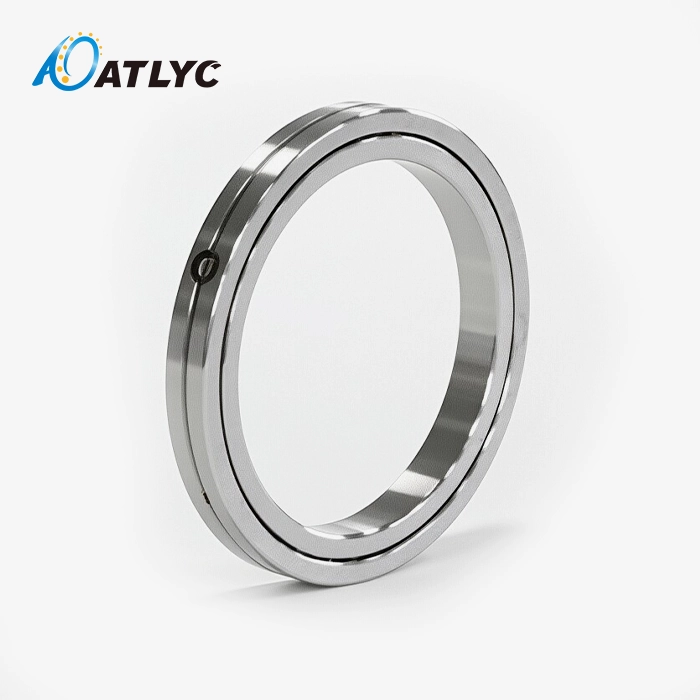
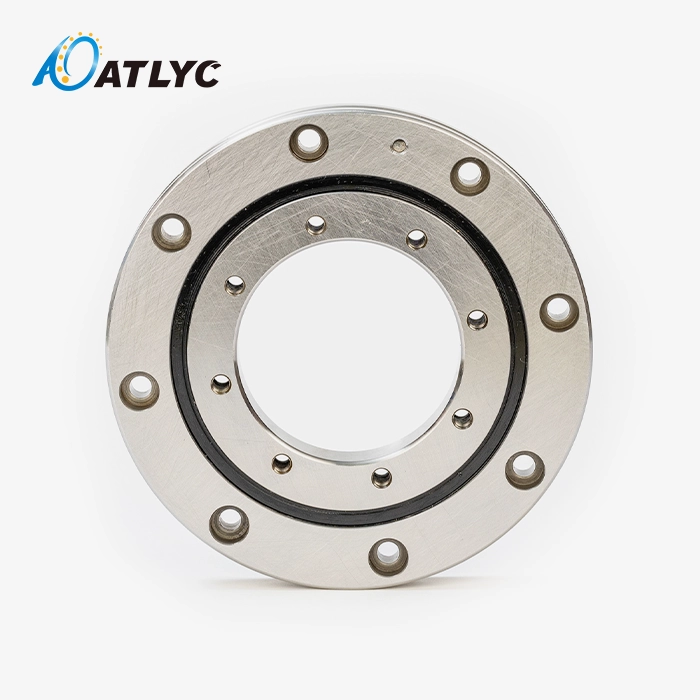
Wind turbine spindle bearings, also referred to as main shaft bearings, support the shaft that connects the rotor to the drivetrain. There are rolling parts between a ring that spins and a ring that doesn't move. Now they're rolling instead of sliding, which cuts down on friction and spreads the load over a larger area. A radial load is put on the bearing when the wind turbine is running. Axial thrust is caused by wind pressure on the bearing, and tilting moments are caused by uneven wind across the blades. Each company that makes turbines has its own terms. Something called a "spindle bearing" can be the main shaft, the rotor shaft, or an extra position. Before they source, buyers should look at the drawing, make sure the bearings are in the right place, and read the mounting instructions.
What Unplanned Downtime Costs Operators
When a bearing breaks, it costs a lot more than the part itself. The turbine stops making electricity when it's not being used. Operators have to book a crane, organize field crews, and wait for good weather before they can start working. Things that are broken in the raceway can also damage other parts of the drivetrain. A 2020 review in Wind Energy Science talks about the design, operation, damage mechanisms, and fault detection of main bearings. This shows that the industry knows a lot about this part. It's harder and costs more to get to sites that are far away or offshore, so the stakes are higher. It is important to be reliable because it protects availability, and availability protects revenue.
Total Cost of Ownership Over Unit Price
The low price of a quote doesn't always mean what it says. You can find the total cost of ownership by adding up the costs of installation, inspection, shipping, downtime, and the chance of having to replace something. This is the life that 90% of a group of identical bearings reach or go beyond under certain conditions, according to ISO 281. This explains why a cheap Wind turbine spindle bearing that doesn't work well with the load can cost a lot more in the long run. When someone wants to buy something, I tell them to use the same operating data for each comparison to look at prices, expected service life, and failure risk next to each other.
Types of Wind Turbine Spindle Bearings
Large wind turbines usually have one of two main types of designs. Each one fixes a different kind of load and alignment issue.
Double-Row Tapered Roller Bearings
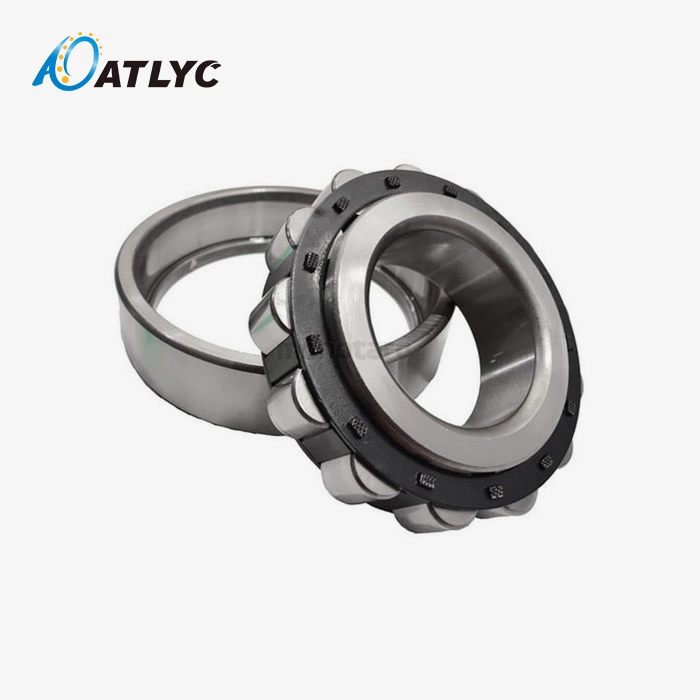
Double-row tapered roller bearings are made up of a cone and a cup that can be taken apart. There are two types of loads that the tapered rollers can handle: radial and axial. They also spread the load evenly across the contact surface. This design works well for onshore turbines that are medium to large and weigh between 3MW and 8MW. The parts are separate, so technicians can change just a few without having to take out the whole bearing. This makes downtime cheaper. Another good thing about tapered designs is that they are very stiff. When the shaft is loaded, this stops it from moving. I think of this type as the first choice when a wind turbine spindle bearing position needs to be stiff and have a high combined load capacity.
Spherical Roller Bearings
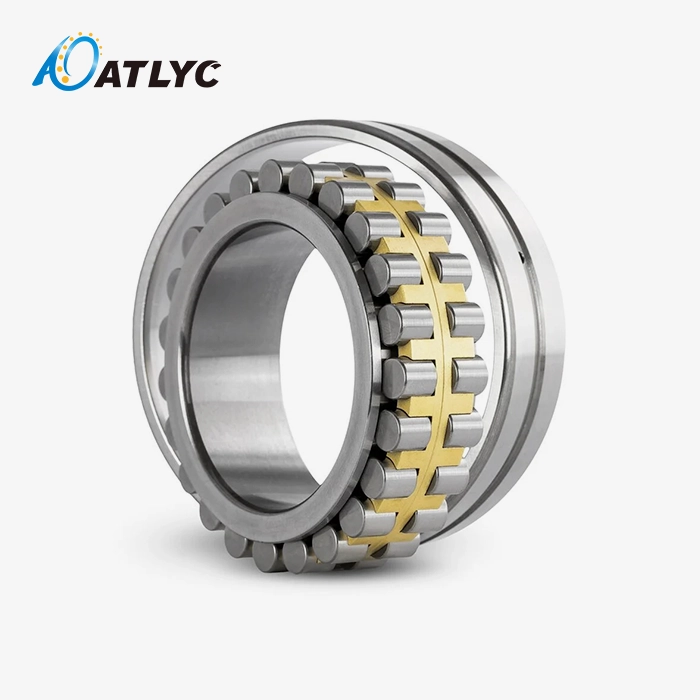
A spherical roller bearing, which is also called a self-aligning roller bearing, has two rows of spherical rollers. They can self-align up to 1.5°, which fixes problems caused by installation mistakes or shaft deflection. Both of these things can happen when wind makes big rotors bend. It is often used on offshore wind turbines with 10MW or more because it is very shock-resistant. The thing you give up is axial stiffness. Spherical roller bearings give up some of their ability to handle misalignment in exchange for that ability. Engineers should think about this trade-off and how stiff the layout of the drivetrain really needs to be.
How the Two Main Designs Compare
On the market, you can also find cylinder roller, split, hybrid, and coated bearings. It is good to have them around when there is a high radial load, limited access, or electrical current. This guide is mostly about the two designs we talk about in our product details. In the table below, you can see what was different.
| Feature | Double-Row Tapered Roller | Spherical Roller |
|---|---|---|
| Structure | Separable cone and cup | Double-row spherical rollers |
| Load handling | Combined radial and axial | Radial and axial, with strong shock resistance |
| Alignment | Needs accurate alignment | Self-aligning up to ±1.5° |
| Typical use | Onshore, 3MW–8MW | Offshore, 10MW and above |
Choose based on the product's full range of uses, not on how well you know it or how much it costs.
What Drives Wind Turbine Spindle Bearing Reliability?
Load Capacity and Duty Cycles
The load rating comes first. We can use load to figure out rated life in ISO 281, and static loads are talked about in ISO 76. The amount of wind changes all the time. Wind gusts, brake events, and yaw movement can all cause loads to change quickly. The rotor weight adds a minute moment that doesn't change. When engineers figure out how long something will last, I tell them to use more than just the rated power. They should also use a realistic duty cycle. How the load is spread across the rollers is also affected by the preload, the shape of the shaft, and how the housing is deformed. It doesn't matter how strong the bearing is; if the load isn't spread out well, it may still fail soon.
Material Quality and Heat Treatment
It makes a big difference in how resistant steel is to rolling-contact fatigue and how clean it is. This is because inclusions create stress points below the surface. Our wind turbine spindle bearing products use high-quality alloy steels like GCr15SiMn and 18CrNiMo7-6. Through vacuum carburizing and quenching-tempering, the surface is hardened to HRC 60–64. The core stays tough enough to handle impact and fatigue loads. To make the bearing work well, it needs to be able to handle both steady load and sudden shock. It works better when the surface is smooth because the stress from the contact is spread out more evenly.
Sealing and Cage Design
When seals get dirty, bearings quickly lose their life, so extra care needs to be taken. Seals with an IP65/IP66 rating keep out dust, water, and salt spray. These are called labyrinth seals or double-lip contact seals. When choosing a seal, there is a cost. Tighter contact seals make things noisier and warmer, but they keep more dust and dirt out. Also, cages are important. Strong brass or polyamide cages hold the rollers in place when the load is heavy and the speed is slow. So there isn't much wear and tear or vibration. Some models come with lubrication channels marked W33 that bring oil or grease to the area where the two parts touch.
Lubrication, Maintenance, and Failure Causes
Lubrication Requirements
It stops wear and corrosion and keeps things from getting too hot by making a film between rolling surfaces. You can use oil or grease. Which one you use depends on the system's speed, load, temperature, and how it was built. In addition to the viscosity of the base oil, you should also look at how well the thickener works with water, the temperature range, the stability of the thinner, and the extreme-pressure additives. When the rotation is slow and starts and stops a lot, it's harder for films to form, so automatic greasing systems are often used for main shaft applications. Too much lubricant makes things stick together, and not enough lubricant makes them heat up. Based on the bearings' size, speed, load, temperature, contamination, and the number of hours they've been used, you can set how often to oil them.
Condition Monitoring and Maintenance
Predictive tools and preventative checks work best when used together. Early signs of damage to the raceways are found by vibration analysis, problems with friction are found by temperature trending, and strange noises are heard by acoustic testing. The amount of water and wear particles in lubricant can be seen in drops of it. Teams can look at readings from different times and compare them with review records. It would be helpful to write down how a new bearing moves when it is first installed. It will be easy to see any changes this way. Without having to wait for something to break, condition-based maintenance lets operators plan when to fix it. This keeps the crane and the crew from costing too much.
Common Failure Causes
Wear and tear from rolling contact, pitting, spalling, and flaking are the main ways things break. Often, issues like not enough grease, too much heat, contamination, corrosion, misalignment, bad installation, and damage from electricity also show up in Wind turbine spindle bearing applications. Cracks that appear white on wind drivetrain bearings have been the subject of a lot of research, and they were written about by Evans in 2016 in Materials Science and Technology. If the temperature goes up, there are warning signs like strange noises or vibrations, changes in torque, and lubricant that is worn out. A clean work area, the right mounting tools, grounding or insulation, good seals, and regular checks can all help stop problems before they happen. When something fails, you should keep the broken bearing and look at the damage patterns, the lubricant level, the installation marks, and any other nearby parts.
Choosing and Buying a Wind Turbine Spindle Bearing
Selection Steps
First, make a model of the turbine and mark the spots where the bearings are. Next, write down the shaft and housing sizes, the radial and axial loads, the speed range, the temperature, the duty cycle, and the site's environment. Then, compare the different types of bearings' internal clearance, load ratings, cage, sealing, lubrication, and mounting arrangement to how they work in real life. From 800mm to 3000mm across the outside, 400mm to 1800mm across the inside, and 200mm to 800mm wide, our sizes cover a wide range of needs. An onshore turbine with 1.5MW to 8MW of power usually has an outer diameter between 800mm and 1800mm. An offshore turbine with 10MW or more of power has an outer diameter between 1800mm and 3000mm. The replacement bearing might look the same, but that doesn't mean it works the same as the old one. You should also look at the data for the load and clearance.
Writing a Complete RFQ
You can get a correct answer faster if you ask for a full quotation. Types of bearings, sizes, loads, speeds, temperatures, the environment, sealing, lubrication, the amount, where the delivery will happen, the desired service life, and any certification needs should all be included. Take a look at the total delivered cost when you compare quotes. This includes shipping, customs, warranty, technical support, risk of failure, downtime, and warranty. Custom or OEM manufacturing can handle orders for unique sizes, retrofitting needs, advanced sealing, higher loads, strange temperatures, private-label orders, and fleet standardization. Because they take up less room and carry less weight, custom sizes may be better for wind farms that are very cold or very high up.
What a Qualified Supplier Provides
A supplier and an engineer should work together. Help picking the right bearings, figuring out the load and life, picking the right material, sealing, lubricating, checking the sizes, and cross-referencing should be done by someone. You should find out what quality controls are in place. For example, you should check the material, make sure the heat treatment was done correctly, test the hardness, check the raceways, test for noise and vibration, do a final inspection, and be able to keep track of each batch. Luoyang Auto Bearing Co., Ltd., our company, has been around since 2010. There are 120 skilled workers here who do things like make parts, do research and development, check quality, and put things together. We have been in business for six years and now have ISO 9001 and IATF 16949 records. We have customers from the US, Germany, South Korea, Russia, Iran, and Turkey.
Reliability Checklist for Wind Turbine Spindle Bearings
The above tips can be turned into steps that can be taken at different times during the life of the bearing.
| Stage | What to Confirm |
|---|---|
| Before purchase | Bearing position, dimensions, load envelope, speed, temperature, duty cycle, materials, sealing, lubrication, supplier documents |
| During installation | Shaft and housing geometry, suitable mounting tools, no force through rolling elements, clearance or preload, batch records |
| During operation | Vibration, temperature, lubricant condition, contamination, corrosion, noise, torque |
| Spare stock | Critical replacement bearings, based on turbine access, lead time, and downtime exposure |
When things go wrong quickly, these checks are meant to find and fix those problems.

Conclusion
A wind turbine spindle bearing performs well when the system as a whole is efficient. You have to look at the real operating envelope to decide which type of roller bearing to use because spherical roller bearings and double-row tapered roller bearings are used for different alignment and load needs. Things that last a long time have realistic duty cycles, clean alloy steel that has been heat-treated correctly, less space between parts, and good sealing. You can keep that base from wearing out, getting dirty, or not being lined up right by lubricating it properly, installing it carefully, and checking on it often. These are the main reasons why things break. The total cost of ownership is higher than the unit price because of things like downtime and getting to the crane. So, when you make a choice about reliability, you should look at supplier quality systems and full operating data.
FAQ
What is the difference between a spindle bearing and a main shaft bearing?
These words are used in various ways by people who make turbines. "Spindle bearing" can also mean the position of the rotor shaft or an extra shaft. "Main shaft position" is what both words usually mean. Making a drawing of the spot will help you be sure.
Which bearing type suits high-load applications?
Double-row tapered roller bearings can be used in 3MW–8MW onshore turbines that need to be stiff and have a high combined load capacity. Sphere-shaped roller bearings work well with big offshore turbines that often get out of alignment or get hit by something.
How do I set lubrication intervals?
Think about the bearing size, speed, load, temperature, contamination, hours of use, and manufacturer's instructions to make your choice.
Can you make custom or OEM bearings, and what should my quote request include?
Yes, we do talk about OEM supply and making sizes just for you. Send pictures or bearing numbers, along with the length and width of the shaft and housing, the loads, the speed, the temperature, where the turbine is located, how it is sealed and oiled, how much you need, and when you need it delivered.
Request a Wind Turbine Spindle Bearing Recommendation from ATLYC
Find a wind turbine spindle bearing manufacturer who has ISO 9001 and IATF 16949 certification as well as six production workshops. You should send ATLYC your drawings, loads, speed, temperature, and quantity to auto@lyautobearing.com. Our tech team will look over your request and give you a price. Go to https://aotezhoucheng.aixdb.cn/ to learn more about each Wind turbine spindle bearing we sell.
References
1. Wind Energy Science, 2020 – "A Review of Wind Turbine Main-Bearings: Design, Operation, Modelling, Damage Mechanisms and Fault Detection"
2. Materials Science and Technology, 2016 – "An Updated Review: White Etching Cracks (WECs) and Axial Cracks in Wind Turbine Gearbox Bearings"
3. ISO 281, 2007 – "Rolling Bearings: Dynamic Load Ratings and Rating Life"
4. ISO 76, 2006 – "Rolling Bearings: Static Load Ratings"
5. IEC 61400-1, 2019 – "Wind Energy Generation Systems, Part 1: Design Requirements"
6. National Renewable Energy Laboratory (NREL), 2013 – "Report on Wind Turbine Subsystem Reliability: A Survey of Various Databases"
Learn about our latest products and discounts through SMS or email