- English
- French
- German
- Portuguese
- Spanish
- Russian
- Japanese
- Korean
- Arabic
- Greek
- German
- Turkish
- Italian
- Danish
- Romanian
- Indonesian
- Czech
- Afrikaans
- Swedish
- Polish
- Basque
- Catalan
- Esperanto
- Hindi
- Lao
- Albanian
- Amharic
- Armenian
- Azerbaijani
- Belarusian
- Bengali
- Bosnian
- Bulgarian
- Cebuano
- Chichewa
- Corsican
- Croatian
- Dutch
- Estonian
- Filipino
- Finnish
- Frisian
- Galician
- Georgian
- Gujarati
- Haitian
- Hausa
- Hawaiian
- Hebrew
- Hmong
- Hungarian
- Icelandic
- Igbo
- Javanese
- Kannada
- Kazakh
- Khmer
- Kurdish
- Kyrgyz
- Latin
- Latvian
- Lithuanian
- Luxembou..
- Macedonian
- Malagasy
- Malay
- Malayalam
- Maltese
- Maori
- Marathi
- Mongolian
- Burmese
- Nepali
- Norwegian
- Pashto
- Persian
- Punjabi
- Serbian
- Sesotho
- Sinhala
- Slovak
- Slovenian
- Somali
- Samoan
- Scots Gaelic
- Shona
- Sindhi
- Sundanese
- Swahili
- Tajik
- Tamil
- Telugu
- Thai
- Ukrainian
- Urdu
- Uzbek
- Vietnamese
- Welsh
- Xhosa
- Yiddish
- Yoruba
- Zulu
YRTC High-Speed Rotary Table Bearing OEM Selection Guide
Selecting the right high-speed rotary table bearing for OEM applications remains one of the most critical procurement decisions in precision manufacturing. YRTC High-Speed Rotary Table Bearing solutions combine exceptional rigidity with enhanced rotational capability, making them indispensable for CNC machining centers, automated assembly systems, and industrial robotics. These specialized components integrate thrust, radial, and moment load capacities within a single compact unit, eliminating the complexity of traditional multi-bearing configurations while delivering consistent positioning accuracy even under demanding thermal conditions. Our 15-year manufacturing journey at Luoyang Auto Bearing Co., Ltd. has taught us that OEM partnerships succeed when technical specifications align perfectly with real-world production requirements, backed by rigorous quality assurance and responsive engineering support.

Understanding YRTC High-Speed Rotary Table Bearings
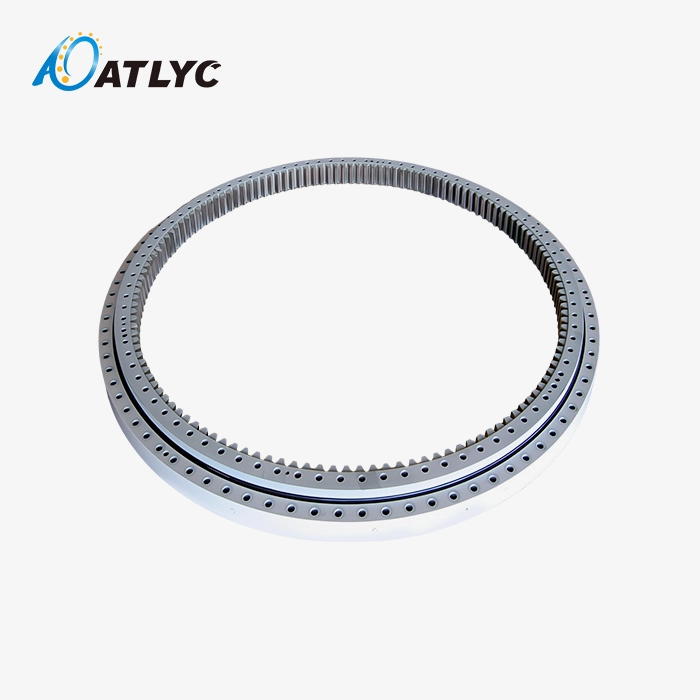
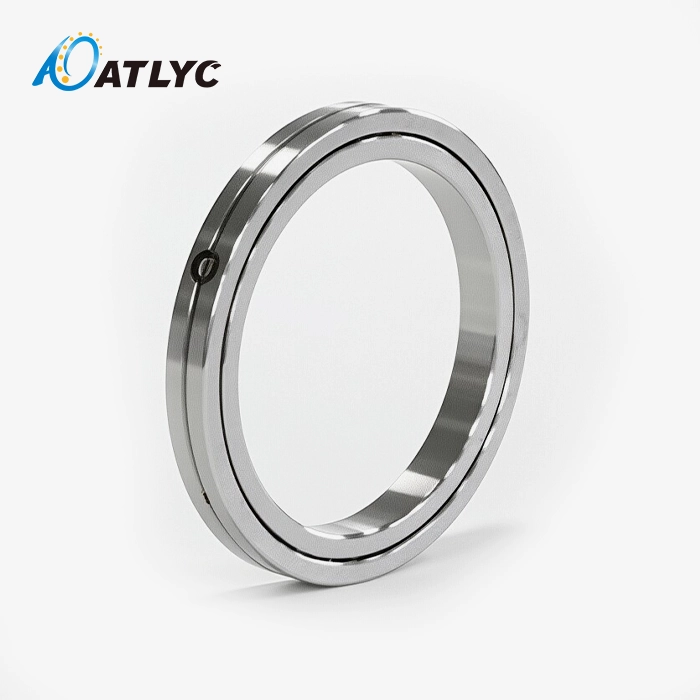
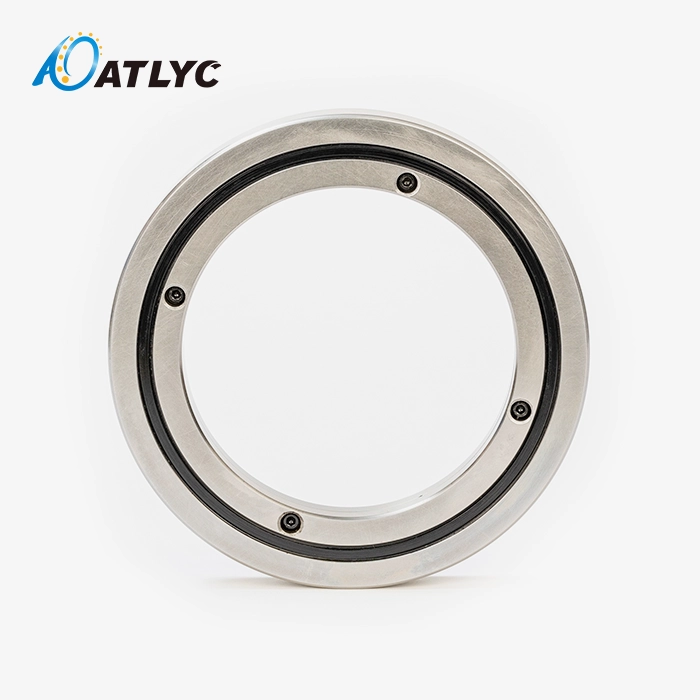
The YRTC High-Speed Rotary Table Bearing designation refers to a unique improvement within the YRT bearing family, designed to get around speed issues that commonly affect traditional rotary table solutions. Even though regular YRT bearings can handle both axial and radial loads, the high-speed version has important design changes that lower friction torque and stop heat expansion during long-term use.
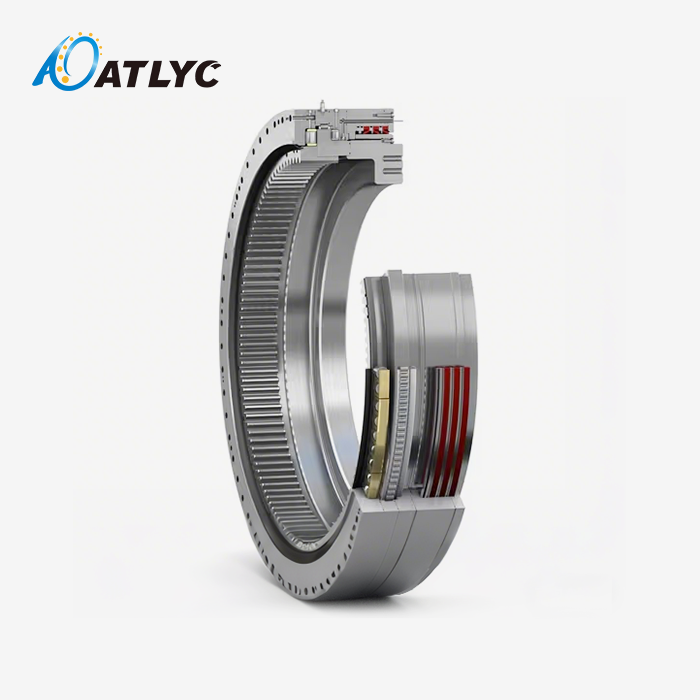
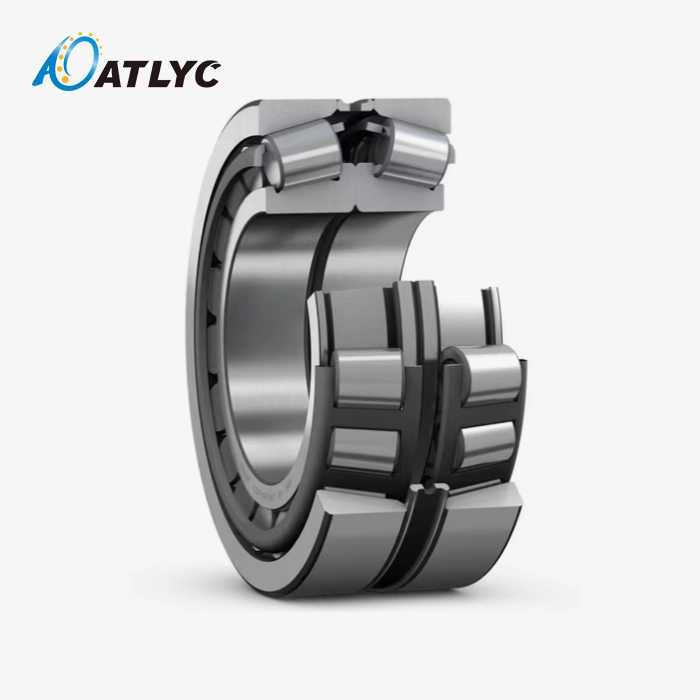
At the heart of every YRTC bearing is a three-in-one design that works together. This small structure combines thrust bearings, radial bearings, and precision tracking mechanisms into one piece. It is made up of an outer ring that stays in place, an inner ring that rotates, precision rollers set up in multiple rows, and an advanced cage system. This combination directly fixes a problem that has been bothering machine tool designers for a long time: getting rid of the extra space and complexity that come with stacked bearing setups. Installing a rotary table bearing with this consolidated design makes the overall footprint smaller and speeds up alignment steps that normally take a lot of time during setup.
High-speed rotary table bearings have a multi-row roller arrangement that can handle a wide range of loading conditions at the same time. Two rows of axial rollers handle the thrust loads and tilting moments that come up during heavy cutting operations. A separate row of radial rollers handles the lateral forces. This setup keeps its stiffness very high even when the cutting forces on your machining center change from different directions. In the YRTC variant, the cage system gets extra attention. New materials and better roller guidance stop it from skidding at high RPMs, which damages the finish and speeds up wear in regular designs. Precision-ground raceways go through super-finishing steps that make the surface rough enough to keep vibrations to a minimum at high speeds. The geometric accuracy of these raceways stays within the P4 or P2 tolerance classes. This means that radial and axial runout usually stays below 2 micrometers. This level of accuracy directly leads to better workpiece quality in your production setting, especially when making parts with tight limits for size.
Technical Characteristics That Define Performance
Bearings for rotary tables that are tuned for speed show limiting speeds that are 50–80% higher than those of normal bearings. This improvement in efficiency comes from lowering the friction coefficients by changing the cage and making the internal shape better. The "C" name specifically points out these improvements that lower friction, which lowers working temperatures and allows high-speed rotation to continue without affecting load capacity. Choosing the right materials is also very important for dependability. YRTC bearings are made from high-quality 100Cr6 bearing steel that has been heated and cooled in a controlled way to make the surface hard (58–62 HRC). This hardness resists wear, which is important for a long service life, and the core toughness takes the shock of stopping and starting cutting or quick slowing down. The balance between surface hardness and core resilience stops failure modes that happen too soon and are common in poor bearing solutions.
Application Environments Where YRTC Excels
The main place where these special bearings are used is on direct-drive CNC rotary tables. In modern five-axis machining centers, the rotary table has to be stiff enough for aggressive milling cuts while also being able to spin quickly enough for turning tasks. This seems like a contradiction, but YRTC High-Speed Rotary Table Bearing solutions make sense of it. They let the table spin at several hundred RPM, depending on the diameter, while keeping the position accurate during the cutting cycle. For high-precision gear grinding machines to work, vibration and runout must be kept to a minimum. The bearing makes sure that gear workpieces spin with almost perfect concentricity, which is necessary to meet DIN and AGMA quality standards. Any change in the accuracy of spinning during the grinding process shows up as profile flaws that hurt the performance of the gear and make noise when it's in use. Medical scanning equipment and large-scale coordinate measuring tools have special needs. They need to be able to rotate smoothly and with little change in friction throughout the whole cycle. For accurate data collection, rotary table bearings made for high-speed use provide the smooth motion patterns needed while holding heavy gantry structures or measuring arms without bowing.
Comparing YRTC with Other Leading Brands for OEM Selection
When an OEM buys something, they need to be able to compare established bearing manufacturers in a fair way. When we compare YRTC High-Speed Rotary Table Bearing solutions to high-end brands like NSK, SKF, and INA, we see that performance metrics are getting closer together while cost structures are becoming more different. Comparing durability shows that when YRTC bearings are made correctly, they have L10 fatigue life rates that are similar to higher-end options when used within certain limits. Most of the time, consistency between production batches, not the theoretical life of the bearings, is what makes the difference. Our ISO 9001 and IATF 16949 certifications at Luoyang Auto Bearing Co., Ltd. make sure that our quality control procedures are in line with international standards. This way, we can guarantee consistent performance for big orders.
Detailed details tell an interesting story. While well-known European brands deserve respect for their engineering history, modern Chinese factories can now regularly make rotary table bearings that meet P4 accuracy class standards. Using Talyrond roundness testing instruments, we check the geometric accuracy and make sure that the radial and axial runout values meet the requirements that are important for your precision machining applications. It's no longer whether or not bearings meet standards that makes a difference; it's the total cost of ownership over the whole span of the product.Periods of maintenance and failure modes should be carefully looked at. Real-life case studies from our clients in the car and industrial machinery industries show that YRTC bearings have the same mean time between failure rates as premium alternatives when they are installed and kept correctly. The benefit now lies in the value proposition: getting the same level of performance at a lower price that improves the cost-performance ratio of your tools without lowering its reliability.
| Comparison Parameter | YRTC Series | Premium European Brands | Standard Asian Alternatives |
|---|---|---|---|
| Limiting Speed (relative to bore) | High (optimized cage design) | High (mature technology) | Moderate (conventional design) |
| Load Capacity Rating | Excellent (multi-row configuration) | Excellent (precision manufacturing) | Good (varies by manufacturer) |
| Price Positioning | Competitive mid-range | Premium pricing | Budget to mid-range |
| Customization Flexibility | High (responsive engineering) | Moderate (standardized offerings) | Limited (catalog products) |
| Lead Time for Volume Orders | 4-6 weeks typical | 6-10 weeks typical | Variable (3-8 weeks) |
This comparison framework helps teams in charge of buying things figure out how the choice of rotary table bearings fits in with their overall strategic goals. If your equipment competes mostly on how different it is technologically, choosing higher-quality parts may be worth the extra cost. On the other hand, if you sell competitive tools to markets that care about price, you can gain a long-term competitive edge by getting 90% of the top performance at 60% of the cost.
OEM Selection Criteria for YRTC High-Speed Rotary Table Bearings
To choose the right bearings, you must first make sure that the technical specifications of the YRTC High-Speed Rotary Table Bearing match your operational needs. It's not enough to just look at load capacity numbers; you also need to know how different performance factors work together in your particular application setting.
Load Capacity and Speed Requirements
Figuring out the real loads on rotary table bearings is more complicated than just finding out how much the item weighs. Cutting forces during heavy milling create large tilting moments that the bearing must be able to resist without bending. These moments change depending on where the spindle is positioned, which creates dynamic loading conditions that may be lower than what steady figures show. To get accurate bearing load requirements, we suggest using finite element analysis or taking physical load measurements during typical cutting operations.In the same way, speed standards need to be carefully thought through. A bearing may list a maximum rotational speed, but running near that speed for a long time creates heat that needs to be removed. The temperature inside your machine tool's enclosure affects the temperature of the bearings, which in turn affects how stable the dimensions are and how accurately they are placed. Even though YRTC bearings that are designed to have less friction help handle thermal loads, your machine design still needs to include enough ways for heat to escape.Environmental factors, such as exposure to pollution, changes in the atmospheric temperature, and vibrations from nearby parts, all affect how well a bearing works. Different types of sealed bearings keep coolant and chip contamination out, which can happen in machining environments. Temperature tolerance specifications make sure that the bearing keeps its preload and geometry across the entire temperature range of your building. This keeps accuracy from dropping during yearly temperature changes.
Quality Certifications and Compliance Verification
Following international standards makes sure that the methods used to make bearings stay consistent. Our IATF 16949 approval is specific to the quality standards needed for the car industry. It shows that we have strict process controls that help all OEM uses. This certification shows that you know how to use statistical process control, continuous improvement methods, and processes for approving production parts. These methods keep quality from dropping over time.In addition to certifications, checking the actual quality control procedures shows how committed the manufacturer is. We use magnetic particle screening and nital etching to find surface cracks or grinding burns on raceways. These are flaws that hurt wear life but might not be visible to the naked eye. Starting torque testing makes sure that frictional torque stays within certain ranges. This makes sure that preload issues or cage defects don't affect the high-speed capability.You can make sure that the geometric accuracy, material hardness, and surface finish specifications meet your needs before committing to large-scale production by asking for inspection reports for sample batches.
Customization Capabilities and Engineering Support
Standard stock bearings work well in many situations, but sometimes changes need to be made to get the best performance from a machine. High-speed rotary table bearings can be customized by changing the preload settings to meet your stiffness needs, the seal configurations to meet specific environmental protection levels, and the cage materials to improve thermal stability.At ATLYC, our engineering team works together with OEM clients to check whether standard products meet the needs of the application or whether customization leads to real performance gains. This advice process looks at load profiles, speed needs, temperature conditions, and mounting setups to come up with the best bearing specs. This kind of expert help is especially helpful when making new machine bases, since the choice of bearings affects the overall design architecture.
Installation, Maintenance, and Longevity Best Practices
If you don't install or take care of your YRTC High-Speed Rotary Table Bearing correctly, even the best ones will break early. Setting up the right procedures for everything from the initial installation to regular maintenance routines will protect your equipment investment and extend the life of its parts.
Precision Installation Procedures
Before installation can begin, the mounting surfaces must be cleaned very well. Any kind of contamination, like protective coatings, leftover machining fluids, or particles, causes localized stress concentrations that bend bearing raceways when clamping forces act on them. We set standards for how clean the surface must be and how flat the mounting connections must be in order to stop these installation-related problems.The right bearing orientation is very important. When it comes to load directions, the inner and outer rings must be lined up properly, and the fastening bolt patterns must be placed according to the manufacturer's instructions. It's very important to stick to the torque order and values—if you don't, the bolts will tighten unevenly, which will cause geometric distortion. We give you exact force specs and suggest tightening patterns that spread clamping loads evenly around the bearing's diameter.Running a runout test to check the accuracy of the installation shows that the mounting methods achieved the desired level of geometric precision. By checking the radial and axial runout right after installation, before connecting the drive parts, you can separate the accuracy of the bearing mounting from other geometry errors in the machine. Verification of the work in writing produces standard measures that can be used for future condition tracking.
Maintenance Protocols for Extended Service Life
Managing lubrication is the most important upkeep task that affects how long a bearing lasts. Lubricants for high-speed rotary table bearings need to keep the film strength across a wide range of working temperatures while reducing spinning resistance at high speeds. We tell you what kind of lube to use, how much to use, and how often to re-apply it based on things like speed, temperature, and contamination exposure. Temperature monitoring lets you know early on when problems are starting to happen. During operation, the temperature of the bearing naturally rises and then stays at a level that reflects the amount of frictional heat that is generated and lost. Gradual temperature rises over time can mean that the oil is breaking down or that contaminants are building up, while sudden temperature spikes mean that there are serious problems that need to be looked into right away. Setting temperature baselines during setup makes it possible to keep an eye on the state of a system for its whole life.
Noise and sound research can find worn-out bearings before they fail completely. When they are working, healthy bearings make a steady low-level noise. Noise changes like louder sounds, different frequencies, or sounds that come and go are linked to certain types of failure, such as contamination damage, not enough lubrication, or developing fatigue spalling. Vibration analysis tools gives a number value to the state of a bearing, which lets maintenance plans be made ahead of time to avoid unplanned downtime.
| Maintenance Activity | Recommended Frequency | Key Inspection Points | Action Thresholds |
|---|---|---|---|
| Lubrication replenishment | Per manufacturer specification (typically 1000-3000 operating hours) | Lubricant quantity, contamination level | Replace if contamination is visible or consistency degraded |
| Temperature monitoring | Continuous during operation | Bearing housing temperature, trend analysis | Investigate if temperature exceeds baseline by >10°C |
| Vibration analysis | Quarterly or per-condition monitoring program | Velocity and acceleration spectra, bearing frequencies | Schedule replacement when vibration amplitude increases 3x baseline |
| Visual inspection | During scheduled maintenance intervals | Seal condition, mounting bolt torque, leakage | Address any visible damage or looseness immediately |
Troubleshooting Common Performance Issues
Too much runout during action is usually a sign of damage to the fixing surface or the bearing. If the runout readings taken during installation were within the acceptable range, but the runout during operation is too high, you should look into the mounting bolt pressure retention and the flatness of the bearing seat when the temperature changes. When the bearing and housing materials don't expand or contract at the same rate, it can leave gaps that let the bearing move. Unusual noise patterns need to be systematically diagnosed. Grinding sounds mean that the raceways are getting dirty, while popping or clicking sounds mean that the cage is broken or the rollers are sliding. Continuous humming at frequencies related to roller pass rates is usually a sign of normal operation, but if the amplitude goes up, it's time to pay attention. By recording noise patterns during normal operation, you can use them as comparison points to figure out what's wrong. When temperatures go outside of normal operating ranges, they need to be fixed right away. Lack of lubricant, too much pressure, or damaged bearings can all cause high temperatures that speed up wear and tear. Thermal imaging helps find heat sources and tells the difference between temperature rises caused by bearings and those caused by outside factors like not enough cooling or nearby heat sources.
Procurement and Partnership with ATLYC for OEM Clients
It takes more than just buying parts to build a good relationship with an OEM YRTC High-Speed Rotary Table Bearing supplier. Technical collaboration, solid delivery, and quick help are all important parts of relationships that work well throughout the lifecycle of a product. At Luoyang Auto Bearing Co., Ltd., our buying process is based on openness and adaptability. OEM clients get thorough quotes that include information about the bearings' specs, amounts, prices, and delivery times. We keep a stock of standard bearing sizes and can schedule production for custom designs that work with the launch dates of your equipment. Lead times are usually between four and six weeks for large orders, but there are faster choices for those who need them right away. Each package comes with quality assurance paperwork that can be used to trace back to the batches of materials used and prove the results of inspections. This paperwork is very helpful when we need to get regulatory approvals for equipment that has our bearings or when we need to look into performance problems in the field that need a root cause analysis.
After-Sales Support and Technical Consultation
Our dedication to OEM partnerships lasts as long as your equipment does. Technical support teams help with questions about applications, improving performance, and fixing problems that happen in the field. Based on real-world performance data, this ongoing connection helps find ways to improve bearing specifications in future versions of equipment. Warranty coverage guards against problems with the way the product was made and sets clear standards for how it should work. We stand behind the quality of our products with warranties that are in line with industry standards. If flaws are found through failure analysis, we'll send you new bearings. This warranty support lets your customers know that the equipment will work, and it also keeps your brand's reputation safe.
Manufacturing Capacity and Scalability
Our building has grown from one workshop in 2010 to six specialized production areas, which shows that we can support our growing relationships with OEMs. At the moment, 120 skilled workers are employed in manufacturing, quality control, research and development, and assembly. This group of workers uses high-tech cutting and grinding tools to make high-precision bearings that meet international tolerance standards. Scalability is important when you sell more equipment or when you release new products that need a bearing supply ramp-up. We keep production flexible by training our workers, planning the capacity of our equipment, and managing the supply chain so that we don't run out of parts when demand goes up. This operational capacity helps OEM clients who are moving into new regional areas or whose volume changes with the seasons. Our experience exporting to South Korea, the US, Germany, Russia, Iran, and Turkey has taught us that different global markets have different technical requirements, documentation standards, and logistics issues to think about. This foreign knowledge makes it easier for OEM clients to enter new markets as they expand their reach.

Conclusion
When choosing rotary table bearings for OEM use, you have to weigh the technical performance against business factors like cost, delivery reliability, and ongoing support. When it comes to precision machinery that needs both high rigidity and high rotational speeds, YRTC High-Speed Rotary Table Bearing solutions are just what you need. The combined design that fits thrust, rotational, and moment loads into small spaces makes machine construction easier and gives performance that matches more expensive options at a reasonable cost. Luoyang Auto Bearing Co., Ltd. is a key bearing source that can help your equipment through research, production ramp-up, and ongoing service life. We can make bearings; we have quality certifications, and we are committed to OEM partnerships.
FAQ
What factors decide whether YRTC bearings are right for my CNC application?
To figure out if a bearing is right for a rotary table, you have to look at its load patterns, which include the rotational forces, axial loads, and tilting moments it experiences while it's running. Figure out the highest loads that can be put on the YRTC High-Speed Rotary Table Bearing under the worst cutting conditions. Then, make sure that these loads are within the bearings' capacity values by adding the right safety factors. Taking into account the temperature inside your machine container, the speed needs to stay below the maximum speeds listed for the bearing size you chose.
How often should upkeep be done on rotary table bearings by lubrication?
When to re-oil depends on things like speed, temperature, and how much pollution is present. When bearings are used at moderate speeds and in clean environments, they can last for 2000 to 3000 hours. However, when they are used at high speeds or in dirty conditions, they need to be serviced more often. Instead of just using time-based intervals, you should also keep an eye on the bearing's temperature and noise levels to make sure that the cleaning plans are perfect for your needs.
Can I ask for bearing samples before I commit to large orders?
We urge OEM clients to test bearing samples while equipment is still being designed. Sample orders let you test performance in real-world situations, making sure that the specs meet your needs before committing to mass production. Get in touch with our team to talk about getting samples, technical requirements, and evaluation help for your project.
Partner with ATLYC for Your High-Speed Rotary Table Bearing Requirements
ATLYC is your strategic production partner. They offer well-designed rotary table bearing solutions that are backed by quality systems that are ISO 9001 and IATF 16949 approved. Our YRTC High-Speed Rotary Table Bearings offer both high technical performance and low prices. We also offer engineering advice to help you choose the best bearings for your machinery. We offer stable supply partnerships that grow with your business because our production capacity can handle scalable amounts, and we have experience exporting to major industrial markets. Email our team at auto@lyautobearing.com to talk about your bearing needs, get detailed specs, or set up a trial sample. Find out how working with a well-known YRTC High-Speed Rotary Table Bearing manufacturer can improve the performance of your equipment and make you more competitive in today's global markets.
References
1. Harris, T.A. & Kotzalas, M.N. (2006). Advanced Concepts of Bearing Technology: Rolling Bearing Analysis. CRC Press, Taylor & Francis Group.
2. ISO 199:2014. Rolling Bearings — Thrust Bearings — Tolerances. International Organization for Standardization.
3. Wensing, J.A. (1998). On the Dynamics of Ball Bearings. PhD Thesis, University of Twente, Enschede, Netherlands.
4. IATF 16949:2016. Quality Management System Requirements for Automotive Production and Relevant Service Parts Organizations. International Automotive Task Force.
5. Gupta, P.K. (2012). Advanced Dynamics of Rolling Elements. Springer Science & Business Media, New York.
6. SKF Group. (2018). Rolling Bearings Catalog: Selection and Application Guide for Rotary Table Bearings. SKF Technical Documentation Series.
Learn about our latest products and discounts through SMS or email