- English
- French
- German
- Portuguese
- Spanish
- Russian
- Japanese
- Korean
- Arabic
- Greek
- German
- Turkish
- Italian
- Danish
- Romanian
- Indonesian
- Czech
- Afrikaans
- Swedish
- Polish
- Basque
- Catalan
- Esperanto
- Hindi
- Lao
- Albanian
- Amharic
- Armenian
- Azerbaijani
- Belarusian
- Bengali
- Bosnian
- Bulgarian
- Cebuano
- Chichewa
- Corsican
- Croatian
- Dutch
- Estonian
- Filipino
- Finnish
- Frisian
- Galician
- Georgian
- Gujarati
- Haitian
- Hausa
- Hawaiian
- Hebrew
- Hmong
- Hungarian
- Icelandic
- Igbo
- Javanese
- Kannada
- Kazakh
- Khmer
- Kurdish
- Kyrgyz
- Latin
- Latvian
- Lithuanian
- Luxembou..
- Macedonian
- Malagasy
- Malay
- Malayalam
- Maltese
- Maori
- Marathi
- Mongolian
- Burmese
- Nepali
- Norwegian
- Pashto
- Persian
- Punjabi
- Serbian
- Sesotho
- Sinhala
- Slovak
- Slovenian
- Somali
- Samoan
- Scots Gaelic
- Shona
- Sindhi
- Sundanese
- Swahili
- Tajik
- Tamil
- Telugu
- Thai
- Ukrainian
- Urdu
- Uzbek
- Vietnamese
- Welsh
- Xhosa
- Yiddish
- Yoruba
- Zulu
YRTM Rotary Table Bearing: Integrated Encoder Advantages
When precision meets intelligence in modern manufacturing, YRTM Rotary Table Bearings with integrated encoders emerge as game-changing solutions for complex automation challenges. These miniature precision components combine advanced load-bearing capabilities with real-time angular feedback systems, addressing critical needs in space-constrained applications. Unlike conventional bearing setups requiring external measurement devices, the integrated encoder eliminates installation complexity while delivering arc-second level positioning accuracy. This fusion of mechanical strength and electronic precision solves persistent industry challenges: reducing component count, minimizing transmission errors, and enabling closed-loop control in high-stakes environments. Our 15 years of manufacturing experience at Luoyang Auto Bearing has positioned us to deliver these sophisticated components that meet ISO 9001 and IATF 16949 standards, serving clients across six continents who demand uncompromising quality in rotary motion control.
Understanding YRTM Rotary Table Bearings and Their Integrated Encoders
The engineering foundation of rotary table bearings with embedded measurement systems represents a significant evolution in precision motion control. As automation demands escalate across industrial sectors, traditional bearing configurations struggle to meet simultaneous requirements for compact design, high load capacity, and precise position feedback.
What Defines the YRTM Series Architecture
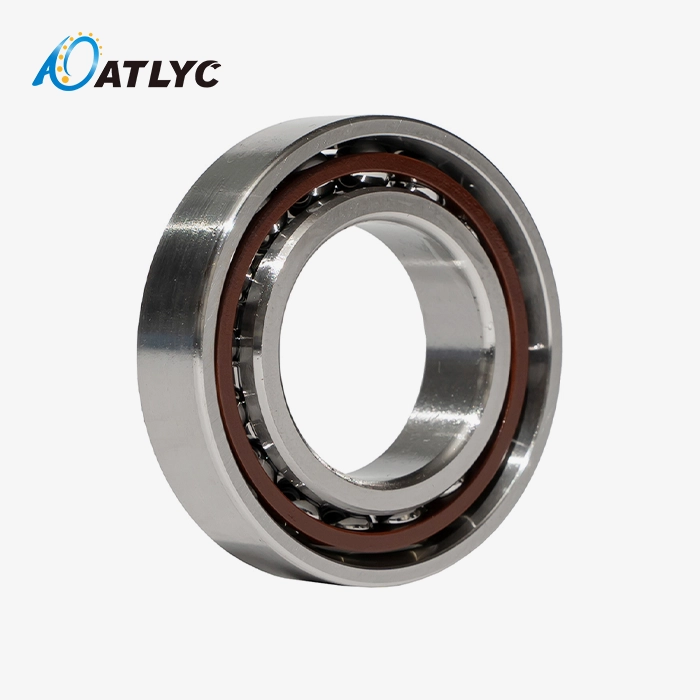
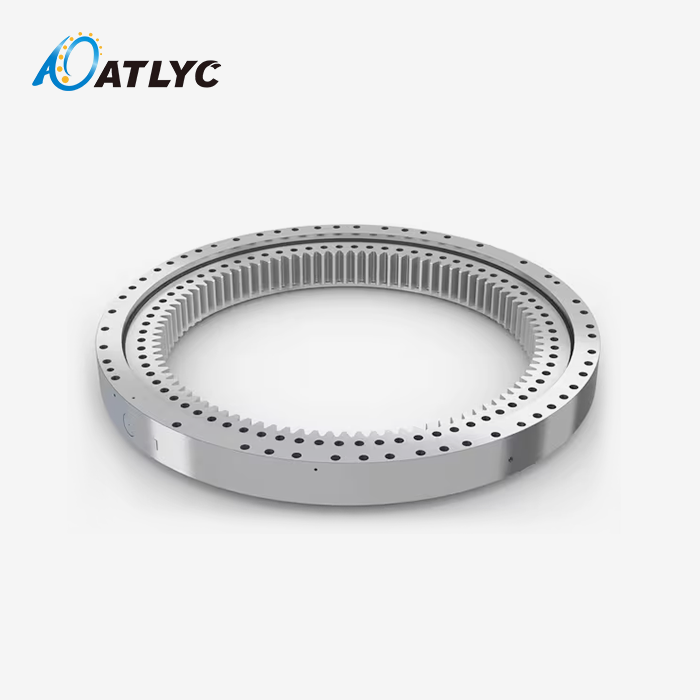
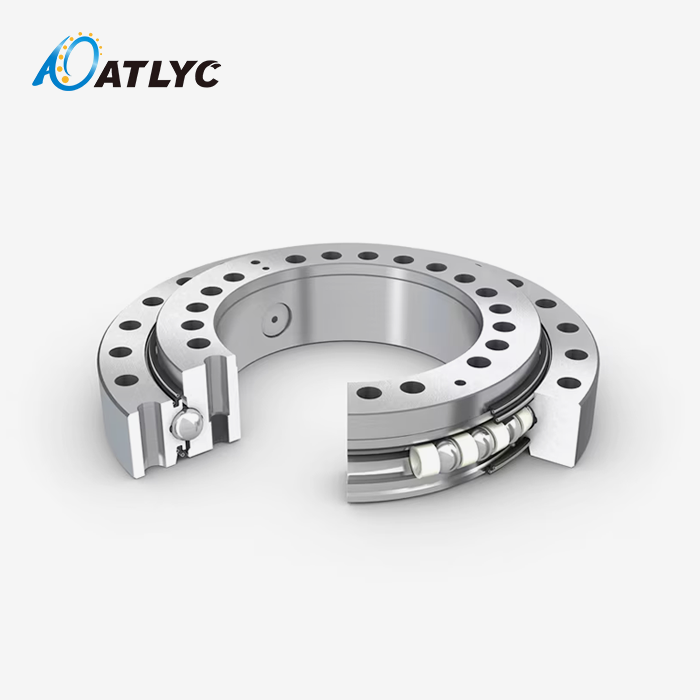
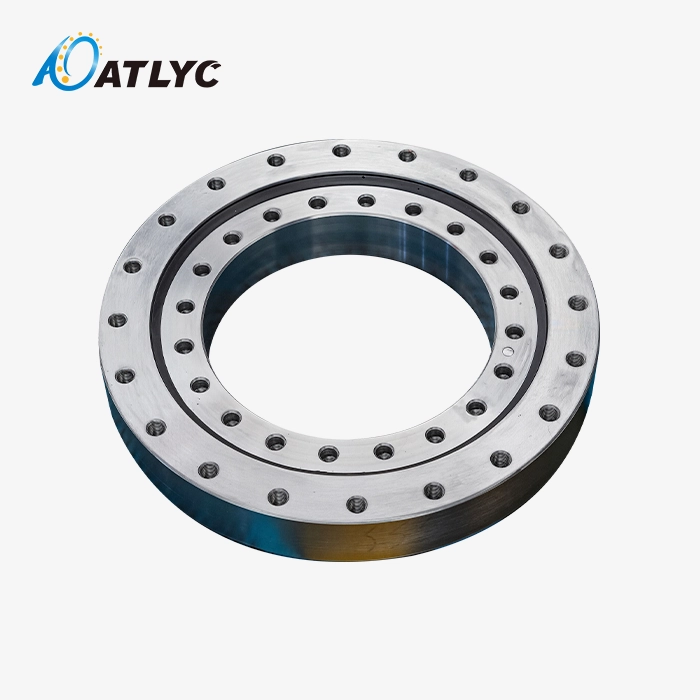
The YRTM series represents the miniature variant within rotary table bearing families, specifically engineered for applications where dimensional constraints cannot compromise performance. This bearing category adopts a compact integrated structure that fundamentally differs from traditional combined bearing solutions. The design philosophy centers on eliminating redundancy while maximizing functional density. At its core, the bearing features a three-in-one integrated design that merges thrust bearing capability, radial bearing function, and moment resistance into a single unit. The assembly consists of an outer ring (fixed ring), an inner ring (rotating ring), precision steel balls, and a cage system. This structural integration eliminates complex assembly of multiple components, dramatically simplifying equipment installation processes while reducing overall mechanical structure volume.
Double-Row Angular Contact Ball Configuration
The steel balls are arranged in two rows at specific contact angles, typically 45° or 60°, depending on application requirements. This arrangement enables simultaneous bearing of axial loads, radial loads, and composite moments (tilting moments) from multiple directions. The geometric configuration effectively improves load-carrying capacity and rigidity, ensuring stable operation under complex loading conditions that characterize modern manufacturing equipment. Precision-ground raceways undergo meticulous grinding and super-finishing processes, achieving surface finishes that minimize friction and wear. The inner and outer raceways maintain micrometer-level tolerances, critical for consistent performance throughout the bearing's operational lifespan. When combined with high-grade bearing steel and advanced heat treatment protocols, these components deliver the durability required for continuous operation in demanding production environments.
Encoder Integration Technology
A distinguishing feature of advanced YRTM configurations involves the integrated magnetic angle measuring system. Unlike standard rotary bearings requiring external optical encoders, the magnetic dimensional scale is inductively hardened onto the shaft washer. This integration addresses critical pain points: eliminating external encoder mounting requirements saves installation space and reduces component costs substantially. The measurement occurs directly at the bearing's rotational center, solving feedback loop latency and mechanical transmission error issues inherent in traditional setups. Magnetic read heads interpret the scale variations, generating 1 Vpp signals compatible with standard control electronics. This direct measurement approach ensures positional accuracy suitable for high-end CNC machining centers and direct drive rotary tables, where angular errors translate directly to workpiece inaccuracies. Rotary table bearing variants serve different application niches. The standard YRT series offers a combined roller design balancing radial and thrust loads. YRTS versions feature preloaded configurations with double-sided seals for contaminated environments. The YRTM configuration prioritizes a miniature, compact structure for space-limited installations. Meanwhile, ZKLDF bearings provide reinforced rings with multi-row rollers for extreme load scenarios. Understanding these distinctions helps engineers select optimal configurations matching specific operational parameters.
Advantages of Integrated Encoders in YRTM Rotary Table Bearings
The functional benefits of embedding position feedback directly within YRTM Rotary Table Bearing structures extend beyond simple space savings. These advantages cascade through design, installation, operation, and maintenance phases, delivering measurable value to OEMs and end-users alike.
Precision and Accuracy Enhancement
Integrated encoders significantly elevate bearing performance by delivering superior accuracy and repeatability compared to conventional bearings without position feedback. The elimination of mechanical coupling between the measurement system and rotating element removes backlash and compliance errors that plague externally mounted encoders. Real-time angular feedback enables precise closed-loop control systems essential in automated manufacturing environments. Control systems continuously compare commanded positions with actual encoder readings, adjusting motor drive signals to maintain submicron positioning accuracy. This feedback precision directly improves process efficiency and product quality, particularly in applications like five-axis CNC machining, where tool path accuracy determines surface finish and dimensional tolerance achievement. Magnetic encoder systems demonstrate remarkable resolution capabilities, with modern designs achieving 0.01-degree positional accuracy across full rotation. This resolution supports applications requiring interpolated positioning between discrete index points, enabling smooth contouring operations and complex tool path execution that would be impossible with purely mechanical indexing systems.
Installation and Space Efficiency
Integration brings substantial installation and space-saving benefits by eliminating external encoder mounts and reducing wiring complexity. Traditional configurations require separate mounting brackets, alignment fixtures, and protective housings for external encoders. Each additional component introduces potential failure points and complicates assembly procedures. The unified bearing-encoder package reduces parts count dramatically. Procurement teams manage fewer SKUs, inventory requirements decrease, and assembly line complexity diminishes. Installation time drops significantly since technicians mount and align a single component rather than coordinating multiple elements. This simplification proves particularly valuable in compact machine designs where every cubic centimeter impacts overall equipment footprint. Wiring harness complexity reduces substantially when encoders are integrated within bearing structures. External encoders require separate cable routing from the rotating element to stationary control cabinets, often necessitating slip rings or cable carriers that introduce additional failure modes. Integrated systems route signals through the bearing mounting interface, minimizing cable length and reducing electromagnetic interference susceptibility.
Predictive Maintenance Capabilities
The embedded measurement system supports predictive maintenance strategies that decrease unplanned downtime and extend component lifespan. Modern control systems monitor encoder signal quality continuously, detecting degradation patterns that indicate developing bearing problems before catastrophic failure occurs. Signal amplitude variations can reveal lubricant degradation or contamination ingress. Phase shift anomalies indicate raceway wear or cage damage. By trending these parameters over time, maintenance teams schedule interventions during planned downtime rather than responding to unexpected failures that halt production lines. Operational reliability improves substantially when measurement systems share the same environmental protection as bearing elements. External encoders often fail prematurely in harsh industrial environments despite protective housings. Integrated encoders benefit from the same sealing systems protecting bearing internals, extending service life in applications involving coolants, cutting fluids, and particulate contamination common in metalworking operations. These combined advantages help B2B clients appreciate how embedded encoder technology drives operational reliability and smart factory readiness. As Industry 4.0 initiatives emphasize data-driven maintenance and real-time process optimization, integrated bearing-encoder packages provide foundational sensing capabilities enabling these advanced manufacturing strategies.
Comparing YRTM Rotary Table Bearings with Other Bearing Solutions
Procurement decisions benefit from objective performance comparisons across competing technologies. When evaluated against alternative bearing types, the unique characteristics of miniature rotary bearings with integrated encoders become evident through application-specific analysis.
Performance Benchmarking Against Traditional Configurations
Cross roller bearings represent established technology for precision rotary applications, utilizing cylindrical rollers arranged perpendicular to each other between inner and outer rings. While offering excellent rigidity and load capacity, cross roller designs typically require larger envelope dimensions for equivalent load ratings. The absence of integrated position feedback necessitates external encoder mounting, adding complexity that YRTM configurations eliminate. Four-point contact bearings provide another comparison reference, using single-row ball arrangements contacting raceways at four distinct points. These bearings excel in applications with combined loading but generally deliver lower rigidity compared to double-row angular contact designs. The structural differences result in increased deflection under moment loads, potentially affecting positional accuracy in precision machinery applications. Compared to NSK and THK precision bearing offerings, YRTM series components deliver comparable mechanical performance while offering integrated measurement capabilities that competitors typically provide only through separate encoder products. This functional consolidation translates to reduced total system cost when analyzing complete motion control implementations rather than individual component pricing.
Application-Specific Performance Characteristics
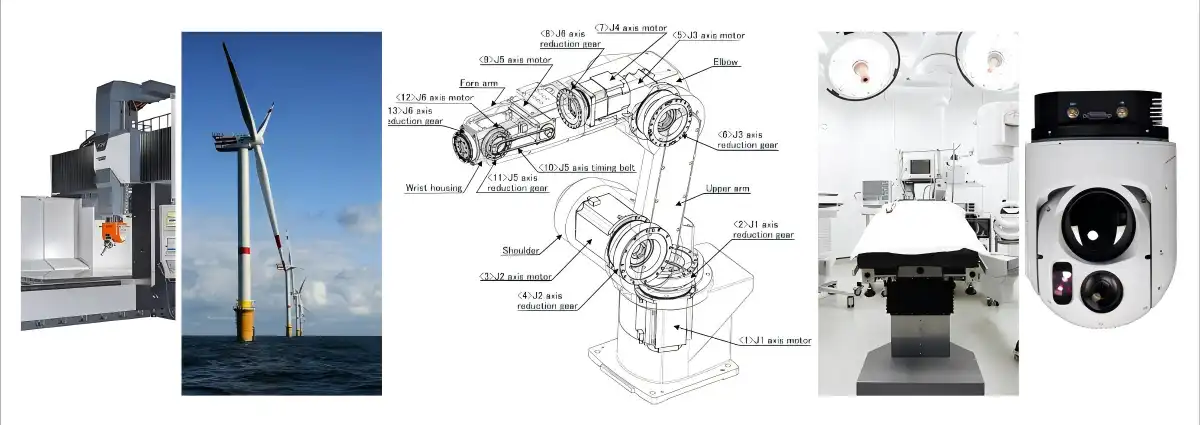
In high-end five-axis CNC machining centers, YRTM Rotary Table Bearing with integrated encoders excel where space constraints prohibit external encoder mounting and applications demand heavy milling load capacity alongside real-time angular feedback. The bearing simultaneously withstands cutting forces while providing position data enabling contour accuracy measured in micrometers. Direct drive radar and telescope positioning systems demonstrate another application domain where integrated measurement delivers distinct advantages. Aerospace applications require supporting heavy antenna arrays while ensuring precise tracking without backlash errors common in geared systems. The elimination of mechanical transmission between bearing and encoder removes this error source entirely. Medical tomography and scanning equipment employ these bearings in rotating gantries supporting imaging systems. Smooth rotation, high load capacity, and precise position feedback prove mandatory for imaging clarity. Magnetic encoder systems demonstrate particular value in these electromagnetic environments where optical encoders might suffer interference from the intense magnetic fields generated by imaging equipment.
Cost-Performance Analysis
Total cost of ownership analysis reveals competitive advantages extending beyond initial purchase price. While unit costs for integrated bearing-encoder assemblies may exceed simple bearing components, system-level cost comparison demonstrates substantial savings when accounting for eliminated external encoders, mounting hardware, alignment labor, and reduced assembly time. Lead times for integrated components typically match or improve upon sourcing separate bearings and encoders from different suppliers, simplifying supply chain management. Quality consistency improves when a single manufacturer controls both mechanical and electronic elements, reducing interface-related failures that occur when mixing components from multiple sources. Long-term reliability advantages further enhance value propositions. Warranty claims decrease when integrated designs eliminate common failure modes associated with external encoder mounting misalignment or environmental exposure. Maintenance costs diminish through extended service intervals enabled by unified environmental protection systems. This comprehensive comparison equips procurement managers and engineers with insights justifying rotary bearings with integrated encoders as strategic investments for demanding production environments where precision, reliability, and total cost optimization drive sourcing decisions.
Installation, Maintenance, and Technical Guidance for YRTM Bearings with Integrated Encoders
Maximizing performance and service life from precision rotary bearings requires adherence to proven installation procedures and maintenance protocols. Our three decades of bearing manufacturing experience inform practical guidance supporting B2B clients through implementation and operational phases.
Precision Installation Procedures
Installing these bearings demands meticulous attention to handling and alignment practices that prevent premature wear. Contamination represents the primary threat during installation. Clean room conditions prove ideal, but practical field installations require stringent cleanliness protocols, including solvent cleaning of mating surfaces and component handling with lint-free gloves. Mounting surface flatness critically affects bearing performance. Surfaces should exhibit flatness within 0.01mm across the bearing seat diameter. Surface finish should achieve Ra 1.6μm or better to ensure proper load distribution across the bearing interface. Machining burrs or raised edges must be completely removed to prevent localized stress concentrations. Alignment verification using dial indicators ensures coaxial mounting within specified tolerances, typically 0.02mm total indicated runout. The encoder portion requires particular care during mounting since magnetic scale damage or contamination degrades signal quality. Mounting bolts should be torqued in a star pattern to manufacturer specifications, preventing ring distortion that introduces preload variations and accelerates wear.
Encoder Integration and Signal Verification
Proper encoder signal verification confirms correct installation before operational loading. Magnetic encoder systems generate sinusoidal signals as read heads pass scale variations. Signal amplitude should measure 1 Vpp ±20% across the full rotation range. Amplitude variations exceeding specification indicate improper airgap between read head and scale, typically 0.5-1.5mm depending on design. Phase relationships between multiple read head outputs (common in quadrature encoder configurations) should maintain 90-degree electrical separation within ±10 degrees. Deviation indicates magnetic scale damage or electronic circuit malfunction. Signal offset should center near the supply voltage midpoint, with excessive offset suggesting electromagnetic interference or grounding problems. Control system interface configuration requires matching encoder parameters, including resolution, signal type (voltage or current), and electrical specifications. Modern CNC controllers support various encoder protocols, but verification prevents operational issues arising from parameter mismatches that cause positioning errors or erratic behavior.
Lubrication Management and Maintenance Schedules
Maintenance procedures play key roles in sustaining operational integrity throughout bearing service life. Lubrication schedules depend on operating conditions, including speed, load, temperature, and contamination exposure. Standard industrial applications typically require relubrication intervals ranging from 2000 to 10000 operating hours, depending on these factors. Grease selection affects performance significantly. High-quality lithium complex or polyurea greases formulated for precision bearings provide optimal performance. Grease quantity matters critically—excessive grease increases operating temperature and churning losses while insufficient lubrication accelerates wear. Manufacturer specifications typically recommend filling 25-35% of the available bearing cavity volume. Troubleshooting common issues requires systematic diagnostic approaches. Excessive noise or vibration may indicate contamination, inadequate lubrication, or mounting surface problems. Temperature elevation beyond expected ranges suggests overlubrication, excessive preload, or alignment issues. Encoder signal degradation manifests through positioning errors or intermittent faults, potentially indicating seal failure, allowing contamination ingress.
Technical Datasheet Interpretation
Interpreting technical specifications for YRTM Rotary Table Bearing empowers procurement and engineering teams to make informed decisions aligned with application requirements. Load ratings appear as dynamic load capacity (C) and static load capacity (C0), expressed in kilonewtons. Dynamic capacity relates to bearing fatigue life through the relationship L10 = (C/P)^3 × 10^6 revolutions, where P represents applied load. Moment load capacity (tilting moment) proves particularly relevant for rotary table applications. Specifications list allowable tilting moments about radial axes, typically ranging from several hundred to several thousand Newton-meters, depending on bearing size. Exceeding rated moment capacity causes uneven load distribution and accelerated raceway wear. Encoder resolution specifications define positioning accuracy potential. Magnetic encoders typically provide 1024-4096 pulses per revolution, with electronic interpolation enabling finer resolution. Accuracy specifications account for systematic errors across full rotation, typically expressed as arc-seconds or arc-minutes of angular deviation. Mounting dimensions, including bolt circle diameter, bolt quantity and size, and interface surface requirements, appear in dimensional drawings. Attention to axial and radial runout tolerances for mating components ensures proper bearing performance. These specifications serve as practical manuals supporting B2B clients in achieving extended service life and optimal results from their bearing investments.
Procurement Considerations and Partnering with YRTM Bearing Suppliers
Strategic sourcing decisions for precision motion control components extend beyond price comparison to encompass supply chain reliability, technical support quality, and long-term partnership potential. Understanding procurement best practices helps industrial buyers and OEMs optimize sourcing strategies.
Sourcing Channels and Supply Chain Management
Reliable sourcing avenues include certified distributors and direct factory channels, each offering distinct advantages. Authorized distributors provide local inventory for rapid delivery of standard configurations, valuable when project timelines permit minimal lead times. Distributor technical support helps with initial selection and application guidance, though the depth of expertise varies significantly among distribution partners. Direct factory engagement suits applications requiring customization or volume commitments, justifying dedicated engineering resources. Manufacturers like Luoyang Auto Bearing offer OEM customization services, adapting bearings and encoders to specific project requirements, including modified dimensional envelopes, special sealing arrangements, and encoder resolution variations matching control system specifications.
Pricing Transparency and Lead Time Planning
Transparency in pricing structures helps decision-makers plan supply chain logistics effectively. Standard pricing typically appears in published catalogs or distributor price lists, though negotiation opportunities exist for volume commitments or long-term agreements. Custom configurations require quotation processes accounting for engineering hours, special materials, and dedicated manufacturing runs. Lead times vary substantially between standard and custom products. Distributor stock items may ship within days, while factory-direct standard products typically require 4-8 weeks from order placement to delivery. Custom configurations extend lead times to 8-16 weeks, depending on modification complexity and current production schedules. Rush processing options sometimes reduce timelines 25-50% with premium pricing.
Quality Certification and Manufacturing Capacity
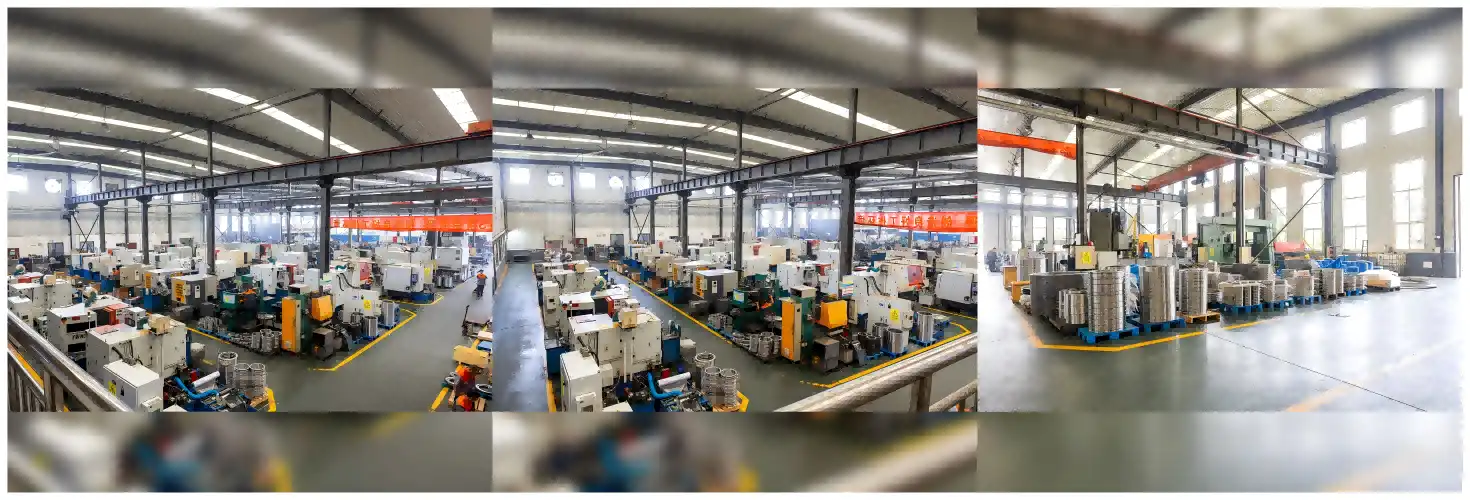
Quality certification demonstrates the manufacturer's commitment to consistent processes and international standards. ISO 9001 certification verifies quality management system effectiveness, while IATF 16949 specifically addresses automotive industry requirements, including advanced product quality planning, production part approval processes, and measurement system analysis. These certifications provide confidence that manufacturing processes incorporate statistical process control and continuous improvement methodologies. Manufacturing capacity assessment ensures suppliers can meet both immediate and future volume requirements. Luoyang Auto Bearing operates six production workshops staffed by 120 skilled employees dedicated to production, research and development, quality inspection, and assembly operations. This scale supports both prototype quantities and production volumes, accommodating customer growth without requiring supply chain changes that introduce qualification overhead.
Technical Support and After-Sales Service
Establishing partnerships with knowledgeable suppliers ensures access to technical support, tailored solutions, and trustworthy after-sales service, adding value beyond the product itself. Pre-sales application engineering helps optimize bearing selection, matching load conditions, speed requirements, and environmental factors to appropriate product configurations. Installation support, including detailed procedures, torque specifications, and verification protocols, minimizes commissioning problems. Some manufacturers provide on-site installation supervision for critical applications or complex assemblies where proper implementation proves essential to success. Remote support via phone or video conference offers a cost-effective alternative for standard installations.
Conclusion
YRTM Rotary Table Bearings with integrated encoders represent sophisticated solutions addressing modern manufacturing's simultaneous demands for precision, compactness, and intelligence. The combination of miniature bearing structures, advanced load-carrying capabilities, and embedded position feedback eliminates the complexity inherent in traditional configurations requiring separate components. Performance advantages extend across accuracy, installation efficiency, space optimization, and maintenance simplification, delivering measurable value throughout equipment lifecycles. Sourcing these specialized components requires understanding technical specifications, quality certifications, and supplier capabilities that distinguish transactional purchases from strategic partnerships. Our experience manufacturing precision bearings to international standards positions us to support your critical motion control applications with reliable products and responsive technical support.
FAQ
What applications benefit most from integrated encoder bearings?
Applications requiring simultaneous precision positioning and high load capacity in space-constrained envelopes benefit substantially. Five-axis CNC machining centers, direct drive rotary tables, robotic joints, and medical imaging equipment represent typical use cases where integrated encoders eliminate external measurement device complexity while maintaining arc-second positioning accuracy essential for process quality.
How does encoder resolution affect positioning accuracy?
Encoder resolution defines the smallest angular increment the measurement system can detect. Higher resolution enables finer positioning control, though actual positioning accuracy depends on multiple factors, including mechanical stiffness, control loop tuning, and thermal stability. Typical magnetic encoder resolutions of 1024-4096 pulses per revolution provide positioning accuracy sufficient for most industrial automation applications when combined with electronic interpolation.
What maintenance intervals apply to these bearings?
Maintenance intervals depend on operating conditions, including speed, load, temperature, and contamination exposure. Standard industrial applications typically require lubrication inspection every 2000-4000 hours with relubrication every 4000-10000 hours. Harsh environments may necessitate more frequent service. Continuous encoder signal monitoring enables condition-based maintenance strategies, identifying developing problems before catastrophic failure occurs.
Partner with ATLYC for Your Precision Bearing Requirements
Luoyang Auto Bearing (ATLYC) combines 15 years of precision manufacturing expertise with comprehensive quality systems certified to ISO 9001 and IATF 16949 standards. Our six production workshops and 120 skilled professionals deliver rotary table bearings meeting the exacting requirements of automotive, industrial machinery, and automation equipment applications. We serve as a dependable bearing manufacturer offering YRTM Rotary Table Bearing solutions with consistent quality, competitive pricing, and reliable lead times tailored to your production schedules. Contact our engineering team at auto@lyautobearing.com to discuss your specific application requirements and discover how our technical support and customization capabilities can optimize your motion control systems for superior performance and long-term reliability.
References
1. Harris, T.A. and Kotzalas, M.N. (2006). Advanced Concepts of Bearing Technology: Rolling Bearing Analysis, 5th Edition. CRC Press, Taylor & Francis Group.
2. Weck, M. and Brecher, C. (2006). Werkzeugmaschinen-Fertigungssysteme 2: Konstruktion, Berechnung und messtechnische Beurteilung, 7th Edition. Springer-Verlag Berlin Heidelberg.
3.ISO 199:2014. Rolling bearings — Thrust bearings with cylindrical roller thrust bearings, thrust needle roller bearings with cage assembly and washers. International Organization for Standardization.
4. Marsh, E.R. (2010). Precision Spindle Metrology. DEStech Publications, Lancaster, Pennsylvania.
5. Neugebauer, R., Denkena, B. and Wegener, K. (2007). "Mechatronic Systems for Machine Tools," CIRP Annals - Manufacturing Technology, Vol. 56, Issue 2, pp. 657-686.
6. Tsuji, T. and Takemura, N. (2008). "Development of Compact Direct Drive Motor with Integrated Optical Encoder for Machine Tools," Precision Engineering, Vol. 32, Issue 3, pp. 187-194.
Learn about our latest products and discounts through SMS or email