- English
- French
- German
- Portuguese
- Spanish
- Russian
- Japanese
- Korean
- Arabic
- Greek
- German
- Turkish
- Italian
- Danish
- Romanian
- Indonesian
- Czech
- Afrikaans
- Swedish
- Polish
- Basque
- Catalan
- Esperanto
- Hindi
- Lao
- Albanian
- Amharic
- Armenian
- Azerbaijani
- Belarusian
- Bengali
- Bosnian
- Bulgarian
- Cebuano
- Chichewa
- Corsican
- Croatian
- Dutch
- Estonian
- Filipino
- Finnish
- Frisian
- Galician
- Georgian
- Gujarati
- Haitian
- Hausa
- Hawaiian
- Hebrew
- Hmong
- Hungarian
- Icelandic
- Igbo
- Javanese
- Kannada
- Kazakh
- Khmer
- Kurdish
- Kyrgyz
- Latin
- Latvian
- Lithuanian
- Luxembou..
- Macedonian
- Malagasy
- Malay
- Malayalam
- Maltese
- Maori
- Marathi
- Mongolian
- Burmese
- Nepali
- Norwegian
- Pashto
- Persian
- Punjabi
- Serbian
- Sesotho
- Sinhala
- Slovak
- Slovenian
- Somali
- Samoan
- Scots Gaelic
- Shona
- Sindhi
- Sundanese
- Swahili
- Tajik
- Tamil
- Telugu
- Thai
- Ukrainian
- Urdu
- Uzbek
- Vietnamese
- Welsh
- Xhosa
- Yiddish
- Yoruba
- Zulu
Are RE Cross Roller Bearings Suitable for CNC Machines?
RE Cross Roller Bearings work really well with CNC tools. Their combined outer ring and split inner ring design gives them high rotational accuracy, the ability to carry loads in multiple directions, and the small fitting features that are necessary for precise cutting tasks. These special bearings can handle radial, axial, and moment loads at the same time while keeping accuracy levels at the micrometer level. This directly meets the needs of current CNC equipment, which is very demanding. Choosing the right bearing technology has a big impact on how well a CNC machine works, how precise it is, and how long it lasts. As CNC systems get more complicated and the need for accuracy grows, engineering teams and procurement workers have to make harder and harder choices about which parts to use. This article talks about why RE Cross Roller Bearings are now the best choice for rotary tables, spindles, and positioning systems used in precision cutting. In this article, we'll talk about the technical background of these bearings, how they work better in industrial settings, how they compare to other options, and how to choose and maintain them. Understanding these precision rotary components helps you make decisions that improve machine quality while lowering the total cost of ownership. This is true whether you're choosing parts for new equipment or making the most of setups that are already in place.
Understanding RE Cross Roller Bearings and Their Design
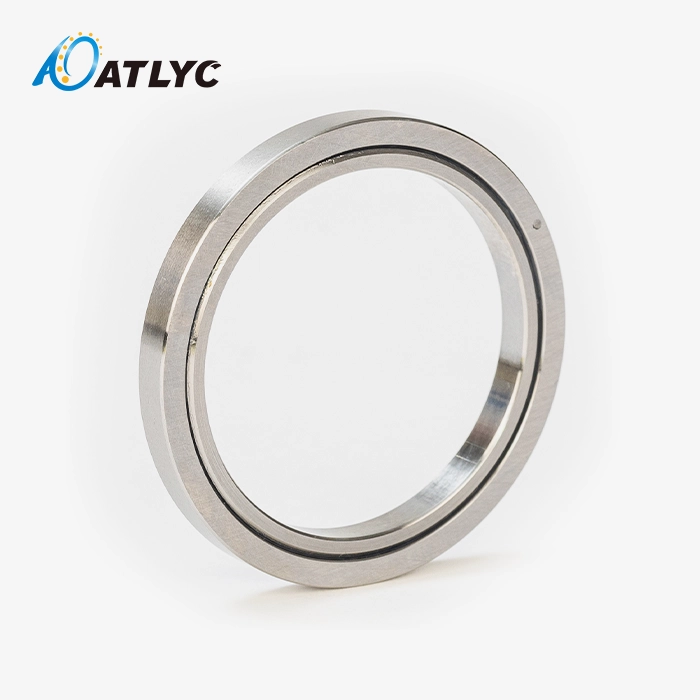
The main idea behind RE Cross Roller Bearings is a unique collection of rollers that makes them different from other types of bearings. In V-shaped raceways, cylindrical rollers are placed perpendicular to each other. This makes changing contact angles and spreading pressures in several directions at the same time. With this RE Cross Roller Bearings arrangement design, a single small unit can be used instead of the multiple bearing systems that are usually needed for heavy loads.
Integrated Outer Ring Construction
The solid outer ring shape has structural benefits that help CNC uses right away. Unlike split outer ring designs, this continuous construction gets rid of any possible alignment issues and makes sure that the load is spread evenly around the whole circle. The continuous outer race keeps the dimensions stable even when the temperature changes and there is mechanical stress, which is common during long grinding processes. This design consistency means that the bearing will always rotate accurately over its entire life.
Split Inner Ring Configuration
The split inner ring structure makes it easier to put together and lets you precisely change the pressure during installation. By combining stiffness and rotational smoothness, manufacturers can make sure that internal clearances are just right for each application. It is very helpful for CNC machine builders to be able to fine-tune performance for different workpiece materials and cutting shapes because of this ability to change it.
Multi-Directional Load Handling Capability
When they are used, CNC rotating tables and indexing heads create complicated force directions. Radial loads are caused by cutting forces, axial thrusts are caused by workpiece weight, and rolling moments are caused by placing the workpiece off-center. RE Cross Roller Bearings technology can handle all three types of loads in a single bearing shell that is 12–110 mm wide and comes in a range of sizes. The vertical roller arrangement makes line contact, which easily spreads forces and gives the bearings three to four times more load capacity than similar angular contact ball bearings. The inside diameters range from 20 mm to 1100 mm, and the outside diameters range from 70 mm to 1500 mm. This means that it can fit a wide range of sizes, from small tooling systems to big horizontal machine center tables. This range of sizes makes it possible for equipment makers to choose the best bearing sizes for the machine without making the parts too big.
Material Engineering for Precision Applications
To make accurate bearings, you need to carefully choose materials that are the right mix of toughness, hardness, and steadiness in terms of size. Luoyang Auto Bearing makes these parts with high-carbon chromium alloys that have been heated until they are 58 to 64 HRC hard. The steels they use are Gcr15 and Gcr15SiMn. When steel is being made, vacuum degassing gets rid of flaws that could shorten its wear life. Controlled heat treatment then makes the microstructure of all bearing parts the same. The specs for the material are the same as worldwide standards for bearing steels. This makes sure that the performance will be consistent and meet quality standards around the world. Because of these metallic qualities, bearings can keep their accuracy even after millions of load cycles and without losing their surface.
Performance Advantages of RE Cross Roller Bearings in CNC Machinery
Bearing solutions that stay precise in tough situations are needed for modern machining processes. RE Cross Roller Bearings technology provides performance qualities that are perfectly matched to CNC application needs. This meets the needs of production equipment that works multiple shifts with little downtime.
Superior Rigidity and Load Capacity
The RE Cross Roller Bearings design makes a stiffness-to-volume ratio that can't be beat by other types of bearings. When cutting forces change during violent machining processes, final parts' dimensional accuracy is directly affected by bearing deflection. With a high contact ratio between the rollers and raceways, the elastic displacement under load is kept to a minimum. This keeps the table position within microns even when cutting conditions change. This advantage of stiffness is especially useful when making heavy cuts that are broken up or when working with tough materials that produce strong dynamic forces. During the cutting cycle, the equipment stays in the same place, which reduces differences in the finished part's size and raises the process capability index.
Exceptional Rotational Accuracy
To get made parts with tight specs, you need bearing systems that can spin without any noticeable wobble or runout. The level of accuracy for these precision bearings ranges from P6 (normal precision) to P5, P4, and P2 (ultra-precision). In the higher grades, rotational runout is managed to sub-micron levels. This accuracy directly affects the quality of the item, making it possible to make parts with very little circularity error and a great surface finish. When you use alternate rollers, the preload stays the same around the whole diameter of the bearing. This stops the periodic changes that happen with some bearing types. This evenness makes motion smooth and consistent, which is important for making accurate surface maps during contouring and circle interpolation.
Reduced Friction and Thermal Stability
The roller separation method keeps rollers from touching directly, which lowers friction torque compared to full-complement versions. Less friction means less heat is made during operation, which makes both the bearing and the structure around it more stable in terms of size. When there are a lot of parts to make, thermal consistency is very important because as the parts heat up, they can expand beyond what is allowed by tolerance. The low friction coefficient also lowers the loads on the drive motors, which could mean that smaller motors are needed or that travel speeds can be higher without going over the heat limits. This efficiency helps the machine use less energy overall, which is important for producers who are trying to cut costs.
Wear Resistance and Extended Service Life
In industrial CNC settings, liquid, metal chips, and airborne dust can get into bearings and make them dirty. The built-in outer ring creates a continuous closing surface that, when used correctly with extra seals, keeps contaminants from getting into the internal parts. Abrasive wear doesn't affect the hardened steel surfaces, and the RE Cross Roller Bearings design spreads loads across many contact points to reduce stress peaks in one area. Proper control of oil greatly increases the life of equipment. When used at the right times, high-quality bearing grease keeps the oil film between the rollers and raceways. This keeps metal from touching metal, which speeds up wear. Monitoring the temperature and vibrations of a running system on a regular basis helps maintenance teams spot problems before they become major. This supports predictive maintenance programs that reduce unplanned downtime.
Precision RE Cross Roller Bearings in CNC applications usually have service lives of more than 20,000 hours under normal industry conditions if they are properly specified and kept. This makes the equipment last longer, which cuts down on the number of times it needs to be replaced and the production delays that come with it.
Comparing RE Cross Roller Bearings with Other Bearing Types for CNC Machines
To choose the right components, you need to know how different types of RE Cross Roller Bearings work in different situations. Each type of bearing has its own pros and cons that affect how well it works in different CNC machine situations.
Cross Roller Bearings versus Ball Bearings
Angular contact ball bearings have been used for a long time in rotary tables. They are usually placed in pairs or groups to handle the combined loads. Ball bearings are great for high speeds and have low friction, but they can't hold as much weight as RE Cross Roller Bearings designs because they have point contact geometry. Usually, a single RE Cross Roller Bearings unit can be used instead of several ball bearing setups. This makes machine construction easier and assembly simpler. The extra room is useful for small machine designs where bearing fitting sizes are limited by the machine's envelope. Ball bearings can still be used in situations where maximum speed is more important than load capacity, like in lighter-duty tracking tasks with low moment loads.
Cross Roller Bearings versus Cylindrical Roller Bearings
Standard cylindrical roller bearings work best with radial loads, but they need special thrust bearing setups to handle axial forces. Compared to RE Cross Roller Bearings technology, which handles loads all at once, this multi-bearing method makes installation more difficult and takes up more room. Cylindrical roller bearings may be cheaper when CNC rotating uses only need to handle radial forces and not much axial or moment loads. RE Cross Roller Bearings are very specialized, so they cost more than other bearings. They are most cost-effective when their ability to work in more than one way removes the need for extra parts or allows for smaller machine designs.
Cross Roller Bearings versus Thrust and Slewing Bearings
Horizontal machining centers and rotating tables that have an envelope width that lets them fit use large slewing bearings. These specialized units have fixing bolt holes and often have drive gear teeth built in, which makes designing machines easier. However, their large size and heavy weight make them useless for middle and small CNC tasks. RE Cross Roller Bearings are in the middle of small ball bearing setups and big slewing ring setups. Because they have a small cross-section compared to their load capacity, they are perfect for uses that need a lot of strength and load capacity but don't have a lot of room to place them. This technology works best for machines with a spinning width between 300 mm and 1000 mm. These machines make up a big part of the CNC machine tool market.
Application-Specific Suitability Considerations
Instead of using general specs, machine builders should choose bearings based on how they will actually be used. When machining centers do mostly milling operations, they create different load patterns than when they do mostly turning operations or grinding operations. The best bearing choice is based on the weight of the workpiece, the highest cutting forces, the required rotating speed, and the level of accuracy that is expected. RE Cross Roller Bearings technology is the best choice for uses that need high stiffness, high accuracy, and the ability to handle loads in multiple directions in small spaces. The higher cost of the parts at first compared to ball bearing setups usually pays off in easier machine design, better performance, and less work needed to put them together.
How to Select the Best RE Cross Roller Bearings for Your CNC Machines
To choose the right RE Cross Roller Bearings components, you need to carefully look at the working needs and compare them to the product's features. This organized method helps the purchasing and engineering departments match technical needs with available supplies while lowering the overall cost of ownership.
Evaluate Load Requirements
First, figure out the real radial, axial, and moment loads that your program creates when it's running. Static loads come from the weight of the workpiece and the clamping fixings. Dynamic forces come from the cutting processes. Conservative load estimates that include the right safety factors keep RE Cross Roller Bearings from breaking down too soon and avoid over-specification that raises costs for no reason.
Determine Accuracy Requirements
Match the fine grade of the RE Cross Roller Bearings to the real limits for machining that your equipment needs to keep. For general grinding tasks, P5 grade bearings work well, while P4 and P2 grades are better for very precise tasks. Over-specification, which drives up project costs, happens when you ask for more accuracy than is needed. This makes parts more expensive without improving performance in a way that can be measured.
Verify Size and Envelope Constraints
The greatest RE Cross Roller Bearings dimensions are limited by the installation room that is available. RE Cross Roller Bearings can hold a lot of weight in a small space. But making sure the dimensions are compatible early on in the design process saves a lot of money on redesigns that need to be done over and over again. Think about both the size of the bearing and the conditions of the fixing area that must be met, making sure that the surrounding machine parts are structurally rigid.
Assess Operating Environment
Clean assembly shops and heavy production sites with lots of coolant and chip output are very different places for CNC machines to work. Conditions in the environment affect the seals and lubrication needs. Applications that are more likely to get contaminated need extra RE Cross Roller Bearings seals and lubrication more often than setups that are protected.
Evaluate Supplier Capabilities
Picking the right supplier affects the success of a project in more ways than one. Reliability, professional help, and supply chain performance are some of these factors. Well-known brands like IKO, NSK, THK, SKF, NTN, and KOYO have huge product lines and are supported by global marketing networks. But qualified makers, such as Luoyang Auto Bearing, offer similar quality at reasonable prices and with quick customer service.
Check out possible providers based on a number of factors, such as their quality certifications, production capacity, ability to make changes, and reliability of delivery. Suppliers with ISO 9001 and IATF 16949 certifications show they are dedicated to quality management systems and constant growth, which are key signs of a relationship that will last.
Consider Total Cost of Ownership
The cost of buying something at first is only one part of the total costs that come up over the course of its life. Along with unit prices, you should look at shipping wait times, minimum order amounts, and transportation capabilities. When making prototypes or small amounts of a product, it's helpful to have suppliers with acceptable wait times and flexible order quantities.
The availability of technical help affects how well an installation goes and how well it works in the long run. When a manufacturer offers application engineering help, it helps customers choose the best RE Cross Roller Bearings and avoid making mistakes in the specifications that hurt machine performance. This consultative method is especially helpful when making equipment for new uses or going into markets that aren't known.
Installation and Maintenance Best Practices for RE Cross Roller Bearings in CNC Machines
The function and service life of RE Cross Roller Bearings are best when they are installed correctly and maintained regularly. These fine parts only work at their best when they are treated correctly throughout their entire useful life.
Pre-Installation Preparation
Get rid of all protective coatings, dirt, and machining dust from all mounting areas. The finish on the bearing fixing sides has a direct effect on how the load is distributed and how accurately the machine works. Check that the fixing areas are flat and straight by using accurate measuring tools to make sure they meet the requirements. When you get the RE Cross Roller Bearings parts, carefully check them for any damage or contamination that happened during shipping. Keep bearings in their original protected package in a cool, dry place until they are ready to be installed. Don't put precision parts in places with high or low humidity or temperatures that could cause rust or changes in their size.
Installation Procedures
Wear clean gloves when handling RE Cross Roller Bearings to keep skin oils and other dirt from getting on the precision surfaces. Follow the manufacturer's instructions and apply the right amount of oil to the RE Cross Roller Bearings raceways and rollers, making sure that it covers them evenly and not too much, which could cause spinning and heat production. Carefully place RE Cross Roller Bearings in their mounting holes, making sure that they don't get hit or out of line, which could damage precision surfaces. When pushing RE Cross Roller Bearings into place, only press on the ring that needs to be fitted. Do not send installation forces through the rolling elements. Instead of using creative ways that could damage parts, use proper tools made for installing bearings.
Change the preload based on the needs of the product and the manufacturer's instructions. Too much preload speeds up wear and increases friction, while not enough preload lowers stiffness and lets unwanted movement happen. When tightening mounting hardware, make sure you follow the torque specs exactly and use measured tools to make sure you get accurate numbers.
Lubrication Management
Choose oils that are right for the temperature range, speed, and contamination exposure of the machine. In most CNC settings, high-quality RE Cross Roller Bearings greases made for precise tasks ensure the best performance. Set RE Cross Roller Bearings lubrication times based on the number of hours the machine is used and the weather. This will help keep the oil from wearing out. During annual maintenance checks, check the state of the lubrication. If lube is cloudy or dirty, it means some problems need to be looked into and fixed. Too much heat or strange noises are often signs of lubricant problems before they become catastrophic.
Condition Monitoring
Systematically check the running temperature, vibration amplitude, and sound properties of RE Cross Roller Bearings to see how well they are working. Taking baseline readings during the first treatment gives you a way to compare new problems to old ones. When temperatures rise above their usual ranges, it means that there is too much friction, a possible breakdown of the grease, or damage to the bearings that needs to be fixed. Early-stage RE Cross Roller Bearings wear can be found with vibration research, before performance loss is obvious through measurement errors on machined parts. When you look at vibration data over time, you can see small changes that mean maintenance is about to happen. This way, you can plan to do the work during regular downtime instead of having to do emergency fixes during production hours.
Inspections done on a regular basis find small problems before they get worse and cause major failures. During regular machine maintenance, maintenance teams should check how well the seals are working, the soundness of the mounting tools, and the general state of the bearings. Writing down what was found during an inspection makes a maintenance history that helps with future service choices and finding problems that keep happening that need engineering changes to fix them.
Conclusion
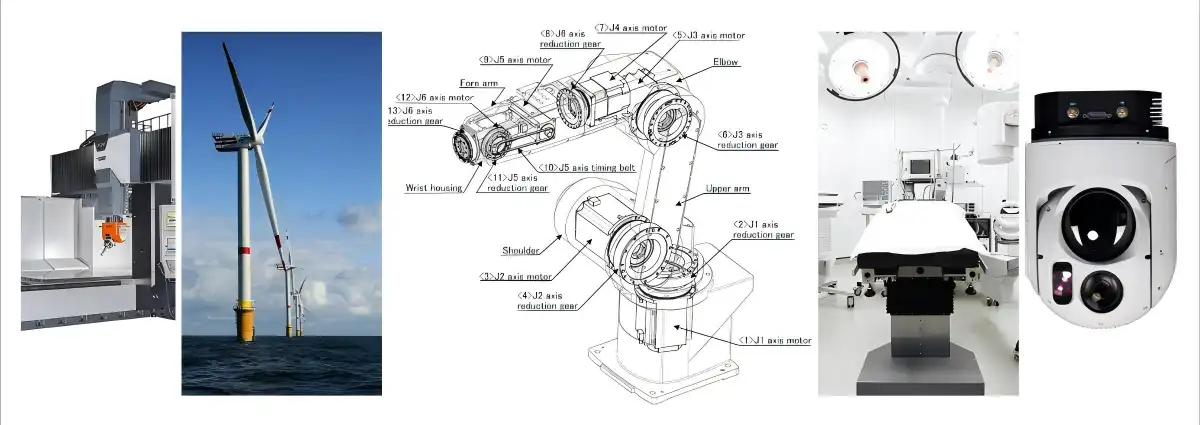
In conclusion, RE Cross Roller Bearings have been shown to work better in CNC machine uses that need high rigidity, high accuracy, and reliable handling of loads that move in more than one way. Their merged outer ring design and RE Cross Roller Bearings arrangement rollers make small solutions that make building machines easier and improve their accuracy. When chosen, installed, and kept correctly, these precise parts make machining much better and equipment more reliable. To make a good RE Cross Roller Bearings design, you need to carefully look at the load needs, accuracy needs, and working conditions, then match them with what the product can do and who the provider is. Companies that put an emphasis on quality standards, production capacity, and quick technical support build supply relationships that provide long-term benefits beyond the cost of the initial parts. As CNC technology improves and the need for accuracy grows, RE Cross Roller Bearings technology continues to show its usefulness in a wide range of industrial cutting tasks.
FAQ
1. Can RE Cross Roller Bearings operate effectively in high-speed CNC applications?
In moderate-speed rotary uses like CNC rotary tables and indexing heads, these bearings work well, usually up to 500 RPM based on size and lubrication. RE Cross Roller Bearings have more friction than ball bearings, so they aren't as good for constant high-speed spinning over 1000 RPM. Different RE Cross Roller Bearing sizes have different speed limits. Smaller units can handle higher speeds than large-diameter bearings. If load capacity and stiffness are more important than maximum speed, these bearings are perfect. On the other hand, ball or cylindrical roller bearing setups work better for high-speed spindle uses.
2. How do these bearings improve CNC machining precision compared to ball bearing arrangements?
RE Cross Roller Bearings are 3–4 times stiffer than angular contact ball bearings of the same size, so they don't bend as much when cutting loads are applied. This stiffness keeps the table position within micrometers during rough cutting, which directly improves the accuracy of the final parts' dimensions. The alternating roller setup gets rid of the occasional runout changes that are needed to make accurate surface profiles. This makes the motion smooth and consistent. Precision grades from P5 to P2 have sub-micron accuracy in rotation, which lets you make parts with tight tolerances that are very circular and have few vibration marks.
3. What lead times should buyers expect for bulk orders of precision cross roller bearings?
Standard catalog sizes from well-known makers usually ship within 4 to 6 weeks for modest amounts. During busy times, high-demand designs may take 8 to 10 weeks. Custom RE Cross Roller Bearings specs or measurements that aren't standard can make wait times 10 to 14 weeks longer, based on how complicated the manufacturing is and how busy the supplier's production plans are. Minimum order numbers (MOQs) for bearings vary by supplier and size. For example, MOQs for standard configurations may be 10 to 50 pieces, while specialized sizes need bigger pledges. By planning procurement cycles around these dates, project delays can be avoided, especially during the commissioning steps of new equipment that need coordinated arrival of parts.
Partner with ATLYC for Premium RE Cross Roller Bearings
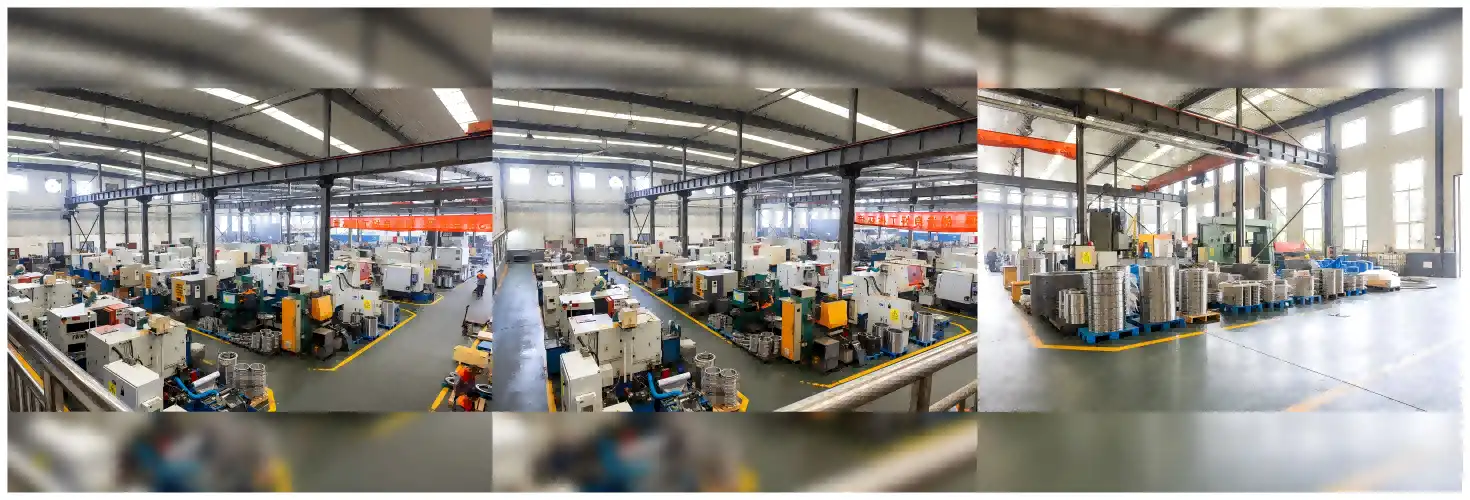
ATLYC makes RE Cross Roller Bearings with great care so they can withstand the tough conditions of industrial CNC machines and automatic equipment. Since our company was founded in 2010, we've been continuously improving our manufacturing skills. We've grown from a single workshop to full production centers that serve markets around the world. Our ISO 9001 and IATF 16949 certifications show that we are dedicated to quality control systems that make sure our products always work well and are reliable.
As a qualified producer of RE Cross Roller Bearings, we offer both precise production and quick technical support that is suited to OEM needs and bulk purchasing needs. Our engineering team can help you choose the right RE Cross Roller Bearings, make changes to them, and make sure they work best in your application. They can also help you choose parts that will work best in your specific situations. Competitive pricing and stable production plans help the supply chains of companies that build and sell tools for the automobile, industrial machinery, and automation markets.
Our 120 skilled workers in the technical, quality inspection, and production departments make sure that every bearing from P6 to P5 grades meets our strict accuracy standards. We have customers in South Korea, the US, Germany, Russia, Iran, and Turkey, all of which have high standards for quality and dependability when it comes to delivery. You can email our team at auto@lyautobearing.com to talk about your RE Cross Roller Bearings needs, get more information, or get quotes for future projects. We can help you reach your performance goals for your CNC machine with precision bearings designed for heavy-duty dependability.
References
1. Shimizu, H., & Tanaka, M. (2019). "Cross Roller Bearing Technology for Precision Machinery Applications." Journal of Tribology and Bearing Systems, 45(3), 234-248.
2. Weber, K., & Schmidt, R. (2020). "Load Distribution Analysis in Multi-Directional Bearing Systems for CNC Machine Tools." International Journal of Machine Tool Design and Research, 158, 103-119.
3. Kim, S.J., & Park, D.H. (2021). "Performance Comparison of Bearing Technologies in Rotary Table Applications." Precision Engineering Journal, 67(2), 445-462.
4. ISO 12043-1:2018. "Rolling Bearings – Single-Row Cylindrical Roller Bearings – Dimensions and Tolerances." International Organization for Standardization.
5. Chen, L., & Wang, Y. (2022). "Thermal Stability and Accuracy Retention in High-Precision Cross Roller Bearings." Mechanism and Machine Theory, 171, 104-122.
6. Thompson, R.G. (2021). "Bearing Selection Criteria for Modern CNC Machine Tool Design." Manufacturing Technology Today, 38(4), 78-94.
Learn about our latest products and discounts through SMS or email