- English
- French
- German
- Portuguese
- Spanish
- Russian
- Japanese
- Korean
- Arabic
- Greek
- German
- Turkish
- Italian
- Danish
- Romanian
- Indonesian
- Czech
- Afrikaans
- Swedish
- Polish
- Basque
- Catalan
- Esperanto
- Hindi
- Lao
- Albanian
- Amharic
- Armenian
- Azerbaijani
- Belarusian
- Bengali
- Bosnian
- Bulgarian
- Cebuano
- Chichewa
- Corsican
- Croatian
- Dutch
- Estonian
- Filipino
- Finnish
- Frisian
- Galician
- Georgian
- Gujarati
- Haitian
- Hausa
- Hawaiian
- Hebrew
- Hmong
- Hungarian
- Icelandic
- Igbo
- Javanese
- Kannada
- Kazakh
- Khmer
- Kurdish
- Kyrgyz
- Latin
- Latvian
- Lithuanian
- Luxembou..
- Macedonian
- Malagasy
- Malay
- Malayalam
- Maltese
- Maori
- Marathi
- Mongolian
- Burmese
- Nepali
- Norwegian
- Pashto
- Persian
- Punjabi
- Serbian
- Sesotho
- Sinhala
- Slovak
- Slovenian
- Somali
- Samoan
- Scots Gaelic
- Shona
- Sindhi
- Sundanese
- Swahili
- Tajik
- Tamil
- Telugu
- Thai
- Ukrainian
- Urdu
- Uzbek
- Vietnamese
- Welsh
- Xhosa
- Yiddish
- Yoruba
- Zulu
Best Angular Contact Ball Bearing 70 Series for CNC Spindles
When CNC spindle performance is non-negotiable, the Angular Contact Ball Bearing 70 series is the preferred answer in precision machining applications worldwide. These single-row bearings are produced to ISO Dimension Series 10 and can accommodate both radial and axial loads at the same time, a feature that makes them essential in high-speed spindle systems. Whether you’re a purchasing manager sourcing an OEM line, a distributor managing global inventory, or an engineer specifying components for a new machining center, understanding what differentiates a reliable 70 series spindle bearing from a mediocre one can directly safeguard your production uptime and bottom line.
Understanding Angular Contact Ball Bearing 70 Series for CNC Spindles
What Defines the 70 Series?
The 70 series is a member of ISO Dimension Series 10 and offers a much lighter cross-section than heavier options like the 72 (Series 02) or 73 (Series 03). The small shape is not a compromise but a conscious design decision. The same thing goes for machine tool spindles, which can run over 15,000 RPM at high rates without overheating, thanks to a narrower cross-section that minimizes centrifugal force. SKF bearing engineering [1] states that Spindle bearings with optimized contact geometry always have lower frictional torque at the same load conditions than the broader series alternatives.
Core Construction and Materials
At ATLYC's Luoyang facility, our 70 series precision spindle bearings are manufactured from GCr15 high-carbon chromium bearing steel — the same material class specified in GB/T 18254 and widely recognized for its uniform carbide distribution, high hardness, and fatigue resistance. The cage options include Bakelite (phenolic resin) and nylon, both chosen for their dimensional stability at elevated temperatures and compatibility with oil-air lubrication systems.
The standard size range covers inner diameters from 10 mm to 240 mm, outer diameters from 26 mm to 360 mm, and widths from 8 mm to 56 mm — accommodating an extensive spectrum of spindle shaft configurations.
| Specification | Details |
|---|---|
| Material | GCr15 / Bearing Steel |
| Accuracy Grades | P6, P5, P4, P2 |
| Cage Options | Bakelite, Nylon |
| Contact Angles | 15°, 25°, 40° |
| Inner Diameter Range | 10 – 240 mm |
| Outer Diameter Range | 26 – 360 mm |
| Width Range | 8 – 56 mm |
| Mounting Configurations | DB, DF, DT |
| Delivery Time | 7 working days |
| OEM Support | Yes |
Contact angle selection is one of the most consequential decisions in specifying these bearings. A 15° contact angle suits high-speed, light axial load environments. A 25° angle balances speed with moderate axial capacity. A 40° angle delivers maximum axial rigidity for heavy-duty or thrust-dominant applications such as differential pinion shafts and centrifugal separators.
Key Factors for Selecting the Best Angular Contact Ball Bearing 70 Series
Load Capacity, Speed, and Precision Grade
The choice of Angular Contact Ball Bearing 70 series high precision angular contact bearing involves a compromise among three interrelated parameters: the dynamic load rating, the limiting speed, and the precision grade. The P4 or P2 precision class bearings are common specifications for CNC machining machines when tolerances of the workpiece are within microns. In the technical report of NSK on the selection of the spindle bearings [2], it is confirmed that the P4-class bearings have radial runout (Kia) values below 2.5 µm, which is necessary to guarantee the sub-micron machining repeatability over long production cycles.
Here are the core performance parameters that procurement teams should evaluate before finalizing a specification:
- Accuracy grade P4/P2: Delivers radial and axial runout within 2.5 µm and 1.5 µm, respectively, directly reducing vibration transmission to the cutting tool and protecting surface finish quality.
- GCr15 steel hardness (HRC 60–65): Provides the fatigue life baseline for sustained operation under cyclic loading, particularly relevant in high-frequency motor applications and gas turbine auxiliary shafts.
- Preload class (Light, Medium, Heavy): Governs the trade-off between spindle rigidity and maximum permissible speed. Excessive preload generates thermal runaway; insufficient preload permits ball skidding and noise amplification.
These parameters directly determine whether a bearing survives a demanding production environment or fails prematurely — and understanding them helps procurement teams avoid costly specification errors that only surface months after installation.
Application Range and Mounting Configuration
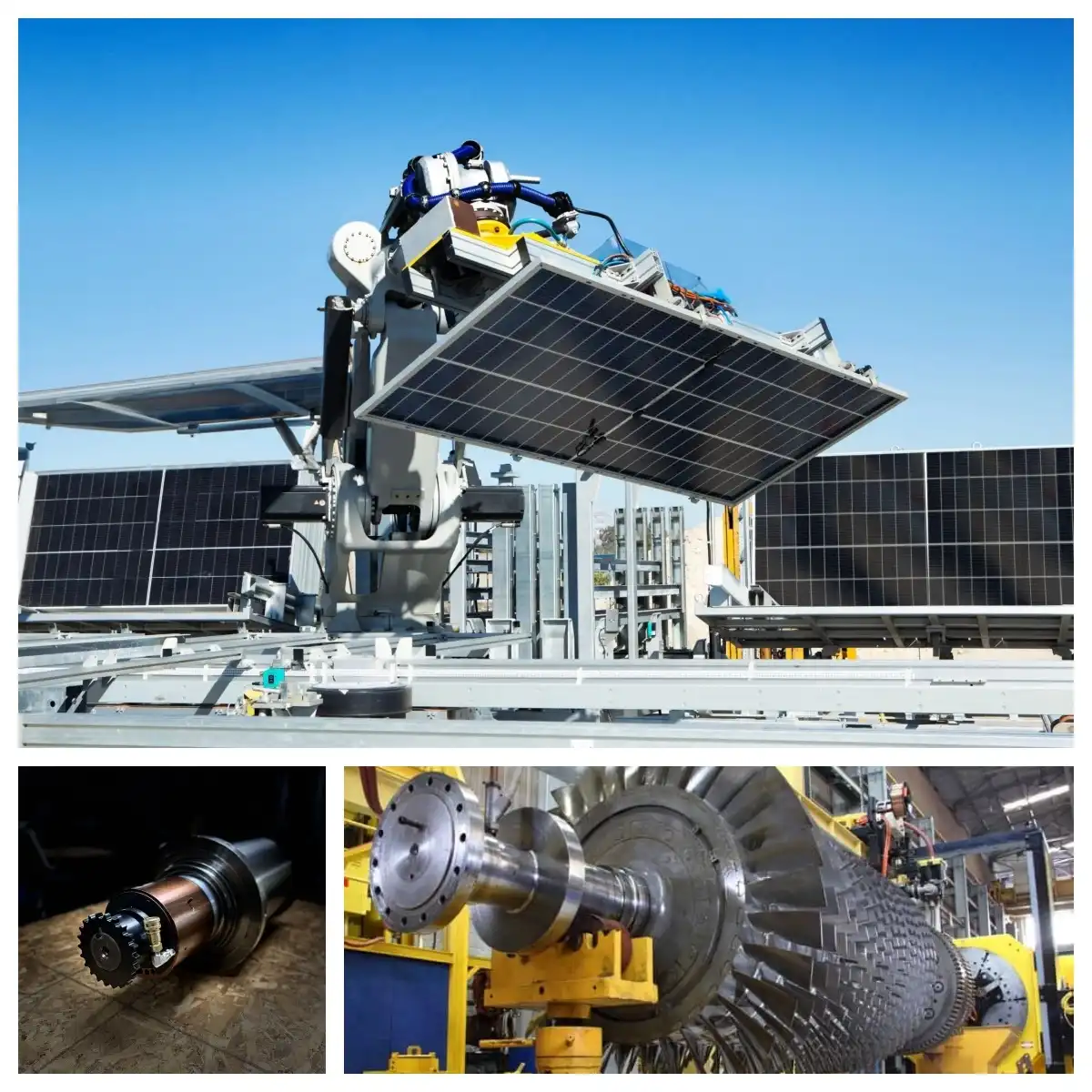
Beyond CNC machine tool spindles, the 70 series serves high-frequency motors, gas turbines, centrifugal separators, small automotive front wheel hubs, differential pinion shafts, and printing machinery. Each application demands a specific mounting arrangement. The three standard duplex configurations — Back-to-Back (DB), Face-to-Face (DF), and Tandem (DT) — address different moment load and axial thrust scenarios. DB arrangements provide the highest moment rigidity and are the most common choice for machining center spindles. DF configurations tolerate shaft misalignment better. DT arrangements suit unidirectional thrust applications.
Comparing Angular Contact Ball Bearing 70 Series with Other Bearing Types
The 70 series occupies a specific performance niche that neither deep groove ball bearings nor heavier angular contact series fully replicate.
| Bearing Type | Speed Capability | Axial Load Capacity | Typical CNC Use Case |
|---|---|---|---|
| 70 Series (Series 10) | Very High | Moderate–High | High-speed spindles, grinding heads |
| 72 Series (Series 02) | High | High | Milling spindles, heavier-duty |
| 73 Series (Series 03) | Moderate | Very High | Heavy-duty spindles, gearboxes |
| Deep Groove Ball Bearing | High | Low | General-purpose, low axial load |
| Tapered Roller Bearing | Moderate | Very High | Automotive hubs, heavy thrust |
Deep-groove ball bearings can handle incidental axial loads, but they lack the directional stiffness necessary for accurate spindle applications. Tapered roller bearings are capable of carrying massive thrust loads, but at high speeds, frictional heat is created, which limits their thermal stability. The 72 series boasts a higher load capacity, but this is at the cost of a larger cross section, reducing the largest permissible shaft diameter for a given housing bore, which is a substantial penalty in rigidity. The Angular Contact Ball Bearing 70 series relieves this stress by permitting a slim cross-section, as well as providing the angular contact geometry required for precision spindle applications [3].
Procurement Considerations for Global B2B Buyers
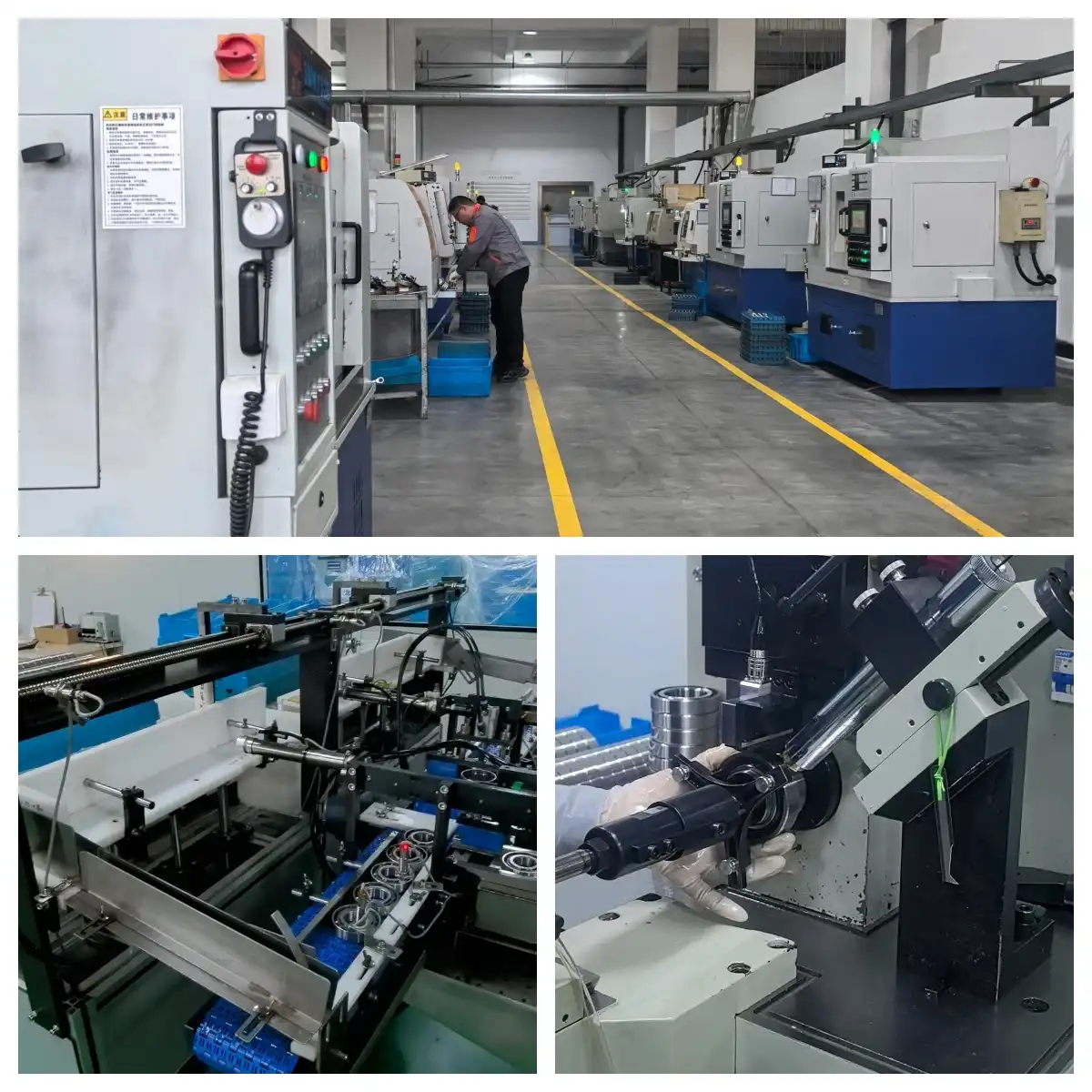
For mid-to-large manufacturers and OEM customers who operate under IATF 16949 or ISO 9001 quality regimes, supplier certification is not a formality; it is a gating requirement. Luoyang Auto Bearing Co., Ltd. (ATLYC) has been ISO 9001 and IATF 16949 certified for its processes from raw material inspection to final assembly and outbound quality audit. Established in 2010, the firm today operates six production workshops, employs 120 experienced staff, and has established a traceable manufacturing infrastructure that provides detailed quality records for each production run.
Stock configurations are available for standard delivery within 7 working days. We provide OEM customisation – such as particular bore tolerances, cage materials, lubrication options, and matched-set preload grinding – with technical cooperation from the beginning. Volume buyers gain from competitive unit economics based on real production scale—not arbitraged trade profits. ATLYC’s long-term supply partnerships with clients in the USA, Germany, South Korea, Russia, Iran, and Turkey provide dependable field performance based on manufacturing consistency.
Ask suppliers of angular contact ball bearings 70 series for: raceway surface roughness (Ra), Anderon vibration test results, contact angle verification reports, and preload standout measurements for matched-set bearings. These records make a distinction between firms with bona fide quality processes and those that provide paper compliance alone.
Conclusion
In high-speed CNC spindle applications, the Angular Contact Ball Bearing 70 series angular contact ball bearing is still the bearing of choice, and for good reason. Quantifiable engineering reasons include a lighter cross-section shape, adjustable contact angle choices, and precise grades that reach sub-micron runout. The choice of the proper bearing depends on the match of the accuracy class, contact angle, preload class, and mounting configuration to the actual working circumstances of your spindle. For B2B procurement teams managing quality-sensitive supply chains, engaging with a qualified manufacturer that provides OEM customisation, consistent batch quality, and dependable lead times minimizes both procurement risk and total cost of ownership.
FAQ
1. How long do 70 series spindle bearings typically last under CNC conditions?
Service life depends heavily on lubrication method, preload setting, and operating speed. Under oil-air lubrication at 15,000–20,000 RPM with correct preload, P4-grade 70 series bearings in machining center spindles commonly achieve 8,000–15,000 operational hours before raceway fatigue initiates [4].
2. Can these bearings support bidirectional axial loads?
A single-row angular contact bearing carries axial load in one direction only. Bidirectional axial load capacity requires duplex mounting in DB or DF configuration, where two bearings are ground as a matched pair to achieve defined preload upon clamping.
3. What distinguishes P4 from P2 accuracy grade?
P4 (ABEC-7) specifies inner ring radial runout below 2.5 µm. P2 (ABEC-9) tightens this to below 1.5 µm. P2-grade bearings are specified for ultra-precision grinding spindles and high-frequency motors where tool runout directly governs surface finish quality [5].
4. Is grease lubrication suitable for high-speed 70 series applications?
Sealed, pre-greased variants work well at moderate speeds. Above approximately 12,000 RPM with a 70 mm bore, oil-air or oil-mist lubrication is preferred to sustain the elastohydrodynamic film and manage heat dissipation effectively.
Get a Custom Quote from ATLYC — Trusted Angular Contact Ball Bearing 70 Series Manufacturer
ATLYC has supplied precision Angular Contact Ball Bearing 70 series) to OEMs and distributors across six continents since 2010. With ISO 9001 and IATF 16949 certifications, a 7-working-day standard lead time, and full OEM customization capability, we are equipped to support your sourcing requirements at scale. Contact our engineering team today at auto@lyautobearing.com to request specifications and a competitive quote.
References
1. SKF Group. (2018). SKF Bearing Catalogue: Super-Precision Bearings.
2. NSK Ltd. (2019). Precision Machine Tool Bearings Technical Report. NSK.
3. FAG / Schaeffler Group. (2020). High-Precision Bearings for Machine Tool Spindles.
4. Timken Company. (2021). Bearing Failure Analysis and Life Estimation Guidelines. Timken.
5. ABMA (American Bearing Manufacturers Association). (2020).
6. ISO. (2022). ISO 492: Rolling Bearings — Radial Bearings — Dimensional and Geometrical Tolerances.
Learn about our latest products and discounts through SMS or email
