- English
- French
- German
- Portuguese
- Spanish
- Russian
- Japanese
- Korean
- Arabic
- Greek
- German
- Turkish
- Italian
- Danish
- Romanian
- Indonesian
- Czech
- Afrikaans
- Swedish
- Polish
- Basque
- Catalan
- Esperanto
- Hindi
- Lao
- Albanian
- Amharic
- Armenian
- Azerbaijani
- Belarusian
- Bengali
- Bosnian
- Bulgarian
- Cebuano
- Chichewa
- Corsican
- Croatian
- Dutch
- Estonian
- Filipino
- Finnish
- Frisian
- Galician
- Georgian
- Gujarati
- Haitian
- Hausa
- Hawaiian
- Hebrew
- Hmong
- Hungarian
- Icelandic
- Igbo
- Javanese
- Kannada
- Kazakh
- Khmer
- Kurdish
- Kyrgyz
- Latin
- Latvian
- Lithuanian
- Luxembou..
- Macedonian
- Malagasy
- Malay
- Malayalam
- Maltese
- Maori
- Marathi
- Mongolian
- Burmese
- Nepali
- Norwegian
- Pashto
- Persian
- Punjabi
- Serbian
- Sesotho
- Sinhala
- Slovak
- Slovenian
- Somali
- Samoan
- Scots Gaelic
- Shona
- Sindhi
- Sundanese
- Swahili
- Tajik
- Tamil
- Telugu
- Thai
- Ukrainian
- Urdu
- Uzbek
- Vietnamese
- Welsh
- Xhosa
- Yiddish
- Yoruba
- Zulu
Tapered Roller Bearing 32 series: A Complete Selection Guide
If you're sourcing precision bearings for demanding industrial applications, the Tapered Roller Bearing 32 series deserves a close look. Defined under ISO 355 and DIN 720 standards, this metric single-row bearing family—including sub-series 320xx, 322xx, 323xx, and 329xx—is engineered to carry simultaneous radial and axial loads where ball bearings simply fall short. Whether you're specifying components for automotive transmissions, heavy-duty gearboxes, or agricultural wheel hubs, this guide walks you through everything you need to make a confident procurement decision.
Understanding Tapered Roller Bearing 32 Series Dimensions and Specifications
Core Dimensional Standards
The 32 series follows metric dimensional conventions governed by ISO 355, with bore diameters (d) typically ranging from 15 mm to 200 mm, outer diameters (D) from 42 mm to 360 mm, and assembly widths (T) varying by sub-series. The designation system encodes the bore size, series width, and contact angle directly in the part number, making interchangeability across suppliers straightforward—provided you verify the tolerance class (Normal, P6, or P5 per ISO 492).
The table below summarizes the 32 most common sub-series and their general dimensional profiles:
| Sub-Series | Bore Range (mm) | Section Width | Primary Use Case |
|---|---|---|---|
| 320xx | 20–150 | Narrow | Compact gearboxes, light axles |
| 322xx | 25–180 | Medium-wide | Industrial reducers, conveyors |
| 323xx | 30–200 | Wide | Heavy-duty mining equipment |
| 329xx | 45–160 | Extra-narrow | Automotive wheel hubs |
Load Capacity and Roller Geometry
32 series tapered roller bearings derive their load-carrying strength from a fundamental geometrical principle: all raceway surfaces and rolling elements converge to a single apex on the bearing axis. This alignment permits real rolling action and reduces friction. High-quality variations include a logarithmic roller profile that distributes the Hertzian contact stress uniformly down the length of the roller, minimizing the edge loading, which is a typical failure source when the shafts deform or are slightly misaligned. Dynamic load ratings (C) of this series generally range from around 28 kN up to over 500 kN depending on the sub-series and bore size. They are ideal for medium- to heavy-duty cycles.
Comparison and Performance Analysis of the 32 Series vs. Other Bearings
How the 32 Series Stacks Up Against Adjacent Models
Usually, procurement engineers are in a dilemma about whether to mention the 30 series or the Tapered Roller Bearing 32 series or 33 series. The differences are considerable. The 30 series has a lighter cross section and lower load rating; therefore is suitable for situations where space is limited, and loads are modest. The 33 series has a broader cross-section and a steeper contact angle, which provides more axial capacity at the expense of a larger envelope. 32 series tapered roller bearing is the practical combination of balanced radial and axial capacity in a small, adaptable design.
The 32 series is superior to deep-groove ball bearings in combined loading, but it needs pairing or back-to-back installation to accommodate thrust in both directions. They have a pure radial capacity greater than the 32 series but cannot take large axial stresses. The 320 sub-series roller bearing is of the same family classification as the 322 or 323 sub-series, but is thinner in shape and narrower in breadth and is better suited for lighter-duty automotive applications than for shock-intensive conditions where the 322xx and 323xx excel.
The table below provides a direct performance comparison:
| Bearing Type | Radial Load | Axial Load | Speed Rating | Misalignment Tolerance |
|---|---|---|---|---|
| 32 Series TRB | High | High (combined) | Moderate | Low–Moderate |
| Deep Groove Ball | Moderate | Low | High | Low |
| Cylindrical Roller | Very High | Minimal | High | Low |
| 33 Series TRB | High | Very High | Low–Moderate | Low |
Cost-Performance Ratio
From a procurement perspective, the 32 series has a very good cost-performance ratio. The modular design (cone inner ring and cup outer ring installed separately) facilitates assembly and lowers maintenance time. Buyers may get a competitive unit price without losing structural integrity, and it is widely available from worldwide OEM brands and verified Chinese producers.
Procurement Considerations for the 32 Series
Verifying Quality and Certification
Proper source verification is needed if you want to buy original Tapered Roller Bearing 32 series tapered roller bearings. Key quality control checkpoints include dimensional verification of bore (d), outer diameter (D), and assembly width (T) to ISO 355 tolerances, raceway surface roughness (Ra < 0.2 µm), and metallurgical integrity, i.e., HRC 60–64 hardness and controlled retained austenite levels in GCr15/52100 bearing steel. Reputable firms will have ISO 9001 and IATF 16949 certifications, the latter being a must-have for automotive OEM supply chains.
Andersometer noise and vibration test data should also be requested by procurement teams. These tests reveal chatter marks and waviness on raceways, which are precursors to premature fatigue failure — flaws that cannot be seen with the naked eye but are catastrophic in service.
Here are the core procurement evaluation criteria worth prioritizing:
- Certification traceability: Confirm ISO 9001 and IATF 16949 scope covers the specific bearing series you're ordering, not just a general facility certificate.
- Material certification: Heat treatment records and spectrographic steel analysis should accompany bulk shipments to verify alloy consistency across production batches.
- Dimensional inspection reports: Third-party CMM measurement reports for bore tolerance, runout, and taper angle deviation provide an objective quality baseline.
- Noise grade documentation: Andersometer test data (S0910 standards) confirm raceway finish quality and rolling element uniformity before shipment.
These checkpoints give procurement managers a defensible quality assurance framework when qualifying new suppliers or auditing existing ones.
Bulk Purchasing and Lead Time Management
For large-scale industrial supply chains, lead time predictability matters as much as unit price. Established manufacturers running multiple production workshops can fulfill large-volume orders with consistent cycle times. Before placing blanket orders, confirm warehouse stocking capacity, production scheduling flexibility, and Incoterms. Warranty terms covering dimensional non-conformance and premature fatigue failure should be explicitly documented in purchase agreements.
Installation, Maintenance, and Lifespan Optimization
Mounting Procedures and Tooling
Many bearing problems begin with incorrect installation. The Tapered Roller Bearing 32 series of the tapered roller bearing 32 must be mounted with a careful adjustment of the axial clearance. The 32 series is different from deep groove ball bearings in that the clearance, or preload, is adjusted during assembly by shims or locknuts, which position the cone and cup relative to each other. Interference-fit installation may cause damage to the raceway by impact forces. Use a bearing heater (induction type, 80–100°C max) to avoid such damage.
Lubrication and Inspection Schedules
Grease lubrication works well for most low-to-moderate speed applications. Circulating oil or oil mist systems are suitable for high-speed designs in vehicle gearboxes or industrial spindles. The frictional heat generated at the cone rib-roller end contact is dissipated by the oil. Re-lubrication times depend on operating temperature, speed factor (n · dm), and quantity of pollutants. Routine checks should include monitoring of operating temperature (an increase of 20°C above baseline is an indication of risk), changes in vibration signature, and seal integrity. Early indicators of failure include spalling on raceways and scoring at roller ends due to lack of lubrication or too much preload.

Conclusion
The Tapered Roller Bearing 32 series continues to be one of the most flexible and commonly used bearing families in both industrial and automotive applications. Its geometry gives it true combined load capability, its detachable construction makes it easy to maintain, and its wide variety of sub-series means it can be used in applications from small car wheel hubs right up to large mining gears. ISO compliant sourcing, strict QC verification, and good installation techniques by procurement teams will ensure these bearings provide their entire service life. The best way to ensure long-term operational success is to partner with a qualified manufacturer that understands the technical requirements and supply chain realities of global OEM sourcing.
FAQ
1. How is internal clearance set in the 32 series?
Unlike fixed-clearance bearings, clearance or preload in the tapered roller bearing 32 series is set during installation by adjusting the axial spacing between cone and cup using shims or adjusting nuts. This tunability makes them highly adaptable to precision shaft guidance requirements.
2. What distinguishes 320xx from 322xx within the 32 series?
The 320xx sub-series has a thinner section and narrower width, favoring compact, lighter-load applications. The 322xx offers a wider cross-section with significantly higher dynamic load ratings, making it the preferred choice for heavy-duty industrial gearboxes and conveyor drives.
3. Are 32 series bearings suitable for high-temperature environments?
Standard GCr15 steel variants operate reliably up to approximately 120°C. Applications exceeding this threshold require stabilization heat treatment (suffix S1 or S2) to control dimensional changes from retained austenite transformation. Always confirm the thermal rating with your supplier for elevated-temperature duty cycles.
4. What are the primary signs of 32 series bearing failure?
Spalling (pitting) on the raceway surface from rolling contact fatigue and scoring on roller ends from lubricant starvation or excessive preload are the two dominant failure modes. Abnormal noise, elevated operating temperature, and increased vibration amplitude typically precede visible damage.
Partner with ATLYC for Reliable Tapered Roller Bearing 32 Series Supply
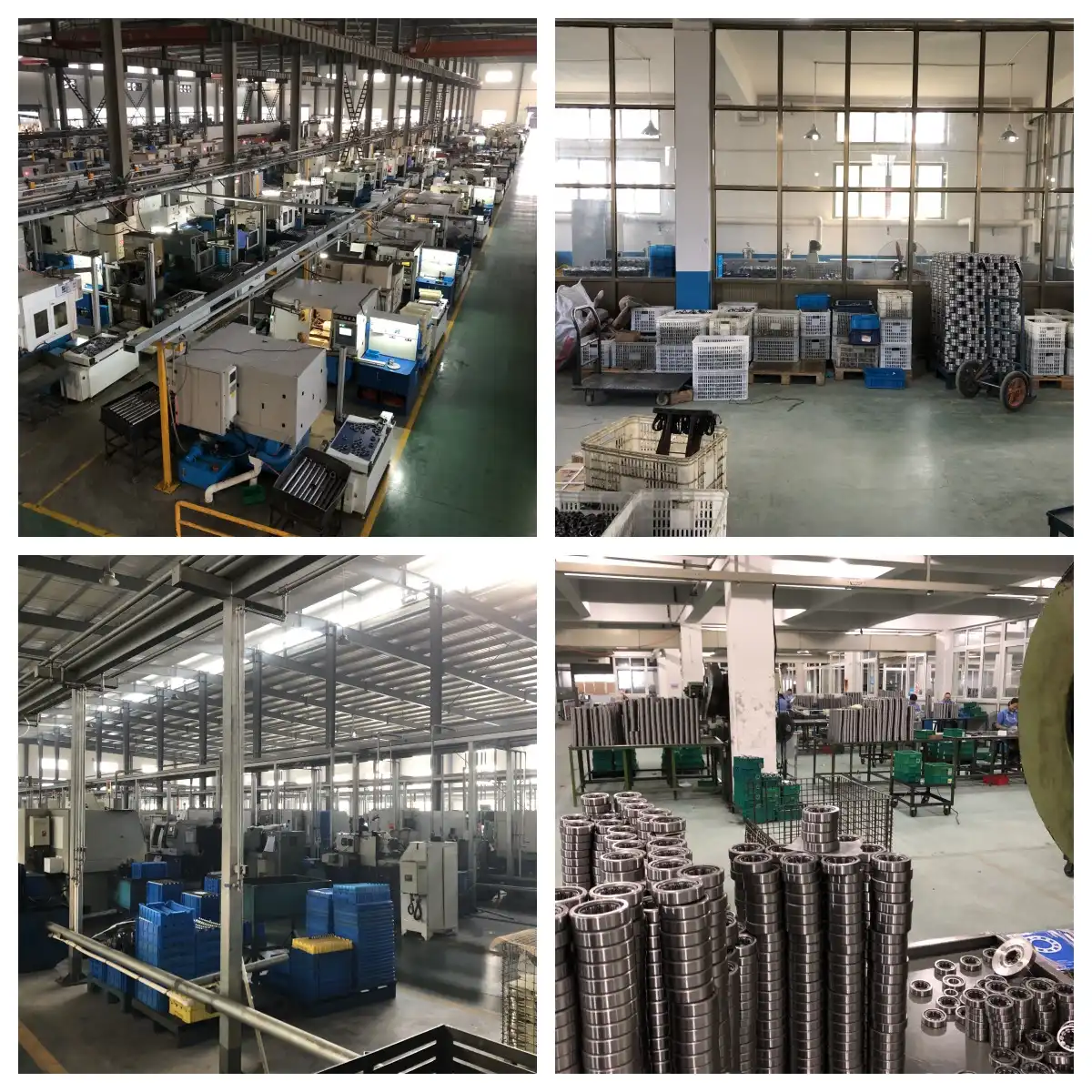
ATLYC (Luoyang Auto Bearing Co., Ltd.) has been manufacturing precision bearings since 2010, growing from a single workshop to six production lines with 120 skilled professionals. Holding ISO 9001 and IATF 16949 certifications, we serve OEMs and distributors across the US, Germany, South Korea, and beyond. As a trusted Tapered Roller Bearing 32 series supplier, we offer competitive bulk pricing, customization capability, and dependable lead times. Reach our technical team at auto@lyautobearing.com to request your catalog or a custom quotation today.
References
1. ISO 355:2007 — Tapered roller bearings — Boundary dimensions and series designations. International Organization for Standardization, 2007. Referenced in the dimensions and specifications section. https://www.iso.org/standard/38515.html
2. DIN 720:2012 — Tapered roller bearings — Dimensions. Deutsches Institut für Normung, 2012. Referenced in the introduction and dimensional standards section. https://www.din.de/en/getting-involved/standards-committees/nawa/standards/wdc-beuth:din21:152313227
3. Timken Company — Bearing Installation and Maintenance Guide, 2020. Referenced in the installation and maintenance section. https://www.timken.com/resources/bearing-installation-maintenance/
4. SKF Group — SKF Rolling Bearings Catalogue, 2023. Referenced in the performance comparison and procurement sections. https://www.skf.com/us/products/rolling-bearings/roller-bearings/tapered-roller-bearings
5. Harris, T.A. & Kotzalas, M.N. — Essential Concepts of Bearing Technology (5th ed.), Taylor & Francis, 2006. Referenced in the load capacity and roller geometry section. https://www.routledge.com/Essential-Concepts-of-Bearing-Technology/Harris-Kotzalas/p/book/9780849371837
6. IATF 16949:2016 — Quality Management System Requirements for Automotive Production and Relevant Service Parts Organizations. International Automotive Task Force, 2016. Referenced in the procurement considerations section. https://www.iatfglobaloversight.org/iatf-169492016/
Learn about our latest products and discounts through SMS or email