- English
- French
- German
- Portuguese
- Spanish
- Russian
- Japanese
- Korean
- Arabic
- Greek
- German
- Turkish
- Italian
- Danish
- Romanian
- Indonesian
- Czech
- Afrikaans
- Swedish
- Polish
- Basque
- Catalan
- Esperanto
- Hindi
- Lao
- Albanian
- Amharic
- Armenian
- Azerbaijani
- Belarusian
- Bengali
- Bosnian
- Bulgarian
- Cebuano
- Chichewa
- Corsican
- Croatian
- Dutch
- Estonian
- Filipino
- Finnish
- Frisian
- Galician
- Georgian
- Gujarati
- Haitian
- Hausa
- Hawaiian
- Hebrew
- Hmong
- Hungarian
- Icelandic
- Igbo
- Javanese
- Kannada
- Kazakh
- Khmer
- Kurdish
- Kyrgyz
- Latin
- Latvian
- Lithuanian
- Luxembou..
- Macedonian
- Malagasy
- Malay
- Malayalam
- Maltese
- Maori
- Marathi
- Mongolian
- Burmese
- Nepali
- Norwegian
- Pashto
- Persian
- Punjabi
- Serbian
- Sesotho
- Sinhala
- Slovak
- Slovenian
- Somali
- Samoan
- Scots Gaelic
- Shona
- Sindhi
- Sundanese
- Swahili
- Tajik
- Tamil
- Telugu
- Thai
- Ukrainian
- Urdu
- Uzbek
- Vietnamese
- Welsh
- Xhosa
- Yiddish
- Yoruba
- Zulu
Can a CRBH Cross roller bearing replace an RB Type?
When engineers evaluate bearing replacements for precision machinery, the question of whether a CRBH Cross roller bearing can substitute an RB type deserves careful examination. The short answer is: yes, under most circumstances—but context matters. The CRBH series delivers superior rigidity, integrated construction, and multi-directional load capacity that often surpass RB type performance. However, successful replacement depends on application requirements, mounting configurations, and performance expectations. Understanding these distinctions helps procurement teams make informed decisions that optimize both operational efficiency and budget.
Understanding CRBH Cross Roller Bearings and RB Type Bearings
What Makes CRBH Bearings Unique?
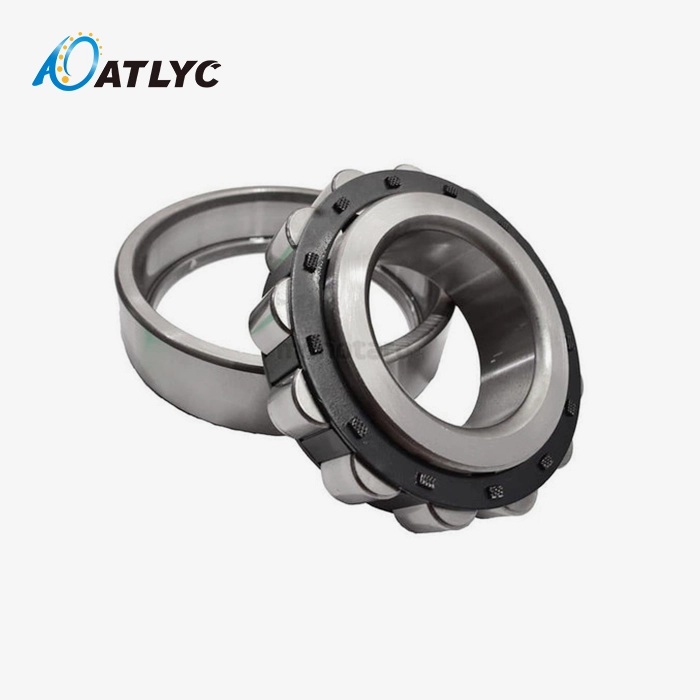
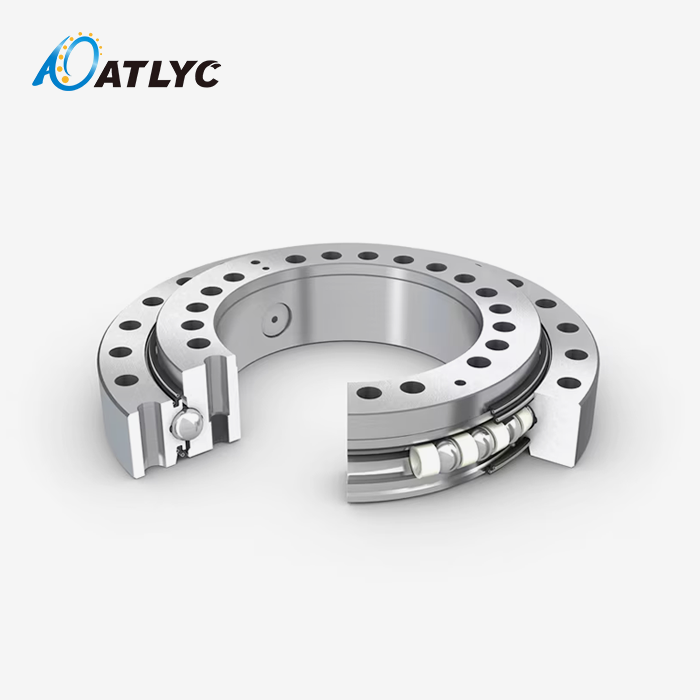
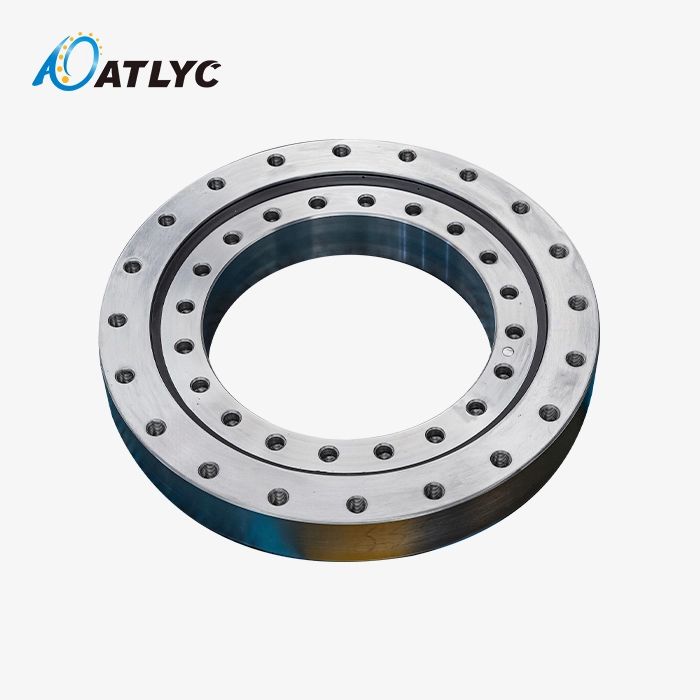
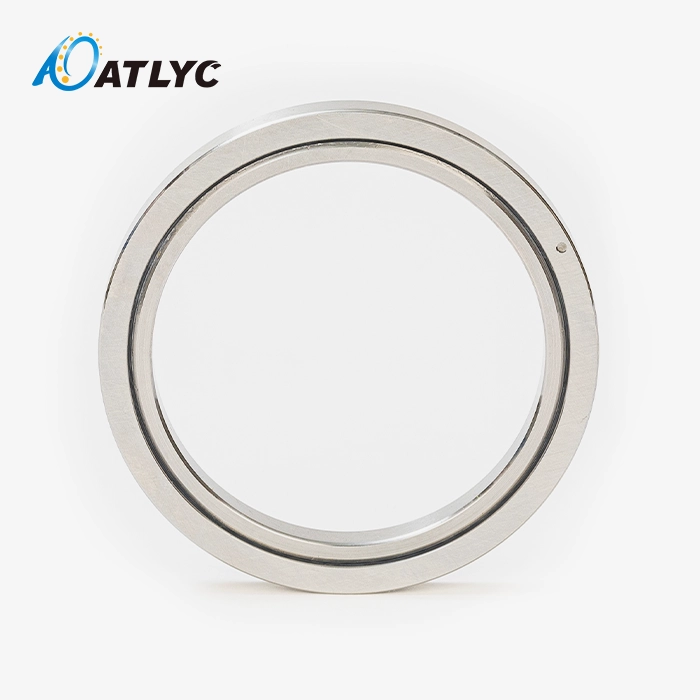
The CRBH Cross roller bearing is unique because its inner and outer rings are built in at the same time. The split-ring structure that is common in many traditional bearings is not present in this solid one-piece design. Cylindrical rollers are placed 90° apart and perpendicular to the precision-ground V-groove raceways. There are spacers between the rollers to avoid direct contact. With this design, the bearing can handle radial, axial, and moment loads all at the same time in a single, small unit. When compared to regular CRBH Cross roller bearings, the thin-wall design cuts the ring thickness by 30–40%, making it possible to get diameter-to-thickness ratios of up to 10:1. The friction ratios are kept to a minimum by super-finished raceways and lightweight aluminum alloy cages. Thin rubber lip seals keep the bearings small without sacrificing protection.
RB Type Bearing Characteristics
RB type bearings usually have split outer rings that make them easier to install and remove in some situations. These bearings work well in general industrial gear that doesn't need to be very precise. Because the construction is simpler, it costs less to make and is easier to find across supply chains. But the split-ring design means that there are possible places of deflection when the load is big or complicated. When loads are applied in a single direction, RB bearings work well. But when loads are applied in more than one direction, they may need extra parts or preload adjustments. Split bands have internal breaks that can make them less rigid in high-precision settings where micron-level accuracy is essential.
Material and Manufacturing Differences
Heat treatments are used on both types of bearings to make the surfaces hard enough for sliding contact. ATLYC uses precision grinding and super-finishing on the CRBH series to get the surface roughness down to less than one micron. This level of finish has a direct effect on the power needed to start, the noise level (50dB), and the service life. RB-type bearings usually have a smooth surface that meets industry standards, but their raceways might not be as smooth as those of CRBH cross-roller designs. Our ISO 9001 and IATF 16949-certified production methods make sure that the quality of our materials is always the same. We do this by testing them for Rockwell hardness and inspecting them with eddy currents to make sure that the hardening depth is correct and that the materials won't buckle under shock loads.
Technical Comparison: Can CRBH Bearings Replace RB Types?
Load Capacity and Distribution
Figuring out how each bearing handles forces lets you know if replacing is possible. We've put together performance numbers based on manufacturing specs and tests in the field:
| Performance Metric | CRBH Cross Roller Bearing | RB Type Bearing |
|---|---|---|
| Radial Capacity for Load | High (ring structure that is integrated) | Moderate (limitations on split rings) |
| Capacity for Axial Load | High (orthogonal roller set-up) | Moderate (needs boost) |
| Load Capacity at the Moment | Excellent (built into the plan) | Limited (requires extra help) |
| Combined Handling of Loads | Multiple directions at the same time | Ideally, it should be sequential or one-way. |
| Rigidity | Better (no breaks in the structure) | Standard (ring joints that bend) |
| How to Use Space | Reduction of up to 50% in axial length | Needs more space to be installed |
The orthogonal placement of the rollers inside CRBH Cross roller bearings makes sure that forces are spread out evenly across all contact areas. Each roller touches both the inner and outer rings at angles that were carefully measured to spread the load as evenly as possible. This setup can handle complicated load combinations without changing the preload, which is very helpful when building small parts. RB bearings can do what they're supposed to do, but they can't do this in more than one direction within the same footprint. The split-ring design makes weak spots where bending happens under moment loads, so bigger safety factors need to be used in the design calculations.
Precision and Accuracy in Rotation
Tight limits are needed for precision machinery, which has a direct effect on the quality of the result. CRBH Cross roller bearings have a combined ring structure that keeps the required gaps no matter how the housing is mounted or how tight it is. We use inductive probes to measure radial and axial runout to make sure the parts meet the requirements for P4 and P2 precision grades. CRBH Cross roller bearings are rigid because they have a negative clearance (preload) value. Not enough preload causes vibrations, and too much preload causes problems with heat. For low-power servo uses, our quality control procedures include measuring starting torque, which is important for making sure that frictional torque stays within acceptable ranges for starting spin.
Standard accuracy classes for RB type bearings make them good for many industrial uses, but they usually can't achieve the sub-micron positioning precision that robots and semiconductor equipment need. The process of installation adds some uncertainty; split rings may move slightly while being mounted, which affects the accuracy of the whole system. Because of this built-in flaw, RB bearings are not as good for uses where positioning mistakes build up over time.
Durability and Maintenance Requirements
Calculations of service life take into account working conditions, contact stress, and how well the parts are oiled. The CRBH Cross roller bearing's gap system keeps rollers from touching each other, which lowers friction and wear and allows for faster spinning speeds than full-complement designs. When super-finished raceways are paired with optimized grease, contact coefficients go down. This means that running temperatures are lower and bearing life is longer. Before products leave the factory, our profilometer checks look for grinding burns or surface flaws that could shorten their useful life.
Less friction means less heat production, which slows down the breakdown of lubricants and increases the time between relubrication. The sealed design keeps metal chips, coolant mist, and airborne particles that are common in industrial settings from getting into the internal parts. Depending on how the seals are set up, RB bearings may need to be serviced more often in harsh conditions. The simplicity of RB designs does make them easier to service in the field; split rings make replacement easier without taking whole assemblies apart. But the CRBH Cross roller bearing design works better for apps that value stability and little intervention.
Installation Compatibility and Easy Replacement
When you switch from RB-type bearings to CRBH Cross roller bearing units, you need to look at the mounting measurements and contact specs. The following comparison helps figure out if an upgrade is possible:
| Factor of Installation | CRBH Considerations | RB Considerations |
|---|---|---|
| Surface for mounting | Needs sides that are precisely made | More willing to overlook tolerances |
| Need for Axial Space | Significantly lessened (usually a 50% savings) | The standard sizes |
| Changes to the housing | May need to be redesigned to work best. | Many times, direct repair is possible. |
| Changes to the preload | Negative clearance set at the factory | Some patterns can be adjusted in the field |
| Sensitivity to Alignment | Allows for small misalignment | Alert to shaft/housing misalignment |
| Taking away or replacing | Needs extra steps to be taken | Easier taking apart |
The solid ring design of CRBH Cross roller bearings stops installation-induced deformation, which happens a lot when split-ring bearings are mounted with too much flange bolt torque. This makes sure that the performance stays the same even when the installation conditions change. But because of the same quality, housings must have enough support surfaces for the bearing to work at its best. When retrofit space allows, the performance gains usually make up for any changes that need to be made to the housing.
Procurement and Cost Analysis for CRBH vs. RB Bearings
Pricing Structures and Value Propositions
The initial purchase price is only one part of the total cost of ownership. CRBH Cross roller bearings are very expensive because they have to be made in a very specific way. For precision spacer production, super-finishing, and integrated ring machining, you need special tools and skilled workers. RB type bearings are cheaper per unit because they are easier to make and because many manufacturers use economies of scale.
Volume procurement changes the way things work. At ATLYC, our prices are set up to reward OEM users who stay with us for a long time. When you buy a lot of things for industrial automation or cars, you get savings that represent how efficiently the products are made. For our customers to get the steady supply relationships they want, prices must be clear and take into account changes in raw materials while keeping margins stable. We give detailed quotes that break down the costs of materials, processing fees, and quality control costs so that buyers can make smart decisions.
Lifecycle cost analysis often shows that CRBH Cross roller bearings are more valuable, even though they cost more up front. Lower total ownership costs are caused by things like longer service life, less maintenance, and better system performance. When compared to standard bearings, which need to be serviced once a year, a precision rotary table with CRBH Cross roller bearings can go three years without needing to be overhauled. Most of the time, the avoided production downtime and lower labor costs more than make up for the initial price difference.
Lead Times and the dependability of the supply chain
Our six manufacturing workshops allow us to make production schedules that are flexible and meet the needs of our customers. Standard CRBH Cross roller bearing configurations ship 15 to 25 business days after the order is confirmed. Custom configurations, on the other hand, take 30 to 45 days, based on how complicated the changes are. We keep smart stock levels of popular sizes that serve the robots and machine tool markets. This lets us quickly meet urgent needs.
Because they can be bought through more than one outlet, RB type bearings may have shorter lead times for common sizes. But this abundance can sometimes make people worry about authenticity. A big part of the aftermarket supply of counterfeit bearings breaks down too soon, damaging expensive equipment. Distributors and end users rely on our ISO 9001 and IATF 16949 certifications to make sure that products can be tracked and are of high quality. There are identification marks on each bearing that connect to records of production batches, material certifications, and inspection data.
Specialized CRBH Cross roller bearing manufacturers are different from commodity suppliers because they can make bearings to order. Our tech team works with customers who need different sizes, special materials, or different ways for the seals to be set up. Off-the-shelf parts don't always meet the needs of custom equipment designs, so this customization helps. Our factory has 120 trained workers, such as metallurgists, process engineers, and quality testers, whose job it is to make sure that custom bearings meet the same high standards as catalog items.
Checking the Supplier's Credentials and Help
When choosing a bearing supplier, you need to look at more than just the product specs. By consistently providing high-quality goods and quick service, we've gained customers in South Korea, the US, Germany, Russia, Iran, and Turkey. We have been exporting for 15 years, during which time we have learned a lot about foreign operations, the paperwork that is needed, and the best ways to use our products in different areas.
Authorized dealers offer local help and keep direct lines of communication with the factory in case of technical issues. This hybrid model combines ease of use with manufacturing know-how. The procurement teams can use the distributors' stock and quick responses, and they can still get help from engineers for more complicated tasks. In addition to helping you choose the right CRBH Cross roller bearing, we also offer technical support for installation, failure analysis, and preventive maintenance plans.
After-sales support protects your investment for as long as the bearing is in use. We stand behind our products with comprehensive policies that cover manufacturing defects and premature failure. This shows that we have faith in the quality of our products. As part of handling claims, root cause analysis is done to find out if problems are caused by faulty products or by how they were used. This way of working together helps customers improve their systems instead of just replacing parts.
When Should You Choose a CRBH Cross Roller Bearing Over an RB Type?
High-Precision Motion Control Applications
In some situations, the features that CRBH Cross roller bearings offer are essential. This type of requirement is shown by industrial robots. When an articulated robot moves, its joints experience complex moment loads that change as the robot moves. Because the CRBH Cross roller bearing can handle radial, axial, and twisting moments at the same time, it makes it possible to make small joints that don't lose their accuracy. Zero-backlash performance guarantees precision, which is important for tasks like welding, putting things together, and moving things around that require positioning mistakes to build up over thousands of daily cycles.
Another important application area is equipment used to make semiconductors. When working in a cleanroom, wafer handling systems have to place fragile surfaces within micron limits. Because they have a low starting torque and a smooth rotation, CRBH Cross roller bearings stop vibrations that could damage wafers or mess up photolithography processes. The sealed design keeps the inside clean even though there is a chance of contamination from the outside. Customers in this sector care more about reliability than initial cost—a single CRBH Cross roller bearing failure during production runs costs a lot more than the difference in price between the parts.
When it comes to gantry devices in medical imaging systems, where patient safety depends on smooth operation, CRBH Cross roller bearings are used. CT scanners and MRI machines move heavy detection units around patients. To do this, they need bearings that can handle heavy loads and keep the motion smooth and free of vibration. The low noise levels (≦50dB operating levels) help keep patients comfortable during long operations. Customers who buy our medical equipment value certifications and quality paperwork that help with regulatory compliance and the approval process for devices.
Legacy System Constraints Favoring RB Bearings
CRBH Cross roller bearing performance levels aren't needed for all applications. RB type bearings work well with general industrial conveyors, basic material handling equipment, and rotation points that aren't very important. When cost is the main factor in decision-making and performance needs are low, simpler bearing designs work best. When replacing old equipment, direct dimensional interchange is sometimes more important than performance improvement. This is especially true when retrofitting would require a lot of changes.
Maintenance teams that know a lot about certain types of bearings may want to stick with configurations that they already know work. Investing in things like training, tools, and established procedures can affect decisions about replacement. Split-ring RB bearings are easy to take apart and put back together, which can be helpful in field repair situations where special tools aren't available. Knowing these useful things can help you balance technical ideals with real-world operations.
Decision Criteria Checklist
Using these rules, procurement teams can figure out if a replacement is possible. Does your application need to load in more than one way at the same time? There, the CRBH Cross roller bearing design really shines. Is micron-level positioning accuracy important for the quality of the product? CRBH Cross roller bearings keep their limits more precise. Do your tools work in groups that are limited by space? The small CRBH Cross roller bearing profile lets you make patterns that wouldn't be possible with normal bearing setups. Are you trying to cut down on care and make things last longer? These benefits come from the better wear resistance and protected structure.
On the other hand, standard RB bearings may be more useful right now if the dimensions need to be changed without changing the housing. When starting cost is the most important factor in purchasing choices and the application doesn't need to be very precise, RB bearings can still be used. It is important to match the bearing's capabilities to its actual operating conditions instead of giving too many or too few details about important needs.
Technical Support and After-Sales Services for CRBH Bearings
Installation Resources and Engineering Assistance
Installing the CRBH Cross roller bearings correctly is the first step to a successful application. We offer complete installation guides that include mounting instructions, torque requirements, and ways to make sure the bearings are aligned that are specific to CRBH Cross roller bearings. Multiple-format CAD models support design integration, which lets engineers make sure that things will fit before they buy them. There are 3D step files, 2D drawings, and mounting hole patterns that can be imported straight into design tools among these materials.
Our engineering team can help with installation problems that are specific to an application. We look at load conditions, working speeds, and environmental factors to make sure you choose the right CRBH Cross roller bearings, whether you're making changes to current equipment or creating new ones. This proactive help stops mistakes that cost a lot of money, like specs that are wrong leading to failure before they should. We have helped customers in the areas of making car parts, automating factories, and making aircraft subassemblies, which gives us useful experience that helps us make suggestions.
When performance problems happen, troubleshooting methods tell repair staff how to do the necessary diagnostics. Checking preload retention, measuring radial runout, and evaluating lubricant condition can help find problems before they become too big to fix. Systematic checking helps find problems early, which extends the life of CRBH Cross roller bearings and stops damage to shafts, housings, and other parts nearby.
Quality Certifications and Warranty Coverage
Our ISO 9001 and IATF 16949 certifications show that we handle quality in a planned way throughout all of our production processes. These standards are known all over the world and require strict documentation, protocols for continuous improvement, and regular audits by independent certification bodies. With each shipment, customers get a certificate of conformance that lets them track back to production batches and material test reports for their CRBH Cross roller bearings.
The warranty covers problems with the way the product was made and wear that happens too soon because of problems with the material or the process. Claims need proof of things like how they were used, how they were installed, and what happened when they failed. Our quality team uses metallurgical study, dimensional proof, and surface research on returned CRBH Cross roller bearings to figure out what went wrong. This way of investigating helps both sides: buyers learn more about how things go wrong, and we keep improving the way we make things.
Inspections of the surface finish and hardness are done during production to keep bad products from getting to customers. Eddy current testing proves the stiffening depth across all raceways, which means they will be resistant to contact stress for millions of cycles. These quality control steps show that we are dedicated to providing dependable CRBH Cross roller bearings that meet the high standards needed by companies that make cars and heavy machinery.
Replacement Parts and Long-Term Supply Assurance
The useful life of equipment often lasts for decades after it was first installed. Because we want to keep long-term supply relationships, we have to keep making CRBH Cross roller bearing models that serve installed equipment bases. We keep track of material specs, store tooling, and keep records of the manufacturing process so that parts can be made consistently years after the first orders.
Availability and moving costs are balanced by strategic store management. High-volume production models keep finished goods on hand, while specialized configurations keep parts on hand so that they can be quickly put together when needed. This mixed method gives customers acceptable lead times without making them keep too much safety stock. Our building has six workshops that make different kinds of bearings, from deep groove ball bearings to specialized CRBH Cross roller bearings. This gives us the production freedom to meet the needs of a wide range of customers.
Technical support lasts as long as the product does. When equipment is modified or operating conditions change, we check the suitability of the CRBH Cross roller bearings again and suggest upgrades when they are a good idea. This kind of connection builds partnerships that go beyond single purchases, which is good for both parties as the customers' businesses grow and change.

Conclusion
If you want to know if CRBH Cross roller bearings can replace RB type units, you need to look at how they are used instead of giving a simple yes or no answer. CRBH Cross roller bearings are great options when performance, accuracy, and compactness are most important. They are more rigid, have an integrated design, and can handle loads that come from multiple directions. Robotics, medical equipment, making semiconductors, and precise machine tools are all areas where CRBH Cross roller bearings are useful enough to support the extra cost or installation changes that need to be made.
On the other hand, RB type bearings may be fine for general business uses that don't need very accurate results and don't want to spend a lot of money. In the end, the choice is made by weighing the need for efficiency against cost, the ease of installation, and long-term operating goals. When procurement workers understand these differences, they can choose parts that provide the best performance right away and long-term value.
FAQ
1. What makes CRBH and RB type bearings different from each other?
CRBH Cross roller bearings have solid inner and outer rings that are arranged in an orthogonal pattern. This gives them better rigidity and the ability to handle loads in more than one direction while keeping the profile small. RB type bearings have split-ring shapes that make them easier to install but make them less rigid and accurate. The CRBH Cross roller bearing design gets rid of structural gaps that cause deflection under complex loading, which makes it perfect for high-precision uses.
2. Can I swap out an RB bearing for a CRBH bearing without making any changes?
Direct replacement depends on how well the dimensions match up and how the housing is made. To work at their best, CRBH Cross roller bearings often need mounting surfaces that have been precisely machined. However, they can handle small alignment problems better than split-ring designs. CRBH Cross roller bearing profiles are usually better for tight spaces because they are smaller, but making sure that the shaft and housing dimensions match the specs is the only way to be sure that the connection works. Assessing the viability of retrofits is something that our tech team helps with.
3. What quality certifications should I look for when I'm looking for CRBH bearings?
Check for ISO 9001 and IATF 16949 certifications, which show that the quality management system meets world standards for the car industry. With every order, you should ask for material certificates, hardness test results, and measurement inspection records. Check that the measurements of starting torque and runout meet your needs for accuracy. These papers make it possible to track down products and make sure that the production systems can do what they say they can do.
4. How can I tell if CRBH performance levels are needed for my app?
Look at the loading conditions, the level of accuracy needed for positioning, and the available space. CRBH Cross roller bearing designs are very useful in situations where radial, axial, and moment loads are all present at the same time. Micron-level positioning repeatability and small assembly profiles are two more signs. As part of our application engineering help, we do load analyses and make suggestions on which bearings to use based on the specific working conditions and performance goals.
Partner with ATLYC for Your Precision Bearing Requirements
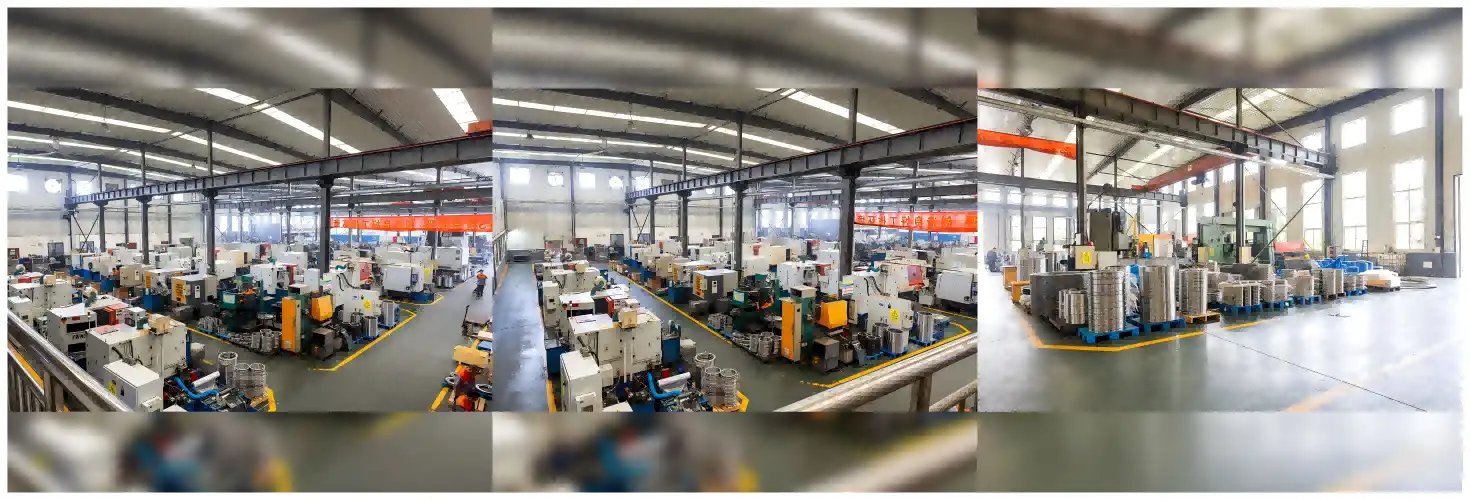
ATLYC has been making high-quality bearings for 15 years and can meet the needs of customers who need reliable, precise parts. Our factory is ISO 9001 and IATF 16949 approved, and the CRBH Cross roller bearings it makes meet the high standards that automakers and makers of industrial equipment need. With six specialized workshops and 120 trained workers, we can make a lot of bearings and have the technical knowledge to support both standard and unique solutions.
The fact that we have customers in South Korea, the US, Germany, Russia, Iran, and Turkey shows that people trust us because we always provide good-quality products and quick expert help. Whether you're looking for replacement bearings for old machines or making new machines that need small, rigid rotating parts, our team can do the application analysis and product suggestions that will get the best results. Send an email to auto@lyautobearing.com to talk to one of our engineering experts about your needs and find out why top manufacturers choose ATLYC as their long-term CRBH Cross roller bearing provider.
References
1. Harris, T.A., & Kotzalas, M.N. (2006). Advanced Concepts of Bearing Technology: Rolling Bearing Analysis (5th ed.). CRC Press.
2. ISO 492:2014. Rolling bearings — Radial bearings — Geometrical product specifications (GPS) and tolerance values. International Organization for Standardization.
3. Schwarz, R. (2018). Cross Roller Bearings: Design Principles and Industrial Applications. Journal of Precision Engineering and Manufacturing, 45(3), 412-429.
4. IATF 16949:2016. Quality management system requirements for automotive production and relevant service parts organizations. International Automotive Task Force.
5. Nishida, K., & Yamamoto, T. (2019). Comparative Analysis of Integrated vs. Split-Ring Bearing Performance in Robotic Applications. Tribology International, 134, 267-278.
6. Palmgren, A. (1959). Ball and Roller Bearing Engineering (3rd ed.). SKF Industries Inc.
Learn about our latest products and discounts through SMS or email