- English
- French
- German
- Portuguese
- Spanish
- Russian
- Japanese
- Korean
- Arabic
- Greek
- German
- Turkish
- Italian
- Danish
- Romanian
- Indonesian
- Czech
- Afrikaans
- Swedish
- Polish
- Basque
- Catalan
- Esperanto
- Hindi
- Lao
- Albanian
- Amharic
- Armenian
- Azerbaijani
- Belarusian
- Bengali
- Bosnian
- Bulgarian
- Cebuano
- Chichewa
- Corsican
- Croatian
- Dutch
- Estonian
- Filipino
- Finnish
- Frisian
- Galician
- Georgian
- Gujarati
- Haitian
- Hausa
- Hawaiian
- Hebrew
- Hmong
- Hungarian
- Icelandic
- Igbo
- Javanese
- Kannada
- Kazakh
- Khmer
- Kurdish
- Kyrgyz
- Latin
- Latvian
- Lithuanian
- Luxembou..
- Macedonian
- Malagasy
- Malay
- Malayalam
- Maltese
- Maori
- Marathi
- Mongolian
- Burmese
- Nepali
- Norwegian
- Pashto
- Persian
- Punjabi
- Serbian
- Sesotho
- Sinhala
- Slovak
- Slovenian
- Somali
- Samoan
- Scots Gaelic
- Shona
- Sindhi
- Sundanese
- Swahili
- Tajik
- Tamil
- Telugu
- Thai
- Ukrainian
- Urdu
- Uzbek
- Vietnamese
- Welsh
- Xhosa
- Yiddish
- Yoruba
- Zulu
RA15008UUCC0 Precision Cross Roller Bearing for High Accuracy Machines
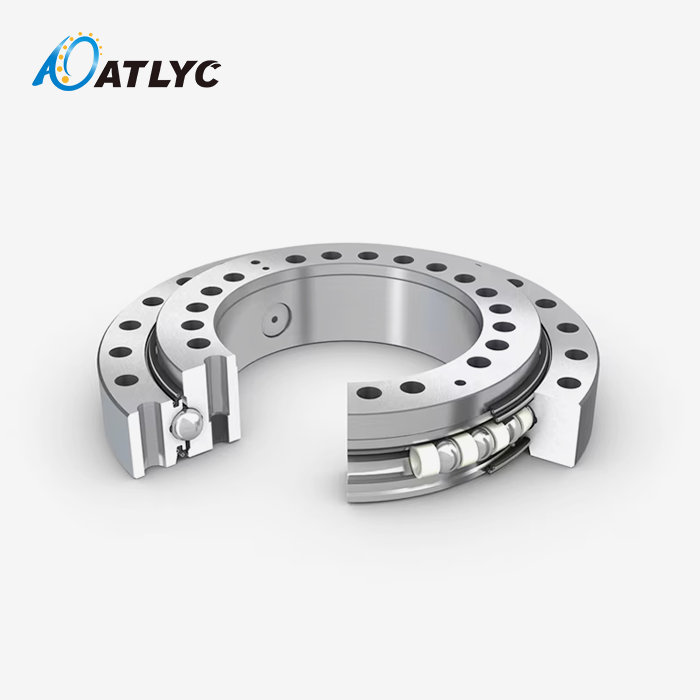
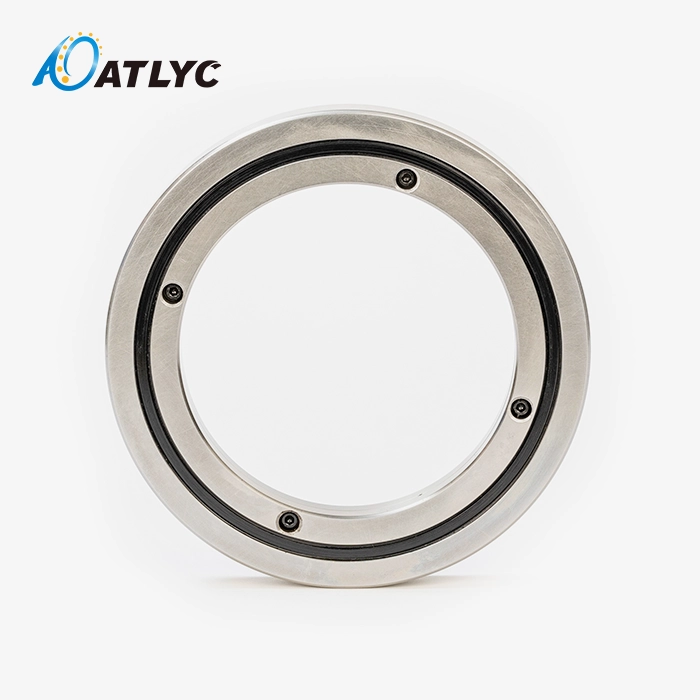
When precision manufacturing demands meet spatial constraints, the RA15008UUCC0 Precision Cross Roller Bearing emerges as an engineering solution designed specifically for ultra-thin applications requiring exceptional load capacity. This specialized bearing model features cylindrical rollers positioned orthogonally at 90-degree intervals within V-grooved raceways, combining a separable outer ring structure with an integrated inner ring design. The dual rubber seals and negative clearance preload deliver micron-level rotational accuracy while handling simultaneous radial, axial, and moment loads—characteristics that distinguish this bearing from conventional ball bearing assemblies in robotics, semiconductor equipment, and medical imaging applications.
Introduction
In the 15 years that ATLYC has been making bearings, we have seen the need for precision grow across all industries. The RA15008UUCC0 Precision Cross Roller Bearing is an important part category that solves problems that automakers, automation equipment makers, and industrial machinery makers have when they need high-precision rotational performance in small assembly spaces.Large and medium-sized companies that do business in globally competitive markets know that the bearings they choose have a direct effect on machine uptime, production consistency, and long-term operational costs. This detailed book gives people who work in buying and building teams technical details, comparisons, and useful strategies for deploying the products. Our Luoyang factory, which is ISO 9001 and IATF 16949 approved, has sent precision bearings to partners in South Korea, Germany, and the US. They have set up production processes that guarantee consistent quality and reliable lead times.When business leaders look at cross roller bearing technology, they need to know the technical differences between bearing designs and which uses are best for each. This helps them make smart sourcing choices that balance performance needs with cost-effectiveness.
Understanding RA15008UUCC0 Precision Cross Roller Bearing
The main way that RA15008UUCC0 Precision Cross Roller Bearings are designed is different from standard radial ball bearings because of the way they distribute load. This part looks at the RA15008UUCC0 Precision Cross Roller Bearing's technical architecture and material specifications, which determine how well it works.
Separable Outer Ring Architecture
For machinery makers, the outer ring separable structure offers big installation benefits. This way of building structures lets the inner ring spin nonstop while keeping its place accurate to within one micron. During assembly, techs can place the bearing parts in a certain order, which makes it easier to put them together in small housings where access would normally be limited. The split design takes into account differences in how much bearing parts and housing materials expand and contract with temperature. This lowers stress levels that could affect the accuracy of spinning over long periods of time.
Dimensional Specifications and Material Composition
In high-precision machinery uses, bearing performance is determined by precise dimensional control. The model has an inner diameter of 150 mm, an outer diameter of 166 mm, and an incredibly thin width of 8 mm. In robotic joint assemblies and rotary indexing tables, where every millimetre matters for the total performance of the device, this small cross-section makes it possible to create parts that take up less room.The choice of material has a direct effect on the load capacity and service life of the bearing. ATLYC makes these parts with GCr15 bearing steel that has been vacuum-degassed and heated to a Rockwell hardness of 60 to 64. This metallurgical standard makes sure that the material won't wear down when it's loaded and unloaded many times, which is common in automated factory settings. GCr15SiMn alloy steel is used in other specifications for situations where better resistance to thermal degradation at high operating temperatures is needed.
| Technical Parameter | Specification | Performance Impact |
|---|---|---|
| Inner Diameter | 150mm | Accommodates large shaft diameters in robotic joints |
| Outer Diameter | 166mm | Compact envelope for space-constrained assemblies |
| Width | 8mm | Ultra-thin profile reduces mechanism weight |
| Seal Type | UU (Dual Rubber) | Prevents contamination in industrial environments |
| Clearance Class | CC0 (Negative) | Eliminates backlash for precision positioning |
| Accuracy Grades | P6, P5, P4, P2 | Matches application precision requirements |
Cross Roller Arrangement Principles
Line-contact geometry is made up of cylindrical rollers that are placed perpendicular to each other and V-grooved raceways. This setup spreads weight across several contact points at the same time, making it three to four times more rigid than point-contact ball bearings of the same size. Because the rollers are arranged at a 90-degree angle, the bearing can withstand complex moment loads. This is a very important property for robotic arm uses where uneven masses cause large tipping forces during motion cycles.When the preload condition CC0 is reached, there is no more interior clearance. This creates controlled interference that keeps the rollers in touch with the raceways throughout the load spectrum. This negative clearance state increases stiffness and decreases elastic displacement under changing load conditions. These properties directly help with repeatability in positioning applications for precision machinery.
Sealed Protection System
The designation "double UU seal" means that synthetic rubber seals are attached to both bearing faces. When these contact seals are in place, they protect against dust, metal chips, and coolant mist that are common in machining centers. Keeping grease contained increases the time between lubrication and maintenance needs. This is especially helpful in automated production lines where unplanned downtime can mess up schedules and lower productivity goals.
Comparing RA15008UUCC0 Precision Cross Roller Bearing with Other Bearings: Making Informed Decisions
Comparative research that shows how the performance of different bearing technologies and competing products is different is helpful for making buying choices. This evaluation method helps engineering teams match the bearing's capabilities to the needs of a particular application while taking cost-performance ratios into account.
Performance Comparison with Similar Models
Although the RA15007UUCC0 model is based on the same design ideas as the RA15008UUCC0 Precision Cross Roller Bearing, it is 7 mm wide instead of 8 mm across. This difference in size has an effect on the load capacity and stiffness. When there are higher moment loads or a need for maximum rigidity, the 8mm width configuration is usually chosen. On the other hand, mechanisms that care about weight may choose the slightly lighter 7mm option when load margins allow it.However, angular contact ball bearings are an alternative way to handle combined loads, but they need to be mounted in pairs to reach the same load capacity. This arrangement makes the assembly more complicated and takes up more axial space, which are both things that favour cross roller technology in small mechanism designs where the ability to use space efficiently determines the overall system's viability.
Brand Positioning Against Established Manufacturers
NSK and THK are well-known bearing brands that make a wide range of cross roller products. ATLYC's manufacturing strategy is based on providing the same level of technical performance while keeping prices low enough for OEM production numbers. Independent testing shows that our P5 grade bearings have rotational accuracy within 3 microns, which is the same level of performance as more expensive options.
| Comparison Factor | RA15008UUCC0 Precision Cross Roller Bearing | Standard Ball Bearings | Premium Brand Cross Rollers |
|---|---|---|---|
| Load Direction Handling | Radial + Axial + Moment | Radial primary | Radial + Axial + Moment |
| Mounting Complexity | Single bearing assembly | Paired arrangement | Single bearing assembly |
| Space Efficiency | 8mm width | 15-20mm combined | 8-10mm width |
| Rigidity Performance | High line-contact | Moderate point-contact | High line-contact |
| Price Positioning | Competitive mid-range | Budget-friendly | Premium pricing |
| Lead Time | 2-4 weeks standard | Short for common sizes | 4-8 weeks typical |
Application Suitability Considerations
Cross roller design is especially good for robotic joint systems because it can handle a lot of weight at once. When you use traditional bearing arrangements with many parts to resist moment loads, the tolerances add up over time, which makes positioning less accurate. This worry is taken away by models like the RA15008UUCC0 Precision Cross Roller Bearing's single-bearing approach, which also makes setup easier and cuts down on the number of parts needed.In machine centers, rotary indexing tables need to be very stiff so that they can keep the part in place while cutting, which creates changing force directions. The preloaded cross roller configuration doesn't bend under these dynamic loads, which helps keep the surface finish quality and the same dimensions across production runs.
Practical Guide: Installation, Maintenance, and Usage Tips for RA15008UUCC0 Precision Cross Roller Bearing
The full performance potential of RA15008UUCC0 Precision Cross Roller Bearings can only be reached by following the right steps for fitting and regular upkeep. This part gives useful advice based on real-life experience in a range of workplace settings.
Installation Best Practices
Because the outer ring can be taken off, the mounting area needs to be flat and the pin torque needs to be even. The mounting surfaces of the housing should be flat within 0.01 mm across the bearing envelope to keep the rings from warping, which would affect the accuracy of rotation. When installing, use mounting bolts in a star pattern, gradually tightening each one until it reaches the required level instead of fully tightening each one one at a time. This method properly spreads clamping forces and keeps the circular ring shape that is needed for precise operation.The performance of a bearing is affected by the temperature during installation. Let the parts settle at room temperature before putting them together for good, because changes in temperature can cause changes in size that affect the loading conditions. The negative clearance CC0 standard means that interference fits should be carefully considered—too much press force can damage bearing parts plastically, and not enough interference may let them move around while they're working.
Lubrication Schedules and Procedures
When you buy sealed bearings, they come with grease that is already installed and is made for general commercial settings that work in temperatures between -20°C and +100°C. Relubrication should be done every 10,000 hours of service or once a year, whichever comes first in standard uses. When working at high speeds and high temperatures, greasing cycles may need to be shorter to keep the grease from breaking down, which raises friction and speeds up wear.If you need to remove the seal in a vacuum environment to stop outgassing, use a different type of fluorinated lubricant, like Krytox or Fomblin. When there is a vacuum, normal petroleum-based lubricants would evaporate and affect sensitive processes, but these speciality greases keep their lubricating qualities.
Troubleshooting Common Issues
When something is rotating and making strange noises, it's usually because of pollution getting past the sealing surfaces or not enough lubricant. Check the seal's contact surfaces for damage that could lead to leaks that let dust or water in. If the rotating force goes up, it means that the preload has gone up because of thermal effects or bearing degradation, which means that the part needs to be replaced before it fails completely.A runout reading that is too high is caused by an uneven mounting surface or a housing that bends under load. Check that the torque on the mounting bolts is the same on both sides, and look inside the housing to see if the bore is out of round, which would put uneven stress on the bearing structure. Fixing these problems with the fitting usually brings back the performance that was expected without having to replace the bearings.
Procurement Insights for RA15008UUCC0 Precision Cross Roller Bearings
When making strategic sourcing decisions, you have to weigh technical needs against business factors like supplier dependability, pricing, and the ability to provide support after the sale. RA15008UUCC0 Precision Cross Roller Bearings This part gives people who work in procurement guidelines for judging suppliers and setting up purchase deals.
Supplier Evaluation Criteria
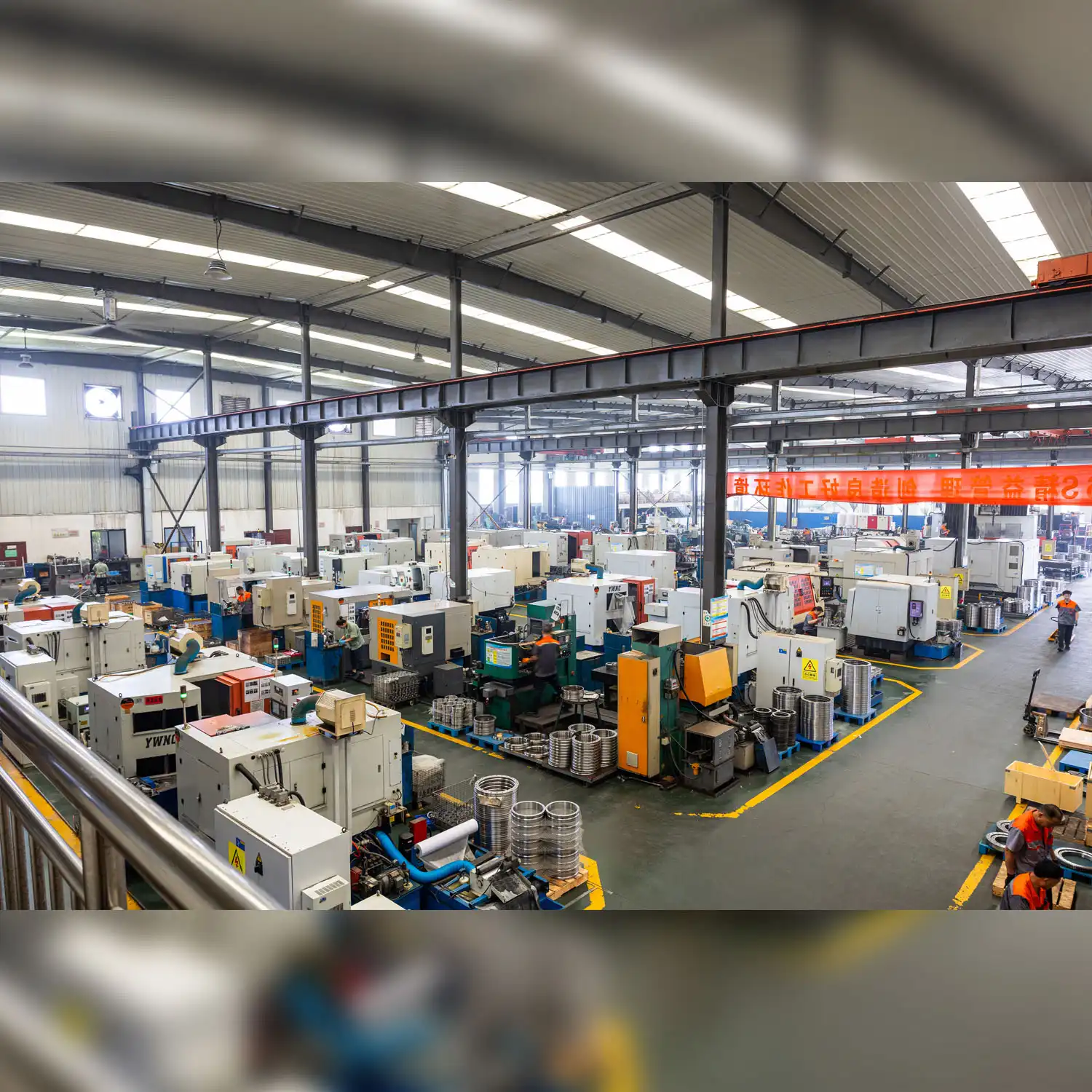
Quality certification status is one of the most important ways to choose a supplier. ISO 9001 certification shows that quality control systems are well-established, and IATF 16949 meets the needs of the car industry for preventing defects and improving all the time. ATLYC keeps both certifications up to date with regular audits by a third party, which shows that they can control processes.A supplier's manufacturing capacity shows how well they can meet volume needs within required lead times. Our six production workshops have automated grinding and heat treatment tools that can handle 50,000 bearing units per month, which means that OEM production plans can make more of them. This ability can handle both small amounts for prototypes and large amounts for regular production, so customers don't have to qualify multiple sources at different stages of a product's lifecycle.
Pricing Structures and Volume Considerations
Unit prices usually go down as the number of orders goes up because fixed setup costs are spread out over more orders. Standard price tiers might offer 10-15% discounts for orders of 100 units or more, and bigger discounts are available for yearly orders of more than 500 units. These volume commitments let suppliers make the best use of production schedules and give customers stable cost structures that they can use to plan their budgets.Lead times depend on the size of the order and the specifics that need to be met. Standard setups can be shipped within two weeks if they are in stock. Custom changes, like using different seal materials or upgrading to a higher precision grade, may cause shipping to take up to four weeks. Setting up blanket buy orders with planned releases helps balance the costs of keeping inventory with the needs of the production schedule. This is especially helpful in just-in-time (JIT) manufacturing settings.
Warranty and Technical Support
Full guarantee coverage shows that the seller is confident in the quality of the product and protects customers from the costs that come with defects. Standard warranty terms should cover flaws in the material or the way it was made for at least 18 months from the date of shipment. Access to technical support helps answer application questions during the design phase and handle problems in the field, which cuts down on the time it takes to fix problems that cause production to stop.During the development stages of a project, ATLYC offers free technical advice on how to choose bearings based on load estimates and available room. This way of working together cuts down on project risk and speeds up the time it takes to bring new products to market by letting customers make changes to designs before they invest in tools.
RA15008UUCC0 Precision Cross Roller Bearing Applications and Industry Use Cases
Cross roller bearing technology has clear benefits over other options in certain situations, which engineers can spot by learning about common use cases. This part looks at specific implementations in different industries and how they improve performance.
Industrial Robotics and Automation
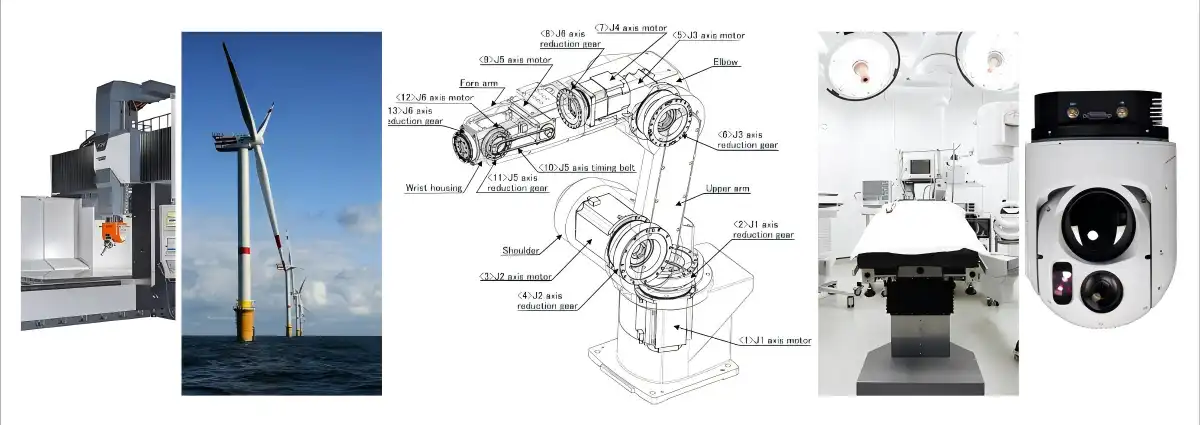
When designing collaborative robots, small joint mechanisms that keep positioning accuracy even when the payload conditions change are given the most weight. Because the RA15008UUCC0 Precision Cross Roller Bearing can handle moment loads within an 8mm width, designers can make robot arms with smaller cross-sections. This lowers the robot's rotating inertia and improves its acceleration response. Robots on an auto assembly line that use these bearings can keep their positions within 0.02mm over millions of motion cycles. This is important for making sure that welded and glued joints are always the same quality.The waist and elbow joints are especially hard to load because extending the arm creates moment loads that are related to the distance of the mass from the joint center. Using paired angular contact bearings in traditional bearing setups takes up a lot more axial room and causes tolerance stack-up, which makes positioning less accurate. Cross roller designs get rid of these problems because they handle loads all at once.
Semiconductor Manufacturing Equipment
In lithography systems, the wafer alignment stages need to be able to position themselves with sub-micron accuracy in vacuums. After taking off the seal and replacing the oil with one that works in vacuums, the RA15008UUCC0 Precision Cross Roller Bearing gives you the precise rotation you need for pattern alignment while taking up very little space in clean-room equipment that is already crowded. The preloaded setup gets rid of backlash, which would require motion control systems to use complicated methods to fix.
Medical Imaging Systems
CT scanner gantries move detector arrays around patients while keeping them perfectly lined up with reconstruction methods. Vibration-free rotation is important for picture clarity because mechanical noise leads directly to artefacts in reconstruction. When you use line-contact geometry to get a low friction coefficient, you get smooth motion profiles without stick-slip behaviour, which would make it harder to take pictures. Because of limited space in gantry housings, cross roller technology's very thin profile is better than stacked bearing arrangements.
Conclusion
When it comes to precision machinery, the RA15008UUCC0 Precision Cross Roller Bearing solves certain technical problems because it is small, can hold loads in multiple directions, and is very rigid. When purchasing bearings for robotic systems, rotary tables, and precision instruments, procurement professionals should think about how the detachable outer ring design makes installation easier and how the preloaded setup eliminates backlash in positioning applications. Choosing materials made of heat-treated GCr15 steel ensures that they won't wear down over long periods of time, and the different precision grades can meet the needs of a wide range of standard industrial applications and ultra-precision instrumentation. When making sourcing decisions, it's helpful to look at a supplier's quality certifications, production capacity, and technical support skills along with the unit price.
FAQ
This part answers some of the most common technical questions that come up during the selection and procurement processes for bearings. The answers are short and to the point to help you make a choice.
What distinguishes CC0 clearance from standard bearing configurations?
CC0 means that the internal clearance is negative, which is achieved by applying controlled loading. In this state, there is no interior play between the wheels and the raceways. This makes the system as rigid and accurate as possible when it rotates. Standard clearance bearings keep a small amount of internal space, which lets them bend slightly when they're loaded. This is fine for most uses, but it can be a problem when precise placement is needed to make sure the quality of the product.
Can this bearing work in places where the temperature is high?
Standard configurations can work continuously in temperatures ranging from -20°C to +100°C. When using high temperatures in an application, it's important to think about how thermal expansion might change the loading conditions and how the oil might break down. For temperatures above 100°C, special greases are needed, and you may need to talk to someone to make sure they'll work in your specific situation.
What are the fastest speeds that cross roller bearings can go?
Compared to ball bearings, the line-contact geometry and preload condition limit the speed at which the bearing can rotate. This model's normal speed ranges from 500 to 800 RPM, but this can change based on how it is oiled and how much weight is on it. Applications that need higher speeds should look at other bearing technologies that work better with high spinning speeds.
Partner with a Trusted RA15008UUCC0 Precision Cross Roller Bearing Manufacturer
has been making bearings for 15 years and has quality systems that are ISO 9001 and IATF 16949 approved. They send precision parts to companies around the world that make robotics and industrial equipment. Our engineering team gives technical advice on how to choose the right RA15008UUCC0 Precision Cross Roller Bearings and make the best use of them. They are backed up by six specialised workshops that can make more than 50,000 units per month. For full details on the RA15008UUCC0 Precision Cross Roller Bearing, price quotes for large orders, and sample test units, please email our technical sales team at auto@lyautobearing.com. We work with OEM partners in North America, Europe, and Asia. Our solid lead times and full service coverage help us build long-term supply relationships.
References
1. Harris, T.A. & Kotzalas, M.N. (2006). Rolling Bearing Analysis: Essential Concepts of Bearing Technology, Fifth Edition. CRC Press, Taylor & Francis Group.
2. Eschmann, P., Hasbargen, L. & Weigand, K. (1985). Ball and Roller Bearings: Theory, Design and Application, Second Edition. John Wiley & Sons Ltd.
3. Weck, M. & Brecher, C. (2006). Machine Tools 4: Metrological Analysis and Performance Tests, Volume 4. Springer-Verlag Berlin Heidelberg.
4. ISO 492:2014. Rolling bearings — Radial bearings — Geometrical product specifications (GPS) and tolerance values. International Organization for Standardization.
5. Bhushan, B. (2013). Principles and Applications of Tribology, Second Edition. John Wiley & Sons, Inc.
6. Hamrock, B.J., Schmid, S.R. & Jacobson, B.O. (2004). Fundamentals of Fluid Film Lubrication, Second Edition. Marcel Dekker, Inc.
Learn about our latest products and discounts through SMS or email