- English
- French
- German
- Portuguese
- Spanish
- Russian
- Japanese
- Korean
- Arabic
- Greek
- German
- Turkish
- Italian
- Danish
- Romanian
- Indonesian
- Czech
- Afrikaans
- Swedish
- Polish
- Basque
- Catalan
- Esperanto
- Hindi
- Lao
- Albanian
- Amharic
- Armenian
- Azerbaijani
- Belarusian
- Bengali
- Bosnian
- Bulgarian
- Cebuano
- Chichewa
- Corsican
- Croatian
- Dutch
- Estonian
- Filipino
- Finnish
- Frisian
- Galician
- Georgian
- Gujarati
- Haitian
- Hausa
- Hawaiian
- Hebrew
- Hmong
- Hungarian
- Icelandic
- Igbo
- Javanese
- Kannada
- Kazakh
- Khmer
- Kurdish
- Kyrgyz
- Latin
- Latvian
- Lithuanian
- Luxembou..
- Macedonian
- Malagasy
- Malay
- Malayalam
- Maltese
- Maori
- Marathi
- Mongolian
- Burmese
- Nepali
- Norwegian
- Pashto
- Persian
- Punjabi
- Serbian
- Sesotho
- Sinhala
- Slovak
- Slovenian
- Somali
- Samoan
- Scots Gaelic
- Shona
- Sindhi
- Sundanese
- Swahili
- Tajik
- Tamil
- Telugu
- Thai
- Ukrainian
- Urdu
- Uzbek
- Vietnamese
- Welsh
- Xhosa
- Yiddish
- Yoruba
- Zulu
Where to Use RE3010UUCC0 Crossed Roller Bearings?
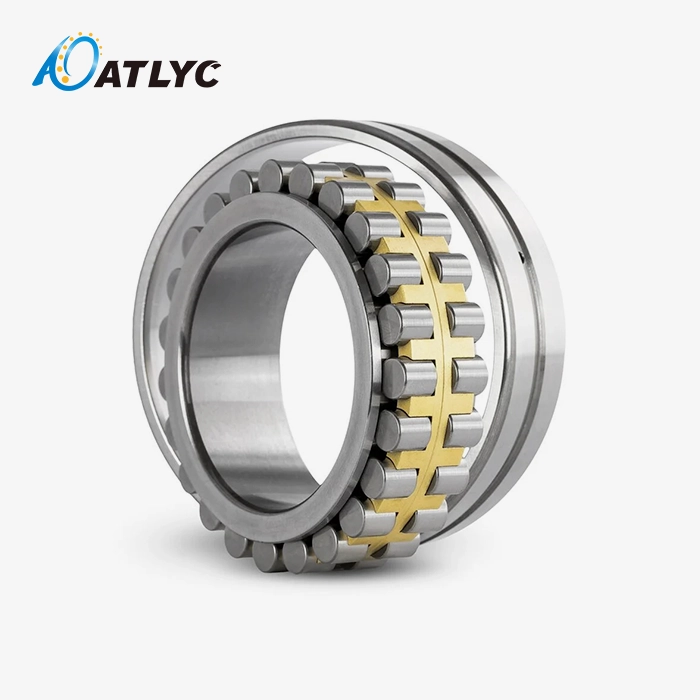
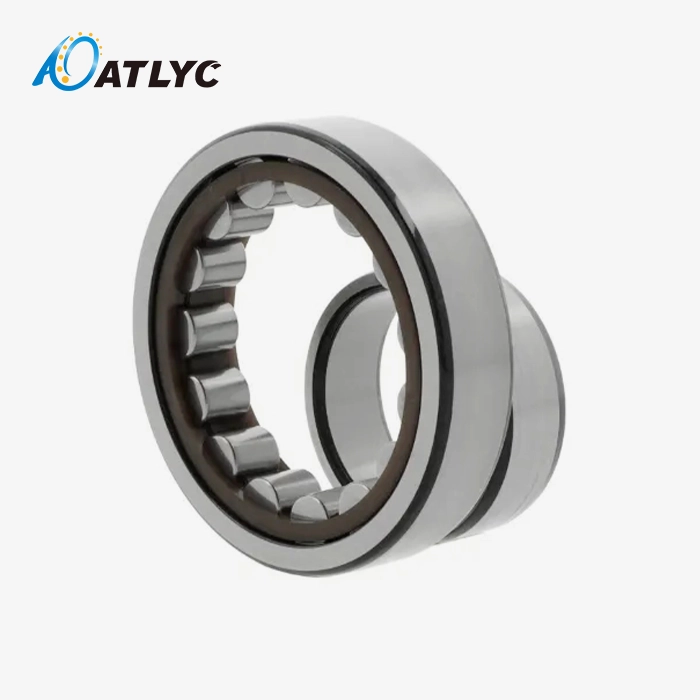
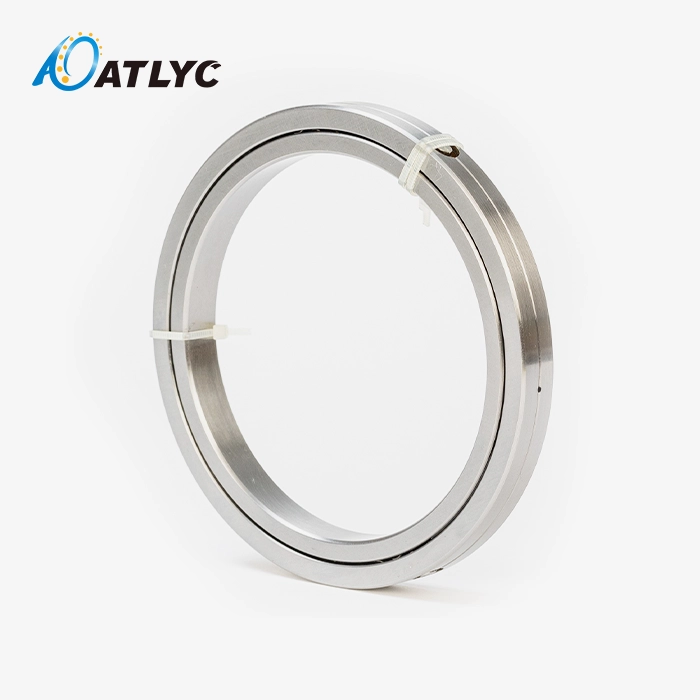
The RE3010UUCC0 Crossed Roller Bearings excel in high-precision industrial applications demanding exceptional accuracy and compact design. These bearings feature an integral outer ring with a split inner ring, measuring 30mm inner diameter, 55mm outer diameter, and 10mm width. Their orthogonal roller arrangement handles radial, axial, and moment loads simultaneously, making them indispensable in robotic joints, CNC rotary tables, medical imaging equipment, semiconductor manufacturing devices, and precision measuring instruments where space limitations and multi-directional load support prove critical for operational excellence.
Introduction
More and more, global makers looking for precise motion control solutions are turning to specialized bearing technologies that work very well in small areas. The RE3010UUCC0 Crossed Roller Bearings represent an important part for procurement managers, design engineers, and original equipment manufacturers (OEMs) who work in competitive industries. This detailed guide covers all the important factors you need to think about in order to choose the right bearings for your tools and get the best performance. To stay ahead of the competition and run your business more efficiently, you need to know where and how to use these specialized parts as technology improves and the need for precision grows in the medical, automobile, and industrial machinery sectors.
Understanding RE3010UUCC0 Crossed Roller Bearings
Technical Specifications and Core Design
The RE3010UUCC0 Crossed Roller Bearings feature exact measurements that make them perfect for small setups. A 30mm bore fits standard shaft sizes, and the 55mm outer diameter and 10mm width reduce the space needed for fitting. These parts are made from high-quality Gcr15 or Gcr15SiMn bearing steel and have accuracy classes from P6 to P2. The P4 and P5 grades meet most industrial precision standards. The choice of material ensures that the dimensions stay the same even when the temperature changes and the stress levels change during use.
This type of bearing is different from others because it has a continuous outer ring design and a split inner ring structure. This design makes installation easier around fixed shafts while keeping the accuracy of the outer ring's rotation very high. Engineers can install the bearing without taking apart the shaft because the inner ring is split. This cuts down on installation time and mechanical complexity during equipment setup or repair.
Working Principle and Load Distribution
Crossed roller technology places cylindrical rollers at 90-degree angles inside V-groove raceways. This makes line contact instead of the point contact that happens with ball bearings. This geometric arrangement lets a single small unit support radial forces, axial thrust, and moment loads all at the same time. Each roller shares the load distribution with neighboring elements. This maximizes the contact area and makes the bearing much more rigid than standard designs.
The placement of the orthogonal rollers reduces the amount of friction that happens during spinning while providing excellent runout accuracy that is necessary for precise positioning. The "UU"-designated dual contact seal system keeps lubrication in while protecting internal parts from outside contaminants. This increases service intervals and lowers maintenance needs. This sealed design is especially useful in harsh industrial settings where particulate contamination could damage the integrity of the bearing.
Performance Advantages Over Alternative Solutions
Crossed roller bearings have clear operational benefits that solve certain engineering problems. The small cross-section can be used instead of several regular bearings, which lowers the weight of the unit and the amount of space it needs without lowering its load capacity. High moment rigidity stops deflection under cantilevered loads, so the position stays accurate during all operational cycles. The low friction coefficient makes it possible for the part to rotate smoothly at different speeds while also producing little heat, which could affect the accuracy of measurements in precision applications.
These performance qualities directly lead to longer machine uptime and lower total cost of ownership. The design makes it easier to maintain because it needs to be oiled less often than similar bearings, and the sealed construction keeps it from wearing out too quickly. The consistent performance and predictable service life are appreciated by engineering teams because they help meet tight production plans and quality assurance standards in tough industrial settings.
Common Applications of RE3010UUCC0 Crossed Roller Bearings
Robotics and Automation Systems
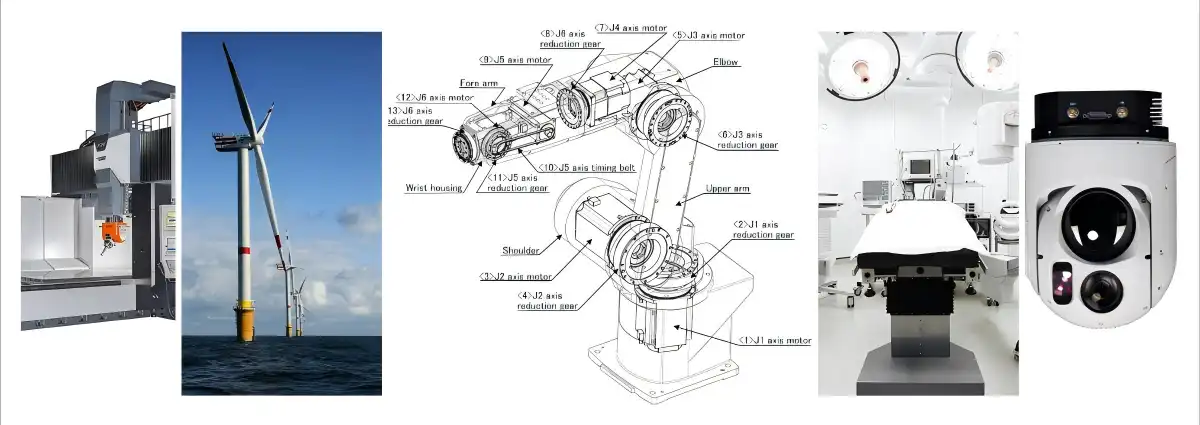
Industrial robotic manipulators need bearings that can handle a lot of weight while still staying in the right place. The RE3010UUCC0 Crossed Roller Bearings serve as the rotating base for robot joints, wrist assemblies, and articulation points where moment loads from extended arms make things hard to work with. Collaborative robots benefit from the small size, which lets them move in more directions without getting bigger.
These bearings are used in pick-and-place motors and rotary indexing devices in automated assembly systems. High stiffness and smooth spinning work together to make sure that the setting is always accurate to within micrometers, which is very important for quality control in high-volume production. The sealed design keeps out coolant spray and metal chips that are common in automatic machining settings, which makes the bearing last longer than other options.
Machine Tools and CNC Equipment
Crossed roller bearings are used in precision machining centers in the rotating tables and indexing heads, where cutting forces create large rotational and moment loads. During machining, the RE3010UUCC0 keeps the table flat and accurate in terms of angles. This has a direct effect on the quality of the workpiece and the finish on the surface. When cutting is interrupted, shock loads can be created that could damage less sturdy bearing designs. The rigid support structure doesn't bend.
Coordinate measuring machines (CMM) and measuring instruments depend on these bearings to move the rotary stage and place the probe. The very high runout accuracy means that measurements can be taken again and again, which is important for quality inspection and verifying dimensions. The low starting torque makes it possible to start the motion smoothly, without any stick-slip behavior that could make measurements less accurate or make the control system more complicated.
Medical and Scientific Equipment
Crossed roller bearings are used in gantry rotation devices of medical imaging equipment like CT scanners and X-ray C-arms. The RE3010UUCC0 supports the heavy imaging components and rotates without vibrations, which is necessary for clear images. The smooth motion and quiet operation make patients more comfortable during diagnostic processes and allow for exact positioning needed for accurate medical imaging.
The small size and high accuracy make it useful for laboratory robotic tools and analytical instruments. In vacuum environments, where reliability and preventing contamination are very important, these bearings are used in semiconductor inspection tools and wafer handling systems. Because these bearings work the same way in all kinds of conditions, they can be used in research projects that need long-term measurement stability.
| Application Sector | Primary Function | Critical Performance Requirement | Load Type |
|---|---|---|---|
| Industrial Robotics | Articulation of joints | A lot of moment stiffness | Combined moment and radial |
| CNC Rotary Tables | Indexing of workpieces | Accuracy in angles | Axial, radial, and moment |
| Medical Imaging | Moving the gantry | Operation without vibration | Radial or moment |
| Semiconductor Tools | Positioning the wafer | Very little particulate matter | Very accurate radial |
Specialized Industrial Applications
These bearings are used in antenna positioning systems, optical tracking devices, and precision gimbals for defense and aerospace applications that need to work reliably in harsh conditions. The material's temperature stability and other properties keep it working well in harsh environments like those found in aerospace applications.
The small size makes it possible for machines to have tight shapes while still being rigid enough to do high-speed, repeated tasks. This is useful for packaging and cloth equipment. The sealed design cuts down on the number of times that upkeep needs to be done in work settings, where downtime has a direct effect on output and profits.
Comparing RE3010UUCC0 with Alternative Bearings
Performance Comparison with Similar Crossed Roller Models
The 3010 size is in the middle of the RE series and strikes a good balance between load capacity and small size. Larger RE series bearings can hold more weight, but they need more space to be installed. Smaller versions, on the other hand, can hold less weight and are better for lighter-duty uses. The RE3010UUCC0 Crossed Roller Bearings are flexible enough to meet a wide range of business needs without being over-specified, which would raise the cost of the parts unnecessarily.
There are clear structural changes between the RE arrangement and the RA and RB series crossed roller bearings. The split outer ring and combined inner ring of RA bearings make the inner ring rotate very accurately. RB bearings have rings that can be taken off, which gives installers more options. The RE3010UUCC0 integral outer ring design works perfectly for tasks that need precise outer ring rotation. For example, in robot joints and rotary tables, the outer ring usually rotates against a stationary housing.
Angular Contact and Ball Bearing Alternatives
Angular contact ball bearings are less expensive, but they need to be paired up in order to handle combined loads. Compared to the single-unit RE3010UUCC0 option, this makes installation more difficult and requires more axial room. When moment loads are applied, ball bearings are less rigid, which could affect the accuracy of positioning in precision applications. When compared to crossed roller bearings, which have line contact, ball bearings have point contact, which reduces the amount of load they can hold.
Cylindrical roller bearings can hold a lot of horizontal load, but they need separate thrust bearings to handle vertical loads. This method of using multiple bearings makes the system more complicated, heavier, and more likely to have balance problems. The RE3010UUCC0 gets rid of these problems by supporting loads in more than one direction. This makes machine design easier and increases reliability by cutting down on the number of parts needed.
Selection Criteria for Optimal Bearing Choice
When engineers choose bearing technology, they have to look at the needs of the specific application. Initial selection is based on a load analysis that shows the size and direction of the forces. Crossed roller designs that are small and fit in places where regular bearings can't are often the only option. The choice of precision class is based on the level of accuracy needed. Grades P4 or P5 are good for most business needs, while grade P2 is ultra-precision for specific uses.
The operating speed, temperature range, and weather factors make it easier to choose the right bearing. The sealed RE3010UUCC0 version works well in dirty places, while the open versions can be used with certain lubrication systems in controlled settings. To find the best value, cost-performance analysis compares the starting cost of a component to its total lifecycle costs, which include upkeep, downtime, and the number of times it needs to be replaced.
| Bearing Type | Load Capacity | Rigidity | Accuracy | Space Efficiency | Complexity |
|---|---|---|---|---|---|
| RE3010UUCC0 | High altogether | Very good | Better runout | Small single unit | Easy installation |
| Angular Contact Balls | Moderate altogether | good | High | Needs to be paired | Needs more than one bearing |
| Cylindrical Rollers | But only high radial | Radial is very good | Moderate | Need for separate thrust | Needs more than one bearing |
Procurement Considerations for RE3010UUCC0 Crossed Roller Bearings
Supplier Evaluation and Authenticity Verification
Professionals in procurement must carefully evaluate possible bearing providers to make sure that the parts they sell are real and that the quality is always the same. Established companies like NSK, KOYO (JTEKT), and IKO make RE3010UUCC0 Crossed Roller Bearings that meet international standards. New companies like ATLYC have shown they can make high-precision bearings that are in line with ISO 9001 and IATF 16949 quality management systems. Checking the manufacturing skills and quality certifications keeps you safe from fake parts that make tools less reliable.
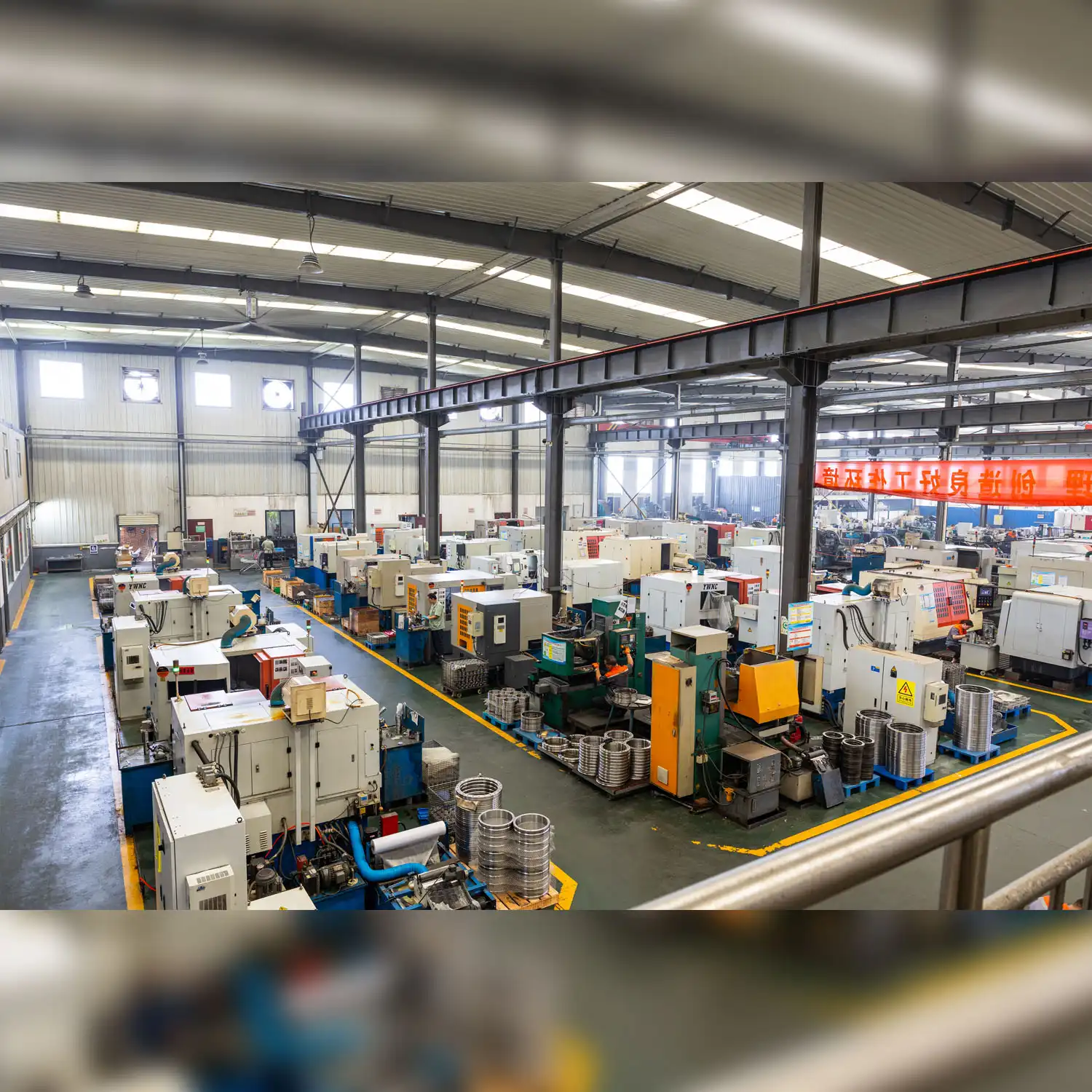
The supplier's production capacity affects how reliably deliveries happen and how consistently orders are filled. When compared to facilities that only make a few bearings at a time, those that have dedicated crossed roller bearing production lines keep process controls tighter and get better physical stability. ATLYC has six specialized workshops that are only used to make precise bearings. This shows that the company can produce enough of them to reliably serve OEMs and industrial distributors around the world.
Pricing Dynamics and Lead Time Management
The price of a crossed roller bearing depends on how hard it is to machine precisely, how much the materials cost, and how the quality is checked. Through economies of scale, buying in bulk usually leads to better prices, but custom specifications or ultra-precision grades cost more. Costs and quality requirements should be weighed by procurement teams, who should know that failed bearings cost a lot more than the initial savings on the component.
Lead times vary a lot depending on how much inventory is available and when the production is scheduled. Standard configurations can usually be shipped within days from stock at a distributor, but unique designs may take a few weeks to make. Strategies for buying in bulk that are in line with production planning cut down on the costs of emergency expediting while making sure that materials are always available to support continuous manufacturing.
Warranty Coverage and After-Sales Support
Comprehensive guarantee programs show that the maker trusts the quality of the product and lower the risk of buying something. Reliable suppliers offer technical support that can help with choosing the right bearings, installation, and fixing problems. This support is useful throughout the lifecycle of the equipment. The quality of the service provided after the sale is what sets premium sellers apart from basic providers, especially when dealing with unexpected application problems.
Long-term partnerships are good for both makers and sellers because they help each other solve problems and keep making things better. Suppliers who know about the needs of a certain application can make proactive suggestions that improve bearing performance and stop them from breaking down too soon. In addition to transactional component buying, this consulting method adds a lot of value.
Maintenance and Longevity of RE3010UUCC0 Bearings
Lubrication Schedules and Cleaning Protocols
For RE3010UUCC0 Crossed Roller Bearings to last as long as possible, they need to be properly oiled. Because these bearings have two seals, the factory-applied oil stays on them, so they usually don't need to be serviced when things are normal. Applications with high speeds, extreme temperatures, or dirty environments may need to be relubricated on a regular basis according to the manufacturer's instructions to keep working at their best.
When maintaining equipment, cleaning methods must not introduce contaminants that weaken the bearings. Non-abrasive solvents can get rid of dirt on the outside without hurting the seals, but sealed bearings should not be taken apart to clean the inside. It is usually more reliable and cheaper to replace bearings than to try to fix problems inside the machine. This is especially true when it comes to the precise production standards needed for crossed roller performance.
Wear Indicators and Troubleshooting Techniques
Predictive maintenance programs that check the condition of bearings stop unexpected failures and unplanned downtime before they happen. Increased spinning resistance, strange noises, or high working temperatures could be signs of bearing wear that needs to be looked into. Vibration analysis finds early signs of wear so that bearings can be replaced during routine maintenance instead of having to be fixed in an emergency.
During regular maintenance, a visual check shows any harm to the outside, the integrity of the seals, and the state of the lubrication. By keeping track of bearing performance over time, you can find baseline characteristics that make it possible to spot gradual degradation. This data-driven method finds the best time to replace bearings by balancing the costs of the parts with the need for operational reliability.
Service Life Extension Strategies
Environmental controls that keep bearings safe from high temperatures, water, and dirt and dust greatly increase their useful life. Preload problems that speed up wear can be avoided by installing things correctly and following the manufacturer's power recommendations. Precision raceways and roller surfaces can't be damaged as long as shock loads are avoided and operating within rated capacities.
The way extra bearings are stored affects how well they work when they are installed. Climate-controlled spaces keep lubricants and metals from rusting, and proper handling keeps them from getting dirty or damaged. These seemingly small factors add up to big differences in how long bearings last and how reliable equipment is over long periods of time.
Conclusion
Using RE3010UUCC0 Crossed Roller Bearings strategically meets important needs for precise motion control in many different business settings. Because they are small, can hold loads in multiple directions, and are very accurate, they are essential for robots, machine tools, medical equipment, and making semiconductors. To get the best bearing performance and equipment reliability, procurement professionals need to check the credentials of suppliers, balance cost and quality, and follow the right maintenance procedures. Crossed roller technology has measurable benefits like making systems simpler, more accurate, and lasting longer. These benefits make the initial investment worth it because they lower the total cost of ownership and improve operational efficiency.
FAQ
1. What is the maximum load capacity of RE3010UUCC0 bearings?
The load capacity of the RE3010UUCC0 Crossed Roller Bearings varies on how the load is placed and how it is loaded. The crossed roller design can handle radial, axial, and moment loads all at the same time in a 10mm width. To make sure there are enough safety factors, you should check the manufacturer's specifications for exact capacity ratings that take into account the size, direction, and duty cycle of the load in your application.
2. How do RE3010UUCC0 bearings differ from traditional ball bearings in robotic applications?
Crossed roller bearings are much stiffer and can handle much more moment load than ball bearings of the same size. The arrangement of the orthogonal rollers makes line contact instead of point contact, which improves load distribution and positional accuracy. This makes it possible for robotic joints to keep their accuracy even when they are loaded from above, which would cause ball bearings to bend too much.
3. Where can I source authentic RE3010UUCC0 bearings with warranty support?
Genuine bearings can be bought from quality-certified bearing makers or from approved distributors of major manufacturers. Before buying something, make sure the supplier has the right ISO 9001 and IATF 16949 certifications, ask for proof that the materials can be tracked, and check the warranty terms to make sure the parts are real and the supplier is responsible.
Partner with ATLYC for Reliable RE3010UUCC0 Crossed Roller Bearings Supply
You can trust ATLYC as an RE3010UUCC0 Crossed Roller Bearings maker because they have been making precision bearings well for 15 years and have ISO 9001 and IATF 16949 certifications. Our 120 trained workers run six specialized production workshops that provide uniform quality and reliable lead times to companies that make cars, industrial machinery, and automation equipment in South Korea, the US, Germany, and other places. Precision parts are very important to your production lines, and we can help you with all of your technical questions. We also offer competitive bulk pricing and quick service after the sale. Email our engineering team at auto@lyautobearing.com right now to talk about your requirements and find out how our scalable production capacity and dedication to quality can help your business succeed.
References
1. Harris, T.A., and Kotzalas, M.N. (2006). Advanced Concepts of Bearing Technology: Rolling Bearing Analysis, 5th Edition. CRC Press.
2. Nishioka, M. (2018). "Precision Crossed Roller Bearings for Industrial Robot Applications," Journal of Mechanical Engineering Science, Vol. 232, pp. 3147-3159.
3. ISO 5593:1984. Rolling Bearings - Vocabulary. International Organization for Standardization.
4. Wensing, J.A. (1998). On the Dynamics of Ball Bearings. PhD Thesis, University of Twente, Netherlands.
5. Palmgren, A. (1959). Ball and Roller Bearing Engineering, 3rd Edition. SKF Industries Inc.
6. Zhou, R.S., and Hoeprich, M.R. (1995). "Torque of Tapered Roller Bearings," ASME Journal of Tribology, Vol. 117, pp. 479-489.
Learn about our latest products and discounts through SMS or email